
Review · JAPAN COOKING CLASSES
Culinary Home Cooking with Grandmothers – Vegan Friendly
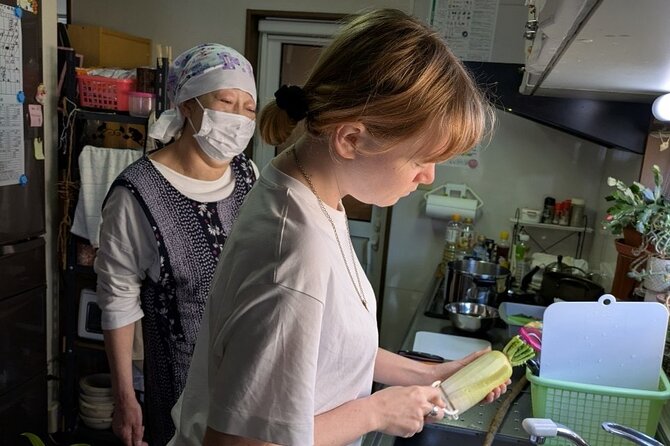
A bowl of keno-jiru vegetable miso soup, hand-shaped onigiri, and a table shared with Aomori grandmothers make this more than a standard cooking lesson. You’ll work in a private home kitchen, hear family stories, and see how snowy winters and lush summers shape local food.
I like the genuine home setting and the way the meal brings everyone together, regardless of diet. I also like the practical lessons: washing, cutting, seasoning, and preparing simple dishes you can repeat at home. The main drawback is the location. You must make your own way to Maeda Tsuruta near Mutsu-Tsuruta Station, and the three-hour visit leaves little room for a late arrival.
Key points to know before booking
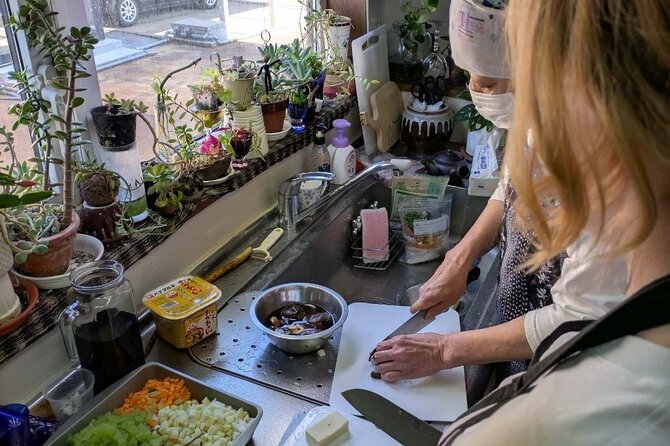
- Local grandmothers lead the cooking, sharing family methods, stories, and everyday food traditions.
- The menu is plant-based, with dishes suited to vegan, vegetarian, Oriental Vegetarian, and gluten-free diners.
- Keno-jiru and onigiri are central dishes, along with seasonal vegetable sides that change with available ingredients.
- The setting is a private home, and only your group participates.
- English support is available, making the class practical for visitors who do not speak Japanese.
- The $78.04 price includes lunch, a welcome drink, ingredients, utensils, and instruction, but not transportation.
Aomori food begins with the seasons
This cooking class starts with a short introduction to Aomori’s geography, climate, and food customs. That opening matters because it gives you a reason for the ingredients and cooking methods you will use later.
Aomori has snowy winters and productive summers. That contrast shapes home cooking. You can expect the menu to change according to the season and the ingredients on hand, rather than follow one fixed restaurant-style lineup.
I like this approach because it connects the food to daily life. You are not simply following a recipe from a printed card. You are learning why a local household prepares certain vegetables, soups, rice dishes, and seasonings in a particular way.
The introduction should also help you notice the difference between regional food and the dishes most often served in major Japanese cities. This is a small-scale look at Aomori through its kitchen, not a broad survey of Japanese cuisine.
More Home Cooking Classes in Japan
- Private Home Cooking in Yanaka – Local Flavors in a Warm Setting
★ 5.0 · 173 reviews - Near Fushimiinari: Kyoto Home Cooking Class & Supermarket tour
★ 5.0 · 100 reviews - Japanese Home Cooking Class & Walk in Todoroki Temple Tokyo
★ 5.0 · 88 reviews
Entering a private kitchen near Mutsu-Tsuruta Station
The meeting point is in Maeda Tsuruta, in Kitatsugaru District, Aomori. The activity begins at 11:00 a.m. and returns to the same place after lunch.
You will need to arrange your own transportation to Mutsu-Tsuruta Station on the JR Gono Line, then make your way to the meeting point. Transportation is not included, so check your route and allow enough time before booking. A cooking class has a fixed rhythm, and arriving late could mean missing the introduction or the first preparation steps.
The private format is a real advantage. Only your group takes part, so the kitchen does not have the feel of a large demonstration class. You can ask questions, work at a comfortable pace, and speak directly with the local women leading the session.
Individual guide names are not provided, but the class is led by local grandmothers who have spent their lives preparing seasonal food. English support is available, and the language help is important here because cooking depends on small details: how finely to cut something, how much liquid to add, or when to season a soup.
A welcome drink and a gentle start
You receive a welcome drink on arrival before the cooking begins. This gives you a moment to settle into the home and meet the people who will guide the class.
The atmosphere is meant to feel personal rather than formal. The strongest part of the activity is the human exchange. The grandmothers do not only demonstrate recipes. They share stories, family habits, and the kind of kitchen wisdom that usually comes from years of cooking for relatives.
That can make this visit especially appealing if you want a closer look at ordinary Japanese life. You are not watching a professional chef prepare a polished restaurant dish. You are learning from people whose experience comes from preparing food at home, through many seasons and generations.
The language support helps, but you should still expect some communication to happen through demonstration, gestures, and shared work. That is often a pleasant part of a cooking lesson, though anyone looking for a highly technical culinary course may find the format more relaxed and informal.
Preparing keno-jiru, onigiri, and seasonal sides
The cooking portion is hands-on. You will learn basic Japanese preparation methods, including how to wash, cut, and season ingredients.
One featured dish is keno-jiru, a vegetable miso soup associated with northern Japanese home cooking. It is a useful dish for understanding how simple vegetables, broth, and miso can become a filling meal. The recipe also suits the plant-based focus of this class.
You will also prepare onigiri, the familiar Japanese rice balls shaped by hand. This is a simple dish, but it rewards attention. The cooking process gives you a feel for rice as a central part of Japanese meals, and shaping the rice yourself makes lunch more personal.
Seasonal side dishes complete the meal. The exact selection changes with the season and the ingredients available, so you should not book expecting a fixed menu. That uncertainty is a small drawback for anyone with one particular dish in mind, but it is also part of the point. A local home kitchen cooks with what is good and available now.
The class uses straightforward techniques that you can repeat at home. You are not expected to master complicated equipment or restaurant-level presentation. Instead, you learn the rhythm of preparing several dishes and bringing them together for one meal.
More Vegetarian Cooking Classes in Japan
- Ramen & Dumpling Cooking in Tokyo with Chef/Vegan possible
★ 5.0 · 107 reviews - Vegan/Vegetarian Ramen and Gyoza by Bentoya cooking
★ 5.0 · 59 reviews - Private Plant-Based Japanese Cooking Class – Kyoto Edition
★ 5.0 · 15 reviews - Zen Buddhist Vegetarian(Shojin Ryori): Cooking Experience
★ 5.0 · 9 reviews
A plant-based meal that includes the whole table
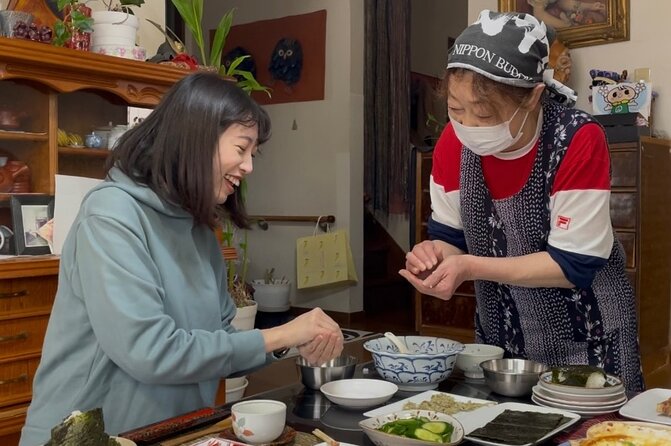
The menu is naturally plant-based and is intended for vegan, vegetarian, Oriental Vegetarian, and gluten-free diners. That makes the class useful for mixed groups where one person’s diet might otherwise make a shared meal difficult.
The value here is not only dietary convenience. Everyone prepares and eats the same general meal. Nobody needs to sit apart with a special plate while the rest of the group eats something else.
You should still communicate your dietary needs clearly when booking or before the activity. The information says the menu is suitable for these diets, but it does not provide a full ingredient list or details about allergy procedures. If you have a serious allergy, ask for specific confirmation before you go.
The food is also a good match for anyone who wants an uncomplicated Japanese lunch. Keno-jiru, rice balls, and vegetable sides are comforting rather than showy. You will get a better sense of daily food culture than you would from a highly decorated tasting menu.
Sitting down with the women who taught you
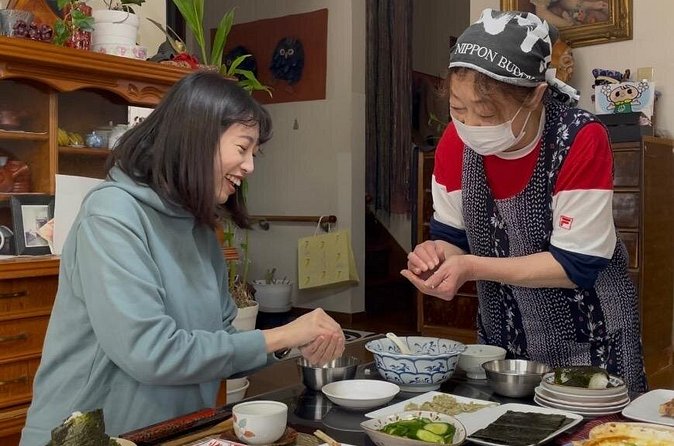
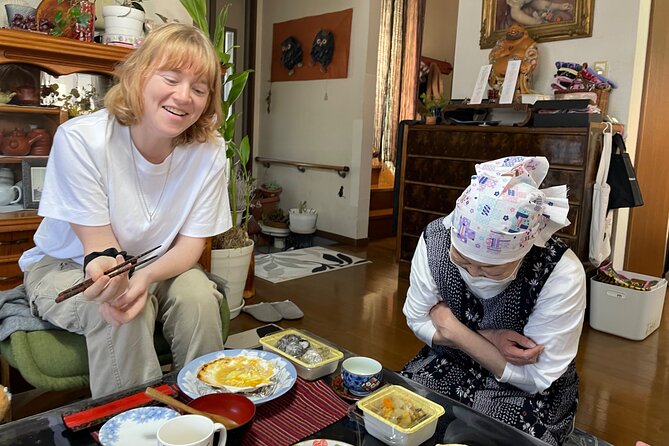
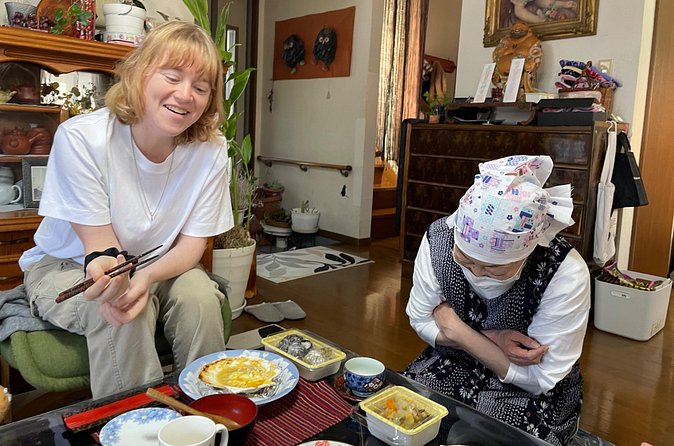
After cooking, everyone gathers around one table to eat the meal they prepared together. This is the emotional center of the visit.
The food gives you something to talk about, but the conversation is just as important. You can ask about the recipes, local ingredients, family customs, and the differences between home cooking in Aomori and food in your own country.
The atmosphere is warm and informal. The women leading the class are described as kind, patient, and welcoming, with some English ability available for international participants. The experience is particularly strong for anyone hoping to feel the warmth of a Japanese home rather than simply collect another recipe.
The shared meal also gives the class a clear ending. You prepare food side by side, then eat it together. That simple structure makes the visit feel complete and helps connect the dishes to the people who taught you to make them.
What the $78.04 price really covers
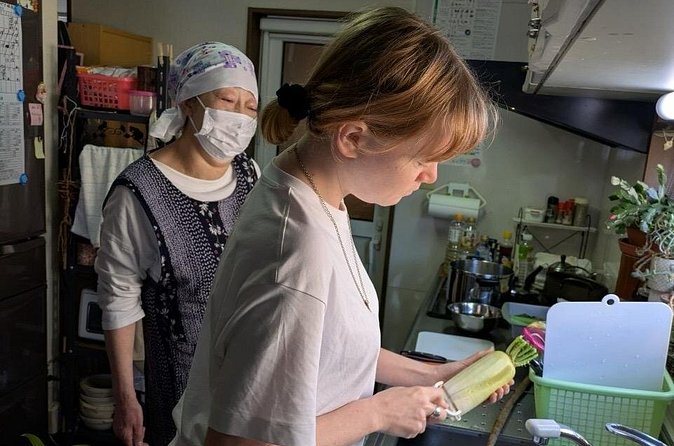
At $78.04 per person, the cost is reasonable if you value personal contact and a full meal rather than only instruction. The price includes the welcome drink, all ingredients, utensils, English-speaking host or guide, hands-on cooking, and lunch.
You are paying for about three hours of time in a private setting. The cost also covers the food you prepare, so it is not an instruction-only class where you must buy lunch afterward.
The value depends on what you want from Aomori. If your main aim is the cheapest possible meal, you can eat for less elsewhere. If you want a personal connection, a plant-based menu, and a chance to learn regional home cooking in a small group, the price is easier to justify.
There is no separate public transportation included. Factor in the cost and time of reaching Mutsu-Tsuruta Station and the meeting point. That is the most important practical expense outside the listed price.
Who will enjoy this class most
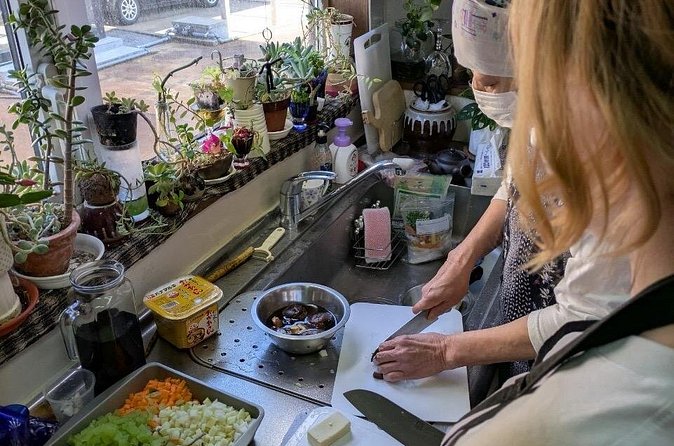
I would recommend this activity to you if you prefer local contact, small groups, and food with a story behind it. It suits solo visitors, couples, families, and private groups who want to cook together rather than watch from the side.
It is also a strong choice for anyone following a vegan, vegetarian, Oriental Vegetarian, or gluten-free diet. The plant-based menu lets the whole group share the same dishes, which is not always easy to arrange in a traditional home meal.
You do not need advanced cooking skills. The class focuses on basic preparation and simple techniques, so it should work well if you rarely cook Japanese food.
You may want to choose another activity if you need a fully fixed menu, a city-center location, or a professional chef-led lesson focused on complex methods. The changing seasonal dishes and home setting are strengths, but they also mean the experience is less standardized.
Timing, transport, and cancellation
The class starts at 11:00 a.m. and lasts about three hours. Since you must make your own way to the meeting point, plan your route before the day of the activity. The meeting point is near public transportation, with Mutsu-Tsuruta Station on the JR Gono Line identified as the relevant station.
A mobile ticket makes it easy to keep the booking on your phone. Confirmation is provided when you book.
You can cancel for a full refund if you do so at least 24 hours before the local start time. Cancellations or changes made within 24 hours are not accepted for a refund. That policy is fair, but the fixed start time means you should be confident about your transport plans before the final day.
Should you book BASAMA’s Kitchen?
Book this class if you want Aomori home cooking with a human connection, not just another meal or a quick recipe lesson. The private kitchen, local grandmothers, shared table, and inclusive plant-based menu give it a clear sense of purpose.
I especially like the way the class brings dietary needs into the same meal rather than treating them as a problem. I also like that the dishes are practical: keno-jiru, onigiri, and seasonal sides are the sort of food you can understand and try again at home.
Think carefully about the location and the fixed 11:00 a.m. start. If you can reach Maeda Tsuruta on time and enjoy a relaxed home setting, this is a worthwhile way to spend three hours in Aomori. If you need a central location or a highly structured culinary course, it may not be the right match.
FAQ
Where does the cooking class take place?
The meeting point is in Maeda Tsuruta, Kitatsugaru District, Aomori 038-3503, Japan. The activity takes place in a private home and ends back at the meeting point.
What time does the activity start?
The class starts at 11:00 a.m. and lasts approximately three hours.
How do I reach the meeting point?
You must make your own way to Mutsu-Tsuruta Station on the JR Gono Line. Public transportation is not included in the price.
Is the food suitable for vegans and people following a gluten-free diet?
Yes. The menu is plant-based and is designed for vegan, vegetarian, Oriental Vegetarian, and gluten-free diners. The exact dishes vary by season and available ingredients.
What food will I prepare?
The class may include keno-jiru vegetable miso soup, onigiri rice balls, and seasonal side dishes. The menu can change according to the season and local ingredients.
What is included, and can I cancel?
The price includes a welcome drink, ingredients, utensils, English-speaking host or guide, the cooking lesson, and lunch. You can cancel at least 24 hours before the start time for a full refund.
More Food Outings in Japan
- Nishiki Market Food Tour with Cooking Class
★ 4.9 · 42 reviews - Okonomiyaki&Takoyaki for Families:Osaka Street Food Festival
★ 5.0 · 4 reviews - Small Group Cooking Class & Market Food Tour in Florence
★ 5.0 · 1,574 reviews - Athens: Food Market Visit and Cooking Class with Wine
★ 4.9 · 1,087 reviews
Newest classes around Japan
- Cooking Class: Make a Local Delicacy in a Japanese House★ 5.0 · 7 reviews
- Nagoya Super Market Tour & Home Cooking Class with a Local, Akiko★ 5.0 · 10 reviews
- Tokyo: Sushi roll and side dish cooking experience★ 5.0 · 2 reviews
- Tokyo: Sushi Making Experience & Japanese Cooking Class★ 5.0 · 2 reviews
- Tokyo: Sushi Cooking Class with Sake Tasting★ 4.8 · 55 reviews
- Tokyo: Real Ramen & Dumpling Cooking with Master Chef★ 5.0 · 10 reviews
- Tokyo: Sushi and Ramen Cooking Class with Sake Pairing Set★ 5.0 · 81 reviews
- Tokyo: Kawaii Bento Cooking Class – Cute Character Lunchbox★ 4.9 · 55 reviews
Japan Cooking Classes, compared.
Ramen Cooking Class at Ramen Factory in Kyoto
Read our review →
Ramen & Gyoza Cooking Class in Tokyo with Local Supermarket Visit
Read our review →
Ramen Cooking Class at a Ramen Factory with Souvenir
Read our review →
Sushi Making Osaka! Popular Sushi Class in Japan!
Read our review →
Tokyo Tsukiji Fish Market Tour and Sushi Making Lesson
Read our review →
Japanese Washoku Bento Small Group Cooking Class
Read our review →
Browse the lists this tour appears in