
Review · TOKYO COOKING CLASSES
Tokyo: Sushi Making Experience & Japanese Cooking Class
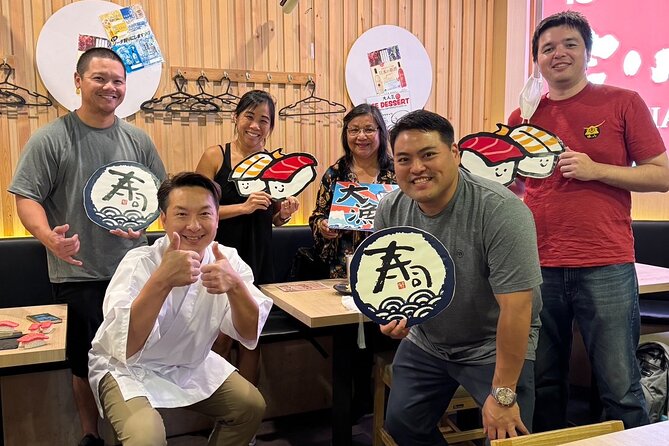
The best part of this class is that you do not simply watch a chef work. You handle the ingredients, shape maki sushi and temari sushi, and learn the customs behind the food. The opening quiz adds useful context without turning the lesson into a lecture.
I like the English-speaking help and the choice of a vegetarian menu. I also like the short 90-minute format, which fits neatly into a day of sightseeing around Shinbashi and central Tokyo. The tradeoff is simple: this is an introduction, not a full Japanese cooking course, and the group can include up to 15 people.
Key points
- Hands-on sushi making: Prepare maki sushi and temari sushi rather than only watching a demonstration.
- A quick lesson in sushi culture: Learn about history, etiquette, and customs through quizzes.
- Flexible ingredients: The menu includes tuna, salmon, squid, shrimp, flying fish roe, cucumber, egg, ginger, and sesame.
- Vegetarian option: Ask for the vegetarian menu when booking or notify the staff if you do not want raw fish.
- English and Chinese support: Instruction is available in English, Traditional Chinese, and Simplified Chinese.
- Easy city timing: The 90-minute class meets near the Karasumori Exit of JR Shinbashi Station.
Starting at Shinbashi Station’s Karasumori Exit
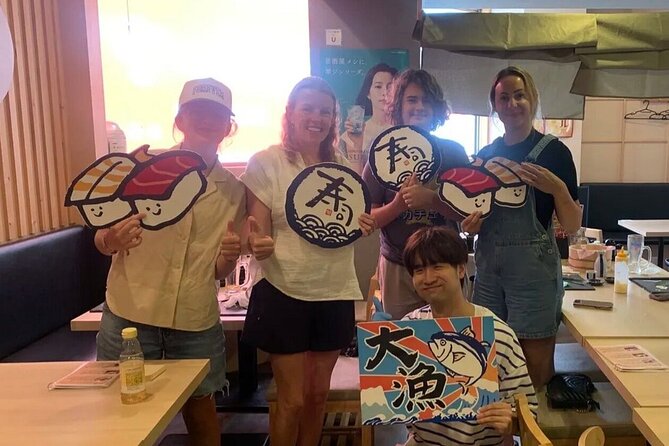
Your meeting point is the Karasumori Exit of JR Shinbashi Station on the Yamanote Line. Shinbashi is a useful base for central Tokyo sightseeing, so the class can fit before or after other plans without taking up half your day.
Pay close attention to the location photo and route details when you book. The meeting point is given at the station exit, not as a broad neighborhood description, so arriving at the correct exit matters. If you use JR trains, the Yamanote Line makes Shinbashi easy to reach from several major parts of Tokyo.
I would allow enough time to find the exit and get oriented. Tokyo stations can be confusing even when the destination is close. The activity itself lasts 90 minutes, but your total time should include the walk from the platform and any waiting needed to meet the instructor.
More Sushi and Japanese Classes in Tokyo:
- Ramen & Gyoza Cooking Class in Tokyo with Local Supermarket Visit
★ 5.0 · 823 reviews - Tokyo Tsukiji Fish Market Tour and Sushi Making Lesson
★ 5.0 · 390 reviews - Tokyo: Easy Ramen Cooking Experience in Kabukicho, Shinjuku
★ 4.6 · 321 reviews
Sushi culture comes before the cutting board
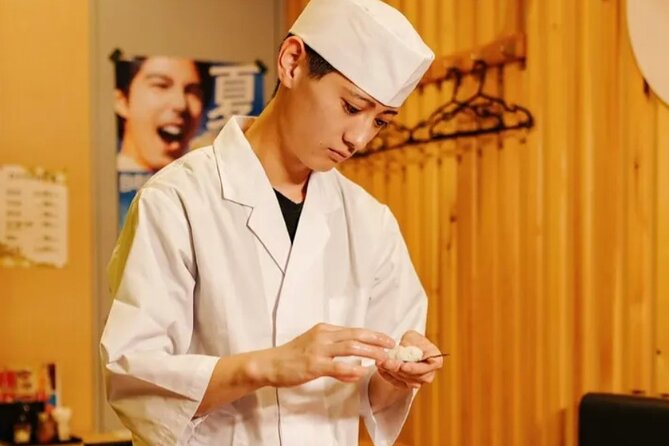
The class begins with quizzes about sushi history, culture, and etiquette. That is a smart way to start. Sushi has rules that are easy to miss if you only treat it as a quick meal, and a short quiz gives you a reason to remember them.
You should not expect a long academic talk. The class is built around making food, so the cultural section is brief and practical. It gives you a better sense of why sushi is prepared and presented in particular ways before you begin shaping your own pieces.
This opening also helps families and first-time visitors get involved. A quiz is less formal than a lecture, and it gives you something to do while the class gets organized. Children under four cannot join, but older children may find the quiz and hands-on work more engaging than a standard sightseeing talk. The activity data does not provide a recommended age beyond the under-four restriction, so parents should judge the class based on their child’s ability to follow a short cooking lesson.
Making maki sushi with the listed ingredients
Maki sushi is the familiar rolled style, made with ingredients arranged and shaped into a roll. Here, you receive the ingredients and cooking tools needed for the lesson, then get help from the staff as you work.
The listed selection gives you several kinds of sushi to think about. Tuna, salmon, squid, shrimp, and flying fish roe provide seafood choices, while cucumber and egg offer milder options. Ginger and sesame add familiar accompaniments and texture.
The menu is broad enough to let you compare flavors and appearances, but the class is still short. Do not expect a large menu or a long series of separate recipes. The purpose is to learn the basic process of making popular sushi forms in a compact session.
Raw fish may be a concern for some people. You can notify the staff if you are uncomfortable with it, and a vegetarian menu is available. I would raise that issue before the class begins rather than waiting until ingredients are set out. The information supplied does not describe every item on the vegetarian menu, so ask the staff what your particular version includes.
Shaping temari sushi for a second style
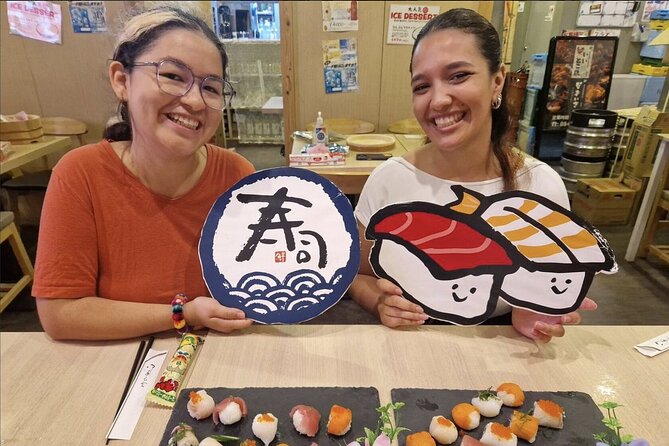
Temari sushi gives you a different form to practice. Instead of focusing only on a long roll, you shape sushi into small rounded pieces. The change is useful because it shows how the same basic ingredients can be presented in another way.
This is also the part that can make the class feel more creative. Maki sushi depends on rolling and cutting, while temari sushi centers on forming neat individual pieces. You will need to pay attention to shape and proportion, but the instructor and staff are there to assist.
The class includes both maki and temari sushi, so you are not spending the entire 90 minutes repeating one technique. That variety adds value for beginners. You leave with a clearer idea of how sushi styles differ, even if you do not become an expert in one visit.
The supplied information does not specify the exact number of pieces you make or the detailed order of each preparation step. Keep that in mind if you want a tightly timed cooking curriculum. The experience is designed as a friendly introduction rather than a professional skills workshop.
More Cooking Classes in Tokyo:
- Ramen and Sushi Cooking Class with Sake Pairing Set in Tokyo
★ 5.0 · 291 reviews - Tokyo: Wagyu and 7 Japanese Dishes Cooking Class
★ 4.9 · 273 reviews - Tokyo Washoku 4-hour Cooking Class: From Market to Table
★ 5.0 · 253 reviews - Small-Group Wagyu Beef and 7 Japanese Dishes Tokyo Cooking Class
★ 5.0 · 190 reviews
English and Chinese support in a small-group setting
Instruction is available in English, Traditional Chinese, and Simplified Chinese. That matters because sushi preparation can involve small but important movements, and it is much easier to follow when you can ask questions in a language you understand.
The staff also assist with commemorative photos. You can ask for help capturing the preparation process or your finished sushi, which is handy if you want a record of the class without constantly handling your phone around food.
One verified booking described a session with Shay as small, quiet, and personable. That is useful context, though group size can vary. The stated maximum is 15 people, so you should not assume every class will have the same intimate feel. Still, the maximum is modest enough to allow for staff assistance, especially compared with a large demonstration where you only watch from the back.
The same account praised Shay’s clear sushi instruction and the high quality of the fish. Those are the two points I would value most in this kind of activity. A cooking class succeeds when the teacher explains the hand movements clearly, and the ingredients matter when raw seafood is part of the lesson.
What the $58 price includes
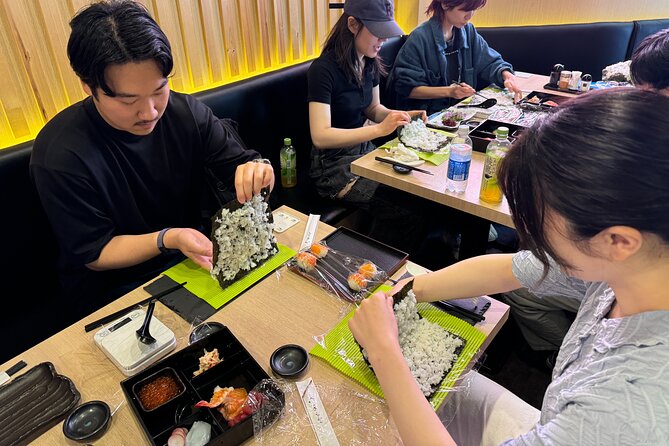
At $58 per person, this class is priced as a short activity rather than a full meal or an extended culinary workshop. You are paying for 90 minutes of instruction, the sushi ingredients, use of cooking tools, language assistance, and help with photos.
That is a fair value if you want to do the work yourself. The class gives you both cultural information and two sushi styles, so it offers more than a tasting. The inclusion of tools also means you do not need to bring cooking equipment.
I would be less enthusiastic about the price if your main goal is simply to eat excellent sushi. The activity is about learning and preparing food, not ordering a broad restaurant meal. Juice and alcoholic drinks are not included, so budget separately if you want a beverage.
The food list includes several seafood items, including tuna, salmon, squid, shrimp, and flying fish roe. The reported high fish quality is encouraging, but ingredient selection can vary according to the menu and your dietary choice. If you want vegetarian food or do not eat raw fish, make that clear in advance.
A useful 90-minute break in a Tokyo itinerary
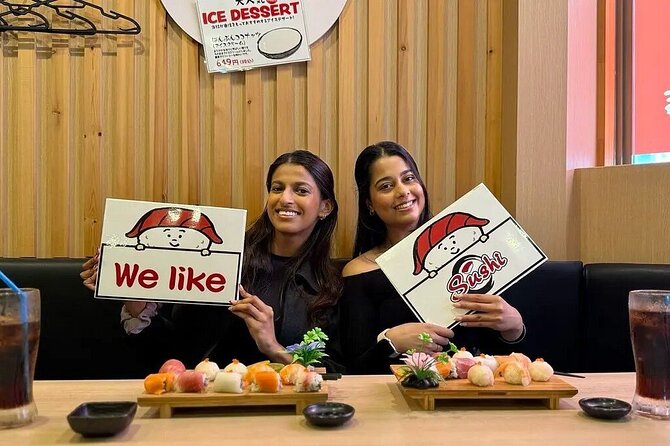
The short duration is one of this activity’s strongest practical features. Tokyo sightseeing can involve long train rides, large stations, and plenty of walking. A 90-minute class gives you a focused indoor activity without forcing you to sacrifice a full morning or afternoon.
You can also use the class as a change of pace. After temples, shopping streets, museums, or station corridors, sitting down to prepare food gives your day a different rhythm. The activity has enough structure to feel substantial, but it does not require the commitment of a full-day cooking course.
The limited time also means the lesson should keep moving. You will learn the cultural background, make two sushi types, take photos, and receive help when needed. If you like slow, detailed instruction with time to repeat every technique several times, this may feel brisk.
For most first-time visitors, that brisk pace is a benefit. You get a taste of the craft without needing prior experience. I would book it as a clear activity within a larger Tokyo day, not as the day’s only food-focused event.
Who will get the most from this class
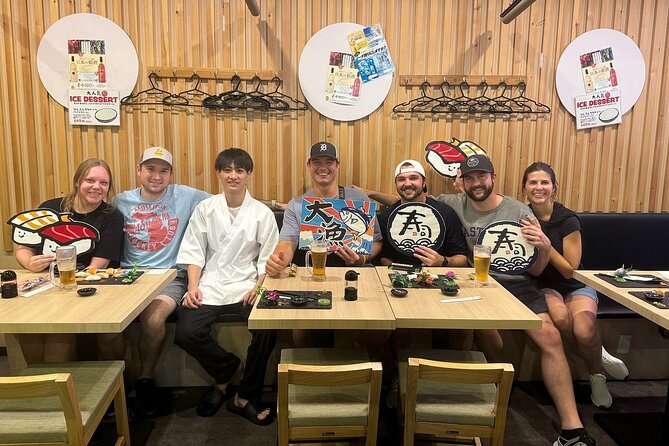
This experience suits first-time sushi makers, couples, families with children aged four and over, and anyone who wants a guided activity near central Tokyo. It also works well for people who want a food experience but need English or Chinese instruction.
Vegetarians should check the menu choice before arriving. People who avoid raw fish can notify the staff, but the supplied details do not spell out every substitution, so ask for confirmation when you reserve.
The class may be less suitable for someone seeking advanced knife skills, restaurant-level sushi training, or a large meal. The focus is on popular sushi forms, basic cultural knowledge, and a friendly introduction. The group maximum of 15 also means the amount of individual attention can depend on the day’s attendance.
Children under four are not permitted. There is no other age guidance provided, so parents should consider how comfortably their child can take part in a 90-minute guided activity.
Booking flexibility and practical limits
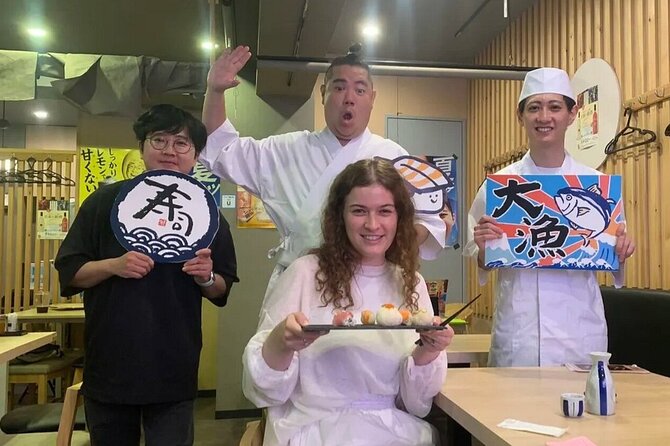
You can cancel up to 24 hours before the start time for a full refund. The reserve-now-and-pay-later option lets you hold a place without paying immediately, which helps when Tokyo plans are still changing.
Confirmation is sent at the time of booking. The experience needs a minimum number of participants, so it can be canceled if that number is not reached. Severe weather, including a typhoon or heavy snow, can also cause cancellation.
Those rules are worth noting during a weather-sensitive season. Tokyo’s transport and outdoor plans can change quickly in bad weather, so keeping this class alongside a flexible schedule is sensible. Check the available start times before booking, since the 90-minute duration does not mean every time of day is offered.
The legal drinking age in Japan is 20, but alcoholic beverages are not included in the class. That detail matters mainly if you are planning other drinks around the activity. The sushi lesson itself is centered on preparation and instruction.
Should you book the Shinbashi sushi class?
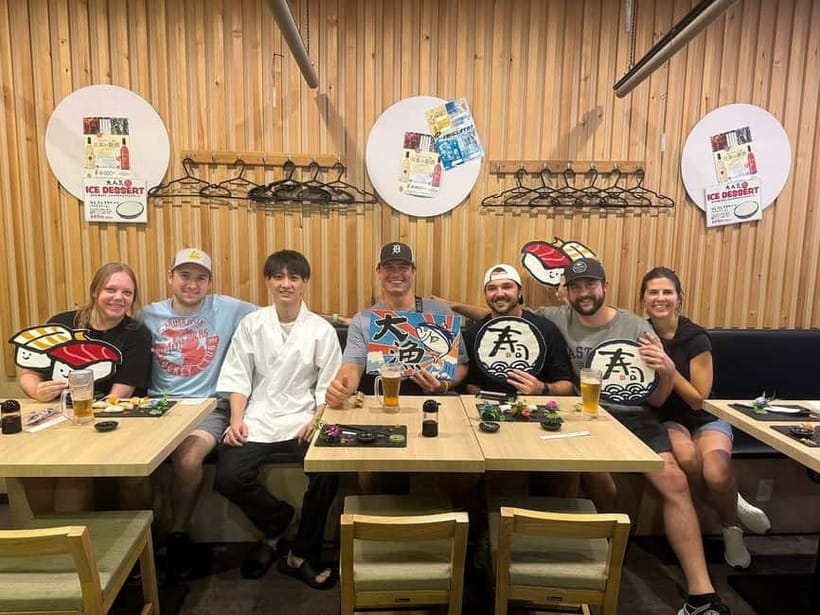
I would book this class if you want a short, hands-on introduction to sushi and like the idea of learning the customs behind the food. The combination of maki sushi, temari sushi, English or Chinese instruction, and a vegetarian option gives it broader appeal than a simple demonstration.
The best reason to choose it is the chance to practice with guidance. Shay’s session was described as small and quiet, with clear help and high-quality fish, though you should remember that attendance can reach 15 people. The main caution is that $58 buys a compact lesson, not an advanced course or a drink-inclusive meal.
Choose it for a practical Tokyo memory near Shinbashi. Skip it if you only want to eat sushi or need a long, technical cooking workshop.
FAQ
Where does the sushi class meet?
The meeting point is at the Karasumori Exit of JR Shinbashi Station on the Yamanote Line. Use the location photo and route information for the detailed approach.
How long does the activity last?
The class lasts 90 minutes. Start times vary, so check availability when booking.
How much does the experience cost?
The listed price is $58 per person.
Which languages are available?
The class is offered in English, Traditional Chinese, and Simplified Chinese.
What sushi will I make?
You will make maki sushi and temari sushi.
Are ingredients and cooking tools included?
Yes. The activity includes the necessary sushi ingredients and rental cooking tools.
What ingredients may be on the menu?
The listed ingredients include tuna, salmon, squid, shrimp, flying fish roe, cucumber, egg, ginger, and sesame.
Is a vegetarian menu available?
Yes. A vegetarian menu is available. Notify the staff if you want that option or if you are uncomfortable with raw fish.
Can I cancel the booking?
You can cancel up to 24 hours before the experience starts for a full refund. The activity may also be canceled if the minimum number of participants is not reached or if severe weather occurs.
Newest classes around Tokyo
- Tokyo: Sushi roll and side dish cooking experience★ 5.0 · 2 reviews
- Tokyo: Sushi Cooking Class with Sake Tasting★ 4.8 · 55 reviews
- Tokyo: Real Ramen & Dumpling Cooking with Master Chef★ 5.0 · 10 reviews
- Tokyo: Sushi and Ramen Cooking Class with Sake Pairing Set★ 5.0 · 81 reviews
- Tokyo: Kawaii Bento Cooking Class – Cute Character Lunchbox★ 4.9 · 55 reviews
- Tokyo: Gyoza Making from Scratch – Ultimate Cooking Class★ 5.0 · 2 reviews
- Tokyo: Night Cooking Class: 5 Home-Cooked Japanese Dishes★ 4.9 · 13 reviews
- Tokyo: Japanese Home-style Cooking Class with Meal★ 4.5 · 3 reviews
Tokyo Cooking Classes, compared.

Ramen & Gyoza Cooking Class in Tokyo with Local Supermarket Visit
Read our review →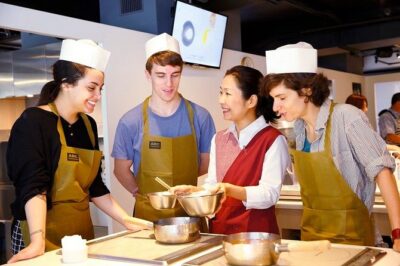
Tokyo Tsukiji Fish Market Tour and Sushi Making Lesson
Read our review →
Easy Ramen Cooking Experience in Kabukicho, Shinjuku
Read our review →
Ramen and Sushi Cooking Class with Sake Pairing Set in Tokyo
Read our review →
Tokyo Washoku 4-hour Cooking Class: From Market to Table
Read our review →
Small-Group Wagyu Beef and 7 Japanese Dishes Tokyo Cooking Class
Read our review →
Private Home Cooking in Yanaka – Local Flavors in a Warm Setting
Read our review →Browse the lists this tour appears in