
Review · TOKYO COOKING CLASSES
Tokyo: Sushi roll and side dish cooking experience
Tokyo’s best food lessons often begin with a simple idea: make something you recognize, then show you the small details that make it Japanese. Here, you learn to roll sushi, prepare dashi soup stock, and cook chawanmushi, miso soup, and white sesame pudding in one sitting.
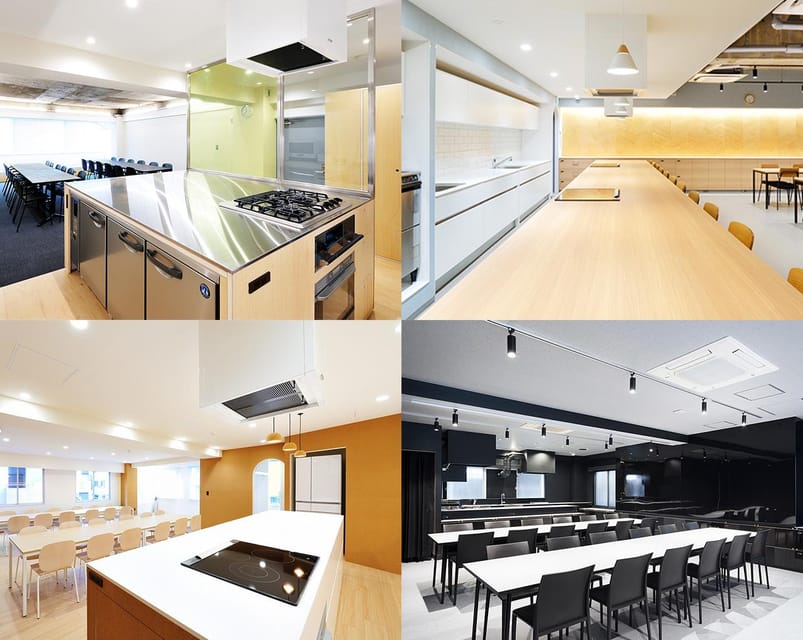
I like the clear English instruction and the menu’s balance between a hands-on main dish and several useful side recipes. I also like that the class is designed for both children and adults, with a welcoming teaching team and a comfortable, roomy studio reported by Albert Ray.
The main drawback is the late location information. You will not receive the exact studio address until three days before your reservation, and the studios are in different parts of central Tokyo. Vegans, children under three, and people with back problems should choose another activity.
Key points at a glance
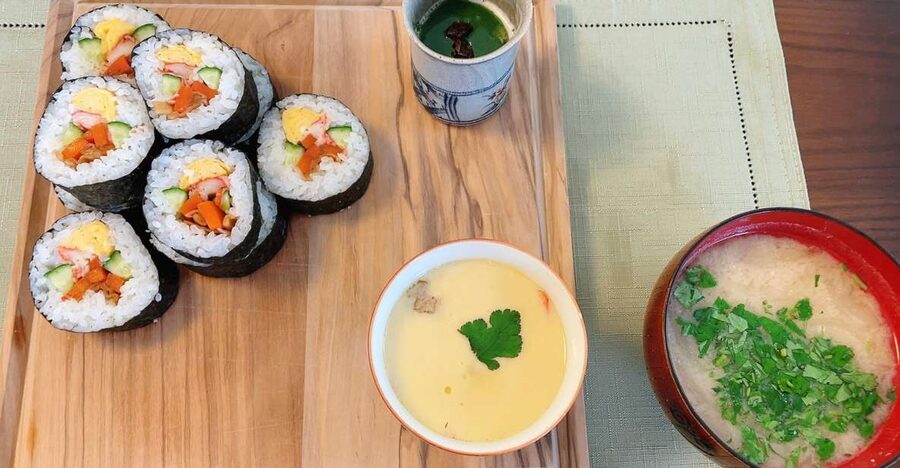
- Five-part Japanese menu: Prepare sushi rolls, dashi, chawanmushi, miso soup, and white sesame pudding.
- English-language teaching: The instructor gives the lecture and cooking guidance in English.
- A 150-minute schedule: Cooking runs from 11:00 to 13:00, followed by tasting until 13:30.
- Three possible central Tokyo areas: The studio is near Shinjuku, Chiyoda, or Minato, with the exact address sent three days before the class.
- Family-friendly format: Children can join from age three, and a verified family booking found the class fun and welcoming.
- $90 value: The fee covers instruction, ingredients, beverages, and the meal you prepare, but not transport.
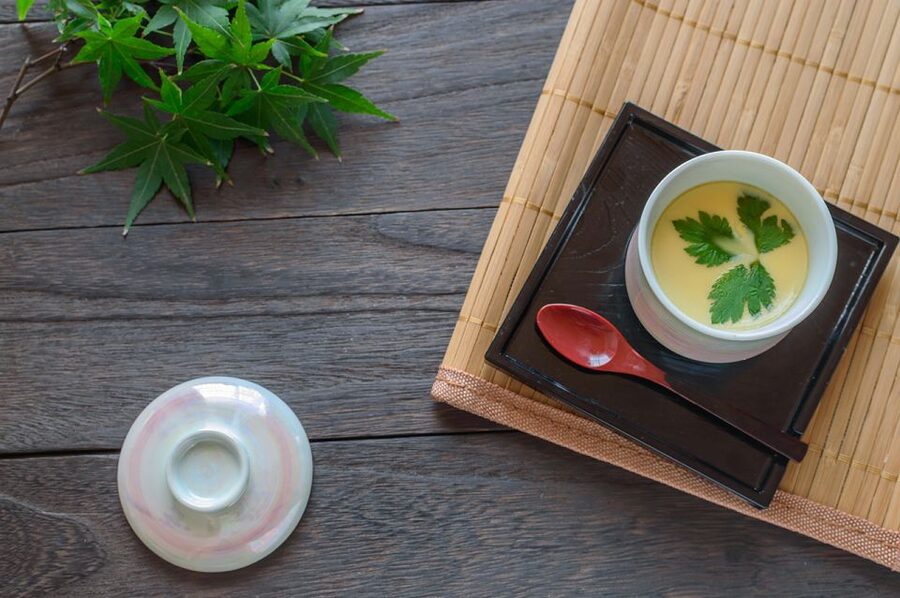
Rolling sushi with a little ceremony
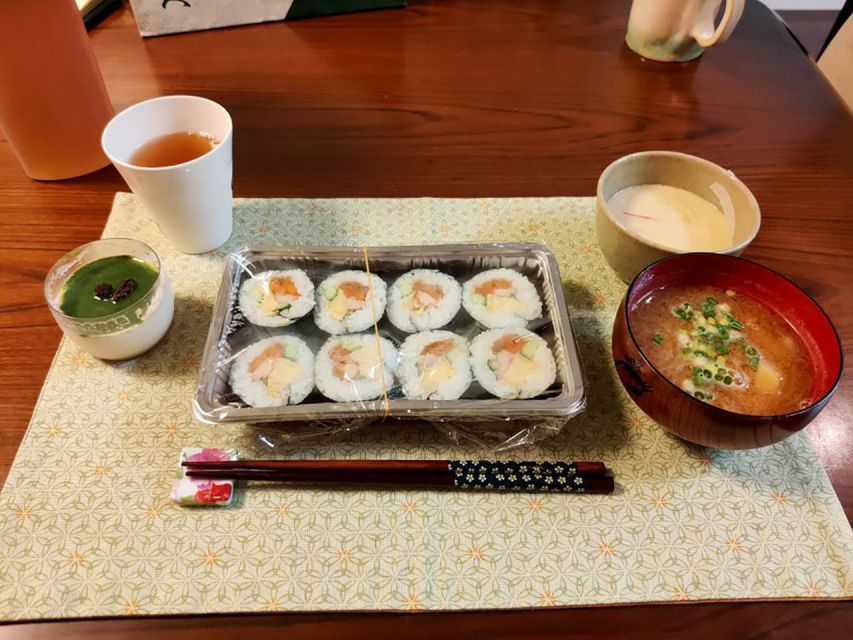
Sushi rolls are the star of this class, and for good reason. They are familiar enough to make the lesson approachable, yet the rolling technique gives you a real task to master rather than a passive demonstration.
The class introduces sushi rolls as a dish often prepared for celebrations and festivals. That detail matters. You are not simply assembling lunch. You are learning a food connected with hospitality and special occasions in Japan, where appearance and balance count alongside flavor.
The instructor shows you how to arrange and roll the sushi. Once you understand the basic motion, the process becomes much less intimidating. This is a good setup for beginners because you can focus on one clear skill, then use it immediately.
I would pay close attention to the first demonstration and avoid rushing your own roll. The class description makes clear that the technique is easy once you get the hang of it, but your first attempt may be more about learning the movement than producing a perfect cylinder.
The finished sushi is part of the tasting meal, so your work has a direct payoff. That gives the lesson more purpose than a cooking demonstration where you watch someone else prepare everything.
More Sushi and Japanese Classes in Tokyo:
- Ramen & Gyoza Cooking Class in Tokyo with Local Supermarket Visit
★ 5.0 · 823 reviews - Tokyo Tsukiji Fish Market Tour and Sushi Making Lesson
★ 5.0 · 390 reviews - Tokyo: Easy Ramen Cooking Experience in Kabukicho, Shinjuku
★ 4.6 · 321 reviews
Dashi gives the menu its Japanese base
Before the soups and steamed egg, you learn how to make Japanese dashi soup stock. This is one of the most useful parts of the menu because it connects several dishes rather than appearing as a separate item.
Dashi gives you a chance to understand the base behind Japanese flavors. The class does not just ask you to follow a recipe for sushi. It shows how stock supports miso soup and chawanmushi, giving the menu a common thread.
The lesson is especially useful if you plan to cook Japanese food after returning home. Sushi rolls may be the dish you talk about first, but dashi is the technique that can help you recreate a wider range of meals.
You should expect an English lecture rather than a language puzzle. The activity is taught in English, which removes a major concern for visitors who want detailed cooking guidance but do not speak Japanese.
Miso soup and chawanmushi add useful variety
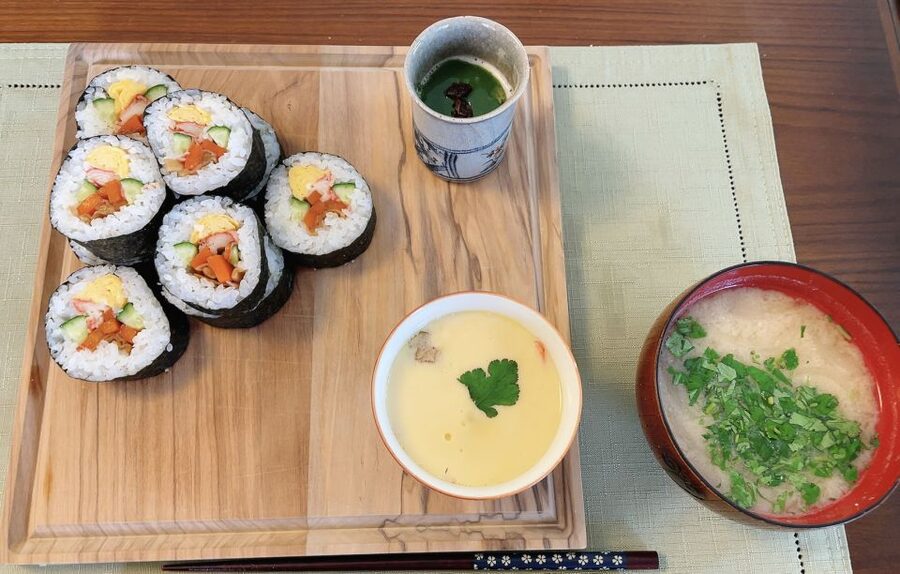
Miso soup is a familiar Japanese staple, but here it forms part of a larger meal. Making it alongside sushi helps you see how a Japanese menu can include a main dish, soup, steamed side, and dessert without becoming a complicated restaurant production.
Chawanmushi is the more distinctive item. This steamed egg custard gives the class a recipe many people may not know how to prepare at home. It also introduces a different cooking texture from the rolled sushi and soup.
The menu therefore moves through several basic methods: rolling, preparing stock, making soup, steaming, and finishing with a dessert. That variety keeps the two-hour cooking period active and gives you more than one recipe to remember.
I like this structure for people who already enjoy Japanese food but want to understand it beyond sushi. You leave with a broader view of the meal, not just a single party trick.
The recipes also make the class suitable for mixed-interest groups. One person can enjoy the sushi technique, while another may be more interested in soup, egg custard, or dessert. Everyone works toward the same tasting time.
White sesame pudding finishes the meal
Dessert is white sesame pudding, a small but worthwhile addition to the menu. It gives the tasting session a sweet ending and rounds out the meal beyond the usual sushi-and-soup pairing.
Because the class includes dessert, you get to see how sesame can appear in a sweet Japanese preparation rather than only as a savory garnish. The menu description does not provide the full recipe or method, so you should not expect a detailed pastry lesson. Think of it as part of the complete meal you prepare together.
This last course also helps pace the class. After making the savory dishes, you have a final item to sample when you sit down at the end.
More Cooking Classes in Tokyo:
- Ramen and Sushi Cooking Class with Sake Pairing Set in Tokyo
★ 5.0 · 291 reviews - Tokyo: Wagyu and 7 Japanese Dishes Cooking Class
★ 4.9 · 273 reviews - Tokyo Washoku 4-hour Cooking Class: From Market to Table
★ 5.0 · 253 reviews - Small-Group Wagyu Beef and 7 Japanese Dishes Tokyo Cooking Class
★ 5.0 · 190 reviews
The 11:00 to 13:30 schedule
The published schedule gives you a clear rhythm. Cooking runs from 11:00 to 13:00, followed by a 30-minute tasting period from 13:00 to 13:30. The overall activity length is listed as 150 minutes, so allow the full two and a half hours rather than planning to leave at 13:00.
The cooking portion includes the lecture, preparation, and work on all five menu items. You should arrive ready to stay engaged for the full session, since this is not a short sushi-making stop.
The final half hour is when you eat the food you helped prepare. Beverages are included, as are the ingredients, so the tasting is built into the experience rather than treated as an extra purchase.
The schedule works well for a morning in Tokyo. You can take the class before an afternoon of sightseeing, but you should not schedule anything that requires an exact departure at 13:00. The class is listed as approximately one and a half hours in one part of the information, while the complete cooking-and-tasting schedule is two and a half hours. Use the longer 150-minute figure when planning your day.
A friendly class for families and first-time cooks
This experience is open to children and adults, but children under three are not suitable. That age limit is important for families planning a booking, especially if a toddler will be part of the group.
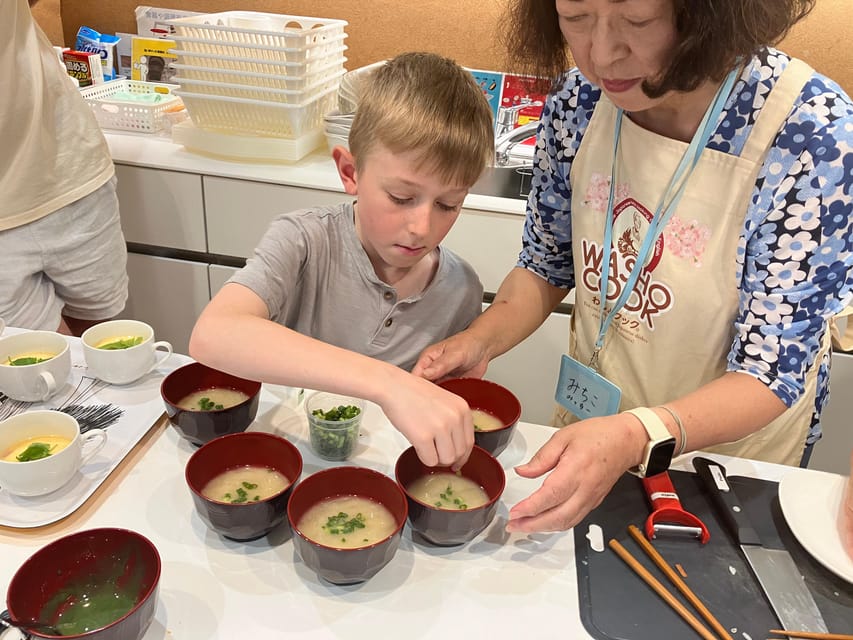
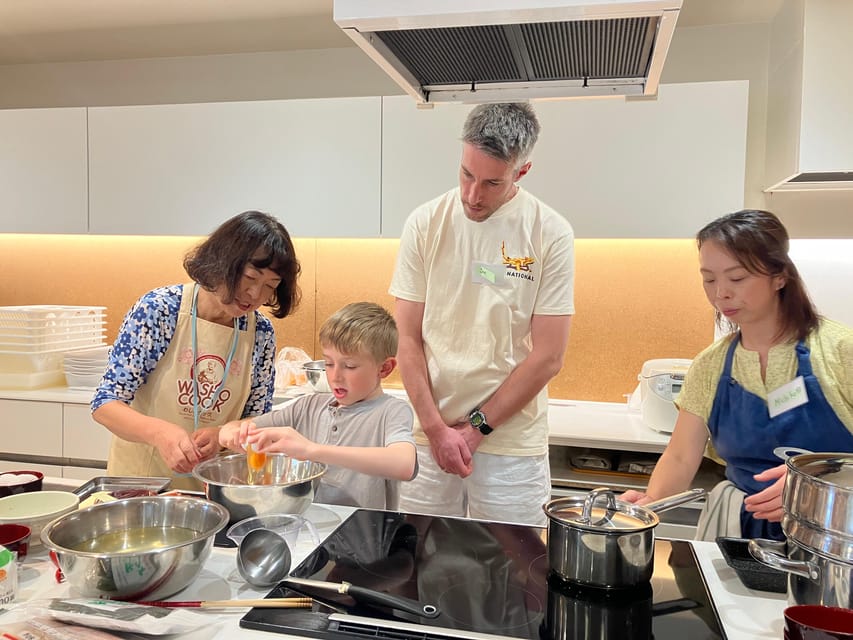
A verified family booking found the hosts welcoming and the class fun for children. Another participant specifically praised the instructor and helpers for being kind and effective. You can reasonably expect a supportive teaching style, though the exact number of assistants and the group size are not specified.
The class is also a good match for adults who do not consider themselves cooks. The sushi rolling has one main technique to learn, and the menu provides several chances to follow guided steps. You do not need to arrive with advanced kitchen skills.
People with back problems should think carefully before booking. The activity does not provide enough detail about seating or how long you will stand, so the stated restriction is worth taking seriously.
Vegans should skip this class. The menu includes chawanmushi, a steamed egg custard, and the activity is specifically listed as unsuitable for vegans.
Three central Tokyo areas, but no fixed address at booking
The cooking studios are located near Shinjuku, Chiyoda, and Minato. These are useful central areas, but they cover a broad part of Tokyo, so you cannot plan your route precisely until the studio is assigned.
The exact address is sent three days before your reservation date. The meeting point shown on the Google Map may display a different location, so do not rely on that map alone. Wait for the designated studio details and go directly there before the start time.
This arrangement is the biggest practical weakness of the class. If you are building a tightly timed Tokyo itinerary, the late address announcement can make planning harder. It also means you should check the message carefully before the day of the activity.
There is no hotel pickup or drop-off. You are responsible for reaching the cooking studio, and the class does not include transportation. Once you receive the address, check the route and leave enough time to arrive before 11:00.
What the $90 price really covers
At $90 per person, this is not the cheapest way to eat sushi in Tokyo. That is not the right comparison. You are paying for an English-language lesson, ingredients, instruction, beverages, and a meal that includes several dishes rather than one prepared plate.
The price makes more sense if you value the teaching. You learn sushi rolling, dashi, miso soup, chawanmushi, and dessert in one session. You also get a practical introduction to the balance of a Japanese meal, which is harder to gain from simply ordering food at a restaurant.
The value is strongest for a first visit to Japan, a family looking for an indoor activity, or anyone who wants a recipe-based experience to take home. It is less compelling if you only want a quick meal or already have strong Japanese cooking skills.
The comfortable, roomy studio praised by Albert Ray also matters. A cooking class can become tiring when the work area feels cramped, but his account suggests this setting allowed the activity to remain comfortable. That is one individual experience, not a guarantee about every session, yet it is useful when weighing the price.
What you should know before reserving
Cancellation is free up to 24 hours before the activity for a full refund. You can also reserve now and pay later, which helps if your Tokyo schedule is still taking shape.
Smoking is not allowed indoors. The class is taught in English, and all ingredients and beverages are included.
I would reserve this class only after checking that everyone in your party is comfortable with the menu. The activity is not suitable for vegans, children under three, or people with back problems. If you have dietary concerns beyond that, the provided information does not specify substitutions, so ask before booking rather than assuming changes are possible.
The two perfect ratings come from a small sample, so I would not treat them as proof that every class will be identical. Still, both accounts point to the same strengths: friendly hosts, enjoyable instruction, and tasty sushi and side dishes. Albert Ray also praised the helpers and roomy setting, while Kelly found it a good choice for a family with children.
Is this Tokyo cooking class worth booking?
Book it if you want to do more than eat Japanese food. The class gives you several practical recipes, English guidance, a full tasting, and a friendly format that suits beginners and families with children aged three and older.
I would especially recommend it if sushi rolling appeals to you but you also want to learn the less familiar parts of a Japanese meal, including dashi and chawanmushi. The menu has enough variety to justify the $90 fee for many visitors.
Skip it if you need a fixed meeting point well in advance, want hotel transportation, follow a vegan diet, or have physical limits that make kitchen work uncomfortable. For everyone else, the late address is a manageable inconvenience, and the class offers a useful, hands-on way to spend a Tokyo morning.
FAQ
How long does the cooking experience last?
The full activity lasts 150 minutes. Cooking is scheduled from 11:00 to 13:00, followed by tasting from 13:00 to 13:30.
What food will I prepare?
You will learn to make dashi soup stock, sushi rolls, chawanmushi, miso soup, and white sesame pudding.
Is the class taught in English?
Yes. The instructor gives the lecture and cooking guidance in English.
Where is the cooking studio?
The studios are near Shinjuku, Chiyoda, and Minato. You receive the specific address three days before your reservation date.
Are ingredients and drinks included?
Yes. The cooking experience, ingredients, and beverages are included in the price. Hotel pickup and drop-off are not included.
Can children join the class?
Children can join, but children under three are not suitable for this activity. The class is also not suitable for vegans or people with back problems.
Newest classes around Tokyo
- Tokyo: Sushi Making Experience & Japanese Cooking Class★ 5.0 · 2 reviews
- Tokyo: Sushi Cooking Class with Sake Tasting★ 4.8 · 55 reviews
- Tokyo: Real Ramen & Dumpling Cooking with Master Chef★ 5.0 · 10 reviews
- Tokyo: Sushi and Ramen Cooking Class with Sake Pairing Set★ 5.0 · 81 reviews
- Tokyo: Kawaii Bento Cooking Class – Cute Character Lunchbox★ 4.9 · 55 reviews
- Tokyo: Gyoza Making from Scratch – Ultimate Cooking Class★ 5.0 · 2 reviews
- Tokyo: Night Cooking Class: 5 Home-Cooked Japanese Dishes★ 4.9 · 13 reviews
- Tokyo: Japanese Home-style Cooking Class with Meal★ 4.5 · 3 reviews
Tokyo Cooking Classes, compared.

Ramen & Gyoza Cooking Class in Tokyo with Local Supermarket Visit
Read our review →
Tokyo Tsukiji Fish Market Tour and Sushi Making Lesson
Read our review →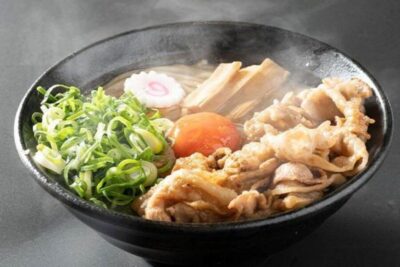
Easy Ramen Cooking Experience in Kabukicho, Shinjuku
Read our review →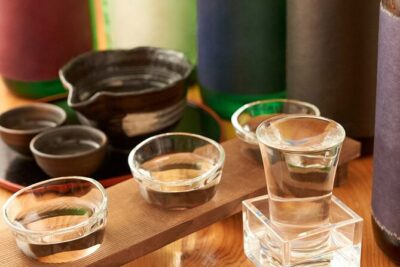
Ramen and Sushi Cooking Class with Sake Pairing Set in Tokyo
Read our review →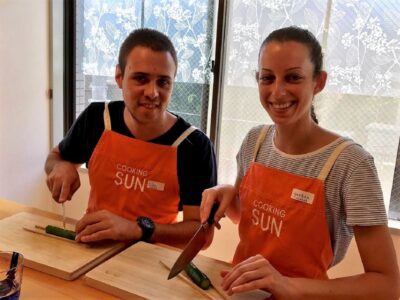
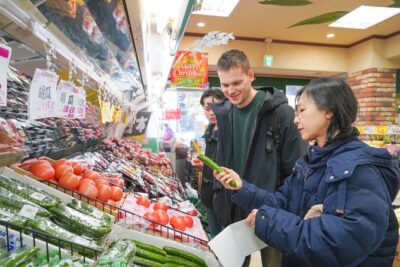
Tokyo Washoku 4-hour Cooking Class: From Market to Table
Read our review →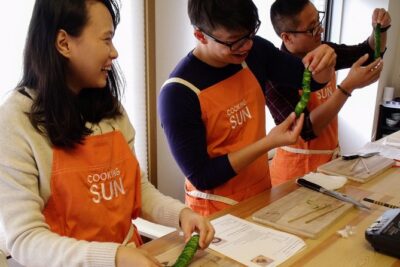
Small-Group Wagyu Beef and 7 Japanese Dishes Tokyo Cooking Class
Read our review →
Private Home Cooking in Yanaka – Local Flavors in a Warm Setting
Read our review →Browse the lists this tour appears in