
Review · TOKYO COOKING CLASSES
Small-Group Wagyu Beef and 7 Japanese Dishes Tokyo Cooking Class
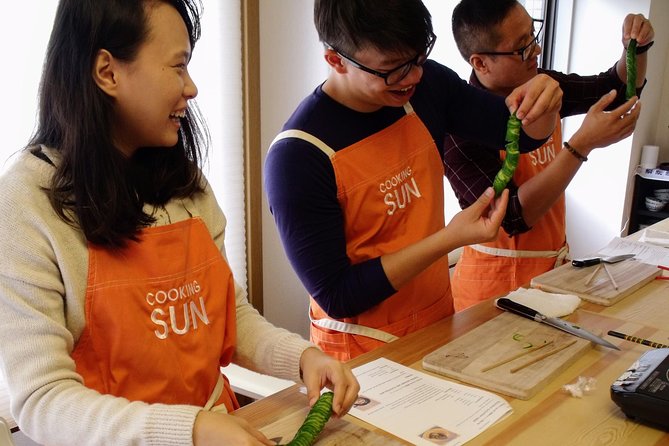
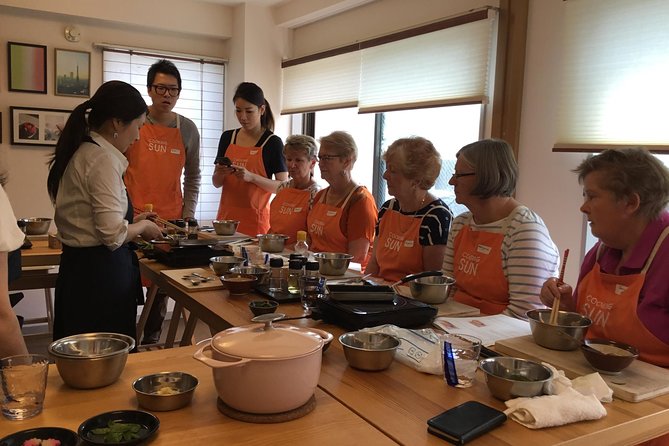
Tokyo’s small-group Wagyu cooking class packs a lot into three hours: dashi from scratch, Japanese seasonings, careful vegetable cuts, a multi-course meal, and tender Wagyu beef. You do not sit at the back watching a chef work. With a maximum of eight people, you get a turn at the counter and direct help from the instructor.
I like the practical recipes and the relaxed, home-style setting. I also like that the class gives you recipes to take home, rather than leaving you with a nice meal and no way to repeat it. The main drawback is the location, which can be hard to spot in the residential area around Shinanomachi, so leave time to find the building.
Key points to know before booking
- Eight-person limit: The class stays small enough for hands-on work and personal help.
- Dashi comes first: You begin with the basic stock used throughout Japanese cooking.
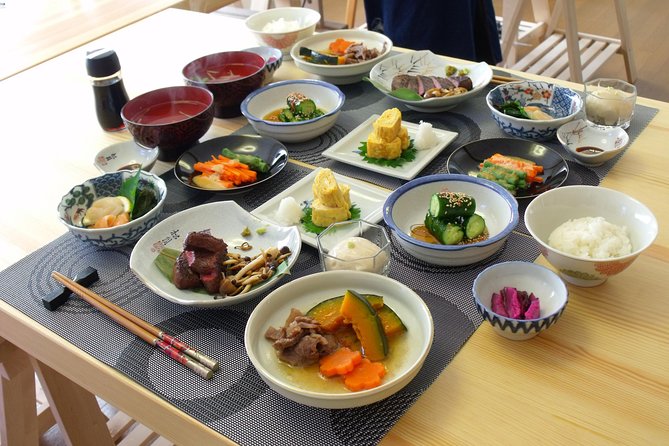
- Wagyu is the main event: You prepare a tender beef dish as part of a full Japanese lunch.
- Up to eight dishes: The class generally covers seven dishes, with the advertised format allowing up to eight.
- English instruction: Local instructors explain ingredients, techniques, and food customs in English.
- Good value at $72.96: Ingredients, recipes, apron, towel, instruction, and the finished meal are included.
Starting with dashi at 9:30 in Shinanomachi
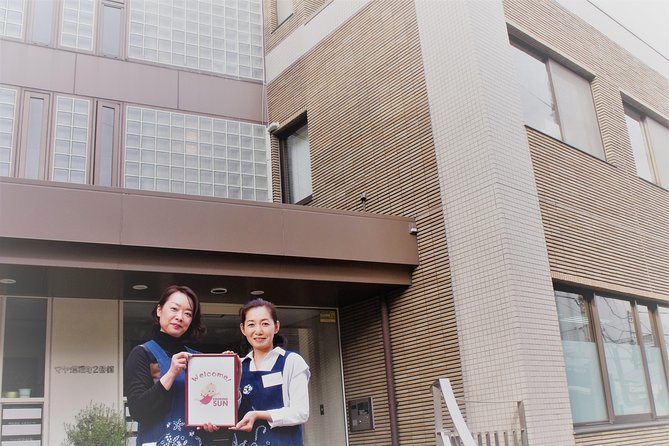
The class begins at 9:30 a.m. at Cooking Sun Tokyo, at 18-39 Shinanomachi, Shinjuku City. It runs for about three hours and ends back at the same meeting point.
The first lesson is dashi, the basic Japanese soup stock. This is a useful choice for an introductory class because dashi is not just one recipe. It is a foundation used in miso soup and many other Japanese dishes. Once you understand how it adds savory depth, Japanese cooking becomes easier to read.
The instructor also explains common Japanese seasonings and staple ingredients. That context matters. You are not simply told to add an ingredient because the recipe says so. You learn where it fits in everyday Japanese cooking and how it helps shape the final taste.
The meeting point is near public transportation, but the building itself may take some effort to locate. A quiet residential setting is part of the charm, yet it is not the sort of place you should search for at the last minute. Use the full address, follow a map carefully, and arrive early enough to avoid turning the first lesson into a navigation exercise.
More Sushi and Japanese Classes in Tokyo:
- Ramen & Gyoza Cooking Class in Tokyo with Local Supermarket Visit
★ 5.0 · 823 reviews - Tokyo Tsukiji Fish Market Tour and Sushi Making Lesson
★ 5.0 · 390 reviews - Tokyo: Easy Ramen Cooking Experience in Kabukicho, Shinjuku
★ 4.6 · 321 reviews
Seven dishes, several techniques, and real kitchen work
After the dashi lesson, you move through a series of dishes using Japanese vegetables, traditional seasonings, and different cooking methods. The exact class description refers to seven dishes, while the broader format says up to eight, so expect a generous multi-course meal rather than a fixed restaurant menu.
The class covers more than one type of preparation. You work with dressings, chopping, mixing, presentation, and some more detailed Japanese cutting techniques. The goal is to show how a Japanese meal is assembled as a group of small, balanced dishes instead of one oversized main course.
This is also where the class earns its place above a simple food demonstration. You get feedback as you work, and the maximum group size of eight keeps you from becoming an observer. The instructors are English-speaking locals, and the teaching is designed for people with different levels of kitchen experience.
That does not mean every part of every dish is prepared entirely by you. Some parts may be done ahead of time or handled by the staff, particularly items that would slow the class. You may spend more time chopping, mixing, seasoning, and assembling than cooking every component from start to finish. If you want a professional kitchen apprenticeship, this is not it. If you want useful Japanese techniques in a manageable morning, the format makes sense.
One particularly useful feature is the short explanation before each recipe. The instructors share tips, background, and occasional lesser-known methods. The style is friendly rather than formal, making it easier to ask questions or admit that a particular knife cut is not going smoothly.
Wagyu beef as the centerpiece
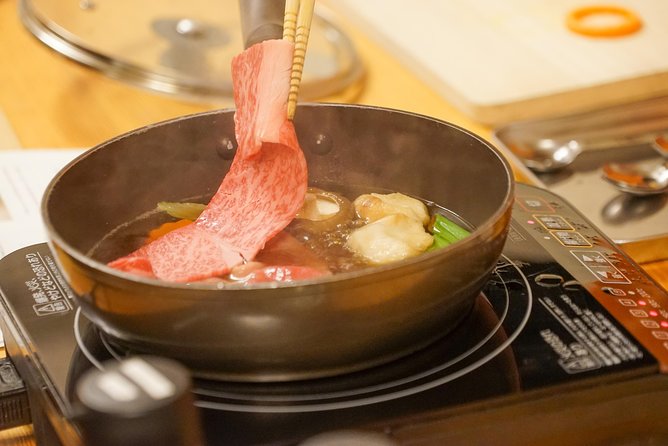
Wagyu is the class’s headline ingredient. The word simply means Japanese beef, and here it forms the main dish in your full-course lunch.
For many people, this is the part that justifies the price. You get to handle and cook a famous local specialty rather than only sample it in a restaurant. The class also puts the beef in context. It is one part of a Japanese meal, served alongside vegetables, soup, rice, and other preparations.
Sukiyaki is highlighted as a favorite dish from the class. The format gives you a chance to prepare it rather than merely order it, which helps explain the balance of sweet, savory, and deeply seasoned flavors. If you already know Japanese food mainly through sushi and ramen, this offers a useful look at home-style dishes that do not always receive as much attention in restaurants.
The Wagyu portion is not the only reason to book, though. The stronger value comes from the complete meal and the number of recipes covered. A class centered on one premium ingredient could feel thin. Here, the beef is the anchor for a broader lesson in Japanese cooking.
Sitting down to eat what you prepared
Once the cooking is finished, the group sits down for the meal. This is the payoff, but also a learning moment. You can taste how dashi, seasonings, knife work, and cooking methods fit together across several dishes.
The meal is described as coming with sake and green tea. The supplied details do not specify the exact amount or style of sake, so do not book this as a tasting session. Think of the drinks as part of the meal rather than the main attraction.
You may also notice that the class is built around the Japanese habit of acknowledging the meal before eating. That small cultural detail helps connect the cooking to everyday food customs, without turning the morning into a lecture.
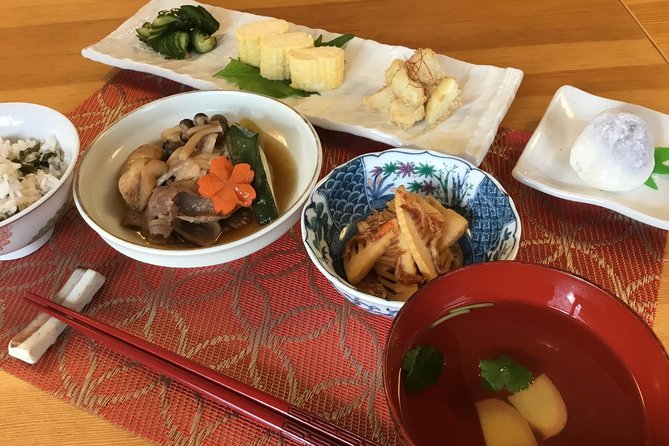
The menu may include dishes that feel less familiar than sushi or ramen. One recipe singled out in the class feedback is a cucumber salad, and another is lotus root stuffed with minced chicken. Potatoes, rice, miso soup, and egg preparation are also part of the cooking process described for some sessions. Since menus can vary, treat these as examples rather than a guaranteed list for every date.
The final meal is substantial for a three-hour class. You are not just nibbling samples. You sit down with the results of the morning’s work, which makes this a useful option if you want a late breakfast or early lunch built into your Tokyo schedule.
More Cooking Classes in Tokyo:
- Ramen and Sushi Cooking Class with Sake Pairing Set in Tokyo
★ 5.0 · 291 reviews - Tokyo: Wagyu and 7 Japanese Dishes Cooking Class
★ 4.9 · 273 reviews - Tokyo Washoku 4-hour Cooking Class: From Market to Table
★ 5.0 · 253 reviews - Private Home Cooking in Yanaka – Local Flavors in a Warm Setting
★ 5.0 · 173 reviews
What you will actually do hands-on
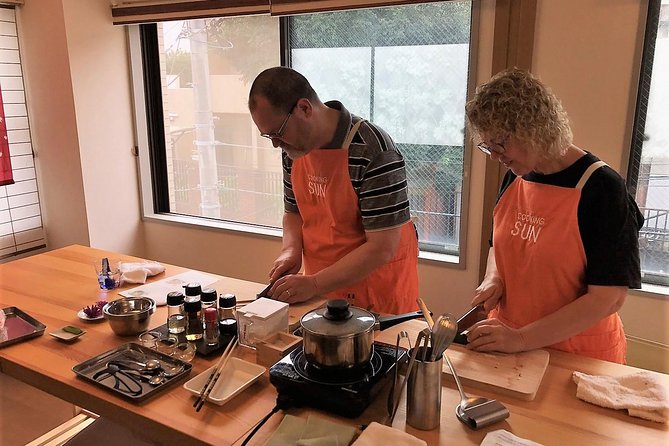
This class suits you best if you want to participate, but it is worth setting the right expectation. You will not necessarily cook every dish from raw ingredients through final plating.
The hands-on work can include:
- Making dashi and learning how it is used
- Chopping vegetables and preparing garnishes
- Mixing sauces and dressings
- Practicing Japanese cutting styles
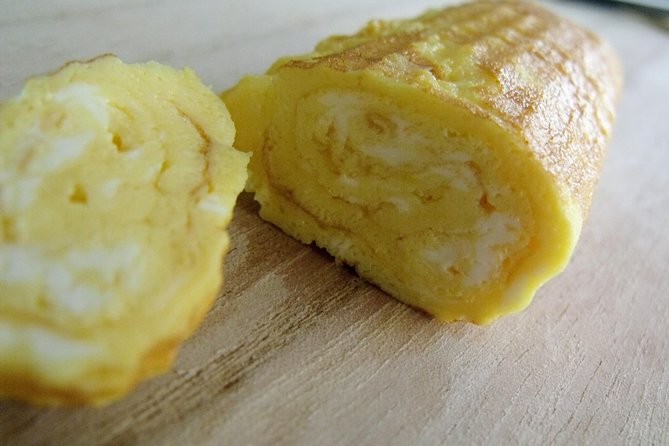
- Cooking an egg
- Searing prepared lotus root filled with minced chicken
- Helping prepare the Wagyu main dish
- Arranging and presenting the finished food
Some ingredients and steps may be prepared in advance, while staff handle parts such as rice, potatoes, or miso soup. That approach allows the class to cover several dishes without running far beyond three hours. It also means the experience is more about learning a useful set of methods than mastering every recipe in full detail.
I see this as a sensible trade-off. You get variety, instruction, and a meal in one morning. The compromise is that the class cannot give equal cooking time to eight separate dishes.
Friendly English instruction in a group of eight
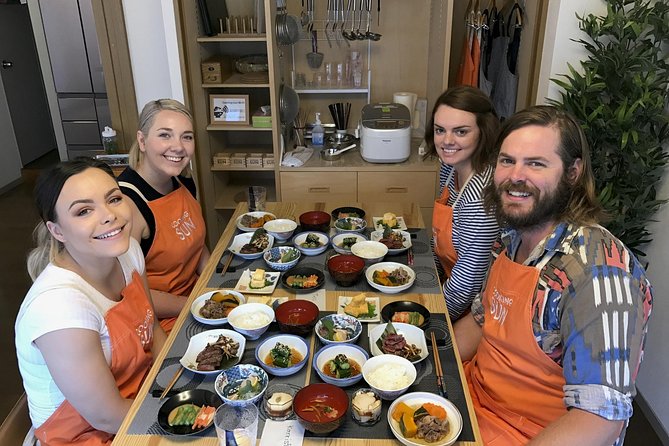
The instructors are local, English-speaking cooks who explain each step and help with technique. Names connected with the class include Aya, Hidemi, Kaori, Megumi, and Yoko. The teaching style is described as patient, clear, and easy to follow, including for people who do not cook Japanese food regularly.
The two-instructor setup is useful when the class is busy. One person can explain the next stage while another checks knife work or helps with a sauce. In a group capped at eight, you are less likely to wait long for help.
The small size also suits families, couples, solo visitors, and people who prefer a social activity without a large tour group. You have a chance to talk about food, cooking, and Tokyo with the instructors and other participants, but the setting remains focused on the kitchen.
You do not need advanced cooking skills. The recipes are presented in manageable steps, and the instructors give feedback as you go. At the same time, experienced home cooks should still find useful ideas in the dashi, seasonings, presentation, and ingredient explanations.
Price, included items, and overall value
At $72.96 per person, the class is well priced for a three-hour activity that includes premium Wagyu, several other dishes, ingredients, recipes, an apron, a towel, instruction, and the meal you prepare.
The value is strongest if you care about learning. A restaurant meal might let you taste Wagyu and several Japanese dishes, but it would not show you how to make dashi, prepare sauces, cut vegetables, or reproduce the recipes at home. The included recipes give the class a longer life after your Tokyo trip.
The price is less compelling if you mainly want to eat Wagyu and have no interest in cooking. In that case, a restaurant would be simpler and more focused. Here, you are paying for participation, explanations, and kitchen time as much as for the food.
Hotel pickup and drop-off are not included. You make your own way to Shinanomachi and return from the meeting point after lunch. The class is mobile-ticket friendly, and confirmation is provided at booking.
Dietary needs and the vegetarian option
A vegetarian option is available, but you need to request it at booking. You should also provide any other dietary requirements at that time.
This is especially important for allergies. The cooking class uses several staple Japanese seasonings, and some dishes rely on stock or prepared ingredients. Giving the instructors advance notice allows them to assess what can be adjusted before you arrive.
Do not wait until the morning of the class to explain a serious allergy or major restriction. The activity specifically asks you to share such details at booking, and that is the safest way to get a clear answer.
Who should book this Tokyo cooking class?
I would choose this class if you want an active food experience with a clear cultural link. It works especially well for:
- First-time visitors who want to understand Japanese home cooking
- Couples looking for a shared morning activity
- Families with older children who can take part in kitchen work
- Solo visitors who enjoy small-group instruction
- Home cooks who want recipes they can repeat
- Anyone curious about dashi, Japanese vegetables, and Wagyu
It may not suit you if you dislike structured activities, have very limited time before a fixed appointment, or expect to cook every element completely from scratch. The class moves through many dishes, so the pace is purposeful even though the atmosphere is relaxed.
The building can also be tricky to find. That is a small issue, but it matters when the start time is fixed. Plan your route the night before and avoid arriving at 9:29 a.m. with no spare time.
Cancellation and booking details
You can cancel at least 24 hours before the 9:30 a.m. start time for a full refund. Cancellations or changes made within 24 hours are not refunded or accepted, and the cut-off uses Tokyo local time.
The class is limited to eight people, so this is a good activity to reserve once your morning plans are firm. It has been booked more than five times in the past week, and the experience carries a 5 out of 5 rating from 190 reviews, with 99 percent recommended. Those figures support booking ahead, particularly if you want the 9:30 a.m. session.
Should you book it?
Yes, if you want to do more than photograph Japanese food. The strongest part is the combination of dashi, Wagyu, several practical recipes, and a small group, all in one compact morning.
Book it with realistic expectations. You will receive hands-on guidance, but some cooking is prepared ahead or completed by the staff so the class can cover seven or eight dishes. You will also need to find the Shinanomachi building yourself and arrange your own transportation.
For the price, the recipes and instruction add lasting value. You leave with a full meal in your stomach and a better sense of how Japanese home cooking is built, from the first pot of dashi to the final plate.
FAQ
How long does the Tokyo cooking class last?
The class lasts approximately three hours.
What time does the class start?
The stated start time is 9:30 a.m.
Where does the class meet?
It meets at Cooking Sun Tokyo, 18-39 Shinanomachi, Shinjuku City, Tokyo 160-0016, Japan.
How many people can join the class?
The class has a maximum of eight participants.
Is the class taught in English?
Yes. The instructors are English-speaking locals, and instructions are provided in English.
Is Wagyu beef included in the cooking?
Yes. Wagyu beef is prepared as the main dish in the full-course meal.
How many dishes will I make?
The class description says you prepare seven dishes, while the overall format describes up to eight dishes. The exact number may vary by session.
Is a vegetarian option available?
Yes. You must request the vegetarian option when booking.
What is included in the price?
The price includes a local cooking instructor, recipes, ingredients, an apron, and a towel rental. Hotel pickup and drop-off are not included.
Newest classes around Tokyo
- Tokyo: Sushi roll and side dish cooking experience★ 5.0 · 2 reviews
- Tokyo: Sushi Making Experience & Japanese Cooking Class★ 5.0 · 2 reviews
- Tokyo: Sushi Cooking Class with Sake Tasting★ 4.8 · 55 reviews
- Tokyo: Real Ramen & Dumpling Cooking with Master Chef★ 5.0 · 10 reviews
- Tokyo: Sushi and Ramen Cooking Class with Sake Pairing Set★ 5.0 · 81 reviews
- Tokyo: Kawaii Bento Cooking Class – Cute Character Lunchbox★ 4.9 · 55 reviews
- Tokyo: Gyoza Making from Scratch – Ultimate Cooking Class★ 5.0 · 2 reviews
- Tokyo: Night Cooking Class: 5 Home-Cooked Japanese Dishes★ 4.9 · 13 reviews
Tokyo Cooking Classes, compared.

Ramen & Gyoza Cooking Class in Tokyo with Local Supermarket Visit
Read our review →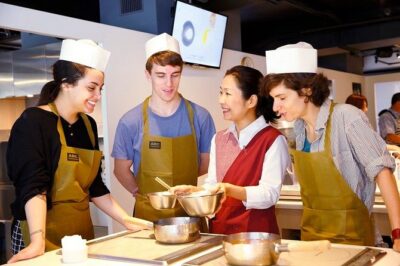
Tokyo Tsukiji Fish Market Tour and Sushi Making Lesson
Read our review →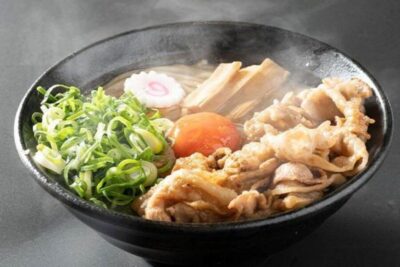
Easy Ramen Cooking Experience in Kabukicho, Shinjuku
Read our review →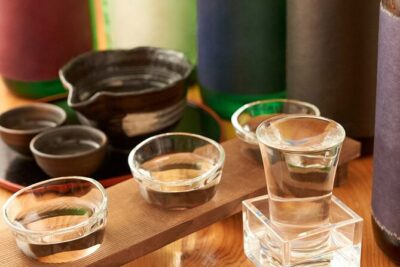
Ramen and Sushi Cooking Class with Sake Pairing Set in Tokyo
Read our review →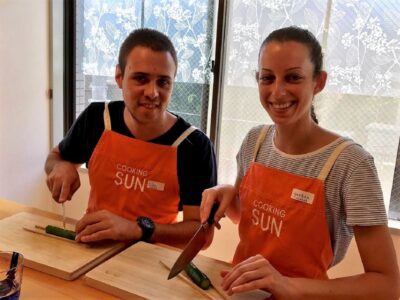
Tokyo Washoku 4-hour Cooking Class: From Market to Table
Read our review →
Private Home Cooking in Yanaka – Local Flavors in a Warm Setting
Read our review →
Unique Private Cooking Class with a Tokyo Local Emi
Read our review →Browse the lists this tour appears in