
Review · OSAKA COOKING CLASSES
Okonomiyaki&Takoyaki for Families:Osaka Street Food Festival
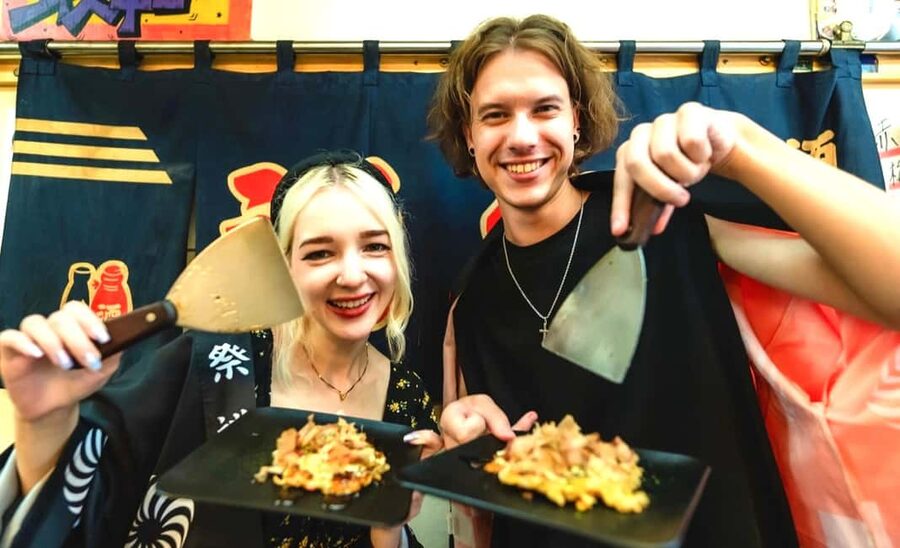
Osaka’s famous street food becomes a group activity here. You cook takoyaki and okonomiyaki at your own teppan grill, snack on Japanese dagashi, dress in a happi coat, and take home a Takoyaki Master certificate. You are not just watching a demonstration. You are turning the food yourself, with help from an English-speaking host.
I like two things right away: the all-ages format lets children, parents, and grandparents take part together, and the mix of cooking, games, snacks, and photos keeps the 90 minutes moving. One host named J’ayla has been singled out for making the session especially fun. The only drawback is that $64 per person is not a cheap meal, especially if you are traveling with a large family, and children under three cannot join.
Key points to know before booking
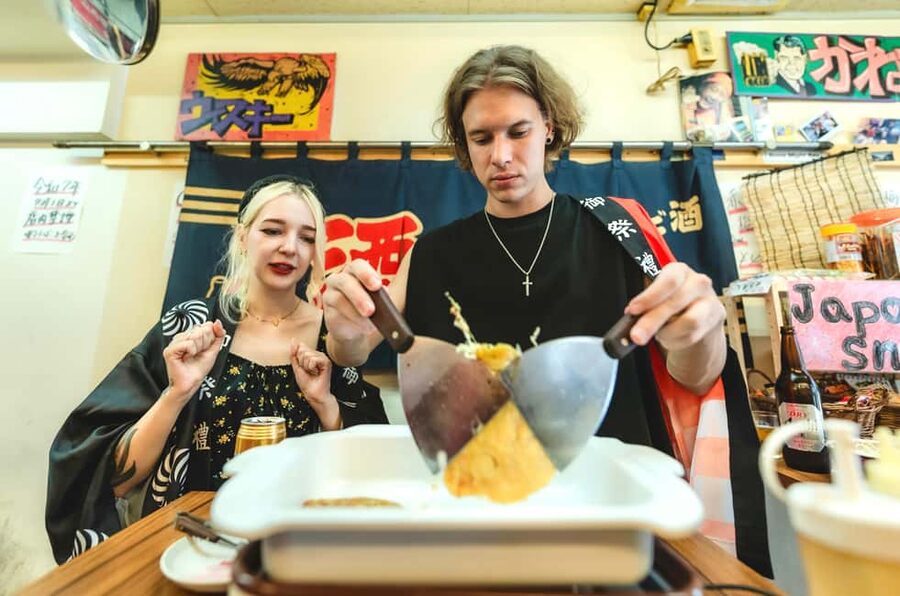
- Cook on real teppan grills: Make takoyaki and okonomiyaki alongside your group instead of simply eating prepared food.
- Six changing ingredients: The daily ingredient selection gives each session a slightly different food lineup.
- Festival atmosphere: Happi coats, dagashi snacks, super ball scooping, and Takoyaki Baby photo spots turn lunch into an activity.
- Good for mixed ages: Children, parents, grandparents, friends, couples, and solo visitors can all join, though children under three are not allowed.
- A souvenir with a little ceremony: You receive a Takoyaki Master certificate at the end.
- Flexible booking: You can cancel up to 24 hours before the activity for a full refund and reserve now while paying later.
Why this Osaka food session works for families
Osaka food is often best understood with your hands. Takoyaki starts as a loose batter in a round mold, then becomes a neat ball as you turn it again and again. That simple change gives children a job, gives adults something to learn, and gives the whole table a reason to laugh when the first few pieces come out uneven.
That is the appeal of this experience. You are not expected to arrive as a cook. The English-speaking host guides you through the process, while you and your group work at the grill. The setup allows everyone to participate at the same time, so one person is not stuck watching while another person does all the work.
I also like that the session is broader than a cooking class. The happi coat, festival game, snacks, character photos, and certificate add a local matsuri feel. It is playful rather than formal, which makes it a good break from temples, museums, and long city walks.
The activity lasts 90 minutes. That is long enough to cook, eat, play, and take photos without taking half a day from your Osaka plans. It is also short enough for families with limited patience or for visitors fitting several stops into one day.
More Sushi and Japanese Classes in Osaka:
- Sushi Making Osaka! Popular Sushi Class in Japan!
★ 5.0 · 500 reviews - Osaka: Ramen and Gyoza Cooking Class in Dotonbori
★ 5.0 · 378 reviews - Osaka Cooking Class: Okonomiyaki &Japanese cuisines experience
★ 5.0 · 261 reviews
Finding the meeting point near Family Mart
The meeting point is described by a Family Mart diagonally ahead to the left. That landmark matters because Japanese city streets can be confusing, especially when several roads meet and a building entrance is not obvious from the main street.
Give yourself enough time to locate the spot. The activity has a set duration, and arriving late could cut into the cooking portion. Since the instructions do not provide a full street address in the details here, check the booking confirmation and map carefully before you leave.
The experience is wheelchair accessible. That makes it a practical option for visitors who need step-free activities, though you should still confirm any personal space or seating needs when booking.
Putting on the happi coat
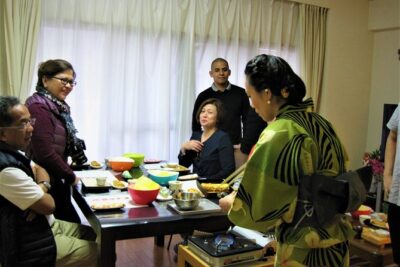
The session begins with the kind of visual touch that makes group photos easy: you wear a colorful festival-style happi coat. A happi is a traditional Japanese coat often linked with festivals and local celebrations. Here, it helps shift the mood from ordinary restaurant meal to hands-on food event.
For families, this is more than a costume. It gives children an instant role and makes the activity feel special from the first few minutes. For adults, it can feel a little silly, but that is part of the point. This is not a quiet tasting menu. You are meant to join in.
The coats also work well for photos with the Takoyaki Baby characters. If you are collecting family pictures from Japan, this creates a clear Osaka memory rather than another generic food shot.
Cooking takoyaki on the teppan
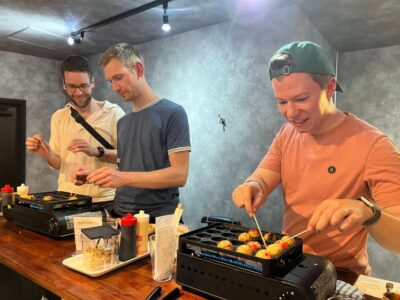
Takoyaki is Osaka’s round, savory snack, usually cooked in a special pan with small circular wells. The fun is in the turning. The batter begins soft, and you use picks or similar tools to rotate each portion as it cooks.
You can expect the host to help you learn the basic method in English. The useful part is that you get to cook for yourself, not just watch someone make a perfect batch. Your first pieces may not be perfectly round. That is normal, and it is often where the humor begins.
The experience includes all-you-can-eat takoyaki. That matters because the first batch is partly practice. You do not have to worry that one misshapen piece has used up your entire meal. You can keep cooking and eating during the allotted time.
Six unique daily ingredients are also part of the appeal. The exact choices change by day, so you should not book expecting one fixed menu. Instead, think of this as a chance to try different combinations within the familiar takoyaki format.
One important detail: the title and description mention both takoyaki and okonomiyaki, while the included items specifically state all-you-can-eat takoyaki. If eating okonomiyaki is essential to your decision, confirm exactly how it is handled on your chosen date.
More Food and Drink Outings in Osaka:
- Osaka Sake Tasting with Takoyaki Cooking
★ 5.0 · 156 reviews - Osaka: Cooking Class & Sake Tasting with Local Market Visit
★ 4.8 · 31 reviews - Osaka: Okonomiyaki Cooking Class with Beer or Soft Drink
★ 4.9 · 9 reviews - Small Group Cooking Class & Market Food Tour in Florence
★ 5.0 · 1,574 reviews
Okonomiyaki and the wider Osaka food lesson
Okonomiyaki is another Osaka favorite, built around a savory pancake mixture cooked on a hot plate. Like takoyaki, it is social food. You prepare it at the table and eat it while it is hot.
Having both dishes connected to the same activity gives you a better sense of Osaka’s street-food culture than a standard restaurant order. You see how heat, batter, fillings, and timing change the final result. You also get a meal that feels shared rather than served in separate courses.
Still, you should set your expectations correctly. This is a short, cheerful food activity, not a full culinary course. You will learn the basic hands-on process, but the focus is fun, participation, and eating. If you want detailed instruction on regional food history or advanced cooking methods, this may feel light.
For most families and casual food lovers, that is a reasonable trade. You get useful context through action, without sitting through a long lecture.
Dagashi snacks and one included drink
While you cook, you can enjoy unlimited Japanese dagashi snacks. Dagashi are inexpensive, often colorful Japanese treats associated with childhood shops and casual snacking. They add variety between rounds of hot food and give younger participants something familiar to explore if they are not ready for every takoyaki ingredient.
One drink is included. Additional drinks are available for purchase, and you can upgrade to an all-you-can-drink option for an extra fee. This is worth considering if your group expects to spend the full 90 minutes eating and drinking.
The included drink keeps the advertised price from feeling incomplete, but the extra drink cost can add up for a family. I would treat the upgrade as optional, not necessary. The main value is the cooking and activity package, not an open bar.
Festival games beyond the grill
The classic festival game includes super ball scooping. In this type of Japanese game, you try to scoop small rubber balls from water using a fragile paper scoop. It looks simple, but the scoop can break quickly, which gives children and adults the same small challenge.
This part helps the experience avoid a common problem with short cooking classes: once the food is finished, the energy drops. Here, the game gives your group another shared task. It also connects the food to the atmosphere of a Japanese summer festival.
The game is not a major attraction by itself, and you should not book this solely for super ball scooping. Its value is in the combination. Cooking, snacks, costumes, photos, and the game create a fuller 90-minute outing.
Photos with Takoyaki Baby characters
The Takoyaki Baby characters provide a ready-made photo setting. With your happi coats and food-themed surroundings, you can take pictures that show what you actually did rather than simply posing outside a restaurant.
This is especially useful for families with children and groups of friends. It gives younger participants a break from eating and creates a souvenir before the session ends. Solo visitors can also use the setting for photos, though you may need to ask the host or another participant to help take them.
The photo element is light and informal. It is not presented as a separate professional photo session, so do not expect a photographer or a polished portrait package. Think of it as an easy way to capture the mood.
The Takoyaki Master certificate
At the end, you receive a Takoyaki Master certificate. It is a small souvenir, but it gives the activity a satisfying finish, especially for children who like collecting certificates and travel mementos.
The certificate does not make you a professional cook. Its value is sentimental. After you have wrestled with the batter and turned your own takoyaki, the title feels earned enough for a family photo.
I like this kind of low-cost souvenir because it takes no room in your luggage and gives the experience a clear ending. You leave with something tied to the activity, rather than only a receipt or a food photo.
How much value do you get for $64?
At $64 per person, this is more expensive than simply ordering takoyaki from a street-food stand. You are paying for the host, the cooking setup, unlimited takoyaki, unlimited dagashi snacks, one drink, the happi coat, a festival game, character photos, and the certificate.
The price makes the most sense when you value participation. A family that only wants to taste Osaka street food can spend less elsewhere. A family looking for an activity that keeps several age groups involved may find the package easier to justify.
Children are listed at ¥7,000. Since the adult price is shown in US dollars, check the current conversion and booking terms before paying, especially if you are budgeting for several people. Children under three are not suitable for this activity.
The all-you-can-eat format also helps with mixed appetites. You are not locked into one fixed plate, and you can keep trying as you cook. For first-time takoyaki makers, that flexibility has real value.
Who should book this experience?
I would put this near the top of the list for families with elementary-school-age children. The activity gives children several ways to join in, including cooking, snacks, games, dress-up, and photos. It also gives grandparents or less mobile family members a seated food activity, with wheelchair accessibility listed.
Friends and large groups should also consider it. The session works because everyone cooks side by side and shares the results. It is more social than a normal meal and less demanding than a full cooking school.
Couples can enjoy it if they like playful activities. If you prefer a quiet, serious dinner, the festival style may feel too active. Solo visitors are welcome, though the group format means the experience is built around shared participation.
The English instruction is a major help for international visitors. You do not need to know Japanese to follow the cooking portion, and the hosts have been praised for being kind, attentive, and entertaining. J’ayla is one host who has made a particularly strong impression, though the host for your session may differ.
Practical booking advice for the 90-minute session
Spots fill quickly, so advance booking is sensible, especially for family travel dates. You can reserve now and pay later, which helps if your Osaka schedule is still shifting.
Free cancellation is available up to 24 hours in advance for a full refund. That gives you some protection, but it is still wise to check the exact time limit shown at checkout.
Check available start times before arranging another meal or attraction. The activity lasts 90 minutes, and you will want enough time afterward to reach your next stop without rushing.
The activity is offered in English and is wheelchair accessible. Children under three cannot take part. Additional drinks cost extra, and the all-you-can-drink upgrade is optional.
My call: book it if you want food with a shared activity
Book this experience if you want to make Osaka food rather than simply order it. The strongest parts are the hands-on takoyaki cooking, the easy English guidance, the all-ages setup, and the festival extras that keep the session lively from start to finish.
Skip it if your priority is the lowest-cost meal, a long culinary lesson, or a quiet restaurant. At $64 per adult, the value depends on using the whole package. For families, friends, and groups who want food, games, photos, and a souvenir in one short outing, it is a sensible choice.
FAQ
How long does the Osaka street-food experience last?
The experience lasts 90 minutes.
What foods can I make?
You can make takoyaki and okonomiyaki using real teppan grills. The included items specifically list all-you-can-eat takoyaki, so confirm the exact okonomiyaki arrangement when booking.
Is the food all-you-can-eat?
All-you-can-eat takoyaki is included. Unlimited dagashi snacks are also included.
How many ingredients are available?
The activity features six unique daily ingredients. The exact ingredients can change from day to day.
Is a drink included?
One drink is included. Additional drinks are available for purchase, and you can upgrade to an all-you-can-drink option for an extra fee.
Is the activity taught in English?
Yes. The instructor language is English.
Can children join?
Children can join, including elementary-school-age children. Children under three are not suitable for the activity.
Is the experience wheelchair accessible?
Yes, the activity is listed as wheelchair accessible.
What do I receive at the end?
You receive a Takoyaki Master certificate.
Can I cancel for a refund?
Yes. You can cancel up to 24 hours in advance for a full refund. You can also reserve now and pay later.
More Food Outings in Osaka
- Athens: Food Market Visit and Cooking Class with Wine
★ 4.9 · 1,087 reviews - Undiscovered Charleston: Half Day Food, Wine & History Tour with Cooking Class
★ 5.0 · 948 reviews - Vietnamese Food Cooking Class in Hanoi with Market Experience
★ 5.0 · 778 reviews - Milan: Italian Cooking Class with Food and Wine
★ 4.7 · 509 reviews
Newest classes around Osaka
- Osaka: Gluten-Free Ramen and Gyoza Cooking Class★ 5.0 · 42 reviews
- Osaka Okonomiyaki Cooking Experience for Families & Groups★ 4.9 · 8 reviews
- Osaka Sake Tasting with Takoyaki Cooking★ 5.0 · 156 reviews
- Osaka : Exclusive Tea Ceremony & Wagashi Cooking★ 5.0 · 2 reviews
- Osaka: Okonomiyaki Cooking Class with Beer or Soft Drink★ 4.9 · 9 reviews
- Osaka: Japanese Cooking Class with Matcha Experience★ 5.0 · 4 reviews
- Osaka: Cooking Class & Sake Tasting with Local Market Visit★ 4.8 · 31 reviews
- Osaka: Cooking Class Ramen & Gyoza Course in Nanba★ 4.9 · 86 reviews
Osaka Cooking Classes, compared.
Sushi Making Osaka! Popular Sushi Class in Japan!
Read our review →
Osaka Cooking Class: Okonomiyaki &Japanese cuisines experience
Read our review →
Roll and Authentic Sushi Making Class in Dotonbori
Read our review →
Browse the lists this tour appears in