
Review · OSAKA COOKING CLASSES
Osaka: Okonomiyaki Cooking Class with Beer or Soft Drink
Osaka’s soul food becomes your lunch in this one-hour okonomiyaki class, where you choose ingredients, cook your own savory pancake, and eat it hot with a Japanese beer or soft drink. The small group size, limited to four people, keeps the lesson personal rather than turning it into a crowded cooking demonstration.
I like two things right away: you make your own original version from 10 variations, and the instructor explains the story of okonomiyaki while guiding you through each step. The class also works well for families, couples, and first-time cooks. The main consideration is its short length, so this is a focused food lesson, not a long tour of Osaka cuisine.
Key points to know before booking

- Choose from 10 okonomiyaki variations: You can shape the dish around your own taste instead of simply watching someone else cook.
- Small groups of four or fewer: The instructor can give close attention and adjust the pace for children or beginners.
- Meet at Nakatsu Station Exit 3: Your English-speaking guide waits on the ground floor of the Midosuji Subway Line station.
- Beer or soft drink included: Your finished okonomiyaki comes with a Japanese beer or a nonalcoholic drink.
- A practical Osaka food lesson: You learn the background of okonomiyaki as well as the basic method for making it.
- Important limits: The class is not suitable for wheelchair users or people with gluten intolerance.
Why okonomiyaki makes a good Osaka food lesson

Okonomiyaki is often described as a Japanese savory pancake, but that simple label misses its best feature: flexibility. The dish is made to suit your taste, with a choice of 10 variations available in this class. That gives you a small but useful look at the spirit behind the name, which broadly relates to cooking what you like.
You are not just handed a finished plate. You choose your ingredients, follow the preparation, and make one okonomiyaki for yourself. For a first visit to Osaka, this is a more memorable way to meet local food than ordering a dish without learning anything about it.
The class also gives the instructor room to explain why okonomiyaki matters in Osaka. You hear about its background and place in Japanese food culture while working with the ingredients. That conversation is part of the value, especially if you want a short activity that connects food with daily life in Japan.
I would not book this expecting a full cooking school. The class lasts one hour, and the stated program centers on one okonomiyaki per participant. You get a clear introduction and a meal, not several recipes or an extended lesson in Japanese cooking.
More Sushi and Japanese Classes in Osaka:
- Sushi Making Osaka! Popular Sushi Class in Japan!
★ 5.0 · 500 reviews - Osaka: Ramen and Gyoza Cooking Class in Dotonbori
★ 5.0 · 378 reviews - Osaka Cooking Class: Okonomiyaki &Japanese cuisines experience
★ 5.0 · 261 reviews
Meeting at Nakatsu Station Exit 3
The meeting point is the ground floor of Nakatsu Station on the Midosuji Subway Line, at Exit No. 3. Your English-speaking guide waits there before leading you to the cooking location.
This is a useful meeting arrangement because you do not have to search for a private kitchen on your own. Still, allow enough time to find the correct station and exit. Osaka has several stations with similar names, so check that you are heading to Nakatsu on the Midosuji Line rather than relying only on the neighborhood name.
The activity includes English and Japanese instruction. That makes it a practical choice if you want to ask questions about the dish, the city, or Japanese customs in English. The class is limited to four participants, which should make it easier to follow the cooking steps and speak with the instructor.
One point from the experience is worth noting for punctuality: the class is short. A late arrival can take a larger share of your cooking time than it would on a half-day activity. One participant described an instructor waiting when the group was late, but I would treat that as kindness rather than a promise. Aim to arrive at the stated meeting point on time.
A short history lesson before the cooking begins
The class begins with an explanation of okonomiyaki and its history. This is not a lecture-heavy visit. The historical talk is tied to what you are about to eat, so you can understand the dish before making it.
That context gives the food more meaning. Okonomiyaki is closely linked with Osaka’s casual food culture, and learning about it from an instructor helps you see why it is often treated as comfort food and a social meal. You also have a chance to ask about Osaka, Japanese food, and everyday life in Japan.
The conversations appear to be one of the strongest parts of the experience. Past participants described the instructor as patient, clear, warm, and happy to chat about Osaka and Japan. One class was praised for feeling more like cooking with a friend than sitting through a formal lesson. That relaxed tone may matter as much as the recipe if you are traveling with children or feel unsure in a kitchen.
The host’s exact name is not provided, so I would not book this expecting a particular named chef. What you can count on is an English-speaking instructor, with Japanese also available, who guides the group through the process.
Choosing ingredients from 10 variations
After the introduction, you choose your preferred ingredients and select from 10 available variations. This is where the activity becomes personal. You are not simply copying a fixed dish selected by the host.
The range of choices also makes the class easier to share with a mixed group. One person can choose a familiar combination, while another can try something different. Children can take part in the selection, and adults can use the opportunity to make a version they would like to repeat at home.
The information does not list every ingredient or explain how each of the 10 variations differs, so you should ask the instructor about the choices when you arrive. That is especially important if you have strong food preferences or allergies. Gluten intolerance is specifically listed as a reason not to book, so this is not the right class for a gluten-free diet.
I like the fact that the class offers choice without making the cooking complicated. Ten variations are enough to give you control, but the instructor still directs the process. You get a taste of customization without having to plan a recipe from scratch.
More Drinks Outings in Osaka:
- Osaka Sake Tasting with Takoyaki Cooking
★ 5.0 · 156 reviews - Osaka: Cooking Class & Sake Tasting with Local Market Visit
★ 4.8 · 31 reviews - Ramen and Sushi Cooking Class with Sake Pairing Set in Tokyo
★ 5.0 · 291 reviews - Kyoto: Afternoon Japanese Izakaya Cooking Class
★ 4.9 · 241 reviews
Hands-on cooking with close guidance
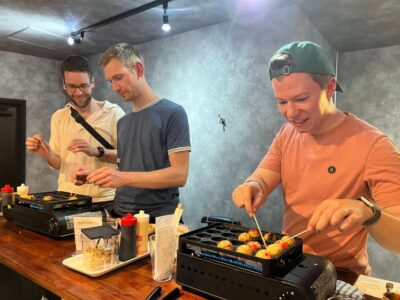
The instructor teaches you how to make your okonomiyaki step by step. The emphasis is on personal guidance, so you should expect to participate rather than stand back and watch.
That format helps beginners. Several participants praised the instructions as clear and simple, and one left feeling able to cook okonomiyaki at home. That is a useful test for a short class: you should come away understanding the basic method, even if your home version will not be identical.
The group size is a major advantage here. With no more than four participants, the instructor has a better chance of seeing what each person is doing and offering corrections. It also avoids the common problem of a cooking class where you watch a demonstration from the back of a large room.
The class remains suitable for children and adults, but keep your expectations realistic. Children can enjoy choosing ingredients and taking part, yet the cooking still requires attention and adult judgment. The supplied information does not describe the cooking equipment or safety arrangements, so families should follow the instructor’s directions closely.
Eating the finished okonomiyaki hot
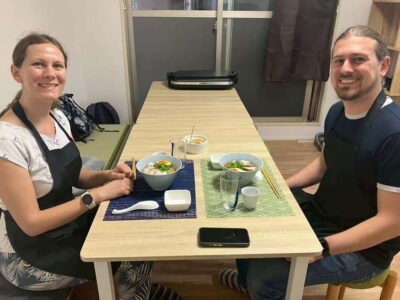
Once your okonomiyaki is ready, it is served hot and you eat the dish you made. Each participant receives one okonomiyaki, with a choice of Japanese beer or a soft drink.
That final meal is simple but important. You get to taste the result while the cooking process is still fresh in your mind. The drink also makes the class feel like a relaxed food outing rather than a technical lesson.
Japanese beer is the natural pairing for this savory dish, but the soft drink option makes the activity suitable for children and anyone who does not drink alcohol. The experience does not suggest that beer is required, so you can choose the nonalcoholic option without losing the main part of the class.
The food itself earns strong praise in the available feedback. The dish was described as delicious, and participants repeatedly noted leaving with full bellies. Since the class includes one okonomiyaki rather than a larger meal, I would think of it as a satisfying snack or light meal, depending on your appetite.
What the $51 price includes

At $51 per person, this is not the cheapest way to eat okonomiyaki in Osaka. You can find the dish in restaurants for less, and a one-hour activity is fairly short.
The price makes more sense when you count what is included: the ingredients, instruction, one complete okonomiyaki, and a Japanese beer or soft drink. You are paying for the hands-on lesson and conversation, not just the plate. The small group limit also gives the session a more private feel than a large food workshop.
I see the best value for someone who wants a simple cultural activity with food at its center. You learn a dish, hear about its place in Osaka, and eat what you make. If you only want a cheap lunch, this is not the strongest value. If you want an easy introduction to Japanese cooking without giving up much sightseeing time, the price is more defensible.
The format is particularly useful early in a Japan trip. You may leave with enough confidence to try okonomiyaki again at home, though the class does not state that a recipe card or take-home materials are included. If recreating the dish matters to you, ask the instructor to explain the main steps clearly or make your own notes.
Who will enjoy this class most
I would recommend this experience to couples, families, and solo visitors who enjoy food with a social side. The small group setting gives you room to talk, ask questions, and compare your choices without the noise and distance of a large tour.
It is also a good pick for first-time cooks. The instructor’s role is hands-on, and the class does not expect you to know Japanese cooking techniques in advance. You can focus on the ingredients and follow the instructions one stage at a time.
Families should like the short schedule. One hour is easier to fit between other Osaka plans than a long cooking workshop, and children can take part in the ingredient choices and preparation. The beer option is not essential, since soft drinks are available.
Food-focused visitors will appreciate the cultural discussion. The instructor talks about okonomiyaki, Osaka, and Japanese life, so you get more than a recipe. The experience is also suitable for anyone who wants a calm, intimate activity after a busy day in the city.
I would skip it if you have gluten intolerance, need wheelchair access, or want a broad Japanese cooking course. Wheelchair users are listed as unsuitable, electric wheelchairs are not allowed, and explosive substances are prohibited. Those rules are unusual in wording, but the practical point is clear: check the restrictions before paying.
Timing, flexibility, and practical planning

The activity takes one hour, with starting times available according to the booking calendar. That makes it easy to place before or after other plans, but the short schedule leaves little room for delays.
You can cancel up to 24 hours in advance for a full refund, and the reserve-now, pay-later option lets you hold a place without paying on the day of booking. Those terms are useful in Osaka, where weather, transport, and changing sightseeing plans can affect your schedule.
The instructor speaks English and Japanese. The meeting point is specific, but the cooking venue itself is not described in detail. You may want to confirm any food concerns before booking, since the class is not suitable for gluten intolerance and the available ingredient list is not provided.
The activity has a 4.9 rating from nine reviews, with repeated praise for the food, clear instruction, clean setting, and friendly host. One participant noted that the instructor and his wife were especially accommodating and offered both beer and soft drinks. I would take that as a sign of a welcoming atmosphere, while remembering that the class remains a brief, structured activity.
Should you book this Osaka okonomiyaki class?
Book it if you want to cook rather than simply eat, prefer a small group, and like the idea of learning about Osaka through one local dish. The strongest reasons are the personal guidance, 10 ingredient variations, included drink, and relaxed conversation with an English-speaking instructor.
Think twice if you are watching every dollar, need a wheelchair-accessible venue, cannot eat gluten, or expect a long lesson with several dishes. At $51, the value comes from the instruction and personal contact, not from the amount of food or the length of the class.
For most couples and families who want a friendly one-hour break from sightseeing, this is a well-targeted Osaka activity. Arrive at Nakatsu Station Exit 3 on time, ask about the ingredient choices, and choose the beer if you want the classic pairing or the soft drink if you prefer to keep it alcohol-free.
FAQ
Where does the okonomiyaki class meet?
Meet your English-speaking guide on the ground floor of Nakatsu Station on the Midosuji Subway Line, at Exit No. 3.
How long does the activity last?
The cooking class lasts one hour.
How many people can join the class?
It is a small-group activity limited to four participants.
Is the class taught in English?
Yes. The instructor speaks English and Japanese.
What is included in the price?
The price includes the cooking class, all necessary okonomiyaki ingredients, a choice of 10 variations, personal instruction, one okonomiyaki per participant, and a Japanese beer or soft drink.
Can children join the class?
Yes. The activity is suitable for both children and adults.
Is the class suitable for people with gluten intolerance?
No. People with gluten intolerance are listed as unsuitable for this activity.
Can I cancel and receive a refund?
You can cancel up to 24 hours in advance for a full refund. You can also reserve now and pay later.
More Food and Drink Outings in Osaka
- Okonomiyaki&Takoyaki for Families:Osaka Street Food Festival
★ 5.0 · 4 reviews - Small Group Cooking Class & Market Food Tour in Florence
★ 5.0 · 1,574 reviews - Pasta Making & Wine Tasting with Dinner in Frascati from Rome
★ 5.0 · 1,326 reviews - Paella Cooking Class, Wine Tasting & Central Market in Valencia
★ 5.0 · 1,150 reviews
Newest classes around Osaka
- Okonomiyaki&Takoyaki for Families:Osaka Street Food Festival★ 5.0 · 4 reviews
- Osaka: Gluten-Free Ramen and Gyoza Cooking Class★ 5.0 · 42 reviews
- Osaka Okonomiyaki Cooking Experience for Families & Groups★ 4.9 · 8 reviews
- Osaka Sake Tasting with Takoyaki Cooking★ 5.0 · 156 reviews
- Osaka : Exclusive Tea Ceremony & Wagashi Cooking★ 5.0 · 2 reviews
- Osaka: Japanese Cooking Class with Matcha Experience★ 5.0 · 4 reviews
- Osaka: Cooking Class & Sake Tasting with Local Market Visit★ 4.8 · 31 reviews
- Osaka: Cooking Class Ramen & Gyoza Course in Nanba★ 4.9 · 86 reviews
Osaka Cooking Classes, compared.

Sushi Making Osaka! Popular Sushi Class in Japan!
Read our review →
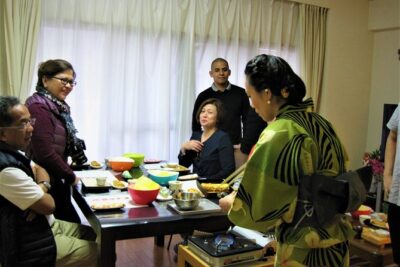
Osaka Cooking Class: Okonomiyaki &Japanese cuisines experience
Read our review →
Roll and Authentic Sushi Making Class in Dotonbori
Read our review →
Browse the lists this tour appears in