
Review · OSAKA COOKING CLASSES
Osaka: Roll and Authentic Sushi Making Class in Dotonbori
Making sushi in Osaka is more than a quick cooking lesson. You learn the story behind the food, then make maki rolls and nigiri with help from an upbeat English-speaking team. The setting near Dotonbori and Shinsaibashi puts you right in the middle of Osaka’s food district.
I like the class’s friendly, social style, especially the way instructors such as Shoki, Yui, Rika, and Takara mix clear demonstrations with jokes and local tips. I also like that you eat what you make, with enough ingredients for a proper light meal. The main drawback is timing: some people find the final eating period rushed, so pay close attention and work steadily.
Key points at a glance
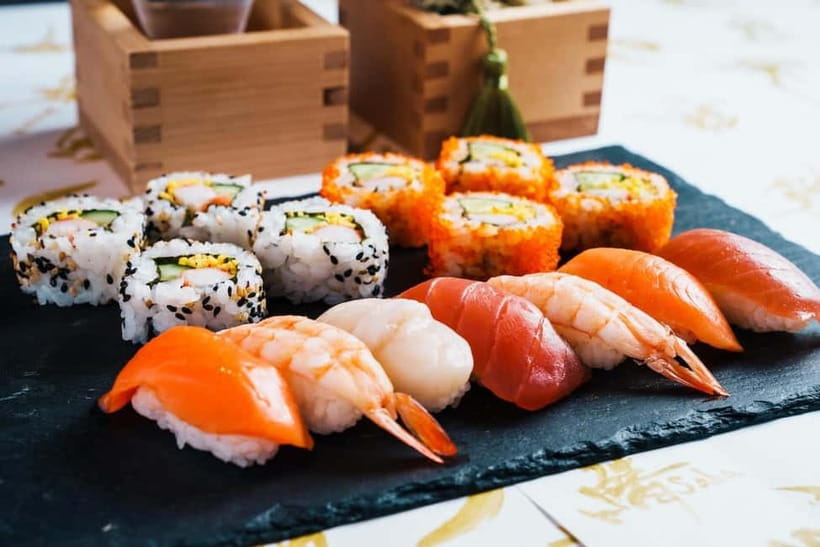
- Two sushi styles in one class: Make both maki rolls and traditional nigiri.
- Sushi history comes first: A light quiz and short introduction add cultural context before the hands-on work.
- English instruction: The staff explain each step clearly and keep the mood relaxed.
- Central Osaka setting: The class is a five-minute walk from Shinsaibashi Station, near Dotonbori.
- Dietary requests are possible: Vegan, vegetarian, gluten-free, halal, and allergy-friendly menus require at least three days’ notice.
- Good for many group types: Solo participants, couples, families, and small groups can all take part.
Sushi making near Dotonbori and Shinsaibashi
The class takes place on the third floor of the Galleria Acca Building, about five minutes on foot from Shinsaibashi Station. That location matters. You can fit the class into a day of shopping and sightseeing, then walk toward Dotonbori for more food afterward.
The building entrance may not be obvious at first. One useful detail from the class information is that the entrance sits within a concrete building with interesting architecture, so give yourself a little extra time to find the right door and floor.
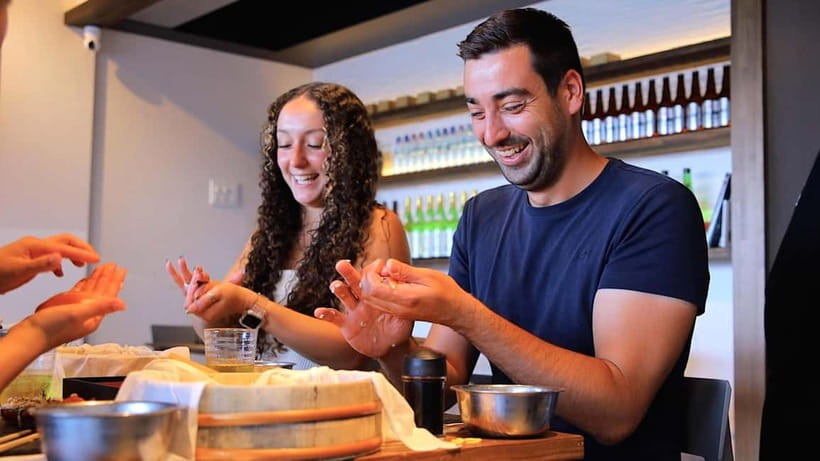
This is not a restaurant demonstration where you sit back and watch a chef work. You take part from the start. The ingredients and instruction are provided, but the point is to handle the rice, fillings, seaweed, and fish yourself.
The class lasts 100 minutes. That is long enough to learn two techniques without taking half a day from your Osaka plans. It also means the pace is fairly brisk, particularly near the end, so this suits you best if you are ready to follow instructions rather than linger over every piece.
More Sushi and Japanese Classes in Osaka:
- Sushi Making Osaka! Popular Sushi Class in Japan!
★ 5.0 · 500 reviews - Osaka: Ramen and Gyoza Cooking Class in Dotonbori
★ 5.0 · 378 reviews - Osaka Cooking Class: Okonomiyaki &Japanese cuisines experience
★ 5.0 · 261 reviews
A light introduction to sushi history
The class begins with an interactive introduction to sushi. Instead of launching straight into food preparation, the instructors use a quiz and short explanations to show how sushi developed and how different styles relate to one another.
I like this approach because it gives the food some context without turning the class into a lecture. You learn while laughing and taking part, which is easier to remember than a long speech filled with dates and terms.
The instructors have different personalities, but the common thread is energy and patience. Shoki is praised for keeping the class playful, while Yui, Rika, Takara, Fujiko, Fuko, and others are described as clear and encouraging teachers. The exact instructor depends on the class date, but English is used throughout.
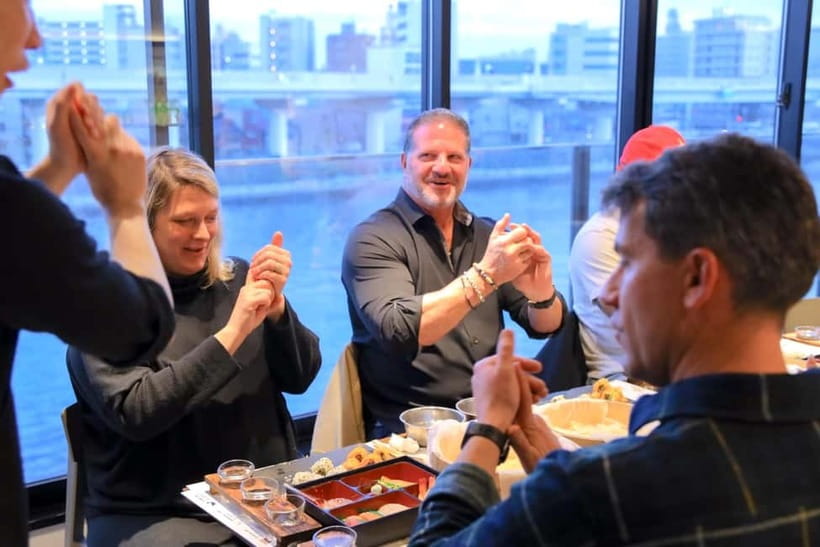
You may hear a cheerful Hoi, hoi, hoi during the sushi shaping. It is part of the class’s playful atmosphere, not a formal part of sushi etiquette. If you prefer a quiet, serious cooking lesson, this lively style may feel a little much. For most people, it helps break the ice, especially when participants come from several countries.
Making maki rolls, one step at a time
The first hands-on section covers maki, the rolled sushi wrapped in seaweed. You work with prepared ingredients and follow a demonstration before making your own pieces.
The practical value is simple: the instructor shows you how to spread and shape the rice, arrange the fillings, roll the seaweed, and cut the finished sushi. You do not need prior cooking experience, and the class is designed so that beginners can follow along.
One helpful feature is the visual teaching style. Participants describe a combination of video, demonstrations, and clear directions, which gives you more than one way to understand the process. If your first roll is uneven, that is part of the fun. The aim is to learn the method, not produce restaurant-perfect pieces on your first try.
You also get to see why small movements matter. Too much rice can make rolling difficult. Uneven pressure can loosen the filling. The instructor can correct these problems as you work, which is more useful than simply watching a polished chef make a perfect roll.
The ingredients are prepared in advance, so this is not a market visit or a full cooking course. You will not be shopping for fish, cooking rice from scratch, or learning professional knife work. Instead, the class focuses on the parts of sushi assembly you can realistically repeat at home.
Shaping nigiri with a little more care
The second technique is nigiri, the hand-formed sushi made with a small mound of rice and a topping. This section feels different from rolling maki because the shape and pressure of your hands matter more.
The instructors demonstrate how to form the rice without crushing it, then help you place the topping neatly. The class keeps the process approachable, but you still get a sense of why trained sushi chefs make it look easy.
This is where the advice to be kind to your sushi makes sense. Press too hard and the rice becomes dense. Handle it too roughly and the shape falls apart. The lesson gives you a small but useful appreciation for the care behind a simple-looking piece of nigiri.
Some class descriptions and comments refer to the finished pieces as six maki and six nigiri. The exact amount may depend on the session and menu, but you should expect enough food to serve as a light lunch or substantial snack. You are not simply making one sample of each type and watching the rest happen.
More Cooking Classes in Osaka:
- Ramen and Gyoza Cooking Class in Osaka
★ 5.0 · 202 reviews - Osaka Sake Tasting with Takoyaki Cooking
★ 5.0 · 156 reviews - Osaka: Cooking Class Ramen & Gyoza Course in Nanba
★ 4.9 · 86 reviews - Osaka: Gluten-Free Ramen and Gyoza Cooking Class
★ 5.0 · 42 reviews
A social class with local conversation
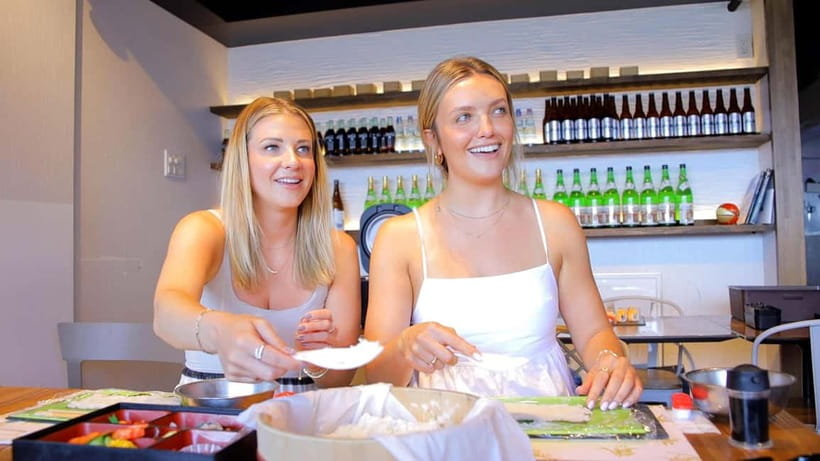
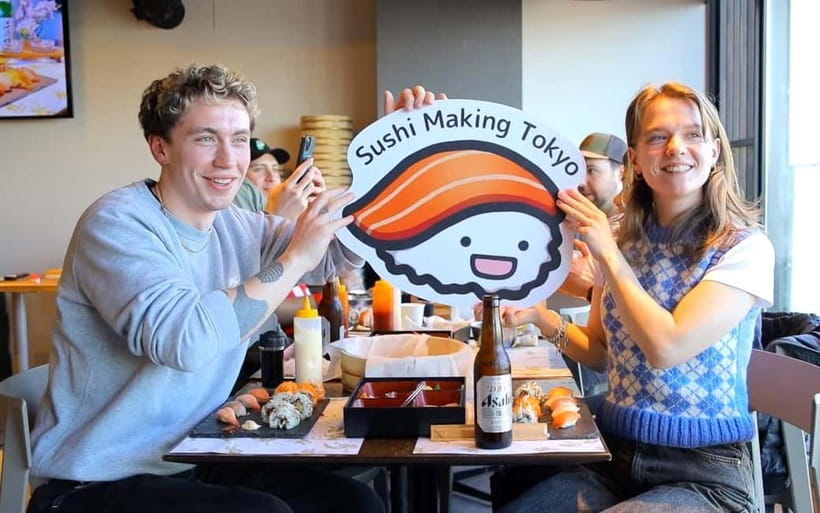
The staff do more than recite instructions. They ask where you are from, make conversation, and share suggestions about food and places to visit in Osaka. That social element is one of the strongest reasons to choose this class over a more formal cooking lesson.
For couples, it gives you a shared activity that is more active than a restaurant meal. For solo visitors, it creates an easy way to meet people without having to force conversation. Families and small groups can work side by side, though younger children will need to keep up with the pace and handle food carefully.
The teachers receive especially strong praise for their warmth and English. Names that come up often include Shoki, Yui, Takara, Fujiko, Fuko, Rika, and Reika. Reika is described as funny, kind, and well prepared, while Fujiko and Takara are noted for patient guidance. You may have a different instructor, but the teaching style is consistently friendly and hands-on.
The class is also suitable for people who do not think of themselves as cooks. One participant specifically noted that the experience remained enjoyable despite having little cooking experience. That is a good sign if you want to try something new without worrying about getting every step right.
Eating what you make
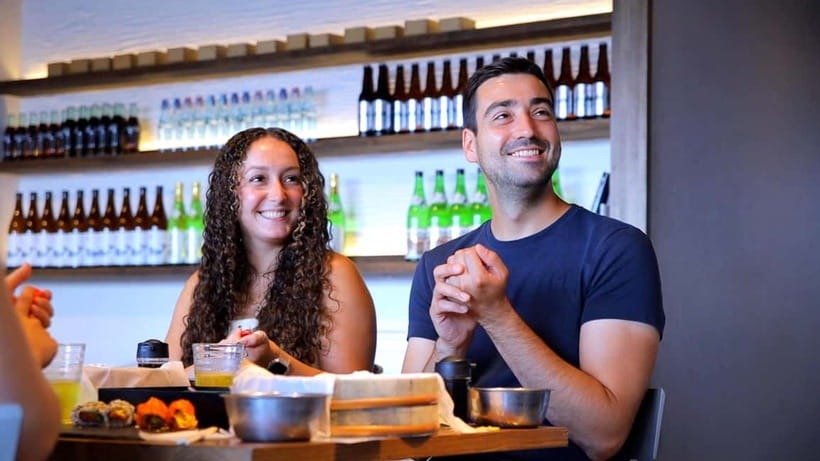
At the end, you eat the sushi you prepared. This is the payoff, but it is also where timing matters most.
The class is tightly scheduled, and a few people found they had little time to eat after making the sushi. One practical tip is to stay focused during the demonstrations and begin each step promptly. Avoid spending too long arranging one piece for a photograph if you want a relaxed meal at the end.
The food is served with the ingredients used in the class, and the emphasis is on enjoying your own work. That makes the meal more satisfying than simply being handed a prepared plate. You remember the technique because you can connect each piece to the steps you just completed.
Some participants felt that trays were collected a little early, particularly if they were still finishing their last piece or had not yet moved ginger and wasabi to their plate. This is a small point, but it is worth keeping in mind: gather anything you want to eat before the work area is cleared.
Dietary choices and advance planning
The class can accommodate vegan, vegetarian, gluten-free, halal, and allergy-related menu changes. Meat, nuts, fruits, and dairy are not used according to the provided menu information, but you still need to contact the organizer when you reserve.
The deadline for a menu change is three days before the class. Same-day requests cannot be handled, and the staff do not accept detailed ingredient specifications beyond the listed menu adjustments.
That policy is important if you have strict dietary needs. Do not assume you can arrive and request a replacement ingredient on the spot. Contact the provider early and make sure your reservation reflects the correct menu.
A halal request was handled successfully for one participant, which shows the value of arranging it ahead of time. Still, you should treat the three-day deadline as firm.
Is 45 dollars a fair price?
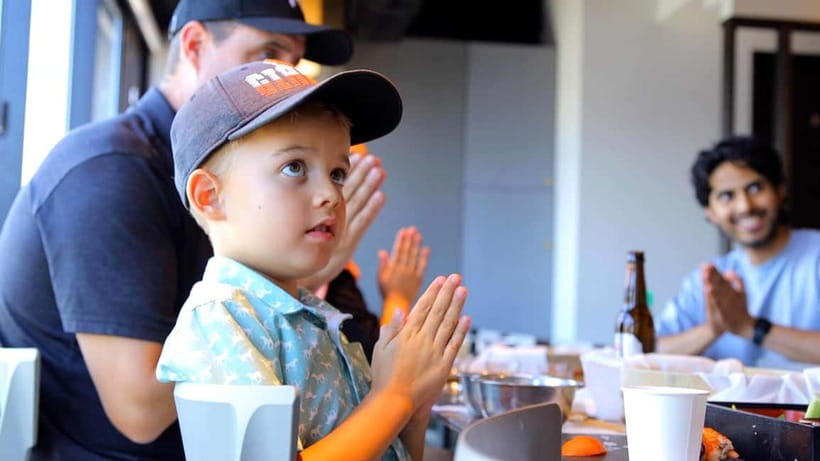
At 45 dollars per person, the class is not the cheapest way to eat sushi in Osaka. You can find a quick sushi meal for less, especially if your only goal is to fill up.
The value comes from the combined experience. You receive a 100-minute lesson, ingredients, an English-speaking instructor, a short cultural introduction, two sushi techniques, and the food you prepare. You also get a central location that is easy to pair with Dotonbori and Shinsaibashi.
I consider the price fair for a visitor who wants an activity rather than another restaurant stop. It is particularly useful on a rainy day, during a food-focused itinerary, or when you want a shared memory with family or a partner.
The value is weaker if you already make sushi at home or want advanced chef training. This is a beginner class with prepared ingredients. You learn practical assembly and shaping, not fish cutting, rice preparation from raw ingredients, or professional sushi service.
Who should book this Osaka class?
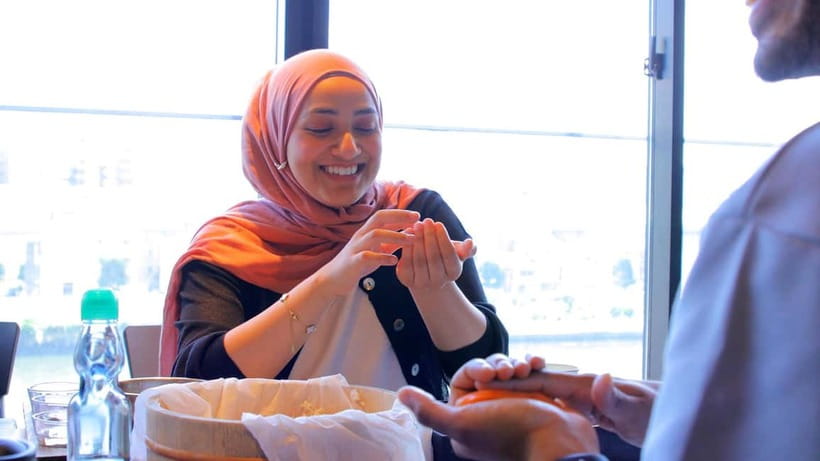
I would choose this class for first-time sushi makers, food-focused visitors, couples, families, and solo participants who enjoy meeting people. The instructors keep the tone relaxed, and the English explanations remove much of the uncertainty for international visitors.
It also works well for people who want a break from temples, shopping, and city walks. You sit down, learn something useful, make food with your hands, and leave with a better understanding of two familiar sushi styles.
You may want to skip it if you dislike group activities, prefer a quiet meal, or need a highly specialized dietary plan. The class is social, energetic, and guided by a schedule. It is not a private chef lesson.
The location is wheelchair accessible, but one practical building detail deserves attention: the elevator does not reach the workshop floor. If that matters for your visit, contact the provider before booking to confirm how access will work.
Booking and timing advice
You can cancel up to 24 hours before the activity for a full refund, and the reserve now, pay later option lets you hold a place without paying immediately. Starting times vary, so check the available schedule against your Osaka plans.
I would place this activity in the middle of a day near Shinsaibashi or Dotonbori rather than rushing to it from the other side of the city. Arrive with enough time to locate the building, especially since the entrance can be easy to miss.
Dietary requests need three days’ notice. That is the most important booking detail for anyone who needs vegan, vegetarian, gluten-free, halal, or allergy-friendly food.
Should you book it?
Book this class if you want to make your own meal, learn the basics of maki and nigiri, and spend time with an outgoing English-speaking team. The strongest part is the mix of useful instruction, sushi history, laughter, and food you can eat at the end.
Keep your expectations sensible. You will not become a professional sushi chef in 100 minutes, and the final meal may feel hurried if you work slowly. But for 45 dollars in central Osaka, this is a well-priced, memorable activity for beginners and food lovers who want more than another meal at a restaurant.
FAQ
Where does the sushi class take place?
The class takes place on the third floor of the Galleria Acca Building, about five minutes on foot from Shinsaibashi Station. It is near Dotonbori and Shinsaibashi.
How long does the activity last?
The class lasts 100 minutes.
What types of sushi will I make?
You will make two types: maki rolls and authentic Japanese nigiri sushi.
Is the class taught in English?
Yes. The instructor language is English, and English-speaking local staff guide you through the class.
Do I need previous sushi-making experience?
No. The class is designed for beginners, and the instructors explain the process step by step.
Do I eat the sushi I make?
Yes. The ingredients and cooking class are included, and you eat the sushi you prepare during the session.
Can I request a vegan or vegetarian menu?
Yes. Vegan and vegetarian menus are available, along with gluten-free, halal, and allergy-friendly options.
When must I request a menu change?
You must contact the provider at least three days before the class. Same-day menu changes are not accepted.
Is hotel pickup included?
No. Hotel pickup and drop-off are not included.
Can I cancel my reservation?
Yes. You can cancel up to 24 hours in advance for a full refund. You can also reserve now and pay later.
Newest classes around Osaka
- Okonomiyaki&Takoyaki for Families:Osaka Street Food Festival★ 5.0 · 4 reviews
- Osaka: Gluten-Free Ramen and Gyoza Cooking Class★ 5.0 · 42 reviews
- Osaka Okonomiyaki Cooking Experience for Families & Groups★ 4.9 · 8 reviews
- Osaka Sake Tasting with Takoyaki Cooking★ 5.0 · 156 reviews
- Osaka : Exclusive Tea Ceremony & Wagashi Cooking★ 5.0 · 2 reviews
- Osaka: Okonomiyaki Cooking Class with Beer or Soft Drink★ 4.9 · 9 reviews
- Osaka: Japanese Cooking Class with Matcha Experience★ 5.0 · 4 reviews
- Osaka: Cooking Class & Sake Tasting with Local Market Visit★ 4.8 · 31 reviews
Osaka Cooking Classes, compared.

Sushi Making Osaka! Popular Sushi Class in Japan!
Read our review →
Osaka Cooking Class: Okonomiyaki &Japanese cuisines experience
Read our review →
Cooking Class & Sake Tasting with Local Market Visit
Read our review →Browse the lists this tour appears in