
Review · JAPAN COOKING CLASSES
Experience Authentic Japanese Home Cooking in Kyoto
The most useful lesson here begins before the first dish: you make dashi from real bonito flakes and kelp, the quiet backbone of Japanese home cooking. In a more than 100-year-old Kyoto townhouse, instructor Kayo guides you through the broth, then shows you how to turn it into rolled omelet, miso soup, simmered vegetables, and chicken teriyaki.
I like that you learn food you can actually repeat at home, not restaurant tricks that require a professional kitchen. I also like the attention to additive-free seasonings, seasonal vegetables, and careful knife work. The main consideration is the format: the class lasts about two and a half hours, and men traveling without women cannot join at this location, though another kitchen may be available by arrangement.
Key points to know
- Make dashi from scratch: Use kombu and katsuobushi instead of relying on instant stock.
- Cook a complete home meal: The menu includes dashi-maki tamago, chicken teriyaki, simmered vegetables, and miso soup.
- Learn with Kayo and her team: English instruction is provided, with translation support available when needed.
- Cook in an old Kyoto townhouse: The setting gives the lesson a direct connection to ordinary Japanese domestic life.
- Private group format: You receive focused instruction rather than joining a large public class.
- Plan around the location details: The meeting information refers to Shijo Station, while the classroom is described as about 10 minutes from Sanjo Keihan or Subway Sanjo Station.
Dashi Comes First in This Kyoto Kitchen
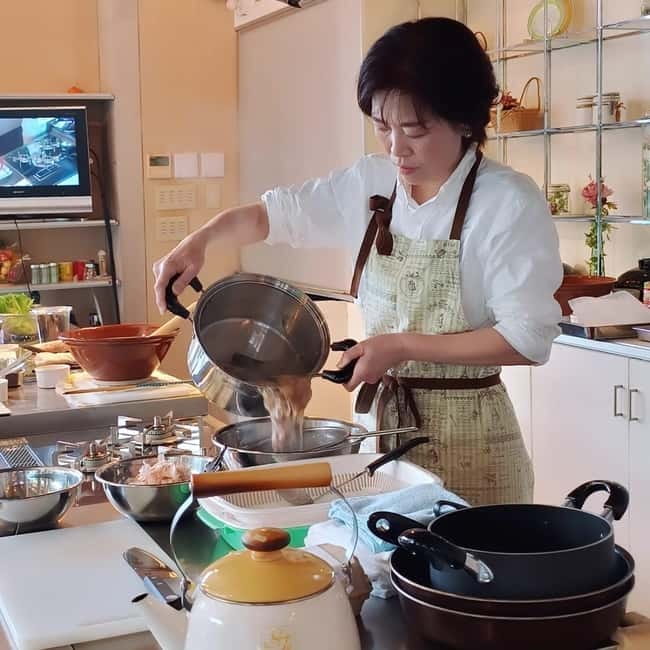
This experience starts with the ingredient that explains much of Japanese cooking: dashi. You make it with kombu, or kelp, and katsuobushi, dried bonito flakes shaved into light, fragrant pieces.
That first step matters. Japanese home cooking often depends less on heavy sauces than on a clean broth that gives vegetables, eggs, soup, and simmered dishes a gentle savory taste. You will see the process rather than simply receiving a bowl of soup stock already made for you.
The class follows the home-cooking approach associated with Katsuo Doi, a well-known Japanese authority on everyday food. The aim is not a fancy restaurant menu. It is the kind of meal a Japanese family might prepare at home, with attention to health, balance, and the natural flavor of each ingredient.
As the dashi is prepared, you also learn why seasonings and ingredients are handled carefully. The emphasis on additive-free seasonings is useful if you want to understand the taste of Japanese cooking beyond soy sauce and teriyaki glaze.
More Home Cooking Classes in Japan
- Private Home Cooking in Yanaka – Local Flavors in a Warm Setting
★ 5.0 · 173 reviews - Near Fushimiinari: Kyoto Home Cooking Class & Supermarket tour
★ 5.0 · 100 reviews - Japanese Home Cooking Class & Walk in Todoroki Temple Tokyo
★ 5.0 · 88 reviews
A Four-Dish Meal You Can Recreate at Home
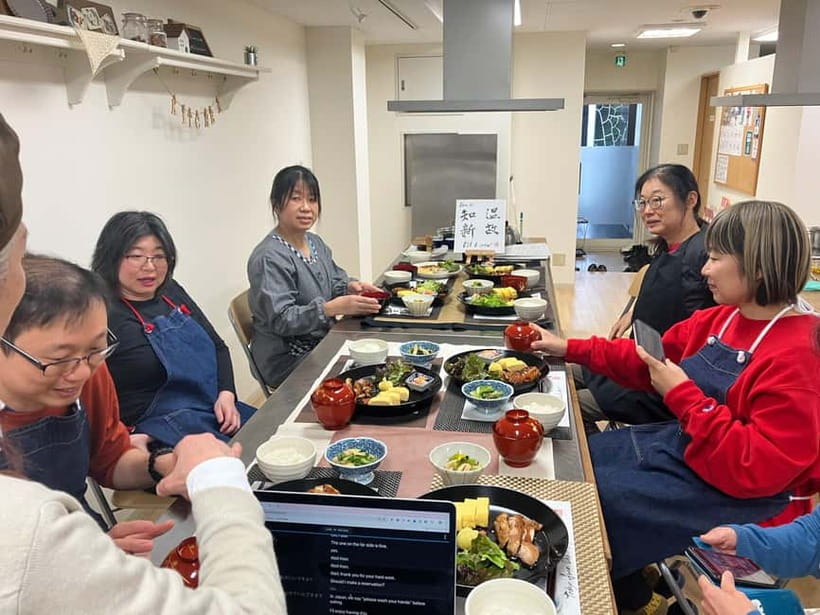
The menu is compact but well chosen. Each dish uses a different technique, and the dashi links several of them together.
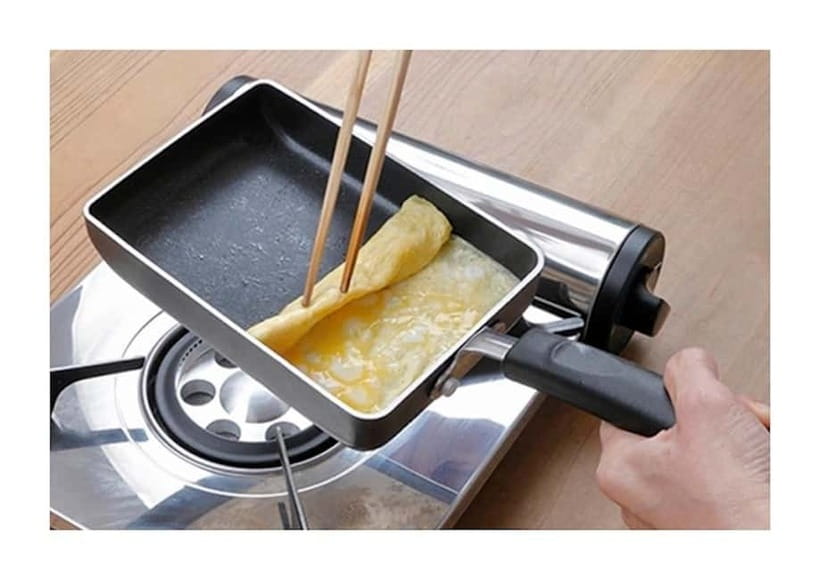
Dashi-maki tamago
The rolled omelet is one of the most practical parts of the class. Dashi-maki tamago is not simply scrambled egg folded into a block. You add fresh stock to the egg mixture and cook it in layers, rolling each layer as you go.
This requires a light hand and some timing. The result should be tender and moist, with the dashi giving the egg a gentle savory flavor. It is a good lesson in how Japanese cooking builds taste without relying on strong spices.
If you have tried to make rolled omelet at home and ended up with something more like an egg pancake, this is where careful instruction helps. Kayo’s step-by-step teaching is intended for beginners, yet the technique still offers something new to experienced cooks. One participant who had spent much of his life working in kitchens still picked up new methods during the lesson.
Simmered seasonal vegetables
The vegetable dish shows how Japanese food changes with the seasons. The exact produce depends on the time of year, so you should not expect one fixed ingredient list.
You will learn that cutting is not only about appearance. Different shapes and sizes affect how vegetables cook and how they hold the broth. The class gives you hands-on practice with those preparation methods instead of treating vegetables as an afterthought.
This is also where the health focus becomes clear. A meal built around seasonal produce, broth, egg, chicken, rice-friendly flavors, and miso soup feels balanced without being complicated. You are learning a useful pattern for home meals, not just one isolated recipe.
More Sushi and Japanese Classes in Japan:
- Ramen Cooking Class at Ramen Factory in Kyoto
★ 5.0 · 1,937 reviews - Ramen & Gyoza Cooking Class in Tokyo with Local Supermarket Visit
★ 5.0 · 823 reviews - Kyoto: Ramen Cooking Class at a Ramen Factory with Souvenir
★ 4.9 · 532 reviews - Sushi Making Osaka! Popular Sushi Class in Japan!
★ 5.0 · 500 reviews
Chicken teriyaki
Chicken teriyaki is familiar to many people outside Japan, but the home version can be quite different from a heavy restaurant coating. Here, you prepare it with traditional flavors and learn how Japanese seasonings work together.
The dish gives the class a more recognizable anchor. If you are new to Japanese cooking, you will leave with a recipe you can identify and make again. At the same time, the method shows how small choices in seasoning and cooking affect the final result.
Miso soup
Miso soup rounds out the meal and gives you another way to use the stock. Since the class teaches you to make dashi first, you can understand the difference between a soup built on fresh broth and one made from an instant base.
You also plate the dishes and set the table before eating. That final step is modest but worthwhile. Japanese meals pay attention to presentation, and arranging several small dishes helps you see the meal as a whole rather than as four unrelated recipes.
The Old Townhouse Is Part of the Lesson
The class takes place in a traditional Kyoto townhouse more than 100 years old. The setting adds something that a modern cooking studio cannot: you are preparing everyday food in a home environment with a direct link to Kyoto’s domestic life.
This is not a sightseeing stop with a long explanation of architecture. The townhouse serves as the place where the cooking happens. That makes the atmosphere quieter and more personal, especially since the activity is offered as a private group.
You should also know that the instructor’s home is used for the class. After your reservation is confirmed, the host will come to the station to pick you up. The information identifies Sanjo Keihan and Subway Sanjo Station as about a 10-minute walk from the classroom, while the meeting point is also given as Subway Shijo Station with a walk of about 10 minutes.
Because both station references appear in the arrangements, check the exact meeting instructions after booking. This is not a major problem, but it is the sort of small detail worth settling before you head out with a full day of sightseeing planned.
Kayo’s Teaching Style and English Support
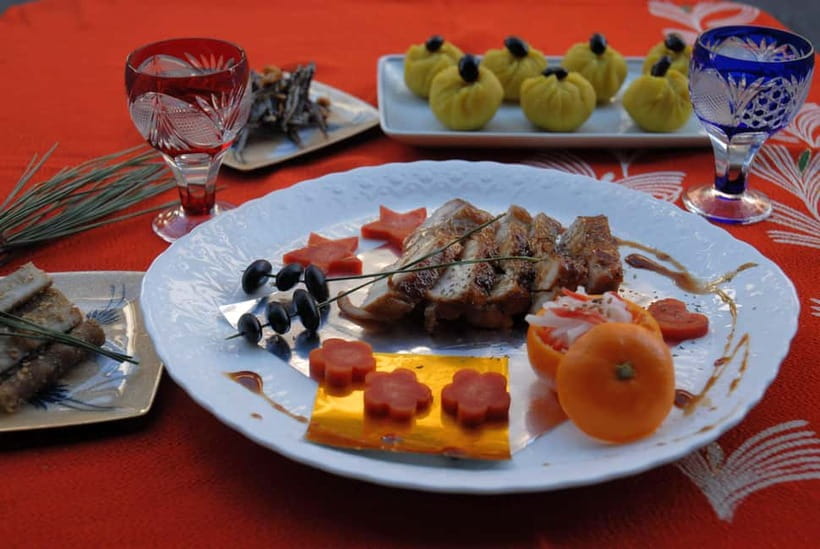
Kayo is the named instructor associated with the class, and the experience is taught in English. The teaching is described as friendly, practical, and accessible to people who are new to cooking.
You will not be expected to know Japanese culinary terms before you arrive. The lesson moves through the dishes step by step, with attention to knife use, preparation, seasoning, and cooking order.
Language support is another strong point. One participant noted that limited Japanese was not a barrier because the instructors used English and had a translator available. That does not mean every instruction will feel like a formal culinary-school lecture, but it does suggest that you can ask questions and follow the process even if your Japanese is basic.
The class also appears to work well for people with different cooking backgrounds. Beginners can learn the foundations, while confident cooks may appreciate the details of dashi, egg rolling, vegetable cuts, and seasoning balance.
Why the Knife Lesson Matters
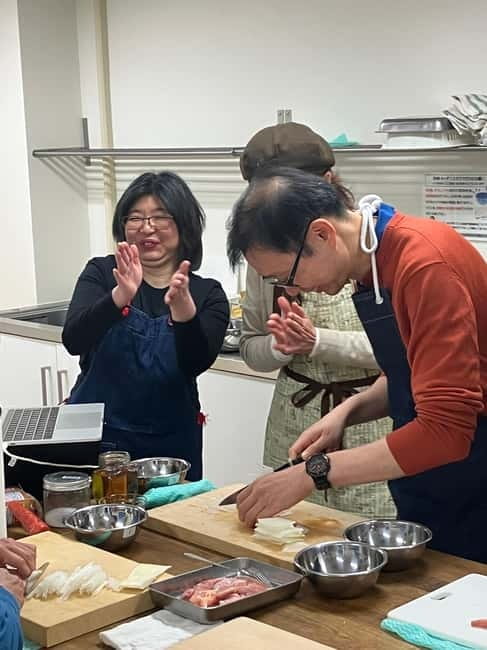
Japanese knives are often praised for their sharpness and precision, but sharp tools also demand care. The class includes instruction in using delicate Japanese knives, along with the cutting techniques suited to different ingredients.
This is valuable because knife work affects more than presentation. Even cuts cook at a similar pace, and the shape of a vegetable changes how it takes on broth. You will get more from the lesson if you pay attention to hand position, pressure, and the way the knife moves through the ingredient.
The instruction is not presented as an advanced knife-skills course. It is part of the meal preparation, which makes it easier to understand the purpose of each technique. You learn the cut because it helps the dish, not because someone wants to show off a set of expensive blades.
A Private Class Near Kyoto’s Major Sights
The location works well with a sightseeing day. Heian Shrine, Gion, Yasaka Shrine, and Kyoto Imperial Palace are all described as roughly 15 to 20 minutes away on foot, with other attractions nearby.
I would pair the cooking class with one or two nearby sights rather than trying to squeeze in all four. A 2.5-hour lesson takes enough time that you should treat it as the main event for part of the day, not a quick break between temple visits.
The station pickup is useful if you are unfamiliar with Kyoto’s streets. Once your reservation is confirmed, clarify where and when to meet. The walking distance is manageable, but the different station references mean you should not rely on a last-minute guess.
The class is listed with a one-day duration for booking purposes, but the actual cooking time is about two hours and 30 minutes. Check the available starting times before building your itinerary around it.
Is the $122 Price Fair?
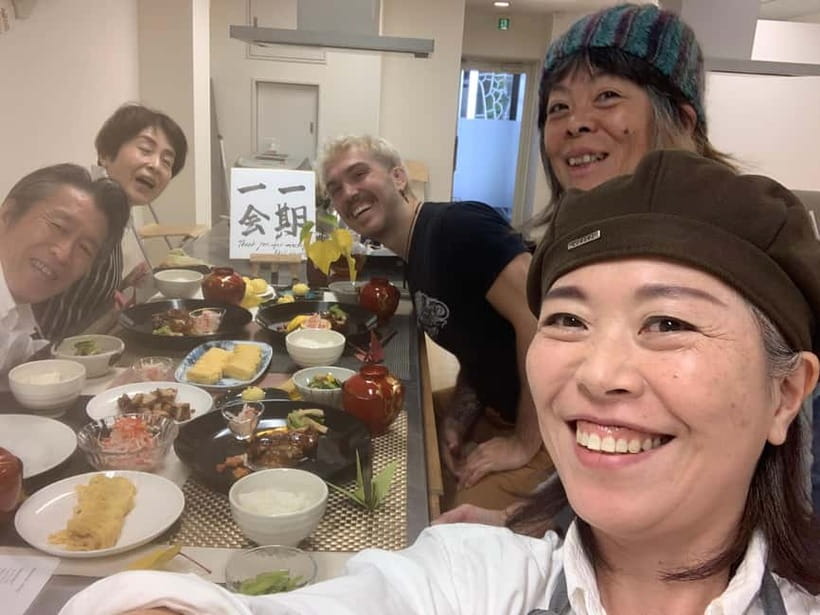
At $122 per person, this is not a cheap meal or a casual demonstration. The price makes more sense when you count what is included: the private cooking experience, instructor-led teaching, apron and cloth rental, all ingredients, every menu item, and the meal you prepare and eat.
You are also paying for access to a local home setting and for instruction that can continue to be useful after your Japan trip. The dashi method, rolled omelet, simmered vegetables, and chicken teriyaki are all recipes and techniques you can attempt in your own kitchen.
The value is strongest if you want participation rather than simply eating. You will spend your time preparing food, using knives, making stock, plating dishes, and asking questions. If your main goal is a low-cost lunch, the price will feel high. If you want a private lesson with a complete meal and a personal connection to Japanese home cooking, it is easier to justify.
Dashi soup sets and merchandise are not included. You can ask about purchasing a dashi soup set separately, but do not assume it comes with the class.
Who Will Enjoy This Most?
I would recommend this experience to you if you want a break from temple photography and restaurant meals. It gives you a look at Japanese food from the kitchen side, where broth, timing, preparation, and family habits matter more than elaborate presentation.
It is especially suitable for:
- First-time cooks who want clear guidance
- Confident home cooks seeking Japanese techniques
- Couples, families with older children, and private groups
- People interested in seasonal food and additive-free seasonings
- Visitors who want recipes they can use after returning home
Children under six cannot participate. The private format may suit families and small groups, but the available information does not specify a maximum group size, so confirm the details when booking.
There is also a gender restriction at this particular home location. A group made up only of men cannot join here. The provider says a separate rental kitchen may be arranged for men-only groups, so send a message before booking rather than assuming the standard location will work.
What I Would Check Before Booking
First, confirm the exact station meeting point. The information refers to Subway Shijo Station and also describes the classroom as about 10 minutes from Sanjo Keihan or Subway Sanjo Station. The host will provide pickup details after confirmation, but you should have those instructions in hand before the day of the class.
Second, check the start time against your sightseeing plans. Although the booking page presents the duration as one day, the hands-on lesson itself takes about two and a half hours. Add walking time and the meal afterward when planning.
Third, think about your cooking priorities. If you want sushi-making, ramen, or a broad survey of Japanese dishes, this is not that class. Its focus is narrower and more useful: dashi, home-style side dishes, soup, chicken, eggs, and knife work.
Finally, remember that all menu ingredients and the meal are included, but merchandise and a dashi soup set are not. If you want to continue making the broth at home, ask about the soup set before your visit.
Should You Book This Kyoto Cooking Class?
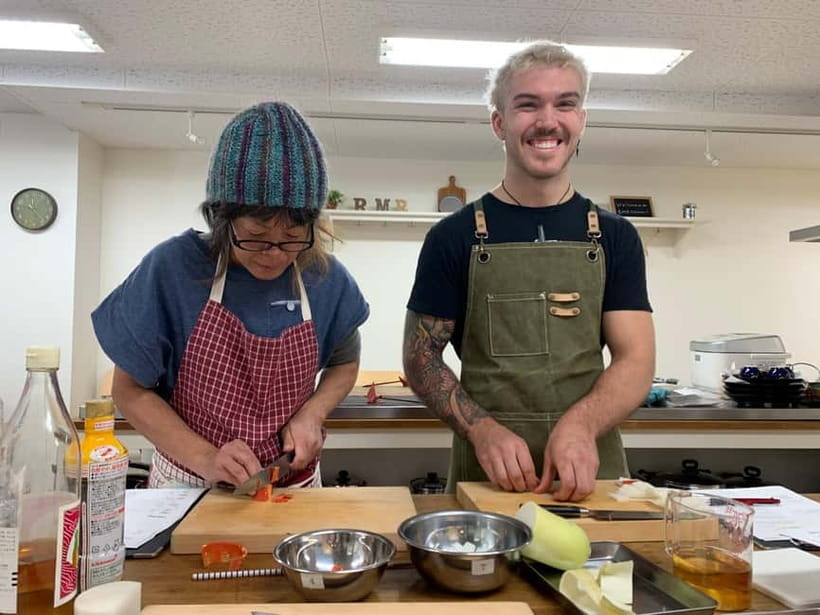
Book it if you want hands-on Japanese home cooking in a personal setting, and if you value learning methods you can use long after your holiday. The strongest parts are the fresh dashi, the practical menu, the private instruction, and the chance to cook in an old Kyoto townhouse.
Skip it if you only want a quick food tasting, a low-cost meal, or a class centered on restaurant specialties. Also pause if your group is men only, unless the alternate rental kitchen is confirmed.
For the right traveler, this is a thoughtful way to add everyday Japanese culture to a Kyoto itinerary. You leave with a meal, a better sense of how Japanese flavors are built, and several techniques that do not require a professional kitchen.
FAQ
How long does the cooking class last?
The cooking session takes about two hours and 30 minutes. It is listed as a one-day activity for booking purposes, so check the available start times before planning the rest of your day.
What dishes will I prepare?
You will make dashi, dashi-maki tamago, chicken teriyaki, simmered vegetables with seasonal ingredients, and miso soup. You will also plate the food and set the table before eating.
Is the class taught in English?
Yes. English instruction is provided. Translation support may also be available when needed.
Where does the class meet?
The meeting information identifies Subway Shijo Station, with about a 10-minute walk. The classroom is also described as about 10 minutes from Sanjo Keihan or Subway Sanjo Station. After your reservation is confirmed, the host will come to the station to pick you up, so confirm the exact meeting details.
Is the class suitable for children?
Children under six are not permitted to participate. The available information does not provide a maximum age or group size.
Can a men-only group join?
Not at the standard home location. A separate rental kitchen may be available for men-only groups, but you need to contact the provider in advance.
What is included in the price?
The price includes the cooking experience, apron and cloth rental, all menu items, ingredients, and the meal. Merchandise and a dashi soup set are not included.
Newest classes around Japan
- Cooking Class: Make a Local Delicacy in a Japanese House★ 5.0 · 7 reviews
- Culinary Home Cooking with Grandmothers – Vegan Friendly★ 5.0 · 5 reviews
- Nagoya Super Market Tour & Home Cooking Class with a Local, Akiko★ 5.0 · 10 reviews
- Tokyo: Sushi roll and side dish cooking experience★ 5.0 · 2 reviews
- Tokyo: Sushi Making Experience & Japanese Cooking Class★ 5.0 · 2 reviews
- Tokyo: Sushi Cooking Class with Sake Tasting★ 4.8 · 55 reviews
- Tokyo: Real Ramen & Dumpling Cooking with Master Chef★ 5.0 · 10 reviews
- Tokyo: Sushi and Ramen Cooking Class with Sake Pairing Set★ 5.0 · 81 reviews
Japan Cooking Classes, compared.
Ramen Cooking Class at Ramen Factory in Kyoto
Read our review →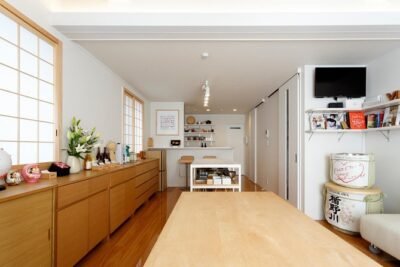
Ramen & Gyoza Cooking Class in Tokyo with Local Supermarket Visit
Read our review →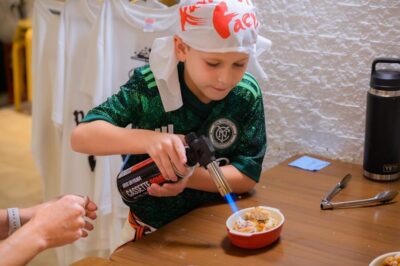
Ramen Cooking Class at a Ramen Factory with Souvenir
Read our review →
Sushi Making Osaka! Popular Sushi Class in Japan!
Read our review →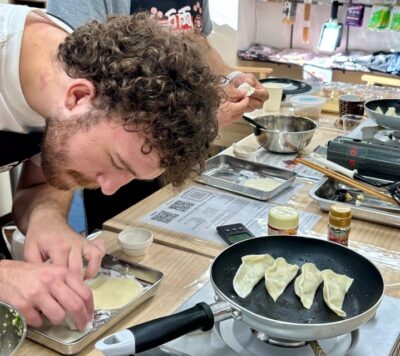
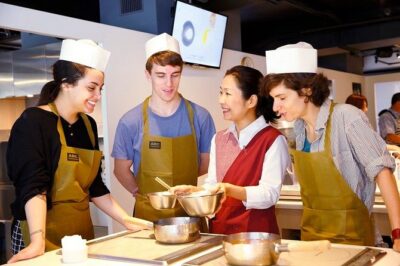
Tokyo Tsukiji Fish Market Tour and Sushi Making Lesson
Read our review →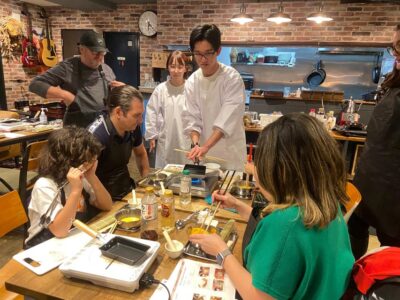
Japanese Washoku Bento Small Group Cooking Class
Read our review →
Browse the lists this tour appears in