
Review · JAPAN COOKING CLASSES
Takayama: Private Cooking Class at Local’s Machiya House
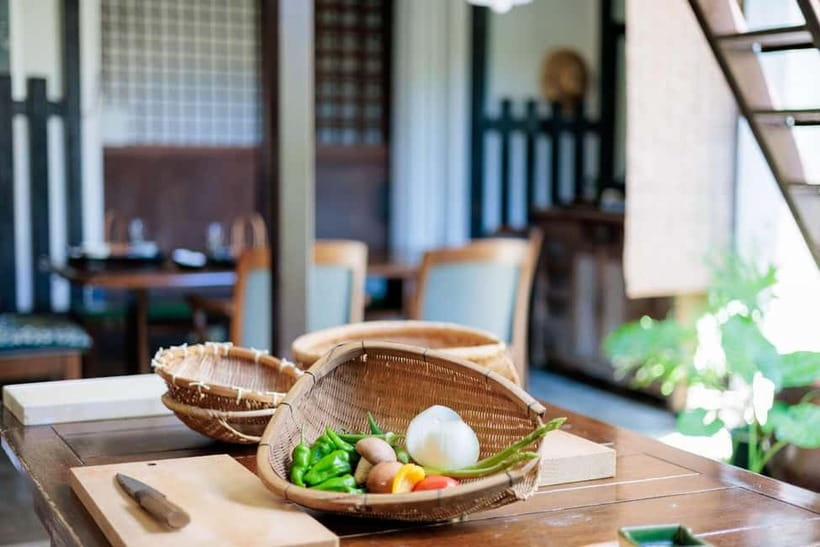
Takayama’s best food lesson may begin behind an unassuming honey shop. Step inside and you’ll find a private cooking class in a family machiya, right on Old Town’s main street. I like the close look at everyday Japanese food culture, and I like that you cook with seasonal local ingredients before sitting down to eat the five-course meal you helped prepare. The main consideration is price: at $233 per person, this is a special occasion activity rather than a casual cooking lesson.
The welcome tea and wagashi set a warm tone, while host Koichiro’s clear guidance gives the class a personal feel. You’ll be standing in the kitchen, so wear comfortable shoes, and tell the host about allergies or food preferences before you arrive.
Key details at a glance
- Cook inside a genuine family machiya: The class takes place in a historic townhouse passed down through generations, not a detached cooking studio.
- Meet local host Koichiro: His guidance covers both practical cooking steps and the ideas behind Japanese food.
- Prepare seasonal Hida dishes: The menu uses local ingredients and leads to a five-course meal.
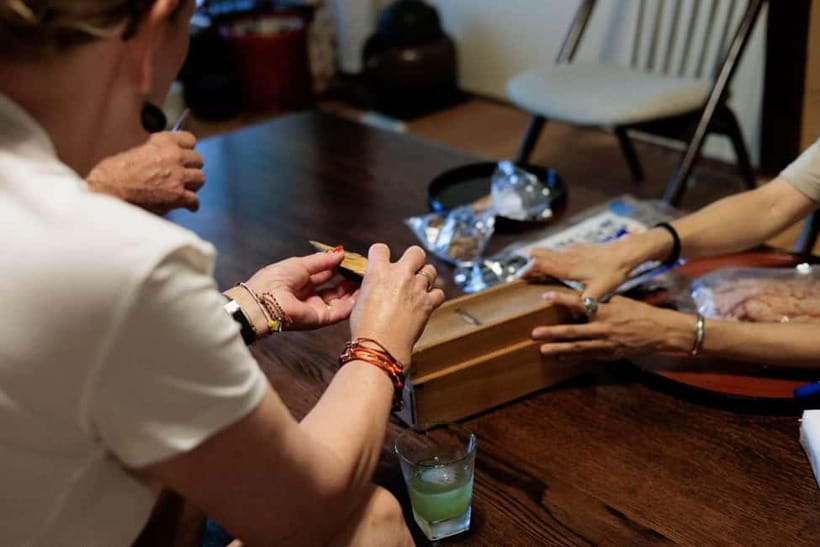
- Begin with tea and wagashi: A cup of tea and a Japanese sweet provide a gentle introduction before the cooking starts.
- See more than the kitchen: A short house tour explains the machiya’s architecture, family story, and connection to a former maternity hospital.
- Stay in central Old Town: Meet at the honey shop next to the house, then finish back at the same point.
Cooking in a Takayama machiya
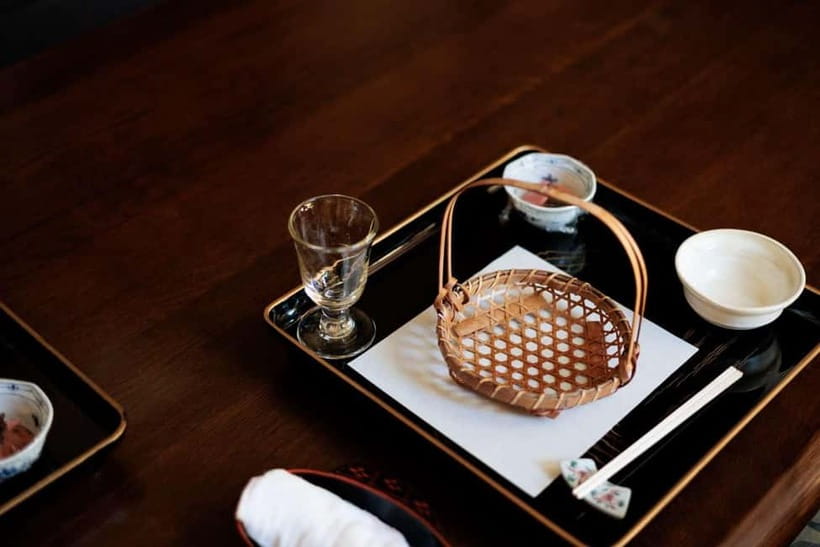
This class gives you something a restaurant meal cannot: a look at how food, family, and home fit together in Takayama. The setting is a traditional machiya townhouse in the center of Old Town, on the main street where you can easily combine the class with sightseeing.
Machiya houses are narrow urban homes built for both family life and work. Here, the house has remained in the family for generations. That matters because the cooking lesson is not separated from local life. You are entering a home with its own history, layout, and family connections.
The setting also keeps the group private. Instead of trying to follow a chef’s demonstration from the back of a large room, you can work directly with the host and ask questions as you go. The supplied information does not give a maximum group size or a set duration, so ask about those details if they affect your planning.
You meet at the honey shop beside the house. Wait in front of the shop, where the host will meet you. There is no transportation to arrange from there, and the activity ends at the same meeting point.
More Private Cooking Classes in Japan
- Private Home Cooking in Yanaka – Local Flavors in a Warm Setting
★ 5.0 · 173 reviews - Unique Private Cooking Class with a Tokyo Local Emi
★ 5.0 · 131 reviews - Tokyo: Private Japanese Cooking Class with a Local Chef
★ 5.0 · 81 reviews
Tea, wagashi, and the first lesson in Japanese food
The class begins with a welcome tea and wagashi, a traditional Japanese sweet. This short opening is more than a polite greeting. It gives you time to settle into the house and meet the host before moving into the kitchen.
The first explanation covers the central ideas of Japanese cooking. Expect attention to seasonality, balance, and respect for nature’s ingredients. These themes help explain why Japanese meals often include several small elements rather than one large plate built around a single main item.
I like this part because it gives context to the work ahead. You are not simply copying a recipe. You are learning why certain ingredients appear at a particular time of year and how a meal is built to feel balanced.
The class is conducted in English. The information provided does not specify the exact dishes, so the final menu may depend on the season and available local ingredients. That is a strength if you want food tied to the time of your visit, but it may disappoint you if you need a fixed menu in advance.
Preparing seasonal Hida dishes with Koichiro
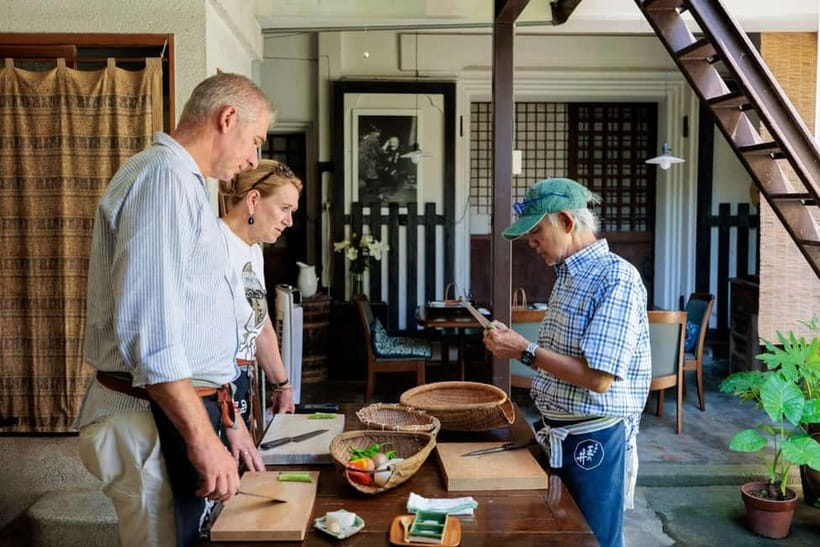
Once the introduction is finished, you move into the kitchen and prepare several seasonal dishes. Host Koichiro guides the process step by step. You receive the ingredients and utensils, so you do not need to shop for supplies or bring cooking equipment.
The focus is Hida Takayama cuisine, the food tradition of the mountain region around Takayama. The class connects that regional cooking with broader Japanese principles, showing how local ingredients can shape a home meal.
You should expect hands-on work rather than a demonstration where you only watch. The activity description specifically describes a cooking session, and the meal is prepared together. Still, the precise tasks are not listed, so the amount of chopping, mixing, shaping, or stove work may vary with the day’s menu.
Wear comfortable shoes. You will be standing during the cooking session, and a townhouse kitchen may not offer much room to sit while the food is being prepared. Comfortable clothes are also a sensible choice, though no special clothing is required.
Tell the host about allergies, dietary restrictions, and food preferences in advance. Do not wait until you arrive. The host can only plan the ingredients properly if you provide this information ahead of time.
Sitting down to a five-course home meal
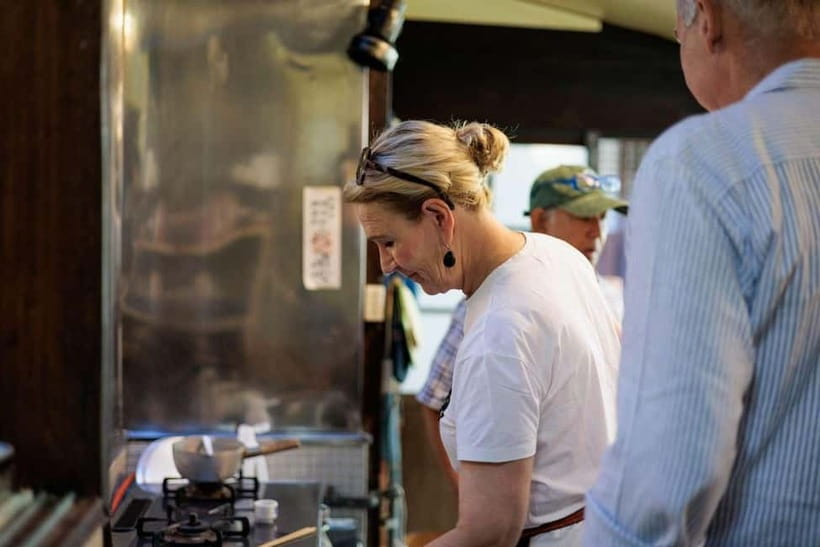
After cooking, you sit down together to enjoy a five-course meal. The meal is included in the price, along with tea and other non-alcoholic drinks. Alcohol is not included, so do not assume that sake, beer, or wine will be part of the table.
The five-course format gives you a chance to see how the dishes work together. You can connect the earlier talk about balance and seasonality with the food in front of you. A home setting also changes the pace. This is not simply a quick meal after a class. The food is the result of your work, and the host remains part of the occasion.
The menu is described as simple, typical, and tasty, with fresh ingredients. That wording is useful. You should come expecting a traditional home-style meal rather than a restaurant tasting menu or a high-end culinary performance.
I would book this for the chance to understand ordinary Japanese cooking from the inside. You may leave with a clearer sense of how Japanese meals are assembled, even if you do not receive a stack of formal recipes. The available information does not state that recipes are provided, so ask if taking written recipes home is important to you.
Same region, a different dish to learn:
- Ramen Cooking Class at Ramen Factory in Kyoto
★ 5.0 · 1,937 reviews - Ramen & Gyoza Cooking Class in Tokyo with Local Supermarket Visit
★ 5.0 · 823 reviews - Kyoto: Ramen Cooking Class at a Ramen Factory with Souvenir
★ 4.9 · 532 reviews - Sushi Making Osaka! Popular Sushi Class in Japan!
★ 5.0 · 500 reviews
A short tour of the family house
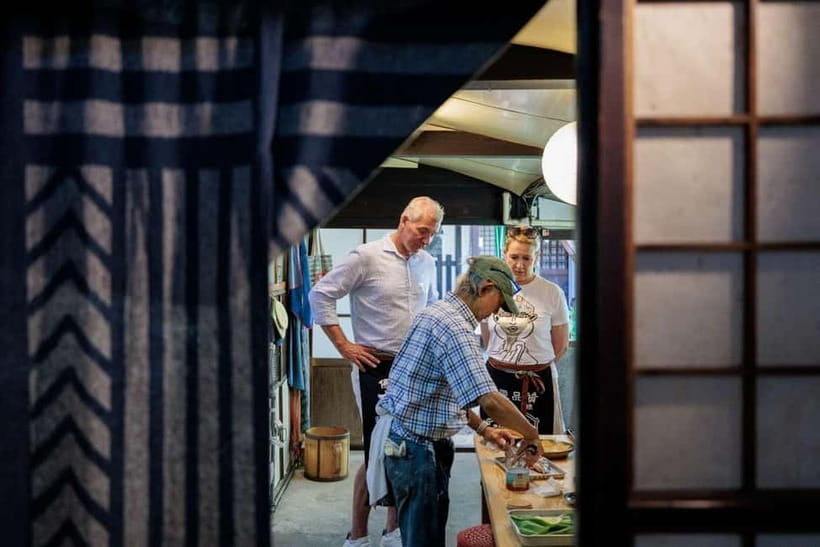
After the meal, the host gives you a short tour of the machiya. You learn about the house’s architecture, its past, and the family stories connected to it.
This part adds value because the building is not just a backdrop. You have cooked inside a home that has remained in the family for generations, and the tour helps you understand the spaces around you. The class becomes a small cultural visit as well as a meal.
One especially interesting detail is the house’s connection to a former maternity hospital. The hospital is attached to the house and is now a museum. A visitor who took the class received a tour of that space as part of the visit. The standard activity description promises a short tour of the machiya, but it does not clearly promise a full museum visit every time, so treat the maternity hospital museum as a possibility to confirm with the host.
This extra connection gives the house an unusual local story. You are not touring a restored building with no human link. You are learning how one family property has served different roles over time.
What the $233 price includes
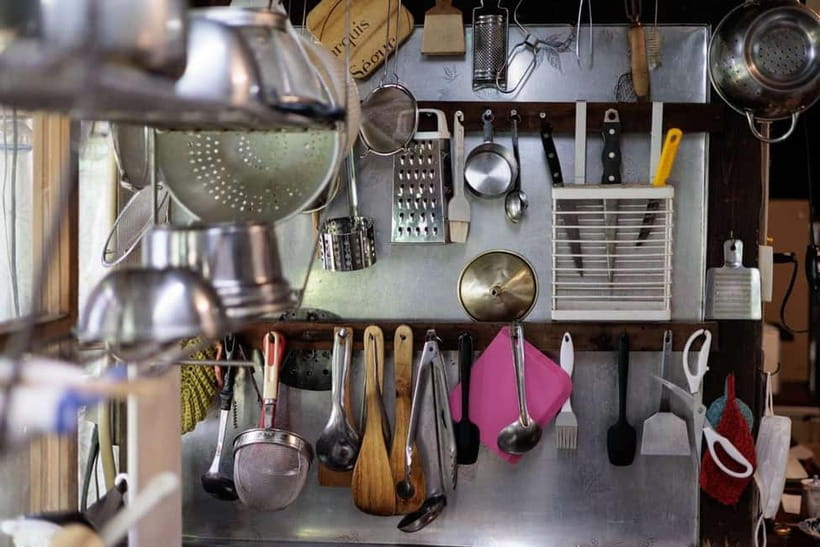
At $233 per person, this class costs more than a basic public cooking lesson. The value comes from the combination of several services:
- A private cooking session
- A five-course meal
- All ingredients and utensils
- Tea or other non-alcoholic drinks
- Welcome tea and wagashi
- A short machiya house tour
- English-language hosting
- A central Old Town location
The private format is the key point. You are paying for personal attention from the host and access to a family home, not only for the food. If you place high value on a small-scale cultural experience, the price may feel fair.
The cost is harder to justify if your main goal is simply to learn a few recipes. You could spend less on a meal in Takayama, and the class does not promise a formal certificate, a recipe book, or alcoholic drinks. The price makes most sense for someone who wants the setting, conversation, local context, and shared meal as much as the cooking itself.
Two strong points came through clearly from the available feedback. The welcome was warm, and the explanations were easy to follow. The meal prepared with fresh ingredients was also praised, as was the chance to gain a close look at Japanese hospitality. Those are the parts I would value most when deciding if the cost fits your plans.
Who will enjoy this class most
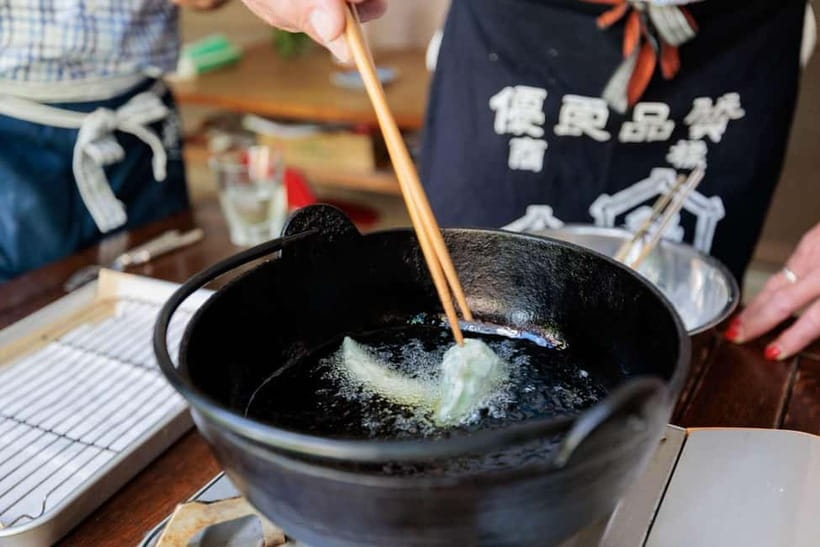
This is a good match for you if you want a private activity with a strong local connection. Couples, families, and small groups who enjoy food and cultural conversation should find the format appealing.
It also suits people who have already visited Takayama’s markets and restaurants and want to go one step further. Instead of only tasting Hida food, you take part in preparing it and hear how the host thinks about the ingredients.
The class may suit first-time visitors, too. Its central location makes it easy to place in a day of Old Town sightseeing, and the house tour adds background to the area beyond the shopfronts.
You may want to choose another activity if you dislike standing, have complex dietary needs, or want a fixed menu. The cooking session requires you to remain on your feet, and the menu changes with the seasons. Contact the host before booking if food restrictions are a serious concern.
This is also not the best choice for anyone looking for a large, lively group event. The appeal is the private home setting and direct contact with the host. If you prefer a broad social atmosphere, a public class may be a better fit.
Practical planning for your Takayama day
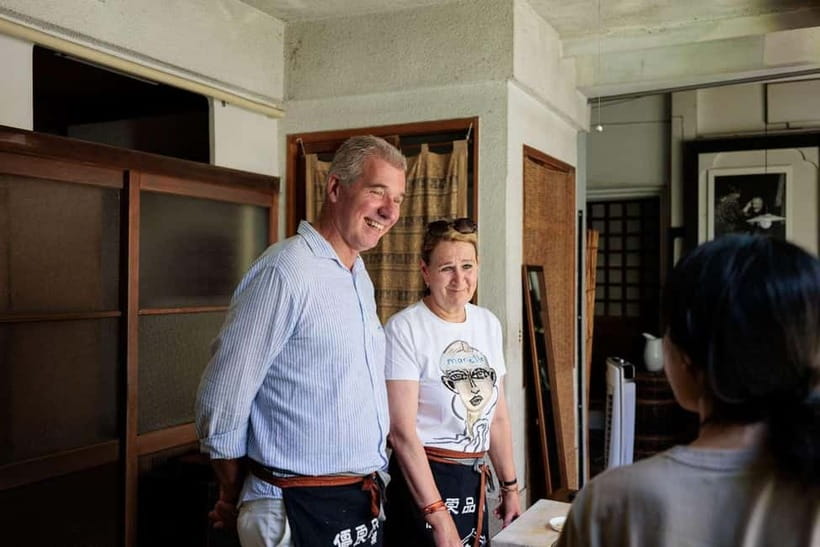
Plan your route so you arrive at the honey shop next to the house, rather than trying to locate the townhouse by a street address alone. Wait in front of the shop for the host. The activity ends back at this meeting point, which makes it easy to continue exploring Old Town afterward.
Allow enough time to find the meeting point without rushing. The class begins with tea and a sweet, then moves through the cooking session, the meal, and the house tour. A precise duration is not provided, so avoid scheduling a train departure or another fixed appointment immediately afterward.
Comfortable shoes matter more than they might for an ordinary meal. You will be standing in the kitchen, and the house setting may involve traditional features that are less forgiving than a modern restaurant.
Smoking is not allowed. Alcoholic drinks are not included. Tea and other non-alcoholic beverages are included, so you can expect drinks with the meal without needing to purchase them separately.
The activity is offered in English. If you want particular information about the house, the former maternity hospital, or the seasonal dishes, prepare a few questions in advance. A private class gives you a better chance to ask them than a large group demonstration.
You can reserve now and pay later, and cancellation is available up to 24 hours in advance for a full refund. Those terms help if your Takayama schedule is still changing.
How this fits into a Takayama visit
Takayama is known for its preserved Old Town, but shop-lined streets can sometimes make a place feel like a stage set. This class gives you a reason to step behind the public face of the district and enter a real family home.
The location is especially convenient because the house sits in the center of Old Town. You can visit the class without arranging a separate ride, then return to the streets, markets, or nearby sights afterward.
The cooking also gives meaning to local food you may encounter elsewhere. Once you have discussed seasonality and prepared Hida dishes yourself, a meal in a Takayama restaurant can feel easier to understand. You know to look for balance, local ingredients, and the way several dishes work together.
Do not expect the class to cover every part of Japanese cuisine. It is a focused introduction to seasonal home cooking in Hida Takayama. Its strength is the personal setting, not a wide survey of regional food across Japan.
Should you book this private cooking class?
Book it if you want access to a family machiya, hands-on cooking, and a meal shared with a local host. The central Old Town location, welcome tea, seasonal five-course menu, and house tour make this more than a standard food lesson.
I would especially recommend it for someone who values authentic contact over a packed sightseeing schedule. The former maternity hospital connection adds an unusual historical note, though you should confirm exactly what part of that museum can be visited.
Think twice if $233 feels high for a cooking activity, if you need a guaranteed menu, or if standing for the session would be difficult. For the right person, the price pays for privacy, setting, local guidance, and a personal look at Takayama life. For someone seeking only inexpensive instruction, it is probably not the best match.
FAQ
Where does the cooking class meet?
Meet in front of the honey shop next to the family’s machiya house in the center of Takayama Old Town. The host will wait there for you.
Where does the activity end?
The activity ends back at the same meeting point by the honey shop.
What is included in the price?
The price includes a private cooking session, all ingredients and utensils, a five-course meal, tea or other non-alcoholic beverages, welcome tea and wagashi, and a short tour of the machiya house.
Are alcoholic drinks included?
No. Alcoholic beverages are not included.
Is the class conducted in English?
Yes. English is listed as the language for the activity.
What should I wear or bring?
Wear comfortable shoes because you will be standing during the cooking session. No special equipment is listed as necessary.
Can I tell the host about allergies or food preferences?
Yes. Notify the host in advance about dietary restrictions, food preferences, and allergies so the meal can be planned appropriately.
Newest classes around Japan
- Cooking Class: Make a Local Delicacy in a Japanese House★ 5.0 · 7 reviews
- Culinary Home Cooking with Grandmothers – Vegan Friendly★ 5.0 · 5 reviews
- Nagoya Super Market Tour & Home Cooking Class with a Local, Akiko★ 5.0 · 10 reviews
- Tokyo: Sushi roll and side dish cooking experience★ 5.0 · 2 reviews
- Tokyo: Sushi Making Experience & Japanese Cooking Class★ 5.0 · 2 reviews
- Tokyo: Sushi Cooking Class with Sake Tasting★ 4.8 · 55 reviews
- Tokyo: Real Ramen & Dumpling Cooking with Master Chef★ 5.0 · 10 reviews
- Tokyo: Sushi and Ramen Cooking Class with Sake Pairing Set★ 5.0 · 81 reviews
Japan Cooking Classes, compared.
Ramen Cooking Class at Ramen Factory in Kyoto
Read our review →
Ramen & Gyoza Cooking Class in Tokyo with Local Supermarket Visit
Read our review →
Ramen Cooking Class at a Ramen Factory with Souvenir
Read our review →
Sushi Making Osaka! Popular Sushi Class in Japan!
Read our review →
Tokyo Tsukiji Fish Market Tour and Sushi Making Lesson
Read our review →
Japanese Washoku Bento Small Group Cooking Class
Read our review →
Browse the lists this tour appears in