
Review · JAPAN COOKING CLASSES
Narita Offering 3hour Japanese cooking experience.
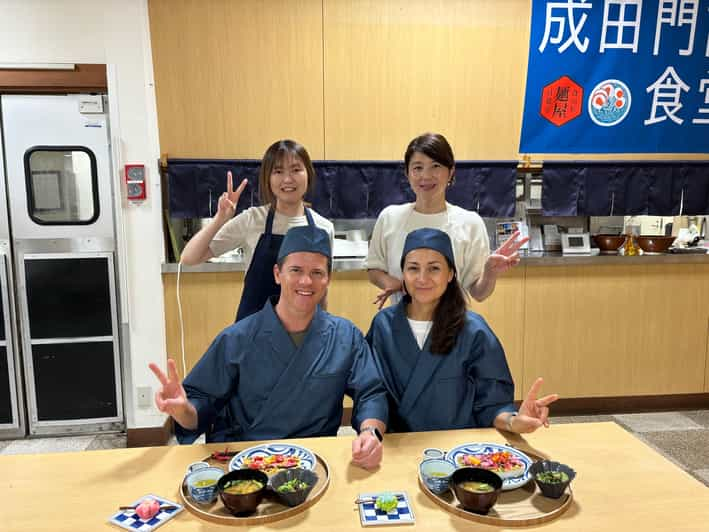
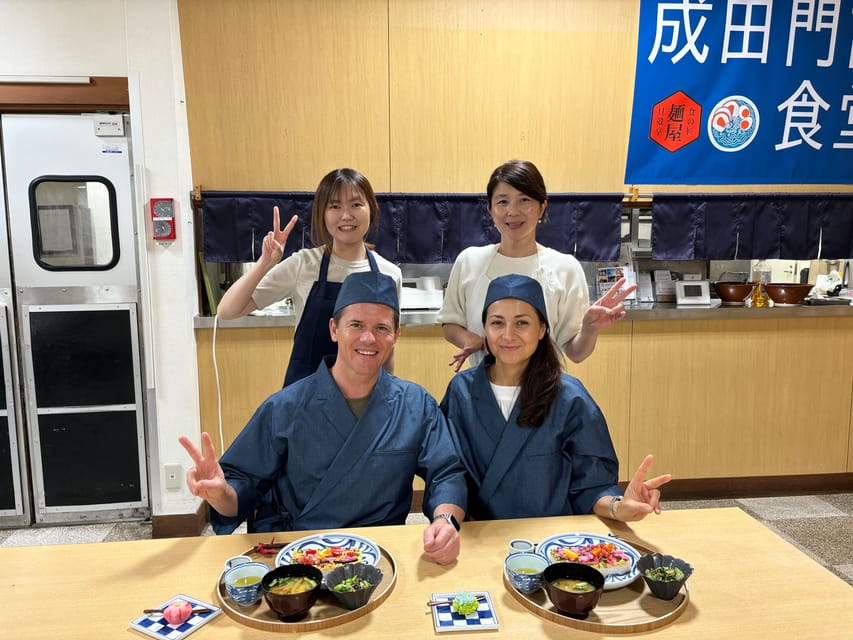
Pressed sushi, miso soup, seasonal salad, and a handmade Japanese sweet make this 2.5-hour Narita cooking class a pleasant way to spend time between sightseeing stops. You work in the back of Nagomi no Yoneya Monzenten, a Japanese sweets shop just five minutes from Narita Sando and Narita Shinshoji Temple.
I like two things here: you learn the basic building blocks of a Japanese home meal, including soup stock and sushi rice, and you get to finish with local sake and nerikiri, a traditional confection. Satoko Hirano has taught home cooking for more than ten years, and her lessons draw on seasonal ingredients and family cooking traditions from Fukushima.
The main consideration is the price, $98 per person, which is fair only if you value direct instruction and a sit-down meal as much as the food itself. The listed menu also mentions a Japanese egg omelet in the overview, while the detailed menu focuses on pressed sushi, miso soup, salad, and nerikiri, so confirm the exact dishes when booking.
Key points to know before booking
- Five minutes from Narita Sando and Shinshoji Temple: You can pair the class with Narita’s main traditional street and temple without arranging extra transport.
- A home-cooking lesson, not a sushi-only class: You work on pressed sushi, miso soup, and salad, with attention to rice, stock, and seasonal vegetables.
- Satoko Hirano teaches from family tradition: Her approach comes from her grandmother and mother, who cooked with seasonal ingredients in Fukushima.
- Dessert and sake are included: You make nerikiri and taste Narita’s local sake after cooking.
- Friendly for beginners: The lesson is designed so even people with little cooking experience can take part.
- Held inside a Japanese sweets shop: The meeting point is Nagomi no Yoneya Monzenten, where you enter and walk to the back.
Cooking near Narita Sando and Shinshoji Temple
This class makes particular sense if you have a few hours in Narita. The meeting point is only about five minutes on foot from Narita Sando, the traditional shopping street leading toward Narita Shinshoji Temple. That location lets you combine food, sweets, temple architecture, and old-town streets in one compact visit.
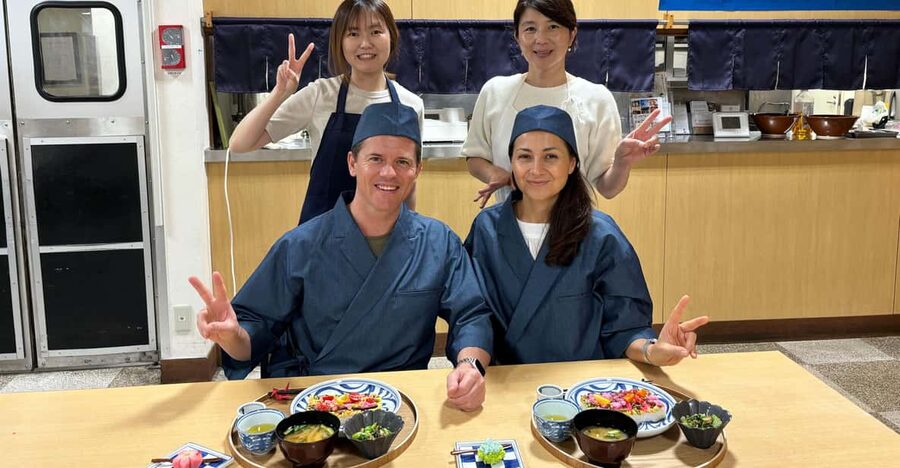
You do not meet at a large cooking school or a modern restaurant. The class takes place in a rented corner at the back of Nagomi no Yoneya Monzenten, a Japanese sweets shop. That setting gives the activity a more local feel, though you should pay attention when entering. Go inside the shop and continue to the back, where your host will be waiting.
The activity begins and ends at the same place. That is useful if you are planning a short Narita stop before a flight or after arriving at Narita Airport, although the activity information does not give a specific airport transfer time. You will need to plan that part yourself.
The host or greeter speaks English and Japanese. The class is also listed as wheelchair accessible, which is important if access affects your choice of activities. For any detailed mobility needs, it is still sensible to confirm the setup before booking, since the class uses a rented section of a shop.
More Sushi and Japanese Classes in Japan:
- Ramen Cooking Class at Ramen Factory in Kyoto
★ 5.0 · 1,937 reviews - Ramen & Gyoza Cooking Class in Tokyo with Local Supermarket Visit
★ 5.0 · 823 reviews - Kyoto: Ramen Cooking Class at a Ramen Factory with Souvenir
★ 4.9 · 532 reviews
What you cook during the 2.5 hours
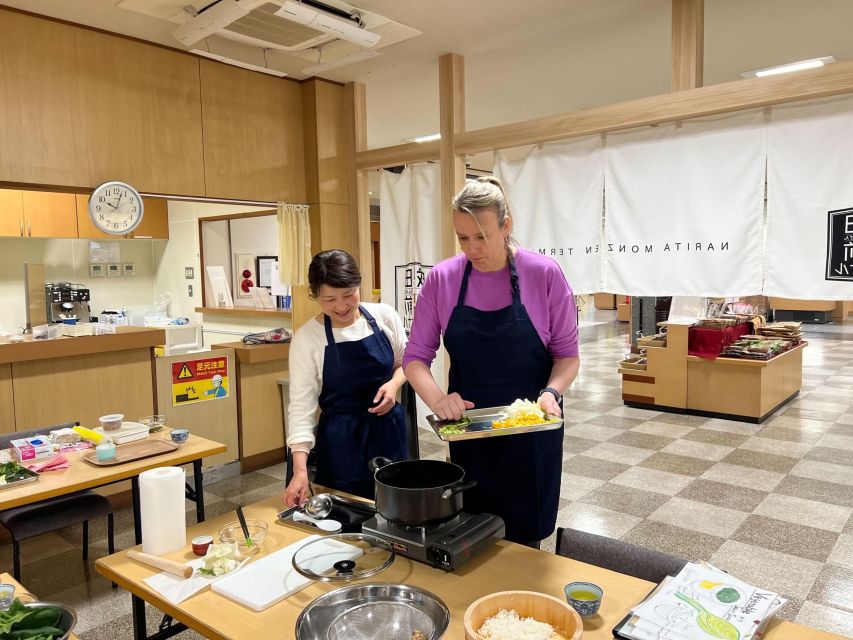
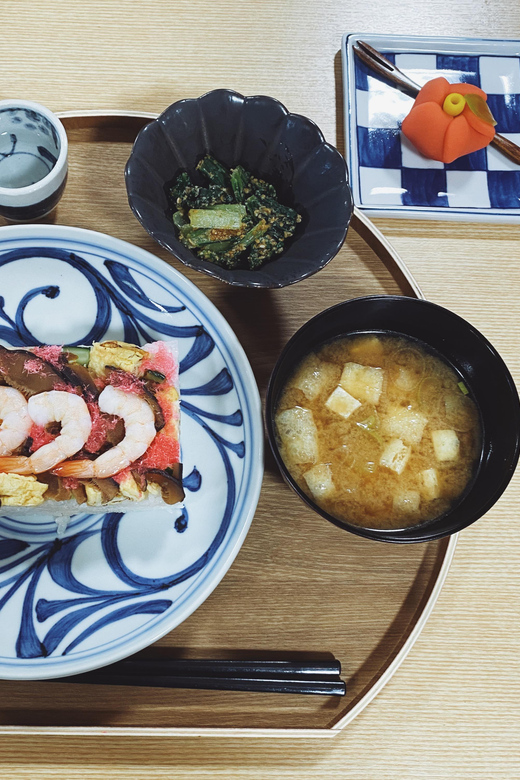
The core meal is Japanese pressed sushi, miso soup, and a Japanese salad. This is a useful combination because it shows you more than one kind of Japanese cooking. Sushi gives you rice and shaping work, miso soup introduces stock and seasoning, and the salad shows how a small side dish fits into a typical Japanese meal.
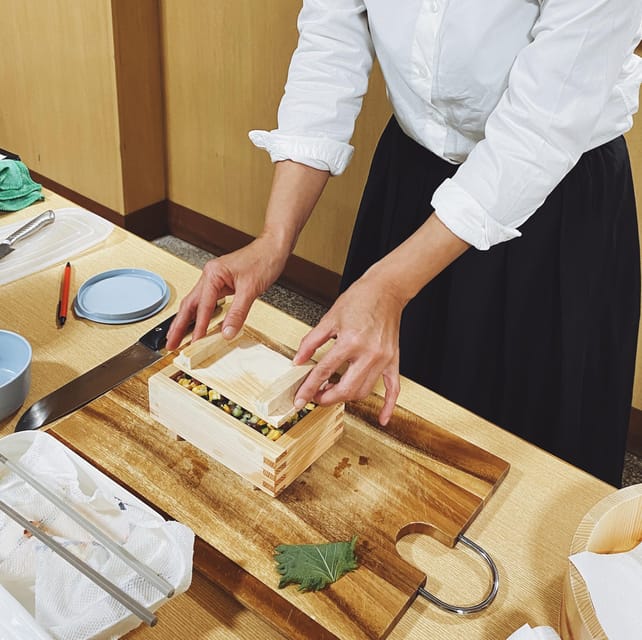
Pressed sushi differs from the rolled sushi most people picture first. Instead of rolling ingredients inside a sheet, you press prepared rice and toppings into a form. The class description says you work carefully from the sushi rice onward, so the appeal is not simply assembling a finished dish. You get a look at how texture, seasoning, and presentation come together.
Miso soup may sound simple, but it is one of the best dishes for learning everyday Japanese cooking. The lesson includes information about soup stock, or dashi, and the use of local vegetables. That gives you a practical starting point for recreating the dish later, even if you do not bring home a recipe for every menu item.
The salad provides a lighter counterpoint to the rice and soup. Since the lesson emphasizes seasonal local ingredients, the exact vegetables may depend on what is available. Do not expect a fixed Western-style salad course. Here, the side dish is part of the balance of a Japanese dinner table.
The overview also mentions a Japanese egg omelet. The more detailed food list names pressed sushi, miso soup, salad, and nerikiri, but not the omelet. If the omelet is the dish that interests you most, ask for confirmation before paying. This small menu difference is the one point I would clarify in advance.
Satoko Hirano’s approach to Japanese home cooking
Satoko Hirano is a Japanese cooking teacher based in Chiba who has taught for more than ten years. She was born in Fukushima and learned much of her cooking outlook from her grandmother and mother.
Her family background gives the class a useful cultural angle. Her grandmother cooked for the family each day using seasonal ingredients, and she did so while wearing a kimono. Satoko also grew up around beautiful kimonos at her grandfather’s kimono store. Those details help explain why the lesson connects food with older Japanese household customs rather than treating cooking as a list of isolated techniques.
Satoko continues to visit nearby farmers to learn about local ingredients. You should not read that as a promise of a farm visit during the class. Instead, it means the teacher can explain why certain vegetables appear at a particular time of year and how Japanese cooks make use of what is available.
That seasonal focus is one of the best reasons to choose this class. Japanese home cooking often depends on restraint, timing, and careful use of ingredients. You learn not only what goes into the pot, but also why a certain vegetable or preparation suits the season.
Reiko is also associated with the class, and the available feedback specifically praises the kindness of both Reiko and Satoko. The pair helped put a beginner at ease, kept the cooking easy to follow, and made room for conversation. That matters in a hands-on class. A complicated recipe is less useful if you feel rushed or embarrassed to ask for help.
A beginner-friendly lesson with room for conversation
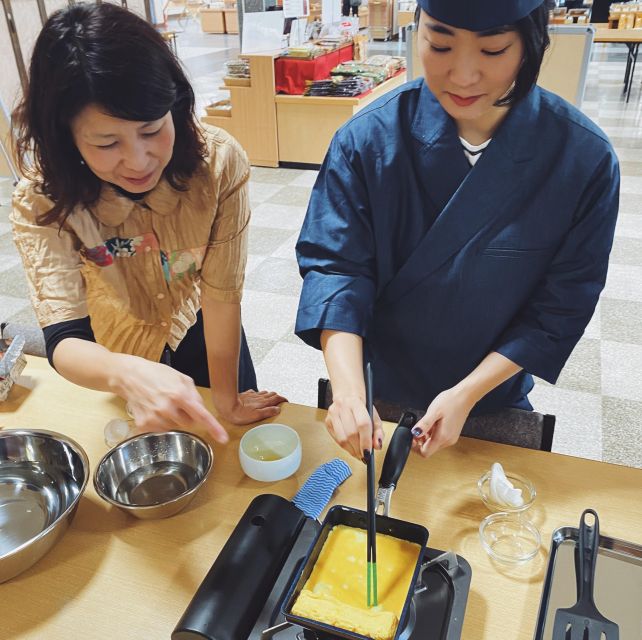
You do not need advanced cooking skills. The class is designed to guide you through each part, and direct feedback describes the cooking as easy to learn even for someone who does not normally cook. That makes this a good choice for first-time visitors who want to take part rather than watch a demonstration from the side.
Expect the lesson to involve practical work with rice, soup, side dishes, and dessert. The exact sequence is not supplied, so I would not promise a particular order. The broad shape is clear: prepare the food with the teacher, sit down to eat what you made, enjoy sake, and finish with nerikiri.
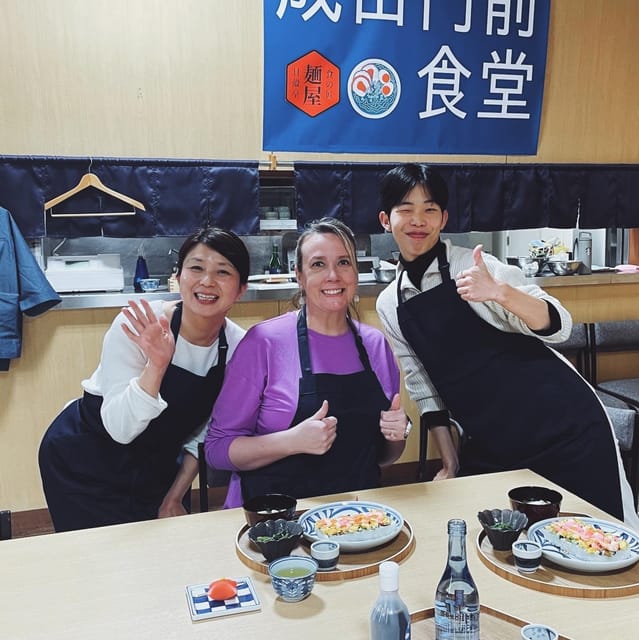
The social side is part of the value. The strongest praise centers on how quickly Reiko and Satoko made participants comfortable, with plenty of laughter and varied conversation. If you are hoping for a formal, silent lesson, this may feel more relaxed than expected. If you want contact with local people and a chance to ask about Japanese food customs, that relaxed tone is a plus.
The class is offered in English and Japanese. The available comments praise the hosts’ ability to help participants through the cooking, but the listing does not describe the level of English instruction or provide a full lesson plan. You can expect English support, though you may still find that demonstrations and gestures are part of the teaching.
More Cooking Classes in Japan:
- Sushi Making Osaka! Popular Sushi Class in Japan!
★ 5.0 · 500 reviews - Kyoto: Ramen, Gyoza, and Onigiri Cooking Class
★ 5.0 · 445 reviews - Kyoto: Japanese Washoku Bento Small Group Cooking Class
★ 5.0 · 380 reviews - Osaka: Ramen and Gyoza Cooking Class in Dotonbori
★ 5.0 · 378 reviews
Nerikiri and sake make the finish special
The dessert is nerikiri, a traditional Japanese confection often shaped into seasonal or nature-inspired forms. Here, you prepare it as part of the class rather than simply receiving a packaged sweet. That gives you a glimpse of the care Japanese confectionery puts into shape, color, and presentation.
Nerikiri is a good ending to this particular meal. After sushi, soup, and salad, the sweet offers a different texture and a more artistic kind of food preparation. The activity information does not specify the design you will make, so the finished shape may vary.
Sake from Narita is included as well. This is a small but worthwhile local touch. You are not just eating the meal in a classroom, you are linking it to the area around Narita. If you do not drink alcohol, check the arrangements before booking, since the included item is specifically sake and no substitute is stated.
The food is described as delicious and succulent in the available feedback, but the greater strength is the chance to understand how the dishes fit together. You learn a meal, not just one Instagram-friendly item. The result should be especially satisfying if you enjoy tasting something you helped prepare.
What the $98 price really covers
At $98 per person, this is not a bargain meal. You can find cheaper food in Narita, and the class is too short to function as a full professional cooking course. The value comes from the instruction, the personal setting, the meal, the dessert, and the local sake all being combined in one appointment.
I would consider the price reasonable for someone who wants a structured cultural activity near the temple. You are paying for a teacher with more than a decade of experience, hands-on preparation, English or Japanese support, and the chance to ask questions about soup stock, local vegetables, and seasonal cooking.
The comparison changes if you are mainly hungry. If your goal is simply to eat pressed sushi, $98 is a poor deal. If you want to understand how Japanese home cooking works and meet the people guiding you, the cost makes more sense.
The small class setting may also matter to you, but no group size is provided. Do not assume this is a private lesson or a tiny family gathering. Ask if group size is important, particularly if you want a quieter class or more direct time with Satoko.
The activity allows free cancellation up to 24 hours before the start for a full refund. You can also reserve now and pay later, which is useful when your Narita plans depend on flight timing. Starting times vary, so check availability rather than building your day around a time that may not be offered.
How to fit the class into a Narita visit
The location makes this easy to pair with sightseeing. You can visit Narita Sando before or after the lesson, then walk to Shinshoji Temple. Since the class itself takes 2.5 hours, allow extra time for the five-minute walk, finding the shop entrance, and exploring the nearby area.
The meeting instructions are simple but worth following closely. Enter Nagomi no Yoneya Monzenten and walk toward the back. Your host will be waiting there, not necessarily at the front of the shop.
Because the activity ends where it starts, you do not need to arrange a separate return meeting point. That is convenient for a half-day plan. The information does not state how much time you need between the class and a flight, so leave a generous buffer for transport and airport procedures.
Narita is more than an airport name, and this class helps you see that. The nearby temple and traditional street give the cooking lesson context. You are learning about food in a place where old shops, sweets, religious buildings, and everyday local life sit close together.
Who will get the most from this class
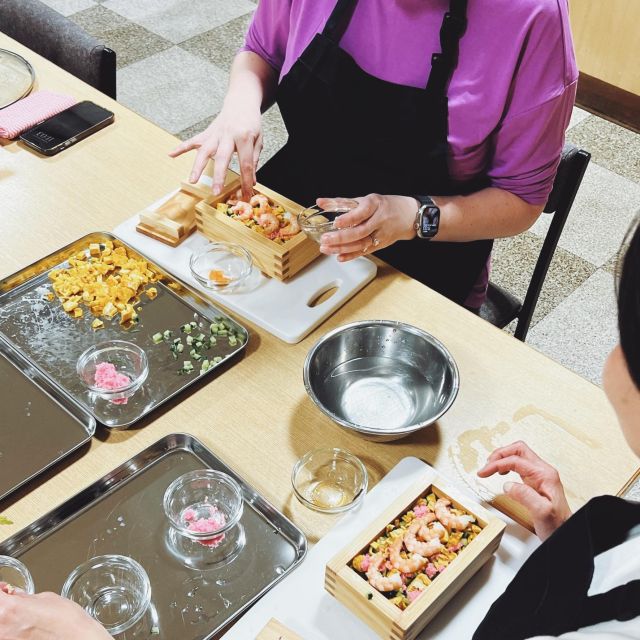
I would recommend this for first-time visitors who want a gentle introduction to Japanese food. You do not need to know how to make sushi, and the teaching style is meant to help you if you rarely cook.
It also suits couples, friends, and families who enjoy doing an activity together. The menu has enough variety to keep the session interesting, while the relaxed conversation makes it less formal than a technical cooking course.
Food-focused visitors will appreciate the explanation of dashi, seasonal vegetables, and home-style meal structure. People interested in Japanese sweets get an extra reason to book because nerikiri is prepared as part of the experience.
I would be more cautious if you want a specialized sushi lesson, a professional chef’s training, or a clearly defined menu that includes the egg omelet. The class is about everyday Japanese cooking, not restaurant technique. Confirm the omelet and any dietary needs before booking, since the supplied information does not give substitution details.
Should you book the Narita cooking class?
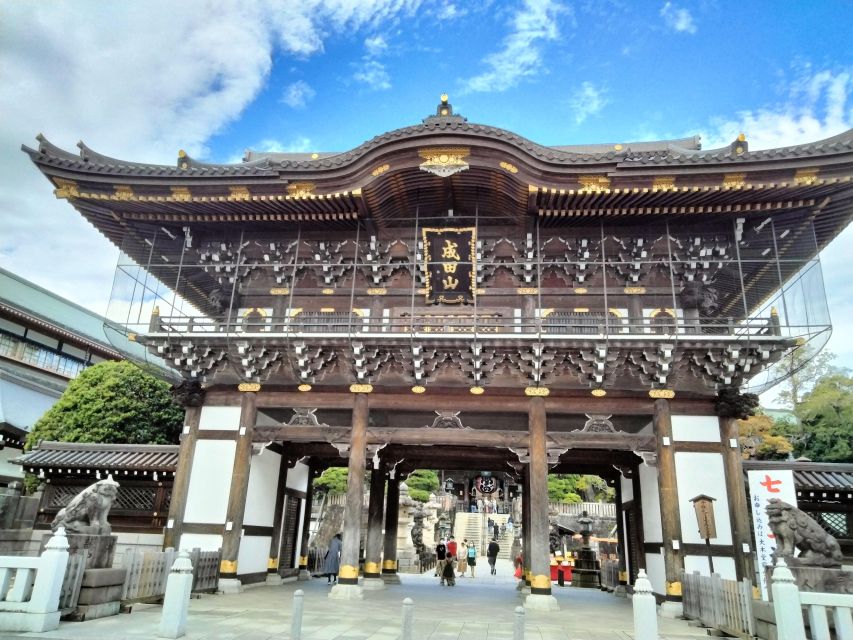
Book it if you have at least 2.5 free hours in Narita and want more than temple photos and souvenir shopping. The strongest reasons are the friendly teaching from Satoko and Reiko, the beginner-friendly pace, the practical look at Japanese home cooking, and the satisfying finish with nerikiri and local sake.
Skip it if your schedule is tight, your main goal is a cheap meal, or you want an advanced sushi workshop. At $98, the experience needs to provide cultural and personal value, not just food. For the right visitor, its location and warm instruction make it a smart way to turn a Narita stop into something you will remember.
FAQ
Where is the Japanese cooking class held?
The class is held in a rented corner at the back of Nagomi no Yoneya Monzenten, a Japanese sweets shop near Narita Sando.
How far is the meeting point from Narita Sando and Shinshoji Temple?
The meeting point is about a five-minute walk from Narita Sando and Narita Shinshoji Temple.
How long does the activity last?
The cooking experience lasts 2.5 hours. Starting times vary, so check availability when booking.
What food will I prepare?
The detailed menu includes Japanese pressed sushi, miso soup, and Japanese salad. Nerikiri confectionery and sake are also included.
Is a Japanese egg omelet included?
The overview mentions a Japanese egg omelet, but the detailed menu does not list it. Confirm the current menu before booking if the omelet is important to you.
Who teaches the cooking class?
Satoko Hirano teaches the class. Reiko is also associated with the experience and helps host the session.
Can beginners join?
Yes. The class is designed to teach basic Japanese cooking, and no advanced cooking experience is required.
What languages are available?
The host or greeter speaks English and Japanese.
Is sake included?
Yes. Narita local sake is included as part of the experience.
Can I cancel for a refund?
You can cancel up to 24 hours in advance for a full refund. You can also reserve now and pay later.
Newest classes around Japan
- Cooking Class: Make a Local Delicacy in a Japanese House★ 5.0 · 7 reviews
- Culinary Home Cooking with Grandmothers – Vegan Friendly★ 5.0 · 5 reviews
- Nagoya Super Market Tour & Home Cooking Class with a Local, Akiko★ 5.0 · 10 reviews
- Tokyo: Sushi roll and side dish cooking experience★ 5.0 · 2 reviews
- Tokyo: Sushi Making Experience & Japanese Cooking Class★ 5.0 · 2 reviews
- Tokyo: Sushi Cooking Class with Sake Tasting★ 4.8 · 55 reviews
- Tokyo: Real Ramen & Dumpling Cooking with Master Chef★ 5.0 · 10 reviews
- Tokyo: Sushi and Ramen Cooking Class with Sake Pairing Set★ 5.0 · 81 reviews
Japan Cooking Classes, compared.
Ramen Cooking Class at Ramen Factory in Kyoto
Read our review →
Ramen & Gyoza Cooking Class in Tokyo with Local Supermarket Visit
Read our review →
Ramen Cooking Class at a Ramen Factory with Souvenir
Read our review →
Sushi Making Osaka! Popular Sushi Class in Japan!
Read our review →
Tokyo Tsukiji Fish Market Tour and Sushi Making Lesson
Read our review →
Japanese Washoku Bento Small Group Cooking Class
Read our review →
Browse the lists this tour appears in