
Review · JAPAN COOKING CLASSES
Fujieda: Suisha-mura Traditional Japanese Cooking Experience
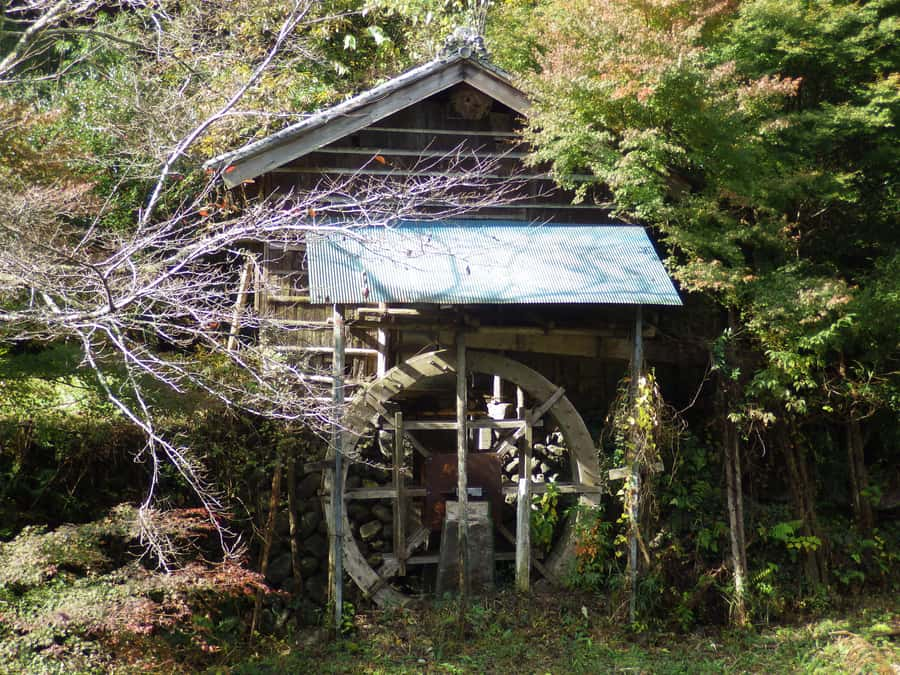
The best part of this Fujieda outing is that lunch is not simply served to you. You chop the wood, build the fire, cook the rice, and grill your own fish in a 250-year-old farmhouse beside a clear mountain stream. It is a hands-on look at rural Japan before gas and electricity changed daily cooking.
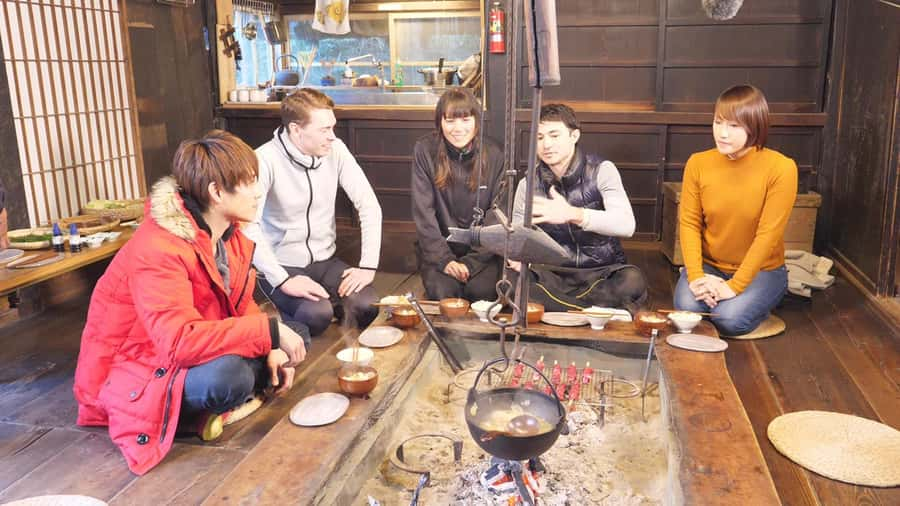
I like the setting, reached by a suspension bridge with an old waterwheel beside the house. I also like the calm, practical rhythm of the day: Hoshi-san teaches each step in English, and you sit around an irori hearth to eat food you helped prepare. The drawback is that this is not a polished indoor cooking school. Expect smoke, dirt, uneven ground, and physical work.
Key points to know before booking
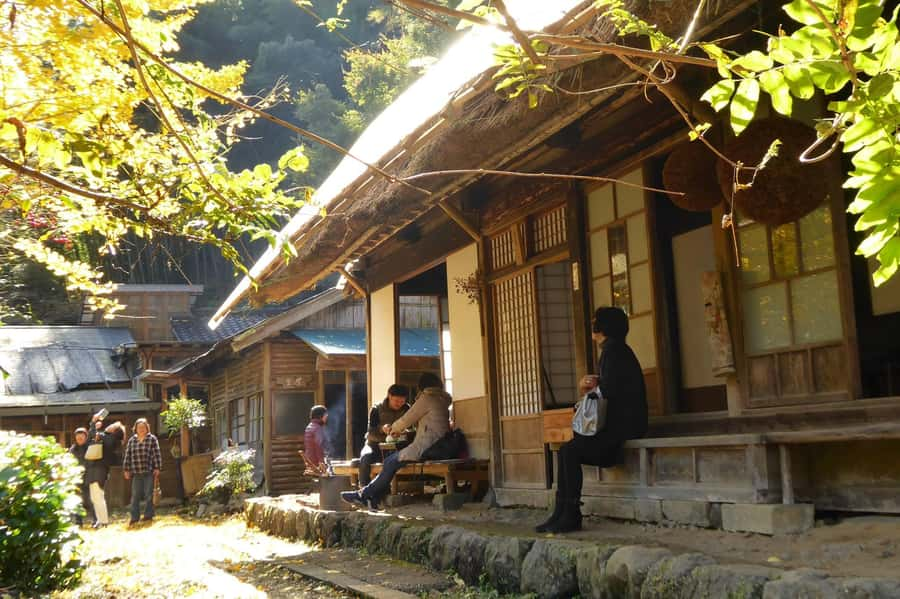
- A 250-year-old thatched farmhouse: Cross a suspension bridge to reach the traditional house in Suisha-mura.
- Lunch comes from your own work: Prepare rice, seasonal vegetables, and salt-grilled yamame mountain trout.
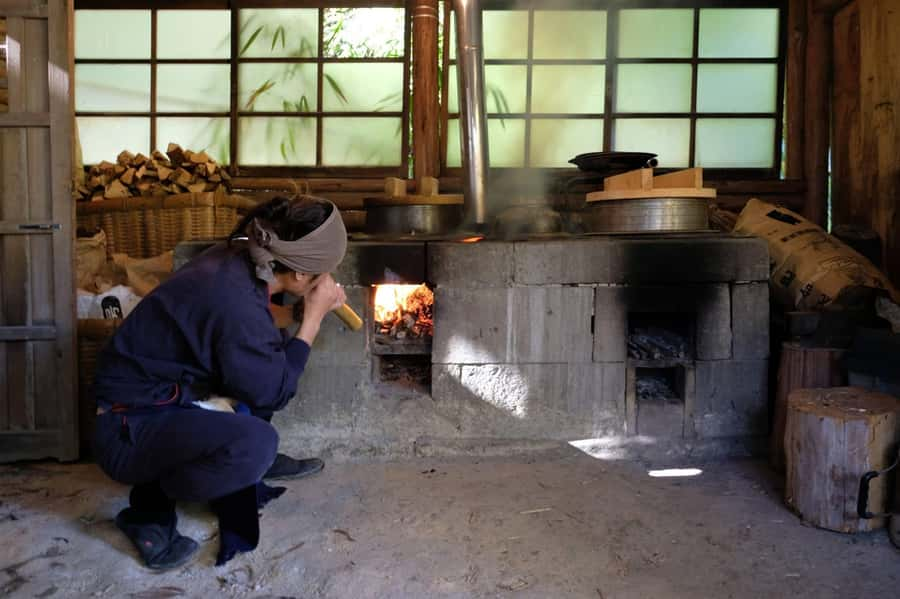
- Old cooking methods: Chop firewood and cook rice over a kamado, an old-fashioned stove.
- A real countryside setting: The village is about 30 minutes by car from central Fujieda.
- Small-group instruction: The group is limited to 10, with English and Japanese guidance from Hoshi-san.
- Not a passive cultural stop: Wear clothes and shoes you can get dirty, and be ready for outdoor activity.
Crossing the bridge into old Fujieda
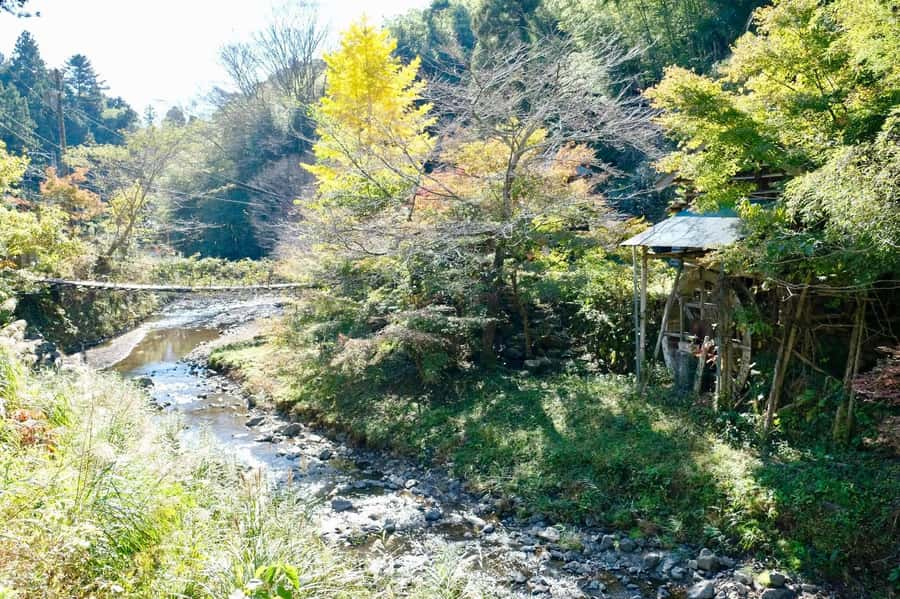
Suisha-mura sits in a mountain valley about 30 minutes from downtown Fujieda. You can meet at the north exit of JR Fujieda Station at 9:30 a.m., then ride with the host and arrive around 10:00 a.m. You can also make your own way to Suisha-mura for the 10:00 a.m. start.
The arrival is part of the experience. You cross a suspension bridge over clear stream water, then reach a thatched Japanese house set against the mountainside. Beside it is the old waterwheel that gives the village its name. The combination feels far removed from Japan’s train stations, shopping streets, and dense city neighborhoods.
I like that the setting does not rely on a staged museum display alone. The house, bridge, waterwheel, river, fireplace, and cooking tools all work together. You are not only looking at old rural life. You are using some of the same basic methods that once made a meal possible.
That setting also tells you what kind of day this will be. The area is rural, and the activity takes place around a traditional house and nearby water. You should expect outdoor surfaces and a little mess rather than a slick, temperature-controlled studio.
More Sushi and Japanese Classes in Japan:
- Ramen Cooking Class at Ramen Factory in Kyoto
★ 5.0 · 1,937 reviews - Ramen & Gyoza Cooking Class in Tokyo with Local Supermarket Visit
★ 5.0 · 823 reviews - Kyoto: Ramen Cooking Class at a Ramen Factory with Souvenir
★ 4.9 · 532 reviews
Firewood, rice, and the work behind lunch
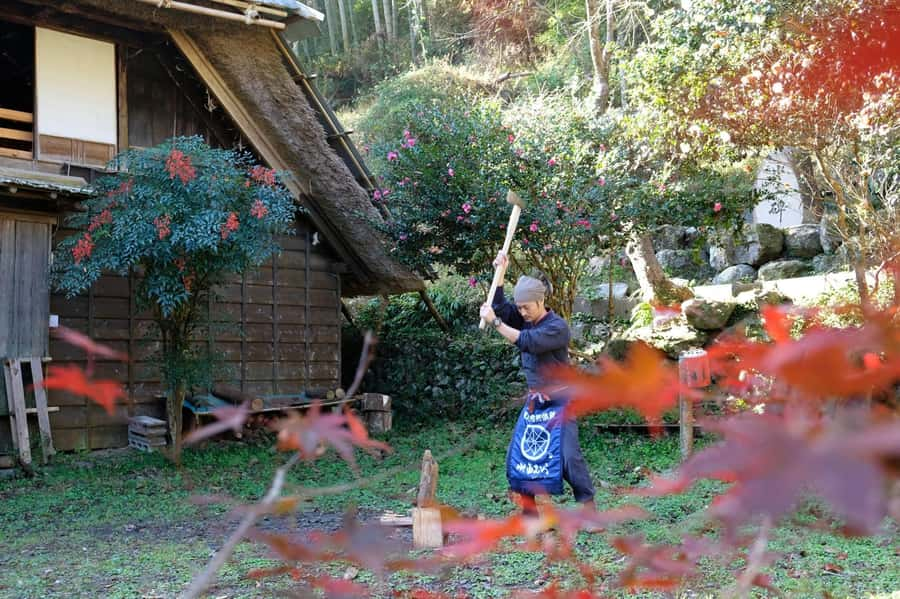
The day begins with practical tasks. You chop firewood, help prepare the fire, and learn how rice was cooked before modern appliances. Rice is made with a kamado, an old-style stove, while the central irori hearth becomes the focus for other cooking and for the meal itself.
This is where the experience earns its price. At $161 per person, it is not a cheap lunch or a quick demonstration. You are paying for transportation from the station, a five-hour small-group activity, instruction, the house visit, cooking tools, wood, ingredients, and the meal. If you want a short photo stop, it costs too much. If you want a full cultural activity with a personal guide and a meal built from your own work, the value is easier to see.
Chopping wood is not just a novelty. It shows how much effort once went into an ordinary bowl of rice. The task also gives the day a physical edge. You should wear shoes that feel secure and clothes that allow easy movement. A towel or handkerchief is useful, since the activity can leave you warm, smoky, or dirty.
The information says not to make a fire independently, so follow the host’s instructions closely. Fire-making is part of the experience under supervision, not permission to handle flames however you like. Smoking and littering are not allowed.
Catching and grilling yamame trout
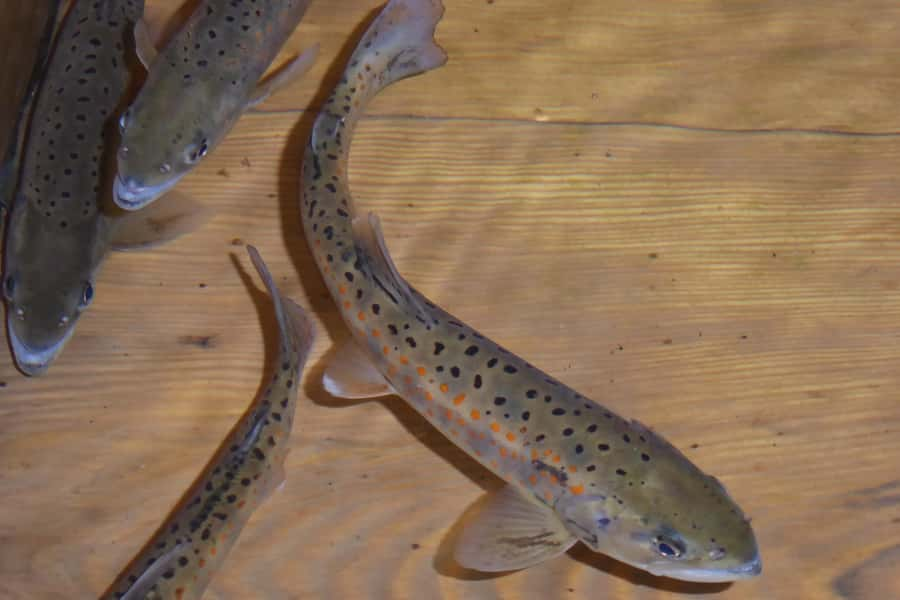
Fish is another hands-on part of the meal. You may catch fish from the nearby river or from a barrel of water, then prepare it for cooking. The included fish is yamame mountain trout, served salt-grilled.
The trout is cooked in a particularly memorable way. You grill it on a stick over the fire, rather than placing a prepared fillet on a modern kitchen grill. This is a simple method, but it makes you pay attention to the heat, the position of the fish, and the pace of cooking.
The nearby stream adds to the sense of place, and one account of the experience describes playing in the river beside the house. Still, you should not treat this as a free-form river adventure. The main focus is cooking, and your activities should follow the host’s direction.
For many people, the fish will be the most fun part of lunch. It gives the meal a clear connection to the surrounding water and mountains. If you do not like handling fish or working around an open hearth, this may be less appealing than a conventional Japanese cooking class.
Seasonal vegetables around the irori
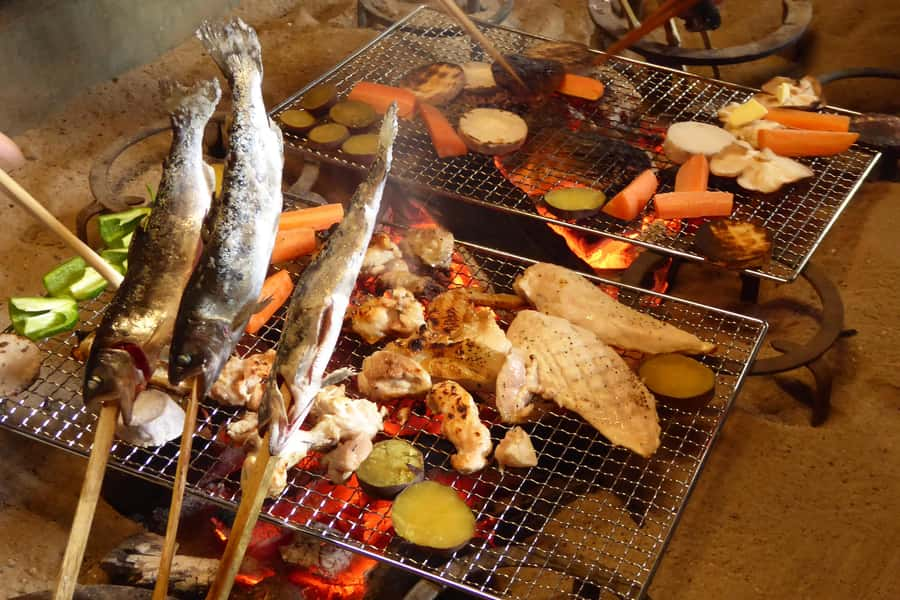
The food is straightforward and seasonal. Ingredients include rice, seasonal barbecue vegetables, salt, wood, and yamame trout. You prepare the meal with the supplied tools and materials, then eat what you have made.
The irori is the heart of the meal. This traditional central hearth provides heat and a cooking point, with seating arranged around it. Eating there changes the mood of lunch. You are not rushing through a restaurant course. You are sitting in the same space where the preparation took place, with the fire still central to the meal.
I like this connection between work and food. You see the wood, fire, rice, vegetables, and fish come together in one place. The menu is not presented as a complicated culinary performance, and that is part of its appeal. It is a healthy, local-style meal built from a few basic ingredients and careful cooking.
Do not expect a broad menu or extra drinks to be included. Personal expenses and additional drinks are not covered, so bring water or something refreshing. The supplied food is enough for the planned meal, but the experience is about traditional preparation more than gourmet variety.
More Cooking Classes in Japan:
- Sushi Making Osaka! Popular Sushi Class in Japan!
★ 5.0 · 500 reviews - Kyoto: Ramen, Gyoza, and Onigiri Cooking Class
★ 5.0 · 445 reviews - Kyoto: Japanese Washoku Bento Small Group Cooking Class
★ 5.0 · 380 reviews - Osaka: Ramen and Gyoza Cooking Class in Dotonbori
★ 5.0 · 378 reviews
A guide who makes the old methods approachable
Hoshi-san leads the experience in English and Japanese. The English is described as fluent, and the teaching covers the practical steps rather than only offering historical background. You learn by doing, with the host arranging the activities and guiding you through the cooking.
That matters in a setting where the tools may be unfamiliar. A kamado, an irori, firewood, and fish on a stick are not difficult to understand, but using them safely and well takes instruction. Hoshi-san’s role is especially useful for first-time visitors who want to try the methods without guessing.
The group limit is 10 people. That is small enough for a more personal activity, although the exact feel will depend on how many people book your date. A smaller group may mean more direct time with the tools. With a full group, you may share some tasks.
The experience has received a top rating from four verified bookings, with repeated praise for the host’s kindness, English, and ability to arrange the activities. The most consistent strengths are clear: the host, the setting, the traditional cooking, and the sense of getting away from city life.
What the five-hour schedule feels like
The timing is simple. Meet at JR Fujieda Station around 9:30 a.m., ride for about 30 minutes, and reach Suisha-mura at approximately 10:00 a.m. The rest of the five hours is spent at the village, house, river, and cooking area before transportation back to the nearest station.
You should allow the morning to unfold at a steady pace. Wood must be chopped, fire prepared, rice cooked, fish handled, vegetables grilled, and lunch eaten. This is not an activity where you rush through three stations for photographs.
The length is useful because traditional cooking needs time. Rice over an old stove cannot be treated like a button-operated rice cooker, and grilling fish over a fire requires attention. The five-hour format gives you room to learn, cook, eat, and enjoy the surroundings without turning every task into a race.
The day may feel long if you want a packed sightseeing schedule in Fujieda. It is a better fit if you want one substantial countryside outing and can give it most of your day.
How the price compares with the experience
The $161 price includes a great deal beyond ingredients. You receive station pickup and drop-off, transportation to the village, access to the traditional house, instruction, cooking tools, firewood, seasonal vegetables, yamame trout, and the completed meal.
The value depends on what you want from Japan. A meal alone would not justify the cost for most people. The price makes more sense when you count the five-hour duration, small group, host-led instruction, rural location, transportation, and the rare chance to cook inside a historic farmhouse using an irori and kamado.
You also avoid arranging the countryside transport yourself. The ride from Fujieda Station removes one practical problem, especially if you are not comfortable reaching a mountain village by local connections. If you already have a car and only want to visit the house briefly, the package may feel less economical.
Flexible booking helps if your schedule is still taking shape. You can reserve and pay later, and cancellation is free up to 24 hours before the activity for a full refund. Check the available starting time when booking.
Who should book this experience
I would choose this for someone who wants old-style Japanese culture through daily work, not just through temples, costumes, or displays. It suits adults, couples, friends, and small groups who enjoy food, nature, and practical activities.
It is also a good choice for people who have already seen major Japanese cities and want a quieter day. The experience offers a different side of Honshu, one tied to firewood, rice, river water, and seasonal cooking.
You should be comfortable with physical tasks and outdoor conditions. The activity is not suitable for children under five, pregnant women, people with mobility impairments, or wheelchair users. Comfortable shoes, warm clothing, a hat, sunscreen, water, food or drinks, and insect repellent are recommended. Wear clothes you do not mind getting dirty.
This is not the right pick if you want a polished cooking studio, a choice of many dishes, or a completely smoke-free meal. It is also not ideal if you need easy access throughout the site.
My verdict on Suisha-mura
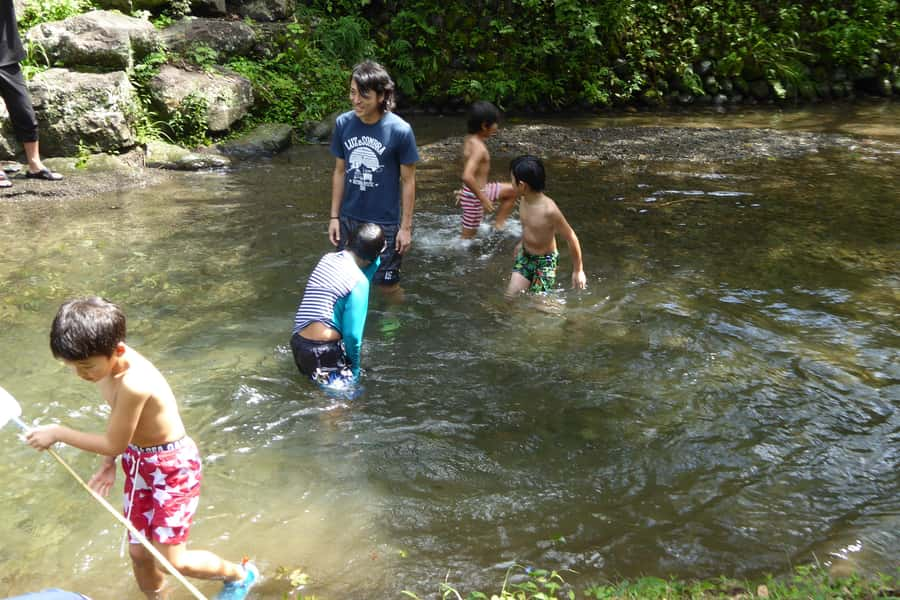
I would book this if I wanted a memorable countryside day near Fujieda and did not mind working for lunch. The suspension bridge, waterwheel, thatched house, river, open fire, and irori meal make a strong combination, and Hoshi-san’s English guidance removes much of the worry about unfamiliar tools.
The biggest reason to go is the connection between the place and the food. You do not simply hear about traditional rural life. You chop the wood, cook the rice, grill the trout, and sit down to eat the result.
Skip it if the $161 price feels high for a meal, or if uneven ground, fire, smoke, and physical work are concerns. For the right person, though, this is one of the more personal ways to spend a day outside Fujieda, with a clear sense of how much care once went into an ordinary Japanese lunch.
FAQ
Where does the Fujieda cooking experience take place?
It takes place at Suisha-mura, a small mountain village about 30 minutes by car from downtown Fujieda. The site includes a 250-year-old traditional thatched house, a suspension bridge, a clear stream, and an old waterwheel.
Where do I meet the host?
Meet at the north exit of JR Fujieda Station around 9:30 a.m. Pickup then takes you to Suisha-mura, arriving at about 10:00 a.m. You can also go directly to Suisha-mura for the 10:00 a.m. start.
How long does the activity last?
The experience lasts five hours. The stated schedule includes the transfer from JR Fujieda Station to Suisha-mura, which takes about 30 minutes.
What food will I prepare?
You will prepare rice, seasonal vegetables, and salt-grilled yamame mountain trout. You may catch fish from the nearby river or from a barrel of water, then grill it over the fire.
Is the experience available in English?
Yes. The activity is offered in English and Japanese. Hoshi-san leads the experience and provides English guidance through the cooking tasks.
What should I bring?
Bring comfortable shoes, warm clothing, a hat, sunscreen, water, food or drinks, insect repellent, and a towel or handkerchief. Wear clothes that are easy to move in and that you do not mind getting dirty.
Can I cancel the booking?
You can cancel up to 24 hours in advance for a full refund. The activity also offers a reserve-now, pay-later option.
Newest classes around Japan
- Cooking Class: Make a Local Delicacy in a Japanese House★ 5.0 · 7 reviews
- Culinary Home Cooking with Grandmothers – Vegan Friendly★ 5.0 · 5 reviews
- Nagoya Super Market Tour & Home Cooking Class with a Local, Akiko★ 5.0 · 10 reviews
- Tokyo: Sushi roll and side dish cooking experience★ 5.0 · 2 reviews
- Tokyo: Sushi Making Experience & Japanese Cooking Class★ 5.0 · 2 reviews
- Tokyo: Sushi Cooking Class with Sake Tasting★ 4.8 · 55 reviews
- Tokyo: Real Ramen & Dumpling Cooking with Master Chef★ 5.0 · 10 reviews
- Tokyo: Sushi and Ramen Cooking Class with Sake Pairing Set★ 5.0 · 81 reviews
Japan Cooking Classes, compared.
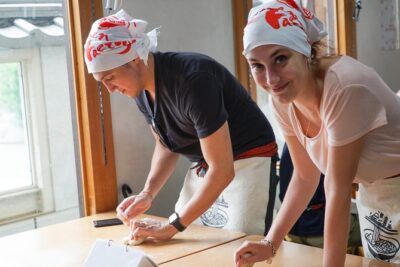
Ramen Cooking Class at Ramen Factory in Kyoto
Read our review →
Ramen & Gyoza Cooking Class in Tokyo with Local Supermarket Visit
Read our review →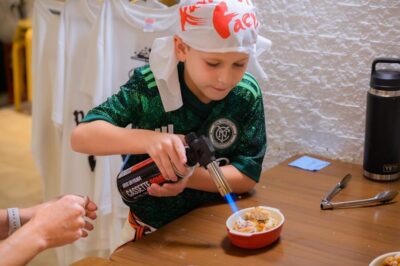
Ramen Cooking Class at a Ramen Factory with Souvenir
Read our review →
Sushi Making Osaka! Popular Sushi Class in Japan!
Read our review →
Tokyo Tsukiji Fish Market Tour and Sushi Making Lesson
Read our review →
Japanese Washoku Bento Small Group Cooking Class
Read our review →
Browse the lists this tour appears in