
Review · CAPE TOWN COOKING CLASSES
Cape Malay/Creole Cooking Class and Local Shopping in Salt River
Cape Town has plenty of polished food tours, but this one takes you into Salt River’s local shops and street-art scene before putting you in a home kitchen. You begin at Fargo Trading, an old spice shop, then cook a Cape Malay/Creole meal with local home cooks.
I like the mix of practical cooking and serious cultural context. I also like the small maximum of 10 people, which should make it easier to ask questions and take part. The main consideration is the walking: you need a strong level of fitness, and the route and weather can affect the day.
Key points at a glance

- Start at Fargo Trading: Meet at one of Cape Town’s older spice shops at 11:00 am and begin with the ingredients that shape Cape Malay cooking.
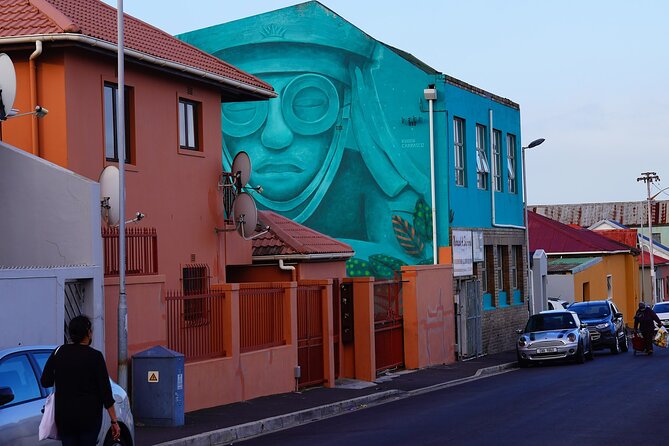
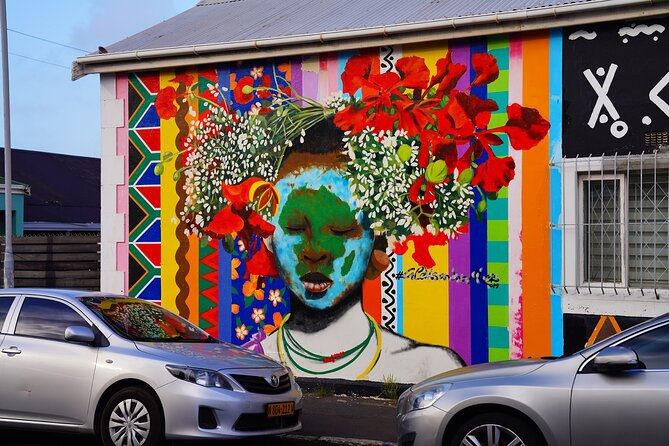
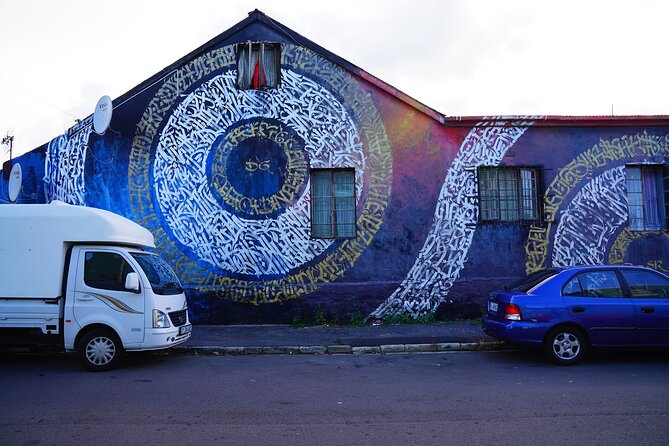
- Walk through Salt River: Shop at local businesses while seeing street art linked to the Salt River Heritage Society and the International Public Art Festival.
- Cook at a local home: Make food from scratch, or take a lighter role if your time and energy are limited.
- Roll rotis and make sambal: These are the standard hands-on tasks, with other cooking steps adjusted to the group.
- Learn through food: The discussion covers the spice and slave trades, Cape Muslim identity, and Creole culture in South Africa.
- Finish with a three-course meal: Share the food with home cooks in Salt River or Woodstock after roughly two hours of cooking.
Why this Salt River food tour feels different
The appeal here is not simply learning a recipe. You are using food to understand how Cape Malay and Creole culture developed in Cape Town. Spices, bread, sambal, shopping streets, and home cooking all become part of the lesson.
That gives the experience more substance than a class held in a purpose-built kitchen. You see where ingredients are bought, meet the character of Salt River, and then sit down to eat food connected to the Cape Muslim community.
I especially like the order of the day. You first encounter the neighborhood, then the ingredients, then the cooking. By the time you reach the house, the meal has a clear setting and purpose.
Nadia is named as the guide, and she is described as lovely and welcoming. The strongest praise focuses on the unusual route through the city and the way it combines street art with food. That makes this a good choice if you want something beyond Cape Town’s standard sights.
More Cooking Classes in South Africa:
- Cape Town: Malay Cooking Class and Lunch in Bo-Kaap
★ 4.8 · 515 reviews - Authentic African Cuisine Cooking Experience
★ 5.0 · 236 reviews - Cape Town: Cape Malay Cooking Class in Bo-Kaap
★ 4.8 · 120 reviews
Starting with spices at Fargo Trading
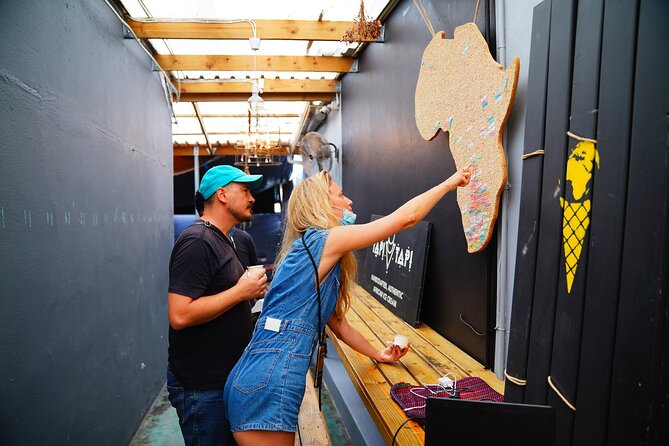
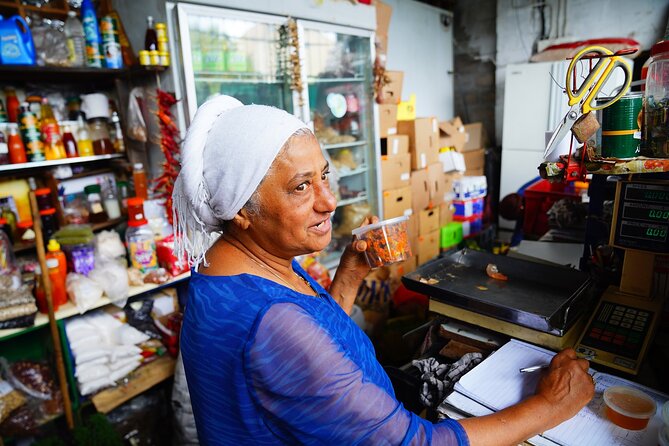
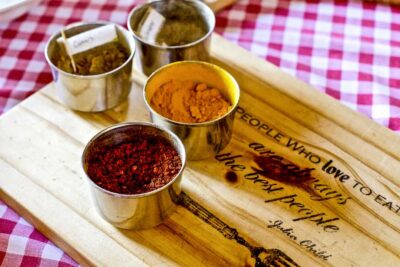
The experience begins at Fargo Trading, Malta House, 3 Malta Road, Salt River, at 11:00 am. This is more than a place to meet. It sets the tone for the meal by introducing you to one of Cape Town’s older spice shops.
You spend about 10 minutes here. That is not enough for a long shopping session, but it is enough to begin thinking about the role of spices in Cape Malay cooking. The class also places food in the larger story of trade and forced migration in South Africa.
This opening is particularly useful if you do not know much about Cape Malay food. Rather than treating spices as decoration, the experience connects them to movement, commerce, and community. You get a clearer idea of why the food developed as it did before you begin cooking.
The meeting point is near public transportation. Since the day starts in a working city neighborhood rather than at a major tourist sight, check your route and arrival time carefully. Being ready at 11:00 am matters because the walk begins soon after.
Shopping through Salt River’s colorful streets
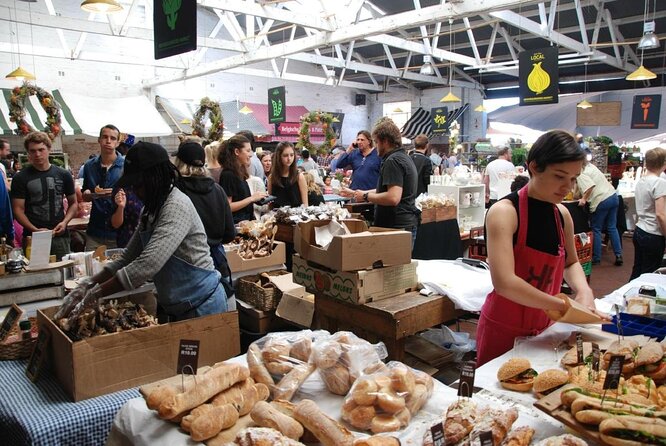
After Fargo Trading, you continue on foot through Salt River for about 50 minutes. The shopping is part of the tour rather than an extra stop added to the day. You help gather ingredients for the meal while seeing a side of Cape Town that many visitors miss.
The walk includes local businesses, African immigrant grocery shops, Cape Malay and Creole food vendors, and street art. Murals connected with the Salt River Heritage Society and the International Public Art Festival add another layer to the route.
I like this section because it avoids the usual split between sightseeing and cooking. You do not simply arrive at a kitchen with ingredients already measured. You see the neighborhood that supplies the food and hear about the communities that run these shops.
The street art also gives the walk a visual focus. If you are interested in public art, this may be one of the best reasons to choose the experience. The class is not only about food, and the route lets you see Salt River as a place with its own artistic and cultural voice.
There is a practical point to keep in mind. The walk is relaxed, but it is still a walk through city streets, followed by cooking. The information says you should have a strong level of physical fitness. Wear comfortable shoes and be prepared to remain active for much of the first half.
Cooking rotis and onion and tomato sambal
The cooking portion lasts about two hours and takes place at a local home at 33B Ormskirk Street, Woodstock. The address is also the finishing point, so you do not need to return to Salt River after the meal.
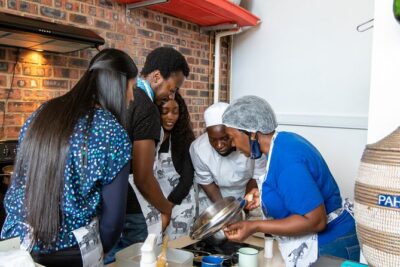
No previous cooking experience is required. You can take part fully and cook from scratch, or ask for guidance through only the key steps. That flexibility is valuable for a mixed group. Someone who loves kitchen work can stay busy, while someone with less time or energy can still follow the process and learn.
By default, you roll out traditional rotis and prepare onion and tomato sambal. These are good tasks for a group class because they are hands-on without requiring advanced technique. You work with familiar ingredients in a distinctly Cape Malay setting.
The exact three-course menu is not specified, so you should not book expecting a particular main dish or dessert. What is clear is that you will prepare and eat a three-course Cape Malay/Creole meal, with welcome drinks and snacks included.
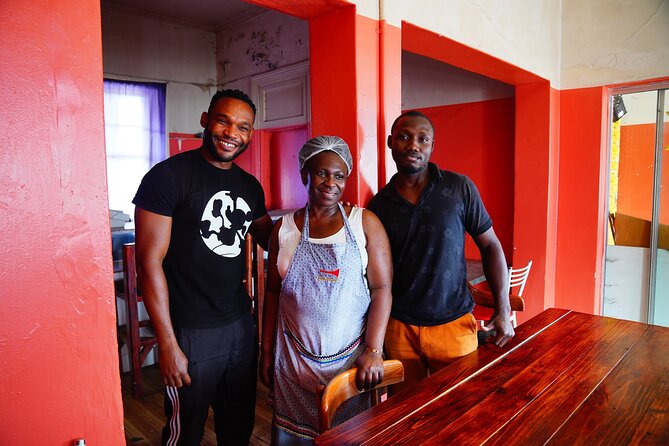
The home setting matters. You are not watching a chef perform from a distance. You are sharing the kitchen with local home cooks known in their communities for their cooking and baking. That creates a more personal experience, though it also means the atmosphere may be less formal than a restaurant class.
Same region, a different dish to learn:
- Cape Town: Bo-Kapp Walking Tour and Malay Cooking Class
★ 4.7 · 105 reviews - Cape Town: Authentic African Cuisine Cooking Experience
★ 4.9 · 31 reviews - Private Cape Malay Cooking Class in Cape Town with a Local Family
★ 5.0 · 24 reviews - GQ: City Walking Tour & African Cuisine Cooking Class
★ 4.6 · 11 reviews
Food as a lesson in Cape Muslim culture
While you cook, the discussion turns to the social and cultural identity of the Cape Muslim community. You also learn about the spice trade and the slave trade in South Africa.
This context is one of the strongest parts of the experience. Cape Malay cooking cannot be separated from the history that shaped Cape Town. Ingredients and recipes reflect contact between communities, movement across the Indian Ocean, colonial rule, and the lives of enslaved people.
The class presents Cape Muslim culture as part of one of the world’s most diverse Creole communities. That makes the meal more meaningful than a simple regional cooking demonstration. You begin to understand how food can preserve memory, identity, and connection.
I would choose this activity if you want a history lesson that stays practical. You are not sitting through a long lecture. The subject comes up as you handle ingredients, cook together, and prepare to eat.
At the same time, the experience is not designed as a full academic course. If your main aim is an exhaustive history of Cape Town, you will need museums, heritage sites, or a dedicated walking tour as well. Here, food remains the main doorway into the subject.
Sharing a three-course meal at the house
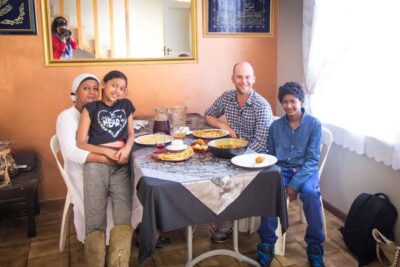
The meal is the payoff for the shopping and cooking. You sit down at the Woodstock home and share three courses with the people who helped prepare them.
Welcome drinks and snacks are included, so the food experience begins before the main meal. Since you have taken part in making at least some of the dishes, eating together should feel more connected than simply being served lunch.
The end point has practical advantages. There is safe street parking, and it is suitable for an Uber pickup. If you are staying elsewhere in Cape Town, arrange your return from Ormskirk Street rather than assuming the tour will take you back to the starting point.
The total experience lasts approximately three to four hours. The listed stops account for about three hours, with the remaining time used for transfers between parts of the experience. Plan for a late lunch or early afternoon finish rather than trying to schedule another fixed activity immediately afterward.
What the $74 price includes
At $74.12 per person, this is not the cheapest way to eat in Cape Town. You are paying for a small-group activity that combines a guided neighborhood walk, ingredient shopping, cultural interpretation, cooking instruction, welcome drinks, snacks, and a three-course meal.
The value is strongest if you would otherwise pay separately for a food tour and a cooking class. You also get access to a home setting and local cooks, which is difficult to reproduce through an ordinary restaurant meal.
The price makes less sense if you only want to eat Cape Malay food. In that case, a restaurant may be simpler and less expensive. This activity is aimed at people who want to understand the food and take part in making it.
The typical booking lead time is 26 days. That suggests you should reserve ahead, especially if your Cape Town dates are fixed. The maximum group size is 10, so the class should remain relatively small, but availability may be limited.
Who will enjoy this experience most
I would recommend this for food lovers, amateur cooks, history fans, and anyone who wants to see a less familiar part of Cape Town. It is also a strong choice if you value conversation and local contact more than a polished sightseeing production.
You do not need cooking skills. The important requirement is curiosity and enough energy for the walking and kitchen work.
It suits solo visitors and couples particularly well because a small class offers a natural way to meet others. Families should consider the walking, the length of the activity, and whether everyone in the group will be comfortable in a home kitchen.
This is not the best pick if you want a quick tasting session, a fixed menu, or a tour centered on famous landmarks. The focus is Salt River, Woodstock, Cape Malay/Creole food, street art, and community life.
Practical details before you book
You receive confirmation at booking, and the ticket is mobile. The meeting point is Fargo Trading at Malta House, 3 Malta Road, Salt River. The experience ends at 33B Ormskirk Street, Woodstock.
The activity requires good weather. If poor weather cancels the day, you will be offered another date or a full refund. It also requires a minimum number of people, so a cancellation for that reason brings the same choice.
Free cancellation is available up to 24 hours before the 11:00 am start. Changes or cancellations inside that period are not accepted, and the amount paid is not refunded.
The route is near public transportation, but you should still allow time to reach Fargo Trading. Since the start and end points are different, note the addresses carefully when planning your transport.
Should you book the Salt River cooking class?
Book it if you want Cape Town food with context, not just a meal. The combination of Fargo Trading, local shopping, Salt River street art, hands-on cooking, and a home-hosted three-course lunch gives the day a clear sense of place.
I would be especially inclined to book if you enjoy small groups and are curious about Cape Muslim culture. The main cautions are the walking, the weather requirement, and the fact that the exact menu is not provided in advance.
For a visitor who wants an easy, authentic-feeling introduction to Cape Malay/Creole food, this is a strong choice. For someone seeking a short, highly structured cooking lesson or a famous-sight tour, choose something else.
FAQ
Where does the experience begin?
It begins at Fargo Trading, Malta House, 3 Malta Road, Salt River, Cape Town, at 11:00 am.
Where does the experience finish?
It ends at 33B Ormskirk Street, Woodstock, Cape Town. The location has safe street parking and is suitable for an Uber pickup.
How long does the experience last?
The experience lasts approximately three to four hours.
Do I need cooking experience?
No. The activity requires no prior cooking knowledge. You can cook from scratch or take part in selected steps, depending on your time and energy.
What will I cook?
By default, you will roll out traditional rotis and prepare onion and tomato sambal. You will also take part in a three-course Cape Malay/Creole meal, though the full menu is not specified.
How many people can join?
The maximum group size is 10 people.
Can I cancel for a full refund?
Yes. You can cancel up to 24 hours before the experience start time for a full refund. Cancellations or changes made less than 24 hours before the start are not accepted.
Newest classes around South Africa
- Private Cape Malay Cooking Class in Cape Town with a Local Family★ 5.0 · 24 reviews
- Langa Township and Bokaap Cooking Class Half Day Tour★ 5.0 · 4 reviews
- Cape Town Shore Excursion| South African Cooking & Port Transfers★ 5.0 · 3 reviews
- South African Cooking Class in Cape Town with a Local Family★ 5.0 · 2 reviews
- South African Cooking in Cape Town with Local Chef Richard★ 4.5 · 10 reviews
- Private Authentic Cape Malay Cooking Class in Manenberg with Locals★ 5.0 · 5 reviews
- Johannesburg: Pan-African Cooking & Dinning Experience★ 4.5 · 6 reviews
- GQ: City Walking Tour & African Cuisine Cooking Class★ 4.6 · 11 reviews
Cape Town Cooking Classes, compared.

Private Cape Malay Cooking Class in Cape Town with a Local Family
Read our review →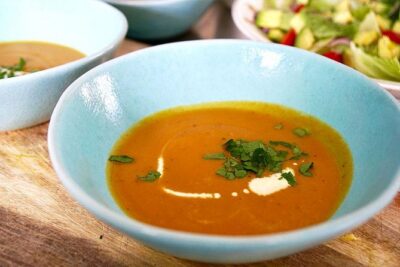
South African Cooking in Cape Town with Local Chef Richard
Read our review →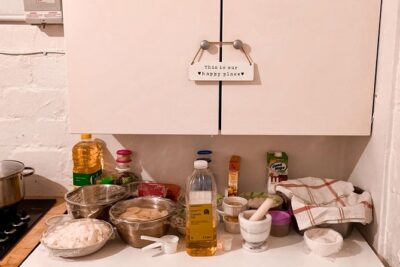
Private Authentic Cape Malay Cooking Class in Manenberg with Locals
Read our review →Browse the lists this tour appears in