
Review · JAPAN COOKING CLASSES
Cooking Class: Make a Local Delicacy in a Japanese House
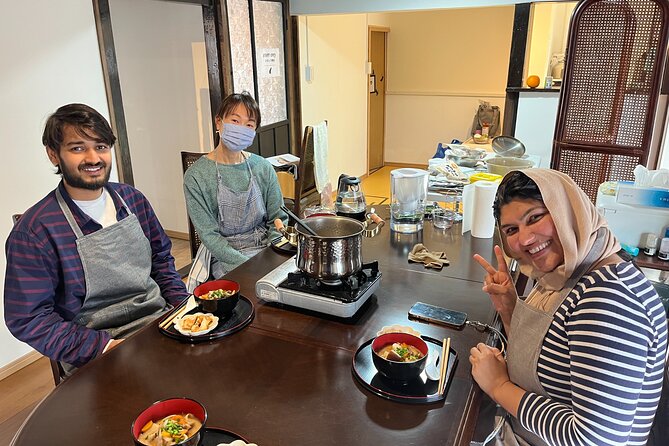
The heart of this Beppu cooking class is dango noodle soup, a simple Oita dish made by kneading flour, resting the dough, and stretching it by hand. You make and eat it inside a Japanese house more than 100 years old, with local vegetables, miso or soy seasoning, and a dab of yuzukosho.
I like the private format and the chance to talk with a Beppu local rather than sit in a polished cooking studio. I also like the choice of ramen or onigiri with miso soup, though you must request an alternative when booking. The main consideration is the short 90-minute schedule, which leaves little room for a long market visit or an extended cooking lesson.
Key points at a glance
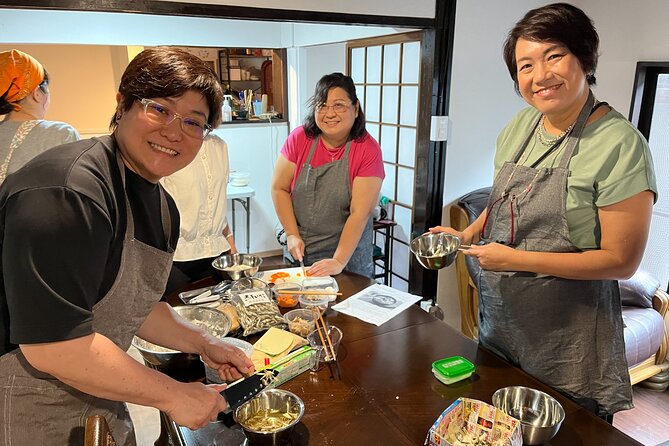
- Century-old setting: The class takes place at Space Beppu in a Japanese house more than 100 years old.
- Handmade Oita specialty: You knead, rest, stretch, and shape the noodles for dangojiru, a local soup from Oita Prefecture.
- Private group format: Only your own group participates, making the lesson more relaxed and personal.
- Flexible menu: You can request ramen or onigiri with miso soup instead of dango noodle soup when booking.
- Local people and conversation: Teachers and hosts connected with the class include Mari, Aya, and Masa.
- Useful language support: An English-speaking interpreter is available on request at no extra fee.
Making dangojiru in a 100-year-old Beppu house
Space Beppu gives this class its character before the cooking even begins. You meet at 12 Chiyomachi, in Beppu, and cook inside a Japanese house that is more than a century old. That matters because the setting feels tied to daily life in the city, not built solely for visitors with stainless-steel counters and a row of identical workstations.
The class is private, so your group gets the teacher’s attention. That is useful when you are handling dough for the first time. You can ask questions, work at your own pace, and talk without trying to hear instructions over a large room full of people.
The lesson lasts about 1 hour and 30 minutes. You should expect a focused activity rather than a full afternoon of food shopping, cooking, and sightseeing. The compact format works well if you have a busy Beppu schedule, but it also means the class keeps moving.
More Sushi and Japanese Classes in Japan:
- Ramen Cooking Class at Ramen Factory in Kyoto
★ 5.0 · 1,937 reviews - Ramen & Gyoza Cooking Class in Tokyo with Local Supermarket Visit
★ 5.0 · 823 reviews - Kyoto: Ramen Cooking Class at a Ramen Factory with Souvenir
★ 4.9 · 532 reviews
Why dango noodle soup matters in Oita
Dangojiru is a traditional dish from Oita Prefecture. Its name can sound as if it refers to sweet dango dumplings, but here the dough becomes broad, hand-stretched noodles that cook in a savory soup.
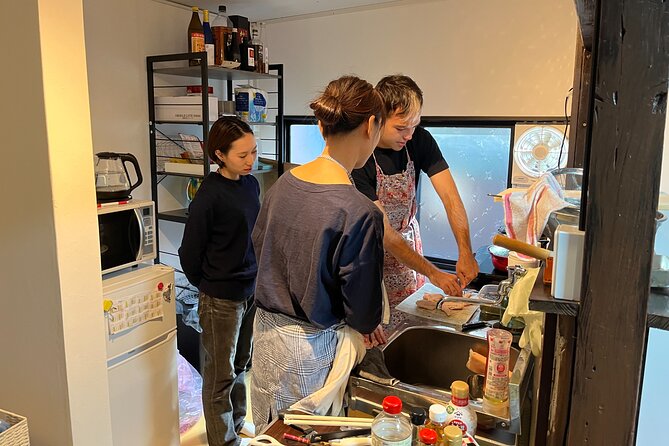
The method is pleasingly direct. Wheat or rice flour is mixed with water, then left to rest. After that, you stretch and shape the dough by hand before adding it to the broth. You get to see how a few basic ingredients become a filling meal through patient handling rather than special equipment.
The soup is made with local, seasonal vegetables. Taro and burdock are specifically part of the dish, and the broth may be seasoned with miso or soy sauce. The result is hearty and wholesome, with the sort of practical cooking that suits a cooler day or a hungry afternoon.
Your teacher first explains what dangojiru is and why it matters to local food culture. That introduction helps you understand the bowl as more than a noodle recipe. You are learning one small part of how Oita cooks with flour, vegetables, broth, and strong regional flavors.
Kneading, resting, and stretching the dough
After the introduction, you receive an apron and begin cooking step by step. All ingredients are provided, so you do not need to shop before class or bring special supplies.
The hands-on work begins with the dough. Kneading looks simple, but the texture changes as flour and water come together. The resting period is important, since the dough needs time before it can be stretched and shaped properly.
You then work the dough into noodles by hand. This is the most distinctive part of the class. A machine could produce tidy strands more quickly, but hand shaping connects you to the old-fashioned method and gives you a better sense of the dish.
Do not expect every noodle to look identical. That is part of the fun, and the teacher is there to guide you through the process. The private format should be especially helpful for children, first-time cooks, or anyone who wants clear instruction without feeling rushed by a large group.
Once the noodles are ready, they go into the broth with vegetables such as taro and burdock. Seasoning may lean toward miso or soy sauce, and the finished soup gets an extra local touch from yuzukosho.
Yuzukosho combines yuzu citrus with chili pepper and salt. It is used in small amounts, so you can add it carefully. The flavor gives the warm soup a sharp, spicy lift and makes the meal feel particularly connected to Kyushu.
A local meal at the end of the lesson
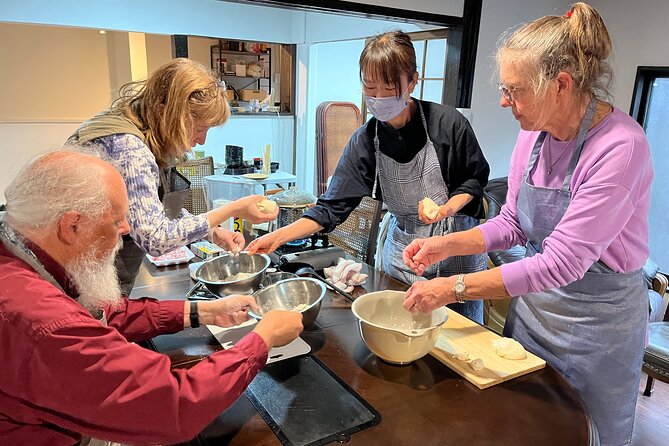
The cooking ends with you sitting down to eat what you made. This is not a demonstration where the important part happens in front of you and the meal arrives separately. You take part in the preparation, then taste the result at the same place.
That simple finish is one of the strongest reasons to choose this class. You leave with a clearer idea of how the dish is made, and you get to judge the noodles, broth, vegetables, and yuzukosho for yourself.
The house also includes a small local crafts area. It adds another point of interest beyond the bowl of soup, though the available information does not specify exactly what crafts are displayed or how much time is set aside for them. Think of it as an added feature, not the main purpose of the visit.
The food is substantial, but this is not presented as a restaurant meal with a wide menu. You are coming for one regional dish and the process behind it. If you prefer a focused food lesson to a long tasting session, that is a good match.
More Cooking Classes in Japan:
- Sushi Making Osaka! Popular Sushi Class in Japan!
★ 5.0 · 500 reviews - Kyoto: Ramen, Gyoza, and Onigiri Cooking Class
★ 5.0 · 445 reviews - Kyoto: Japanese Washoku Bento Small Group Cooking Class
★ 5.0 · 380 reviews - Osaka: Ramen and Gyoza Cooking Class in Dotonbori
★ 5.0 · 378 reviews
Ramen and onigiri alternatives
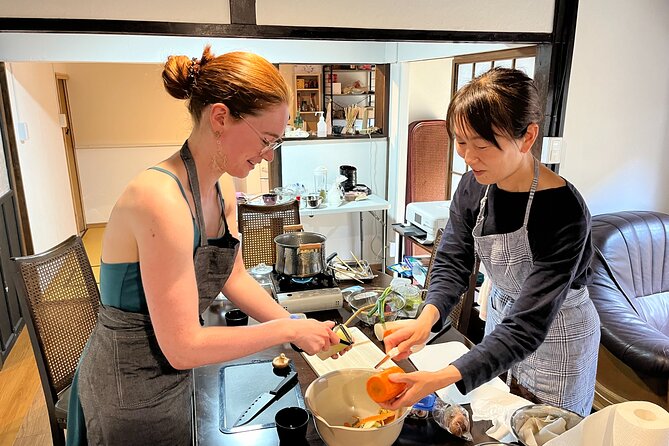
Dango noodle soup is the main activity, but you can request another menu. The alternatives are ramen noodles or onigiri with miso soup.
You need to ask for your preferred option at the time of booking. Do not assume you can change the menu when you arrive. The information does not state whether every alternative is available for every date, so an early request is the sensible approach.
Ramen makes sense if you want to practice noodle preparation but prefer a more familiar dish. Onigiri with miso soup offers a different kind of Japanese home cooking, centered on rice rather than hand-stretched flour noodles.
The choice is useful for families and mixed groups. One person may want the local dangojiru, while another may be more comfortable with ramen or rice balls. Still, the class is built around local cooking, not a large selection of dishes, so you should choose one clear direction before the day.
Meeting the people behind the class
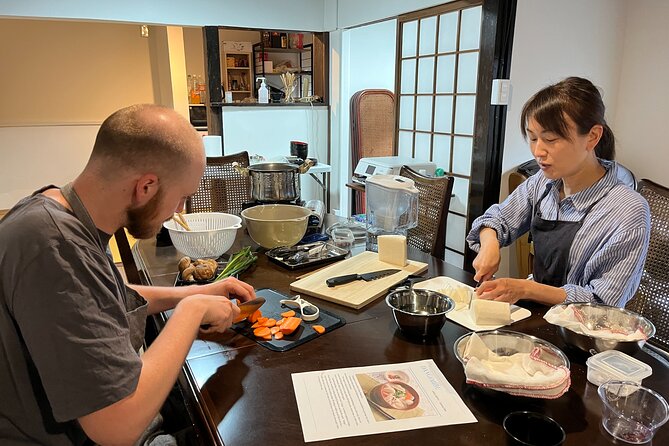
The experience is designed around personal contact. You work with a local teacher, and the class gives you time to ask about Beppu and Oita food traditions while you cook.
Names associated with the class include Mari, Aya, and Masa. Mari and Aya have hosted participants together, while Masa has led the cooking with a female assistant. The exact teacher may vary, but these personal connections are useful to know if you value a class led by identifiable local people rather than an anonymous instructor.
Masa has also shown flexibility with the wider food experience. When a participant had already visited the intended market, he adjusted the plan and visited another market instead. That does not mean a market visit is part of every booking, so you should not plan on one. It does show the kind of practical adjustment that can make a private activity feel less rigid.
An English-speaking interpreter can be arranged at no extra fee. You should request this in advance. The interpreter is especially helpful if you want more than cooking instructions and hope to ask about local ingredients, customs, or the history of the dish.
What the $61.90 price gets you
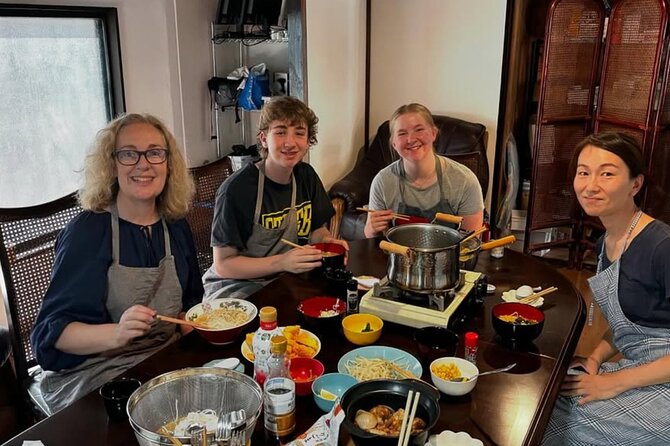
The listed price is $61.90 per person. For a 90-minute activity, that is not the cheapest way to eat noodles in Japan. You are paying for the instruction, ingredients, apron, private format, cultural setting, and the chance to prepare a regional dish inside a century-old house.
The value improves for a small group that wants a personal lesson. A private class avoids the awkwardness of being paired with strangers, and you have more freedom to ask questions or slow down during the dough work. Group discounts are available, though the exact reduction is not specified.
You should also compare the price with what you want from a cooking class. If you only want a quick bowl of soup, a restaurant will cost less and take less time. If you want to understand how dangojiru is made and speak with someone from Beppu, the class offers more than a meal.
The included ingredients make the cost easier to judge. You do not have to buy flour, vegetables, seasonings, or cooking supplies, and you finish with food you prepared yourself. For someone interested in Japanese home cooking, that combination gives the price a fair explanation.
Timing, meeting point, and practical details
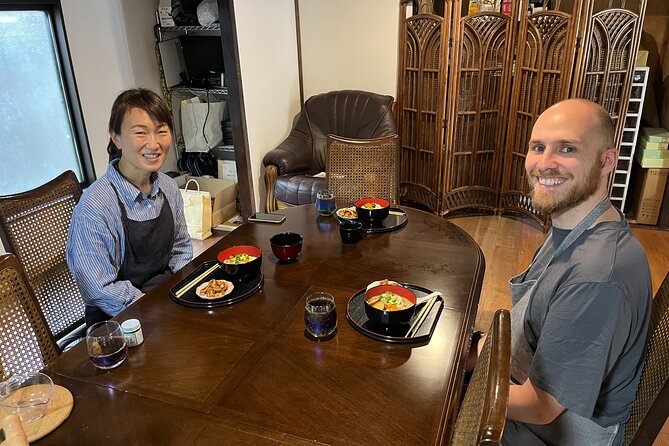
The class begins and ends at Space Beppu, at 12番9号 Chiyomachi, Beppu, Oita 874-0942. It is near public transportation, which makes it easier to fit into a day without arranging a private car.
Your mobile ticket is accepted, and confirmation is sent within 48 hours of booking, subject to availability. The experience is booked an average of 59 days ahead, so I would not leave it until the last minute if the date matters to you.
The class ends back at the meeting point. That makes planning simple, especially if you want to continue exploring Beppu afterward. Since the activity is short, you can place it between other plans, but leave enough time to arrive at the house without rushing.
Free cancellation is available if you cancel at least 24 hours before the start time. Cancellations made less than 24 hours ahead are not refunded, and changes inside that period are not accepted. The cut-off uses local Beppu time.
Who will enjoy this cooking class most
I would recommend this experience to anyone who wants a small taste of regional Japan rather than a generic sushi lesson. Dangojiru is closely tied to Oita, and the hand-shaped noodles make the class feel different from standard cooking activities.
It also suits people who prefer conversation and local contact. The private format lets you talk with the teacher, and the interpreter option removes much of the language barrier. Families can benefit from the hands-on dough work, though the data does not specify a minimum age.
The class is a good fit for a short stay in Beppu. You get a cultural activity, a meal, and a chance to see a historic Japanese home without giving up half a day.
I would hesitate only if you want a broad menu, a long market tour, or a highly technical cooking course. Ninety minutes is enough to make and eat one main dish, but not enough for an extended study of Oita cuisine.
My recommendation for booking in Beppu
I would book this class if you want a warm, personal introduction to Beppu food culture. The strongest features are the century-old house, the hand-stretched dangojiru noodles, the private format, and the chance to speak with local hosts such as Mari, Aya, or Masa.
Request the English interpreter and any menu alternative when you book. Choose ramen or onigiri only if you genuinely prefer them, since dangojiru is the dish that gives this activity its local character.
At $61.90 per person, it makes the most sense for people who value instruction and cultural context, not simply the cheapest meal. If that sounds like your kind of afternoon, this is a thoughtful use of 90 minutes in Beppu.
FAQ
Where does the cooking class take place?
The class takes place at Space Beppu, Japan, at 12番9号 Chiyomachi, Beppu, Oita 874-0942.
How long does the experience last?
The cooking class lasts approximately 1 hour and 30 minutes.
What is the main dish prepared in the class?
The main dish is dangojiru, a traditional Oita noodle soup made with hand-shaped dough, broth, and seasonal vegetables such as taro and burdock.
Can I choose something other than dango noodle soup?
Yes. You can request ramen noodles or onigiri with miso soup instead. Make the request at the time of booking.
Is an English-speaking interpreter available?
Yes. An English-speaking interpreter is available on request at no additional fee.
Is this a private activity?
Yes. Only your own group participates in the activity.
How much does the class cost?
The listed price is $61.90 per person. Group discounts are available.
When will I receive booking confirmation?
Confirmation is sent within 48 hours of booking, subject to availability.
Can I cancel for a full refund?
Yes, if you cancel at least 24 hours before the experience start time. Cancellations made less than 24 hours ahead are not refunded, and changes during that period are not accepted.
Newest classes around Japan
- Culinary Home Cooking with Grandmothers – Vegan Friendly★ 5.0 · 5 reviews
- Nagoya Super Market Tour & Home Cooking Class with a Local, Akiko★ 5.0 · 10 reviews
- Tokyo: Sushi roll and side dish cooking experience★ 5.0 · 2 reviews
- Tokyo: Sushi Making Experience & Japanese Cooking Class★ 5.0 · 2 reviews
- Tokyo: Sushi Cooking Class with Sake Tasting★ 4.8 · 55 reviews
- Tokyo: Real Ramen & Dumpling Cooking with Master Chef★ 5.0 · 10 reviews
- Tokyo: Sushi and Ramen Cooking Class with Sake Pairing Set★ 5.0 · 81 reviews
- Tokyo: Gyoza Making from Scratch – Ultimate Cooking Class★ 5.0 · 2 reviews
Japan Cooking Classes, compared.
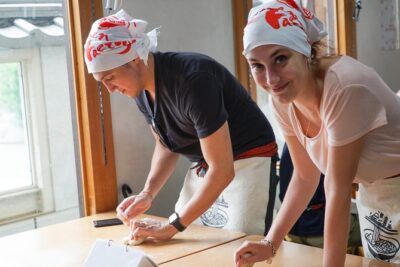
Ramen Cooking Class at Ramen Factory in Kyoto
Read our review →
Ramen & Gyoza Cooking Class in Tokyo with Local Supermarket Visit
Read our review →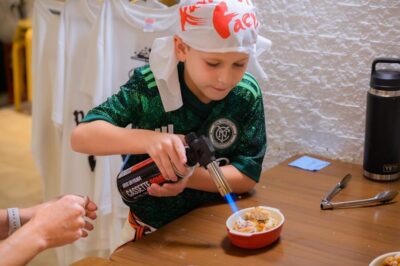
Ramen Cooking Class at a Ramen Factory with Souvenir
Read our review →
Sushi Making Osaka! Popular Sushi Class in Japan!
Read our review →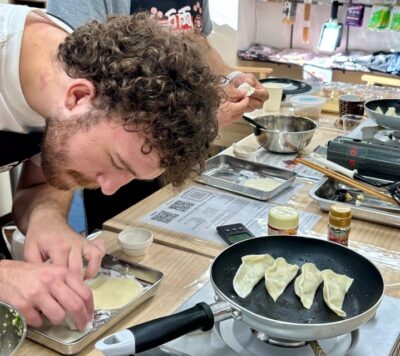
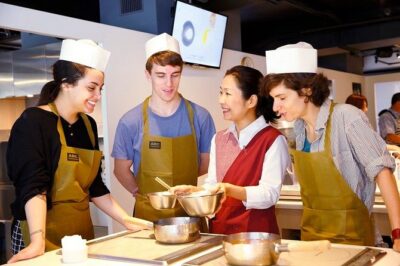
Tokyo Tsukiji Fish Market Tour and Sushi Making Lesson
Read our review →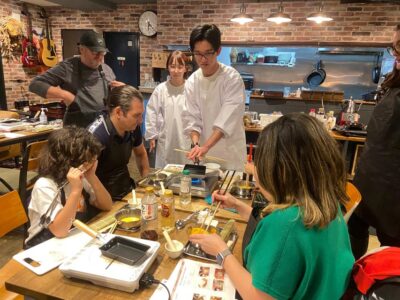
Japanese Washoku Bento Small Group Cooking Class
Read our review →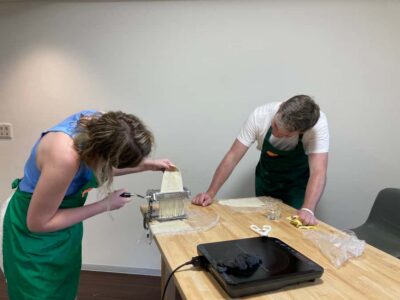
Browse the lists this tour appears in