
Review · KYOTO COOKING CLASSES
Near Fushimiinari: Kyoto Home Cooking Class & Supermarket tour
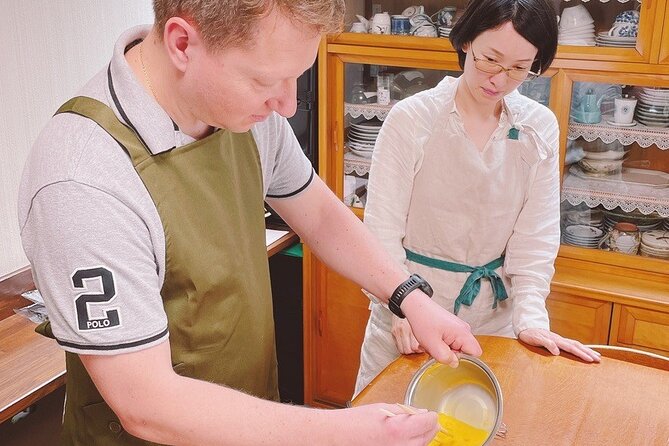
Near Fushimi Inari, this four-hour experience takes you into a traditional Kyoto home for a hands-on lesson in Japanese cooking. You learn about dashi, the soup stock used in much of Japanese cuisine, prepare about five dishes, then eat your meal in a tatami room overlooking a garden.
I like the small group of six or fewer, which gives you room to ask questions and handle the cooking yourself. I also like the supermarket visit, where Miho or another licensed English-speaking guide helps you identify the ingredients you have just used. The main consideration is that drinks are not included, and the class requires good weather.
Key points at a glance
- Start with dashi: Learn the basic soup stocks that shape many Japanese dishes.
- Cook about five dishes: Expect demonstrations, hands-on preparation, and shared kitchen work.
- Eat in a traditional home: Lunch is served in a tatami room with a garden view.
- Shop for ingredients afterward: Spend about 30 minutes learning how to find Japanese cooking staples.
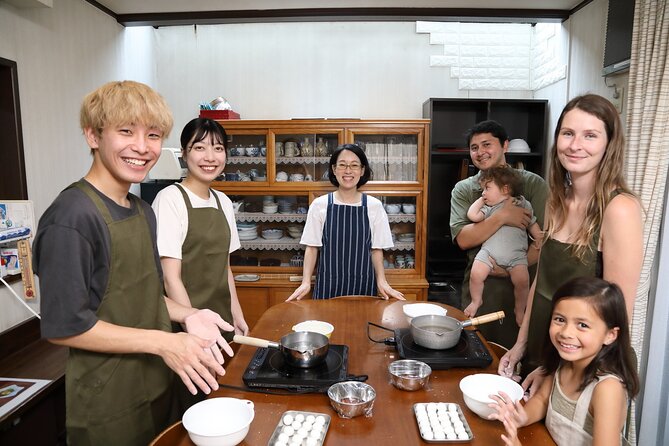
- Keep the group small: A maximum of six people makes this more personal than a large culinary class.
- Meet near Fushimi Inari: The class begins at 9:30 a.m. at 38-4 Fukakusa Watamoricho.
A Kyoto cooking class with a real home setting
Many cooking classes take place in purpose-built studios. This one begins in a local home near Fushimi Inari, which changes the feel from a formal lesson to a visit with a Kyoto cook.
You arrive at 9:30 a.m. at 38-4 Fukakusa Watamoricho in Fushimi Ward. The location is near public transportation, but you should allow time to find the address and arrive ready to start. The activity ends back at the same meeting point after the supermarket visit.
The home itself is part of the appeal. You can expect a traditional Japanese room with tatami flooring, a tokonoma display area, and a view toward a quiet garden. The cooking takes place in the kitchen, while the finished meal is enjoyed in the more formal room.
That split between kitchen and dining room helps you notice how Japanese meals are presented, not just how they are prepared. You are not simply standing at a counter and eating quickly. You prepare food, sit down together, and see the meal in a more traditional setting.
More Home Cooking Classes in Japan
- Kyoto Home Cooking Class &Supermarket tour near Fushimiinari
★ 5.0 · 31 reviews - Private Home Cooking in Yanaka – Local Flavors in a Warm Setting
★ 5.0 · 173 reviews - Japanese Home Cooking Class & Walk in Todoroki Temple Tokyo
★ 5.0 · 88 reviews
Starting with dashi and Japanese cooking basics
The lesson begins with dashi, one of the most useful ideas to take home from a Japanese cooking class. Dashi is a family of Japanese soup stocks, and it appears in many familiar dishes, including miso soup and other seasoned foods.
This part matters because Japanese cooking often depends on a few well-balanced basics rather than a long list of heavy sauces. Learning how the stock is used gives you a better sense of why the finished dishes taste the way they do.
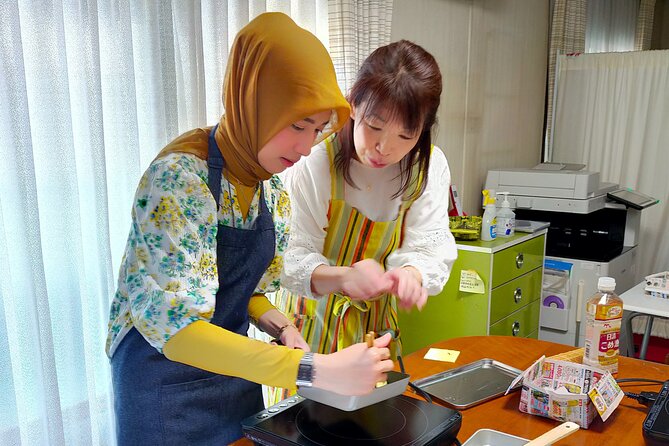
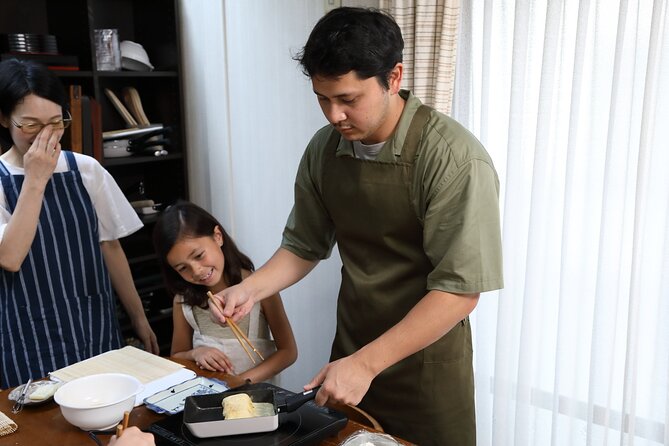
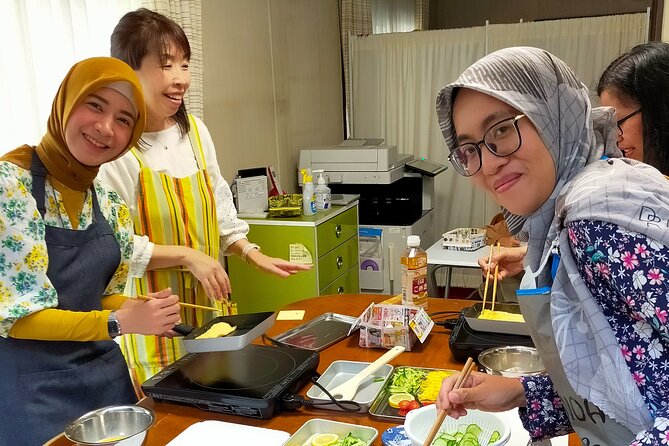
The instructor demonstrates techniques before you begin. You then prepare about five dishes either on your own or with a partner. The exact menu can vary, but the dishes described in the experience include miso soup, sushi, spinach salad, tempura, and mochi. One class also included mochi ice cream, which adds a fun dessert task at the end.
The lesson is designed to be hands-on. You are not only watching Miho prepare everything while you take notes. You get to make the dishes yourself, with guidance as you work. That makes the class useful for home cooks who want recipes and methods they can repeat after returning home.
The pace should feel manageable for most people, but four hours is still a substantial block of your morning and early afternoon. If you prefer a quick demonstration with a tasting, this may feel too long. If you want to learn several dishes and eat what you make, the length makes sense.
Miho’s teaching style and the small group advantage
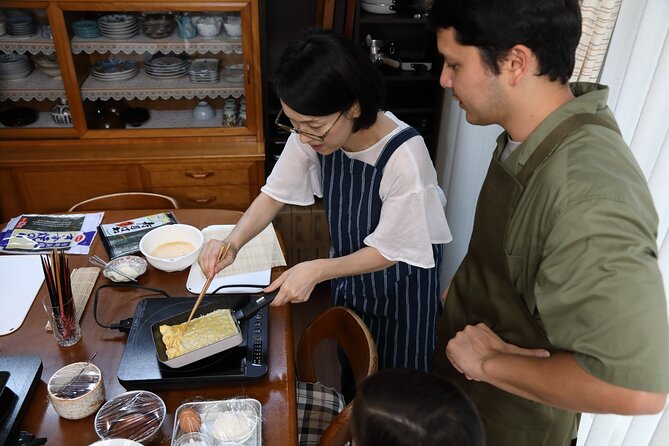
Miho is the instructor most often identified with this class. She is described as friendly, patient, and clear in English. The instructors are licensed guide interpreters, and the class is conducted in English.
That language support is important in a cooking lesson. You need to understand small instructions about cutting, seasoning, timing, and texture. You also want to be able to ask why an ingredient is used, not simply follow a silent demonstration.
The group limit is six people. This is one of the strongest practical features of the experience. In a larger class, you may spend much of the time watching someone else work. Here, you have a better chance to ask questions and take part in each stage.
A small group also suits solo visitors. The meal is shared with the other participants, and the cooking naturally gives you an easy way to meet people. You do not need to arrive with a companion to feel part of the activity.
The class can also accommodate vegetarians, according to the available information. Still, if you have a strict dietary requirement, confirm it before booking. The details provided only specifically mention vegetarian catering, not every possible allergy or restriction.
From the cutting board to a Japanese lunch
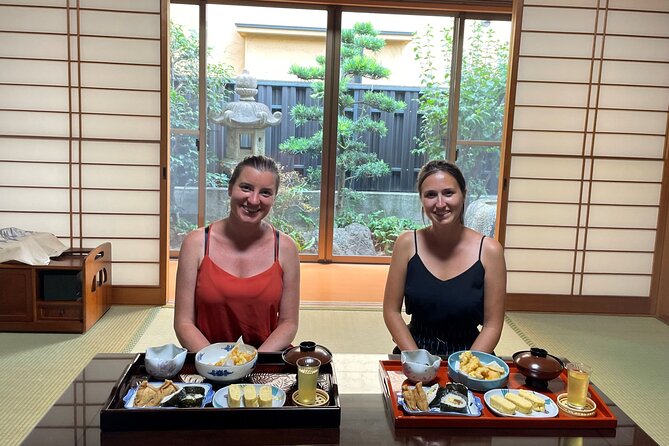
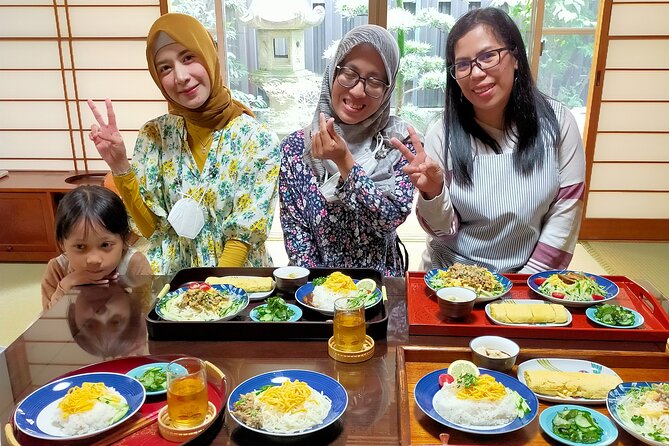
Once the dishes are ready, you sit together and eat what you prepared. The meal is included in the price, along with ingredients, seasonings, and taxes.
The dining room is a memorable part of the experience. A tatami floor, tokonoma display, and garden view give the meal a sense of place that you will not get from eating the same dishes in a restaurant. The setting also gives you time to talk with Miho and the other participants.
The menu is not presented as an elaborate restaurant tasting. That is a good thing if your goal is to understand everyday Japanese food. You are learning dishes that can be recreated at home, using techniques and ingredients explained during the class.
You should note one small inconsistency in the descriptions: the experience is scheduled as a lunch class, while one account refers to an amazing Japanese dinner. Plan around the stated 9:30 a.m. start and four-hour duration, with the included meal treated as lunch.
Drinks are not included, so bring money or a drink if you want something beyond the food provided. Gratuity is also not included.
More Home Cooking Classes in Kyoto:
- Khmer Cooking Class at a Local’s Home in Krong Siem Reap
★ 5.0 · 2,731 reviews - Local Home Korean Cooking Class & Market Adventure in Seoul
★ 5.0 · 1,024 reviews - Marrakech: Moroccan Cooking Class with a Local Family
★ 4.9 · 668 reviews - Mexican Cooking from Scratch in a Local Home in Tulum
★ 5.0 · 585 reviews
The supermarket visit makes the lesson more useful
After the meal, you spend about 30 minutes at a local supermarket. This is more than an extra stop. Japanese grocery stores can be difficult to read if you do not know the packaging, labels, or local names for common ingredients.
The guide helps you find the items used in class and explains what you are seeing around the store. You can ask about seasonings, soup-stock ingredients, and other products needed to repeat the recipes.
This is where the class moves from a pleasant morning activity to a practical cooking lesson. You leave with recipes, but recipes are only useful if you can find the ingredients. The supermarket visit helps bridge that gap.
You may also buy ingredients to prepare the dishes for family and friends. The activity does not include those purchases, so allow extra money if you want to shop.
Thirty minutes is enough for an introduction, but not enough for a full grocery tour. Think of it as a focused follow-up to the cooking lesson, not a separate shopping excursion. The short length works well after a meal, especially if you have afternoon plans around Fushimi Inari or elsewhere in Kyoto.
What the $118.92 price includes
At $118.92 per person, this is not the cheapest way to eat lunch in Kyoto. The value comes from the combination of instruction, food, a private-home setting, a small group, and the supermarket visit.
Your price includes:
- The cooking lesson
- Lunch
- All cooking ingredients and seasonings
- All fees and taxes
- An English-speaking instructor
- About 30 minutes at a local supermarket
You are paying for access to a local teaching kitchen and for time with an instructor, not just for a meal. If you already cook Japanese food confidently, the value may be lower. You might prefer to spend the money on several restaurant meals instead.
For a first visit to Japan, though, the class offers several useful takeaways. You learn what dashi does, practice a group of familiar dishes, receive recipes to use later, and get help finding ingredients in a Japanese supermarket. Those details can make the experience pay off after your trip.
The class is often booked about 28 days ahead. That advance pattern suggests you should not leave it until the last morning of your Kyoto stay, especially if you want a particular date.
Timing your morning near Fushimi Inari
The location is convenient for combining with time around Fushimi Inari Shrine, but the class itself begins at 9:30 a.m. You should plan the cooking activity first rather than assuming you can visit the shrine immediately beforehand.
The experience lasts about four hours and returns to the meeting point. With the class, meal, and supermarket visit, it will take up most of your morning and early afternoon.
That timing suits you if you want one substantial activity before continuing your sightseeing. It may not suit you if you are trying to fit several distant Kyoto sights into the same morning.
The tour requires good weather. If poor weather causes cancellation, you are offered a different date or a full refund. You can also cancel for a full refund up to 24 hours before the start time. Changes or cancellations within 24 hours are not accepted, and the cut-off uses local Kyoto time.
Who will get the most from this experience
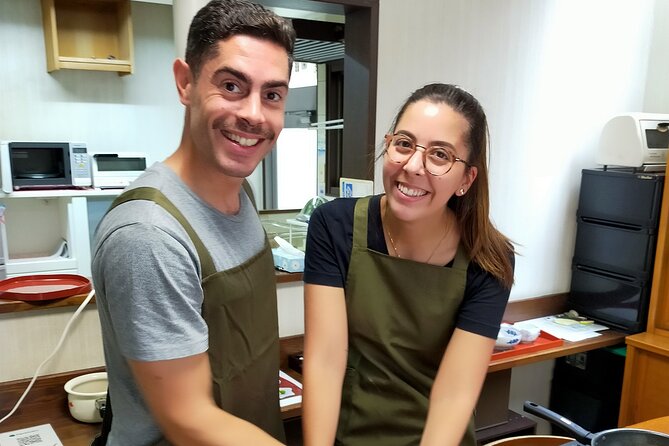
I would choose this class if you want to meet people, learn practical food skills, and see how a Japanese home is arranged. It works especially well for solo visitors, couples, and families who enjoy doing rather than simply watching.
It is also a good choice for cooks who want dishes that can be repeated at home. The recipe handout is useful here, and the supermarket visit gives you a better chance of locating the needed products later.
The class may be less suitable if you want a strictly private lesson. The group can include up to six people, and some preparation may be shared with a partner.
It may also disappoint you if you expect a long tour of Fushimi Inari. The shrine is useful as a location reference, but the main activity is cooking in the home and shopping at the supermarket. You should book it for the food lesson, not as a shrine tour.
Practical details before you book
The activity uses a mobile ticket, and confirmation is received when you book. The start point is 38-4 Fukakusa Watamoricho, Fushimi Ward, Kyoto, postal code 612-0022.
The class is conducted in English, with licensed guide interpreters leading the instruction. The experience is open to English and non-English speakers, but the stated language of the class is English.
Lunch, ingredients, and seasonings are included. Drinks, gratuity, hotel pickup, and hotel drop-off are not included.
Wear something comfortable for a cooking lesson and check the weather before setting out. Since the class requires good weather, keep your schedule flexible if rain is expected.
Should you book this Kyoto cooking class?
Book it if you want a personal introduction to Japanese home cooking rather than another restaurant meal. The strongest reasons are the small group, the traditional home setting, Miho’s clear English instruction, the chance to make several dishes, and the supermarket stop that helps you continue cooking at home.
I would think twice only if you want a private class, need a fully specified menu in advance, or consider $118.92 too much for a four-hour activity. For most visitors who value practical food skills and local contact, the price is reasonable because it includes lunch, instruction, ingredients, recipes, and a useful shopping lesson.
FAQ
Where does the cooking class start?
The class starts at 38-4 Fukakusa Watamoricho, Fushimi Ward, Kyoto, 612-0022, Japan.
What time does the experience begin?
The start time is 9:30 a.m.
How long does the experience last?
The activity lasts about four hours.
How many people can join the class?
The maximum group size is six people.
Is lunch included?
Yes. Lunch is included, along with the cooking ingredients and seasonings.
Is the class taught in English?
Yes. The class is conducted in English by English-speaking instructors who are licensed guide interpreters.
Is the supermarket visit included?
Yes. The activity includes a local supermarket visit lasting about 30 minutes.
What is not included in the price?
Drinks, gratuity, and hotel pickup and drop-off are not included.
Newest classes around Kyoto
- Kyoto Udon & Tempura Cooking Class with Professional Chefs★ 3.8 · 3 reviews
- Kyoto: Wagashi (Japanese sweets) Cooking near Fushimiinari★ 5.0 · 40 reviews
- Kyoto Home Cooking Class &Supermarket tour near Fushimiinari★ 5.0 · 31 reviews
- Kyoto: Morning Japanese Bento Cooking Class★ 5.0 · 149 reviews
- Kyoto: Authentic Sushi Making Cooking Lesson★ 5.0 · 103 reviews
- Kyoto: Cooking class, learning how to make authentic sushi★ 4.2 · 9 reviews
- Authentic Japanese Cooking Experience at Izakaya restaurant★ 4.2 · 5 reviews
- Gyoza Cooking Class in Kyoto: Traditional Japanese Dumplings★ 5.0 · 12 reviews
Kyoto Cooking Classes, compared.
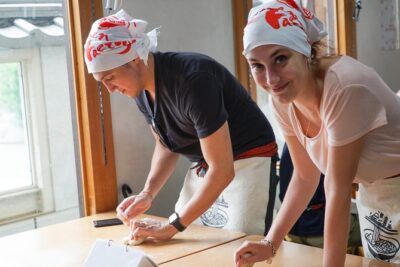
Ramen Cooking Class at Ramen Factory in Kyoto
Read our review →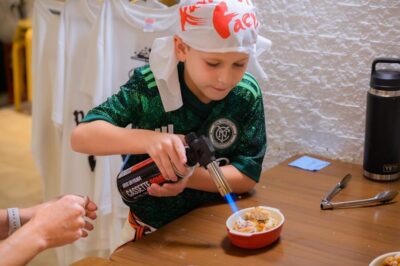
Ramen Cooking Class at a Ramen Factory with Souvenir
Read our review →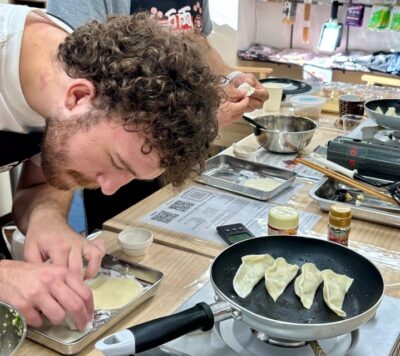
Japanese Washoku Bento Small Group Cooking Class
Read our review →
Kyoto Ramen and Gyoza Cooking Class with Professional Chefs
Read our review →
Gyoza Cooking Class in Kyoto: Traditional Japanese Dumplings
Read our review →Browse the lists this tour appears in