
Review · KYOTO COOKING CLASSES
Kyoto: Morning Japanese Bento Cooking Class
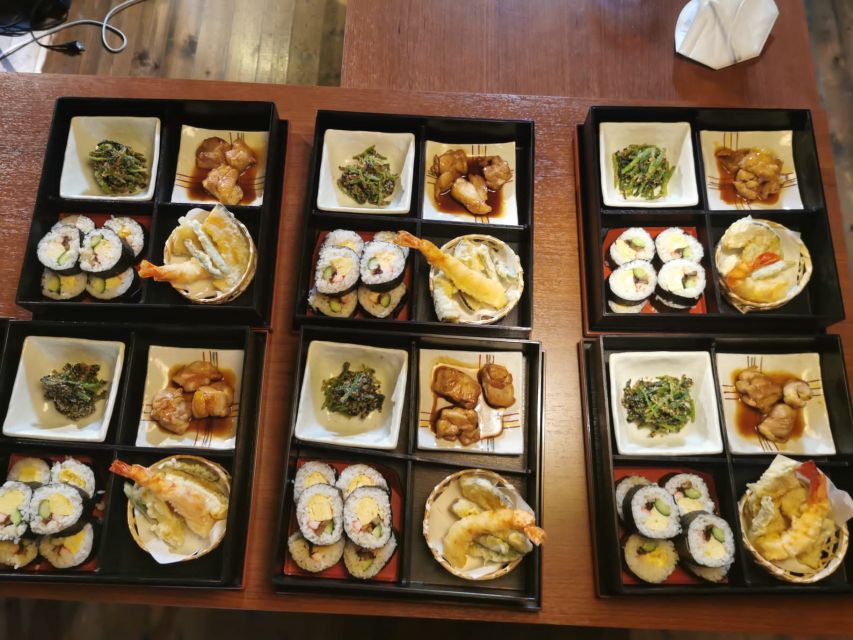
Kyoto’s best food lesson may be the one you can eat straight from the cooking table. At Cooking Sun, you prepare a full Japanese bento with sushi, tempura, teriyaki chicken, miso soup, and several smaller dishes, then arrange it as lunch. I like the hands-on format and the clear cultural explanation of why bento became such a central Japanese meal.
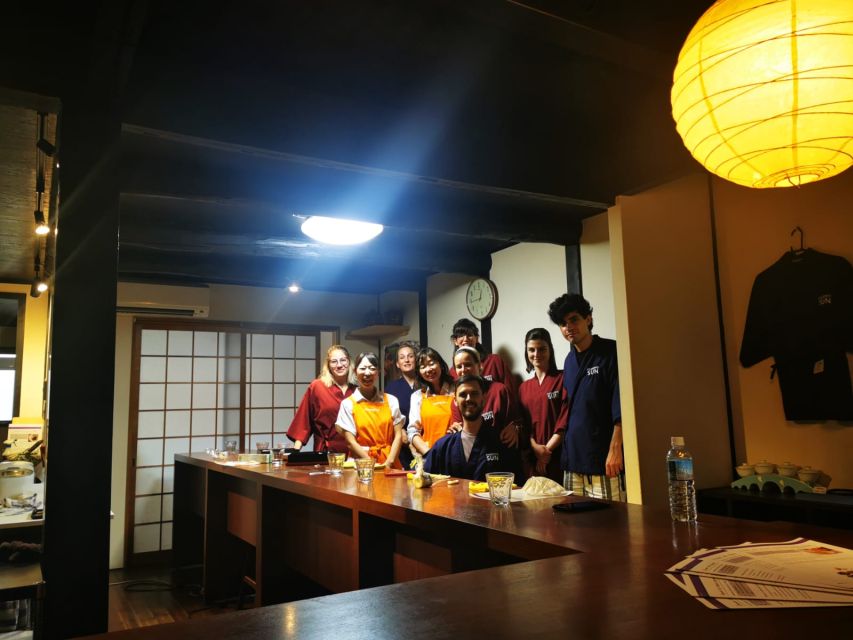
I also like the small-group feel, with past classes ranging from four to about ten people, and teachers such as Tomoko, Yukari, Coco, and Mei offering patient guidance in English. The main drawback is that much of the chopping and preparation is done before class, so this is more about assembling and cooking several dishes than learning advanced knife skills. The meeting point can also take a little effort to find.
Key points at a glance
- A full bento meal in three hours: Prepare sushi, tempura, teriyaki chicken, miso soup, and other traditional dishes before sitting down to eat.
- English instruction: The class is taught in English, with clear demonstrations, written recipes, and practical tips for making the food at home.
- Small-group attention: Group size can be intimate, giving you more chances to ask questions and receive help.
- Cultural context included: You learn how the bento developed from an old Japanese food tradition into an everyday meal.
- Dietary needs can be discussed: Vegetarian and no-shellfish adjustments have been provided, but you should state your requirements when booking.
- Central Kyoto location: Meet at Cooking Sun on Funayacho in Shimogyo Ward. Hotel transportation is not included.
Making a Kyoto bento from several small dishes
The appeal here is variety. Instead of spending three hours on one recipe, you move through a collection of dishes that together create a proper bento lunch.
The menu includes sushi, tempura, teriyaki chicken, and miso soup. Other sessions have included as many as six or seven dishes, with small portions arranged in the familiar bento style. That gives you a useful introduction to the balance of Japanese home cooking: rice, protein, fried food, soup, and neatly presented side dishes.
I like this approach because it shows how Japanese meals work as a whole. You are not simply learning how to make sushi and then heading home. You see how different textures, colors, and flavors share one meal, and how small portions can make a lunch feel generous.
The recipes are designed to be manageable for visitors. People with little Japanese cooking experience can follow along, while experienced home cooks still have room to pick up new methods and small improvements. One participant who already cooked Japanese food at home still found useful tips, including a better way to prepare rolled eggs.
More Sushi and Japanese Classes in Kyoto:
- Ramen Cooking Class at Ramen Factory in Kyoto
★ 5.0 · 1,937 reviews - Kyoto: Ramen Cooking Class at a Ramen Factory with Souvenir
★ 4.9 · 532 reviews - Kyoto: Ramen, Gyoza, and Onigiri Cooking Class
★ 5.0 · 445 reviews
What the morning schedule feels like
The class lasts about three hours, or two and a half to three hours depending on the session. You arrive at the Cooking Sun kitchen, collect your apron and utensils, and receive the ingredients needed for the menu.
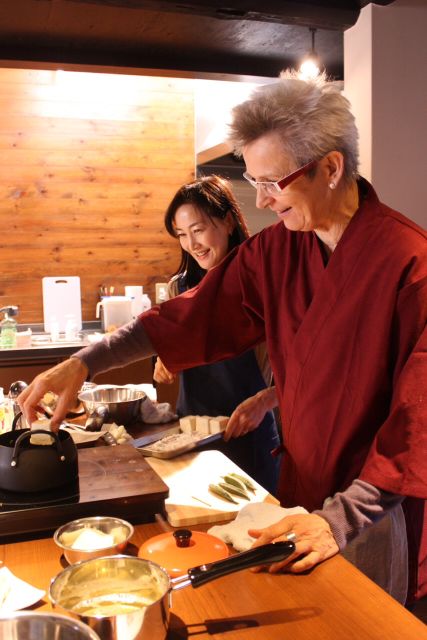
The instructor demonstrates each dish before you try it. The teaching style is practical: watch a step, repeat it yourself, then move on to the next part. That rhythm keeps the class moving without making you feel rushed.
You should expect a fairly full morning. There is a lot to prepare in a short period, especially when the menu includes several dishes. The instructors keep the pace manageable, and the written recipes help you keep track of what you have made.
The cooking itself is not a formal knife-skills course. Most ingredients are prepared ahead of time, so you spend more time following recipes, cooking, shaping, seasoning, and arranging than cutting raw ingredients from scratch. For many visitors, that is a plus. You get to make and eat a wide range of food without spending the whole class on basic preparation.
If you want a lesson focused on professional knife technique, this is not the right fit. If you want to learn several Japanese dishes that you can try again at home, the format makes good sense.
Sushi, tempura, teriyaki chicken, and miso soup
Sushi
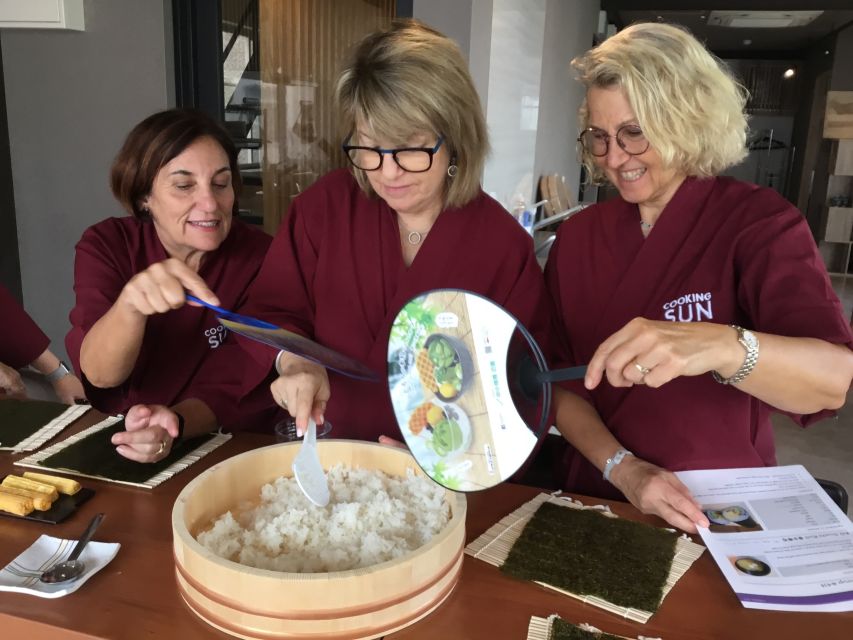
Sushi is one of the class highlights, but the lesson is not limited to raw fish. You learn how to handle the rice and assemble a roll in a way that suits a home kitchen.
The useful part is the repeatability. You are not just watching a chef make a perfect roll. You are working through the steps yourself, so you leave with a better idea of how to recreate the dish outside Japan.
More Morning Classes in Kyoto:
- Tingly Thai Cooking Class with Morning Market Tour
★ 5.0 · 589 reviews - Cooking Morning Class Chiang Mai Visit Organic Garden and Market
★ 5.0 · 211 reviews - Balinese Cooking class with traditional morning market visit
★ 5.0 · 161 reviews - Morning Cooking Class in Organic Farm with Local Market Tour
★ 5.0 · 157 reviews
Tempura
Tempura gives the class a taste of Japanese frying technique. You learn how the batter and cooking process work, then include the finished pieces in your bento.
The class also gives you a chance to understand ingredients that may be unfamiliar. One participant specifically appreciated learning about tempura and mirin, then planned to try both at home. That is a good sign for anyone who wants more than a one-time meal.
Teriyaki chicken
Teriyaki chicken is likely to feel familiar, but making it yourself helps explain why the dish tastes different in Japan. You follow the sauce and cooking process rather than simply ordering the finished dish in a restaurant.
The recipe is also practical for home use. Several people left eager to recreate the chicken for family and friends, which tells you the class favors accessible cooking over complicated restaurant tricks.
Miso soup
Miso soup provides a simple but important part of the meal. You learn how it fits alongside the other dishes and how a few basic ingredients can add warmth and depth to a bento lunch.
Together, these recipes offer a useful range. You fry, season, roll, arrange, and prepare soup. That variety makes the three-hour class feel substantial.
Why the bento lesson adds cultural value
Bento is more than a convenient lunchbox. The tradition reaches back to the late Kamakura Period, from 1185 to 1333, and has remained part of Japanese food culture in many forms.
The class explains that background while you prepare your own meal. That context matters because the arrangement of a bento is not random. Small portions, neat presentation, and a mix of dishes are all part of how the meal works.
I find this more useful than a cooking class that treats food as a list of recipes. You learn why the dishes are placed together and how the meal reflects ordinary Japanese eating habits. The cultural information stays connected to what is in front of you, rather than becoming a separate lecture.
The bento also gives you an immediate reward. Once the cooking is finished, you arrange the dishes and eat the lunch you made. There is no restaurant stop afterward and no question about whether the meal will suit your taste. You have prepared it yourself, and the lunch is included in the class price.
The teachers and the learning style
The instructors use English and demonstrate each stage clearly. Past sessions have included teachers named Tomoko, Yukari, Coco, and Mei, although you should not assume a particular instructor will lead your booking.
The strongest part of the teaching is the patience. Families with children have found that ten-year-olds could take part, and a teenager received extra help when needed. That makes the class workable for mixed-age groups, provided everyone is comfortable following kitchen instructions.
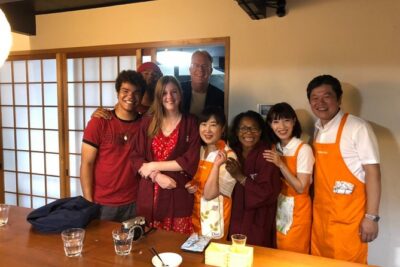
The class also works well for solo visitors and couples. Small groups have sometimes meant a close teacher-to-student ratio, including one session with just two participants and another with four people and two instructors. Larger groups can reach around eight to ten people, so the amount of individual attention may vary.
Written recipes are provided, which is a real benefit. You do not have to remember every measurement while also cooking. The recipes give you something useful to take home, and instructors have offered advice about finding ingredients after returning home.
Some teachers have also taken pictures and videos during the session. This is not listed as a guaranteed service, so bring your own phone if you want to record the process, but the friendly teaching style can make the morning feel personal rather than mechanical.
Is $67 a fair price?
At $67 per person, the experience is not the cheapest meal in Kyoto. You could buy a bento lunch for much less. The value comes from the instruction, ingredients, kitchen use, cultural background, written recipes, and the meal at the end.
You are also getting several recipes in one sitting. A class that covers sushi, tempura, teriyaki chicken, miso soup, and other dishes gives you more practical takeaways than a single-recipe workshop.
For me, the price makes the most sense if you plan to cook Japanese food again. If you only want lunch, a restaurant or shop will cost less and take less time. If you want a skill-based activity that becomes part of your Kyoto memories, the fee is reasonable.
Families should also consider the value of a shared activity. Children can participate in the cooking, learn about Japanese food, and eat what they have made. That can be more satisfying than simply taking them to another restaurant, especially for a child who likes practical activities.
Finding the kitchen and planning your morning
The meeting point is Cooking Sun at Funayacho, Shimogyo Ward, Kyoto 600-8466. Hotel pickup and drop-off are not included, so you need to make your own way there.
Allow time to find the entrance. One participant found the location difficult to locate, so do not leave arrival until the last minute. Check the starting time when booking, since class times vary by availability.
The morning schedule works well with a day of sightseeing. You finish with lunch, leaving the afternoon open for Kyoto’s temples, markets, or neighborhoods. Still, this is a three-hour commitment, so it is not something to squeeze between two tightly scheduled attractions.
The activity is wheelchair accessible. If you have food allergies, follow a vegetarian diet, or need to avoid shellfish, provide those details when booking. The kitchen has handled vegetarian and no-shellfish meals, but the staff needs advance notice.
Free cancellation is available up to 24 hours before the class for a full refund. You can also reserve now and pay later, which helps if your Kyoto plans are still changing.
Who will enjoy this most
I would choose this class if you want to do something active in Kyoto and prefer learning by making. It suits couples, families, solo visitors, and small groups of friends.
It is especially good for:
- People who want several Japanese recipes rather than one demonstration
- Families with children or teenagers who enjoy hands-on activities
- Visitors who want a meal included at the end
- Home cooks looking for recipes they can repeat
- Vegetarians and people avoiding shellfish, provided they notify the school ahead of time
- Anyone curious about the cultural role of bento
You may want another type of class if you are looking for a serious knife-skills lesson, advanced culinary training, or a very quiet private experience. Shared equipment can mean less individual cooking space, especially in a fuller group.
My call: book it for the food and the skills
I would book the Kyoto Morning Japanese Bento Cooking Class if you want your food experience to continue after the holiday. The strongest features are the range of dishes, the patient English instruction, the written recipes, and the chance to sit down to a bento you prepared yourself.
The main tradeoff is the pre-prepared ingredients and variable group size. You will not spend the morning mastering knife work, and you may share equipment with other participants. But for a three-hour introduction to Japanese home cooking at $67, the class gives you a useful amount of food, context, and practice.
Book it when you have a free morning, state your dietary needs in advance, and allow extra time to find Cooking Sun. If you want a friendly, practical cooking lesson with lunch built in, this is a strong choice for Kyoto.
FAQ
How long does the bento cooking class last?
The class lasts three hours, with the stated duration ranging from two and a half to three hours depending on the session.
What dishes will I learn to prepare?
The class includes sushi, tempura, teriyaki chicken, and miso soup. Sessions may also include additional bento dishes, with some participants preparing six or seven traditional dishes.
Is lunch included?
Yes. You eat the bento lunch you prepare during the class, and lunch is included in the price.
Is the class taught in English?
Yes. The instructor language is English, and written recipes are provided.
What does the $67 price include?
The price includes the cooking class, ingredients, apron, utensils, and lunch.
Where does the class meet?
The meeting point is Cooking Sun, Funayacho, Shimogyo Ward, Kyoto, Kyoto 600-8466.
Can dietary requirements be accommodated?
You should advise the cooking school of dietary requirements when booking. Vegetarian and no-shellfish versions have been provided in past sessions.
Is the activity wheelchair accessible?
Yes, the activity is listed as wheelchair accessible.
Newest classes around Kyoto
- Kyoto Udon & Tempura Cooking Class with Professional Chefs★ 3.8 · 3 reviews
- Kyoto: Wagashi (Japanese sweets) Cooking near Fushimiinari★ 5.0 · 40 reviews
- Kyoto Home Cooking Class &Supermarket tour near Fushimiinari★ 5.0 · 31 reviews
- Kyoto: Authentic Sushi Making Cooking Lesson★ 5.0 · 103 reviews
- Kyoto: Cooking class, learning how to make authentic sushi★ 4.2 · 9 reviews
- Authentic Japanese Cooking Experience at Izakaya restaurant★ 4.2 · 5 reviews
- Gyoza Cooking Class in Kyoto: Traditional Japanese Dumplings★ 5.0 · 12 reviews
- Private Plant-Based Japanese Cooking Class – Kyoto Edition★ 5.0 · 15 reviews
Kyoto Cooking Classes, compared.
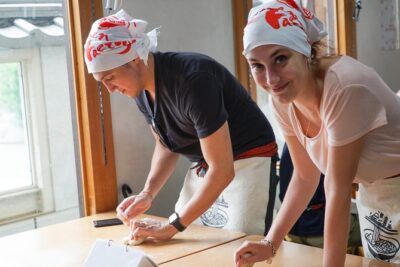
Ramen Cooking Class at Ramen Factory in Kyoto
Read our review →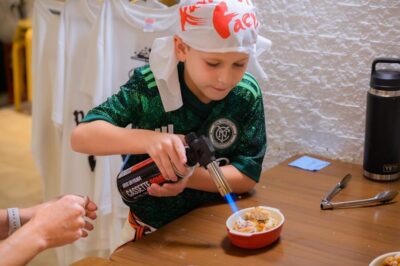
Ramen Cooking Class at a Ramen Factory with Souvenir
Read our review →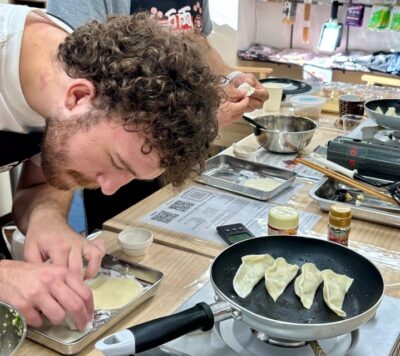
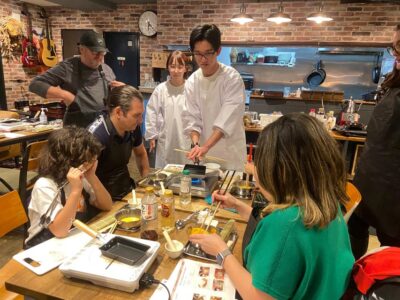
Japanese Washoku Bento Small Group Cooking Class
Read our review →
Kyoto Ramen and Gyoza Cooking Class with Professional Chefs
Read our review →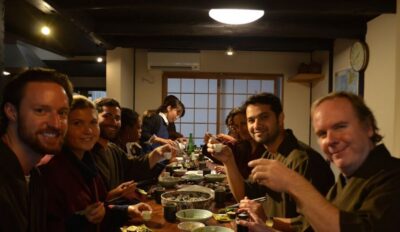
Gyoza Cooking Class in Kyoto: Traditional Japanese Dumplings
Read our review →Browse the lists this tour appears in