Review · UBUD COOKING CLASSES
Balinese Cooking class with traditional morning market visit
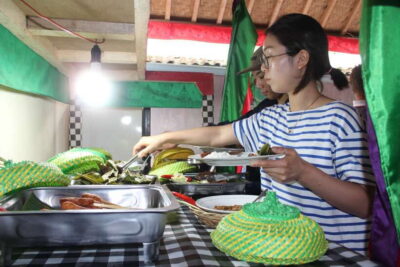
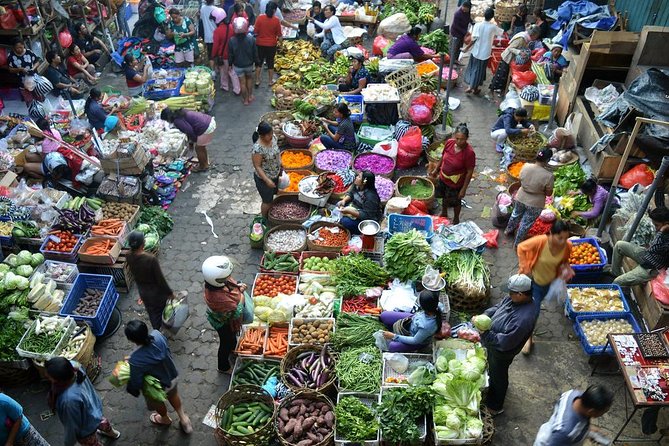
The best part of this Ubud cooking class happens before the stove is lit. You visit a local morning market, learn what the herbs, fruits, vegetables, meat, and spices are used for, and choose ingredients before heading to the kitchen in Laplapan village. The class then adds a thoughtful cultural touch: making a canang, the small Balinese offering basket seen outside homes and temples.
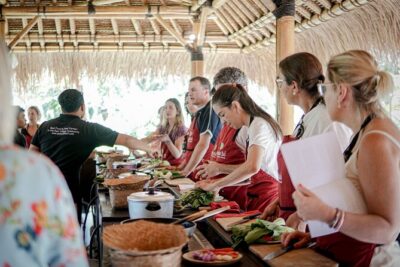
I like the small maximum group of eight, which gives the chef time to guide your chopping, grinding, and cooking. I also like the included air-conditioned pickup, especially if you are staying outside central Ubud. The one thing to keep in mind is the early market start and the roughly six-hour commitment, so this is a full morning and part of the afternoon rather than a quick class.
Key points to know before booking
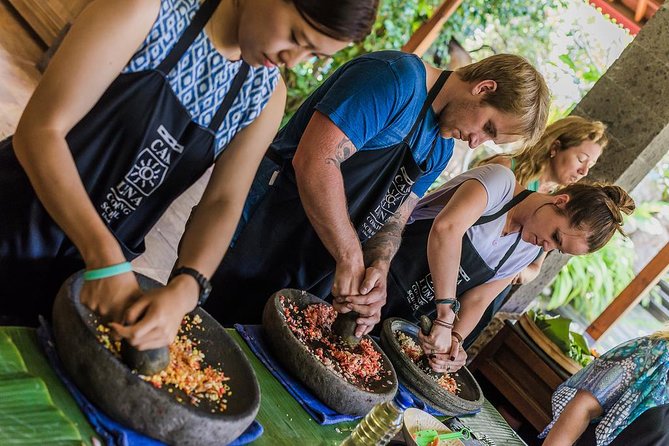
- Morning market visit: Choose and learn about fresh Balinese ingredients before cooking with them.
- Laplapan village setting: Continue to a traditional village kitchen surrounded by Ubud countryside.
- Canang offering lesson: Make a small Balinese offering and learn why it matters in daily life.
- Several dishes in one class: Prepare starters, main courses, and dessert, with some sessions covering up to nine dishes.
- Small-group format: The advertised maximum is eight people, with equipment and cooking fees included.
- Practical value: At $35 per person, you receive transport, instruction, ingredients for the class, and a sit-down meal.
A market morning that gives the class its meaning
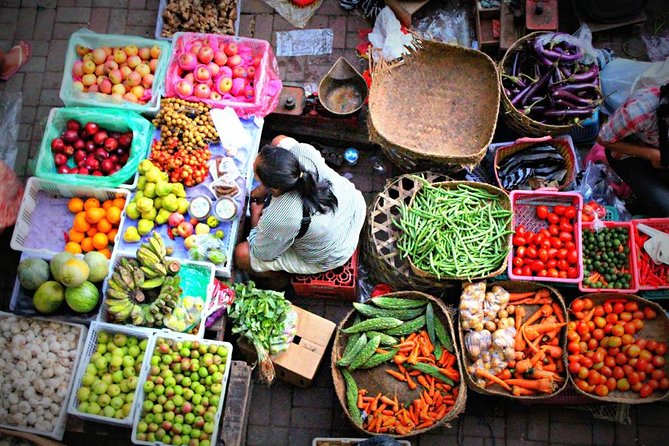
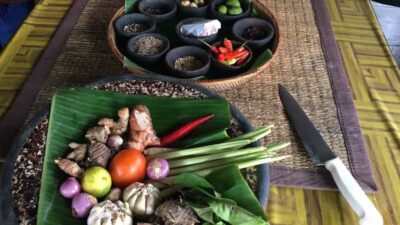
Many cooking classes begin with ingredients already measured and waiting on a counter. This one begins at the market, where you can see those ingredients in their everyday setting. Your guide helps identify local produce, herbs, spices, meat, and sweets, and you may have the chance to smell or taste unfamiliar foods.
That short market visit is not just shopping. It helps you connect a finished dish with the raw materials behind it. You may see the difference between ingredients used locally and foods brought in from elsewhere, an especially useful lesson if this is your first time in Bali.
The market portion is described as brief, so do not expect a long food tour or a free hour to browse every stall. Its purpose is focused: learn what goes into Balinese cooking and select what you will use later. I see that as a good trade. You get context without spending the entire morning on market logistics.
The early timing also matters. Morning is when fresh food is being bought for the day, and the class is designed around that rhythm. If you are not a morning person, arrange a light breakfast or bring water. The cooking session includes a meal, but the schedule starts well before that meal is served.
More Cooking Classes with a Market Tour in Indonesia
- Ubud: Cooking Class with Transfers and Optional Market Visit
★ 4.9 · 824 reviews - Balinese Ubud cooking school (9 Dish Cooking and Market Tour)
★ 5.0 · 540 reviews - Ubud: Balinese Cooking Class and Market Tour
★ 4.8 · 531 reviews
From the market to Laplapan village
After the market, air-conditioned transport takes you to Laplapan, a traditional village near Ubud. Hotel pickup is included, and the vehicle is a useful part of the package rather than a minor extra. Ubud traffic can make short distances take time, and transport saves you from arranging a separate ride between the market and cooking school.
Pickup is offered from hotels, and one reported pickup worked even from Sanur, about an hour away. Exact pickup coverage should still be confirmed when booking, since the details depend on your hotel and the operator’s route.
Laplapan gives the class a local setting instead of a hotel function room. The cooking takes place in a clean, attractive environment, described in one account as a beautiful local home. You will receive a welcome drink and snack before the main work begins, then settle into the cooking area with the other members of your group.
The setting is part of the appeal, but it is worth keeping expectations sensible. This is a hands-on village cooking workshop, not a luxury culinary school with private stations and formal restaurant service. The strength is personal instruction and local connection.
Making a canang before making lunch
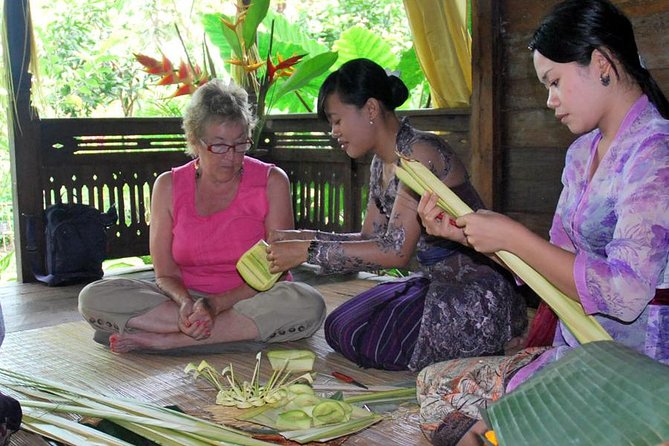
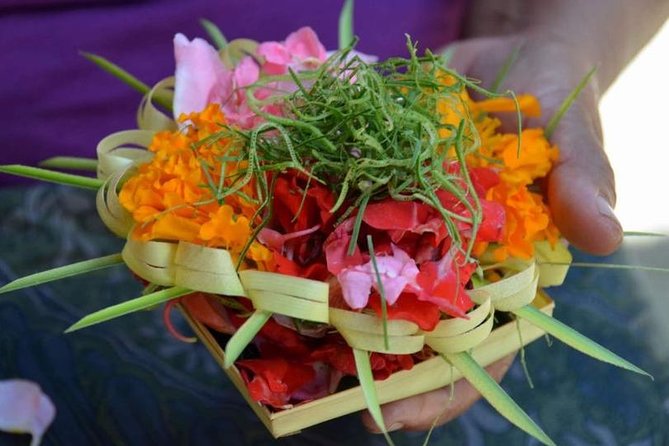
Before cooking, you learn how to make a canang and other pieces used in Balinese offerings. These small woven trays are filled with flowers and other materials and are part of daily Hindu Balinese practice. Making one by hand gives you a simple way to understand a tradition that can otherwise look like decoration from a passing car.
This section adds depth to the food lesson. Balinese cooking is tied to family life, ceremonies, religion, and community, so the offering activity helps explain the world in which the food is prepared and eaten.
It is also a welcome change of pace. You are not rushed straight into chopping vegetables. Instead, the class gives you a cultural activity that requires patience and attention, then moves into the kitchen.
The lesson is suitable for families as well as adults. Children aged six, eight, and nine were able to take part with help from the guide. Young children may not complete every step independently, but the activity gives them something tactile to do before the cooking begins.
What you actually cook in the kitchen
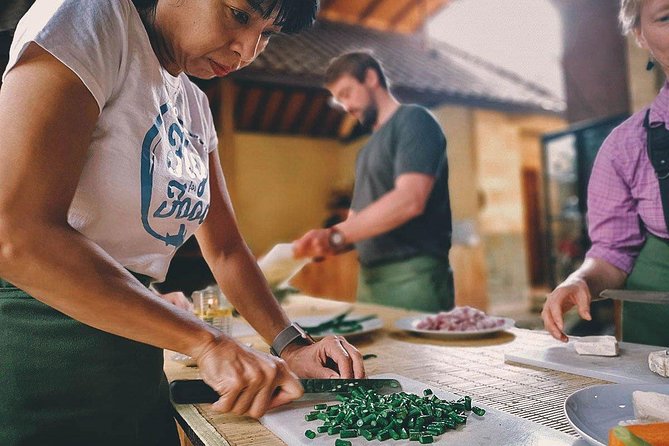
The class covers traditional Balinese techniques and includes starters, main courses, and an authentic dessert. The exact menu can vary, but the supplied details indicate that some groups prepare a five-course meal, while another session included nine tasty dishes.
That is a lot of food for one class. Some ingredients are prepared in advance so the group can finish within the scheduled time, but you still take part in plenty of hands-on work. You may chop, mix, season, shape, and cook rather than simply watching a chef perform.
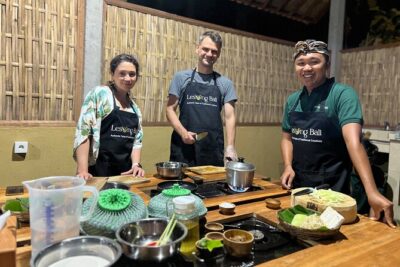
The chef provides step-by-step help and answers questions as you work. Wayan is repeatedly singled out for her patience, humor, and clear instruction, while Dewa, Putu, and other members of the team are also associated with warm hosting and good support. The precise instructor depends on the date, but the experience is clearly built around local staff who teach as well as cook.
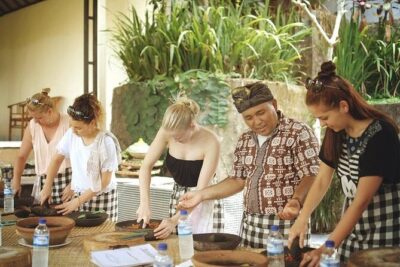
One useful feature is the shared workload. You prepare food with the group, which makes the class social without turning it into a loud party. Solo visitors can meet other cooks, while families and couples can divide up the tasks and work together.
The format also lets you learn a range of techniques in one sitting. You get more than a single signature dish. You learn how spice pastes, fresh herbs, vegetables, and other ingredients fit together across several courses.
More Cooking Classes with a Market Tour in Ubud
- PRIVATE Ubud Market Tour & Balinese Cooking Class with Putu
★ 5.0 · 125 reviews - Jambangan bali cooking class with morning market tour
★ 5.0 · 35 reviews - Balinese cooking class/Go shopping at the market, cook, eat
★ 5.0 · 12 reviews
How interactive is the cooking?
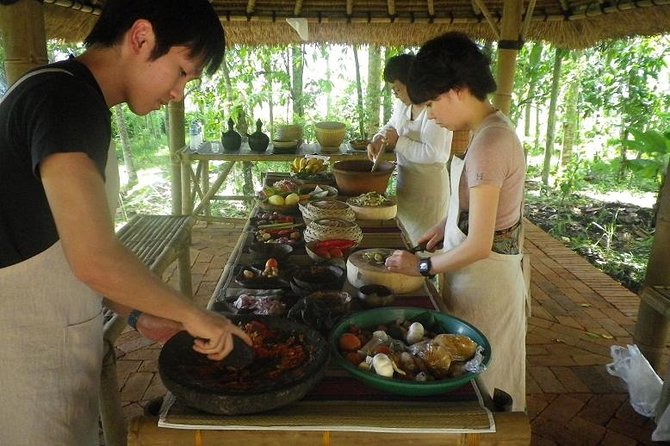
The level of participation can vary slightly with group size. In a full class, the staff may pre-prepare certain ingredients so everyone can finish on time. That means you might not personally complete every single step of every dish.
Still, the class is intended to be interactive. Several accounts describe substantial hands-on work, and one solo participant had a private lesson and prepared each meal with patient guidance. If you want maximum time at the cutting board and stove, a smaller group is likely to suit you best.
The advertised maximum is eight people. That is small enough for questions and personal help, though you should not assume a one-to-one lesson unless the group happens to be very small.
Dietary needs can be accommodated in at least some cases. Vegetarian options were provided for one group, and another class adapted to dietary requirements. You should state your needs when booking rather than waiting until the market or kitchen.
The meal at the end is part of the value
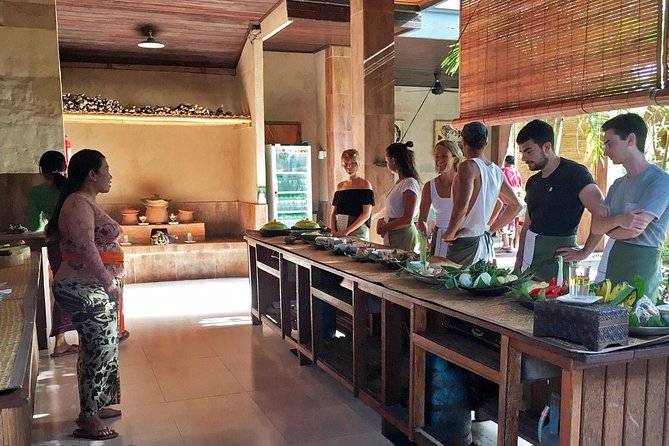
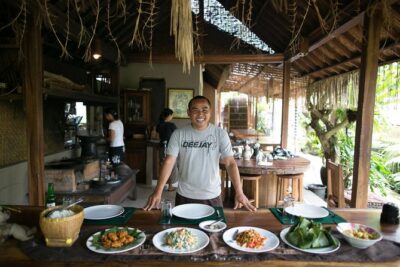
Once the dishes are ready, everyone sits down and eats what the group has made. This is not a demonstration where you leave with a sample plate. The meal is the payoff for the work, and it lets you compare the finished dishes while they are fresh.
The amount of food appears generous. You may prepare several courses, and one family group described the meal as very filling. You also get to see how the individual dishes work together as a Balinese meal rather than tasting them as isolated recipes.
Some sessions provide a recipe book, giving you a practical way to repeat the dishes at home. The class is most useful when you treat it as a skill-building activity, not just a meal. Pay attention to the order in which ingredients are added, how the spice mixture is prepared, and how the chef adjusts seasoning.
Do not expect restaurant-level uniformity from a group kitchen. The final dishes depend partly on how confidently each person chops and seasons. That is part of the fun, and the instructor is there to keep the results on track.
What $35 gets you
At $35 per person, this is strong value if you use all parts of the package. The price includes cooking equipment, the cooking class, taxes, and air-conditioned transport. It also includes the food used in the class and the meal you eat at the end, based on the description of the experience.
You are paying for about six hours, not just a two-hour cooking lesson. The market visit, transport, offering activity, instruction, and sit-down meal create a full half-day program.
The price becomes even more attractive if you are staying outside Ubud and would otherwise pay separately for transport. Group discounts may be available, which could help families or friends booking together.
Personal expenses are not included. The information does not specify additional costs for drinks, souvenirs, or anything else outside the class, so bring a little spending money if you want to buy something at the market. Do not count on the market stop as a shopping excursion, though. It is mainly part of the lesson.
The practical details that affect your day
The total duration is about six hours, and pickup is included. Because the class starts with a morning market visit, check the pickup time carefully and allow room in your schedule afterward. The program is long enough that you will not want to place a rushed airport transfer or fixed appointment immediately after it.
Mobile tickets make the booking simple, and confirmation is provided at the time of booking. The operator offers free cancellation when you cancel at least 24 hours before the start time. Inside that window, the payment is not refunded, and last-minute changes are not accepted.
The activity has a maximum of eight people. That limit is important because the class works best when the chef can move around the group and give direct help.
The experience is a good match for:
- Food-focused visitors who want more than restaurant meals
- Families with children who enjoy practical activities
- Solo visitors who like meeting people during a shared class
- Couples looking for a half-day cultural activity
- Cooks who want recipes and techniques they can repeat at home
- Anyone curious about the relationship between Balinese food and Hindu customs
It may be less suitable if you want a late start, a private chef, a short demonstration, or a polished restaurant-style lesson. The class is also not the right choice if you dislike group work or hands-on preparation.
The strongest parts of the experience
The market visit gives the class a clear sense of place. You learn about local produce from someone who uses it, rather than reading ingredient names from a printed menu.
The offering lesson is the most distinctive cultural element. Plenty of cooking classes can teach you to make a spice paste. Far fewer also show you how to make a canang and explain its place in daily Balinese life.
The staff are another major strength. Wayan is praised for being patient, funny, and easy to understand, while Putu is described as welcoming and particularly good with children. Dewa and the drivers also contribute to the feeling that the day is personal rather than mechanical.
The food itself receives high marks, but the real value comes from preparing several dishes and then eating them together. You leave with more than a full stomach. You have a better sense of how Balinese meals are built.
The experience has a 5.0 rating from 161 reviews and a 99 percent recommendation rate. Those numbers support the idea that the class delivers what it promises, though they should not obscure the practical points: it is early, it lasts six hours, and the group format means some preparation is shared.
Should you book this Balinese cooking class?
I would book this class if I wanted a hands-on introduction to Balinese food and culture in one morning. The market, canang lesson, village setting, local chef, and shared meal give it more substance than a standard cooking demonstration.
At $35, the combination of transport, food, equipment, instruction, and a six-hour itinerary is a good deal. Families, solo visitors, and anyone staying outside central Ubud should find particular value here.
Before booking, confirm pickup from your hotel, mention dietary needs, and be ready for an early start. If you want a quiet, private lesson with total control over the menu, choose something else. If you want to cook several local dishes, meet a friendly Balinese teaching team, and understand where the ingredients and traditions come from, this is an easy choice.
FAQ
Where does the cooking class take place?
The class continues to Laplapan village, in the Ubud area, after the morning market visit.
Is hotel pickup included?
Yes. Pickup is offered from your hotel, and air-conditioned transport is included.
How long does the experience last?
The experience lasts approximately six hours.
What happens at the market?
You visit a local fresh food market, learn about vegetables, herbs, meat, fruit, and spices, and choose ingredients for the cooking class.
Will I learn about Balinese offerings?
Yes. The class includes instruction in making a canang and other equipment used for Balinese offerings.
How many people can join?
The activity has a maximum of eight travelers.
Is the cooking class suitable for children?
Yes. Children have taken part, including children aged six, eight, and nine.
Are vegetarian options available?
Vegetarian options have been offered, and dietary requirements have been accommodated. You should provide your requirements when booking.
What is included in the price?
Cooking equipment, the cooking class, an air-conditioned vehicle, and taxes are included. Personal expenses are not included.
Can I cancel for a full refund?
Yes, if you cancel at least 24 hours before the experience start time. Cancellations or changes made less than 24 hours in advance are not refunded or accepted.
More Morning Classes in Ubud
- Tingly Thai Cooking Class with Morning Market Tour
★ 5.0 · 589 reviews - Cooking Morning Class Chiang Mai Visit Organic Garden and Market
★ 5.0 · 211 reviews - Morning Cooking Class in Organic Farm with Local Market Tour
★ 5.0 · 157 reviews - Kyoto: Morning Japanese Bento Cooking Class
★ 5.0 · 149 reviews
More Balinese and Indonesian Classes in Ubud
- Ubud Cooking Class Bali with Balinese Chef
★ 5.0 · 1,609 reviews - PRIVATE Authentic Balinese Cooking Class in Ubud at Putu’s Home
★ 5.0 · 644 reviews - Balinese Farm Cooking Class by Pemulan Bali
★ 5.0 · 410 reviews - Balinese Authentic Cooking Class in Ubud
★ 5.0 · 239 reviews
Newest classes around Ubud
- The Authentic Balinese Cooking Experience★ 5.0 · 4 reviews
- Ubud: Organic Farm Harvest, Bali Cooking Class by Pemulan★ 4.8 · 12 reviews
- packages cooking class and romantic dinner in a local home★ 5.0 · 4 reviews
- Jambangan bali cooking class with morning market tour★ 5.0 · 35 reviews
- Ubud: Balinese Cooking Class with Hotel Transfers★ 4.8 · 17 reviews
- Balinese cooking class/Go shopping at the market, cook, eat★ 5.0 · 12 reviews
- Bali: Cooking Class with Monkey Forest and Art Village Tour★ 5.0 · 2 reviews
- PRIVATE Ubud Market Tour & Balinese Cooking Class with Putu★ 5.0 · 125 reviews
Ubud Cooking Classes, compared.
Cooking Class with Transfers and Optional Market Visit
Read our review →
PRIVATE Authentic Balinese Cooking Class in Ubud at Putu’s Home
Read our review →
Balinese Ubud cooking school (9 Dish Cooking and Market Tour)
Read our review →