
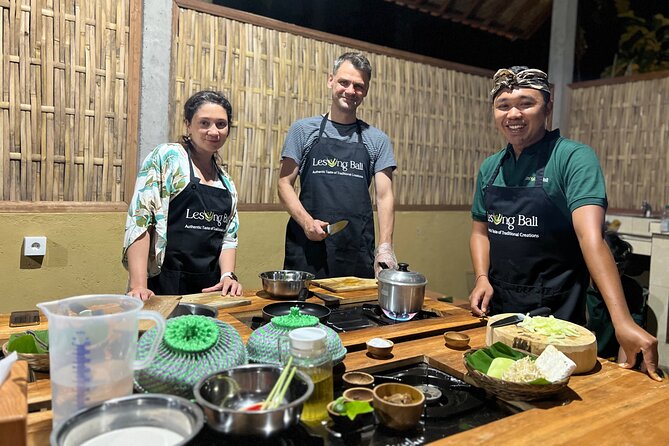
Review · UBUD COOKING CLASSES
Balinese Authentic Cooking Class in Ubud
The best part of this Ubud cooking class is that the food lesson begins before you reach the stove. You visit a local market, see a Balinese family compound, gather spices from a farm, then use a traditional lesung, or mortar and pestle, to build your meal. I like the market-and-farm connection, and I like that you get real hands-on work rather than simply watching a chef. The main catch is that the market visit is offered only with the morning class.
I also like the small-group format, capped at 15 people, and the choice of regular, vegetarian, or vegan menus. Guides such as Ron, Putri, Don, Gusti, and Begul have received especially warm praise for their humor, patience, and cultural explanations. Still, class pacing can vary, and one person found some spice additions were made without much explanation.
Key points at a glance
- Morning market visit: See local produce, spices, and fruit, with market shopping included in the morning schedule only.
- Traditional Balinese home: Learn about family compounds, daily life, and the way buildings are arranged.
- Farm-to-table cooking: Walk through the farm and harvest ingredients used in your own meal.
- Six-course meal: Many sessions include six dishes, often with a dessert, so arrive hungry.
- Flexible menus: Choose regular, vegetarian, or vegan cooking options.
- Ubud pickup included: Transfers are offered within Ubud, while rides from other areas cost extra.
A five-hour introduction to Balinese food and family life
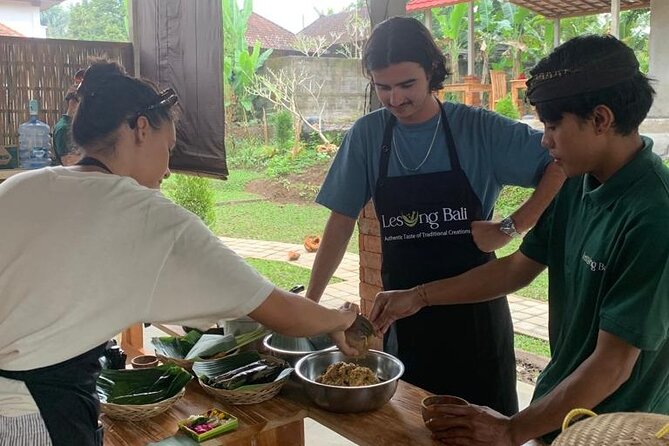
Lesung Bali’s cooking class takes place on the west side of Ubud, away from the town center and surrounded by countryside. The setting matters. You are not simply dropped into a commercial kitchen to copy a recipe. The experience links the food on your plate with the market, garden, home, tools, and family traditions that shape it.
The full experience takes about five hours. That includes transport from Ubud, cultural visits, time on the farm, cooking, and the meal itself. A morning, afternoon, or evening class is available, but only the morning schedule includes the traditional market visit.
I would choose the morning class if this is your first time in Bali or if you want the fullest program. The afternoon and evening options still include the home, farm, and cooking session, but you miss the early market atmosphere and the chance to see ingredients being bought for the class.
More Balinese and Indonesian Classes in Ubud:
- Ubud Cooking Class Bali with Balinese Chef
★ 5.0 · 1,609 reviews - PRIVATE Authentic Balinese Cooking Class in Ubud at Putu’s Home
★ 5.0 · 644 reviews - Balinese Ubud cooking school (9 Dish Cooking and Market Tour)
★ 5.0 · 540 reviews
The morning market gives the class its best opening
With the morning option, the day starts at a traditional local market. You see the fruits, vegetables, herbs, and spices that form the backbone of Balinese cooking. The class uses this visit to explain what the ingredients are and how they fit into local meals, rather than treating the market as a quick photo stop.
You might also sample local fruit. That small detail helps you understand the difference between reading a recipe and recognizing the ingredients by sight, smell, and taste. The group buys some spices from local sellers before continuing to the next stop.
The market is not included in the afternoon or evening schedule, so check the class time before booking. If seeing daily food shopping is important to you, this is the clearest reason to get up early.
The market may feel less polished than a tourist food hall. That is part of its value, but you should expect a working local market rather than a staged attraction. The pace can also depend on the group and the morning traffic.
A Balinese family compound adds useful context
After the market, the group visits a traditional Balinese home. Here you learn about the layout of a family compound and how the buildings relate to one another. The visit gives useful context for Balinese family life, customs, and household routines.
Coffee, tea, Balinese cake, and other local snacks are served during this part of the experience. It is a welcome pause after the market, and it gives you time to ask questions before the cooking begins.
The home visit is one of the strongest reasons to book this class instead of a standard recipe lesson. Balinese food is connected to family, ceremonies, gardening, and shared meals. Seeing the home helps put those connections into plain view.
There is one detail to keep in mind: the exact extent of the house visit may vary. One account describes seeing the grounds and garden rather than going inside the home itself. You should expect a look at the compound and an explanation of local life, but not assume that every room will be open.
The farm shows where the flavors begin
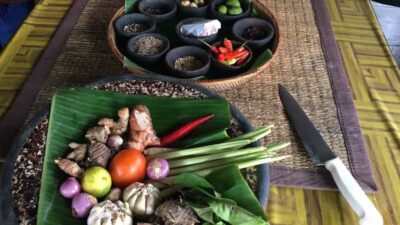
The class then moves to its farm and cooking area. Before choosing the menu, you explore the garden and harvest some of the spices and other ingredients that will be used in the meal.
This is a simple idea, but it changes how you cook. Instead of receiving a tray of anonymous chopped ingredients, you can connect the finished dish with the plants that produced its flavor. It also gives the class a useful lesson in freshness and local cooking habits.
The grounds are described as green, calm, and well kept, with the cooking area set apart from the garden. This is still a practical working class, not a luxury cooking school, but the outdoor setting gives the afternoon a relaxed feel.
The farm portion is likely to appeal most to people who enjoy seeing how food is grown. If you only want a fast cooking demonstration, this extra time may feel slow. I see that as a fair trade, since the farm is part of the cultural lesson and not filler between activities.
More Cooking Classes in Ubud:
- Ubud: Cooking Class with Transfers and Optional Market Visit
★ 4.9 · 824 reviews - Ubud: Balinese Cooking Class and Market Tour
★ 4.8 · 531 reviews - Balinese Farm Cooking Class by Pemulan Bali
★ 5.0 · 410 reviews - PRIVATE Balinese Cooking Class in Ubud with Dewa with Transfers
★ 5.0 · 213 reviews
The cooking is hands-on, not just a demonstration
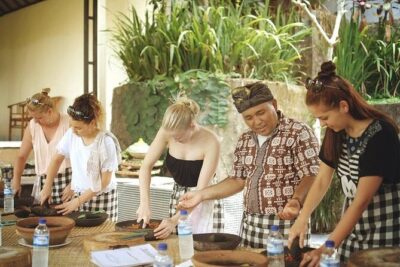
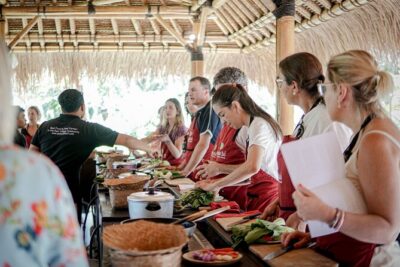
Once the menu is set, the Balinese chef walks you through the preparation. You learn traditional techniques such as chopping and pounding spices with a lesung. The large mortar and pestle is one of the memorable parts of the class, and it gives you a feel for the physical work behind Balinese spice pastes.
You are shown how much of each ingredient to use, how the ingredients are combined, and how cooking methods change with the selected menu. The goal is not only to hand you a recipe. It is to show you how the flavor develops.
The class is suitable even if you have little cooking experience. Putri has been praised for explaining each step carefully and helping beginners feel comfortable. Ron is known for a funny, easygoing teaching style, while Don has been singled out for explaining Balinese houses, customs, and food traditions.
You should still expect some variation between instructors. One session felt slightly rushed, and the chef added small amounts of spices without always explaining them first. If you want a slower lesson, ask questions as you go and let the instructor know you would like to perform each step yourself.
The class generally gives you a good amount of personal work. In one session, each person prepared their own dishes with help nearby. That is much more useful than standing behind a counter while the chef does everything.
What ends up on your plate
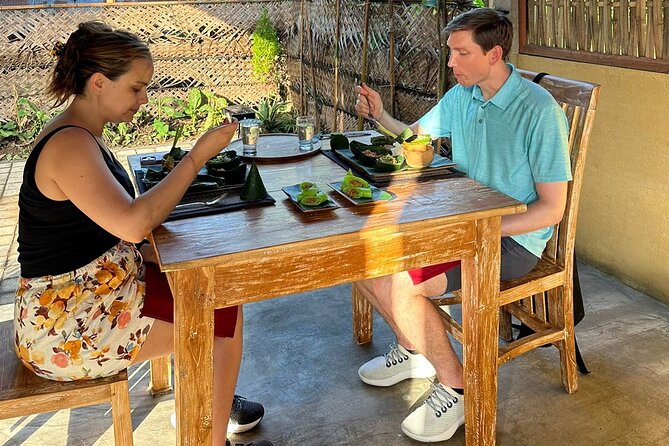
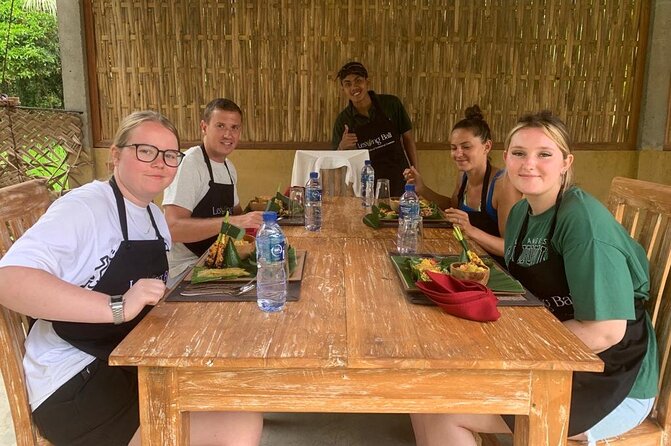
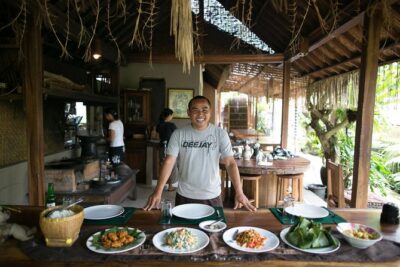
The meal commonly includes six dishes, and some sessions include dessert. Menus vary by class choice, but you can select a regular, vegetarian, or vegan option.
A regular menu is the natural choice if you want to sample a broad range of local cooking. The vegetarian and vegan options make the experience easier to fit into your diet without forcing you to sit out important parts of the lesson.
The food is served after the cooking, and the portions can be generous. You may have more than you can finish, so do not eat a large meal beforehand. Coffee, tea, mineral water, and a Balinese cake are included, along with the food you prepare.
The strength here is freshness. Ingredients come from the market and farm, and the meal reflects techniques you have just practiced. You are not merely tasting a fixed restaurant menu. You are eating the result of your own work, with the chef’s help close at hand.
Guide quality shapes the experience
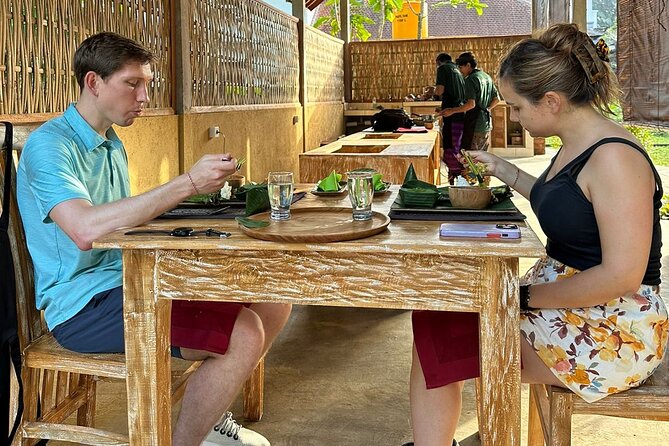
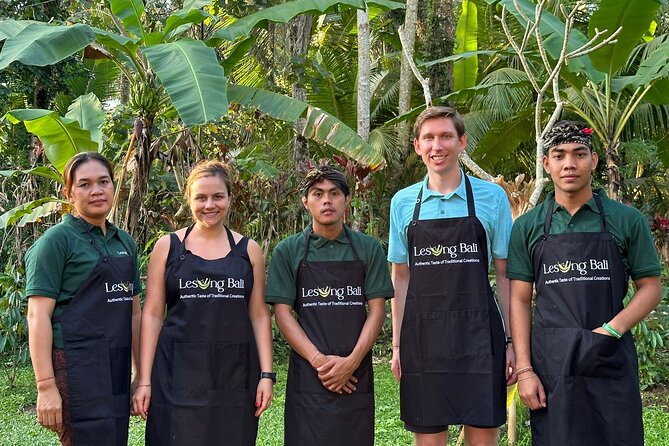
The instructors are central to this class. Ron appears frequently in the most enthusiastic accounts, with praise for his humor, warm welcome, clear pickup communication, and ability to talk about Balinese culture while driving or hosting. Putri is described as patient and detailed, making her a good match for beginners.
Don has been appreciated for his explanations of family compounds and local traditions. Gusti has also been praised for combining cooking instruction with personal stories about ceremonies, culture, and respect for the land. Begul is described as funny and energetic, though one person wanted more explanation while ingredients were being added.
You may not get a particular instructor, so it is best to book for the structure of the experience rather than for a guaranteed personality. The common thread is an approachable teaching style and plenty of room for questions.
A solo participant may do especially well here. One person who arrived alone received a private market tour and cooking session because nobody else had chosen that early start. That kind of arrangement cannot be promised, but the small-group design makes solo participation practical.
Small groups and transport keep the value strong
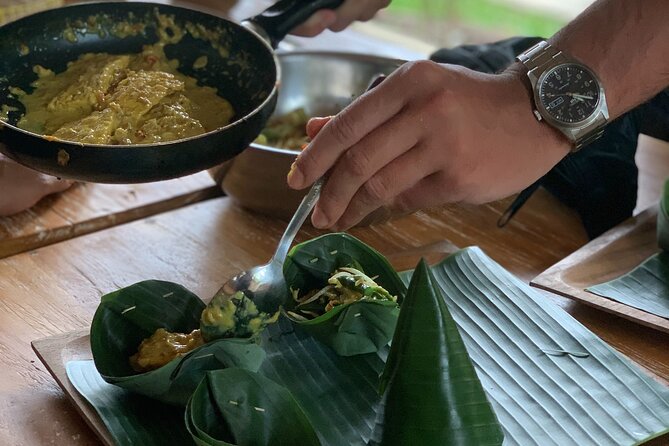
The group limit is 15 people. That is not a private class, but it is small enough to allow more contact with the chef than a large bus-group activity. The best sessions appear to be smaller still, sometimes only a few people, which creates a more personal cooking lesson.
Pickup and drop-off are included within Ubud. The vehicle is air-conditioned, and mineral water is provided. Confirm the pickup details when you book, since the free shuttle applies only to the Ubud area.
Pickup outside Ubud costs extra by car:
- Kuta, Seminyak, Sanur, and Canggu: IDR 450,000
- Nusa Dua and Jimbaran: IDR 500,000
- Uluwatu: IDR 550,000
At $39.71 per person, the price is strong for a five-hour activity that combines transport within Ubud, snacks, drinks, a cultural visit, a farm tour, instruction, and a full cooked meal. You are also paying for access to a local setting that would be difficult to arrange independently.
The value drops if you are staying far from Ubud and need to add one of the private transport charges. In that case, compare the total cost for your group before booking. For two or more people, the extra car fee may still be reasonable, but it should not come as a surprise.
Who will enjoy this class most
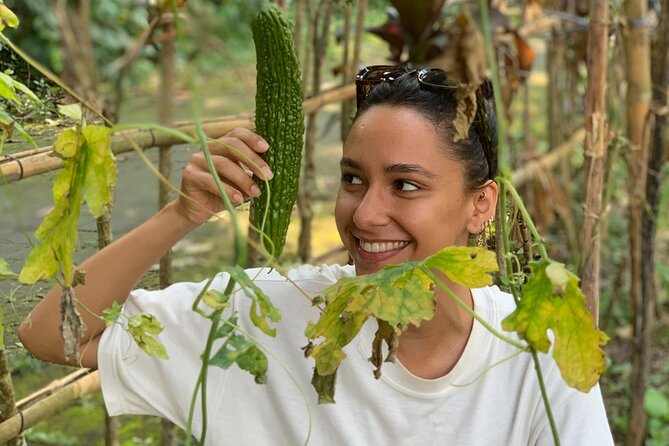
I would recommend this experience to you if food is one of the main ways you like to understand a place. It works especially well for couples, families, solo visitors, and small groups who want a relaxed activity with conversation rather than a quick demonstration.
You do not need strong cooking skills. The class is designed to guide you through the work, and the chef provides help when needed. It is also a good choice for anyone who wants vegetarian or vegan food without giving up the shared cooking experience.
The class is less suitable if you want a tightly timed, high-end culinary workshop or a guaranteed private lesson. The setting is cultural and informal, and different instructors may explain things at different speeds. The market visit also requires choosing the morning schedule.
Wear something comfortable for cooking and bring an appetite. Since the activity includes a garden, market, and outdoor areas, practical clothing is more useful than anything dressy.
Booking details and cancellation terms
Confirmation is provided when you book. Free cancellation is available up to 24 hours before the scheduled start time. Cancellations or changes made within 24 hours are not refunded.
The class requires good weather and a minimum number of participants. If poor weather or low enrollment causes cancellation, you can choose another date or receive a full refund.
Should you book Lesung Bali?
Book it if you want more than a recipe card. The combination of market, family compound, farm, spice pounding, and shared meal gives you a clear look at how Balinese food connects to ordinary life.
Choose the morning schedule for the fullest version, especially if the market matters to you. Choose an afternoon or evening class if you prefer a later start and are satisfied with the home, farm, and cooking portions.
At $39.71, the class offers good value inside Ubud, provided you enjoy a relaxed pace and some variation between instructors. I would book it for the cultural setting, the generous meal, and the chance to do the cooking yourself. I would skip it only if you want a short, polished demonstration with no transport time or cultural stops.
FAQ
How long does the Balinese cooking class last?
The experience lasts approximately five hours, including the cultural visits, farm time, cooking lesson, meal, and transport within Ubud.
Does the class include a market visit?
The traditional market visit is included with the morning class only. The afternoon and evening schedules do not include this stop.
Can I choose a vegetarian or vegan menu?
Yes. You can choose a regular, vegetarian, or vegan menu during the class.
Is hotel pickup included?
Free shuttle service is included within the Ubud area. Pickup and drop-off outside Ubud are not included and require an additional transportation fee.
How many people can join the class?
The maximum group size is 15 people. Some sessions may be smaller, depending on bookings.
What is included in the price?
The experience includes coffee or tea, mineral water, a Balinese cake, an air-conditioned vehicle, all fees and taxes, the cooking lesson, and Ubud-area shuttle service.
Can I cancel for a full refund?
Yes, if you cancel at least 24 hours before the experience start time. Cancellations or changes made less than 24 hours in advance are not refunded.
Newest classes around Ubud
- The Authentic Balinese Cooking Experience★ 5.0 · 4 reviews
- Ubud: Organic Farm Harvest, Bali Cooking Class by Pemulan★ 4.8 · 12 reviews
- packages cooking class and romantic dinner in a local home★ 5.0 · 4 reviews
- Jambangan bali cooking class with morning market tour★ 5.0 · 35 reviews
- Ubud: Balinese Cooking Class with Hotel Transfers★ 4.8 · 17 reviews
- Balinese cooking class/Go shopping at the market, cook, eat★ 5.0 · 12 reviews
- Bali: Cooking Class with Monkey Forest and Art Village Tour★ 5.0 · 2 reviews
- PRIVATE Ubud Market Tour & Balinese Cooking Class with Putu★ 5.0 · 125 reviews
Ubud Cooking Classes, compared.
Cooking Class with Transfers and Optional Market Visit
Read our review →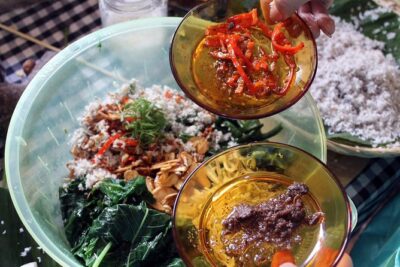
PRIVATE Authentic Balinese Cooking Class in Ubud at Putu’s Home
Read our review →
Balinese Ubud cooking school (9 Dish Cooking and Market Tour)
Read our review →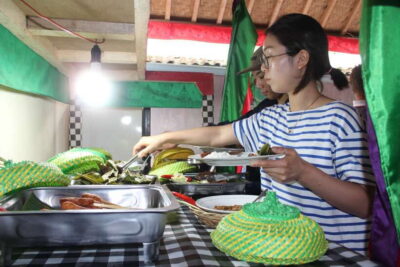
PRIVATE Balinese Cooking Class in Ubud with Dewa with Transfers
Read our review →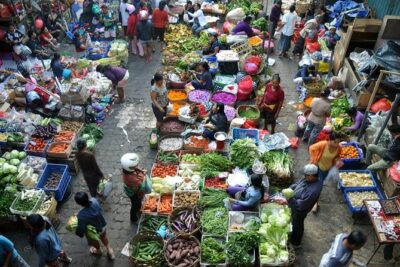
Balinese Cooking class with traditional morning market visit
Read our review →Browse the lists this tour appears in