
Review · KYOTO COOKING CLASSES
Kyoto Ramen and Gyoza Cooking Class with Professional Chefs
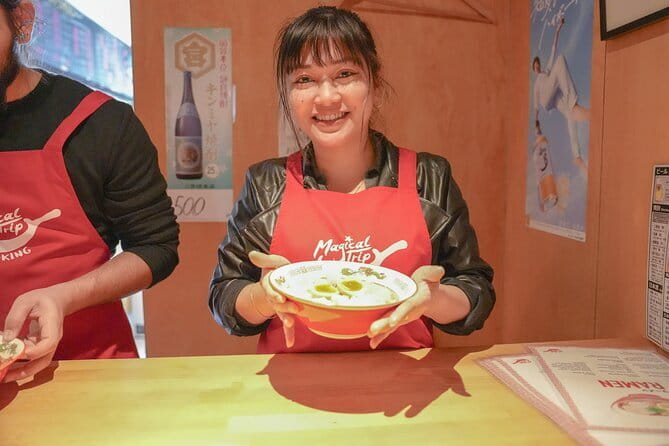
Fresh noodles, folded gyoza, and a full meal make this Kyoto cooking class more than a quick demonstration. You knead, cut, shape, cook, and then sit down to eat ramen, gyoza, and fried rice. I like the patient instruction from chefs and hosts such as Yuki, Ayuri, Rina, and Emi, plus the small maximum group of eight. I also like that two drinks and take-home recipes are included.
The main catch is dietary flexibility. The ramen uses pork broth, and the class cannot accommodate vegetarian, vegan, or gluten-free diets. The cooking space has stairs and several levels, and late arrivals cannot join, so plan your route carefully.
What makes this Kyoto cooking class worth your time
- Fresh ramen noodles from scratch: Knead and cut the dough before topping your bowl.
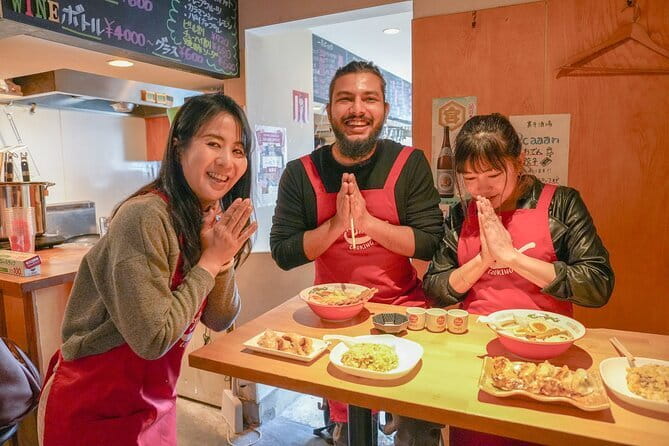
- Three-part Japanese meal: Prepare ramen, gyoza, and fried rice, then eat everything you make.
- Professional chef instruction: The chef leads the cooking while an English-speaking host translates and adds cultural context.
- Small group setting: The class has a maximum of eight people, with some sessions feeling almost private.
- Two drinks included: Beer or sake can accompany the meal, with nonalcoholic options not specified.
- Recipes to take home: You receive a guide so you can try the dishes again after Japan.
Making ramen noodles in a former Kyoto restaurant
The class meets at 「北緯35物語」木村光佑 in Shincho, in Kyoto’s Shimogyo Ward. The experience lasts about two and a half hours and ends at the same place. It is near public transportation, but you still need to allow time to find the entrance and arrive before the start.
The setting is part of the appeal. The cooking takes place in a former restaurant, giving you a working kitchen rather than a polished classroom made only for demonstrations. One useful caution: the space is mostly upstairs and has several levels, so watch your step. The activity is not recommended for people with mobility issues.
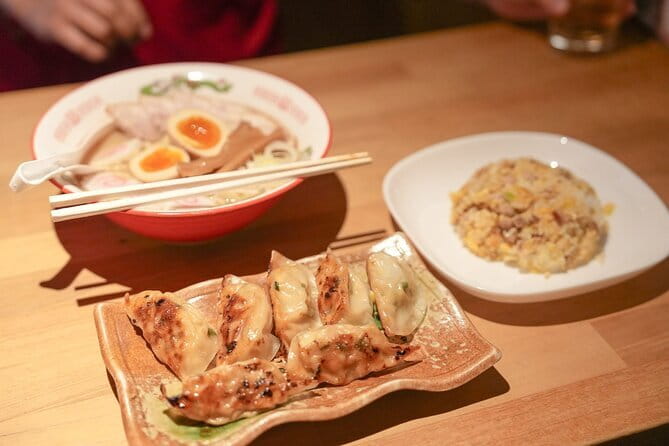
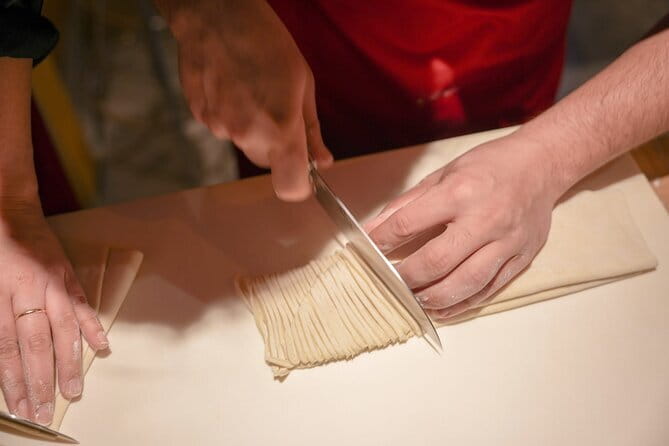
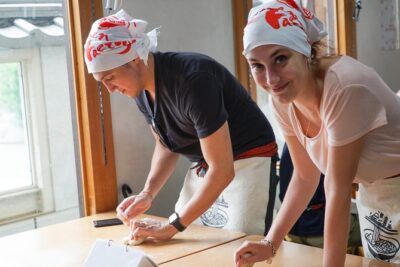
The first major task is making ramen noodles. You knead the dough, cut it, and prepare it for cooking. This is the most hands-on part of the class and gives you a better sense of what goes into a bowl than simply watching a chef work.
The process is approachable for beginners. The chef demonstrates each step, and the host helps explain instructions in English. Yuki, Ayuri, Emi, Rina, and other hosts have been praised for clear translation, friendly guidance, and extra information about Kyoto and Japan.
You should not expect a professional culinary school lesson. The class is designed for a broad range of cooking ability, including people who rarely cook. One experienced home cook found the activity less hands-on than expected and considered the recipes fairly simple. That is a fair point. This is a social food experience first, and a technical cooking course second.
More Sushi and Japanese Classes in Kyoto:
- Ramen Cooking Class at Ramen Factory in Kyoto
★ 5.0 · 1,937 reviews - Kyoto: Ramen Cooking Class at a Ramen Factory with Souvenir
★ 4.9 · 532 reviews - Kyoto: Ramen, Gyoza, and Onigiri Cooking Class
★ 5.0 · 445 reviews
Folding gyoza and learning the small details
Gyoza preparation brings a different kind of fun. You fill and fold the dumplings, with the chef helping you keep the process moving. The shapes may not all come out perfectly, but that is part of the charm. You learn the basic method without needing advanced knife skills or restaurant-level speed.
Children aged six and older can join, which makes this a useful family activity. Adults must supervise children when knives or other potentially risky steps are involved. Families with children and groups ranging from teenagers to adults have found the class easy to enjoy together.
The host also adds cultural information as the cooking moves along. This gives the food a little more meaning. Ramen and gyoza are familiar worldwide, but learning how they fit into everyday Japanese dining helps you see them as more than export favorites.
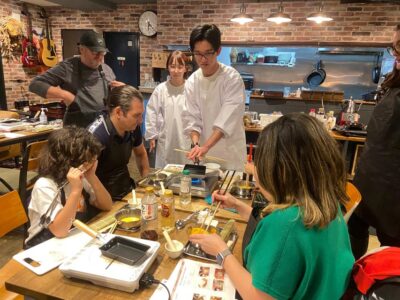
The class is conducted in a group, with up to eight people. That is small enough for the chef and host to help, but it is not guaranteed to feel private. Some sessions have had only three or four people, while others include several families or couples. A smaller turnout can make the instruction more relaxed, but you should book this as a shared experience.
A full meal: ramen, gyoza, and fried rice
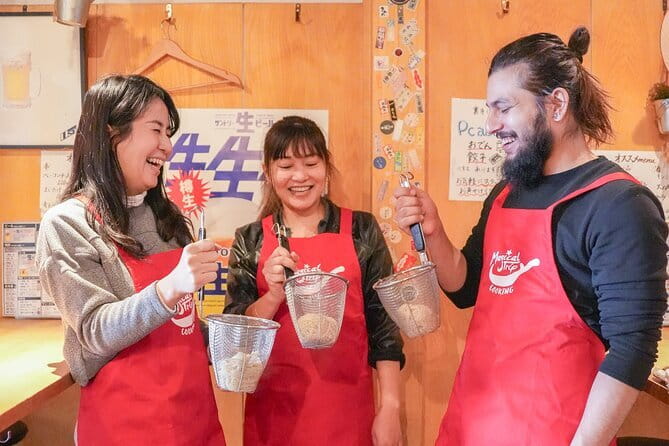
This is not a class where you make one small dish and leave hungry. You prepare ramen, gyoza, and fried rice, then eat the meal at the cooking space. The portions are described as generous, so eat lightly beforehand if you want to finish everything comfortably.
The ramen is built around a pork broth. This matters even if you plan to skip meat toppings. The base itself is not vegetarian, and the operator cannot accommodate vegetarian, vegan, or gluten-free requests. Allergy-free preparation is not guaranteed because the food is prepared in kitchens that are not dedicated allergen-free facilities.
One point deserves a clear warning: the broth may not be made through a long traditional stock-making process. At least one participant expected a more traditional broth and found that the base used a paste mixed with water. If handmade broth is the main reason you want a ramen class, this may disappoint you.
Still, the meal has a strong practical advantage. You eat food you have prepared yourself, with the chef helping you get the timing and seasoning right. The combination of soup, dumplings, and fried rice also makes the experience feel like a proper lunch or dinner rather than a tasting.
Two drinks are included. Beer or sake are suggested pairings for the gyoza, adding a pleasant Japanese dining touch. The exact nonalcoholic drink choices are not specified, so check with the operator if that matters to you.
The hosts make a big difference
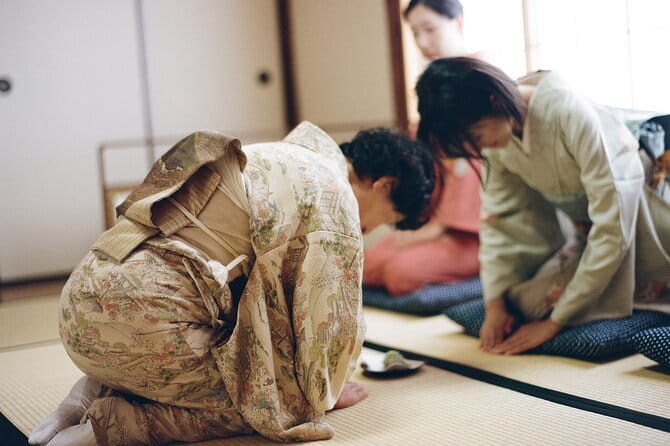
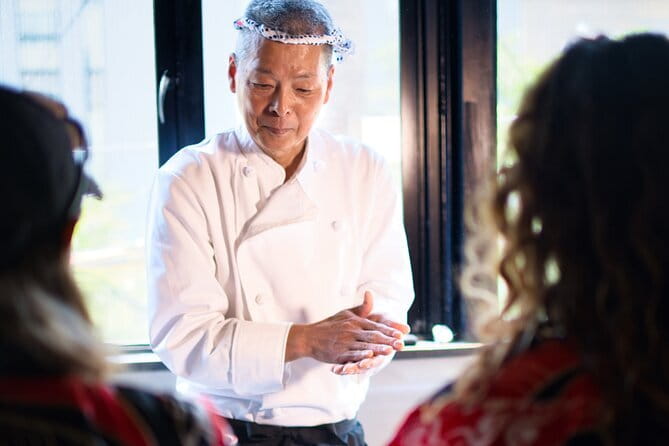
The chef teaches the cooking, while the host often acts as translator, cultural guide, and timekeeper. That division works well. You can focus on the food while the host explains what is happening and keeps communication clear.
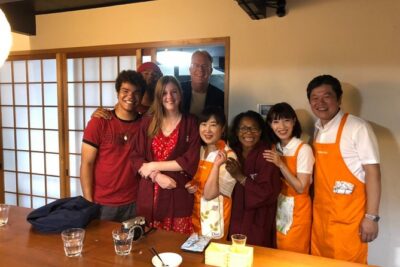
Yuki has been especially useful for translating the chef’s instructions and adding information about Kyoto and Japan. Ayuri has also been praised for making the class feel relaxed and for offering local recommendations. Rina has been described as attentive and patient, while Emi helped make the process clear and enjoyable for a mixed-age group.
Names and staffing can change, so you should not book expecting one particular guide. The larger point is that the host is an important part of the experience. Clear translation matters in a cooking class, where a missed instruction can mean overcooked noodles or poorly sealed dumplings.
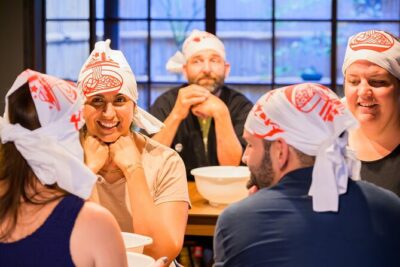
The atmosphere is friendly rather than formal. You cook, talk, and eat alongside other people. That makes the class a good choice for couples, families, and solo visitors who enjoy meeting people over food. It may be less appealing if you want quiet, private instruction or a serious chef-training session.
More Cooking Classes in Kyoto:
- Kyoto: Japanese Washoku Bento Small Group Cooking Class
★ 5.0 · 380 reviews - Kyoto: Afternoon Japanese Izakaya Cooking Class
★ 4.9 · 241 reviews - Izakaya Style Cooking Class
★ 5.0 · 219 reviews - Gyoza Cooking Class in Kyoto: Traditional Japanese Dumplings
★ 5.0 · 210 reviews
Is $86.22 a fair price?
At $86.22 per person, this class is not the cheapest way to eat ramen in Kyoto. A restaurant bowl will cost much less, and you can buy gyoza and fried rice without spending an afternoon in a kitchen.
The value comes from what is bundled into the price. You receive about two and a half hours of instruction, a full three-dish meal, two drinks, translation and cultural explanation, professional chef guidance, and recipes to use at home. You also avoid the work of sourcing ingredients and finding equipment in an unfamiliar city.
I think the price makes sense if you value participation. You are paying for the activity as much as for the food. The cost is harder to justify if you mainly want an excellent bowl of traditional ramen or if you already cook these dishes often.
The small group limit helps. With no more than eight people, the chef can watch your noodle work and gyoza folding. When attendance is low, the experience can feel almost private, though that is luck rather than a promise.
Practical details that can make or break the experience

Arrive early. The class starts on time, and late arrivals cannot join, reschedule, or receive a refund. That rule is strict because the group works through several timed cooking steps, but it also means you should not cut your transport connection close.
The meeting point is in Shincho, Shimogyo Ward, Kyoto, near public transportation. The activity returns to the same meeting point, so you do not need to arrange a separate ride from the end.
The class welcomes all cooking levels. You do not need to pay for the guide’s food or drinks. The experience may be canceled for unsafe weather, and free cancellation is available if you cancel at least 24 hours before the start time. Changes or cancellations inside that window are not accepted for a refund.
The cooking area includes stairs and several levels. If mobility is a concern, a private tour with suitable arrangements may be a better choice, though the supplied information does not promise specific accessibility features.
Who will enjoy this most
I would choose this class for families who want a rainy-day activity, couples looking for a shared meal, and food-focused visitors who want more than restaurant photos. It also suits people who like meeting others and learning through doing.
Beginners should feel comfortable. The chef breaks down the work, and the host helps with translation. Children from age six can take part with close adult supervision during knife work and other risky steps.
You should think twice if you need vegetarian, vegan, or gluten-free food. You should also reconsider if you have serious allergies, need step-free access, or want a highly technical lesson on traditional ramen broth.
For a solo visitor, the group format can be a plus. You will have a natural reason to talk with the people around you. For a family, the three dishes provide enough jobs to keep different ages involved, though younger children may need an adult beside them throughout.
What you take home besides a full stomach
The recipe guide is a useful feature. It turns the class from a one-time holiday activity into something you can repeat in your own kitchen. The recipes are not presented as advanced restaurant formulas, but that is helpful for most home cooks. Simple instructions are easier to follow after a long flight home.
You also leave with a better feel for the work behind fresh noodles and folded dumplings. Even if you do not recreate the exact broth, you can repeat the basic techniques and adapt them to ingredients available at home.
The strongest part of the experience is this combination of food, instruction, and company. The class gives you something to do with your hands, something to eat at the end, and a few cooking skills that last beyond the afternoon.
Should you book the Kyoto ramen and gyoza class?
Book it if you want a social, hands-on food activity with a full meal and friendly English support. The chef-led instruction, small group limit, two drinks, and recipes make the $86.22 price reasonable for a two-and-a-half-hour experience.
Skip it if you need special-diet cooking, step-free access, or a traditional broth made from scratch over many hours. For everyone else, this is a practical and enjoyable way to spend part of a Kyoto day, especially with family or friends. Arrive early, come hungry but not stuffed, and treat the class as an interactive meal rather than a formal cooking qualification.
FAQ
How long does the Kyoto ramen and gyoza cooking class last?
The class lasts approximately two hours and 30 minutes.
Where does the activity start and finish?
It starts at 「北緯35物語」木村光佑 in Shincho, Shimogyo Ward, Kyoto. The activity ends back at the same meeting point.
What food will I prepare?
You will prepare ramen, gyoza, and fried rice, then eat the meal you make.
Are drinks included?
Yes. Two drinks are included with the experience. Beer or sake are suggested pairings for the gyoza.
Is the ramen vegetarian?
No. The ramen uses pork broth, so it is not vegetarian even without meat toppings.
Can the class accommodate vegan, vegetarian, or gluten-free diets?
No. The experience cannot accommodate vegetarian, vegan, or gluten-free requests. Allergy-free meals are also not guaranteed.
Can children join the cooking class?
Yes. Children aged six and above are welcome. An accompanying adult must supervise children when they use knives or take part in potentially dangerous steps.
What happens if I arrive late?
The class starts on time. Late arrivals cannot join, reschedule, or receive a refund.
How many people can join the class?
The maximum group size is eight people.
Will I receive recipes?
Yes. A recipe guide is provided so you can recreate the dishes at home.
Newest classes around Kyoto
- Kyoto Udon & Tempura Cooking Class with Professional Chefs★ 3.8 · 3 reviews
- Kyoto: Wagashi (Japanese sweets) Cooking near Fushimiinari★ 5.0 · 40 reviews
- Kyoto Home Cooking Class &Supermarket tour near Fushimiinari★ 5.0 · 31 reviews
- Kyoto: Morning Japanese Bento Cooking Class★ 5.0 · 149 reviews
- Kyoto: Authentic Sushi Making Cooking Lesson★ 5.0 · 103 reviews
- Kyoto: Cooking class, learning how to make authentic sushi★ 4.2 · 9 reviews
- Authentic Japanese Cooking Experience at Izakaya restaurant★ 4.2 · 5 reviews
- Gyoza Cooking Class in Kyoto: Traditional Japanese Dumplings★ 5.0 · 12 reviews
Kyoto Cooking Classes, compared.
Ramen Cooking Class at Ramen Factory in Kyoto
Read our review →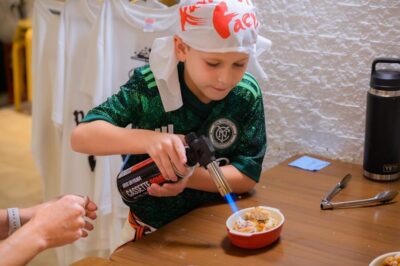
Ramen Cooking Class at a Ramen Factory with Souvenir
Read our review →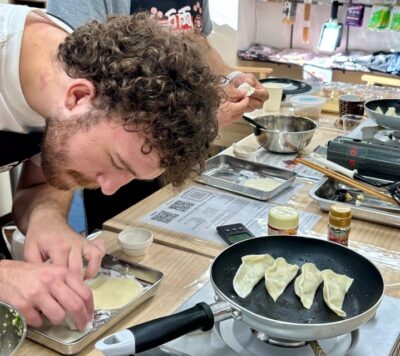
Japanese Washoku Bento Small Group Cooking Class
Read our review →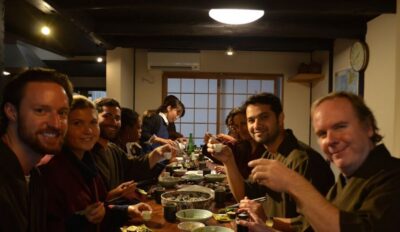
Gyoza Cooking Class in Kyoto: Traditional Japanese Dumplings
Read our review →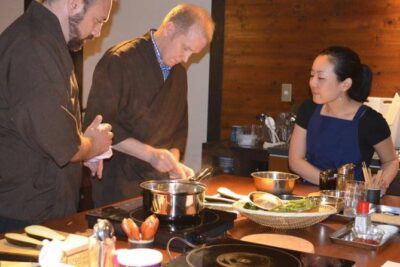
Browse the lists this tour appears in