
Review · TOKYO COOKING CLASSES
Tokyo: Real Ramen & Dumpling Cooking with Master Chef
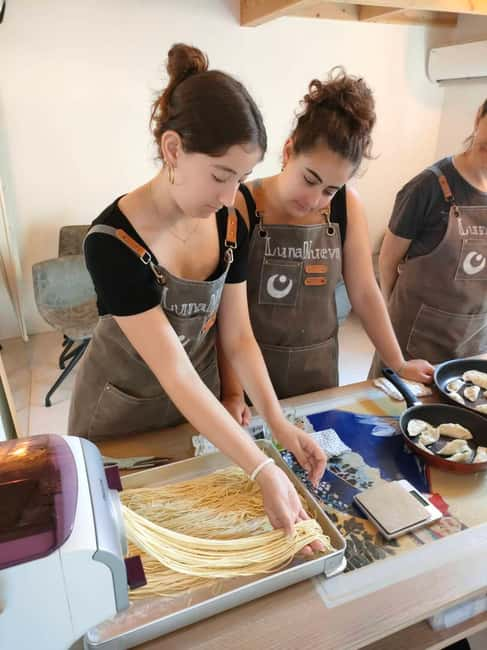
The best part of this Tokyo cooking class is its small-group, hands-on format. Chef Yoshi, who once ran a restaurant in Sydney, teaches the work behind a proper bowl of ramen, while Amo helps keep the class friendly and easy to follow. You do not just watch noodles go into a pot. You prepare the egg, toppings, dumplings, soup, and final bowl yourself.
I like the English instruction and the chance to learn both ramen and five gyoza in two hours. I also like that you receive the recipes afterward, so the class can live on in your own kitchen. The main drawback is the meeting point: Ekoda is on the Seibu Ikebukuro Line, not the JR network, and rapid trains do not stop there.
Key points
- A rare English-language ramen lesson: Chef Yoshi brings experience from his own Sydney restaurant and Japanese ramen kitchens.
- Two dishes in one class: You make ramen and five gyoza, rather than focusing on a single recipe.
- A very small possible group: The class may have no more than four participants.
- A full ramen assembly lesson: You prepare the egg, toppings, chashu, soup, noodles, and dramatic draining technique.
- Vegetarian ramen is available by advance request: Same-day changes cannot be accommodated.
- A useful take-home extra: Recipes are sent by email after the class.
Meeting Chef Yoshi and Amo near Ekoda Station
This experience begins at Ekoda Station, in Tokyo’s Nerima City. Your meeting point is outside the ticket gate, where Amo waits up to 15 minutes before the class begins. From there, you walk about five minutes to the cooking space and meet Yoshi.
Give yourself extra time for this part. Ekoda is on the Seibu Ikebukuro Line, not the JR Line, and the station name can also appear as Egota in directions. The local train stops at Ekoda, but the rapid train does not. That is a small detail with real consequences: arrive at the wrong platform or board the wrong service, and your two-hour class can start with a sprint.
The meeting instructions ask you to arrive at least 15 minutes early. Take that seriously. Late arrival may shorten your lesson, and cooking classes work best when everyone begins together.
The location also gives you a different slice of Tokyo. You are not meeting at a famous sightseeing landmark or a large culinary school. You walk from a local station into a home-style cooking setting, which helps the class feel personal rather than packaged.
More Sushi and Japanese Classes in Tokyo:
- Ramen & Gyoza Cooking Class in Tokyo with Local Supermarket Visit
★ 5.0 · 823 reviews - Tokyo Tsukiji Fish Market Tour and Sushi Making Lesson
★ 5.0 · 390 reviews - Tokyo: Easy Ramen Cooking Experience in Kabukicho, Shinjuku
★ 4.6 · 321 reviews
Why the four-person limit matters
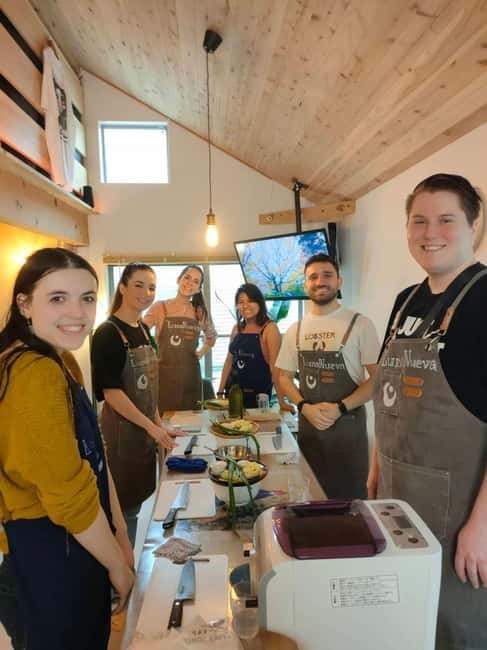
The group can be as small as four people. That is a major advantage for a practical class. Folding gyoza, cutting toppings, and handling noodles are easier when the instructor can watch what you are doing and correct you without making the whole room wait.
Yoshi and Amo are both part of the teaching team. The class is conducted in English, and the pair explain each stage, answer questions, and offer help while you work. This matters more than it might sound. Ramen has several moving parts, and a quiet class with clear timing is much easier to enjoy than a large demonstration where you only see the finished bowl.
The small setting also suits couples and families. You can work side by side, compare your dumpling folds, and share the meal at the end. Children and first-time cooks may need help with the knife work or hot pans, but the instructions are designed for active participation rather than professional kitchen skills.
One useful detail from the class atmosphere is the amount of conversation around the food. Yoshi brings stories from his restaurant years in Sydney and from training in Japanese ramen shops. These anecdotes give you context for the techniques without turning the lesson into a lecture.
Starting with the egg and ramen toppings
The first preparation is the semi-soft boiled egg, known here as nitamago. The menu describes it as a seasoned running-yolk egg. It is a small item, but it matters in a bowl of ramen. The soft center and seasoned outer layer add texture and salt to the finished dish.
You then prepare the ramen toppings. The listed ingredients include seaweed, sliced spring onion, and wood ear fungus. Each brings a different texture. The spring onion gives freshness, the seaweed adds a savory note, and the wood ear fungus provides a light crunch.
This is where the class earns its keep. You learn that ramen is not just broth and noodles. The toppings need to be cut and arranged with care because they affect each spoonful. I like that the class gives these supporting ingredients proper attention instead of rushing straight to the noodles.
The class also includes ramen sauce, soup, fragrant oil, and chashu. These components are prepared for the lesson so you can focus on the cooking steps rather than spending two hours making every stock and sauce from the beginning. That makes the schedule practical, though it also means this is not a full stock-making workshop.
Folding five gyoza by hand
Next comes the gyoza. You slice and combine the filling ingredients, then fold five dumplings yourself. Folding is simple in theory and surprisingly fiddly in practice. The shape does not need to be perfect, but the edges need to close well so the filling stays inside during cooking.
This is one of the most social parts of the class. You can see how your folds compare with the others, and the instructors can show you a better way to seal the wrapper. If you cook with family or a partner, this gives each person a clear task rather than leaving one person to do all the work.
After folding, you cook the gyoza until they are properly browned. The aim is a crisp underside with a tender wrapper. You eat five gyoza as part of the meal, so this is not a practice exercise with nothing to show for it.
The class does not present gyoza as a side note. It gives you a second Japanese dish with its own preparation, folding, and cooking method. At $99 per person, that two-dish format helps explain the price.
More Chinese Classes in Tokyo:
- Ramen & Dumpling Cooking in Tokyo with Chef/Vegan possible
★ 5.0 · 107 reviews - Warsaw’s No 1 cooking class-Polish dumplings with liqueur tasting
★ 5.0 · 576 reviews - Gyoza Cooking Class in Kyoto: Traditional Japanese Dumplings
★ 5.0 · 210 reviews - Flavors of Beijing: Eat Like A Real Chinese
★ 5.0 · 78 reviews
Preparing chashu, soup, and the final bowl
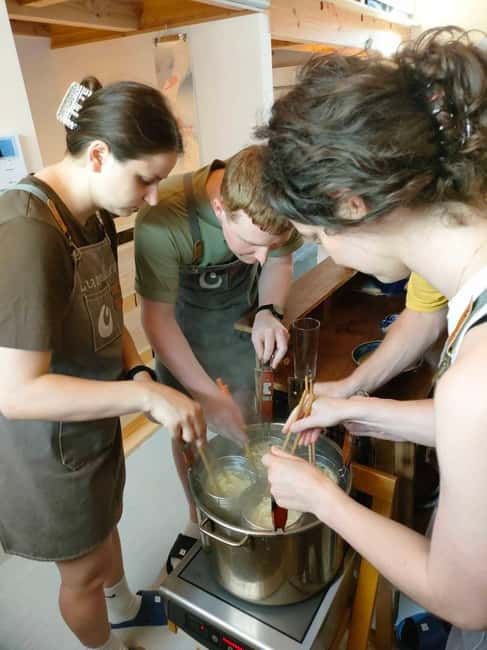
The next stages bring the separate pieces together. You infuse the chashu with flavor, prepare the soup, and boil the ramen noodles. The menu describes the chashu as slow-cooked chicken. One participant described the meat as pork, so if the exact protein matters to you, ask the hosts to confirm the day’s preparation.
The soup stage is especially useful because it shows how ramen comes together at the last moment. You combine the prepared elements rather than waiting for a large stockpot to simmer for hours. You can see how the soup, ramen sauce, and fragrant oil work together to create the finished taste.
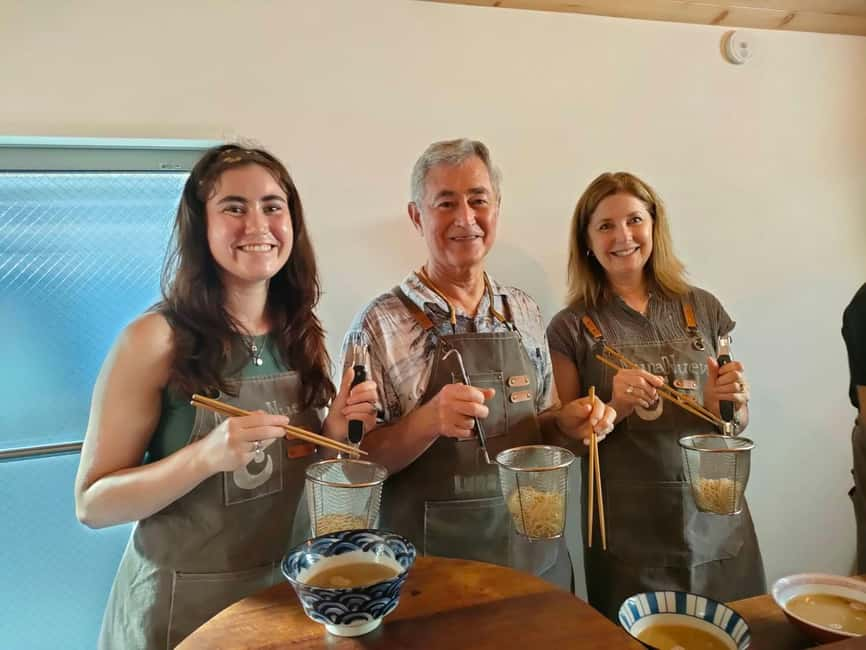
Then comes the noodle technique. You boil the noodles and use the taught draining motion to shake off excess water. It is the class’s most playful moment, and it has a practical purpose. Too much water can weaken the soup, while poor timing can leave the noodles too soft.
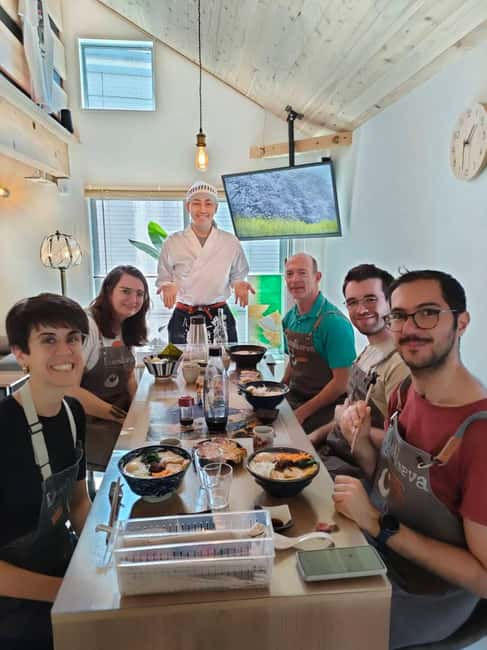
Finally, you arrange the egg, chashu, seaweed, spring onion, and wood ear fungus on top. The finished bowl is yours to eat. Some portions have been described as generous, so pace yourself if you want to finish both the ramen and gyoza.
What makes the meal feel authentic
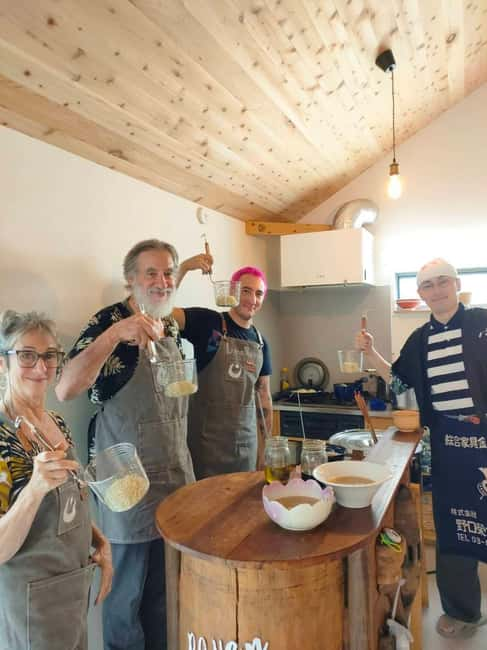
Authenticity here comes from participation and setting, not from a staged show. You cook in the instructors’ home-style space, ask questions as you work, and eat the food immediately after preparing it.
Yoshi’s background adds another useful layer. He has run a restaurant in Australia and trained in respected Japanese ramen settings. That combination gives him a practical view of the dish. He can explain not only how to make ramen, but also how the food works in a restaurant and why each step matters.
The class has received a five-star rating from ten bookings, with repeated praise for the clear English explanations, patient help, friendly welcome, and taste of the finished food. One participant also bought a custom apron, while another mentioned fun merchandise. These extras are not the reason to book, but they add a personal touch if you like cooking souvenirs.
The recipes are the most useful take-home item. They are sent by email after the class, allowing you to repeat the meal rather than leaving Tokyo with only a photograph. You can also buy self-designed shirts or an apron, but those purchases are optional.
Vegetarian ramen and dietary planning
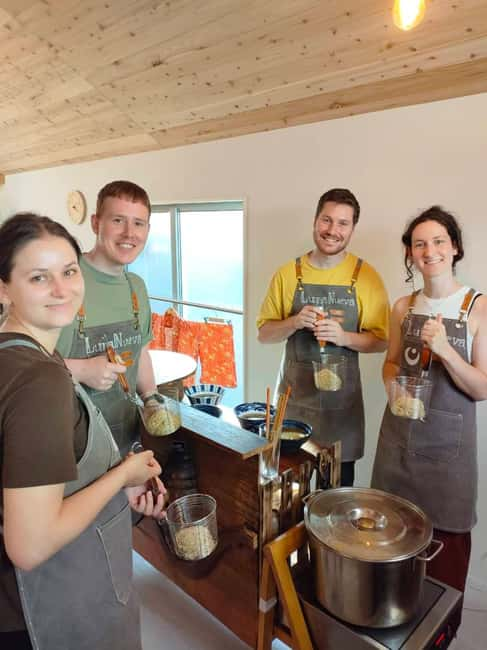
Vegetarian ramen is available, but you must request it in advance. The hosts cannot accommodate a same-day vegetarian request, so make the choice when booking or contact them before the class.
The supplied details only confirm a vegetarian ramen option. They do not promise a vegetarian version of every item served, including the gyoza or chashu. If you avoid meat, ask the hosts exactly what can be adjusted before you arrive.
For everyone else, the class includes ramen toppings, seasoned egg, chashu, seaweed, spring onion, wood ear fungus, soup, and five gyoza. Allergies and other dietary needs are not described in the available information, so you should contact the provider rather than assume substitutions are possible.
Is $99 a fair price?
At $99 per person for two hours, this is not a budget meal. You can find a cheap bowl of ramen in Tokyo for far less. The value comes from the instruction, the small group, two dishes, the English-speaking chef, and the recipes you can use later.
The comparison I would make is with a private cooking lesson, not a restaurant meal. You receive a hands-on class with a possible maximum of four people, a meal you prepare yourself, and direct access to instructors with restaurant experience. If you only want to eat ramen, spend less at a local shop. If you want to understand how the bowl is built and learn to repeat it at home, the price is easier to justify.
The class also works well near the end of a Tokyo trip. You can enjoy the meal as a final food memory, then return home with the recipes. One participant described it as a wonderful end to a trip, and that timing makes sense: the lesson gives you something active to do and a practical souvenir afterward.
Free cancellation is available up to 24 hours before the class for a full refund. You can also reserve now and pay later, which helps if your Tokyo schedule is still shifting.
Who should book this ramen class?
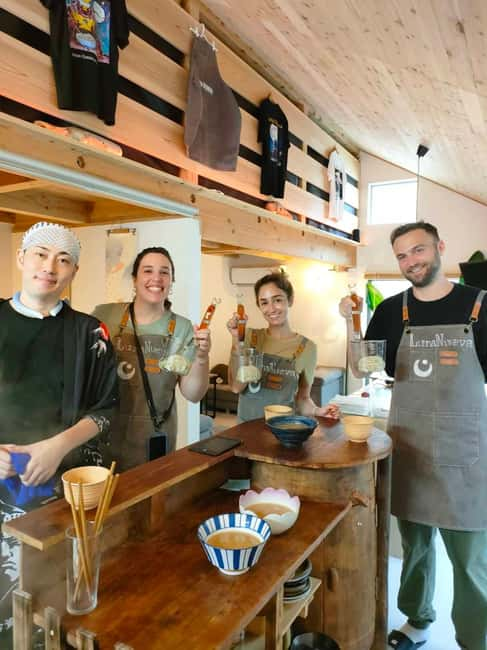
I would choose this experience if you enjoy cooking, want direct contact with a local instructor, or have already eaten plenty of ramen and want to understand the work behind it. It is also a good fit for couples, families, and small groups who prefer an activity where everyone has a job.
It suits people who value clear English instruction and personal attention. The possible four-person limit is far more appealing than a large cooking demonstration, especially for beginners.
I would hesitate if you are looking for a full-day food tour, a market visit, or a lesson focused on making ramen broth from raw ingredients. The class lasts two hours, and several components are prepared in advance. It teaches assembly, timing, toppings, noodles, and gyoza rather than every stage of a restaurant’s production.
The location is another consideration. Ekoda is easy enough to reach if you follow the train instructions, but it is not on the JR Line. If you are uncomfortable navigating Tokyo’s private railway lines, leave extra time and save the phone number, +81 80 7262 1175, in WhatsApp for use when Wi-Fi is available.
Should you book it?
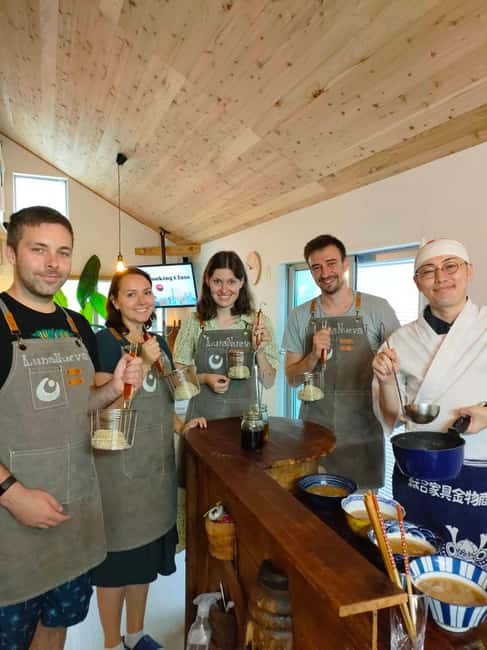
Book this class if you want to make and eat your own ramen, learn gyoza folding, and spend time with an English-speaking chef in a small setting. The Sydney restaurant background, five-person gyoza portion, seasoned egg, toppings, noodle technique, and emailed recipes give you more than a basic demonstration.
Skip it if your priority is the lowest possible meal cost or a broad sightseeing schedule. For everyone else, especially home cooks and families, the $99 fee buys a useful skill, a generous meal, and a food memory you can recreate after Japan.
FAQ
Where does the ramen cooking class meet?
The meeting point is outside the ticket gate at Ekoda Station, at 1 Chome-78 Asahigaoka, Nerima City, Tokyo 176-0005, Japan.
How do I reach Ekoda Station?
Ekoda is on the Seibu Ikebukuro Line, not the JR Line. Use a local train because rapid trains do not stop at Ekoda. The station may also appear as Egota in directions.
How early should I arrive?
Arrive at least 15 minutes before the class starts. Amo waits outside the ticket gate before the class, and late arrival may shorten your lesson.
How long does the experience last?
The cooking class lasts two hours.
Is the class taught in English?
Yes. The instructor language is English, and chef Yoshi and Amo explain the steps and answer questions in English.
Can I request vegetarian ramen?
Yes, but you must request it in advance. The hosts cannot accommodate a vegetarian ramen request made on the same day.
What food is included?
You make and eat ramen and five gyoza. The ramen includes toppings such as seasoned egg, chashu, seaweed, sliced spring onion, and wood ear fungus. Recipes are sent by email after the class.
Newest classes around Tokyo
- Tokyo: Sushi roll and side dish cooking experience★ 5.0 · 2 reviews
- Tokyo: Sushi Making Experience & Japanese Cooking Class★ 5.0 · 2 reviews
- Tokyo: Sushi Cooking Class with Sake Tasting★ 4.8 · 55 reviews
- Tokyo: Sushi and Ramen Cooking Class with Sake Pairing Set★ 5.0 · 81 reviews
- Tokyo: Kawaii Bento Cooking Class – Cute Character Lunchbox★ 4.9 · 55 reviews
- Tokyo: Gyoza Making from Scratch – Ultimate Cooking Class★ 5.0 · 2 reviews
- Tokyo: Night Cooking Class: 5 Home-Cooked Japanese Dishes★ 4.9 · 13 reviews
- Tokyo: Japanese Home-style Cooking Class with Meal★ 4.5 · 3 reviews
Tokyo Cooking Classes, compared.

Ramen & Gyoza Cooking Class in Tokyo with Local Supermarket Visit
Read our review →
Tokyo Tsukiji Fish Market Tour and Sushi Making Lesson
Read our review →
Easy Ramen Cooking Experience in Kabukicho, Shinjuku
Read our review →
Ramen and Sushi Cooking Class with Sake Pairing Set in Tokyo
Read our review →
Tokyo Washoku 4-hour Cooking Class: From Market to Table
Read our review →
Small-Group Wagyu Beef and 7 Japanese Dishes Tokyo Cooking Class
Read our review →
Private Home Cooking in Yanaka – Local Flavors in a Warm Setting
Read our review →Browse the lists this tour appears in