
Review · OSAKA COOKING CLASSES
Osaka: Cooking Class & Sake Tasting with Local Market Visit
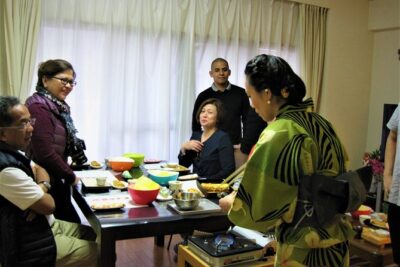
Osaka’s food culture makes the most sense when you cook it yourself. In four hours, you visit a neighborhood supermarket, prepare niku-sui, okonomiyaki, and gyoza, then sit down to eat what you made. I like the supermarket stop because it shows you the ordinary ingredients behind Osaka cooking, and I like that the recipes are simple enough to repeat at home. The small group, capped at seven, keeps the class friendly and hands-on.
The main catch is that this is not a good fit for anyone needing gluten-free food, and the kitchen may not be suitable for people with mobility difficulties. You also need to arrive on time at the FamilyMart meeting point, since late arrivals cannot join or receive a refund.
Key things to know before booking
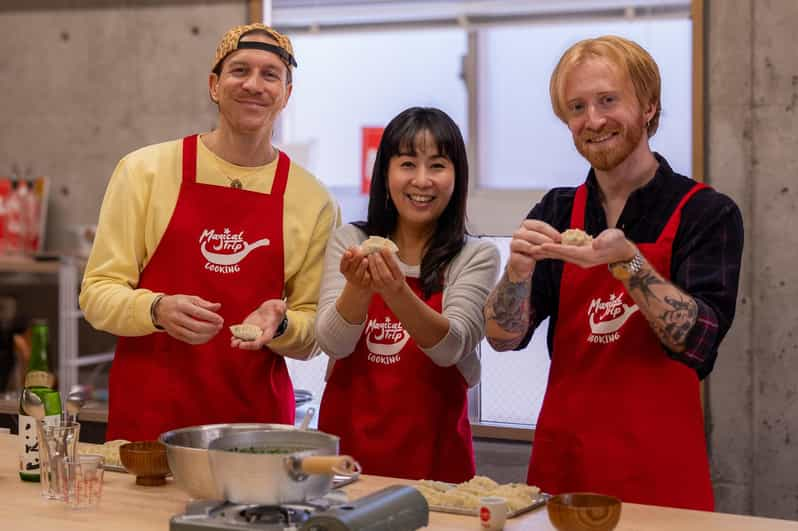
- Three Osaka dishes in one class: Make beef soup, savory pancake, and pan-fried dumplings, then eat them as lunch.
- The supermarket visit matters: You see the fresh ingredients before learning how they are used.
- Guides set the tone: Chie, Eri, Emi, Akko, and Ayu have all led warm, conversational sessions.
- Drinks are part of the meal: Three canned alcoholic or non-alcoholic drinks, plus tea, are included.
- Recipes go home with you: Download the instructions and recreate the dishes for friends and family.
- Small group, central meeting point: Meet one minute from Exit 4 of Minami Morimachi Station, with no more than seven participants.
What makes this Osaka cooking class worthwhile
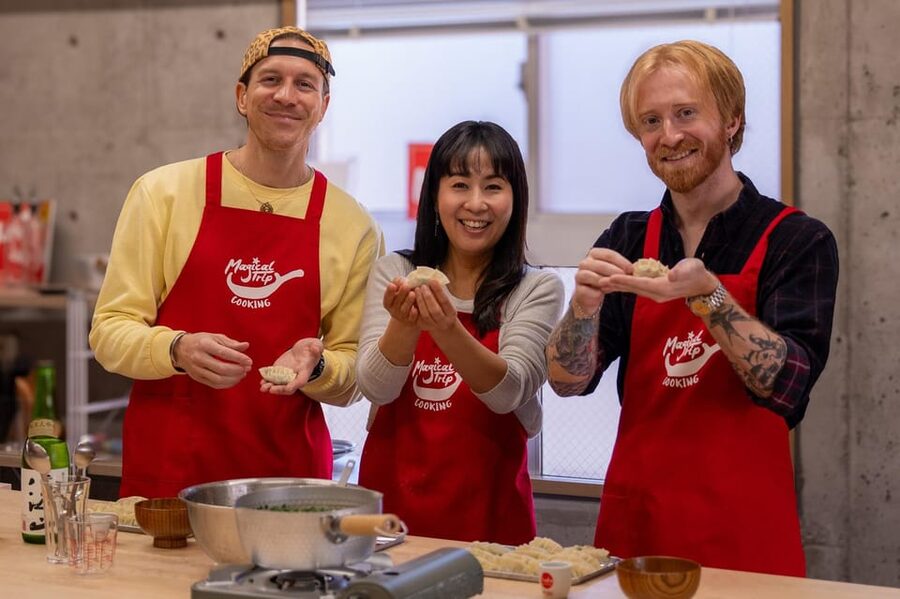
At $90 per person, this is more than a restaurant meal, but it gives you four hours of food, instruction, drinks, lunch, photos, and a local guide. The real value is the practical skill. You do not simply watch someone prepare Osaka dishes. You handle the ingredients, learn the order of the steps, and leave with recipes you can use at home.
That makes the class a good choice if you want a food activity with substance. A restaurant can show you what okonomiyaki tastes like. This class helps you understand how the dish comes together and why small changes in ingredients or cooking style matter.
The format also works well for a first or last day in Osaka. The meeting point is easy to reach from Minami Morimachi Station, and the class gives you a relaxed introduction to local food before you spend more time ordering dishes around town. On a final day, it gives you something useful to take home besides souvenirs.
More Cooking Classes with a Market Tour in Japan
- Tokyo Tsukiji Fish Market Tour and Sushi Making Lesson
★ 5.0 · 390 reviews - Tokyo Washoku 4-hour Cooking Class: From Market to Table
★ 5.0 · 253 reviews - Tokyo: Tsukiji Market Walking Tour & Sushi Cooking Class
★ 4.6 · 122 reviews
Starting at the supermarket near Minami Morimachi
The meeting point is in front of a FamilyMart, about a one-minute walk from Exit 4 of Minami Morimachi Station. From there, your guide takes you to a local supermarket to buy the ingredients for the meal.
This is a small but valuable part of the outing. You see the products Osaka residents use in daily cooking rather than only seeing finished dishes in a restaurant. Your guide can explain the ingredients and answer questions about Japanese food and local customs as you shop.
The supermarket stop also gives the class a practical shape. You can see that the recipes are not built around rare or difficult-to-find products. The aim is to show you how familiar ingredients can become distinctly Osaka-style dishes.
The walk and shopping make the activity less formal than a standard cooking lesson. You are not sent straight into a studio and handed a bowl. You first see the food in its normal setting, then use it in the kitchen. If you enjoy markets and ordinary neighborhood life, this may be one of the most satisfying parts of the morning or afternoon.
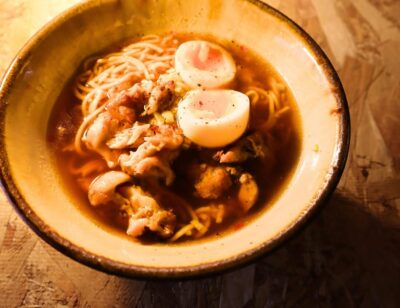
Cooking niku-sui, Osaka’s comforting beef soup
Niku-sui is a beef soup associated with Osaka, and it may be the least familiar dish on the menu for many people. That is part of its appeal. Okonomiyaki and gyoza are widely known outside Japan, but niku-sui gives you a taste of a more local comfort food.
Your guide takes you through the preparation step by step. The dish is hearty, warming, and straightforward enough for a home kitchen. It also shows how Japanese cooking can build flavor from a short list of ingredients rather than a long, complicated method.
I like having niku-sui in the class because it broadens the lesson beyond the dishes most visitors already know. You are not simply learning the three most famous Japanese foods. You are also getting a dish that can remind you of Osaka after you return home.
The soup is likely to be especially welcome in cooler weather. Osaka’s climate changes sharply through the year, so dress for the season. Summer temperatures can reach 40°C, while winter lows can fall to about -5°C.
Making okonomiyaki the Osaka way
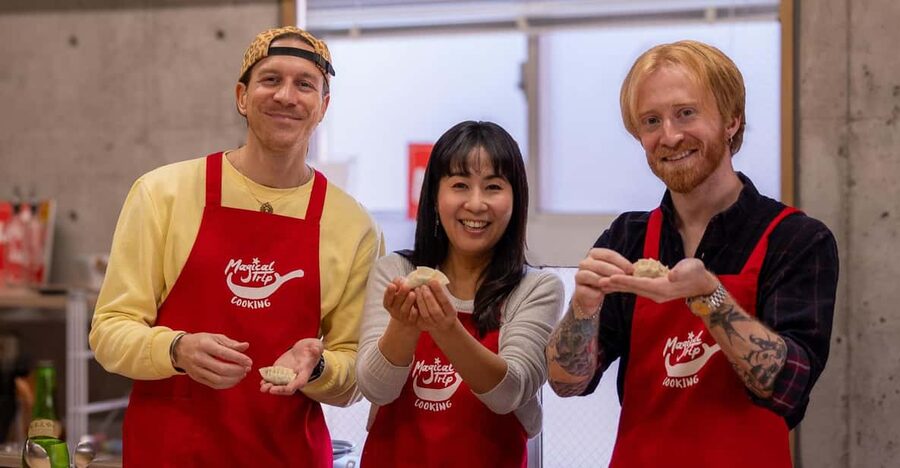
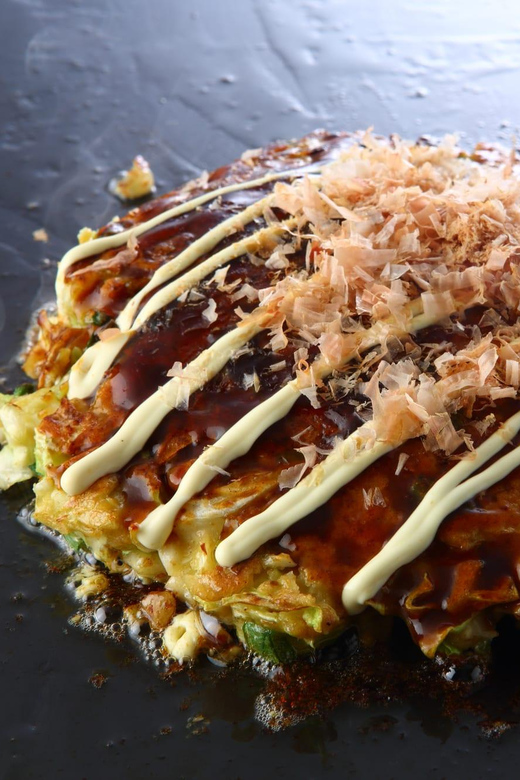
Okonomiyaki is Osaka’s signature savory pancake, and making it yourself lets you see why people take personal ownership of the dish. The recipe has a clear foundation, but there is room for variation in how you mix, cook, and finish it.
The guide explains each stage so that people without cooking experience can keep up. You work with the batter and ingredients, cook the pancake, and learn how the different parts come together into a filling meal.
This is a social dish, too. You can talk while preparing it, compare your progress with other participants, and ask questions about Osaka food. The class is conducted in English, and guides such as Chie, Eri, Emi, Akko, and Ayu are praised for making the instruction clear and the conversation easy.
Do not expect a chef-school lesson focused on technical precision. The point is to make a good, authentic-tasting dish without turning lunch into a test. That relaxed approach suits couples, families with older children, friends, and solo participants who want to meet people over food.
More Cooking Classes with a Market Tour in Osaka:
- Hanoi Cooking Class: Culture, Local Market & Meaning CSR Impact
★ 5.0 · 5,147 reviews - 5 Traditional Dishes Hanoi Cooking Class with Market Trip
★ 5.0 · 4,890 reviews - Cooking Class and Lunch at a Tuscan Farmhouse with Local Market Tour from Florence
★ 5.0 · 4,831 reviews - Chiang Mai: Cooking Class, Market & Thai Herbs Garden Tour
★ 4.9 · 4,824 reviews
Folding gyoza brings the hands-on fun
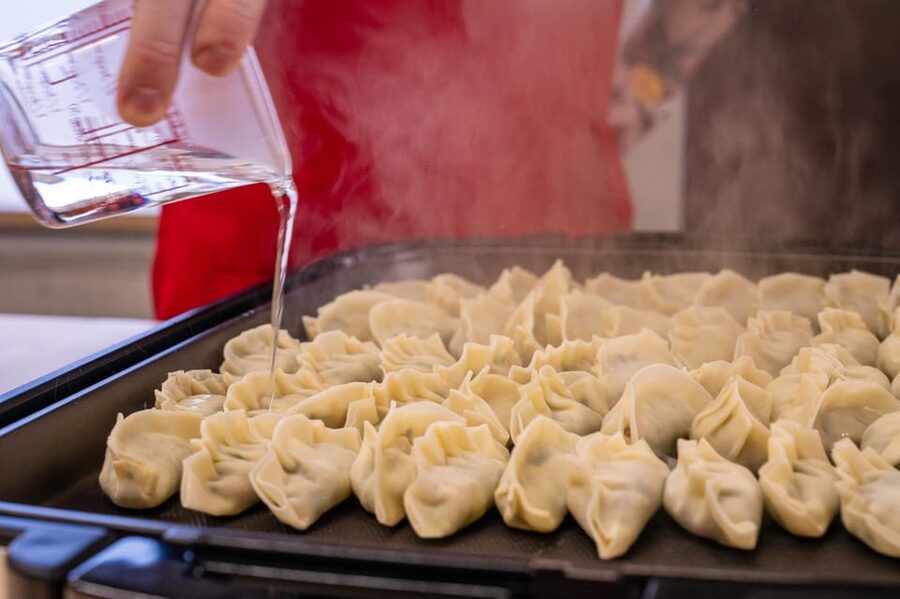
Gyoza is the most interactive part of the class. Folding the dumplings gives everyone a job, and the shape does not need to be perfect to be satisfying. You prepare the filling, fold the wrappers, and cook the dumplings until they are crisp and juicy.
This is where the class feels most playful. The activity works well for a group because you can share techniques, laugh at imperfect folds, and see how a small change in the seal affects the final result.
The dish also travels well to your own kitchen. Once you understand the filling and folding process, you can make gyoza for a dinner party without needing professional equipment. The class does not promise advanced culinary training, but it gives you a useful foundation.
If you have never cooked Japanese food, that is not a problem. The guide demonstrates the process and keeps the steps manageable. You should still be comfortable with basic cutting and heating, since the class is open only to people aged 12 and older for safety reasons.
Drinks, conversation, and lunch at the studio
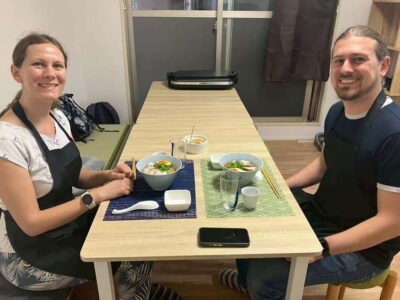
After the cooking, you eat the dishes you made. The experience includes lunch, tea, and three canned drinks. The drinks can be alcoholic or non-alcoholic, so you can choose sake, beer, or soft drinks according to your preference.
The drinks add to the social side of the class without making it a sake seminar. You get a chance to taste local beverages while chatting with the guide and the other participants. If you are especially interested in sake, keep your expectations measured. The focus is cooking, with drinks included as part of the meal, rather than a formal tasting lesson.
The studio is designed to feel relaxed and welcoming. Participants have even been able to choose background music during the cooking, which gives the session a casual, home-style mood. That detail matters if you dislike stiff demonstrations where you sit quietly and watch.
Your guide may also answer questions about Osaka, Kobe, Japanese products, and regional customs while you cook. Chie has been praised for explaining food and Japanese history in an easy way, while Eri has been especially helpful with city and cultural questions. The exact guide depends on the date, but the class is led by an English-speaking local.
A small group with a personal feel
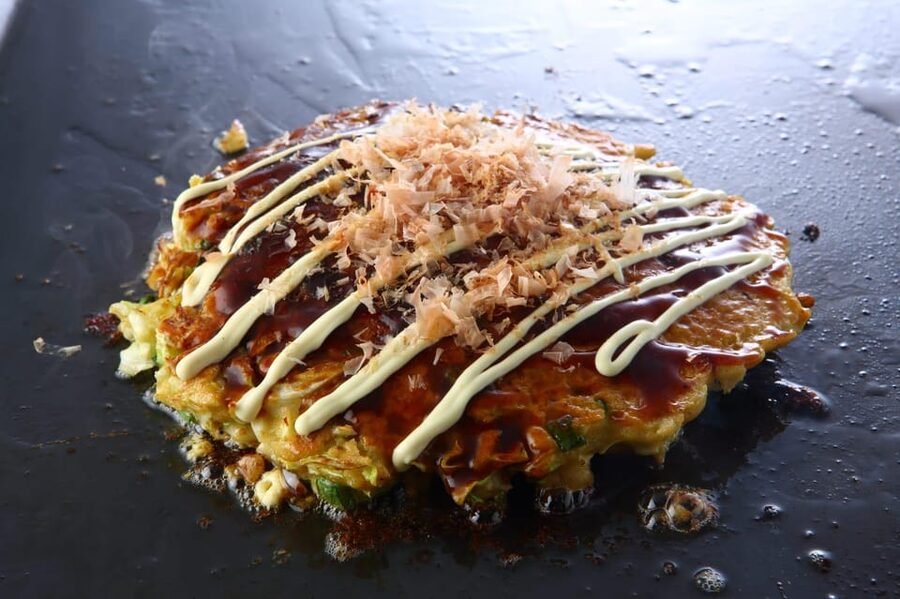
The class is limited to seven people. That number is large enough for conversation but small enough for the guide to help with cutting, mixing, folding, and cooking.
A small group also makes it easier to ask practical questions. You can check a technique, request clarification, or ask about substituting an ingredient at home without waiting through a large class.
Solo visitors should feel comfortable booking. The shared meal and group cooking create natural conversation, and the class does not require you to arrive with companions. Couples and friends get time together, while families with participants over 12 can share a useful activity rather than splitting up for separate sightseeing.
The atmosphere may vary with the group and the guide. Some sessions are quiet and calm, while others become lively once everyone starts cooking. The format allows both, which is useful if you want social contact without committing to a full-day group tour.
What you take home besides a full meal
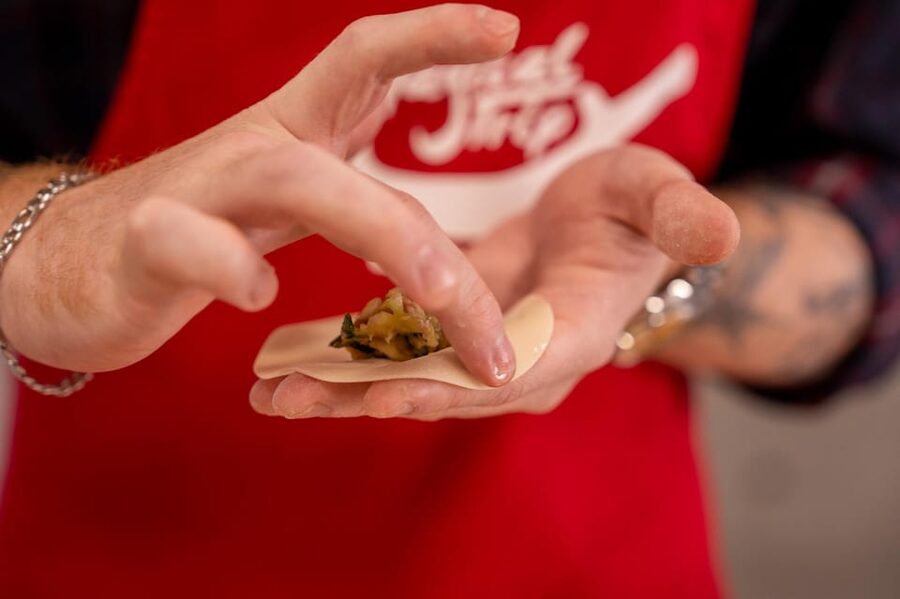
The recipes are provided after the experience for download. This is one of the strongest practical features because the food is meant to be repeated, not forgotten when the class ends.
The recipes use simple ingredients and clear methods. You may need to make substitutions depending on what is available in your home country, but the basic dishes should be approachable for a home cook.
You also receive photos taken by the guide during the class and sent by email afterward. These are a pleasant record of the activity, especially if you are traveling with family or friends and do not want one person to be left out of every picture.
I would save the recipe files as soon as you receive them and note any ingredient explanations that seem especially useful during the class. Your guide can help you understand what to buy and how the products are used, which may be more useful than a recipe alone.
Dietary needs and mobility concerns
Vegans and vegetarians are welcome, but you must tell the operator about dietary needs or allergies at least one day in advance. Same-day requests cannot be accommodated.
Gluten-free cooking is not available. This is an important limitation for anyone with celiac disease or a strict gluten-free diet. The operator also cannot guarantee allergy-free meals because food is prepared in external kitchens, and substitutions may not always be possible.
The activity may include places that are not accessible to wheelchairs or strollers. It is not recommended for people with mobility issues. If walking is difficult, a private tour is suggested instead.
These restrictions do not make the class unsuitable for everyone. They simply mean you should check the menu against your needs before paying. For anyone with serious allergies, the lack of an allergy-free guarantee deserves special attention.
Who should book this experience
I would recommend this class to you if you want to understand Osaka through everyday food rather than only famous sights. It is especially useful for:
- First-time visitors who want a gentle introduction to Osaka cooking
- Couples and friends looking for a shared activity
- Solo visitors who enjoy small-group conversation
- Home cooks who want recipes they can repeat
- Families with participants aged 12 or older
- People who want lunch included instead of adding another restaurant booking
It is less suitable if you want a formal sake tasting, a high-level cooking course, or a fully accessible activity. It is also not the right choice if you need gluten-free food or cannot arrive at the meeting point on time.
Booking details that affect your day
The experience lasts four hours, so leave enough room around it rather than scheduling a rushed museum visit immediately afterward. The starting time varies, and you need to check availability when booking.
You meet in front of FamilyMart near Minami Morimachi Station. Since late arrivals cannot join, reschedule, or receive a refund, plan to reach the station early and allow time to find Exit 4.
Cancellation is free up to 24 hours before the activity for a full refund. You can also reserve now and pay later, which helps if your Osaka schedule is still changing.
The class costs $90 per person. I see the price as fair if you value the instruction, lunch, drinks, recipes, photos, and local conversation. It is less compelling if you mainly want a cheap meal, since Osaka has plenty of inexpensive food. You are paying for the process and the skills, not just the plate.
Should you book it?
Book this cooking class if you want a friendly, practical way to connect with Osaka food. The supermarket visit, three local dishes, small group, included drinks, and take-home recipes give the four hours a clear purpose.
The best reason to choose it is the combination of ordinary local shopping and hands-on cooking. Guides such as Chie, Eri, Emi, Akko, and Ayu bring warmth and useful cultural context, but the experience remains relaxed rather than academic.
Skip it if you need gluten-free or guaranteed allergy-free food, have mobility concerns, or prefer a polished restaurant meal with no cooking involved. For everyone else, especially anyone who wants to recreate Osaka dishes back home, this is a well-priced food experience with a useful souvenir: the ability to make lunch again.
FAQ
Where does the Osaka cooking class meet?
You meet in front of FamilyMart, about a one-minute walk from Exit 4 of Minami Morimachi Station.
How long does the experience last?
The cooking experience lasts four hours.
What dishes will I cook?
You will prepare niku-sui, a beef soup, okonomiyaki, Osaka’s savory pancake, and gyoza dumplings.
Is lunch included?
Yes. The food you prepare is served as lunch during the experience.
Are drinks included?
Yes. The experience includes three canned drinks, which can be alcoholic or non-alcoholic, along with tea.
Is the class taught in English?
Yes. An English-speaking local guide leads the class.
How many people can join?
The group is limited to seven participants.
Can vegetarians and vegans join?
Yes, vegans and vegetarians are welcome, but you must share your dietary needs or allergies at least one day in advance. Gluten-free options are not available.
What happens if I arrive late?
Late arrivals cannot join the class, reschedule, or receive a refund. The tour starts on time, so arrive early at the meeting point.
More Food and Drink Outings in Osaka
- Okonomiyaki&Takoyaki for Families:Osaka Street Food Festival
★ 5.0 · 4 reviews - Small Group Cooking Class & Market Food Tour in Florence
★ 5.0 · 1,574 reviews - Pasta Making & Wine Tasting with Dinner in Frascati from Rome
★ 5.0 · 1,326 reviews - Paella Cooking Class, Wine Tasting & Central Market in Valencia
★ 5.0 · 1,150 reviews
More Drinks Outings in Osaka
- Osaka Sake Tasting with Takoyaki Cooking
★ 5.0 · 156 reviews - Osaka: Okonomiyaki Cooking Class with Beer or Soft Drink
★ 4.9 · 9 reviews - Ramen and Sushi Cooking Class with Sake Pairing Set in Tokyo
★ 5.0 · 291 reviews - Kyoto: Afternoon Japanese Izakaya Cooking Class
★ 4.9 · 241 reviews
Newest classes around Osaka
- Okonomiyaki&Takoyaki for Families:Osaka Street Food Festival★ 5.0 · 4 reviews
- Osaka: Gluten-Free Ramen and Gyoza Cooking Class★ 5.0 · 42 reviews
- Osaka Okonomiyaki Cooking Experience for Families & Groups★ 4.9 · 8 reviews
- Osaka Sake Tasting with Takoyaki Cooking★ 5.0 · 156 reviews
- Osaka : Exclusive Tea Ceremony & Wagashi Cooking★ 5.0 · 2 reviews
- Osaka: Okonomiyaki Cooking Class with Beer or Soft Drink★ 4.9 · 9 reviews
- Osaka: Japanese Cooking Class with Matcha Experience★ 5.0 · 4 reviews
- Osaka: Cooking Class Ramen & Gyoza Course in Nanba★ 4.9 · 86 reviews
Osaka Cooking Classes, compared.

Sushi Making Osaka! Popular Sushi Class in Japan!
Read our review →
Osaka Cooking Class: Okonomiyaki &Japanese cuisines experience
Read our review →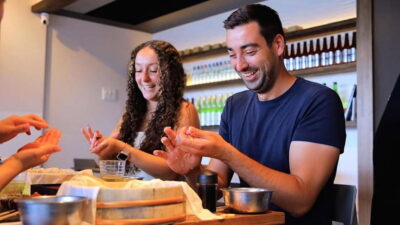
Roll and Authentic Sushi Making Class in Dotonbori
Read our review →
Browse the lists this tour appears in