
Review · KYOTO COOKING CLASSES
Authentic Japanese Cooking Experience at Izakaya restaurant
The best part of this Kyoto cooking class is that you do not simply watch a chef work. You prepare three classic izakaya dishes yourself: yakitori, filled onigiri, and dashi-maki tamago, then sit down to eat the meal you have made.
I like the small group limit of eight, which gives you a better chance to get help with tricky steps such as rolling the omelet. I also like the practical menu, since yakitori, onigiri, and rolled omelet are dishes you can try making again at home. The main drawback is the price: at $139 per person for 1.5 hours, it is a costly cooking class, even with the meal and supplies included.
Key points to know before booking
- Three useful Japanese dishes: Prepare grilled yakitori, filled onigiri, and dashi-maki tamago.
- Small Kyoto class: The group is limited to eight participants, with instruction in English and Japanese.
- Meal included: You eat the dishes you prepare, along with one soft drink.
- Dietary choices available: Vegetarian, vegan, and Muslim-friendly courses are offered without pork, alcohol, or halal meat.
- Easy central location: The venue is a five-minute walk from Keihan Sanjo Station and seven minutes from Hankyu Kawaramachi Station.
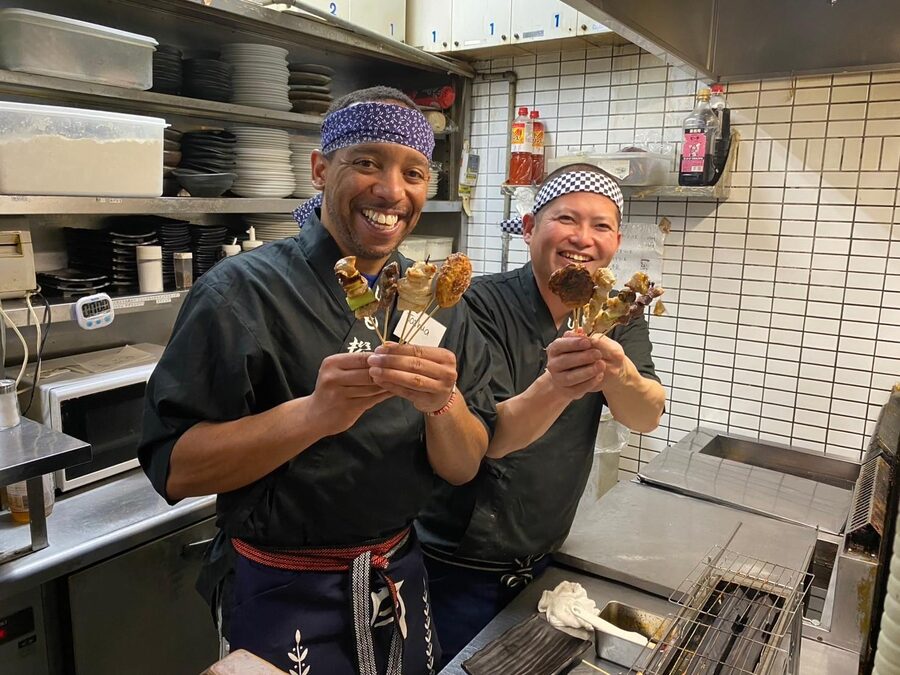
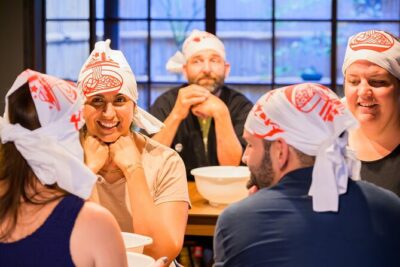
- A practical souvenir: You receive a bandana at the end, a small but useful reminder of the class.
Three izakaya favorites in one short class
An izakaya is a Japanese eating and drinking establishment where people order several small dishes to share. This class gives you a compact introduction to that style of food, with hands-on work instead of a restaurant meal alone.
The menu covers three different skills. Yakitori teaches you about skewering and grilling chicken. Onigiri lets you work with rice and fillings. Dashi-maki tamago introduces the careful rolling technique used to make a soft Japanese omelet flavored with dashi, the stock that gives many Japanese dishes their savory taste.
That mix is a smart choice for a short class. You are not spending the entire session on one complicated recipe, and each dish feels different in your hands. The class also gives you a useful sense of how an ordinary Japanese meal can combine rice, grilled food, and egg.
The class takes place at Izakaya Factory, located inside Imomatsu in Kyoto’s Kiyamachi area. The supplied address is in Nakagyo Ward, in a basement location at the Sixth Kanko Building. Since the venue is below street level, check the address and building details before setting out rather than relying only on a broad map pin.
More Sushi and Japanese Classes in Kyoto:
- Ramen Cooking Class at Ramen Factory in Kyoto
★ 5.0 · 1,937 reviews - Kyoto: Ramen Cooking Class at a Ramen Factory with Souvenir
★ 4.9 · 532 reviews - Kyoto: Ramen, Gyoza, and Onigiri Cooking Class
★ 5.0 · 445 reviews
Yakitori brings the restaurant counter to your table
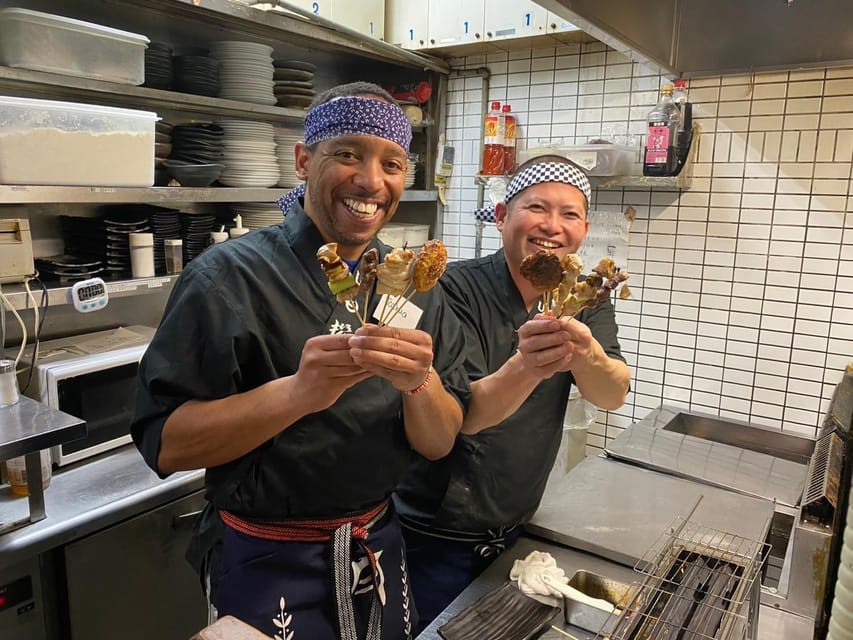
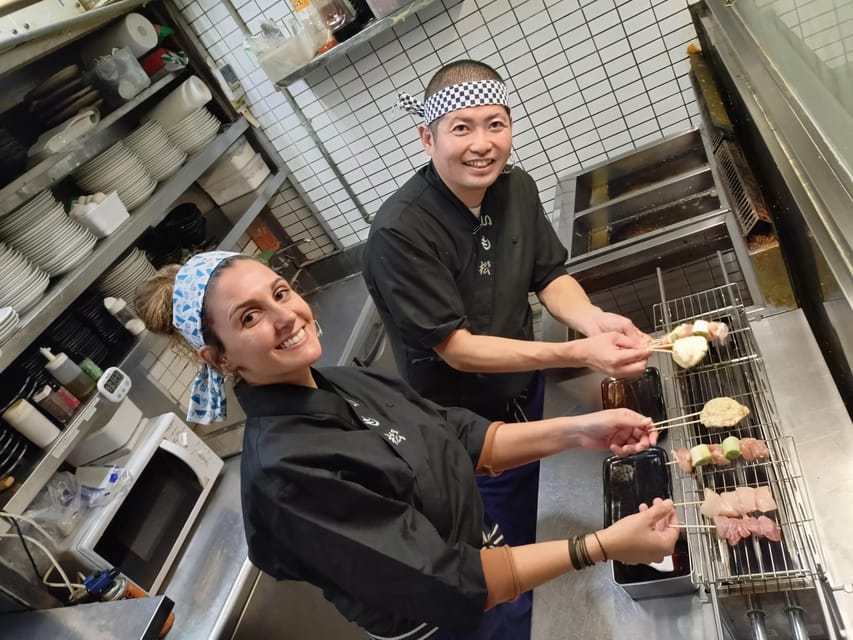
Yakitori is chicken cooked on skewers, usually over a grill. Here, you prepare and grill the skewers yourself, which gives this part of the class a more active feel than simply receiving a plate from a cook.
The appeal is clear. You get to handle one of Japan’s best-known izakaya foods and see how simple ingredients become a finished dish through preparation and heat. The class description specifically presents the process as similar to cooking in a real izakaya, so this is the part most likely to satisfy you if you want the feel of Japanese casual dining rather than a formal culinary lesson.
Do not expect a full professional chef-training session in 1.5 hours. The goal is to learn the basic preparation and enjoy the result, not to master every grilling variation. Still, the dish has good value as a lesson because it is familiar, approachable, and easy to remember once you return home.
You should also keep the short schedule in mind. The class includes three dishes, so the instructor needs to keep everyone moving. If you want a slow, highly technical grilling course, this will probably feel too brief. If you want a lively introduction with food to eat at the end, the pace makes sense.
Rolling dashi-maki tamago takes the most practice
Dashi-maki tamago is a Japanese rolled omelet made with egg and dashi. It looks simple on the plate, but shaping it neatly requires timing and control. The thin layers are cooked and rolled together, creating the soft, folded form associated with the dish.
This may be the most useful part of the class for anyone curious about Japanese technique. An omelet is familiar food, yet the Japanese version has a different texture and method. You can see how a few ordinary ingredients become something more delicate through repeated rolling.
A previous participant specifically found that the Izakaya Master made the omelet look easy. That is a useful warning as well as a compliment: the instructor may make the motion appear effortless, but you should not worry if your first attempt looks less tidy. The class is designed for all skill levels, so beginners are welcome.
The omelet can also be the dish that makes the class feel worthwhile. It is less obvious than grilled chicken or rice balls, and the technique is harder to copy correctly from a cookbook alone. If you are choosing this class mainly to learn one new Japanese kitchen skill, dashi-maki tamago is the strongest candidate.
Shaping filled onigiri is simple, social, and useful
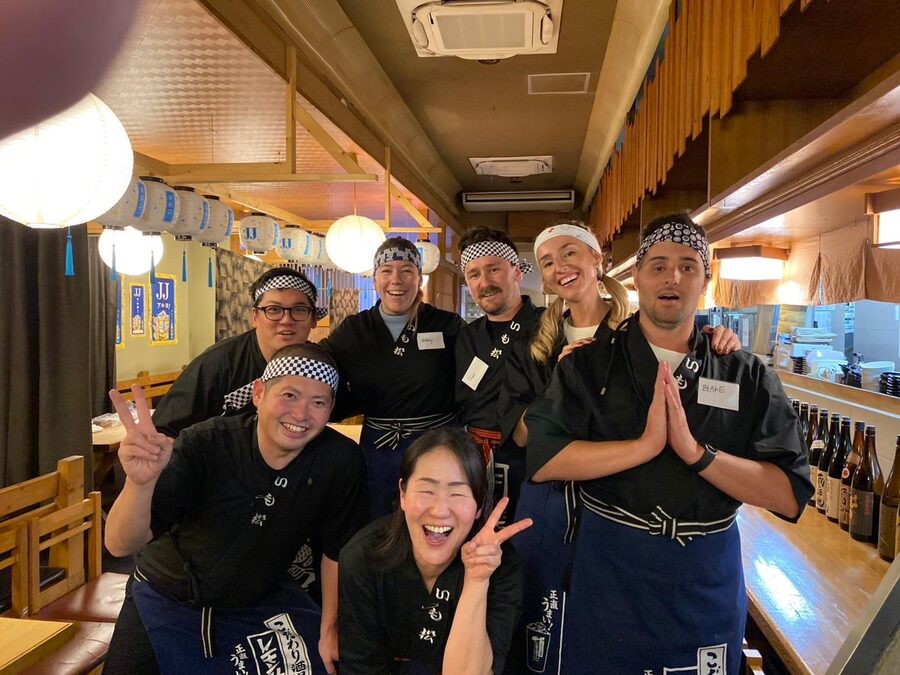
Onigiri are Japanese rice balls, often filled and shaped by hand. They are a staple of Japanese food culture, and the class lets you form them yourself with a choice of fillings.
This is likely the most beginner-friendly station. You do not need advanced cooking ability to understand the basic idea, and shaping the rice gives the class a relaxed, hands-on moment. The fillings also help show how one base ingredient can become several different snacks or light meals.
The finished onigiri are practical beyond the class. You can make them at home with fillings suited to your own taste, and they travel well as a picnic food or quick lunch. That makes the lesson more useful than a dish you might enjoy once but never attempt again.
Onigiri can be sticky to handle, especially if you have never shaped rice before. That is part of the point, though. The instructor can show you the general form, and you can focus on making a solid rice ball rather than a perfect restaurant display piece.
More Places to Eat in Kyoto:
- Pasta Making & Wine Tasting with Dinner in Frascati from Rome
★ 5.0 · 1,326 reviews - Rome: Pasta Making with Wine Tasting and Dinner in Frascati
★ 4.9 · 979 reviews - Palermo: Pizza and Gelato Cooking Class with Dinner and Wine
★ 4.9 · 951 reviews - Seville: Spanish Cooking Class with Dinner
★ 4.9 · 900 reviews
The final meal turns instruction into a real experience
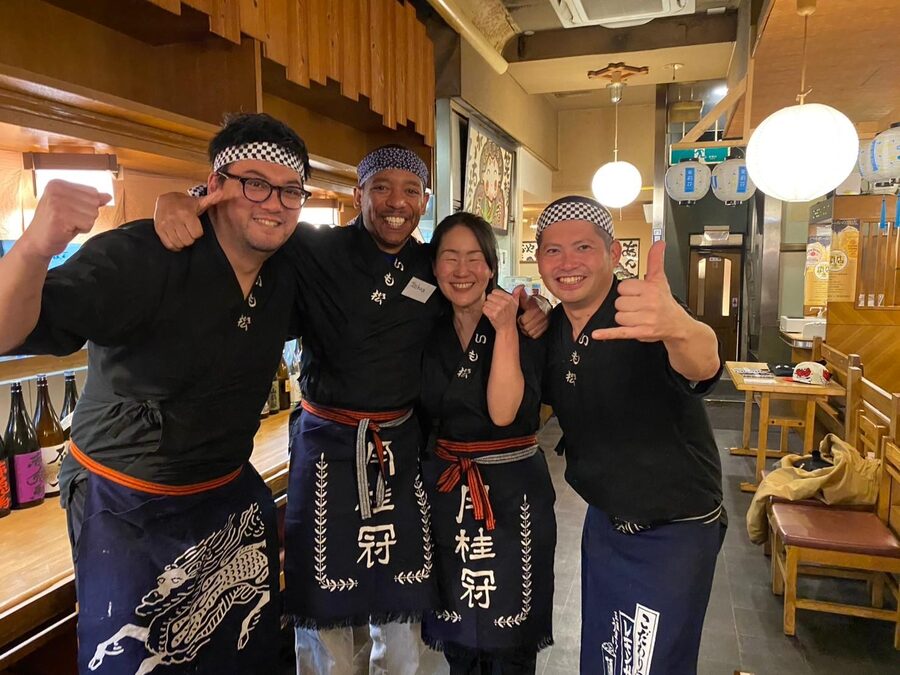
After preparing the dishes, you sit down and eat what you have made. This closing meal matters because it gives the class a clear payoff. You are not leaving with a few uncooked ingredients or a recipe sheet. You have prepared a small Japanese-style meal and can taste how the different dishes work together.
One soft drink is included. The information does not specify the drink, so do not book this expecting alcohol or a particular beverage. In fact, the Muslim-friendly option specifically avoids alcohol, along with pork and non-halal meat.
The meal also gives you a chance to compare your results with the instructor’s guidance while the techniques are still fresh. If the omelet is not perfectly rolled or the onigiri is uneven, that is part of learning. The point is to understand the process and leave with enough confidence to try again.
At 1.5 hours, the meal will be a focused tasting rather than a long evening out. You should think of it as a cooking activity with a meal included, not as a substitute for a full night at an izakaya.
Small groups make the short format work better
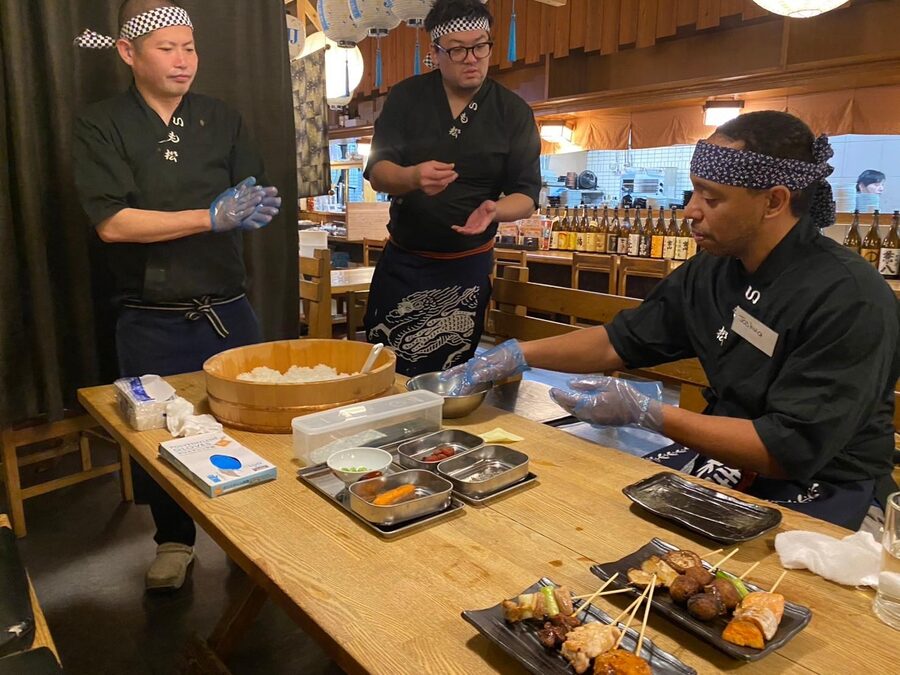
The class accepts no more than eight participants. That is a useful limit for a hands-on activity. You need room to handle ingredients, and you need the instructor to see what you are doing when you roll the omelet or shape the rice.
A small group can also make the class more comfortable for people who are shy about asking questions in English. Instruction is offered in English and Japanese, and the class welcomes all skill levels. No guide name is provided, so you should not book it expecting a specific named chef. You can expect an English-speaking instructor rather than a particular individual.
The small size does not guarantee a private class. One couple happened to be the only participants at their session and received more one-on-one time. Your group may be larger, up to the stated limit of eight. If personal coaching is essential, check the group size when you reserve or ask the provider directly.
For couples, families, and solo visitors, this format has a nice social balance. It is more personal than a large demonstration and less demanding than a private cooking lesson. The class also gives you a shared task, which can be a good break from sightseeing.
Dietary choices are clearly built into the menu
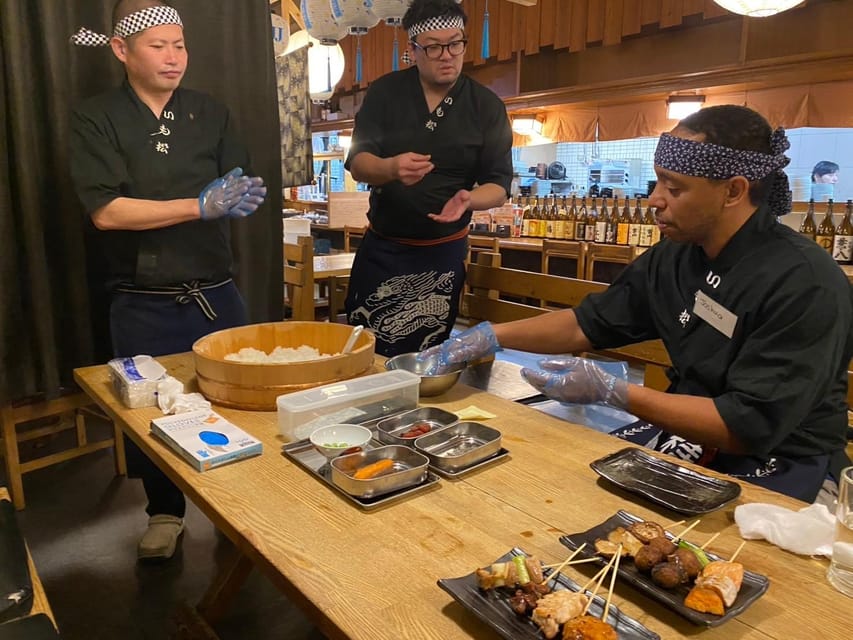
Vegetarian, vegan, and Muslim-friendly courses are available. The Muslim-friendly option uses no pork, alcohol, or halal meat. This is important because many Japanese dishes contain hidden stock, sauces, or cooking ingredients that are not obvious from the name alone.
You should select the correct course when booking and state your needs clearly. The available information confirms that these options are offered, but it does not provide a full ingredient list for every dish or explain how each recipe changes. If you have a serious allergy, ask the provider for more details before paying.
The menu is especially helpful for mixed groups. One person can choose a standard course while another selects a vegetarian, vegan, or Muslim-friendly option. That removes one common problem with food activities, where a single dietary restriction can leave someone watching others eat.
Keep in mind that the food choices are tied to the three-dish format. You are selecting a variation of the planned class, not ordering from a large restaurant menu.
What the $139 price really covers
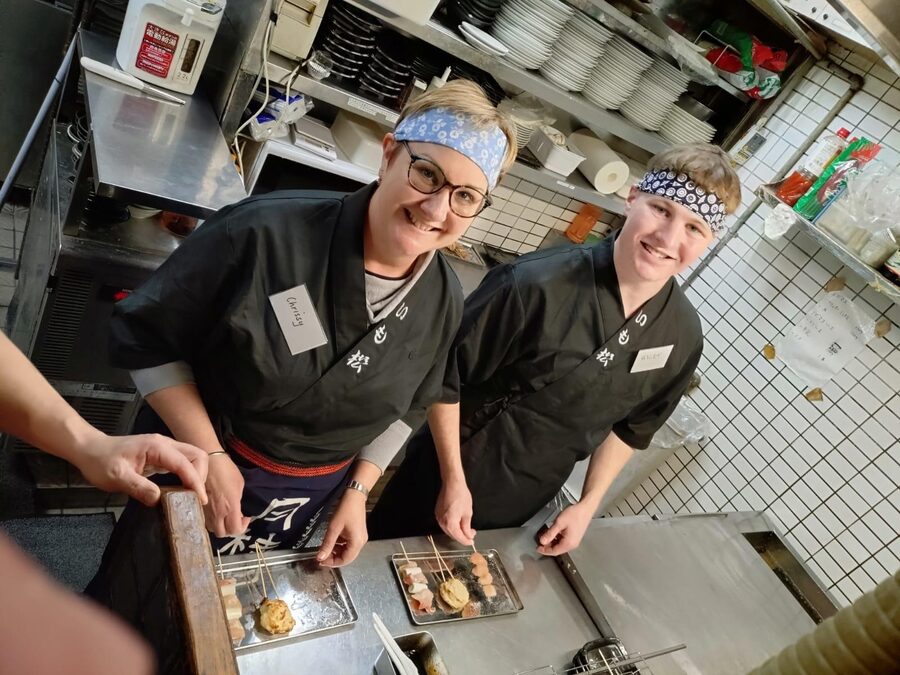
At $139 per person, this is not a budget activity. The session lasts 1.5 hours, which makes the hourly cost high compared with a simple restaurant meal or a longer public cooking workshop.
The price does include all ingredients and cooking tools, one soft drink, an English-speaking instructor, the prepared meal, and a bandana souvenir. You are also paying for a small group setting and for the convenience of doing the activity in central Kyoto, close to two major train and subway areas.
I would judge the value based on your purpose. If you mainly want to eat yakitori, onigiri, and omelet, you can find less expensive food elsewhere. If you want to learn how the dishes are made, cook them yourself, and take home a technique you can repeat, the price becomes easier to justify.
The bandana is a modest souvenir rather than a major part of the value. The real benefit is the instruction and the chance to eat your own work. The class is best for someone who sees cooking as part of the trip, not simply as a way to get lunch.
Getting to Izakaya Factory in Kyoto
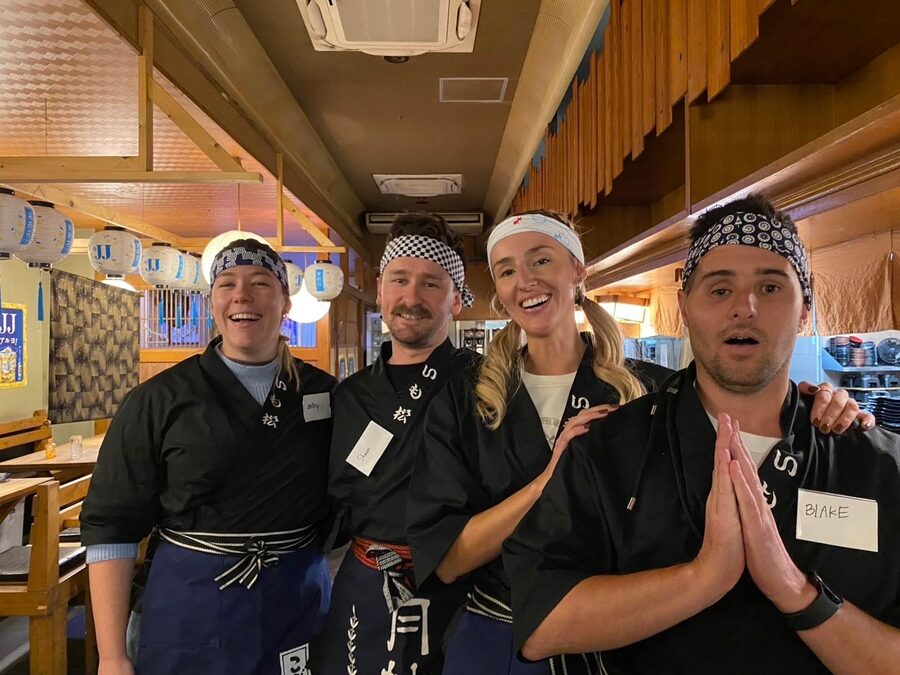
The meeting point is Imomatsu in Kyoto’s Kiyamachi district, at the listed address in Nakagyo Ward. It is described as a five-minute walk from Keihan Sanjo Station and a seven-minute walk from Hankyu Kawaramachi Station. The venue is also listed as 234 meters from Sanjo Station.
Those walking times are short, but Kyoto station names can be confusing because nearby stations serve different rail lines. Check which line you are using and allow a few extra minutes to find the building entrance. Transportation to and from the venue is not included.
The activity ends at the same meeting point. That is convenient if you are planning dinner or another stop in central Kyoto afterward. Since the class itself is short, you can fit it into a morning or afternoon without giving up an entire day of sightseeing.
Starting times vary, so you need to check availability for the date you want. The booking terms allow cancellation up to 24 hours in advance for a full refund, and you can reserve without paying immediately if that option is available for your booking.
Who will enjoy this Kyoto cooking class most
I would recommend this experience to first-time visitors who want a friendly introduction to Japanese food without committing to an advanced course. The menu is recognizable, the session is short, and the hands-on tasks give you something to do at every stage.
It is also a good match for couples. One couple had the class entirely to themselves and found the extra one-on-one time especially pleasant. You cannot count on a private session, but a group capped at eight still offers a more personal setting than a large workshop.
Families may like the variety of tasks, though the available information does not set a minimum age. If you are booking for children, confirm age requirements directly before reserving. The same advice applies to anyone with mobility or allergy concerns, since detailed accessibility information is not provided.
Vegetarians, vegans, and people seeking a Muslim-friendly meal have a clear reason to consider this class. You should still communicate dietary needs in advance, especially if your restrictions are medical rather than preference-based.
Who may want a different food experience
This class may not suit you if your main goal is a long, leisurely dinner. The 1.5-hour schedule is built around cooking three dishes and eating them afterward, so it does not offer the extended restaurant atmosphere of a full izakaya evening.
It may also disappoint serious home cooks looking for advanced instruction. You learn useful basics, but the class is aimed at all skill levels and must cover several recipes in a short time. You will likely leave with a good introduction rather than professional kitchen training.
The cost is another reason to pause. At $139, you should care about the activity itself, not just the food. If you are happy to pay for a guided cultural lesson, the package is reasonable. If you only want a cheap meal, choose a restaurant instead.
Should you book it?
Book this class if you want to cook, not simply eat. The strongest reasons are the small group, the chance to practice dashi-maki tamago, and the useful trio of recipes you can attempt again at home.
I would be more cautious if your schedule is tight, your budget is limited, or you expect a long evening with many dishes. For the right person, this is a compact and personal way to connect Japanese food with everyday technique. For everyone else, $139 is a lot for a short meal.
FAQ
Where does the Japanese cooking class take place?
The class takes place at Imomatsu in Kyoto’s Kiyamachi area, in Nakagyo Ward. The listed address is in the Sixth Kanko Building basement.
How long does the activity last?
The cooking experience lasts 1.5 hours. Starting times vary, so check availability for your chosen date.
Which dishes do you prepare?
You prepare yakitori, filled onigiri, and dashi-maki tamago, a traditional Japanese rolled omelet.
Is the meal included?
Yes. After cooking, you sit down and eat the dishes you prepared. One soft drink is also included.
Are ingredients and cooking tools provided?
Yes. All ingredients and cooking tools are included in the activity.
Is an English-speaking instructor available?
Yes. Instruction is offered in English and Japanese, and an English-speaking instructor is included.
How many people are in each group?
The class is limited to eight participants. A private session is not guaranteed.
Are vegetarian and vegan options available?
Yes. Vegetarian and vegan courses are available.
Is there a Muslim-friendly course?
Yes. The Muslim-friendly option uses no pork, alcohol, or halal meat.
What is included as a souvenir?
Each participant receives a bandana souvenir.
More Drinks Outings in Kyoto
- Kyoto: Afternoon Japanese Izakaya Cooking Class
★ 4.9 · 241 reviews - Izakaya Style Cooking Class
★ 5.0 · 219 reviews - Ramen and Sushi Cooking Class with Sake Pairing Set in Tokyo
★ 5.0 · 291 reviews - Osaka Sake Tasting with Takoyaki Cooking
★ 5.0 · 156 reviews
Newest classes around Kyoto
- Kyoto Udon & Tempura Cooking Class with Professional Chefs★ 3.8 · 3 reviews
- Kyoto: Wagashi (Japanese sweets) Cooking near Fushimiinari★ 5.0 · 40 reviews
- Kyoto Home Cooking Class &Supermarket tour near Fushimiinari★ 5.0 · 31 reviews
- Kyoto: Morning Japanese Bento Cooking Class★ 5.0 · 149 reviews
- Kyoto: Authentic Sushi Making Cooking Lesson★ 5.0 · 103 reviews
- Kyoto: Cooking class, learning how to make authentic sushi★ 4.2 · 9 reviews
- Gyoza Cooking Class in Kyoto: Traditional Japanese Dumplings★ 5.0 · 12 reviews
- Private Plant-Based Japanese Cooking Class – Kyoto Edition★ 5.0 · 15 reviews
Kyoto Cooking Classes, compared.
Ramen Cooking Class at Ramen Factory in Kyoto
Read our review →
Ramen Cooking Class at a Ramen Factory with Souvenir
Read our review →
Japanese Washoku Bento Small Group Cooking Class
Read our review →
Kyoto Ramen and Gyoza Cooking Class with Professional Chefs
Read our review →
Gyoza Cooking Class in Kyoto: Traditional Japanese Dumplings
Read our review →Browse the lists this tour appears in