Review · KYOTO COOKING CLASSES
Private Cooking Class Udon in Kyoto Japan
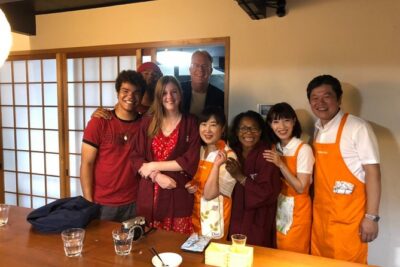
Making noodles with your feet in a 130-year-old Kyoto house is the memorable part here. You mix the dough, knead it, let it rest, stretch it, and cut it before sitting down to eat what you made. Tanaka-san is known for her warm, patient teaching, and the lesson includes small cultural touches such as traditional music and an udon dance.
I like the setting, a restored traditional house only a short walk from Kyoto Station, and I like the clear, hands-on method. Children can take part fully because the class does not require them to boil the noodles. The main consideration is its short teaching portion: the class itself lasts about an hour, and the meal afterward is what extends the visit.
Key points
- A 120-year-old Kyomachiya: Learn in a traditional wooden home near Nishi Honganji Temple.
- Udon from scratch: Mix saltwater, knead the dough, use your feet, stretch it, and cut the noodles.
- Friendly local instruction: Tanaka-san and other Kyoto teachers explain the process in English.
- Lunch is included in the rhythm of the visit: Eat your handmade udon with tempura, dipping broth, ginger, and green onion.
- Good for families: The hands-on work is simple, active, and does not ask children to handle boiling water.
- Easy Kyoto location: The meeting point is about a 12-minute walk from Kyoto Station and two minutes from Nishi Honganji.
A hands-on lunch inside an old Kyoto home
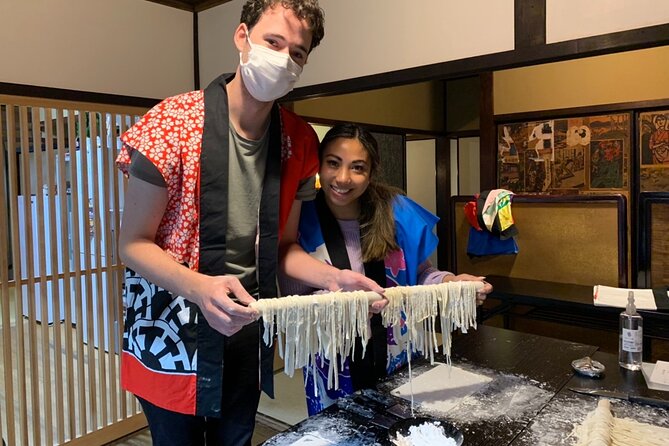
This is not a cooking demonstration where you sit behind a counter and watch someone else do the work. You make the noodles yourself, starting with the most basic ingredients and ending with a bowl of udon at lunch.
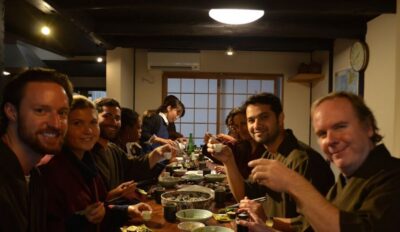
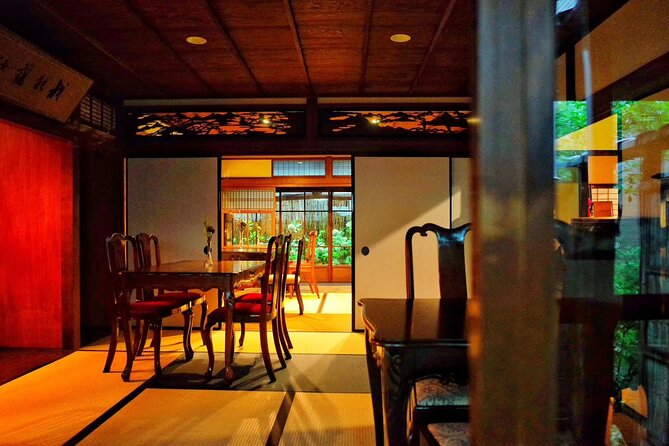
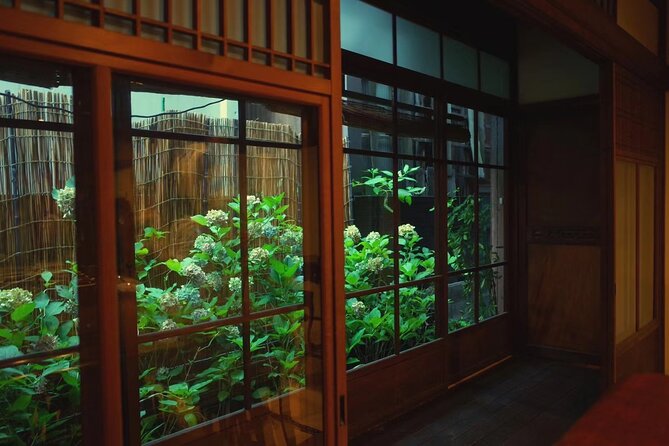
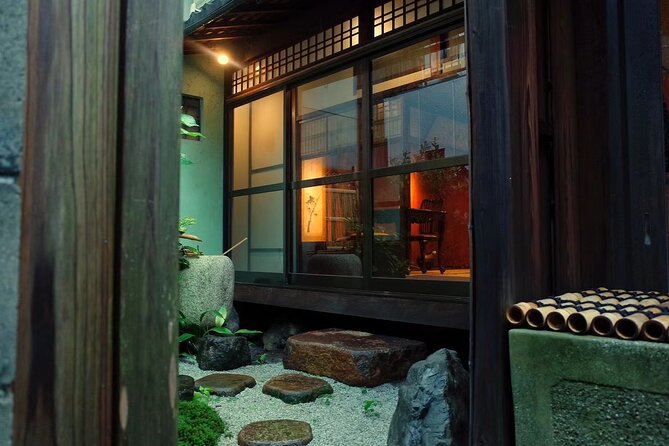
The setting gives the class much of its character. The facility is a traditional Japanese house dating back roughly 120 to 130 years. Antique furniture and household objects, many more than 110 years old, fill the rooms. Traditional Japanese music plays as you work, creating a calm sense of old Kyoto without requiring you to visit a museum or sit through a formal cultural lecture.
The house is near Nishi Honganji Temple, one of Kyoto’s important Buddhist temples, and close enough to Kyoto Station to fit neatly into a day of sightseeing. At noon, you can meet at 364 Momijicho in Shimogyo Ward, make lunch, and continue your afternoon nearby.
The class is private, so only your own group takes part. That matters if you are visiting with children, older family members, or friends who prefer not to cook in front of strangers. It also means the pace can feel more relaxed than a large shared workshop, although the available information does not specify the exact maximum group size.
More Private Cooking Classes in Japan
- Private Kyoto Sushi Cooking Class & Tea Ceremony with Emika
★ 5.0 · 66 reviews - Private Ramen or Gyoza Cooking Class in Kyoto with Chef Midori
★ 5.0 · 18 reviews - Private Guided Traditional Buddhist Cooking in Japan
★ 5.0 · 16 reviews
From saltwater to dough
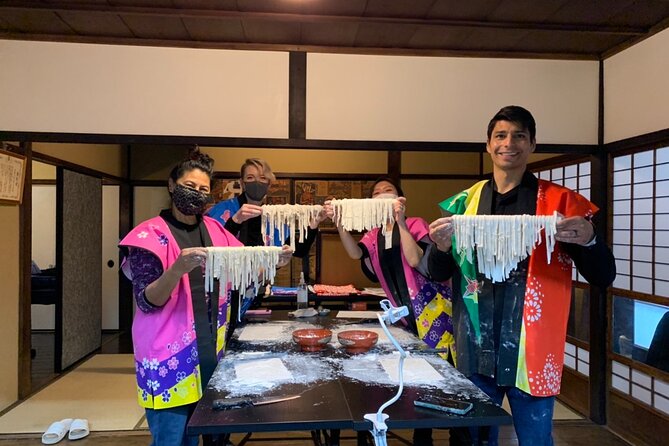
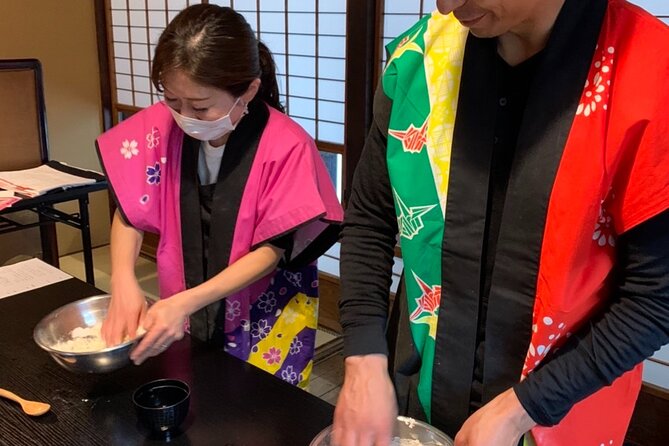
The class follows a clear sequence. You begin by making saltwater, then combine it with the flour. The basic steps are simple, but the texture of the dough changes as you work, which makes the process more interesting than merely following a recipe.
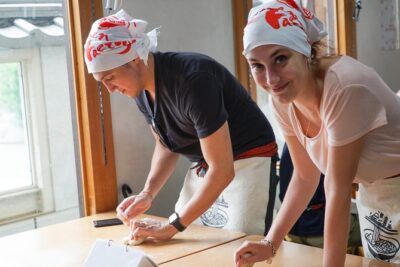
Next comes rinsing and kneading. The distinctive move is the footwork. The dough is worked underfoot, a traditional and practical way to develop its texture. This is the moment children often enjoy most, since it turns an ordinary cooking task into something active and a little silly.
Tanaka-san leads the instructions in English, with assistance from other staff when needed. Her teaching style is upbeat and encouraging, and the steps are demonstrated clearly. You do not need previous cooking experience, and the recipe is provided so you can try making udon at home later.
The dough then rests before you stretch it out. This pause is useful because it gives you a chance to look around the old house instead of standing over a hot stove. The teachers handle the more technical timing while you learn what each stage does to the noodles.
Cutting noodles with a practical lesson
After the dough has matured, you stretch the fabric of dough and cut it into strands with a knife. This part rewards patience. Your noodles may not all be the same width, and that is part of the fun. Handmade udon has a more personal look than factory-made noodles.
The instructor also explains some cultural background, including the connection between udon and China. That history lesson is brief, but it gives the food some context without taking over the cooking. The class is built around doing, not listening.
One charming detail is the udon dance taught during the session. It is a small bit of playfulness, yet it helps keep the class from feeling stiff or overly formal. The tone is friendly, and the teachers encourage participation rather than expecting perfect technique.
The noodle-making portion lasts about an hour. You make the dough and cut the noodles, but you do not boil them yourself. This is worth knowing before you book. If you want a longer cooking lesson with several separate dishes, this will feel limited. If you want a focused activity that works well before lunch, the short format is a strength.
The reward is a bowl of your own udon
Once the noodles are ready, the cooking shifts to the staff. They boil the udon and prepare the rest of the meal. You are then served the noodles with a dipping sauce or dashi broth, grated ginger, chopped green onion, and vegetable tempura.
The meal is not a second cooking workshop. You do not make the tempura, broth, or dipping sauce. For many people, that is exactly right: the udon is the central lesson, and the prepared sides make lunch more complete without adding another hour of work.
The freshly cooked noodles are the payoff. They have a different feel from dried udon, and eating them immediately after making them gives the class a clear beginning and end. The tempura adds crunch and variety, while ginger and green onion let you adjust the flavor.
Plan to stay beyond the advertised one-hour class. The teaching may finish in about an hour, but eating and looking around can bring the full visit closer to 1.5 to 2 hours. If you have a tightly timed temple visit or a train reservation, allow room for the meal.
More Private Cooking Classes in Kyoto
- Private Plant-Based Japanese Cooking Class – Kyoto Edition
★ 5.0 · 15 reviews
Why the old house matters
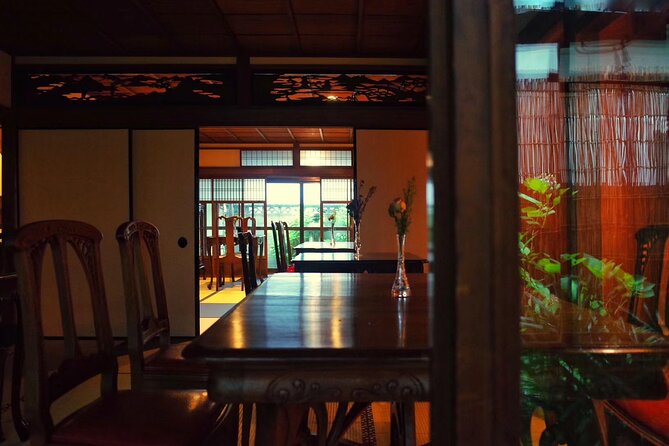
A cooking class can take place in almost any room. Here, the house is part of the lesson. The wooden structure, antique furnishings, and traditional music give you a feel for domestic Kyoto that a modern restaurant kitchen cannot provide.
You should not expect a museum tour with detailed commentary on every object. The appeal is more direct. You are sitting in an old Japanese home, preparing a familiar staple, and then eating it in the same setting. The cultural experience comes through the surroundings and the way the food is made.
The location also makes practical sense. From Kyoto Station, the walk takes about 12 minutes. Nishi Honganji is only about two minutes away, so you can pair the class with a temple visit before or after. The meeting point is near public transportation, though the provided details do not name a specific bus stop or rail exit.
Since the activity starts at 12:00 p.m., it works best as a planned lunch stop. You might visit Nishi Honganji in the morning, attend the class, then continue toward central Kyoto. It is less useful as a quick add-on if you have booked a strict afternoon schedule.
A strong choice for families
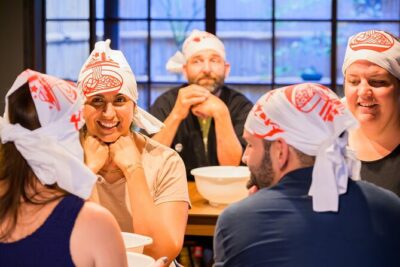
This is one of the better Kyoto food activities for families because the main work is tactile rather than technical. Children can mix, knead, step on the dough, stretch it, and cut it with supervision. They are not asked to stand over boiling water, and the staff are used to keeping young participants involved.
The activity has worked well for groups with young children and teenagers. It also accommodates a mixed-age party, including older family members, because the steps can be followed at a comfortable pace and the reward is a seated meal.
I would still consider the knife-cutting stage when deciding if very young children should take part. The supplied information does not specify age limits, so parents should use their own judgment and follow the teacher’s instructions. The class is family-friendly, but it is not a hands-off play session.
Adults without children should not dismiss it as a kids’ activity. The food preparation is genuine, the setting is distinctive, and the recipe is practical enough to repeat at home. The informal style, including the dance, keeps it light rather than solemn.
What the $60.43 price includes in real terms
At $60.43 per person, this is not the cheapest lunch in Kyoto. You are paying for more than a bowl of noodles, though. The price covers a private, guided activity in a historic house, the ingredients, the instruction, and the meal of handmade udon with tempura and accompaniments.
The value is strongest if you want a cultural activity that also feeds you. A standard restaurant lunch would cost less, but it would not give you the process, the recipe, or the chance to work with a local teacher. A longer cooking course might offer more dishes, but it would likely require more time and a higher price.
The one-hour lesson keeps the cost from feeling excessive for visitors who want a compact activity. The meal afterward adds practical value, but remember that the class price is not buying an elaborate multi-course cooking school. It is a focused udon lesson in a memorable setting.
For families, multiply the cost carefully before booking. The private format may be worth it for a group seeking privacy and flexibility, but a large family will spend considerably more than a couple. The experience makes most sense when you value the activity itself, not simply the food.
Small details that affect your decision
The experience is offered with a mobile ticket, which is convenient for a phone-based Kyoto itinerary. Confirmation is sent within 48 hours, subject to availability, so do not assume the booking is final until you receive it.
Free cancellation is available if you cancel at least 24 hours before the start time. Cancellations or changes made inside that window are not accepted for a refund. The provider also states that poor weather can lead to cancellation, in which case you are offered another date or a full refund, although an indoor cooking class may seem less weather-sensitive than an outdoor tour.
Service animals are allowed, and the meeting point is near public transportation. The activity ends where it begins. No separate hotel pickup is provided in the details here, so plan to reach the Momijicho address on your own.
The class is listed as a private activity, meaning only your group participates. That is a real advantage for families and small parties, but confirmation remains subject to availability. Booking around two weeks ahead is sensible, since the average booking lead time is about 16 days.
Who should book this Kyoto cooking class
I would choose this for a family wanting an easy cultural activity near Kyoto Station, a couple who likes food and old houses, or anyone hoping to learn one Japanese dish rather than spend half a day in a broad cooking course.
It is also a good fit if you want an activity that can bridge sightseeing and lunch. The start time is fixed at noon, the process is straightforward, and the meal comes at the end without requiring you to find another restaurant.
I would hesitate if you are looking for serious culinary training, a menu with several dishes, or a class where you prepare every part of the meal. You will not make the tempura or broth, and you will not boil the noodles yourself. The focus is handmade udon, not a full Japanese cooking curriculum.
The strongest reason to book is the combination of old Kyoto surroundings, active noodle making, and a ready-to-eat lunch. The strongest reason to skip it is the price if you only want a quick meal. For most people comparing food activities, the setting and personal instruction make the difference.
Should you book it?
Yes, if you want a friendly, compact Kyoto activity that gives you something to do, something to eat, and a recipe to take home. Tanaka-san’s warm instruction, the foot-kneading step, and the old house give the class more character than a routine restaurant lunch.
Book with realistic expectations. This is a one-hour udon workshop followed by a meal, not a long professional cooking course. If that sounds like the right scale for your day, the $60.43 price buys a useful cultural memory and a satisfying lunch in a convenient part of Kyoto.
FAQ
Where does the udon class meet?
The meeting point is 364 Momijicho, Shimogyo Ward, Kyoto, 600-8345, Japan.
What time does the activity start?
The class starts at 12:00 p.m.
How long does the class last?
The cooking class lasts about one hour. Allow extra time afterward to eat the udon you made. The full visit may take about 1.5 to 2 hours.
Is the activity private?
Yes. Only your own group participates in the private activity.
Is the class suitable for children?
Yes. Children can take part in the hands-on noodle-making steps, and participants do not boil the noodles themselves. The activity has been enjoyed by families with young children and teenagers.
What food is included after making the udon?
Your handmade udon is served with vegetable tempura, dipping broth or sauce, grated ginger, and chopped green onion.
Is tempura included in the cooking lesson?
Tempura is provided as part of the meal, but you do not make it during the class.
Can I cancel for a full refund?
You can cancel for a full refund at least 24 hours before the experience start time. Cancellations or changes made less than 24 hours before the start are not refunded. If the provider cancels because of poor weather, you are offered another date or a full refund.
More Sushi and Japanese Classes in Kyoto
- Ramen Cooking Class at Ramen Factory in Kyoto
★ 5.0 · 1,937 reviews - Kyoto: Ramen Cooking Class at a Ramen Factory with Souvenir
★ 4.9 · 532 reviews - Kyoto: Ramen, Gyoza, and Onigiri Cooking Class
★ 5.0 · 445 reviews - Kyoto: Japanese Washoku Bento Small Group Cooking Class
★ 5.0 · 380 reviews
Newest classes around Kyoto
- Kyoto: Wagashi (Japanese sweets) Cooking near Fushimiinari★ 5.0 · 40 reviews
- Kyoto Udon & Tempura Cooking Class with Professional Chefs★ 3.8 · 3 reviews
- Kyoto Home Cooking Class &Supermarket tour near Fushimiinari★ 5.0 · 31 reviews
- Kyoto: Morning Japanese Bento Cooking Class★ 5.0 · 149 reviews
- Kyoto: Authentic Sushi Making Cooking Lesson★ 5.0 · 103 reviews
- Kyoto: Cooking class, learning how to make authentic sushi★ 4.2 · 9 reviews
- Authentic Japanese Cooking Experience at Izakaya restaurant★ 4.2 · 5 reviews
- Gyoza Cooking Class in Kyoto: Traditional Japanese Dumplings★ 5.0 · 12 reviews
Kyoto Cooking Classes, compared.
Ramen Cooking Class at Ramen Factory in Kyoto
Read our review →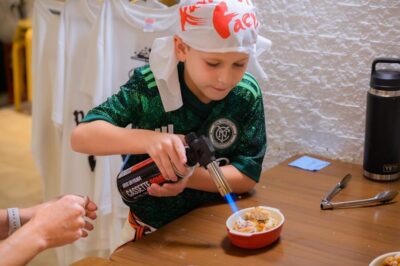
Ramen Cooking Class at a Ramen Factory with Souvenir
Read our review →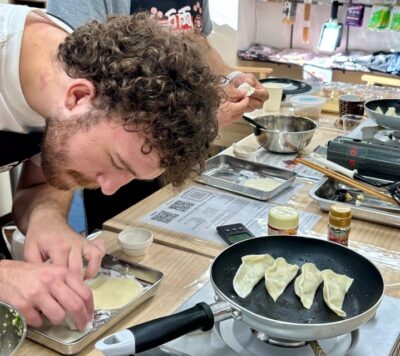
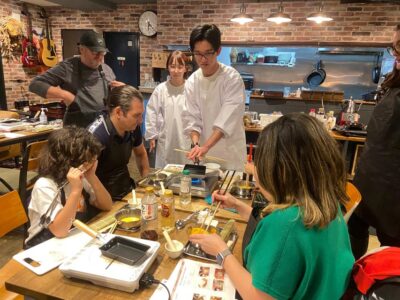
Japanese Washoku Bento Small Group Cooking Class
Read our review →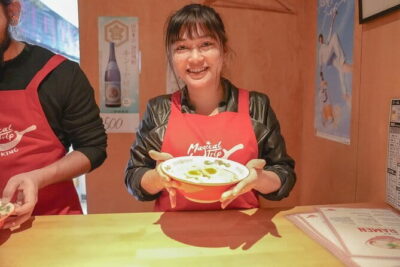
Kyoto Ramen and Gyoza Cooking Class with Professional Chefs
Read our review →