
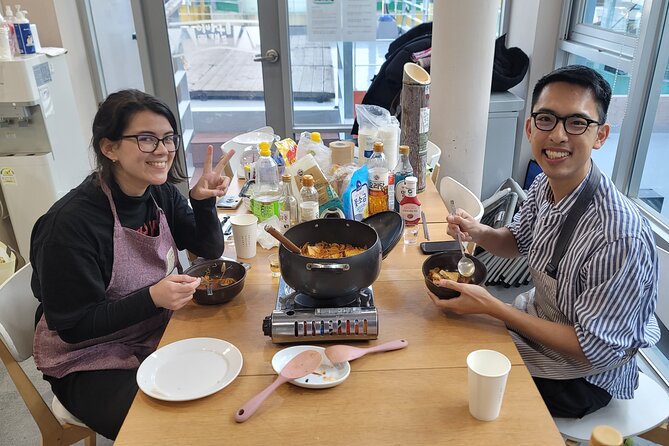
Review · SOUTH KOREA COOKING CLASSES
Busan Tailored Korean cooking class (Vegan OK)with market tour
Bujeon Market is the real doorway into this five-hour Korean cooking experience. You shop for ingredients with Suyang Chang, learn what the vegetables, dried fish, seafood, and sauces are used for, then carry your purchases to his kitchen and cook lunch together. I like the market connection, and I like that you make the food from scratch rather than simply assembling pre-prepared dishes.
I also like the freedom to choose two banchan and one soup or stew, with vegan and vegetarian menus available. The main caution is that the menu is not completely fixed, especially if several groups join the class. The first reservation gets first choice, so contact the host early if a particular dish matters to you.
Key points to know before booking
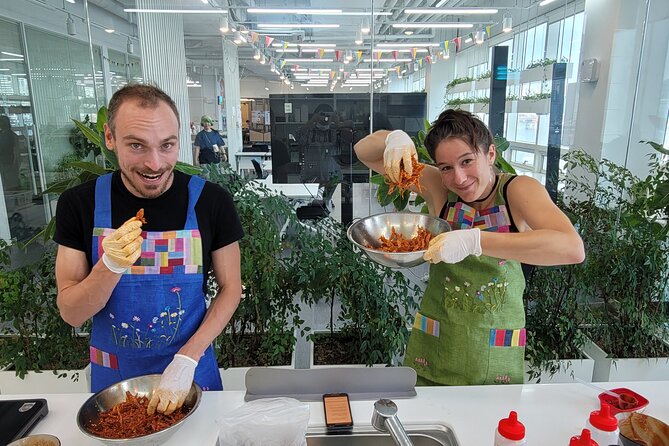
- Bujeon Market comes first: Shop for the day’s ingredients beside a local host, then see how Korean food moves from market stall to kitchen.
- You choose three dishes: Pick two side dishes and one stew or soup from a long menu of familiar and less common Korean recipes.
- Vegan cooking is possible: The host has adapted classes for vegan and vegetarian participants, including dishes such as braised tofu, black beans, and spinach soybean paste soup.
- Suyang Chang leads the class: He also uses the nickname Busan oppa and is happy to discuss Korean culture, language, restaurants, and local food.
- The food becomes your lunch: Bottled water, barley tea, corn tea, or instant coffee are included, while alcohol and personal purchases are extra.
- The format can vary: The activity is described as private and tailored, but the maximum group size is 15 and more than one booking may share a class.
Why this Busan cooking class feels different
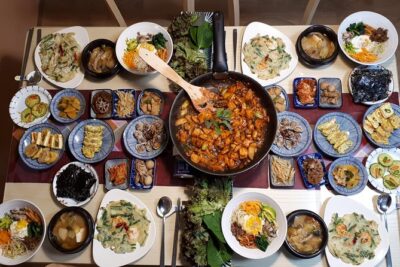
Many Korean food classes focus on a short list of famous dishes: kimchi, bibimbap, Korean barbecue, or pancakes. This one takes a wider view. You might learn seasoned dried pollack, braised black beans, bracken salad, steamed tofu and egg, cucumber kimchi, or pan-fried shrimp and seaweed.
That matters because Korean home cooking is built around more than one centerpiece. A meal usually has rice, a soup or stew, and several small dishes that add salt, heat, sweetness, acidity, or texture. This class gives you a better sense of that everyday balance.
I also appreciate the practical aim. Suyang provides recipes designed to be made at home, and the class focuses on the important steps rather than turning you into a professional cook in five hours. You get techniques you can repeat, not just a pleasant meal that disappears when the class ends.
The setting adds another layer. Instead of starting in a polished demonstration kitchen with ingredients already laid out, you begin at Bujeon Market. That gives you a chance to see the raw materials before they are chopped, seasoned, or simmered.
More Korean Classes in South Korea:
- Local Home Korean Cooking Class & Market Adventure in Seoul
★ 5.0 · 1,024 reviews - Master Korean traditional cooking with a Kimchi chef
★ 5.0 · 385 reviews - Seoul: Korean Cooking Class at a Local Home and Market Tour
★ 5.0 · 348 reviews
Starting near Seomyeon and heading to Bujeon Market
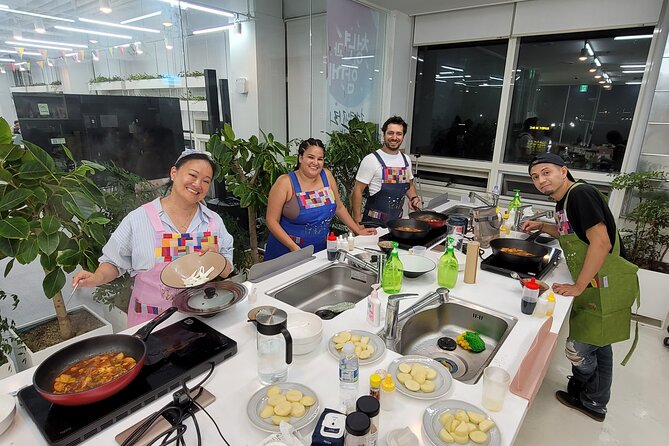
The meeting point is at KB Kookmin Bank Seomyeon Joongang2 on Saessak-ro in Busanjin District. The location is near public transportation, which makes it a useful starting point if you are staying around Seomyeon.
From there, you walk through Bujeon Market with the host. The market is a working food market, not just a stop arranged for sightseeing. You may see vegetables, fish, dried seafood, tofu, sauces, and other ingredients used in Korean kitchens. The value of having Suyang with you is that he can explain what you are seeing and help select the right ingredients for the chosen recipes.
This is where the experience is most different from shopping alone. Korean markets can be hard to read at first. Labels may not be in English, unfamiliar seafood can look similar, and the same ingredient may be sold fresh, dried, salted, or seasoned. A local host gives the food a purpose.
Some classes have also included a quick snack at the market, such as tteokbokki and fried fish cakes, or a simple meal at a market restaurant. That is not listed as a guaranteed part of every session, so you should treat it as a possible extra rather than part of the promised lunch.
Allow yourself room for the market visit. The full activity lasts about five hours, and the shopping is not a rushed photo stop. It is the first lesson in the class.
Choosing your three Korean dishes
The standard choice is two banchan, or side dishes, plus one soup or stew. The menu is broad enough to suit different tastes, and more options may be provided after booking.
Side dishes can include:
- Stir-fried anchovies
- Seasoned dried pollack with spicy sauce
- Black beans braised in soy sauce
- Egg seasoned with soy sauce
- Kimchi pancake or seafood pancake
- Bracken salad and bean sprout salad
- Braised radish or braised tofu with spicy sauce
- Cucumber kimchi
- Seasoned eggplant
- Pickled radish and perilla leaves
- Pan-fried shrimp and seaweed
For the main pot or pan, choices include kimchi stew with pork, soybean paste stew, seaweed soup with clams or dried pollack, Alaska pollack soup, spicy or soy sauce chicken, braised pollack, and braised flat fish.
This list tells you something useful: the class is not limited to one kind of Korean cooking. You can build a meal around seafood, meat, vegetables, tofu, or soup. If you want to learn a dish that is less common outside Korea, ask about dried pollack, braised black beans, bracken salad, or pollack soup.
The menu can also be adjusted for your tastes. That is especially helpful if you do not eat pork or seafood, prefer mild food, or want to focus on vegetarian cooking. A vegetarian class has included braised tofu with spicy sauce, braised black beans, and spinach soybean paste soup. Vegan cooking has also been accommodated.
Be clear about dietary needs when you book. The host has even used gluten-free soybean paste for a participant who requested it, but that kind of adjustment should be arranged in advance rather than assumed on the day.
Cooking in Suyang Chang’s kitchen
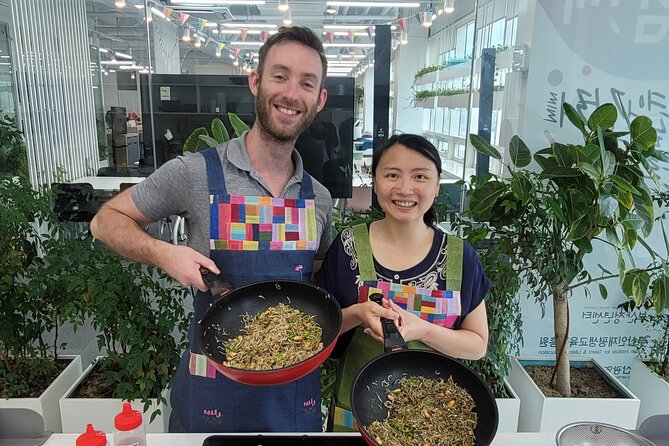
After shopping, you move to the host’s kitchen and prepare the meal together. The important word here is together. You are not simply watching a chef cook while you wait for lunch. You take part in chopping, seasoning, stirring, pan-frying, and assembling the dishes.
Suyang Chang, also known as Busan oppa, has a relaxed teaching style. He explains how the recipes work and connects separate techniques across the dishes. For example, you may learn how soy sauce, chili seasoning, fermented soybean paste, dried seafood, and fresh vegetables each contribute a different kind of flavor.
That approach is useful for home cooks. You do not need to memorize every measurement if you understand the pattern. A vegetable side dish may be seasoned differently from a stew, while a dried ingredient may need soaking or rehydrating first. The class helps you see why each step matters.
The pace should suit people with mixed cooking skills. One couple described having amateur cooking skills and still receiving enough patient instruction to make several dishes. Another group of eight used the class as a family activity, with the host adjusting the session for different ages.
The amount of food can also be generous. Some participants have found they had enough to share beyond the people in the class. That is a plus if you arrive hungry, though it also means this is not a tiny tasting menu.
More Cooking Classes with a Market Tour in South Korea:
- Busan Local Food Cooking Class with Market Tour
★ 5.0 · 53 reviews - Seoul: Authentic Korean Cooking Class and Market Tour
★ 5.0 · 6 reviews - Hanoi Cooking Class: Culture, Local Market & Meaning CSR Impact
★ 5.0 · 5,147 reviews - 5 Traditional Dishes Hanoi Cooking Class with Market Trip
★ 5.0 · 4,890 reviews
Eating the lunch you made
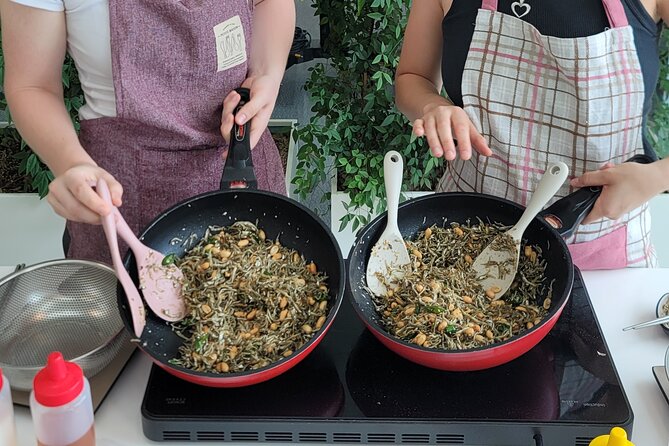
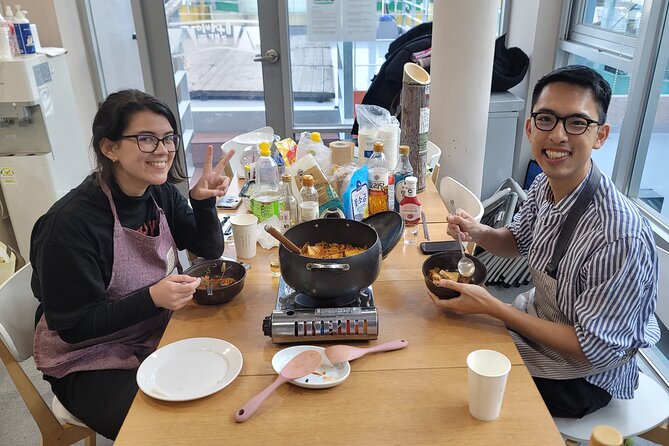
The final meal is included in the price, but it is food prepared by you and the host, not a separate restaurant lunch. That makes the meal feel like the natural end of the class rather than an unrelated reward.
You can expect the selected dishes to be served together, giving you a chance to taste how banchan and soup work as a Korean meal. Barley tea or corn tea is included, along with bottled water and instant coffee. Alcohol is not included.
The meal also gives you time to ask questions. Suyang has discussed Korean language, local customs, restaurants, and other things to do in Busan with participants. If you want restaurant suggestions for later in your trip, this is a good moment to ask.
Recipes are provided so you can repeat the dishes at home. That is one of the strongest reasons to choose this class over a standard food tour. The market visit explains the ingredients, the cooking session teaches the method, and the recipes give you a way to keep using what you learned.
What the $95 price gets you
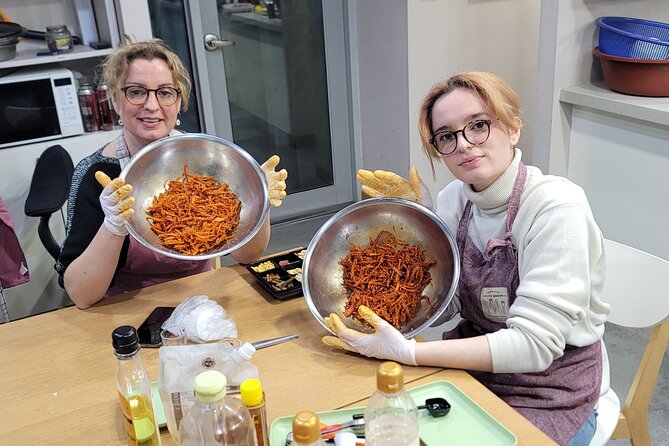
At $95 per person, this is not the cheapest way to eat lunch in Busan. You can have an inexpensive market meal for far less. The price makes more sense if you count the five-hour length, market shopping, instruction, ingredients, lunch, drinks, and personalized menu planning.
You are also paying for access to a local food routine that is difficult to arrange alone. You could walk through Bujeon Market by yourself, buy ingredients, find a kitchen, and attempt the recipes later. In practice, the language barrier and unfamiliar products would make that a poor substitute.
For a couple or small group, the value improves because the experience becomes a shared activity. Group discounts are available, although the exact saving is not stated. The maximum group size is 15, so the atmosphere may change depending on how many people are booked.
There is one important qualification. The experience is presented as a private, customizable class, yet the additional information allows up to 15 participants and notes that several groups may join. If complete privacy is important to you, confirm the arrangement before booking.
Who should book this experience
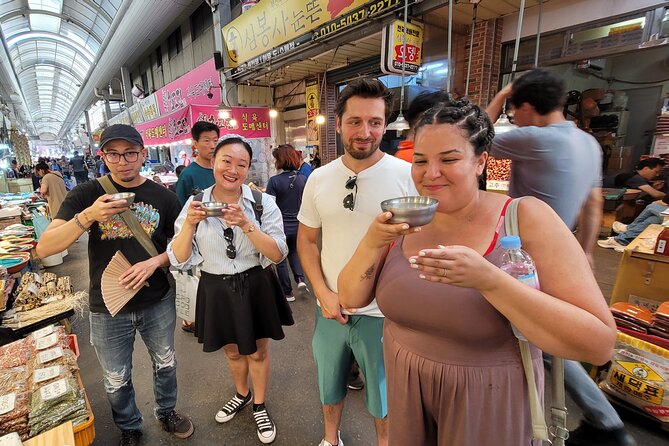
I would choose this class if you want more than a quick introduction to Korean food. It suits people who enjoy markets, hands-on activities, and meals with a story behind them.
It is particularly useful for:
- Vegetarians and vegans who want Korean dishes beyond plain rice and vegetable sides
- Home cooks who want recipes they can repeat
- Families looking for a shared activity in Busan
- Cruise passengers with enough time to reach Seomyeon or arrange the meeting point
- Couples who prefer a personal food experience to a large group tour
- Visitors who have already eaten Korean barbecue and bibimbap and want something less familiar
It may not suit you if you dislike cooking, have very limited time, or want a fixed menu guaranteed in advance. The class includes real preparation, and your preferred dishes may not be available if another group chooses first.
Cruise passengers should pay close attention to timing and meeting arrangements. The experience has worked with cruise visitors, including groups that met at the cruise terminal or used a kitchen near Jagalchi Market, but the stated meeting point for this activity is near Seomyeon. Confirm the exact plan before you commit your port day.
Practical details that affect your day
The activity is booked by mobile ticket, and confirmation is sent within 48 hours, subject to availability. It is often reserved well ahead of time, with an average booking lead of about 45 days. That is another reason to decide on dietary needs and menu preferences early.
The class ends back at the meeting point. Public transportation is nearby, but the information provided does not give a full walking route from specific hotels. Plan to reach the bank on Saessak-ro with extra time, especially if this is your first morning in Busan.
Wear clothes that are comfortable for cooking and walking through a market. The provided information does not promise aprons, lockers, or special equipment, so avoid bringing items you would worry about around food preparation.
The cancellation policy is strict: the experience is non-refundable and cannot be changed for any reason. Do not book until your schedule is firm.
Should you book the Bujeon Market cooking class?
I would book it if you want to understand Korean food from the ingredients upward. The best parts are the market visit with Suyang Chang, the ability to choose a less familiar menu, the hands-on cooking, and the recipes you take home.
I would hesitate only if you need a guaranteed private group, a fixed dish list, or a low-cost meal. For everyone else, $95 buys five useful hours in Busan, a generous lunch, and a practical lesson in how Korean home cooking fits together. Choose your menu early, state dietary needs clearly, and treat the market as part of the class rather than a quick prelude.
FAQ
Where does the Korean cooking class meet?
The stated meeting point is KB Kookmin Bank Seomyeon Joongang2 on Saessak-ro in Busanjin District, Busan. The activity ends back at the meeting point.
How long does the experience last?
The experience lasts about five hours.
Is Bujeon Market included?
Yes. You visit Bujeon Market with the host, shop for cooking ingredients, and then move to the kitchen to prepare the meal.
How many dishes can I choose?
You can choose three dishes: two banchan, or side dishes, and one stew or soup.
Can vegetarians and vegans join?
Yes. Vegetarian and vegan menus are available. The host has prepared dishes such as braised tofu, braised black beans, and spinach soybean paste soup for plant-based participants.
What drinks are included?
Bottled water, barley tea or corn tea, and instant coffee are included. Alcoholic drinks are not included.
Is the class private?
The experience is described as private and customizable, but the maximum group size is 15. If multiple groups participate, the first reservation has the right to choose the menu first.
What is the cancellation policy?
The experience is non-refundable and cannot be changed for any reason. Any cancellation or amendment request results in no refund.
More Food Outings in South Korea
- Busan: Small-Group Traditional Korean Food Cooking Class
★ 4.9 · 58 reviews - Small Group Cooking Class & Market Food Tour in Florence
★ 5.0 · 1,574 reviews - Athens: Food Market Visit and Cooking Class with Wine
★ 4.9 · 1,087 reviews - Undiscovered Charleston: Half Day Food, Wine & History Tour with Cooking Class
★ 5.0 · 948 reviews
More Vegetarian Cooking Classes in South Korea
- Seoul: Temple Vegan Cooking Class & Oriental Medicine Tour
★ 4.6 · 32 reviews - Vegan Friendly Korean Food Cooking Class
★ 5.0 · 2 reviews - Oaxacan Vegetarian Cooking Class
★ 5.0 · 235 reviews - Marrakech: Moroccan Cooking Class for vegetarians and vegan
★ 4.9 · 156 reviews
Newest classes around South Korea
- Vegan Friendly Korean Food Cooking Class★ 5.0 · 2 reviews
- Korean cooking class in Haeundae, Busan★ 5.0 · 92 reviews
- Busan Local Food Cooking Class with Market Tour★ 5.0 · 53 reviews
- Seoul: Korean Home Visit, Cooking & Cultural Experience★ 5.0 · 2 reviews
- Seoul: Korean Kimchi Cooking Class in the Heart of the City★ 5.0 · 3 reviews
- Seoul: Premium Korean Feast Cooking Class★ 5.0 · 3 reviews
- (Seoul) Korean Cooking Class with a Professional Chef★ 5.0 · 14 reviews
- Seoul: Kimchi Dishes Cooking Class with Wine Pairing★ 4.7 · 38 reviews
South Korea Cooking Classes, compared.
Local Home Korean Cooking Class & Market Adventure in Seoul
Read our review →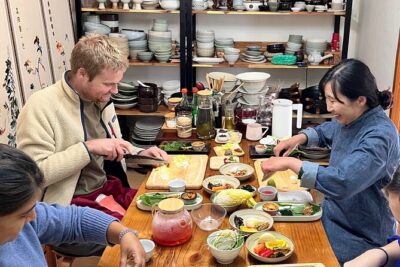
Master Korean traditional cooking with a Kimchi chef
Read our review →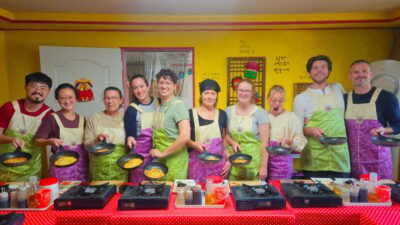
Korean Cooking Class at a Local Home and Market Tour
Read our review →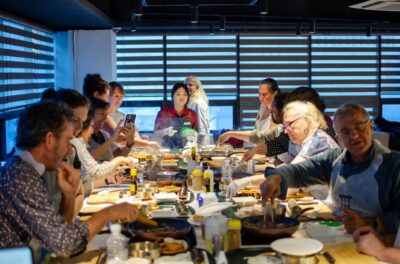
Taste of Korea, Authentic Home Style Cooking Class
Read our review →
Royal Seoul Cooking Class in a 100-Year-Old Hanok
Read our review →
Browse the lists this tour appears in