
Review · SEOUL COOKING CLASSES
Seoul: Authentic Korean Cooking Class and Market Tour
Seoul food is easiest to understand when you see the ingredients before they reach the plate. This small-group market and cooking class starts at Sillim Station, where Ann leads you through a local market, explains Korean seasonings, and helps you choose what to cook.
I like the freedom to shape the meal around your interests, and I like the setting: a Korean home with traditional hand-embroidered works, followed by dessert and tea. The main consideration is that the menu is not fixed, so you should be ready to discuss your choices rather than expect a set cooking demonstration.
Key points
- Start at Sillim Station: Meet at 10:30am inside Line 2’s Sillim Station, near Cafe Mignon and before taking an exit.
- Shop before you cook: Learn about seasonal produce, Korean ingredients, and local seasonings while walking through a traditional market.
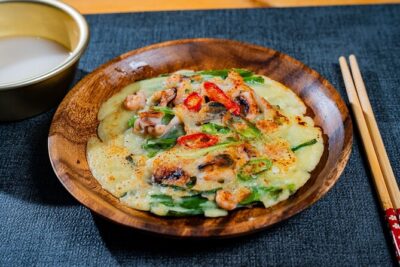
- Choose your dishes: The menu may include bulgogi, bibimbap, kimchi pancakes, or another Korean dish that interests you.
- Cook in a local home: The class takes place in a Korean house connected with the host’s mother and filled with hand-embroidered works.
- Finish with dessert and tea: Make a traditional Korean sweet, then sit down for a quieter tea-time.
- Keep the group personal: With a maximum of four participants and English guidance, you get a more direct class than a large culinary workshop.
A market morning at Sillim Station
Your meeting point is inside Sillim Station at 10:30am. After passing through the ticket turnstiles, do not head for an exit yet. Look for Cafe Mignon, a take-out cafe inside the station, and meet in front of it. Ann will be holding a Sobaan cooking sign.
This detail matters in a large city like Seoul. Sillim is on subway Line 2, listed as station number 230, but the meeting point is inside the paid area rather than on the street. Give yourself enough time to find the correct part of the station, especially if you are carrying bags or arriving by subway from another part of the city.
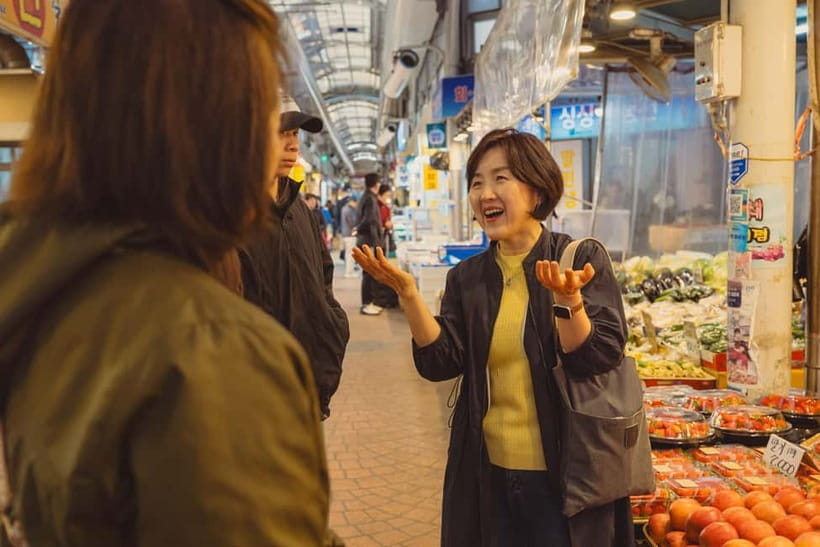
From there, the experience moves into a local traditional market. This is not just a quick stop to buy ingredients. You will walk through the food stalls, see Korean produce and seasonings, and hear the stories behind ingredients used in everyday dishes.
I like this beginning because it gives the cooking class a practical base. Instead of seeing a recipe as a list of items from a supermarket, you see the foods in their local setting. You also learn what to look for when choosing fresh produce, which can be useful if you plan to visit markets or cook Korean food later in your trip.
The market portion should suit curious eaters who want context, not just a photo stop. Ann explains typical foods and their place in Korean cooking, and the shopping is done together. You get to see the decisions that shape the meal before any pan is heated.
More Korean Classes in Seoul:
- Local Home Korean Cooking Class & Market Adventure in Seoul
★ 5.0 · 1,024 reviews - Master Korean traditional cooking with a Kimchi chef
★ 5.0 · 385 reviews - Seoul: Korean Cooking Class at a Local Home and Market Tour
★ 5.0 · 348 reviews
Choosing a Korean meal that fits your interests
A useful feature of this class is that you help choose what to cook. Possible dishes include bulgogi, bibimbap, and kimchi pancakes, but the experience is not presented as a rigid menu. You can discuss what you are curious about and build the meal with the host.
That flexibility makes the class a good match for different levels of food experience. If you already know Korean food, you can focus on a dish you want to understand better. If the cuisine is new to you, you can use the host’s advice to choose a few familiar starting points.
The tradeoff is simple: you should not book this expecting a single advertised recipe taught in exactly the same way each time. The meal depends on your choices and the ingredients selected at the market. For many people, that is part of the appeal. It makes the class feel like a shared meal rather than a stage show.
The shopping also gives you a chance to ask about seasonings and produce while you are looking at them. That is more useful than hearing a list of ingredients after everything has already been measured. You can connect each item to the dish it will help create.
Cooking inside a Korean home
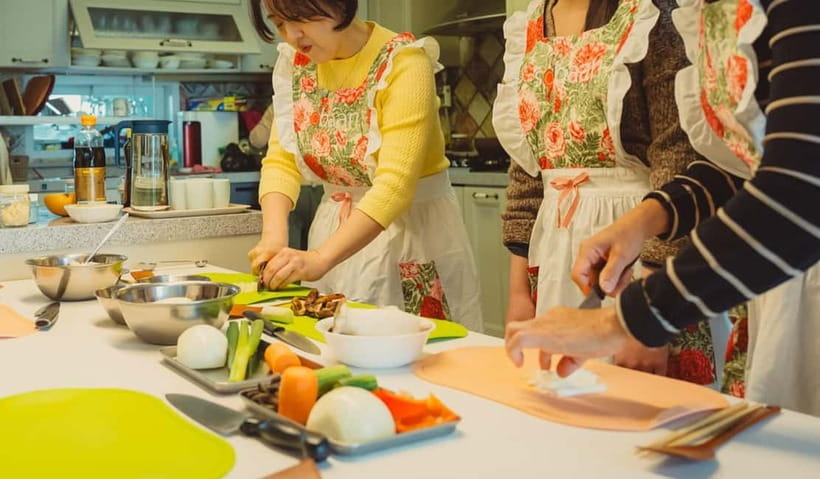
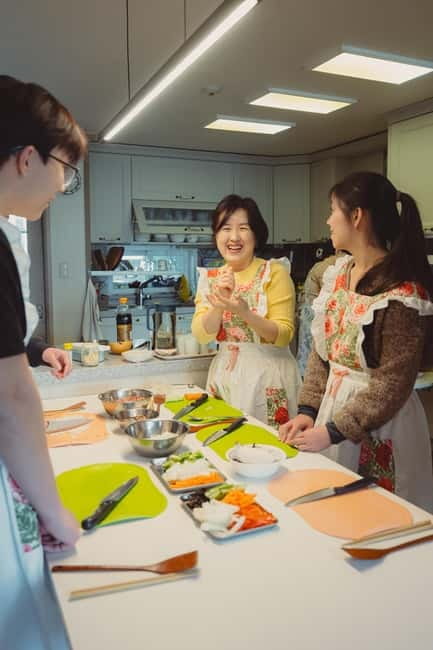
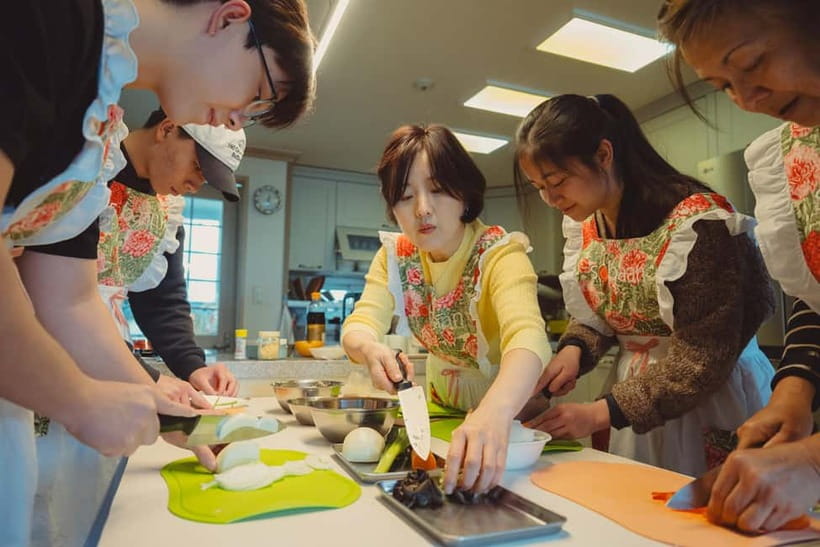
After the market, you go to a local Korean house for the cooking session. The home includes traditional hand-embroidered works, giving the setting a strong connection to Korean domestic culture and craft.
The host’s mother also welcomes you into the home, adding a family element to the experience. You are not simply moving into a commercial kitchen for a lesson. The house provides a quieter setting where cooking, conversation, and cultural details can sit side by side.
I particularly like this part for visitors who want a personal introduction to Seoul. A cooking school can teach technique well, but a home setting gives you a clearer sense of how food fits into family life. The embroidery-filled room also creates a memorable place to eat, rather than ending the activity at the stove.
The class is conducted in English, and the group is limited to four participants. That small size should make it easier to ask questions, compare dish choices, and follow the cooking at a comfortable pace. It also means the experience may feel more personal than a workshop designed for a large tour group.
You should still expect to take part rather than simply watch. The format centers on cooking dishes you have helped select, so the value comes from doing the work and sharing the process. If you prefer a polished demonstration with little hands-on activity, this may not be your ideal food tour.
Lunch with the dishes you helped make
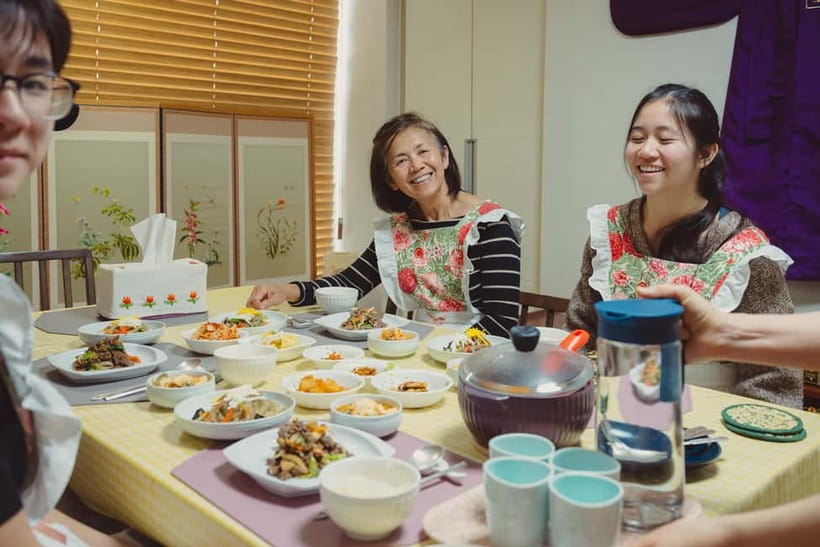
The cooking leads to a homemade Korean lunch. This is the point where the market walk and kitchen work come together. You have seen the ingredients, discussed the food, helped prepare it, and then sit down to eat the finished meal in the home.
That sequence gives the lunch more meaning than a restaurant visit alone. You can connect the flavor of the dish with the produce and seasonings you saw earlier. You also have the chance to ask questions while the meal is still fresh in your mind.
The food is chosen with participant input, so the exact lunch will vary. A group interested in bulgogi may have a different meal from one that chooses bibimbap or kimchi pancakes. This is worth keeping in mind when comparing the class with tours that promise a specific menu in advance.
The pace is another strength. The activity lasts 210 minutes, or three and a half hours, which gives enough time for the market, cooking, lunch, dessert, and tea. It is not a rushed stop squeezed between major sights. You will need to set aside a substantial part of your morning and early afternoon, but the schedule supports a fuller cultural experience.
More Cooking Classes with a Market Tour in Seoul:
- Hanoi Cooking Class: Culture, Local Market & Meaning CSR Impact
★ 5.0 · 5,147 reviews - 5 Traditional Dishes Hanoi Cooking Class with Market Trip
★ 5.0 · 4,890 reviews - Cooking Class and Lunch at a Tuscan Farmhouse with Local Market Tour from Florence
★ 5.0 · 4,831 reviews - Chiang Mai: Cooking Class, Market & Thai Herbs Garden Tour
★ 4.9 · 4,824 reviews
Traditional dessert and tea in an embroidered room
The final food activity is making a traditional Korean dessert. You then enjoy it with tea in the room decorated with traditional embroidery.
This ending changes the mood. The market and cooking portions are active, while tea-time gives you space to slow down and talk. It also means the experience does not stop as soon as lunch is served. Dessert is part of the lesson, and the tea setting gives you a chance to appreciate the home itself.
The exact dessert is not specified, so you should arrive open to learning something different from the familiar Korean sweets found in cafes. The point is the shared preparation and the chance to connect dessert with Korean hospitality.
I like that the class includes this quieter final stage. Many food activities focus only on shopping and cooking, then send you on your way. Here, the meal ends with a small ritual of sitting together, eating what you made, and drinking tea.
What $69 buys you
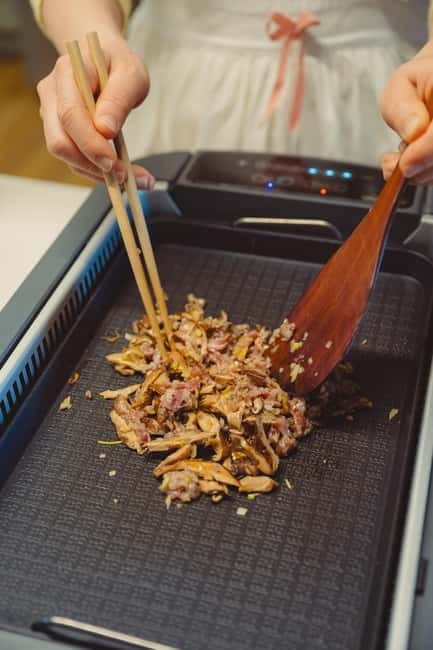
At $69 per person, the price covers a three-and-a-half-hour experience with a market tour, ingredient shopping, a cooking class, homemade lunch, dessert making, and tea. It also includes the setting of a local home and a group capped at four people.
The value is strongest if you want several experiences in one booking. A standard food tour might show you what to eat. A cooking class might teach you recipes. This combines a market visit, practical food guidance, hands-on cooking, a meal, and time in a Korean home.
You are also paying for the small group. Four people is a useful limit for a cooking activity because everyone should have room to participate and ask questions. It is a better fit for someone who values personal attention than for someone who only wants the lowest-cost way to sample Korean food.
The price may feel less appealing if you are mainly looking for a quick lunch or a fixed menu. You are spending much of the day on the experience, and the dishes are selected with your input rather than guaranteed in advance. I would compare it with the cost of booking a separate market tour and cooking class, not only with the price of a meal.
Who will enjoy this class most
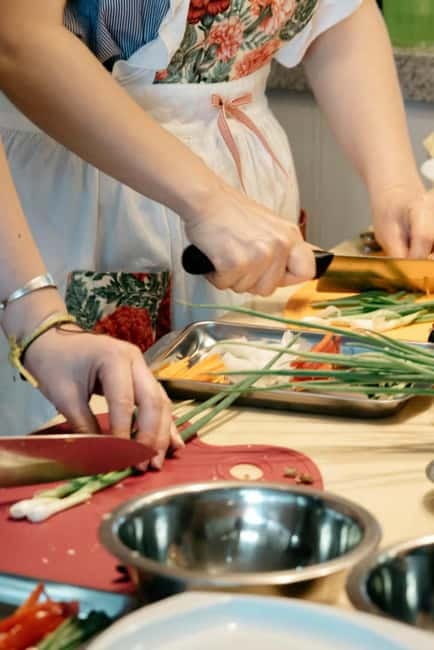
I would recommend this experience to you if you want a slower, more personal side of Seoul. It suits people who enjoy asking questions, trying unfamiliar ingredients, and taking part in a meal rather than simply being served one.
It is especially useful for first-time visitors who want an introduction to Korean food beyond restaurant ordering. The market explanations can help you recognize ingredients, while the kitchen session shows how those items come together in familiar dishes.
It also suits repeat visitors who have already seen major sights and want an activity based on daily life and food. The local home, the host’s mother, the embroidery, and the tea-time create a different kind of cultural encounter from a palace or museum visit.
Families and small friend groups may appreciate the four-person limit, although the supplied details do not specify a minimum age or a child-specific format. People with mobility concerns can note that the activity is listed as wheelchair accessible, but the information does not explain the exact route through the station, market, or home.
You should think twice if you dislike flexible menus or prefer to watch rather than cook. The class is built around participation, shared decisions, and a relaxed pace.
Practical details that make the day easier
Plan to arrive before 10:30am. The meeting point is inside Sillim Station, after the ticket turnstiles but before the exits, in front of Cafe Mignon. This is the most important navigation detail.
The host or greeter speaks English, and English is the listed language for the activity. The group size is limited to four participants, which should help keep explanations and cooking guidance direct.
The full duration is 210 minutes. Since the schedule includes the market, shopping, cooking, lunch, dessert, and tea, avoid booking another fixed appointment immediately afterward.
The activity offers free cancellation up to 24 hours before the start for a full refund. You can also reserve now and pay later, which helps if you are still arranging your Seoul schedule.
The experience has a 5 out of 5 rating from six verified bookings. That is a small sample, so I would treat it as a strong sign of satisfaction rather than proof that every participant will have the same experience. The repeated strengths are clear: the warm host, the home setting, the market explanations, the freedom to choose dishes, and the unhurried cooking pace.
Should you book this Seoul cooking class?
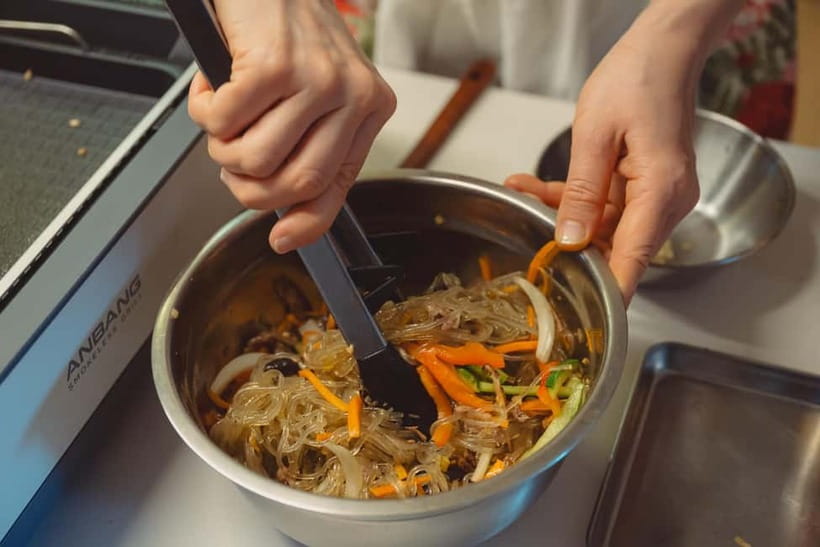
Book it if you want Korean food connected to a place, a person, and a process. The market gives you ingredient context, the home gives you a personal setting, and the dessert and tea provide a calm finish.
The best reason to choose it is the combination of flexibility and intimacy. You help choose the dishes, cook with a very small group, eat homemade food, and spend time in a room filled with traditional embroidery. At $69, that is a fair package for three and a half hours.
Skip it if you want a fast tasting tour, a guaranteed menu, or a large professional cooking studio. For everyone else, especially food-minded visitors looking for something beyond the usual sightseeing circuit, this is a thoughtful and practical way to meet Seoul through its kitchen.
FAQ
Where does the cooking class meet?
Meet inside Sillim Station on subway Line 2, listed as station number 230. After passing through the ticket turnstiles, look for Cafe Mignon before taking any exit. The host will be holding a Sobaan cooking sign.
What time does the experience start?
The meeting time is 10:30am.
How long does the activity last?
The experience lasts 210 minutes, or three and a half hours.
What dishes can I cook?
Possible dishes include bulgogi, bibimbap, and kimchi pancakes. You choose dishes with input from the host, so the exact menu can vary.
Is the activity conducted in English?
Yes. The host or greeter speaks English, and English is the listed language for the activity.
How many people are in the group?
The activity is limited to four participants.
Can I cancel for a refund?
Yes. You can cancel up to 24 hours in advance for a full refund. You can also reserve now and pay later.
Newest classes around Seoul
- Seoul: Korean Home Visit, Cooking & Cultural Experience★ 5.0 · 2 reviews
- Seoul: Korean Kimchi Cooking Class in the Heart of the City★ 5.0 · 3 reviews
- Seoul: Premium Korean Feast Cooking Class★ 5.0 · 3 reviews
- Seoul: Kimchi Dishes Cooking Class with Wine Pairing★ 4.7 · 38 reviews
- Seoul: Korean Cooking Class with Local Grocery Shopping★ 5.0 · 13 reviews
- (Seoul) Korean Cooking Class with a Professional Chef★ 5.0 · 14 reviews
- Seoul: Cooking Class and Tour with Michelin-Trained Chef★ 5.0 · 11 reviews
- Seoul: Royal Seoul Cooking Class in a 100-Year-Old Hanok★ 5.0 · 96 reviews
Seoul Cooking Classes, compared.
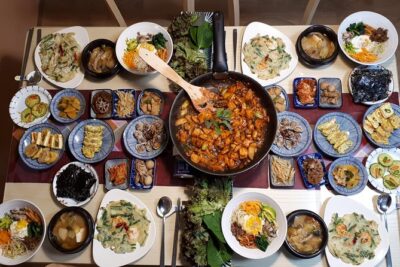
Local Home Korean Cooking Class & Market Adventure in Seoul
Read our review →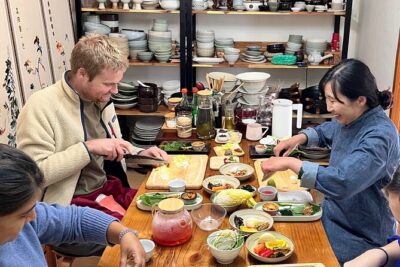
Master Korean traditional cooking with a Kimchi chef
Read our review →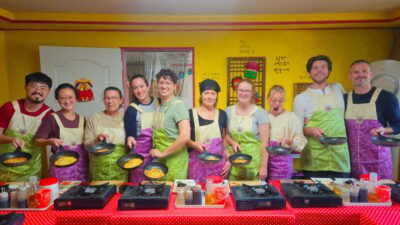
Korean Cooking Class at a Local Home and Market Tour
Read our review →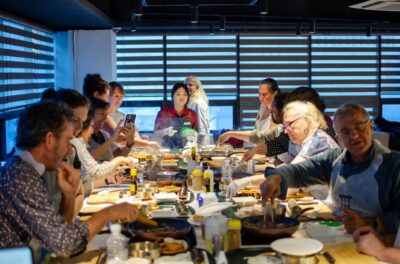
Taste of Korea, Authentic Home Style Cooking Class
Read our review →
Royal Seoul Cooking Class in a 100-Year-Old Hanok
Read our review →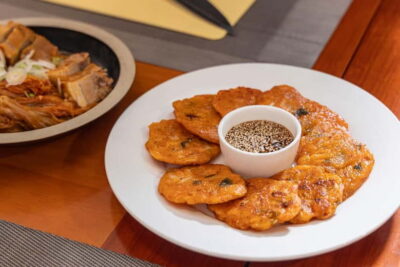
Browse the lists this tour appears in