
Review · SEOUL COOKING CLASSES
Seoul: Royal Seoul Cooking Class in a 100-Year-Old Hanok
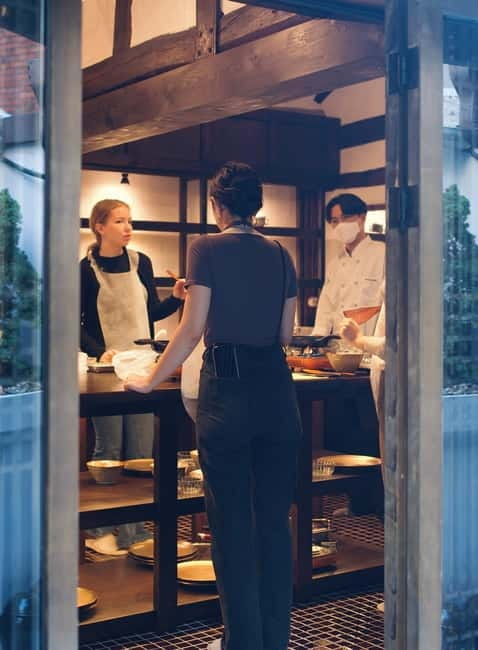
The best part of this Seoul cooking class is the setting: a 100-year-old hanok tucked behind the Insadong IBIS Ambassador Hotel, close to the palaces and busy city streets. Inside, Chef Park guides a maximum of six people through Korean dishes that look impressive but are manageable for first-time cooks. You finish by eating together in the traditional room, using bangjja bronze tableware.
I like the small group size, which gives the chef time to check each person’s work. I also like the way cooking is tied to Korean culture, from the story of the hanok to the background of the dishes. The main consideration is timing: although the class is listed as two hours, some sessions run longer, so do not schedule a tight appointment afterward.
Key details at a glance
- A restored hanok behind Insadong IBIS Ambassador Hotel: You get a quiet heritage setting without leaving central Seoul.
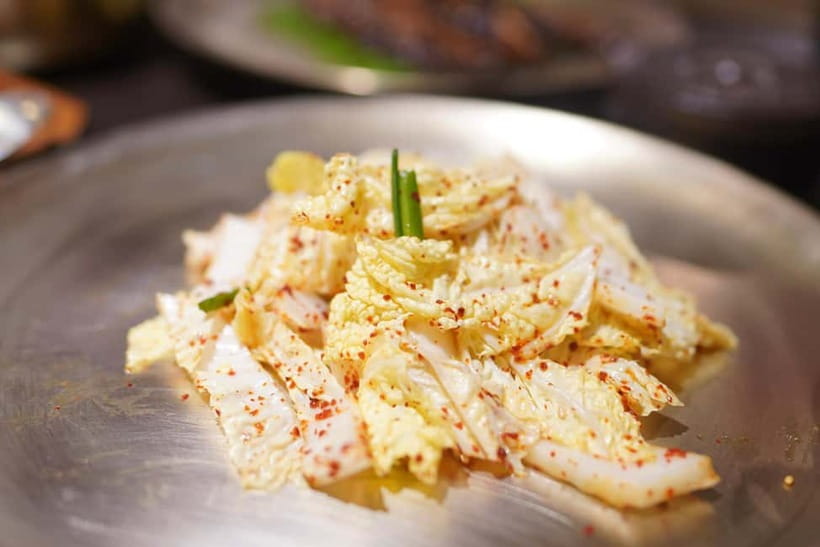
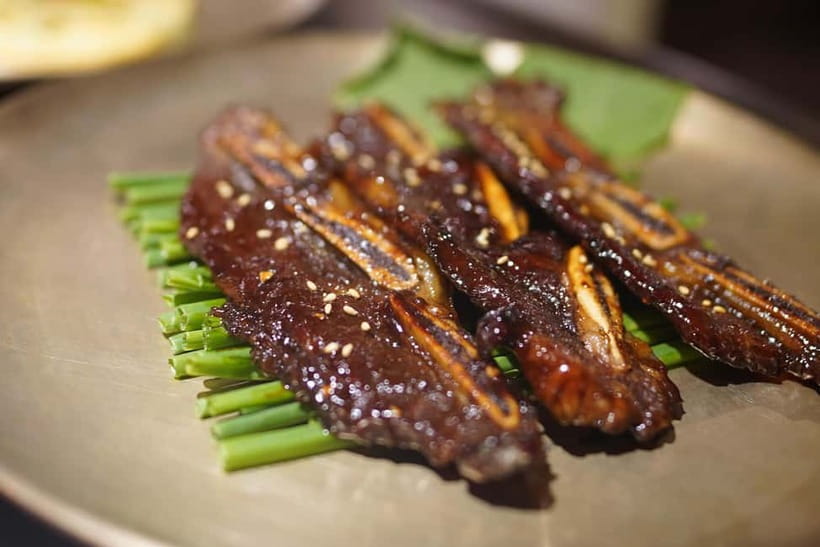
- Four practical Korean dishes: The usual menu includes LA Galbi, fresh kimchi, haemul pajeon, and tangpyeongchae.
- Maximum of six participants: Chef Park can offer close guidance instead of giving a large demonstration and sending you off alone.
- A proper sit-down meal afterward: You eat what you make on traditional bangjja bronzeware, with makgeolli and Korean desserts.
- English instruction and flexible cooking level: The recipes are designed to work for beginners, while still offering useful techniques to more experienced cooks.
- Dietary requests need advance notice: The default main dish is beef LA Galbi, but chicken Dak Galbi or a vegetarian menu may be requested when booking.
A quiet hanok in the middle of Seoul
Seoul can feel fast and loud, especially around Insadong’s shops, signs, and steady foot traffic. This class gives you a pleasant change of pace. The meeting point is at 25 Samil-daero 32ga-gil in Jongno-gu, just behind the Insadong IBIS Ambassador Hotel.
Take care with the hotel name. Seoul has several IBIS properties, and this activity is specifically behind the one in Insadong. The Korean address is 서울시 종로구 삼일대로 32가길 25, which is useful to keep on your phone if you are using a taxi or asking for directions.
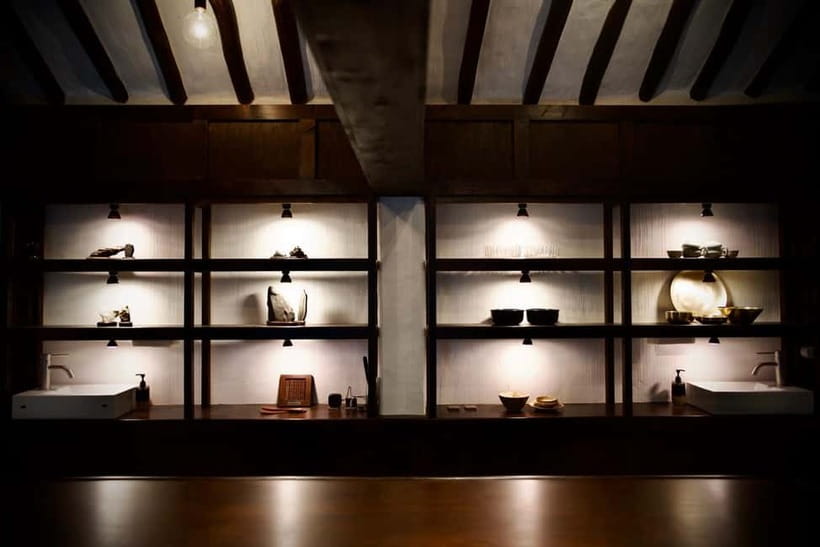
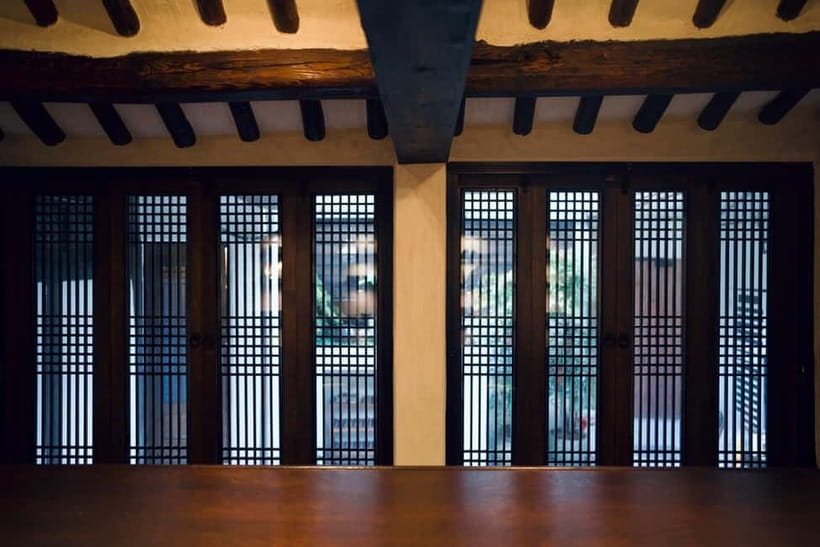
The hanok is not presented as a museum piece. It has been restored and adapted for cooking, so you get the character of traditional Korean architecture with a clean, working kitchen space. That combination matters. You are not simply looking at an old building for a few minutes. You spend the class in it, cook there, and later sit down to eat in the same calm setting.
I especially like the contrast between the old home and the tall buildings around it. You remain close to Seoul’s major sights, yet the room feels removed from the city for a while. If you are spending the day at a palace or walking through Insadong, this makes an easy cultural addition rather than a long journey across town.
More Cooking Classes in Seoul:
- Local Home Korean Cooking Class & Market Adventure in Seoul
★ 5.0 · 1,024 reviews - Master Korean traditional cooking with a Kimchi chef
★ 5.0 · 385 reviews - Seoul: Korean Cooking Class at a Local Home and Market Tour
★ 5.0 · 348 reviews
What you cook during the two hours
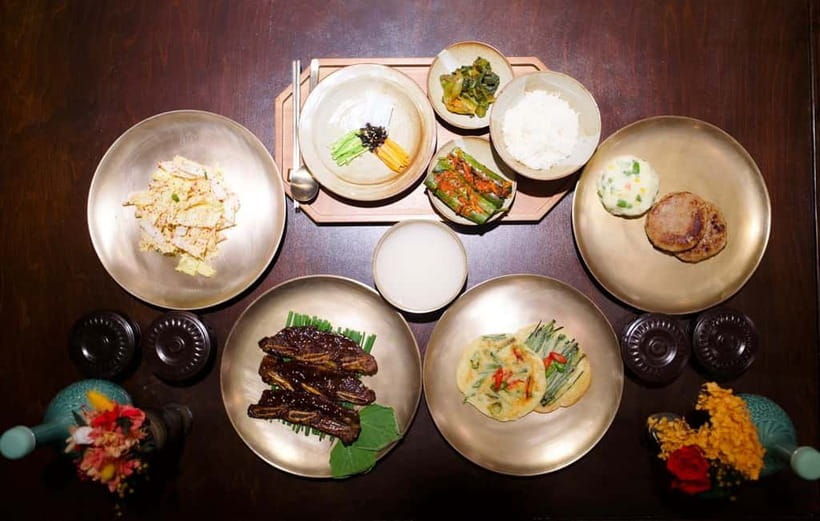
The standard menu centers on LA Galbi, fresh kimchi, haemul pajeon, and tangpyeongchae. These dishes give you a useful spread of Korean cooking styles: marinated beef, fresh vegetable preparation, a savory pancake, and a delicate mung bean jelly dish.
LA Galbi is the main course and uses beef short ribs. The name can cause some confusion because the dish is strongly associated with Korean barbecue, but here you learn how it fits into a wider Korean meal. The marinade and preparation are approachable enough for a novice, and the finished dish feels substantial.
Fresh kimchi gives you a different kind of lesson. It is made for immediate eating rather than long fermentation, so you can taste the result during the class. That makes it especially practical for home cooks. You learn the balance of seasoning and texture without needing to wait days or weeks for fermentation.
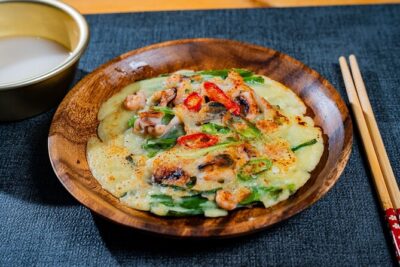
Haemul pajeon is a seafood and scallion pancake. It adds a hands-on step that feels familiar to many home cooks, but the Korean ingredients and cooking method make it distinct. It is also a friendly dish for a group setting because everyone can see the mixture come together and share the finished result.
Tangpyeongchae is lighter and more refined. Its soft mung bean jelly and vegetable components show a different side of Korean food, one that is less about heat or heavy seasoning. The dish is connected with court-style cuisine, which helps explain the reference to royal cooking.
The menu is not designed as a difficult professional course. That is good news if you are nervous about cooking. Instructions are given clearly, and people with little or no kitchen experience can take part. At the same time, someone who cooks regularly can still pick up useful techniques, flavor combinations, and ideas for recreating the meal at home.
Chef Park’s teaching style
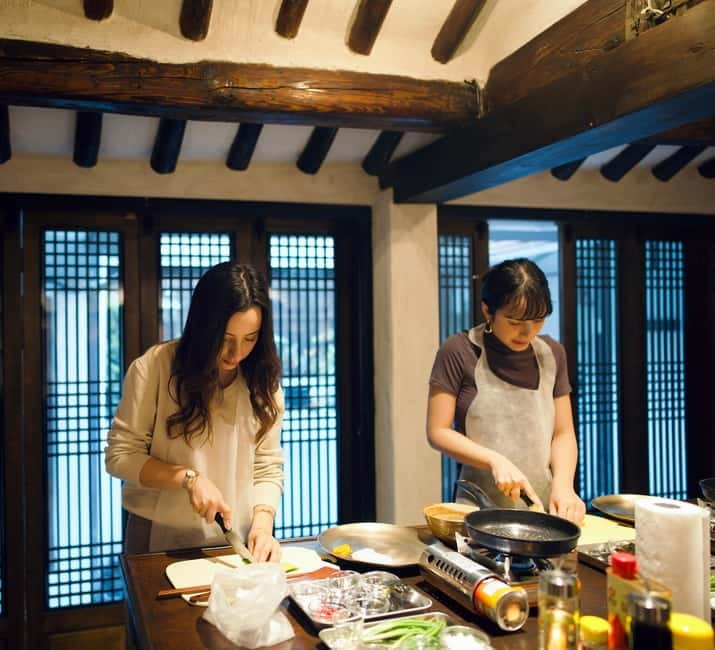
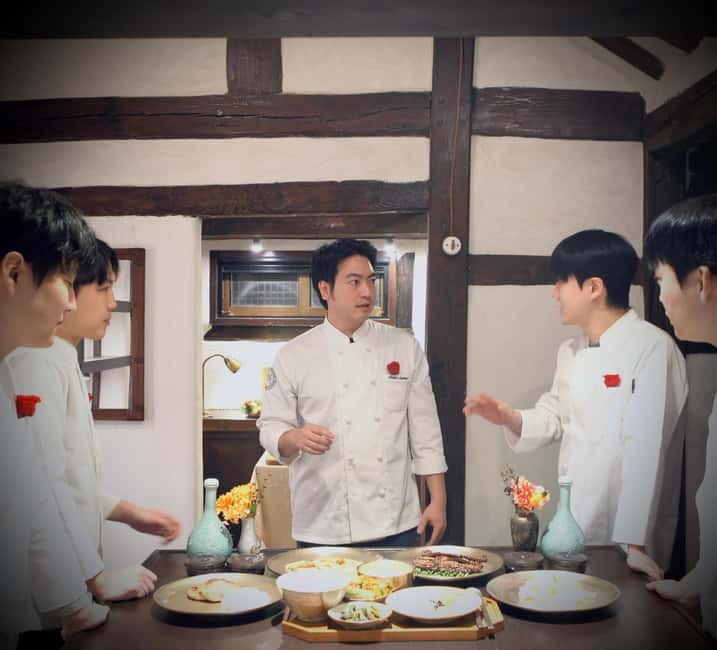
Chef Park is the central personality of the experience. He teaches in English and combines cooking instruction with stories about Korean food, the hanok, and local history. His approach is patient and conversational rather than formal.
That matters in a class of only six people. A large cooking class can leave you watching a demonstration from the back of the room, then trying to copy it without much help. Here, the format allows Chef Park to move around, check your progress, and explain a step again if needed.
You should expect a social class, not a silent lesson. The small table encourages conversation among participants, and several people have found the atmosphere especially comfortable for solo visitors and couples. Chef Park also gives restaurant and Seoul activity suggestions in some sessions, which can be useful if you are still shaping the rest of your visit.
The guides’ names can vary in the activity information. Chef Park is the main name associated with the class, while Ricky is also used in some sessions. The consistent point is that instruction is in English and the teaching is built around clear explanations, patience, and personal attention.
Eating like royalty on bangjja bronzeware
Cooking is only half of the experience. Once the dishes are ready, you sit down to eat them in the hanok. The meal is served on handcrafted bangjja bronzeware, a traditional Korean metal tableware style with a warm, substantial feel.
This changes the mood from a practical lesson to a proper Korean meal. You are not standing around a kitchen island eating samples between steps. You get time to see the dishes together, appreciate how they work as a group, and understand why presentation and tableware matter in Korean dining.
The bangjja plates also help connect the meal to the class theme of royal and traditional cuisine. You should not expect a palace banquet, of course. The experience lasts about two hours and remains relaxed. But the table setting gives the final meal a sense of occasion that a basic cooking workshop may not provide.
A glass of freshly brewed makgeolli is included, along with assorted Korean desserts. Makgeolli is a milky Korean rice drink with a gentle sweetness and light tang. If you do not drink alcohol, it is wise to ask about alternatives in advance, since the supplied details only confirm the included serving, not a substitute.
Same region, a different dish to learn:
- Seoul: Korean Cooking at Seoul Cooking Club!
★ 5.0 · 311 reviews - Korean Cooking at Seoul Cooking Club
★ 5.0 · 220 reviews - Seoul: Taste of Korea, Authentic Home Style Cooking Class
★ 4.9 · 166 reviews - Seoul: Kimchi Dishes Cooking Class with Wine Pairing
★ 4.7 · 38 reviews
Why the cultural context adds value
A Korean cooking class can easily become a recipe lesson with a few broad comments about the country. This one puts more weight on the stories behind the food. Chef Park explains the background of the dishes and offers historical context as you work.
That context helps you understand why the menu includes both hearty LA Galbi and more restrained dishes such as tangpyeongchae. Korean cuisine is not one single flavor profile. It can be spicy, fermented, grilled, fresh, delicate, and carefully arranged within the same meal.
The hanok also gives the cultural lesson a physical setting. You can see how traditional domestic space shapes the experience, rather than hearing about Korean architecture in a modern classroom. The restored building is compact and intimate, which fits the six-person format well.
I would not book this expecting an academic lecture. The class is practical, friendly, and food-led. You learn while chopping, mixing, seasoning, and eating. For most people, that is the stronger way to remember what they hear.
Price, timing, and practical value
The price is $96 per person. That is not the cheapest way to eat in Seoul, especially if your main goal is simply to have dinner. You can find excellent Korean food for less money at a restaurant.
The value comes from the complete package: an intimate class, an English-speaking certified chef, a restored hanok, several dishes, a sit-down meal, bangjja bronzeware, makgeolli, dessert, and cultural explanation. You are paying for an activity and a meal together, not just for ingredients.
The class is listed as two hours, but allow extra time. At least one session ran longer because the cooking and conversation continued at a relaxed pace. I would avoid booking this immediately before a show, timed palace entry, airport transfer, or dinner reservation that cannot be changed.
The activity is limited to six participants and is not suitable for children under 10. That age limit makes sense in a small cooking space, where the focus is on hands-on work and conversation. The format suits adults, couples, solo visitors, and families with older children or teenagers.
Cancellation is free up to 24 hours before the start time, and you can reserve now and pay later. Those terms are helpful when your Seoul schedule is still changing, but check the final booking conditions before you commit.
Food restrictions and menu choices
The default menu includes beef LA Galbi. If you prefer chicken Dak Galbi or a vegetarian option, request it when booking rather than waiting until the class begins.
You should also report allergies and other food restrictions in advance. Some dietary adjustments have been accommodated, but the class needs notice to prepare ingredients and keep the cooking process smooth.
The supplied menu includes seafood in haemul pajeon, beef in LA Galbi, and makgeolli as an included drink. If you avoid any of these, contact the provider before booking and ask exactly what can be changed. Do not assume that a vegetarian main course automatically removes every animal product from the other dishes.
Who will enjoy this Seoul cooking class
I would choose this for you if food is one of the main ways you understand a place. You get recipes that are practical enough to try at home, along with a better sense of how Korean dishes fit together.
It is also a strong choice for a couple. The setting is more personal than a large commercial workshop, and the shared meal gives the evening a natural rhythm. Solo visitors should not feel out of place either. The small group and Chef Park’s conversational style make it easier to meet people without forcing a group activity on you.
Beginners are welcome. You do not need to arrive with knife skills or Korean cooking experience. The dishes are explained step by step, and the format allows the chef to help you along.
Experienced cooks may appreciate the cultural background and the chance to work with familiar ingredients in a new way. Still, this is not an advanced chef-training course. If you want technical pastry work, professional knife training, or a long market tour, choose a different activity.
Location and the rest of your Seoul day
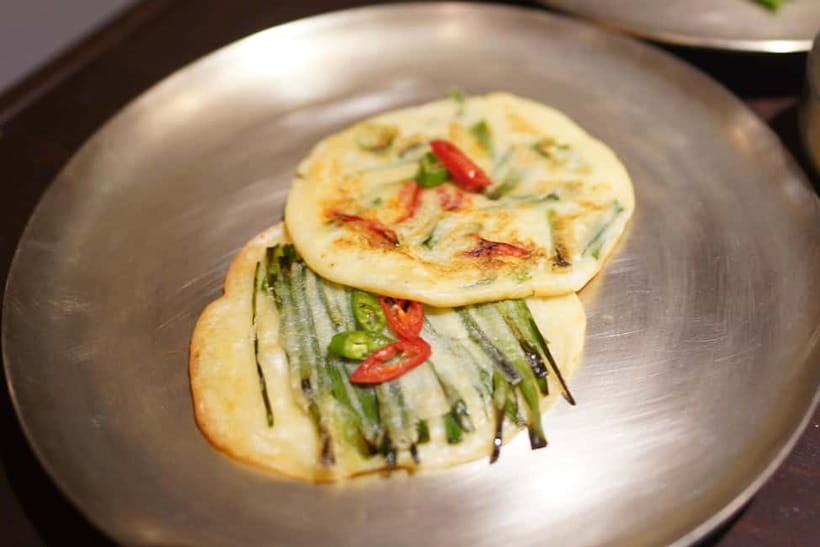
The class works well with a Jongno itinerary. You can pair it with Insadong, nearby palaces, traditional streets, and other central Seoul sights. The exact schedule depends on your class start time, so check availability before planning the day.
Because the meeting point is behind the Insadong IBIS Ambassador Hotel, allow time to find the correct hotel and walk through the surrounding streets. Showing up at another IBIS property would be an avoidable mistake.
I would plan to arrive early enough to locate the address without rushing. The activity is built around a warm, unhurried mood, and you will enjoy it more if you are not trying to find the hanok at the last minute.
Should you book it?
Book this class if you want more than a restaurant meal and prefer a small, personal activity with food at its center. The strongest reasons are the restored hanok, the six-person limit, Chef Park’s patient English instruction, and the chance to eat a complete meal from bangjja bronzeware.
Think twice if you have a strict budget, need a guaranteed two-hour finish, or want a highly advanced cooking course. For most visitors, though, the price is fair for an activity that combines dinner, culture, instruction, and a memorable setting in one stop.
If you have one open evening near Insadong and want to take a piece of Korean food culture home with you, this is a smart choice.
FAQ
Where is the Korean cooking class held?
It is held at 25 Samil-daero 32ga-gil, Jongno-gu, Seoul, just behind the Insadong IBIS Ambassador Hotel. The Korean address is 서울시 종로구 삼일대로 32가길 25.
Is the class near a palace?
Yes. The hanok is in central Seoul near the palace area and Insadong.
How long does the activity last?
The stated duration is two hours. Some sessions may run longer, so allow extra time afterward.
What language is the class taught in?
The class is taught in English.
How many people can join?
The group is limited to six participants.
What dishes are included?
The standard menu includes LA Galbi, fresh kimchi, haemul pajeon, and tangpyeongchae.
Is LA Galbi made with beef?
Yes. The default menu uses beef ribs for LA Galbi.
Can I request chicken or vegetarian dishes?
Yes. You can request Dak Galbi, made with chicken, or a vegetarian option when booking.
Is a drink included?
Yes. A glass of freshly brewed makgeolli is included, along with assorted traditional Korean desserts.
Are children allowed?
Children under 10 are not suitable for this activity.
What should I do about allergies?
Tell the provider about allergies and food restrictions in advance so the menu can be prepared appropriately.
Can I cancel for a full refund?
You can cancel up to 24 hours in advance for a full refund.
Do I have to pay when I book?
The reserve-now, pay-later option lets you book without paying immediately.
Newest classes around Seoul
- Seoul: Korean Home Visit, Cooking & Cultural Experience★ 5.0 · 2 reviews
- Seoul: Korean Kimchi Cooking Class in the Heart of the City★ 5.0 · 3 reviews
- Seoul: Premium Korean Feast Cooking Class★ 5.0 · 3 reviews
- Seoul: Kimchi Dishes Cooking Class with Wine Pairing★ 4.7 · 38 reviews
- Seoul: Korean Cooking Class with Local Grocery Shopping★ 5.0 · 13 reviews
- (Seoul) Korean Cooking Class with a Professional Chef★ 5.0 · 14 reviews
- Seoul: Authentic Korean Cooking Class and Market Tour★ 5.0 · 6 reviews
- Seoul: Cooking Class and Tour with Michelin-Trained Chef★ 5.0 · 11 reviews
Seoul Cooking Classes, compared.
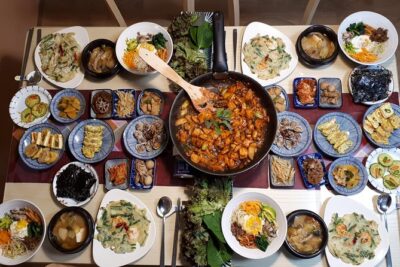
Local Home Korean Cooking Class & Market Adventure in Seoul
Read our review →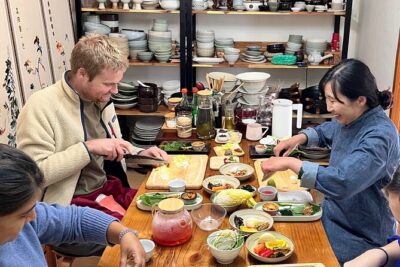
Master Korean traditional cooking with a Kimchi chef
Read our review →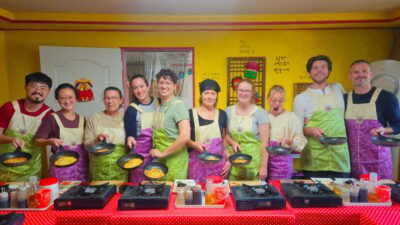
Korean Cooking Class at a Local Home and Market Tour
Read our review →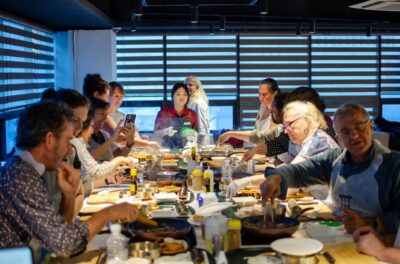
Taste of Korea, Authentic Home Style Cooking Class
Read our review →
Temple Vegan Cooking Class & Oriental Medicine Tour
Read our review →Browse the lists this tour appears in