Review · BOLOGNA COOKING CLASSES
Bologna: Pasta and Tiramisu Cooking Class with Wine
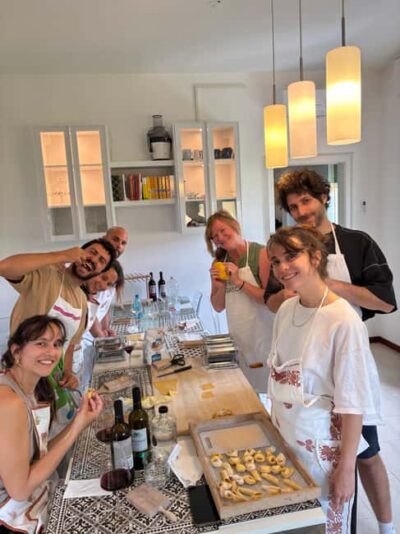
Bologna’s best food lesson is hands-on: you make fresh pasta and tiramisu, then sit down with the group to eat what you prepared. The class takes place inside a working restaurant, so you get more than a recipe demonstration. You see how traditional dishes move from flour and eggs to the plate.
I like the friendly English-speaking instructors, especially Luca, Al, Steven, Peter, and Aladin, who are repeatedly praised for clear instructions and easy humor. I also like the social setup: a welcome Prosecco, shared pasta meal, tiramisu, and a glass of wine turn the three-hour class into a relaxed Bologna evening.
The main caution is dietary. Substitutions may be possible, but the teaching centers on traditional recipes with gluten, dairy, and eggs, and cross-contamination cannot be ruled out. Strict vegans, people with food allergies, and those with gluten or lactose intolerance should choose with care.
Key points to know before booking
- Two pasta preparations: You may make two styles, such as tagliatelle and stuffed pasta with spinach and ricotta, depending on the class.
- Tiramisu comes first: You prepare the famous dessert before moving to pasta dough.
- The chef cooks the pasta: You shape the pasta, but the restaurant kitchen may handle the final cooking and sauces.
- A social meal follows: Everyone sits together for lunch or dinner with Prosecco and wine.
- Guides set the tone: Luca, Al, Steven, Peter, and Aladin are praised for clear English, patience, humor, and local tips.
- Dietary limits matter: Traditional ingredients remain central, and the class is not suitable for strict vegans or serious food allergies.
What this Bologna cooking class really offers
This is a three-hour food lesson in central Bologna, priced at $57 per person. That price includes the cooking class, lunch or dinner, a welcome glass of Prosecco, and a glass of wine with the meal.
I see the value in the combination. A standard restaurant meal gives you food and a drink. This experience adds instruction, hands-on work, a shared table, and a bit of local food culture for roughly the cost of a good casual dinner in many Italian cities. It is not a private lesson, and it is not a professional chef course. It is a lively introduction to the food Bologna is famous for.
The class is led in English. Names vary by session, with Luca, Al, Steven, Peter, and Aladin among the instructors. The best fit is someone who wants clear guidance without a formal classroom mood. You will likely spend as much time chatting and laughing as you do measuring flour.
More Cooking Classes with Wine Tasting in Bologna
- Bologna: Pasta Cooking Class, Ragu, Spritz, Wine & Gelato
★ 4.9 · 775 reviews - Bologna Local Pasta Cooking Class, Ragu, Spritz, Wine & Gelato
★ 5.0 · 527 reviews - Bologna: Pasta and Tiramisu Small Group Cooking Class with Wine
★ 5.0 · 409 reviews
Starting with Prosecco and tiramisu
Your arrival begins with a glass of Prosecco. It is a useful social start, especially if you are traveling alone or joining a group where nobody knows one another. The drink is not just an add-on. It helps set a casual tone before the work begins.
You wash your hands, put on an apron, and begin with tiramisu. That order makes sense. Tiramisu needs time to come together, and preparing it first gives the dessert a chance to rest while you work on pasta.
The instructor explains the dessert’s background and the steps behind its familiar layers. You will work through the traditional method, learning how the texture comes together rather than simply watching someone assemble it. This is a good part of the class for beginners because the task is approachable and does not require the hand strength or coordination needed for pasta dough.
The dessert also gives the group an early success. You finish one dish before tackling the more technical part of the class. If you have never cooked Italian food before, that progression helps you settle in.
Keep in mind that the traditional tiramisu recipe contains dairy and eggs. Substitutions may be offered for some food preferences, but the class instructions remain based on the standard recipe.
Turning flour and eggs into pasta dough
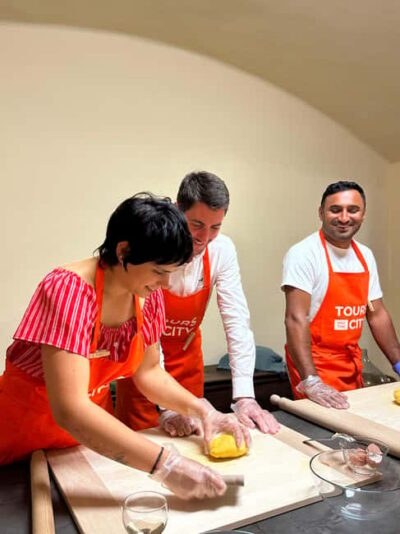
The pasta section is the heart of the experience. At your workstation, the instructor explains flour types and the difference between pasta fresca, or fresh pasta, and pasta secca, dried pasta.
That context is useful because it connects the recipe to the food you see across Italy. Fresh pasta is not simply dried pasta made sooner. The dough, texture, cooking time, and typical sauces can differ. Even a short explanation helps you understand why Bologna is so strongly linked with handmade pasta.
You receive step-by-step guidance as you mix, knead, roll, cut, and shape the dough. This is where a patient instructor matters. Luca is often praised for detailed directions and a relaxed manner, while Al and Steven are noted for keeping the class moving without making beginners feel behind. Peter and Aladin also receive high marks for friendly teaching and good group energy.
The class may include two pasta forms. One example is tagliatelle, a long, ribbon-like pasta. Another is stuffed pasta made with spinach and ricotta. The exact preparations can vary, but the central lesson remains the same: work the dough carefully, then shape it with attention.
You should expect flour on your hands and a little trial and error. Pasta making is not difficult, but it rewards patience. The instructor demonstrates the motions, then helps as you work. That makes this more useful than taking a recipe card home after a demonstration.
The restaurant kitchen takes over
One detail is worth understanding before you book: you may not cook the pasta all the way through yourself. The group makes and shapes the pasta, then the restaurant chef can handle the boiling and final preparation.
Some people will see this as a drawback. If your goal is to practice every stage, including timing the water and finishing the sauce, you may want a smaller private lesson. Here, the restaurant staff may cook the pasta while you sit down with your group.
I think the trade-off works for most holiday visitors. The class avoids a crowded cooking station and lets you enjoy the meal while it is served at its best. You also get to taste the pasta with sauces rather than eating a plate of undercooked practice food.
A previous afternoon class included tomato sauce and browned butter with sage. Those sauces showed how the same handmade pasta can take on different character. The key point is that you are not merely shaping dough for display. The pasta becomes part of the meal.
More Cooking Classes with Wine Tasting in Italy
- Bologna: Pasta Tagliatelle al Ragu Cooking Class with Wine
★ 4.7 · 225 reviews - Bologna: In-Home Italian Pasta Making Workshop with Wine
★ 4.7 · 131 reviews - Bologna: Pasta Cooking Class, Ragu & Wine with Local Host
★ 4.9 · 113 reviews - Bologna: Tagliatelle & Ragù Home Cooking Class with wine
★ 4.5 · 55 reviews
Sitting down to a shared Bologna meal
After the hands-on work, everyone gathers for lunch or dinner. This shared table is one of the strongest parts of the experience.
You eat the pasta made by the class, followed by the tiramisu you prepared earlier. A glass of wine comes with the meal, and the welcome Prosecco gives the event a generous feel from start to finish. Portions have been described as satisfying, so arrive hungry and avoid making tight dinner plans afterward.
The table also changes the pace. Instead of leaving as soon as the last piece of dough is shaped, you have time to talk with people from different countries and compare results. Solo visitors can find this especially useful. Couples and families get a shared activity, while larger groups can turn the meal into the social center of the evening.
The atmosphere depends partly on the group. A lively class can feel like a long Italian dinner with a cooking lesson attached. A smaller session may be quieter, though that can mean more individual help. One small group of solo participants found that the instructor helped everyone feel comfortable, while another participant wished there had been more people. Neither is a serious flaw, but it shows that the social side can change from one date to another.
The instructors make the difference
The repeated praise for the guides is important because a cooking class succeeds or fails on teaching style.
Luca is described as humorous, relaxed, friendly, and clear. He also gives useful tips about food and coffee in Bologna. Al is praised for being patient, efficient, welcoming, and able to keep the class moving in excellent English. Steven is known for jokes, detailed explanations, local facts, and calm answers to questions.
Peter receives similar praise for keeping people involved and making beginners feel comfortable. Aladin is described as an energetic host who makes sure everyone stays on track. These descriptions point to a consistent style: this is not a stern technical course. It is a warm, social lesson led by an instructor who wants you to succeed and enjoy the meal.
That matters if you are not confident in the kitchen. Several people arrived with little or no pasta-making experience and left feeling able to repeat tagliatelle or fettuccine at home. You will not become a pasta expert in three hours, but you can learn the basic feel of the dough and the sequence of the work.
Who will enjoy the three-hour format
The class suits first-time visitors to Bologna who want a food activity with a clear start and finish. It also works well as a change from churches, museums, and sightseeing walks. The pace gives you something practical to do, and the meal means the price covers more than instruction.
It is a good pick for:
- Couples looking for a shared evening activity
- Solo visitors who enjoy meeting people over food
- Families with children old enough to follow kitchen instructions
- Beginners who want a low-pressure introduction to pasta
- Food lovers who want to connect Bologna with its cooking traditions
Children under three are not suitable for the activity, and babies under one year are also excluded. Older children have taken part successfully, but the material does not set a specific upper age or guarantee special children’s instruction.
This is less suitable if you want a quiet, private lesson. It is also not the right choice for a strict vegan diet, serious food allergy, gluten intolerance, or lactose intolerance. The instructions focus on recipes containing gluten, dairy, and eggs, and the provider cannot guarantee a completely separate preparation area.
Practical details that affect your decision
Wear comfortable clothes. You will be standing and working with food, so formal clothing is unnecessary. An apron is provided as part of the kitchen routine.
The class is in central Bologna, which makes it convenient to reach while sightseeing. The exact starting time depends on availability, so check the session that fits your plans. With a three-hour duration, leave enough space before and after it rather than trying to squeeze it between two fixed appointments.
The activity has free cancellation up to 24 hours before the start time, and you can reserve now and pay later. Those terms help if your Bologna schedule is still changing, but the more important planning point is the meal itself. You are likely to leave full, so do not book a serious restaurant dinner immediately afterward.
The overall rating is 4.7 from 507 reviews, with the strongest praise focused on the instructors, food, wine, group atmosphere, and value. One session started late after an electrical outage, and another had a brief lighting problem. The staff kept people comfortable until the issue was resolved, but these stories are a reminder that a restaurant kitchen is a working place, not a perfectly controlled studio.
How this compares with eating at a restaurant
A restaurant meal lets you focus on the finished dish. This class asks you to spend time making it, then gives you a chance to eat it with the people who worked beside you.
I would choose this class over a normal meal if you want an activity that helps you remember Bologna through a skill. Mixing dough and shaping pasta gives the city a physical connection. Afterward, you may look at handmade pasta differently when it appears on a menu.
I would choose the restaurant instead if you are short on time, dislike group activities, or have strict dietary requirements. The class is built around traditional pasta and tiramisu, not a custom menu.
Should you book the Bologna pasta and tiramisu class?
Book it if you want hands-on cooking, a full meal, and an easy social evening for $57. The value is strong because the price covers three hours, two dishes, Prosecco, wine, and instruction in a central restaurant.
I would especially recommend it for first-time pasta makers, couples, solo visitors, and families with older children. Choose your date partly for the guide if names are shown, since Luca, Al, Steven, Peter, and Aladin each bring the warmth and humor that make a group class work.
Skip it if you need a fully allergen-free kitchen, a vegan menu, or a private technical lesson. For everyone else, this is a practical way to taste Bologna, meet people, and leave with enough confidence to make fresh pasta at home.
FAQ
How long is the Bologna cooking class?
The class lasts three hours.
What dishes will I make?
You will prepare tiramisu and fresh pasta. Some sessions include two pasta styles, such as tagliatelle and stuffed pasta with spinach and ricotta.
Is food included?
Yes. You eat the pasta and tiramisu prepared during the class as part of lunch or dinner.
Are drinks included?
Yes. The activity includes a welcome glass of Prosecco and a glass of wine with the meal.
Is the class taught in English?
Yes. The instructor language is English.
Can I request dietary substitutions?
You should report all allergies and food restrictions when booking. Substitutions may be available, but the traditional instructions contain gluten, dairy, and eggs, and complete protection from cross-contamination cannot be guaranteed.
Is the activity suitable for vegans?
No. The activity is listed as not suitable for vegans, and its traditional recipes focus on eggs and dairy.
Can I cancel for a refund?
Yes. You can cancel up to 24 hours in advance for a full refund. You can also reserve and pay later to keep your plans flexible.
More Tiramisu and Dessert Classes in Bologna
- Bologna: Original Lasagna & Gelato Class at a Cooking School
★ 4.9 · 59 reviews - Gelato Making Class in Bologna City center Cooking School
★ 4.7 · 43 reviews
More Pasta Making Classes in Bologna
- Authentic Bologna Home Cooking Class: Tagliatelle & Tortellini
★ 4.5 · 136 reviews - Bologna: Pasta & Tiramisu Cooking Class at a Local’s Home
★ 4.9 · 67 reviews - Bologna: Pasta & Tiramisu Cooking Class at a Local’s Home
★ 4.9 · 54 reviews - Learn and taste the real bolognese ragù and pasta making
★ 4.8 · 32 reviews
Newest classes around Bologna
- Tortelloni and Tagliatelle Cooking Class in Bologna + Wine★ 3.0 · 2 reviews
- 3 hour Lasagna Bolognese cooking class★ 5.0 · 6 reviews
- Bologna Walking Tour & Traditional Cooking Class with Wine★ 5.0 · 3 reviews
- Pasta Making Class: Tagliatelle & Bolognese Sauce★ 5.0 · 15 reviews
- Home Cooking: Pasta Making with Natural Colors in a Tiny Group★ 5.0 · 6 reviews
- Traditional Bolognese Cooking Class in Bologna with Giovanna S★ 5.0 · 6 reviews
- Cesarine: Market Tour & Cooking Class at Local’s Home in Bologna★ 5.0 · 19 reviews
- Bolognese Cooking Class with Margherita in the Historic Center★ 5.0 · 26 reviews
Bologna Cooking Classes, compared.
Pasta Cooking Class, Ragu, Spritz, Wine & Gelato
Read our review →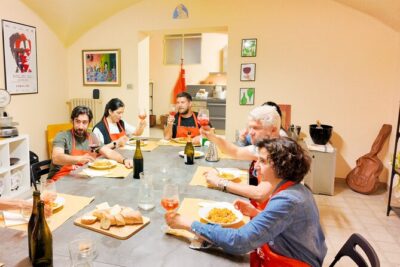
Bologna Local Pasta Cooking Class, Ragu, Spritz, Wine & Gelato
Read our review →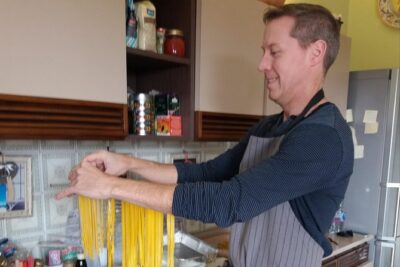
Pastamama, Home Cooking Classes at Grace’s Home
Read our review →
Pasta and Tiramisu Small Group Cooking Class with Wine
Read our review →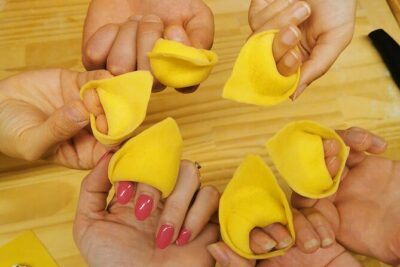
Bologna on the plate, Cooking Class with Alessia
Read our review →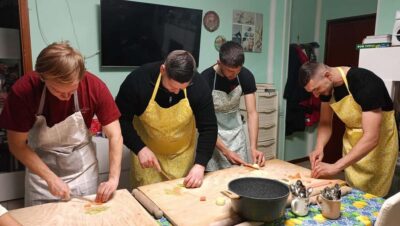
Pasta Tagliatelle al Ragu Cooking Class with Wine
Read our review →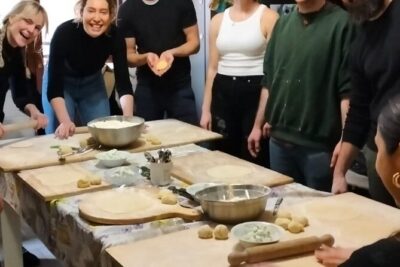
Authentic Bologna Home Cooking Class: Tagliatelle & Tortellini
Read our review →