
Review · BOLOGNA COOKING CLASSES
Bologna: Original Lasagna & Gelato Class at a Cooking School
Bologna’s classic lasagna is not the red-sauce version many of us know. Here, you make green spinach pasta sheets, creamy béchamel, and layered Bolognese ragù, then finish with homemade gelato. I like the hands-on pasta work and the chance to eat a proper Bolognese meal at the end. I also like that the school provides recipes and tips you can use at home.
The class runs in a polished, comfortable school inside the Falcone and Borsellino Gallery, with English instruction and generally small groups. One thing to consider: the ragù is prepared partly in advance, so you learn the assembly and key sauces rather than making the slow-cooked meat sauce from start to finish. Some sauce work is also demonstrated rather than done by every participant.
Key points
- Green pasta from scratch: Knead, rest, roll, and cut the spinach dough used in traditional Bolognese lasagna.
- A full meal, not just a demonstration: Make lasagna and gelato, then sit down for lunch or dinner with wine.
- Local aperitivo included: Taste Emilia-Romagna wine with mortadella, regional ham, and cheese.
- Small-group feel: Several sessions have had only a few participants, allowing plenty of help from the instructor.
- Seasonal dessert options: Prepare one or two gelato flavors, such as yogurt ice cream or pear sorbet.
- Useful take-home material: Leave with a cookbook containing the class recipes and additional Italian dishes.
Why Bolognese lasagna is different
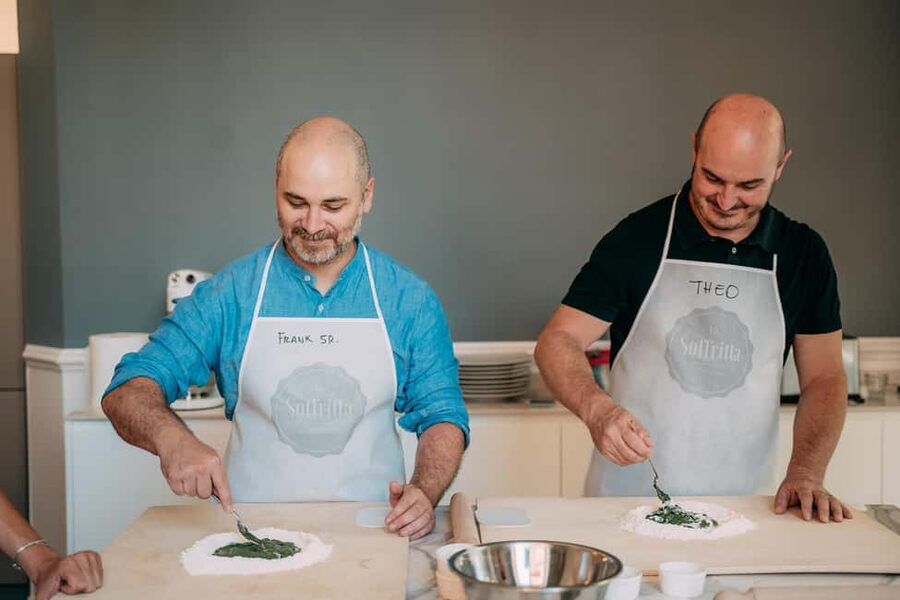
The first surprise is visual. Traditional lasagna from Bologna uses green pasta, colored and flavored with spinach, rather than plain yellow sheets. Those delicate green layers alternate with pale béchamel and slow-cooked Bolognese ragù, creating a dish that is more refined and less tomato-heavy than many versions served abroad.
You’ll make the pasta dough from basic ingredients, adding spinach in the traditional style. The instructor shows you how to knead it, let it rest, roll it thin, and cut it into sheets that fit the baking dish. This is the part where you gain the most useful skill. Once you understand the feel of pasta dough, you can try other fresh pasta shapes at home.
The work is practical, but it is not a frantic kitchen challenge. The class is organized so that one task can rest or cook while the next begins. That keeps the session moving and explains the listed duration of roughly 1.5 to 3 hours. Your exact schedule depends on the class timing and pace of the group.
More Tiramisu and Dessert Classes in Bologna
- Bologna: Pasta Cooking Class, Ragu, Spritz, Wine & Gelato
★ 4.9 · 775 reviews - Bologna Local Pasta Cooking Class, Ragu, Spritz, Wine & Gelato
★ 5.0 · 527 reviews - Bologna: Pasta and Tiramisu Cooking Class with Wine
★ 4.7 · 507 reviews
Inside La Soffritta in central Bologna
You meet the chef inside La Soffritta cooking school, located in the Falcone and Borsellino Gallery. The school is close to Bologna’s historic center, making it a sensible choice for a cooking activity during a day of sightseeing.
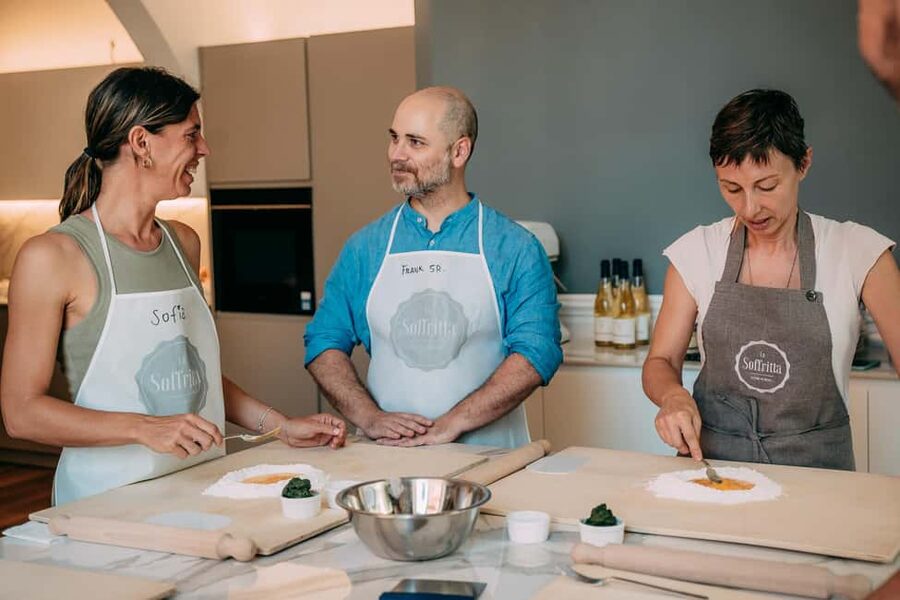
The setting is one of the experience’s strong points. The kitchen is described as modern, spacious, clean, and welcoming, with large windows and plenty of daylight. It has an elegant fit-out without feeling like a television studio. You should arrive 10 minutes early so you can find the school and settle in before the instruction begins.
The class is taught in English. Instructors have included Chef Moina, also spelled Monia in some descriptions, and Francesca. Their teaching style is patient and practical, with attention to technique rather than simply handing you a finished dish. Chef Moina has been especially good at explaining why the steps matter, including lighter recipe ideas and useful cooking tips.
Group size can make a major difference in a cooking class. This one is guaranteed with at least two participants, and several sessions have been small enough for each person to receive direct help. A small group gives you more room at the work surface and makes it easier to ask questions.
There is one minor classroom drawback. One participant felt an overhead mirror would help everyone see demonstrations more clearly. If you are shorter or standing farther from the work area, you may need to shift position or ask the instructor to repeat a step. The instructors appear willing to help, but you should not expect every minute to involve individual work.
Rolling spinach pasta the Bolognese way
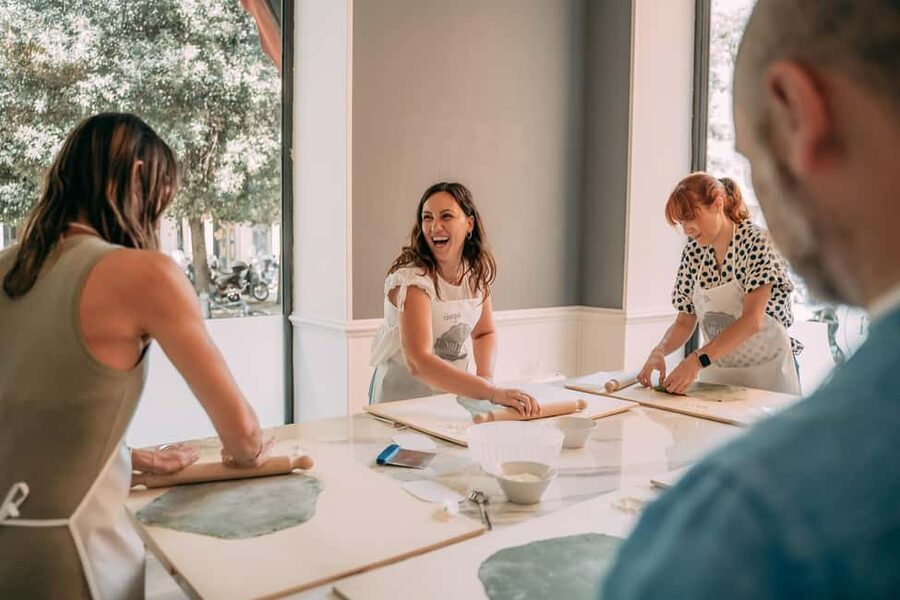
The pasta section gives this class its local character. You are not simply assembling store-bought sheets. You start with dough and learn how to turn it into the green layers that define traditional Bolognese lasagna.
You’ll knead the dough, allow it to rest, then roll it thin. The instructor guides you through the thickness and shape needed for lasagna, which is more useful than a vague instruction to roll it until it looks right. You also cut the sheets and prepare them for cooking before assembly.
This is a good activity for confident cooks and beginners alike. Experienced home cooks can compare the Bolognese method with their own lasagna routine, while less experienced participants get a clear introduction to fresh pasta. One useful lesson is that fresh pasta is more about touch and patience than fancy equipment.
Still, the class is not a private cooking apprenticeship. Some of the work is shared or demonstrated, especially when the instructor is managing several steps at once. If you want every participant to prepare every component independently, you may find the format a little observational at times.
Béchamel, ragù, and the layered lasagna
After the dough, you prepare béchamel sauce by hand. This white sauce is a key part of the Bolognese version, giving the lasagna its creamy texture and balancing the meat sauce. You learn the basic process rather than relying on a packaged sauce, which makes this one of the easier elements to repeat at home.
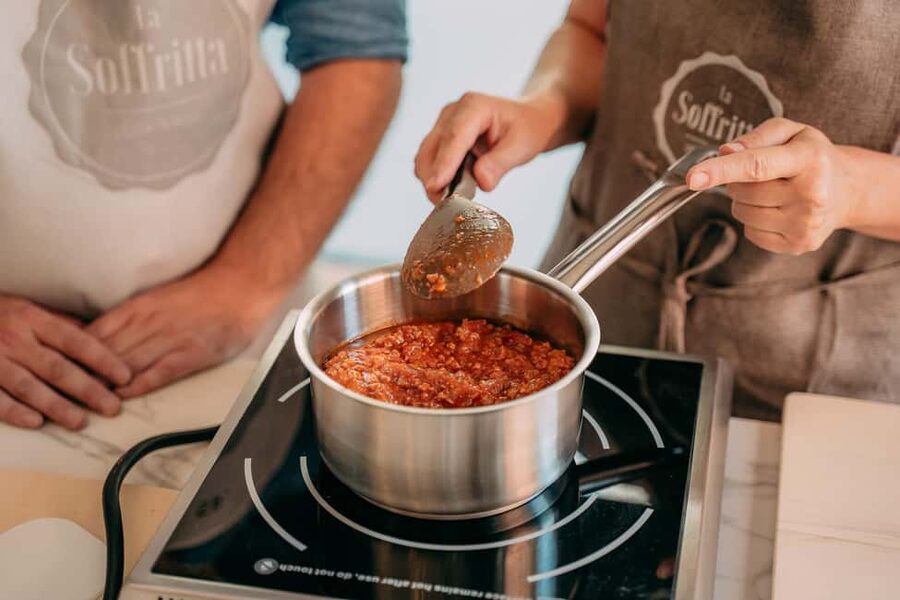
The ragù is handled differently. A true Bolognese ragù takes hours, so it is partly prepared before the class. You learn about its role in the dish and use the slow-cooked sauce while assembling the lasagna, but you do not complete the full ragù preparation from raw ingredients during the session.
That is a sensible tradeoff. Making real ragù from start to finish would stretch the class far beyond the advertised time, and the final meal would not be ready when you sit down to eat. You should simply book this with the right expectation: you are learning the lasagna process and the character of Bolognese cooking, not completing an all-day ragù workshop.
Layering brings everything together. You place pasta, béchamel, and ragù in sequence, building the dish carefully before it goes into the oven. The final lasagna is not just lunch provided by the school. You have shaped the pasta, made the white sauce, assembled the dish, and watched it become a finished local specialty.
Same region, a different dish to learn:
- Pastamama, Home Cooking Classes at Grace’s Home
★ 5.0 · 521 reviews - Bologna: Pasta and Tiramisu Small Group Cooking Class with Wine
★ 5.0 · 409 reviews - Bologna on the plate, Cooking Class with Alessia
★ 5.0 · 260 reviews - Bologna: Pasta Tagliatelle al Ragu Cooking Class with Wine
★ 4.7 · 225 reviews
Making gelato while the lasagna cooks
The sweet course keeps the class from turning into a long wait beside the oven. While the lasagna cooks, you prepare one or two homemade gelato flavors using seasonal ingredients and straightforward methods.
The exact flavors can vary. Past sessions have included yogurt ice cream and pear sorbet, giving you a taste of both a creamy style and a fruit-based frozen dessert. That variety is useful because it shows that gelato is not one fixed recipe. You can see how different ingredients affect sweetness, texture, and freshness.
This portion should appeal to anyone who enjoys desserts but does not want a class focused only on pasta. The techniques are described as easy to learn, and the recipes are included in the cookbook you receive at the end.
The main limitation is that seasonal ingredients mean you should not expect a guaranteed flavor list. If you have a favorite gelato style, ask the instructor what is planned when you arrive. Also tell the school about food allergies or dietary requirements before the class.
Aperitivo with mortadella, ham, cheese, and wine
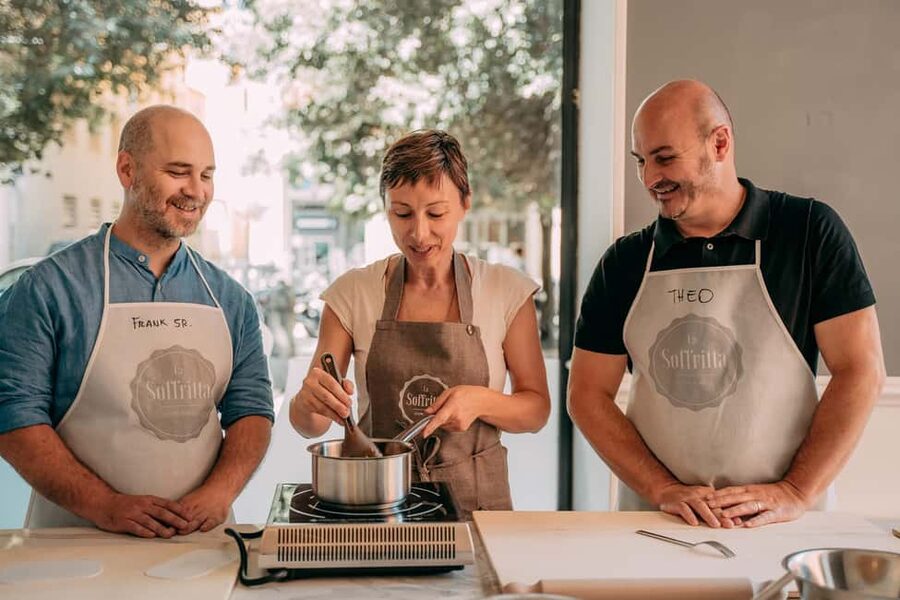
While the food comes together, the class shifts into a traditional aperitivo. You share Emilia-Romagna wine with mortadella, regional ham, and cheese.
This is more than a few snacks added to the booking. Bologna is closely tied to the food traditions of Emilia-Romagna, and mortadella is one of the city’s best-known specialties. Tasting local cured meats alongside the cooking helps connect the recipes to the region’s everyday food culture.
The aperitivo also gives the class a social rhythm. You are not cooking in silence from start to finish. You can talk with the instructor and the other participants while the lasagna finishes. This suits solo visitors and couples who want an evening activity with a shared meal, though the atmosphere can depend on the group.
One participant felt the arrival period could use a little background music, since the room initially felt quiet and classroom-like. That is a small point, but it is fair to keep in mind if you prefer a lively, informal cooking party from the first minute.
Sitting down to eat what you made
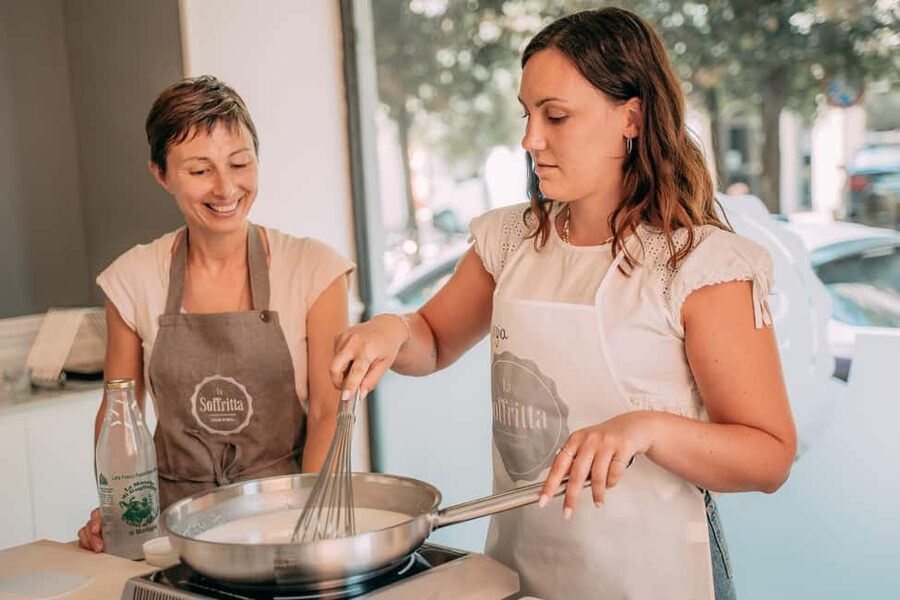
The best part of the schedule comes at the table. Once the lasagna is ready, you eat it as a proper lunch or dinner, with the aperitivo and wine forming part of the meal. Dessert follows with the gelato and sorbet you prepared.
That final meal gives the class a clear purpose. You are not rushing off with a container of food or sampling one small bite before heading back into Bologna. You get to taste the balance between the pasta, béchamel, and ragù, then compare the finished result with the steps you just practiced.
Several participants have found the food especially satisfying, and that makes sense. Fresh pasta and freshly assembled lasagna have a different texture from a quick home version. The meal also gives you a chance to notice details that are easy to miss while cooking, such as how much béchamel to use and how the layers hold together.
The dessert adds a clean finish. Yogurt gelato and pear sorbet, for example, offer a lighter end to a rich pasta dish. The exact combination varies, but you can expect the class to include both the making and eating of the sweet course.
What the $69 price includes
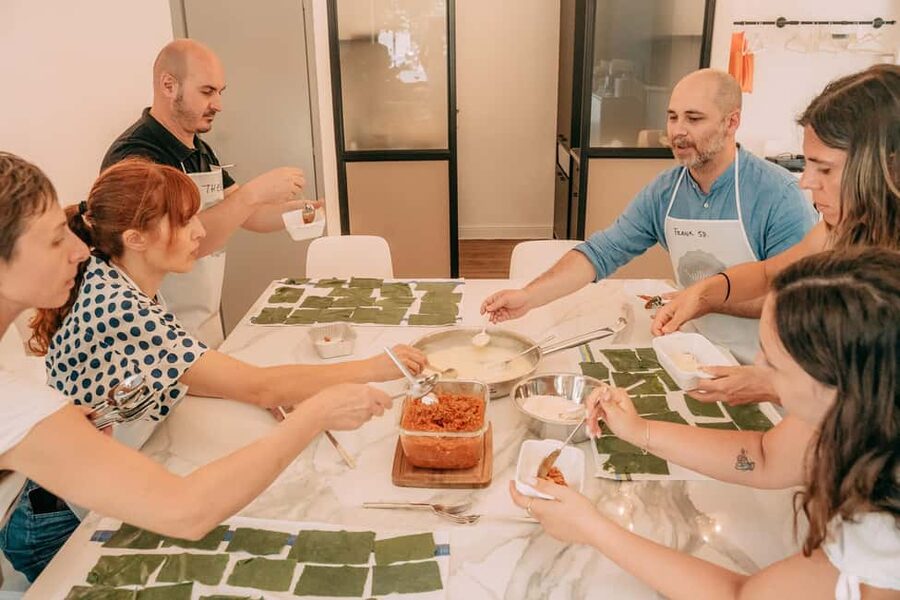
At $69 per person, this class offers solid value if you want a meal plus instruction rather than a short pasta demonstration. The price includes the professional chef, ingredients, equipment, apron, lasagna class, gelato class, aperitivo, local wine, cured meats, cheese, cookbook, and lunch or dinner.
The value is strongest for people who would otherwise pay separately for a restaurant meal and a cooking activity. You receive a substantial food experience and leave with recipes, rather than paying only for a demonstration and tasting.
The price does not include hotel pickup or drop-off. That is not a serious issue in central Bologna, but you need to make your own way to La Soffritta. It also does not include full ragù preparation, as the sauce is partly made in advance.
The cookbook improves the long-term value. It includes the recipes from the class, plus additional Italian classics and cooking tips. If you actually make the pasta and sauces again at home, the class becomes more than a holiday meal.
Who should book this Bologna cooking class?
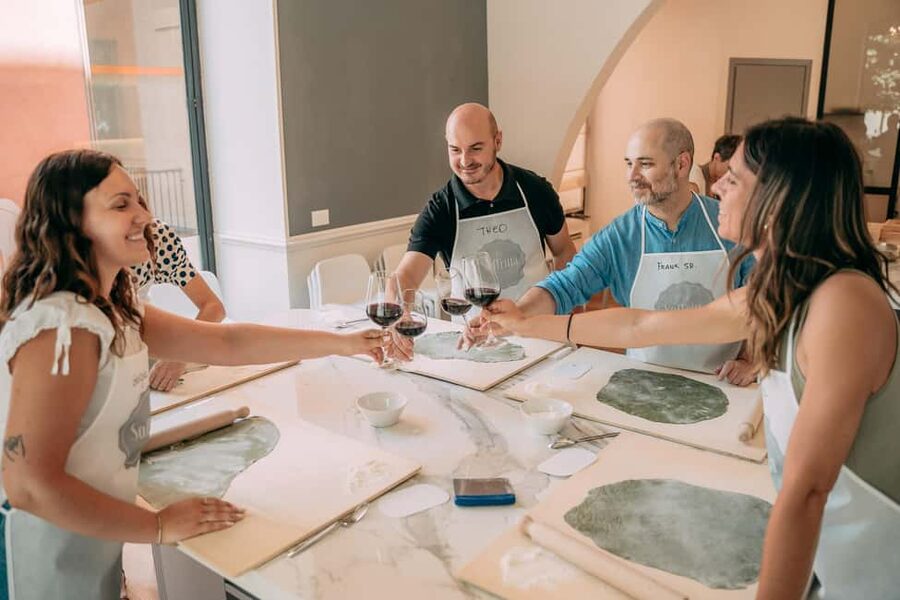
I would recommend it to you if you want a relaxed introduction to Bolognese food, especially if you like learning by doing. Couples, friends, families with older teenagers, and solo participants can all fit the format. The social meal and small-group setting make it easy to meet people without turning the activity into a noisy party.
It is also a good choice for confident home cooks. You may already know how to make lasagna, but the green pasta, béchamel balance, local ingredients, and Bolognese layering offer a useful comparison with your own method.
Children under 14 cannot join, and minors must be accompanied by an adult. The activity is not suitable for wheelchair users, and some parts may be difficult for people with reduced mobility or other disabilities. Contact the school if you are unsure about access before booking.
You should think twice if you want a class where every person makes every sauce entirely alone. The ragù is partly prepared in advance, and some demonstrations may involve watching rather than constant individual work. For most people, that keeps the session at a manageable length, but it is not the same as a full-day culinary course.
Should you book it?
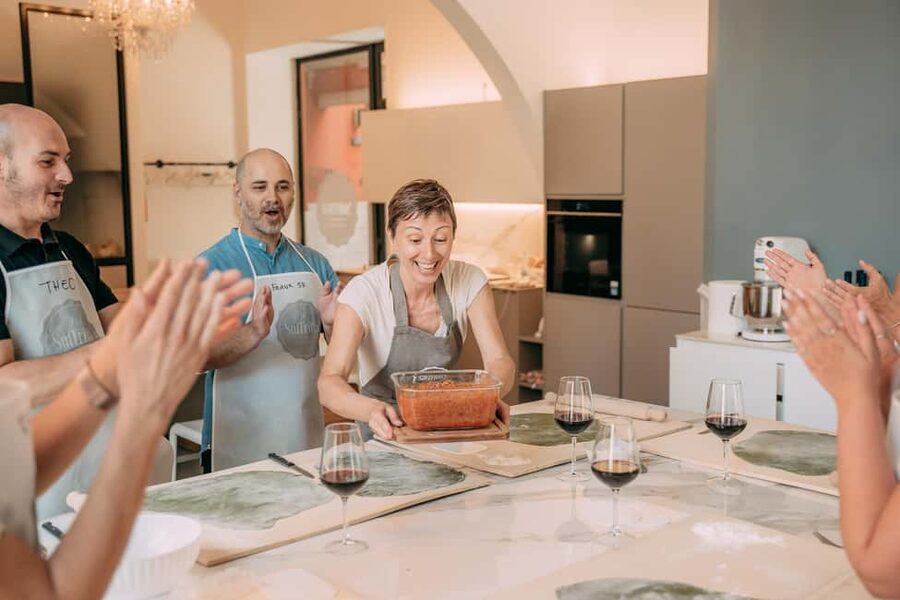
Book this class if you want to understand why Bologna is famous for pasta, eat a generous meal, and learn techniques you can repeat at home. The strongest reasons are the fresh green pasta, patient English instruction, attractive school, small-group feel, and the combination of savory cooking with gelato.
Skip it if you dislike group instruction, need fully accessible facilities, or expect to make ragù from beginning to end. For everyone else, $69 is a fair price for several hours of cooking, regional food and wine, dinner, dessert, and a practical cookbook to take home.
FAQ
Where does the cooking class meet?
Meet the chef inside La Soffritta cooking school, located in the Falcone and Borsellino Gallery in Bologna.
How early should I arrive?
Arrive 10 minutes before the scheduled start time.
How long does the experience last?
The class lasts between 1.5 and 3 hours. Starting times and the exact duration depend on availability.
Is the class taught in English?
Yes. The instructor language is English.
What food will I prepare?
You will make fresh spinach pasta, béchamel sauce, and traditional layered Bolognese lasagna. You will also make one or two homemade gelato flavors using seasonal ingredients.
Is the ragù made during the class?
The ragù is partially prepared in advance. You will use the slow-cooked sauce during the lasagna preparation, but the full ragù process is not completed from start to finish during the class.
What is included in the price?
The price includes the professional chef, ingredients, equipment, apron, lasagna and gelato instruction, an aperitivo with wine, cured meats and cheese, the meal, and a cookbook with recipes and tips.
Can children or wheelchair users join?
Children under 14 cannot participate, and minors must be accompanied by an adult. The activity is not suitable for wheelchair users, and some parts may not be easily accessible for people with reduced mobility or other disabilities.
Newest classes around Bologna
- Tortelloni and Tagliatelle Cooking Class in Bologna + Wine★ 3.0 · 2 reviews
- 3 hour Lasagna Bolognese cooking class★ 5.0 · 6 reviews
- Bologna Walking Tour & Traditional Cooking Class with Wine★ 5.0 · 3 reviews
- Pasta Making Class: Tagliatelle & Bolognese Sauce★ 5.0 · 15 reviews
- Home Cooking: Pasta Making with Natural Colors in a Tiny Group★ 5.0 · 6 reviews
- Traditional Bolognese Cooking Class in Bologna with Giovanna S★ 5.0 · 6 reviews
- Bolognese Cooking Class with Margherita in the Historic Center★ 5.0 · 26 reviews
- Private Market Tour and Cooking Class in Bologna with Giovanna C★ 5.0 · 20 reviews
Bologna Cooking Classes, compared.
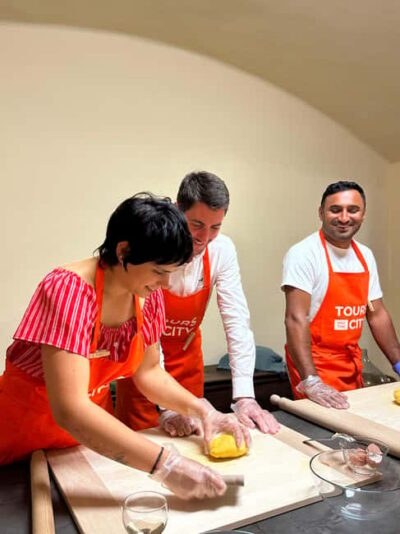
Pasta Cooking Class, Ragu, Spritz, Wine & Gelato
Read our review →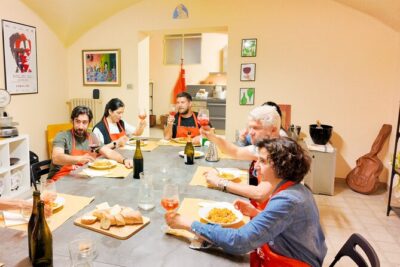
Bologna Local Pasta Cooking Class, Ragu, Spritz, Wine & Gelato
Read our review →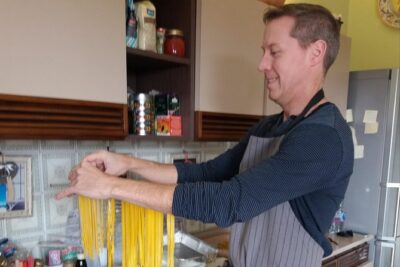
Pastamama, Home Cooking Classes at Grace’s Home
Read our review →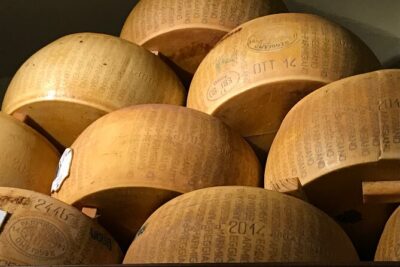
Pasta and Tiramisu Small Group Cooking Class with Wine
Read our review →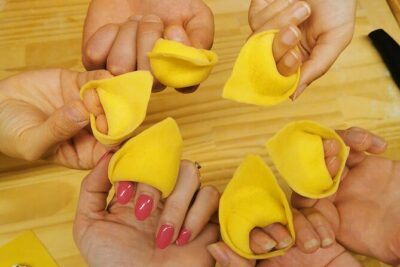
Bologna on the plate, Cooking Class with Alessia
Read our review →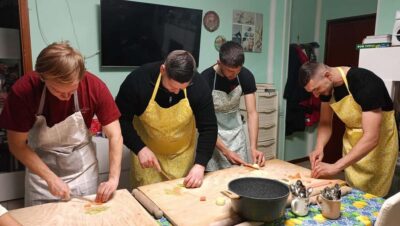
Pasta Tagliatelle al Ragu Cooking Class with Wine
Read our review →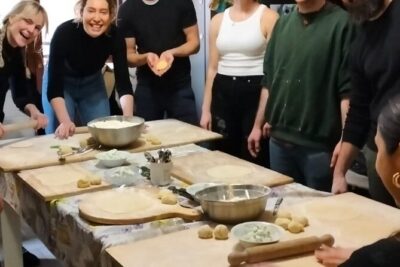
Authentic Bologna Home Cooking Class: Tagliatelle & Tortellini
Read our review →Browse the lists this tour appears in