Review · BOLOGNA COOKING CLASSES
Bologna Local Pasta Cooking Class, Ragu, Spritz, Wine & Gelato
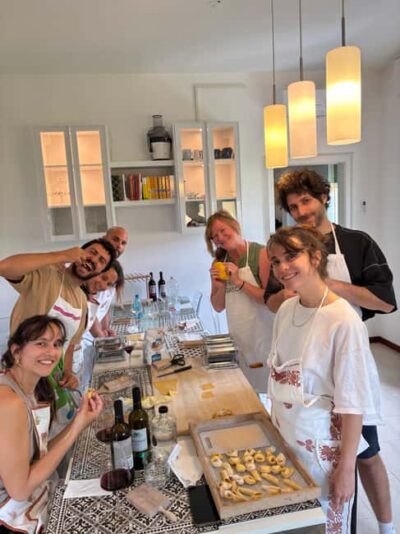
Bologna’s best souvenir may be a recipe you can actually repeat. In this three-hour pasta class, you roll egg-and-flour dough by hand, cut tagliatelle, and eat it with homemade ragù, local wine, and Parmigiano Reggiano. The lesson takes place in a friendly kitchen setting, with drinks and conversation woven through the cooking.
I like the small-group feel and the clear, useful lesson for beginners. I also like that the meal follows a genuine Bolognese pattern, from mortadella and Pignoletto to coffee, amaro, and gelato. The main limitation is that the ragù is prepared before class, so you learn how to make the pasta but not the complete sauce from start to finish.
Key points at a glance
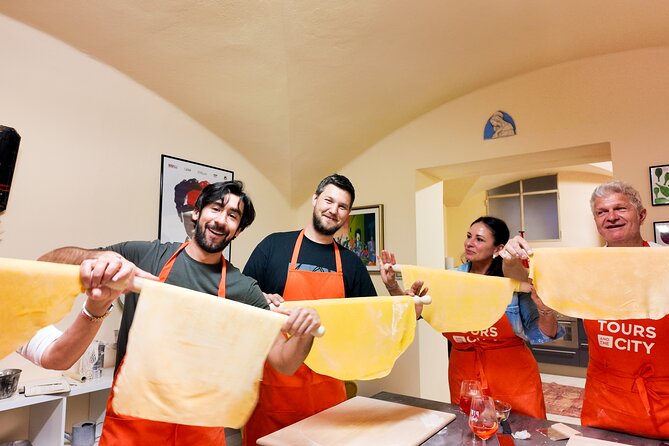
- Handmade tagliatelle: You mix, knead, roll, and cut fresh pasta without a machine.
- Local drinks: The class includes Pignoletto, San Giovese, a Casoni spritz, coffee, and amaro.
- Bolognese meal: Your pasta is served with homemade ragù, Parmigiano Reggiano aged 24 months, and local red wine.
- Friendly instruction: Teachers including Sonia, Stella, Stefania, Claudia, Valentina, and Roberta are praised for patient, encouraging guidance.
- Useful take-home skills: Recipes are available as PDF files by email, and you may have pasta left to cook later.
- Good value for food lovers: At $59.26, the price covers instruction, a full meal, several drinks, dessert, and a social evening.
Why this Bologna pasta class works so well
Bologna is famous for food that is simple on paper and demanding in practice. Fresh pasta needs only flour and eggs, but the texture depends on how you mix, knead, roll, and cut it. This class gives you time to learn those basic moves without turning the lesson into a formal cooking school.
You work with a local sfoglina, the traditional term for a woman who makes fresh pasta by hand. That matters because tagliatelle is not just pasta cut into thin strips. The dough must be rolled thin enough to cook well while still holding up under ragù.
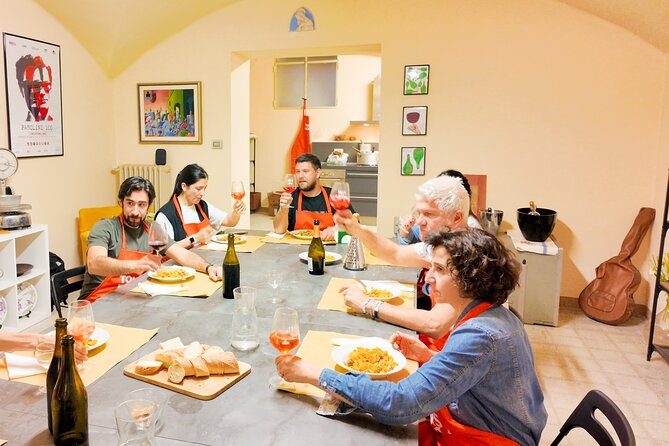
The atmosphere is designed to be social. You cook with other people, share drinks, and sit down together once the pasta is ready. That makes this a good choice if you want more than a quick demonstration. You get a meal, a lesson, and an easy way to meet people during your time in Bologna.
The experience is usually described as a small-group class, with space limited to 10 people in the main description and a maximum of 13 listed in the additional information. The exact size can vary, so do not assume you will have a private lesson. Still, even the stated maximum is modest enough for hands-on help.
More Cooking Classes with Wine Tasting in Bologna
- Bologna: Pasta Cooking Class, Ragu, Spritz, Wine & Gelato
★ 4.9 · 775 reviews - Bologna: Pasta and Tiramisu Cooking Class with Wine
★ 4.7 · 507 reviews - Bologna: Pasta and Tiramisu Small Group Cooking Class with Wine
★ 5.0 · 409 reviews
Meeting at Piazza Galileo Galilei
The class begins at Piazza Galileo Galilei, in Bologna. The meeting point is close to public transportation, and the activity ends back there after roughly three hours.
You receive confirmation when you book, which is useful because the class is often reserved well ahead of time, with bookings averaging about 27 days in advance. If your Bologna plans are fixed, reserve early rather than hoping to find an open place at the last minute.
Give yourself enough time to locate Piazza Galileo Galilei. Cooking classes are not ideal activities to join late, since the opening aperitivo and introductions help set up the evening. The meeting point is precise, but you should still check your confirmation for the latest arrival details.
Mortadella, crescenta, and a glass of Pignoletto
The class begins with an aperitif rather than a flour-covered work surface. You are welcomed with local Pignoletto, a sparkling wine from Emilia-Romagna, along with mortadella and crescenta.
This opening is more than a snack. It introduces the flavors of the region and gives everyone a chance to settle in before handling dough. Mortadella is Bologna’s signature sausage, and crescenta is a local bread specialty. Together, they offer a quick introduction to the food culture you will be cooking in.
The opening also helps if you arrive alone. Several people can work at the same table, and the relaxed food-and-drink start makes it easy to talk with the group. Couples, friends, families, and solo participants can all fit into the format.
The pace is informal, but the meal is generous. If you are planning to eat a large dinner afterward, you may not need to. The class includes a starter, a pasta course, wine, dessert, and several drinks.
Making a Casoni spritz with local character
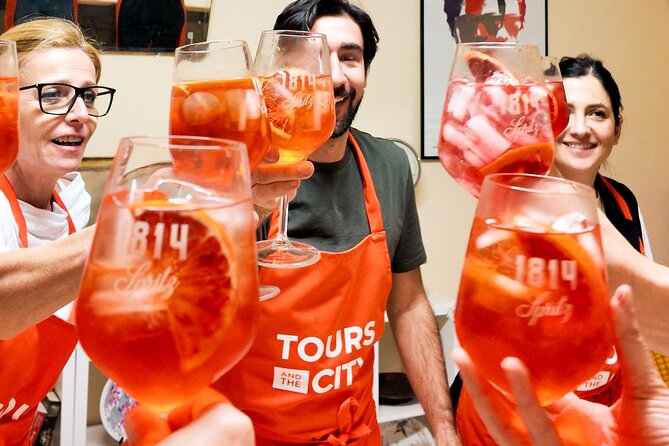
Next comes the Casoni spritz. This is not simply a standard international aperitif poured into a glass. Casoni is connected to Emilia-Romagna, and the drink uses local herbs and regional recipes.
You learn how to prepare the spritz while the pasta work gets underway. Some sessions have also included comparisons between Campari and Aperol spritzes, giving you a useful sense of how bitter and sweet aperitifs differ. The exact drink presentation can vary, but the focus is on learning the local style rather than ordering a familiar cocktail.
The spritz adds a light, playful part to the lesson. It also explains why this class feels different from a basic pasta workshop. You are not only learning one dish. You are getting a small lesson in how Bolognese people begin a meal, with food, conversation, and an aperitivo.
If you do not drink alcohol, check your needs with the provider before booking. The experience centers on wine, spritz, amaro, and coffee, and the supplied information does not list a full nonalcoholic alternative menu.
More Cooking Classes with Wine Tasting in Italy
- Bologna: Pasta Tagliatelle al Ragu Cooking Class with Wine
★ 4.7 · 225 reviews - Bologna: In-Home Italian Pasta Making Workshop with Wine
★ 4.7 · 131 reviews - Bologna: Pasta Cooking Class, Ragu & Wine with Local Host
★ 4.9 · 113 reviews - Bologna: Tagliatelle & Ragù Home Cooking Class with wine
★ 4.5 · 55 reviews
Rolling tagliatelle without a machine
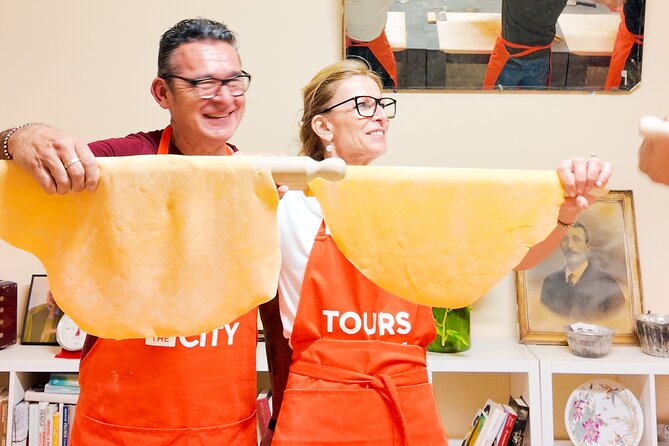
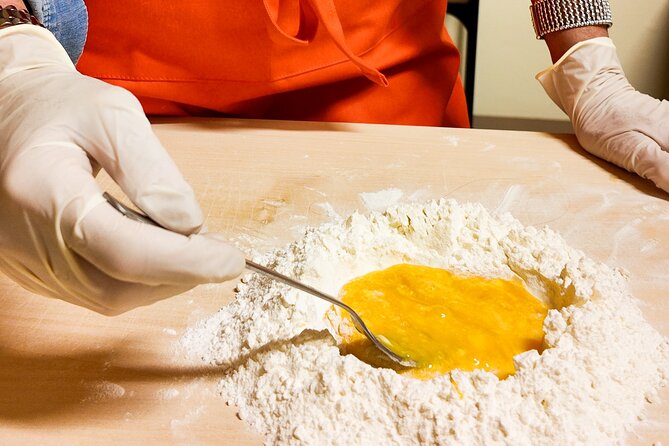
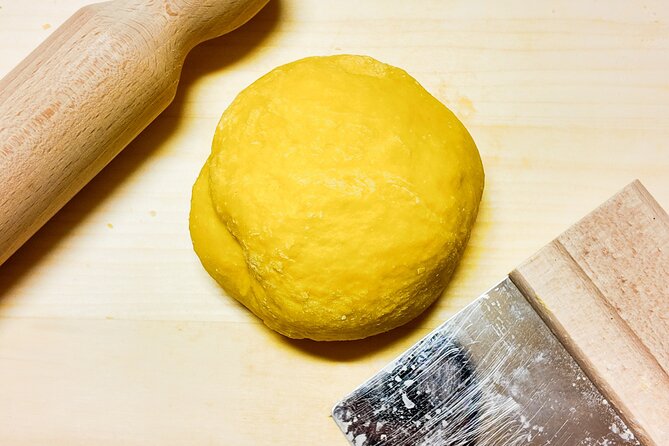
The main lesson begins with eggs and flour. There are no pasta machines here. You are the engine, using your hands and rolling pin to turn the dough into a thin sheet.
That is the most useful part of the class for anyone hoping to cook Italian food at home. A machine can make the process faster, but hand rolling teaches you what the dough should feel like. You learn to notice when it is too sticky, too dry, or not yet smooth enough.
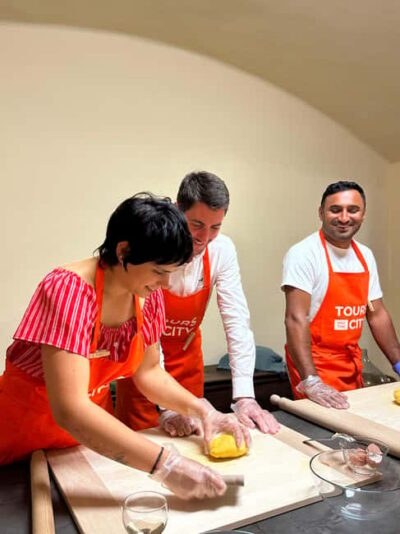
The instructors demonstrate the process and then let you try. Teachers named in different sessions include Sonia, Stella, Stefania, Claudia, Valentina, Roberta, Lucrezia, Beatrice, Anna, and others. The important point is the teaching style: people with no pasta-making background are guided step by step, while experienced home cooks can still pick up new tips.
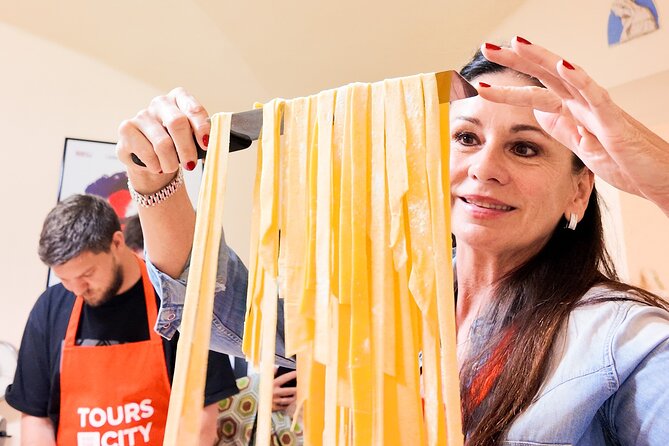
You then fold and cut the sheet into tagliatelle. The work is hands-on, so expect flour on your fingers and a little unevenness in your first strands. That is part of the charm. You are not watching a professional do everything while you stand back.
The class is suitable for beginners, and children are welcome. Still, the menu and pace are designed mainly for adults, so young children may not find every stage equally engaging.
Homemade ragù, with one important limitation
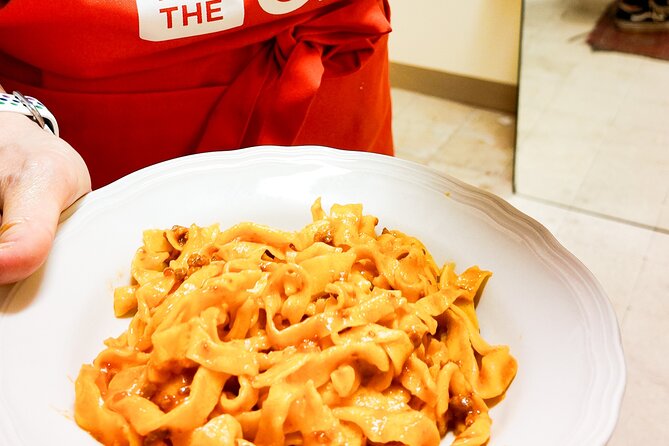
Your finished tagliatelle is served with house-made ragù and 24-month-aged Parmigiano Reggiano. The combination is classic Bologna: fresh egg pasta, a slow-cooked meat sauce, and hard cheese with enough age to bring a salty, nutty flavor.
Here is the key detail to understand before booking: the ragù preparation is not part of the class because there is not enough time. The sauce is fully homemade, but it is already simmering or prepared before you begin the pasta lesson.
That is not a serious flaw if your goal is to learn fresh pasta. In fact, having the sauce ready allows the class to spend its limited three hours on the part you can most easily practice at home. But if you specifically want to learn traditional Bolognese ragù from raw ingredients, this is not a complete sauce-making course.
The shared meal is one of the strongest parts of the format. Once the pasta is cut and dried, the group cooks it together, adds the ragù and cheese, and sits down to eat. Fresh pasta cooks quickly, so you get a direct taste of the difference between handmade pasta and dried supermarket noodles.
San Giovese, coffee, amaro, and mystery gelato
The main course comes with local San Giovese red wine. The spelling in the supplied menu is San Giovese, a regional red associated with Emilia-Romagna. The wine gives the meal a proper Italian table setting rather than making the pasta the only event.
Dessert follows the usual Italian rhythm. You finish with coffee, amaro, and a mystery gelato. The flavor is not specified in advance, which is part of the small surprise at the end.
One particularly memorable finish can include aged balsamic vinegar from Modena drizzled over the gelato. This detail is not guaranteed as part of every session, but it reflects the regional focus of the menu. Modena is close to Bologna, and traditional balsamic is one of the area’s best-known specialties.
The ending is generous for a class priced at $59.26 per person. You are not paying only for a short lesson and a small tasting. You receive a full meal with wine, aperitivo, dessert, and coffee. For many people, that makes the price compare well with an ordinary restaurant dinner, especially since instruction is included.
What the instructors add
The teachers are central to the quality of this experience. Names that come up across sessions include Stefania, Claudia, Sonia, Stella, Valentina, Roberta, Lucrezia, Beatrice, and others. You may not have the same pair on every date, but the teaching approach is consistent in the descriptions provided: informal, encouraging, and practical.
That matters for pasta. A rigid lesson can make beginners nervous, especially when dough does not behave perfectly. The instructors help when you hit a rough patch and keep the group moving without making anyone feel clumsy.
Some instructors also explain the cultural background of the food and drinks. That gives the class more substance than a recipe copied from a cookbook. You learn why tagliatelle belongs to Bologna, how the aperitivo fits into local dining, and how a few basic ingredients can become a complete meal.
The setting is meant to feel like a welcoming kitchen rather than a formal lecture room. You cook, drink, ask questions, and eat at the same table. If you want quiet, precise culinary instruction with no social element, this may feel too relaxed. If you like learning while talking and sharing a meal, the format should suit you.
Dietary needs and practical limits
Gluten-free pasta and vegetarian sauces can be accommodated, but you must give advance notice. The provider warns that the class may not work for severe allergies or strict dietary requirements.
This is important because the experience takes place around flour, eggs, dairy, meat, wine, and other common ingredients. Do not rely on an informal request made on arrival. Contact the provider before booking so you can find out if the class is safe and suitable.
The menu is built around tagliatelle with ragù, Parmigiano Reggiano, local wine, and traditional aperitivo foods. Substitutions may change the meal, even when they are possible. You should book this class for the cooking lesson and social setting first, not as a fully customizable food event.
The class is offered in English, and mobile tickets are accepted. Free cancellation is available until 24 hours before the start time. Cancellations or changes made less than 24 hours in advance are not refunded or accepted.
Who will get the most from this class?
I would choose this for first-time pasta makers who want clear instruction and an enjoyable meal afterward. You do not need prior cooking experience, and the basic ingredients make the method easy to understand.
It also works well for couples and friends. You can work side by side, share the meal, and leave with a story that is more personal than another restaurant reservation. Solo participants fit in nicely too, since the shared-table setup encourages conversation.
Experienced home cooks can enjoy it as well. One Italian participant even found new ideas despite already feeling comfortable in the kitchen. The class is not aimed at professional cooks, but it can sharpen your handling of dough and add regional context to familiar techniques.
Families can book, but keep the adult focus in mind. Children are welcome, yet the three-hour format includes drinks and a meal designed for grown-up participation.
Is $59.26 a good value?
For Bologna, $59.26 is a fair price for what is included. You get approximately three hours of instruction, a starter, a spritz lesson, fresh pasta, homemade ragù, Parmigiano Reggiano, red wine, coffee, amaro, and gelato.
The strongest value comes from the combination of class and meal. A cheaper demonstration might show you how pasta is made, but it may not give you time to make your own dough. A standard restaurant meal may cost a similar amount, but it will not send you home with a repeatable skill or recipes.
The value is less clear if your main goal is to learn ragù. Since the sauce is prepared before class, you will need another source for the full Bolognese sauce method. You should also factor in the social style. The price pays for a shared group event, not a private lesson.
Should you book the Bologna pasta class?
Book it if you want to make fresh tagliatelle, meet people over a relaxed meal, and sample several local drinks without spending an entire day in a cooking school. The class is especially useful for beginners, couples, solo participants, and anyone who wants a recipe they can use at home.
Skip it if you need a private class, a fully alcohol-free menu, or detailed instruction in making ragù from start to finish. Also contact the provider first if you have severe allergies or strict dietary rules.
For most food-focused visits to Bologna, this is a smart three-hour choice. You leave with pasta-making skills, recipes available by email, and a better feel for how the city eats: fresh pasta, local wine, a proper aperitivo, and dessert at the end.
FAQ
How long does the pasta class last?
The experience lasts approximately three hours.
Where does the activity begin?
It begins at Piazza Galileo Galilei, Bologna, Italy.
Where does the activity end?
The activity ends back at the meeting point.
What kind of pasta will I make?
You will make tagliatelle by hand using eggs and flour.
Is the ragù made during the class?
No. The ragù is 100 percent homemade, but its preparation is not included because of the limited class time.
What drinks are included?
The menu includes Pignoletto, a Casoni spritz, San Giovese red wine, coffee, and amaro.
What food is included?
The menu includes mortadella, crescenta, piadina, handmade tagliatelle with ragù, Parmigiano Reggiano aged 24 months, and mystery gelato.
Can the class accommodate vegetarian or gluten-free diets?
Gluten-free pasta and vegetarian sauces can be accommodated, but you must notify the provider in advance. The class may not suit people with severe allergies or strict dietary requirements.
What is the cancellation policy?
You can cancel up to 24 hours before the start time for a full refund. Changes or cancellations made less than 24 hours before the experience are not accepted or refunded.
More Tiramisu and Dessert Classes in Bologna
- Bologna: Original Lasagna & Gelato Class at a Cooking School
★ 4.9 · 59 reviews - Gelato Making Class in Bologna City center Cooking School
★ 4.7 · 43 reviews
More Pasta Making Classes in Bologna
- Authentic Bologna Home Cooking Class: Tagliatelle & Tortellini
★ 4.5 · 136 reviews - Bologna: Pasta & Tiramisu Cooking Class at a Local’s Home
★ 4.9 · 67 reviews - Bologna: Pasta & Tiramisu Cooking Class at a Local’s Home
★ 4.9 · 54 reviews - Learn and taste the real bolognese ragù and pasta making
★ 4.8 · 32 reviews
Newest classes around Bologna
- Tortelloni and Tagliatelle Cooking Class in Bologna + Wine★ 3.0 · 2 reviews
- 3 hour Lasagna Bolognese cooking class★ 5.0 · 6 reviews
- Bologna Walking Tour & Traditional Cooking Class with Wine★ 5.0 · 3 reviews
- Pasta Making Class: Tagliatelle & Bolognese Sauce★ 5.0 · 15 reviews
- Home Cooking: Pasta Making with Natural Colors in a Tiny Group★ 5.0 · 6 reviews
- Traditional Bolognese Cooking Class in Bologna with Giovanna S★ 5.0 · 6 reviews
- Cesarine: Market Tour & Cooking Class at Local’s Home in Bologna★ 5.0 · 19 reviews
- Bolognese Cooking Class with Margherita in the Historic Center★ 5.0 · 26 reviews
Bologna Cooking Classes, compared.
Pasta Cooking Class, Ragu, Spritz, Wine & Gelato
Read our review →
Pastamama, Home Cooking Classes at Grace’s Home
Read our review →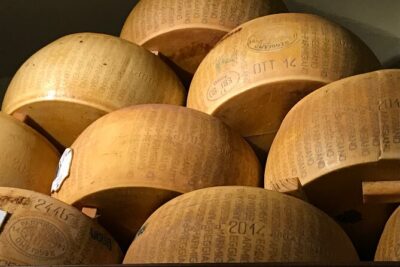
Pasta and Tiramisu Small Group Cooking Class with Wine
Read our review →
Bologna on the plate, Cooking Class with Alessia
Read our review →
Pasta Tagliatelle al Ragu Cooking Class with Wine
Read our review →
Authentic Bologna Home Cooking Class: Tagliatelle & Tortellini
Read our review →