
Review · SEOUL COOKING CLASSES
Seoul: Temple Vegan Cooking Class & Oriental Medicine Tour
Cooking vegan temple food with a Buddhist monk is the heart of this Seoul outing. You prepare seasonal plant-based dishes, eat them at the temple, then head into Cheongnyangni Fruit & Vegetable Market, where medicinal herbs, ginseng, fruit, and everyday Korean foods fill the route. An English guide and interpreter keep the experience accessible.
I like the hands-on cooking because it explains Buddhist food values through the meal itself, not just through a lecture. I also like the mix of old and new Seoul: an Oriental Medicine Museum and tea café sit alongside Starbucks Gyeongdong 1960, a former theater, and vintage LG electronics. The main consideration is pace. Four hours covers a lot, and the group schedule is fixed.
Key points at a glance
- Cook with a Buddhist monk: Prepare seasonal vegan temple dishes and eat them at the temple.
- Explore Cheongnyangni Market: Walk through Seoul’s largest medicinal herb and ginseng market, with tastings along the way.
- Learn Korean wellness traditions: Visit the Oriental Medicine Museum and enjoy one drink at an Oriental Medicine Café.
- See old Seoul in new form: Stop at Starbucks Gyeongdong 1960 and Gold Star Radio LG.
- Taste everyday Korean food: Sample nostalgic and modern street foods, fruits, healthy drinks, snacks, and simple market foods.
- Plan for a fixed schedule: Meet at Anguk Station Exit 1, bring Korean won for purchases, and confirm which optional elements are included in your booking.
A Buddhist monk puts temple food on your plate
The cooking class gives this outing its purpose. Rather than simply eating vegetarian food, you learn how Korean Buddhist temple cuisine treats cooking as part of a calm, disciplined way of life. A Buddhist monk guides the class, while an English interpreter helps explain the preparation and ideas behind the dishes.
The menu changes with seasonal ingredients. That is good news if you want food connected to the time of year, though it means you cannot book this expecting one exact dish. Temple food contains no meat, so vegetarians and vegans can participate without sorting through a menu or worrying about hidden meat ingredients.
The important detail is that the class ends with a meal at the temple. Since the food is prepared to be eaten there and the temple aims to avoid waste, you are expected to finish your portion on-site. If you want to carry some with you, bring your own reusable container.
I would treat this as a cultural food lesson, not a standard cooking school. You may learn less about restaurant-style technique and more about ingredients, restraint, and the role food plays in Buddhist practice. That makes it especially useful if you want context with your meal.
More Vegetarian Cooking Classes in Seoul:
- Oaxacan Vegetarian Cooking Class
★ 5.0 · 235 reviews - Marrakech: Moroccan Cooking Class for vegetarians and vegan
★ 4.9 · 156 reviews - Hoi An: Vegetarian Cooking Class w Local Family and transfer
★ 4.9 · 145 reviews
The temple food option needs a careful booking check
The cooking class is described as optional, and it may be canceled if fewer than three people sign up for it. Check your chosen option before paying, particularly if the class is the main reason you want to book.
One past participant found a reserved booking turned into a private experience with special attention. That can happen, but you should not count on a private tour. This is presented as a group activity, and you are asked to follow the timetable closely.
Saturday may be worth checking first. A past participant specifically noted that the English-language cooking class took place on Saturday. Since schedules can change, confirm the current day and language arrangements rather than assuming every departure includes the same class format.
Cheongnyangni Market shows Korea’s working food culture
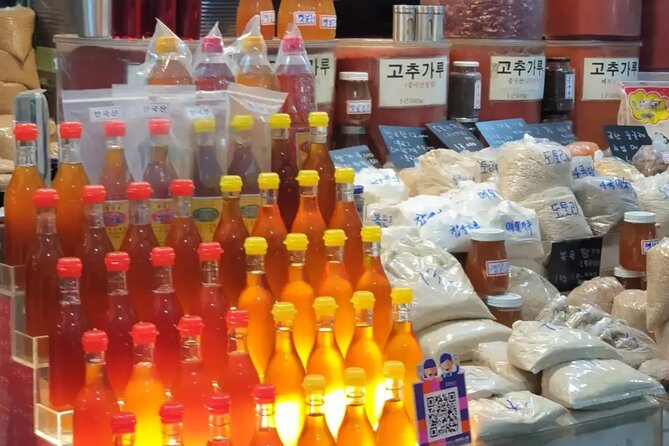
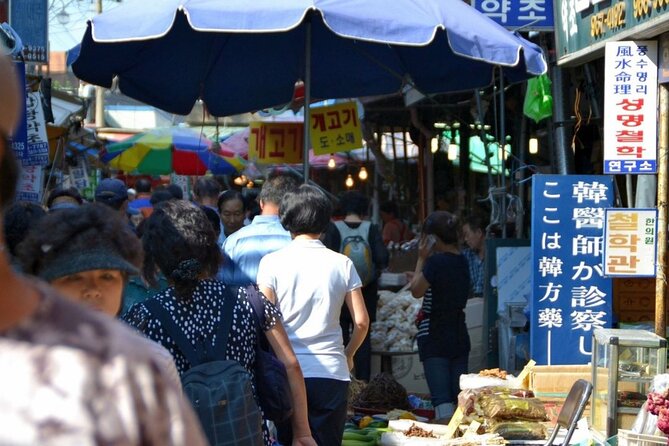
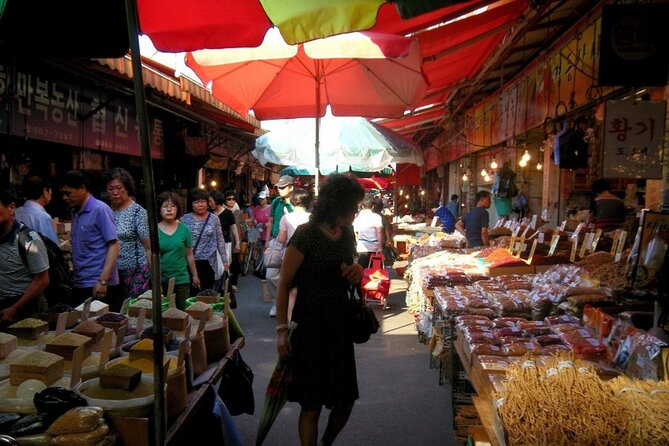
After the temple meal, the tour shifts from quiet cooking to a large traditional market district. Cheongnyangni Fruit & Vegetable Market is described as Korea’s largest and oldest traditional market, as well as the country’s main medicinal herb and ginseng market.
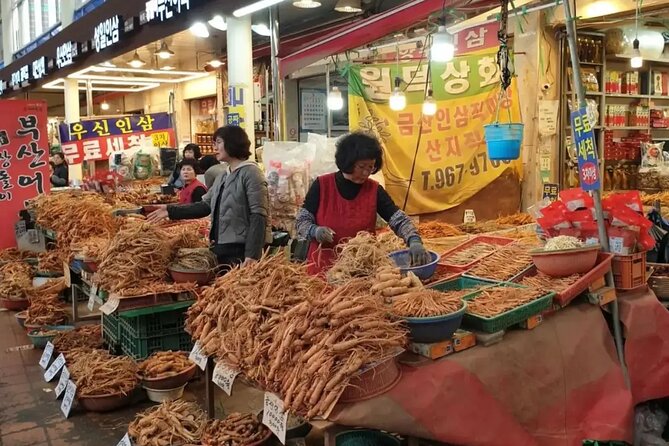
This is where the tour broadens beyond temple cuisine. You see produce, roots, dried ingredients, and herbs used in Korean wellness traditions. The smells and textures are part of the lesson. Instead of viewing Korean medicine only in a museum display, you encounter ingredients in a place where people buy and sell them.
The food offered here is for tasting, not for a full meal. Expect fruits, simple market foods, snacks, healthy beverages, and street-food samples. Bring Korean won if you want to buy extra items. The tour does not cover personal purchases, and a card may not be useful at every small stall.
The market is also the part of the day most likely to feel quick. A guide has to keep a group moving through a working market while fitting in tastings and explanations. If you want plenty of time for photos or shopping, this may feel limited. If you prefer a guided introduction that keeps you from wandering without context, the structure helps.
Korean Oriental medicine, explained through food and body types
The Oriental Medicine portion adds another layer to the outing. You visit the Oriental Medicine Museum and learn how traditional Korean medicine connects food recommendations with different body types and physical conditions.
One especially useful feature is the attempt to explain why certain foods are recommended for particular body compositions. That gives you a framework for understanding Korean wellness ideas, rather than reducing the subject to a collection of unusual herbs.
The tour also includes one drink at an Oriental Medicine Café. The drink is part of the admission and offers a calm pause after the market walk. You should think of it as a tasting and cultural stop, not a personal medical consultation. The supplied information does not promise diagnosis or treatment, so book this for cultural understanding rather than health advice.
A past participant found the wellness element particularly memorable and described hand, foot, and back massage as part of the experience. Another wanted more explanation of common remedies and how old practices fit modern Korean life. Because the exact wellness activities are not fully specified, ask what is planned on your departure if massage or devices are important to you.
More Food Outings in Seoul:
- Small Group Cooking Class & Market Food Tour in Florence
★ 5.0 · 1,574 reviews - Athens: Food Market Visit and Cooking Class with Wine
★ 4.9 · 1,087 reviews - Undiscovered Charleston: Half Day Food, Wine & History Tour with Cooking Class
★ 5.0 · 948 reviews - Vietnamese Food Cooking Class in Hanoi with Market Experience
★ 5.0 · 778 reviews
From an old theater to vintage Korean electronics
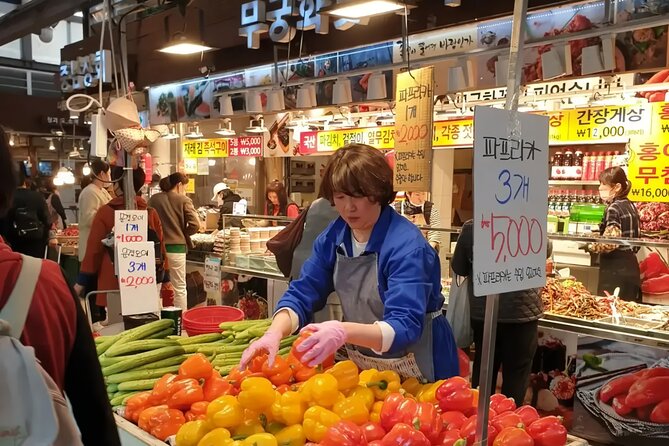
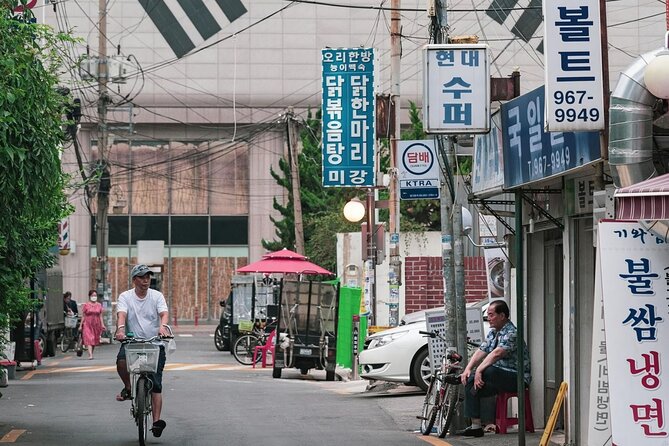
The route also looks at how Seoul reuses its past. Starbucks Gyeongdong 1960 occupies a former theater, turning an older building into a current café. The stop is not just about coffee. It gives you a quick picture of how familiar Korean spaces can be given a new role without erasing their earlier identity.
Gold Star Radio LG adds another small piece of modern Korean history. The display focuses on vintage Korean electronics, connecting household technology with the country’s rapid modernization. You do not need to be an electronics enthusiast to appreciate the stop. It helps explain how recent Seoul can feel, while the market and temple point to much older habits.
These are short cultural stops within a food-focused outing. They are not full museum visits, and you should not expect long, detailed tours of each venue. Their value is in the contrast: temple cooking, medicinal roots, a converted theater café, and old electronics all appear in one compact route.
Street food keeps the day grounded
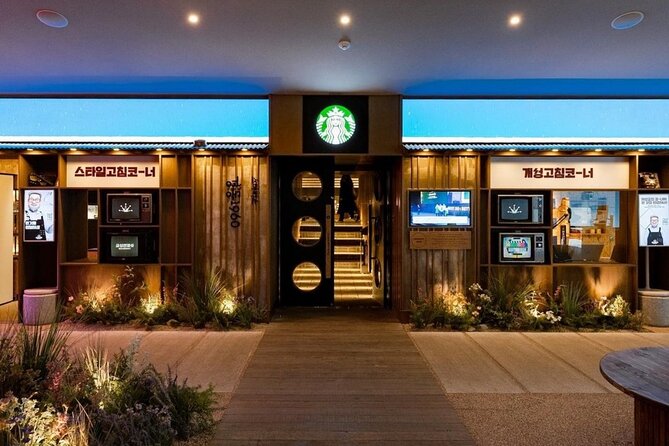
The street-food tastings are a useful counterpoint to temple cuisine. Temple food is carefully tied to Buddhist practice, while market snacks show what people eat in ordinary city life. The selection can include nostalgic Korean foods and newer everyday favorites.
The exact dishes are not fixed in the information provided, so arrive ready for variety rather than a promised menu. The same seasonal approach that shapes the temple class also affects market produce and tastings.
Because the samples are intended as tastings, do not arrive expecting a large lunch. The cooking class meal is the more substantial food stop, while the market portion lets you try several flavors in smaller amounts. If you need a particular diet beyond vegetarian or vegan eating, ask ahead. The tour confirms that vegans can take part, but it does not provide a full allergen policy.
What the $76 price means
At $76 per person, this is not simply a market walk. The price can represent good value if you want several connected experiences: an English-speaking licensed guide, the Oriental Medicine Museum admission, a drink at the medicine café, food samples, the temple cooking option, and perhaps transportation depending on the package you select.
The optional wording matters. Temple Food Cooking Experience and transportation are listed as optional, so compare the exact booking choice rather than assuming every version includes both. The meeting point is easy to understand, but pickup and drop-off are not included. You must reach Anguk Station Exit 1 and return there at the end.
I like the value best for visitors who would otherwise pay separately for a cooking lesson, a market guide, museum entry, and food tastings. It is less attractive if you only want a relaxed meal or a long shopping session. The four-hour limit makes the tour efficient, but it also means each stop receives a measured amount of time.
The overall rating is 4.6 from 32 ratings, and the strongest praise centers on the cooking lesson, guide care, and explanations of Korean food and medicine. Guides named Gina, Jade, and BJ have been singled out for clear help, lively conversation, and professional service on past departures. Guide assignments can change, but English support is part of the experience.
The pace, meeting point, and practical details
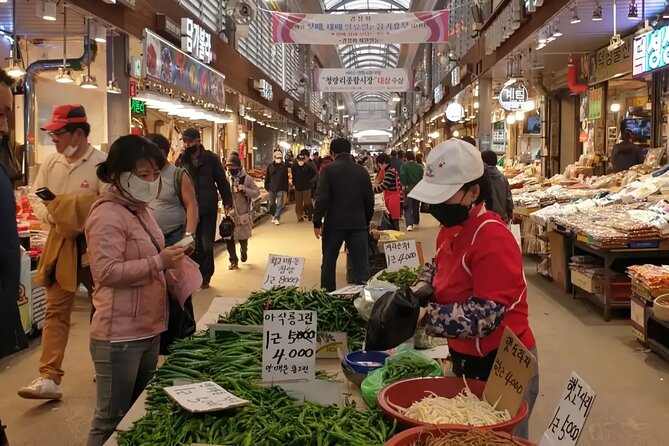
You meet at Anguk Station Exit 1, where the guide carries a Tripper sign. The activity finishes back at the same meeting point. Since there is no hotel pickup or drop-off, allow enough time to reach Anguk Station before the start.
This is a scheduled group outing. You need to stay with the timetable, especially during the market section and when moving between cultural stops. It is not the right choice if you want to linger at every stall or decide your route as you go.
Wear shoes suitable for walking and keep your shopping money separate from your tour budget. The information does not give a precise walking distance, but the itinerary includes a market, food stops, and several cultural locations within four hours. A reusable container is a smart addition if you hope to take temple food away.
The activity is offered in English with a live guide. An interpreter is present for the cooking class, which is important because the monk’s explanations are central to the value of that portion.
Free cancellation is available up to 24 hours before the activity for a full refund, and you can reserve while paying later. Those terms help if your Seoul plans are still shifting, but you should still check the current starting time and selected options before confirming.
Who will get the most from this Seoul outing
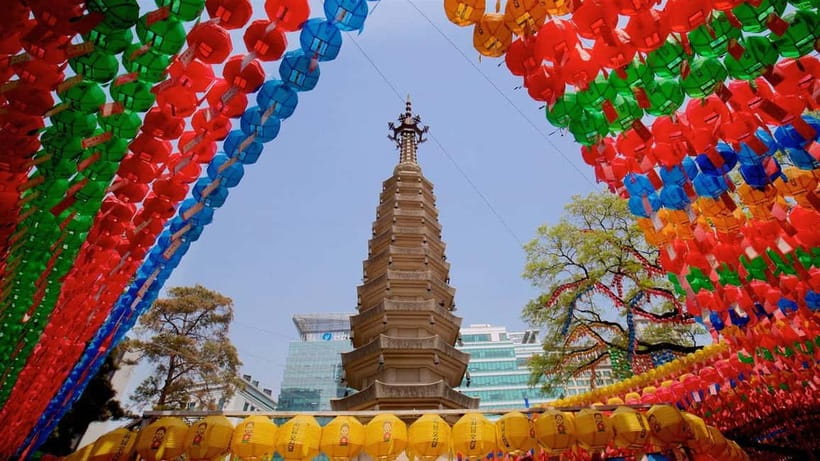
I would recommend this experience to you if you want food to open a door into Korean culture. It suits vegetarians, vegans, wellness-minded visitors, and anyone who prefers a guided introduction to markets instead of simply passing through them.
It is also a good fit for first-time visitors who want several themes in one morning or afternoon. You get temple practice, Korean market life, medicinal traditions, street food, modern cafés, and old electronics without having to arrange each stop yourself.
Families and mixed-interest groups may appreciate the variety. One person can focus on cooking, another on markets, and another on Korean modernization. The food tasting also gives the group regular breaks from walking.
I would hesitate if your priority is a long, quiet cooking class with plenty of free practice time. The class sits inside a four-hour itinerary, and the group schedule continues after the meal. I would also hesitate if you need a fully specified menu, guaranteed massage, or extensive medical consultation. Those details are not promised.
Should you book the temple food and medicine tour?
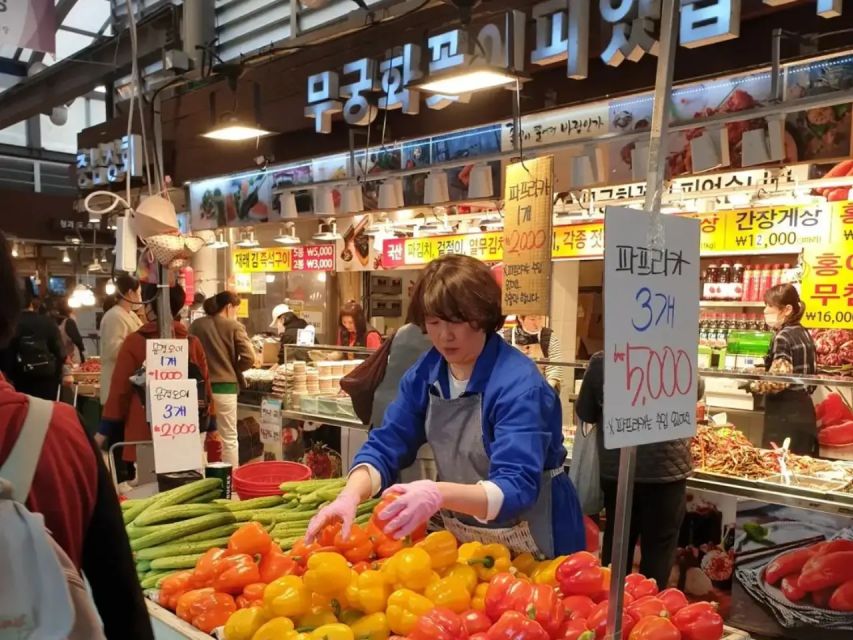
Book it if you want an active, food-led look at Seoul that goes beyond palace photos and restaurant meals. The Buddhist monk, seasonal vegan cooking, medicinal herb market, museum, tea, street foods, and modern cultural stops create a broad but coherent picture of Korean life.
Before booking, confirm three things: that the temple cooking option is running, that the English class is scheduled for your date, and what your selected price includes for transportation and the optional class. If those details line up, $76 is a fair price for a guided half-day with several admissions and tastings.
Skip it if you prefer to explore at your own speed or want a single subject in depth. For everyone else, this is a practical way to connect Korean food, wellness, religion, and recent history in one compact outing.
FAQ
Where does the tour begin and end?
You meet at Anguk Station Exit 1, where the guide will hold a Tripper sign. The activity ends back at the same meeting point.
How long does the experience last?
The tour lasts four hours. Starting times vary, so check availability for your chosen date.
Is the tour offered in English?
Yes. A professional licensed English guide leads the activity, and an English interpreter supports the temple cooking class.
Is the food suitable for vegans?
Yes. The temple food contains no meat, and vegans can take the tour. The temple menu changes with seasonal ingredients.
Can I take the temple food away?
You are expected to finish the prepared food at the temple because the temple aims to avoid waste. If you want to take food with you, bring your own reusable container.
Is the cooking class always included?
No. The Temple Food Cooking Experience is listed as optional. It may be canceled if the minimum of three participants is not reached, so confirm your selected option before booking.
What should I bring if I want to buy things at the market?
Bring cash in Korean won. The food supplied during the tour is for tasting, while extra purchases are your responsibility.
Newest classes around Seoul
- Seoul: Korean Home Visit, Cooking & Cultural Experience★ 5.0 · 2 reviews
- Seoul: Korean Kimchi Cooking Class in the Heart of the City★ 5.0 · 3 reviews
- Seoul: Premium Korean Feast Cooking Class★ 5.0 · 3 reviews
- (Seoul) Korean Cooking Class with a Professional Chef★ 5.0 · 14 reviews
- Seoul: Kimchi Dishes Cooking Class with Wine Pairing★ 4.7 · 38 reviews
- Seoul: Korean Cooking Class with Local Grocery Shopping★ 5.0 · 13 reviews
- Seoul: Authentic Korean Cooking Class and Market Tour★ 5.0 · 6 reviews
- Seoul: Cooking Class and Tour with Michelin-Trained Chef★ 5.0 · 11 reviews
Seoul Cooking Classes, compared.
Local Home Korean Cooking Class & Market Adventure in Seoul
Read our review →
Master Korean traditional cooking with a Kimchi chef
Read our review →
Korean Cooking Class at a Local Home and Market Tour
Read our review →
Taste of Korea, Authentic Home Style Cooking Class
Read our review →
Royal Seoul Cooking Class in a 100-Year-Old Hanok
Read our review →
Browse the lists this tour appears in