
Review · SOUTH KOREA COOKING CLASSES
Busan: Small-Group Traditional Korean Food Cooking Class
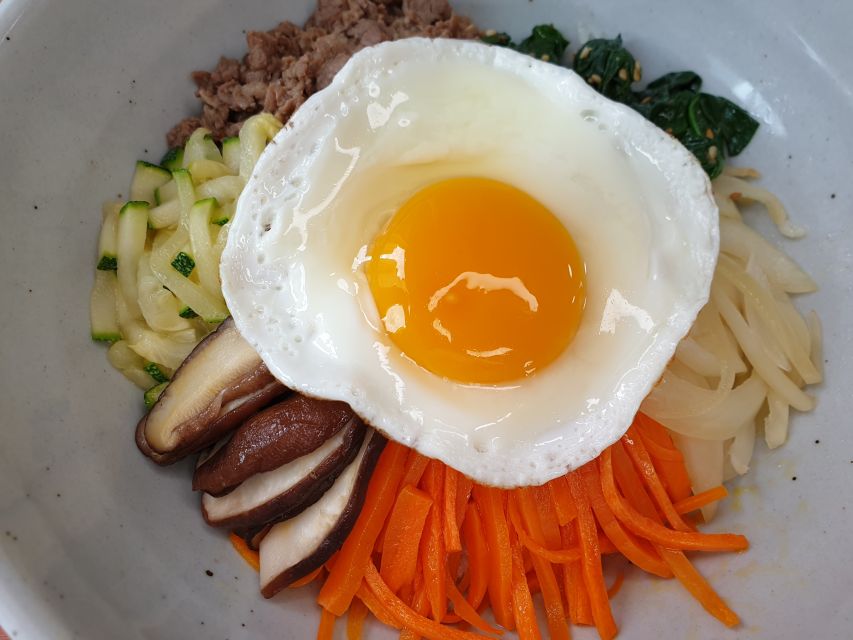
Bibimbap is the star here, but this is more than a quick recipe lesson. Near Haeundae Beach, you cook Korean food with Min or Kim, taste the sauces as you go, and sit down to your own meal on a traditional bapsang table. It gives you a useful look at how Korean home cooking is put together.
I like the small group of up to 10 and the friendly, clear teaching style. I also like the full finish: tea, Korean dessert, recipes to take home, a certificate, and a small surprise gift. The main consideration is the $98 price. It is fair for a three-hour class with food and instruction, but it is not a bargain activity if you only want to sample Korean cuisine.
Key points to know
- Cook several Korean dishes: Depending on the class menu, you may prepare bibimbap, miyeok guk seaweed and beef soup, and buchu jeon vegetable pancake.
- Learn by tasting: The chef introduces Korean sauces and ingredients before you cook, making the flavors easier to understand.
- Eat at a bapsang table: Your finished food is served on a traditional personal dining table, not simply packed away after class.
- English instruction is available: Min and Kim teach in English and Korean, with clear step-by-step guidance.
- Haeundae location: The class is in Marine City, about 10 minutes on foot from Dongbaek Subway Station.
- Plan dietary requests early: Vegan ingredients can be arranged, but you need to ask when booking or at least 24 hours ahead.
Korean cooking near Haeundae Beach
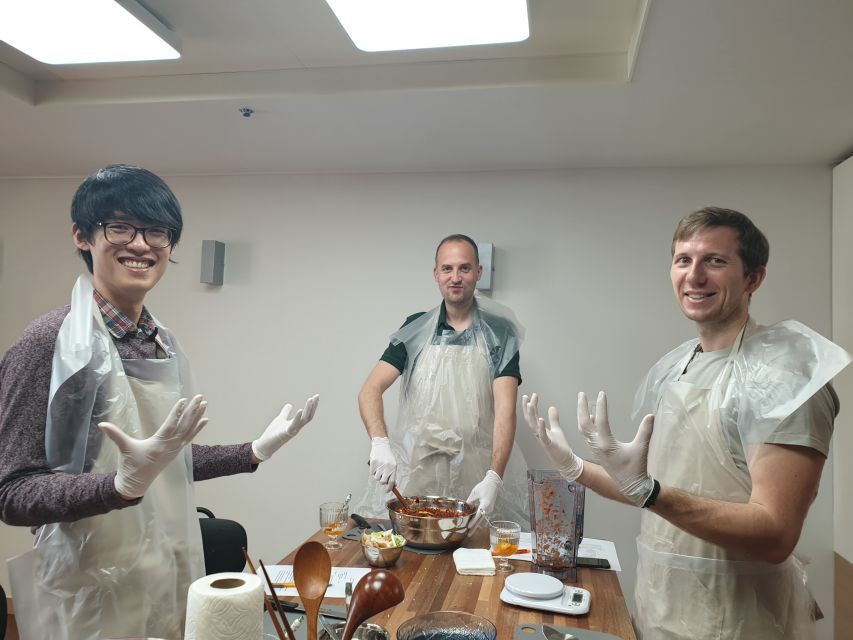
This three-hour cooking class takes place at Korean Cooking Class BAPSANG in Busan, in the Marine City area of Haeundae. The setting is useful for a day that already includes Haeundae Beach, Dongbaek Park, or the nearby waterfront, since you can combine food culture with one of Busan’s best-known seaside districts.
You meet at Flat 2406, Hoabin Busan Haeundae, at 37 Marine City 3-ro. The nearest subway stop is Dongbaek Station on Green Line 2, Exit 1, followed by a walk of about 10 minutes. You can also use buses to Daewoo Marina Apartment, about a seven-minute walk away, or Dongbaek Stop, about 15 minutes away.
Give yourself enough time to find the building and apartment. This is not a large street-front attraction with an obvious ticket booth. You will want to arrive calm, especially if you are carrying groceries, luggage, or a child’s travel gear.
The class is limited to 10 people. That number matters. You get the social feel of a shared activity, but the instructor can still demonstrate, correct small mistakes, and answer questions without shouting across a crowded room.
More Korean Classes in South Korea:
- Local Home Korean Cooking Class & Market Adventure in Seoul
★ 5.0 · 1,024 reviews - Master Korean traditional cooking with a Kimchi chef
★ 5.0 · 385 reviews - Seoul: Korean Cooking Class at a Local Home and Market Tour
★ 5.0 · 348 reviews
A welcome drink and a taste of Korean sauces
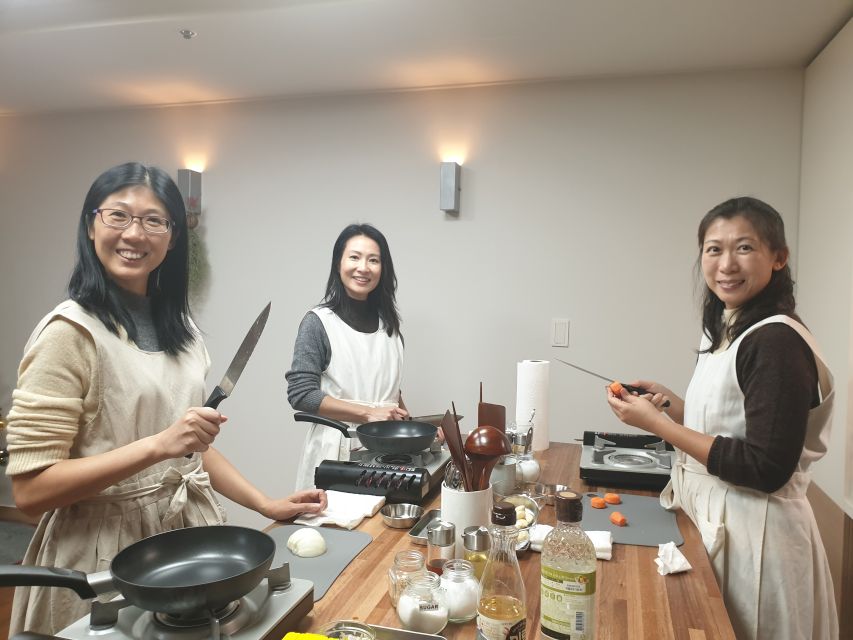
The session begins with a welcome drink, then the instructor introduces the ingredients. This early tasting is one of the most useful parts because Korean food depends on balance. Instead of treating every sauce as a mystery condiment, you get to notice how salty, sweet, spicy, fermented, or savory flavors work together.
The chef explains what you are using before you start cooking. That helps you understand the purpose of each ingredient rather than simply copying a list of steps. If you have eaten bibimbap in a restaurant, this is your chance to see how the separate pieces become one dish.
Min is the instructor most often associated with the class, and she teaches in English and Korean. The teaching style is described as warm, well organized, and easy to follow. Kim also leads sessions and is noted for explaining Korean food in a clear, approachable way.
The class is a good fit if you want cultural context along with the cooking. Min has also offered suggestions for things to do around Busan, which can be handy if this is early in your stay and you are still shaping your sightseeing plans.
Making bibimbap from separate ingredients
Bibimbap means mixed rice, but the charm comes from the separate parts. Rice, vegetables, meat, and sauce are prepared so you can combine them at the end. It is a simple idea with plenty of room to learn about texture, seasoning, and presentation.
You follow instructions one step at a time. The pace is designed for ordinary home cooks, not trained kitchen workers, so you do not need advanced knife skills or a special interest in Korean cooking before arriving.
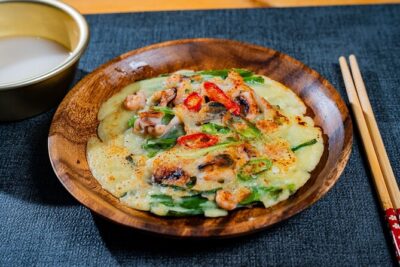
The exact menu can vary, but the class has included bibimbap, miyeok guk, and buchu jeon. Miyeok guk is a seaweed and beef soup often associated with Korean home cooking. Buchu jeon is a savory vegetable pancake. Together, these dishes give you more than one format: a rice bowl, a soup, and a pan-cooked side.
That variety adds value to the class. You are not spending three hours making one dish and then leaving. You get a small meal that shows how several Korean foods work together.
The class also uses fresh local seasonal ingredients. That does not mean the menu will be identical on every date, so you should think of the advertised dishes as a guide rather than a fixed restaurant menu. If one particular dish matters to you, confirm the current menu before booking.
Learning Korean food culture without a lecture
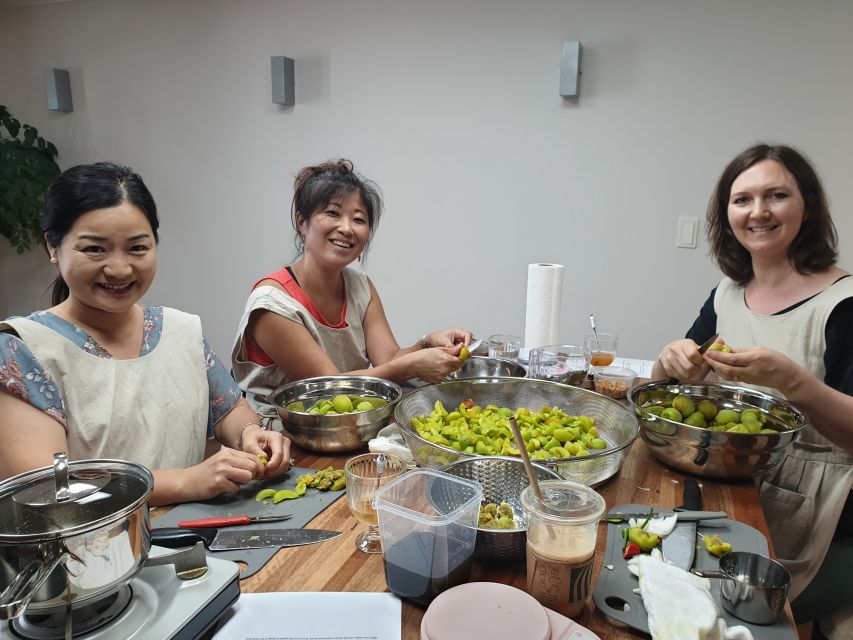
The instructor explains the background of the food as you cook. This is where the class becomes more useful than a recipe video. You can ask about ingredients in the moment, taste sauces before they are mixed into a dish, and see how the finished meal is arranged.
I like this practical approach. Food culture makes more sense when you can eat the result a few minutes after hearing about it. You remember the flavor, the cooking method, and the reason for the ingredient more easily.
The class also offers a window into the home meal rather than only the restaurant version of Korean cuisine. The bapsang table is part of that idea. Your finished food is placed on a small personal dining table, giving the meal a more traditional presentation than eating directly at the work station.
Do not expect a formal museum-style lesson on Korean history. The focus is cooking, tasting, and eating, with cultural background woven into the process. That balance suits most people who want to learn without sitting through a long talk.
More Food and Drink Outings in South Korea:
- Busan Local Food Cooking Class with Market Tour
★ 5.0 · 53 reviews - Vegan Friendly Korean Food Cooking Class
★ 5.0 · 2 reviews - Small Group Cooking Class & Market Food Tour in Florence
★ 5.0 · 1,574 reviews - Pasta Making & Wine Tasting with Dinner in Frascati from Rome
★ 5.0 · 1,326 reviews
Sitting down to your own bapsang meal
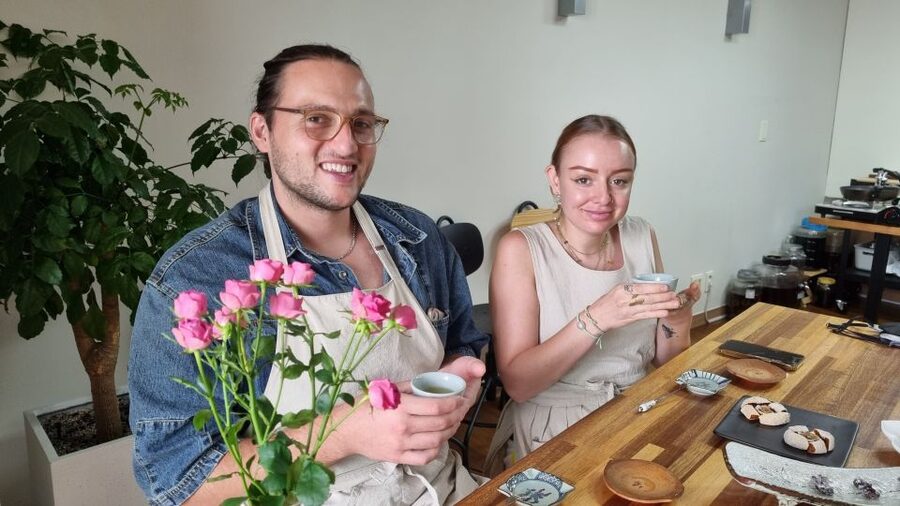
After the cooking, you arrange the food on your bapsang table and eat what you prepared. This is a satisfying finish because the meal is not an afterthought. You can see the work of the class in front of you, then taste how the separate elements come together.
The meal includes dessert and water. Tea and a Korean dessert follow the main food, giving the session a gentle final course. The tea tasting is a good way to slow down after cooking, while the dessert gives you another small introduction to Korean flavors.
The food is the strongest reason to choose this activity. The class is not just about watching someone else cook or sampling a pre-prepared plate. You take part in the preparation, then eat the result.
Still, keep your expectations realistic. This is a hands-on class, not a full restaurant meal with a long menu. You are paying for instruction, ingredients, a prepared lunch or meal, and the cultural setting. If you are mainly hungry and want the cheapest possible food in Haeundae, a local restaurant will cost less.
What the $98 price includes
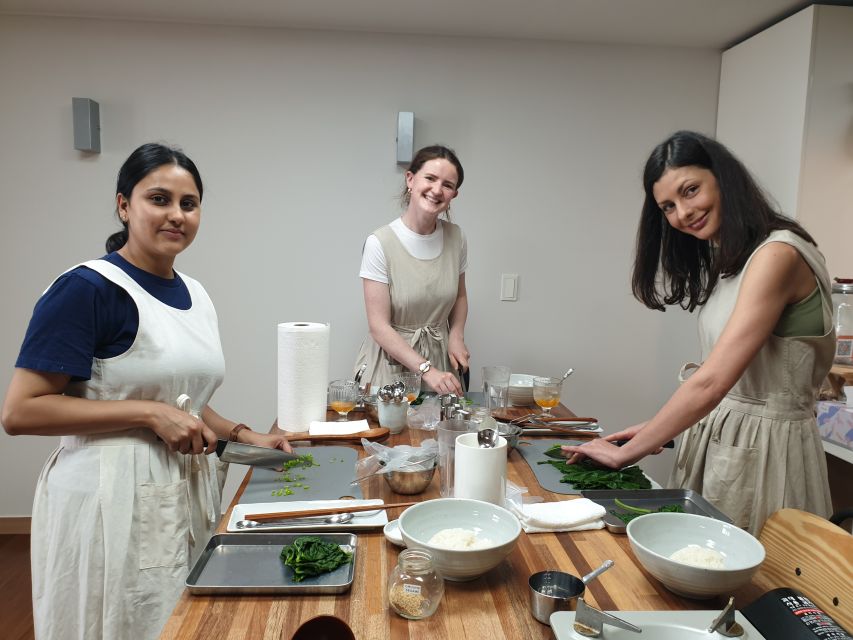
At $98 per person, this is a mid-range activity rather than a casual drop-in lesson. The price includes the ingredients, utensils, apron, meal, dessert, water, and recipes. You also receive a certificate and a surprise gift.
The strongest value comes from the amount of time and personal instruction. Three hours is long enough to cover several dishes without turning the session into a rushed demonstration. A group of up to 10 keeps the lesson personal enough for questions.
The recipes are especially useful if you want the class to continue after your trip. You will not simply remember that you once ate bibimbap in Busan. You can try to recreate it at home, using the class as a starting point.
The price is less attractive for someone who dislikes cooking or has a very short Busan schedule. You need to give up half a day, including the journey to Marine City. If your main goal is to see major sights, compare the class with the time you would spend elsewhere.
For families, the value can improve. A 12-year-old has taken the class successfully, and the step-by-step format can work well for older children who enjoy practical activities. Very young children may find a three-hour cooking session demanding, but no minimum age is provided, so ask before booking if this is important for your group.
Dietary needs and the small-group format
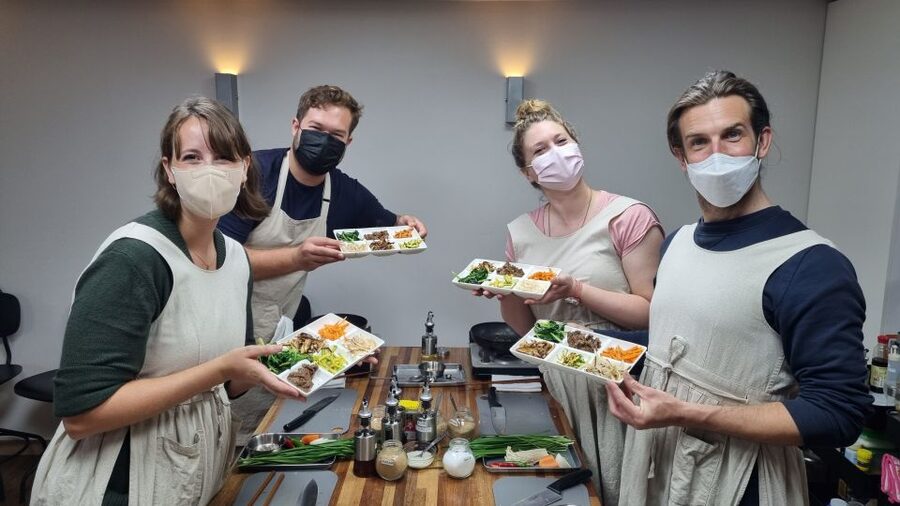
The class can prepare a vegan meal if you request it when booking or contact the provider at least 24 hours ahead. Do not wait until you arrive. The ingredients and menu need to be arranged in advance.
No other dietary details are provided, so people with allergies should contact the provider before reserving. It is sensible to explain the ingredient clearly and ask how the menu can be adapted.
The small group makes the activity social without requiring you to arrive with your own party. You may cook beside people from different countries, share the meal, and compare how the dishes turned out. The class remains limited to 10 participants, although some information also describes it as limited to nine, so expect a small group rather than a private lesson.
English and Korean are the available languages. Min is described as easy to understand in English, and the class is intended for international participants. If you need detailed help with a medical dietary restriction, written confirmation is still the safest plan.
Getting there from Busan
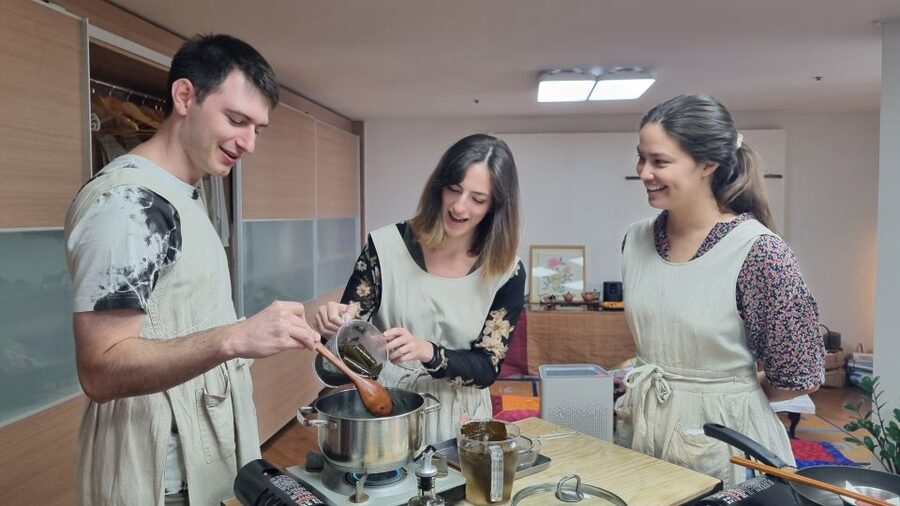
Dongbaek Station is the simplest public transport option. Take Line 2, the green line, leave through Exit 1, and walk for about 10 minutes to the building.
By bus, Daewoo Marina Apartment is about seven minutes away on foot. The listed buses include 139, 307, and 1003 from Busan Train Station. Dongbaek Stop is about 15 minutes away and is served by routes including 31, 38, 39, 40, 63, 100, 100-1, 115-1, 141, 181, and 200.
Pickup and drop-off are not included. That is not a problem if you are comfortable with Busan’s subway and buses, but it adds planning for anyone staying far from Haeundae.
The location works best as part of a Haeundae day. You can schedule the class around the beach and nearby attractions rather than crossing Busan only for the cooking lesson. Check the class start time before making other fixed plans, since the activity lasts three hours.
The venue is wheelchair accessible, which is an important practical plus. You should still confirm the exact route from your accommodation if you need a fully step-free journey, since the supplied access information covers the activity rather than every part of the trip.
Who should book this Busan cooking class
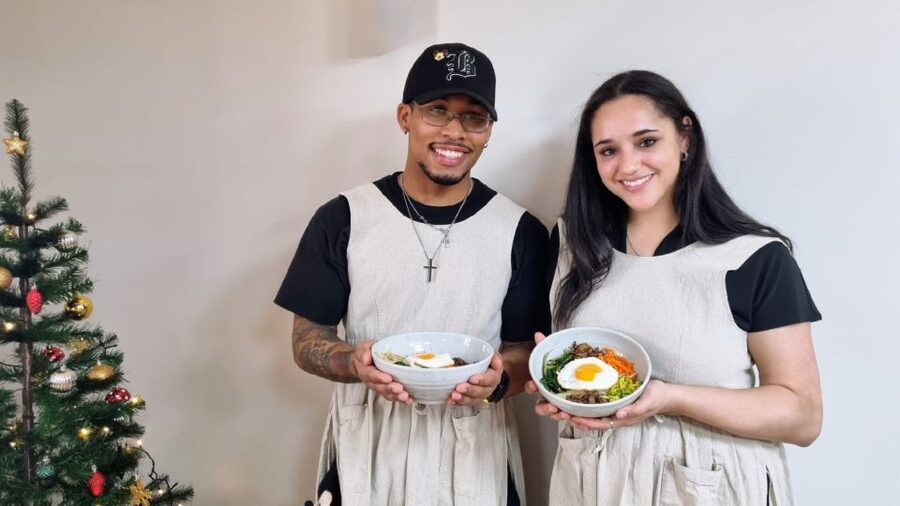
I would choose this class if you want to do something active with Korean food rather than simply order it. It suits solo visitors, couples, families with older children, and anyone who likes returning from a trip with a recipe they can use.
It is also a good choice early in a Busan stay. The instructor can help you understand local foods and may offer suggestions for other things to do in the city. The Haeundae location makes it easy to pair with seaside sightseeing.
You may want a different activity if you are looking for a seafood market visit, a shopping tour, or a class centered on advanced culinary technique. Those are not part of the stated program. The focus here is accessible home-style Korean food, not professional training.
The format is friendly and guided, so you do not need to be confident in the kitchen. At the same time, people who already cook will still get useful ideas about sauces, seasoning, and Korean meal presentation.
Final call: a useful, tasty half-day in Busan
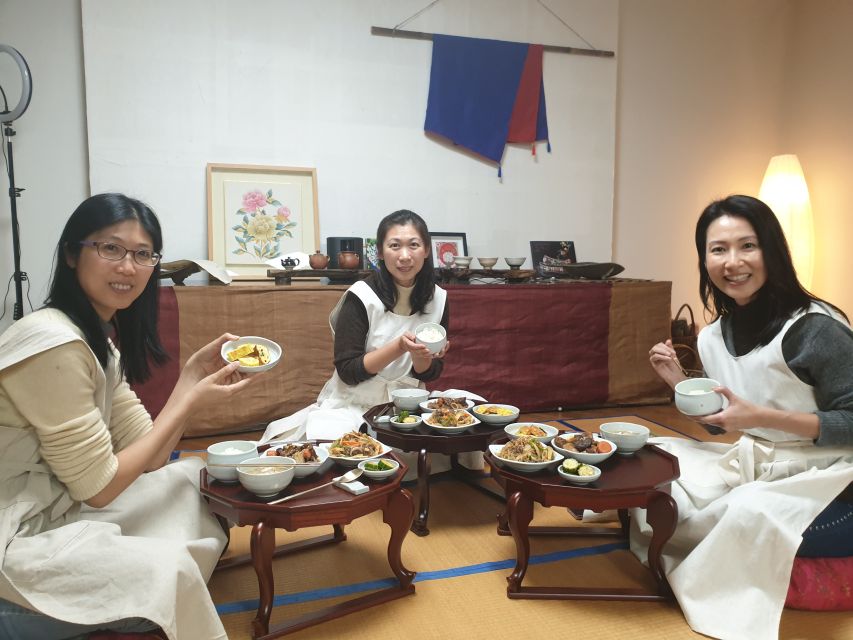
I recommend the BAPSANG class for anyone who wants a personal connection to Korean food and has three hours to spare near Haeundae. The best parts are the clear instruction from Min or Kim, the chance to prepare several dishes, and the sit-down bapsang meal with tea and dessert.
The $98 cost makes sense if you value instruction, ingredients, recipes, and a small group. It is less compelling if you only want a cheap meal or a quick food tasting.
Book it if you enjoy learning by doing, request vegan ingredients at least 24 hours ahead if needed, and leave time to reach the Marine City meeting point. You should come away with a full meal, a better feel for Korean flavors, and recipes that can keep the Busan experience going in your own kitchen.
FAQ
How long does the Korean cooking class last?
The class lasts three hours, including cooking, the meal, tea, and Korean dessert.
What dishes will I cook?
Bibimbap is the featured dish. The class has also included miyeok guk, a seaweed and beef soup, and buchu jeon, a Korean vegetable pancake. The exact menu may vary.
Is the class taught in English?
Yes. The instructors teach in English and Korean. Min and Kim lead the classes.
Where does the activity meet?
The meeting point is Flat 2406, Hoabin Busan Haeundae, 37 Marine City 3-ro, U 1(il)-dong, Haeundae, Busan.
How do I reach the class by subway?
Take Busan Subway Line 2, the green line, to Dongbaek Station. Use Exit 1 and walk about 10 minutes.
Can I request a vegan meal?
Yes. Request vegan ingredients when booking or contact the provider at least 24 hours before the class.
What is included in the $98 price?
The price includes cooking ingredients, utensils, an apron, the meal, dessert, water, recipes, a certificate, and a surprise gift. Pickup and drop-off are not included.
More Food Outings in South Korea
- Busan Tailored Korean cooking class (Vegan OK)with market tour
★ 5.0 · 66 reviews - Seoul: Temple Vegan Cooking Class & Oriental Medicine Tour
★ 4.6 · 32 reviews - Athens: Food Market Visit and Cooking Class with Wine
★ 4.9 · 1,087 reviews - Undiscovered Charleston: Half Day Food, Wine & History Tour with Cooking Class
★ 5.0 · 948 reviews
Newest classes around South Korea
- Vegan Friendly Korean Food Cooking Class★ 5.0 · 2 reviews
- Korean cooking class in Haeundae, Busan★ 5.0 · 92 reviews
- Busan Local Food Cooking Class with Market Tour★ 5.0 · 53 reviews
- Busan Tailored Korean cooking class (Vegan OK)with market tour★ 5.0 · 66 reviews
- Seoul: Korean Home Visit, Cooking & Cultural Experience★ 5.0 · 2 reviews
- Seoul: Korean Kimchi Cooking Class in the Heart of the City★ 5.0 · 3 reviews
- Seoul: Premium Korean Feast Cooking Class★ 5.0 · 3 reviews
- Seoul: Kimchi Dishes Cooking Class with Wine Pairing★ 4.7 · 38 reviews
South Korea Cooking Classes, compared.
Local Home Korean Cooking Class & Market Adventure in Seoul
Read our review →
Master Korean traditional cooking with a Kimchi chef
Read our review →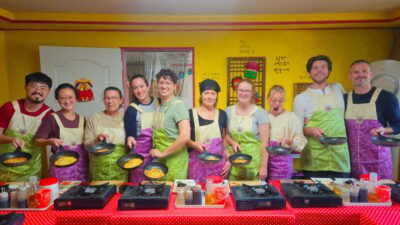
Korean Cooking Class at a Local Home and Market Tour
Read our review →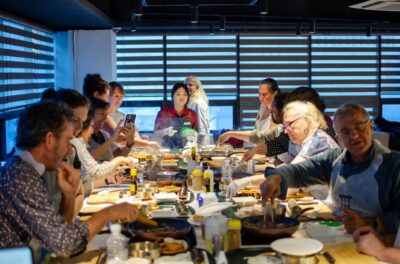
Taste of Korea, Authentic Home Style Cooking Class
Read our review →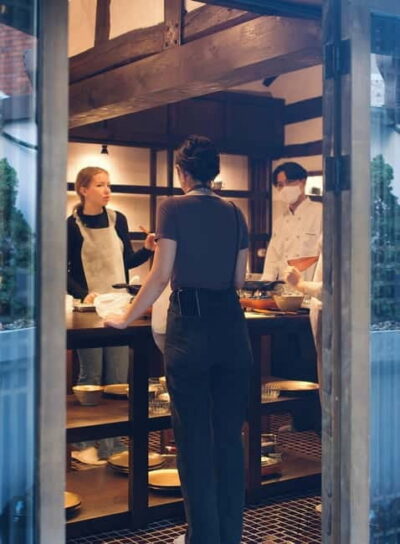
Royal Seoul Cooking Class in a 100-Year-Old Hanok
Read our review →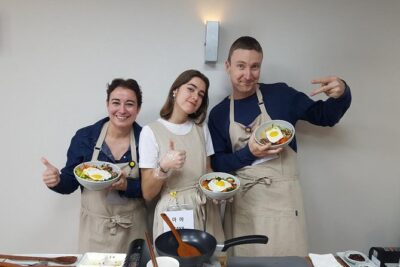
Browse the lists this tour appears in