
Review · SOUTH KOREA COOKING CLASSES
Korean cooking class in Haeundae, Busan
Korean food makes more sense when you cook it yourself. At Bapsang in Haeundae, Min leads a hands-on class where you prepare bibimbap, seaweed soup, and Korean pancakes, then sit down to eat the meal you made. The Joseon-era palace connection gives the class a useful cultural thread, rather than turning it into a simple recipe lesson.
I like the small group of up to seven people and the personal cooking stations, which leave room for questions and individual help. I also like the warm, practical teaching style: Min explains sauces, ingredients, Korean food customs, and even how to read Korean menus. The main consideration is the price, $100 per person, which is fair for a three-hour class with food and extras, but high if you only want a quick demonstration.
Key points to know before booking

- You cook three Korean dishes: The usual menu includes bibimbap, seaweed soup, and a Korean pancake, though the menu can change by date.
- Min teaches more than recipes: Expect food history, Korean culture, language tips, and explanations of traditional sauces.
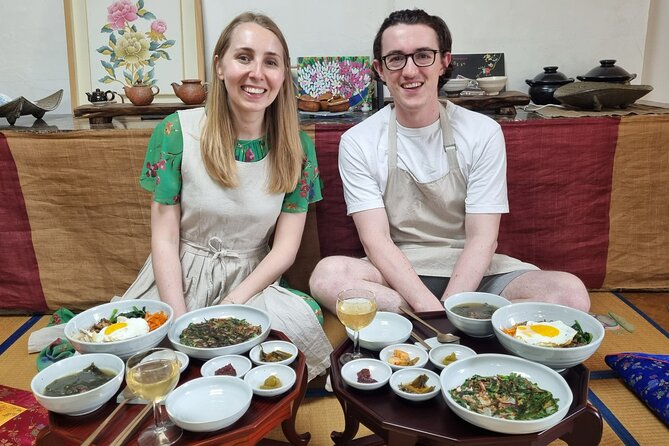
- Your meal is part of the class: You eat your finished dishes at a traditional bapsang table, with chairs available if floor sitting is difficult.
- The group stays small: The class allows up to seven people, with a maximum of eight listed for the activity.
- You receive useful extras: Tea, a simple Korean dessert, a participation certificate, and local area advice are included.
- Plan for about three hours: The activity starts at 10:00 a.m. in Marine City and returns to the meeting point.
Cooking Korean food with Min in Haeundae
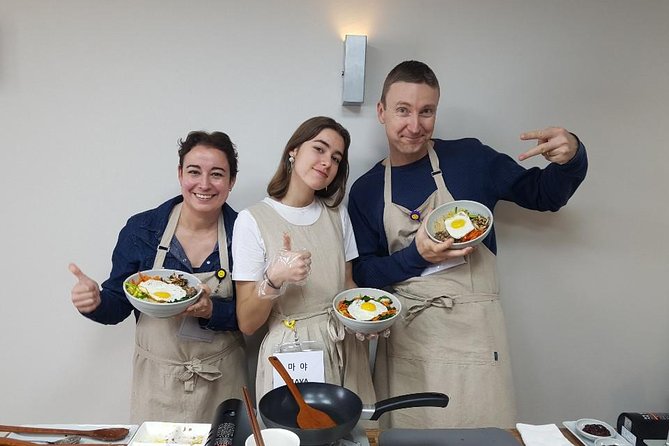
This is a good class for anyone who wants to understand Korean food from the inside out. You are not simply watching someone chop vegetables while you stand back with a camera. You put on an apron, work at your own station, taste sauces, prepare several dishes, and eat the results.
Min is the host and instructor. Her style, as reflected in the experience itself, is friendly and attentive rather than formal. She adjusts her explanations to the people in front of her, making the class suitable for beginners and for families with older children. A little kitchen experience may help you move faster, but it is not required.
The setting also gives the class a sense of occasion. You wear a Korean traditional apron associated with palace cooks, receive a welcome drink, and learn how food was connected with court traditions during the Joseon dynasty. This does not turn the morning into a history lecture. Instead, the historical details help explain why certain dishes, sauces, and serving customs matter.
More Korean Classes in South Korea:
- Local Home Korean Cooking Class & Market Adventure in Seoul
★ 5.0 · 1,024 reviews - Master Korean traditional cooking with a Kimchi chef
★ 5.0 · 385 reviews - Seoul: Korean Cooking Class at a Local Home and Market Tour
★ 5.0 · 348 reviews
What happens from 10:00 a.m. onward
The meeting point is at 37 Marine City 3-ro in Haeundae, near public transportation. The class begins at 10:00 a.m. and ends back at the same meeting point. Allow roughly three hours, since the session includes preparation, cooking, eating, tea, and the certificate presentation.
The first step is getting settled in the traditional apron. You then receive a welcome drink before moving into an introduction to Korean sauces. This is a smart way to begin. Sauces often make Korean food taste familiar or mysterious to first-time cooks, and tasting them separately gives you a better idea of how sweet, salty, spicy, and savory flavors work together.
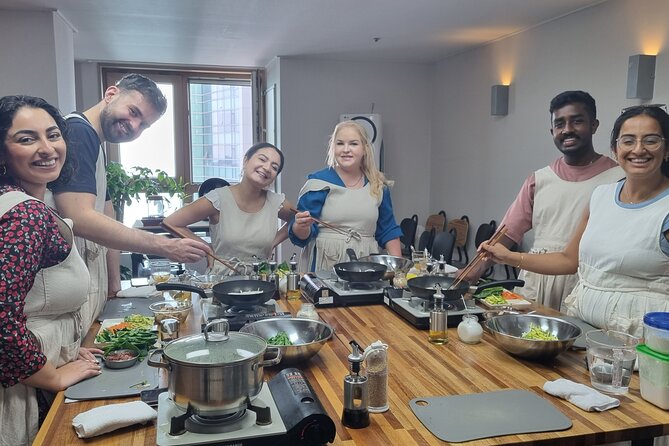
After that comes the hands-on portion. Your personal station means you can follow each step yourself instead of sharing all the work with a partner. Min provides guidance as you go, and the small class size allows time for questions. The class is designed for people with no previous cooking experience, so you should not feel that you need to arrive with knife skills or knowledge of Korean ingredients.
Bibimbap, soup, and Korean pancakes
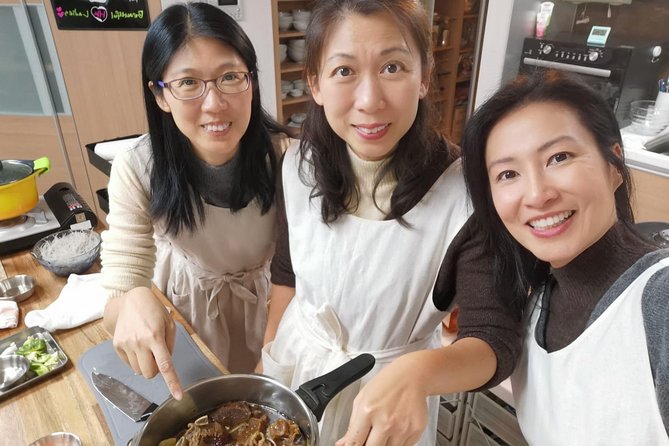
The standard menu features bibimbap, seaweed soup, and a Korean pancake. These dishes make a useful trio because they show different parts of Korean home cooking.
Bibimbap introduces the idea of combining prepared ingredients with rice and sauce. The dish is familiar enough to be approachable, but assembling it yourself helps you understand how its separate flavors work together. The class also includes instruction on the bibimbap sauce, a detail that makes the lesson more useful after you return home.
Seaweed soup provides a gentler counterpoint. It is closely tied to Korean food culture and is commonly associated with birthdays. Preparing it alongside bibimbap gives you more than one type of Korean dish to practice.
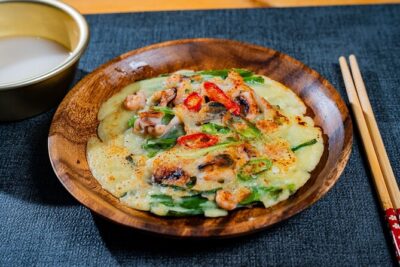
The pancake, often made with chives, brings a crisp and satisfying finish to the savory cooking. It is also a practical dish for home cooks because the method is easy to remember. Dietary needs can be accommodated in some cases. Gluten-free and vegetarian versions have been prepared for participants, but you should contact the provider in advance rather than assume every request can be handled on the day.
The menu may vary by date. Special palace-style or temple-food dates are listed as possible formats, but no special dates are scheduled for 2025 in the supplied information. Confirm the menu when booking if a particular dish is important to you.
Eating at a traditional bapsang table
Once the cooking is finished, you eat what you made at a bapsang, a traditional Korean dining table placed on the floor. This changes the rhythm of the class. Instead of rushing away after the final step, you have time to look at the dishes together and talk about how they turned out.
Floor sitting is not required for everyone. If it is uncomfortable, you can eat at a regular table with chairs. That small option matters for older people, anyone with limited mobility, or anyone simply unused to sitting on the floor.
The meal is followed by Korean tea and a simple dessert. The dessert is not the main reason to book the class, but it completes the traditional meal format and gives you one more taste of Korean food beyond the savory dishes.
Min also gives local advice near the end of the experience. This can be useful if you are staying in Haeundae and want help planning the rest of your day. The class information connects the activity with Dongbaekseom, Haeundae Beach, The Bay 101 Yacht Club, and Nurimaru APAC House, all in the wider Haeundae and Marine City area. Treat these as nearby points of interest for follow-up sightseeing, not as a separate sightseeing tour. The supplied schedule does not describe guided visits or transportation between them.
More Cooking Classes in South Korea:
- Seoul: Korean Cooking at Seoul Cooking Club!
★ 5.0 · 311 reviews - Korean Cooking at Seoul Cooking Club
★ 5.0 · 220 reviews - Seoul: Taste of Korea, Authentic Home Style Cooking Class
★ 4.9 · 166 reviews - Seoul: Royal Seoul Cooking Class in a 100-Year-Old Hanok
★ 5.0 · 96 reviews
What the small group adds
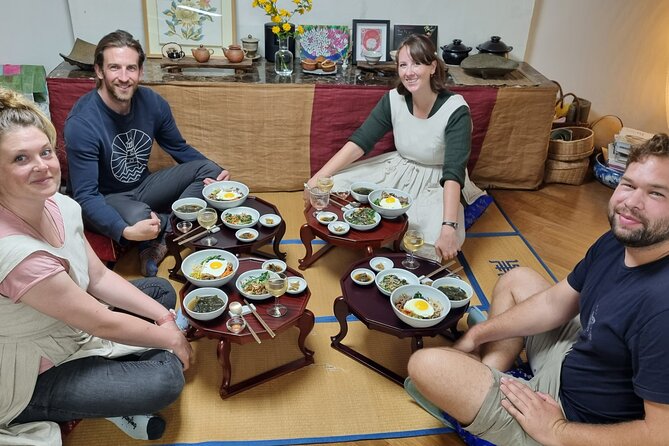
A maximum of seven people is one of the strongest features here. Cooking classes can lose their charm when one instructor is trying to watch a large crowd, especially during chopping, seasoning, and pan work. A small group gives Min more opportunity to correct a step, answer a question, or adjust the pace.
The class also brings together people from different places. That can make the shared meal more social without taking away from the instruction. Families have found the format suitable for children around the early teenage years and older, while adults who rarely cook can still take part without feeling out of place.
You should expect conversation as well as cooking. Min covers culture, language, ingredients, and dining customs, so the experience suits people who want context with their food. If you prefer a silent, highly technical culinary workshop, this may feel more relaxed and conversational than you want.
Is $100 good value?
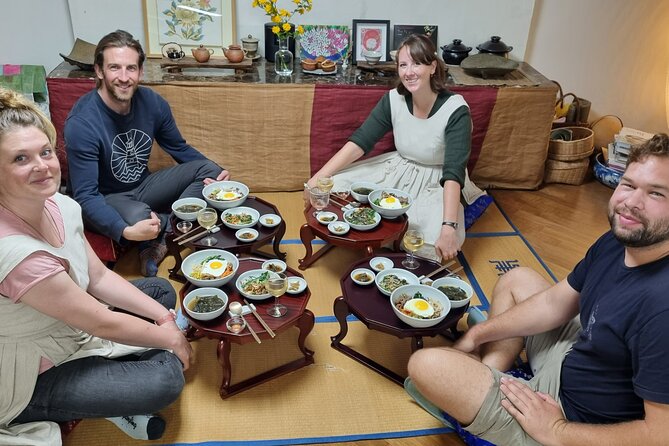
At $100 per person, this is not a budget meal. You are paying for about three hours of instruction, ingredients, a welcome drink, the meal, tea, dessert, a certificate, and a small-group format. You also get a personal workstation and the chance to ask questions directly.
The value improves if you plan to cook the dishes again. Min explains the food clearly enough for beginners to take recipes and basic skills home. Several aspects are especially useful for future cooking: learning the main sauces, understanding bibimbap seasoning, preparing the pancake, and seeing how a Korean meal is arranged and served.
The price is harder to justify if you mainly want to eat Korean food. Haeundae has many ways to spend less on a meal, and this class is not designed as a restaurant replacement. Its value comes from participation, instruction, cultural context, and the memory of making the food yourself.
Practical details that affect your day
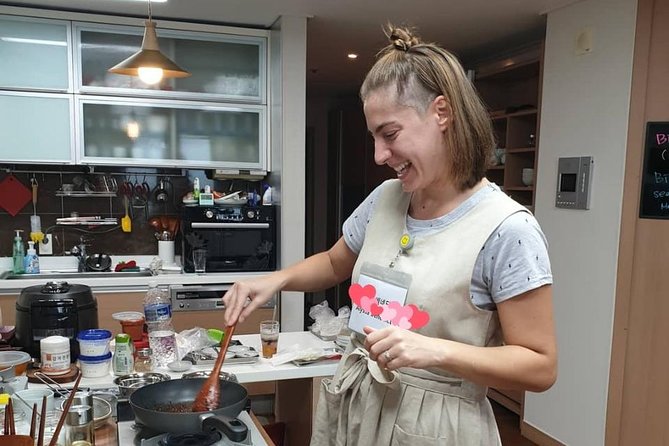
The activity uses a mobile ticket, and confirmation is received at booking. It is close to public transportation, which makes the Marine City meeting point manageable from the Haeundae area.
The class is listed as requiring good weather. If poor weather causes cancellation, you are offered another date or a full refund. You can cancel for a full refund up to 24 hours before the start time. Changes or cancellations made inside that 24-hour period are not accepted, so keep the local start time in mind.
Service animals are allowed. The activity is described as ending back at the meeting point, which makes it easy to continue toward Haeundae Beach, Dongbaekseom, The Bay 101, or Nurimaru APAC House afterward, provided you arrange your own sightseeing.
The floor meal has a chair option, but the information does not provide full details about every physical feature of the cooking space. If you need specific access arrangements, ask before booking.
Who should book this Busan class?
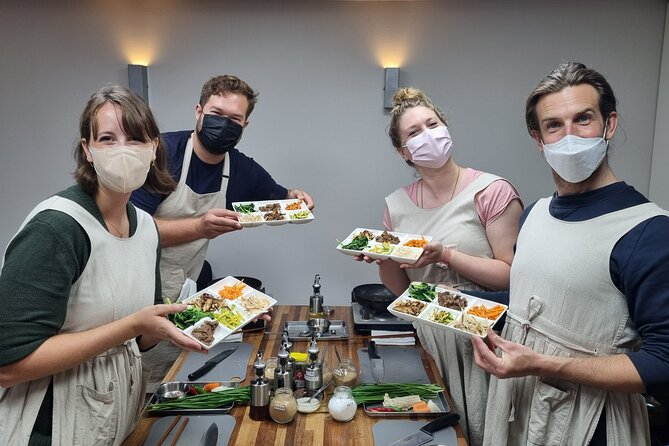
I would choose this experience if you enjoy food, want direct contact with Korean culture, or like bringing home a practical skill. It is especially suitable for couples, families with older children, solo participants comfortable meeting a small group, and people who want more than a standard restaurant meal.
It also works well early in a Busan visit. Min can help you understand Korean food and may offer advice about the surrounding area, giving you useful context for later meals. The 10:00 a.m. start leaves much of the afternoon free.
You may want to skip it if you dislike hands-on activities, cannot sit at a cooking station for several hours, or are looking only for a cheap lunch. The menu can change, and the experience has a teaching and social side that takes up as much space as the eating.
Should you book Bapsang?
Book it if you want to learn how Korean dishes are made, not just photograph them. Min’s attentive teaching, small group size, traditional apron, bapsang meal, tea, dessert, and certificate give the morning a clear sense of purpose.
The best reason to go is that you leave with more than a full stomach. You understand sauces, serving customs, and several dishes you can try again at home. At $100, it is a considered purchase, but for a three-hour cultural activity in Haeundae, it offers solid value if cooking and food traditions are central to your trip.
FAQ
Where does the Korean cooking class take place?
The meeting point is 37 Marine City 3-ro in Haeundae, Busan, South Korea.
What time does the class start?
The class starts at 10:00 a.m.
How long does the cooking class last?
The experience lasts approximately three hours.
How many people can join the class?
The class is designed for a small group of up to seven people. The activity information lists a maximum of eight travelers.
What dishes will I cook?
The usual menu includes bibimbap, seaweed soup, and a Korean pancake. The menu may vary by date.
Do I need cooking experience?
No. Previous culinary experience is not necessary.
Is the meal eaten on the floor?
The meal is served at a traditional bapsang table on the floor. If floor sitting is difficult, you can eat at a table with chairs.
What is included after cooking?
You receive tea, a simple Korean dessert, and a certificate of participation.
Can I cancel for a refund?
You can cancel at least 24 hours before the start time for a full refund. Cancellations or changes made less than 24 hours before the start time are not accepted.
Newest classes around South Korea
- Vegan Friendly Korean Food Cooking Class★ 5.0 · 2 reviews
- Busan Local Food Cooking Class with Market Tour★ 5.0 · 53 reviews
- Busan Tailored Korean cooking class (Vegan OK)with market tour★ 5.0 · 66 reviews
- Seoul: Korean Kimchi Cooking Class in the Heart of the City★ 5.0 · 3 reviews
- Seoul: Premium Korean Feast Cooking Class★ 5.0 · 3 reviews
- Seoul: Korean Home Visit, Cooking & Cultural Experience★ 5.0 · 2 reviews
- Seoul: Kimchi Dishes Cooking Class with Wine Pairing★ 4.7 · 38 reviews
- Seoul: Korean Cooking Class with Local Grocery Shopping★ 5.0 · 13 reviews
South Korea Cooking Classes, compared.
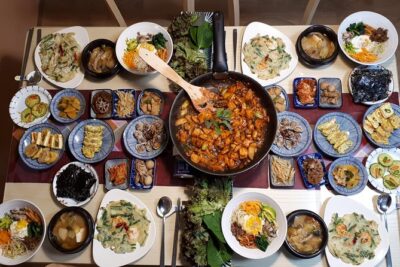
Local Home Korean Cooking Class & Market Adventure in Seoul
Read our review →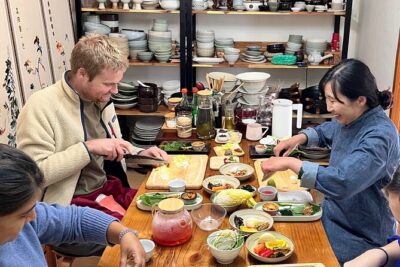
Master Korean traditional cooking with a Kimchi chef
Read our review →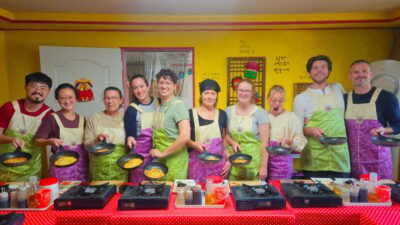
Korean Cooking Class at a Local Home and Market Tour
Read our review →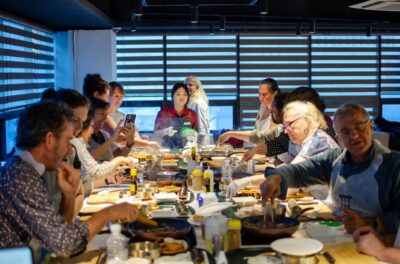
Taste of Korea, Authentic Home Style Cooking Class
Read our review →
Royal Seoul Cooking Class in a 100-Year-Old Hanok
Read our review →
Busan Tailored Korean cooking class (Vegan OK)with market tour
Read our review →Browse the lists this tour appears in