
Review · TOKYO COOKING CLASSES
Tokyo: Tsukiji Market Walking Tour & Sushi Cooking Class
Tsukiji is best understood through two senses: look closely at its fish stalls, then learn what Japanese cooking does with those ingredients. This three-hour combination pairs a guided walk through the Outer Market with a hands-on class at ABC Cooking Studio, where you make sushi, tamagoyaki, and miso soup.
I like the small group size, capped at six, and the way the cooking lesson turns a market visit into something useful. I also like the friendly, patient teaching reported from instructors such as Alika, Akiko, Megumi, and Yukari. The main drawback is time: the market portion lasts about 70 minutes, and several parts of the class can feel rushed if you want a long look at Tsukiji.
Key points at a glance
- About 70 minutes at Tsukiji Outer Market: Follow a guide through food stalls, seafood shops, and narrow market lanes.
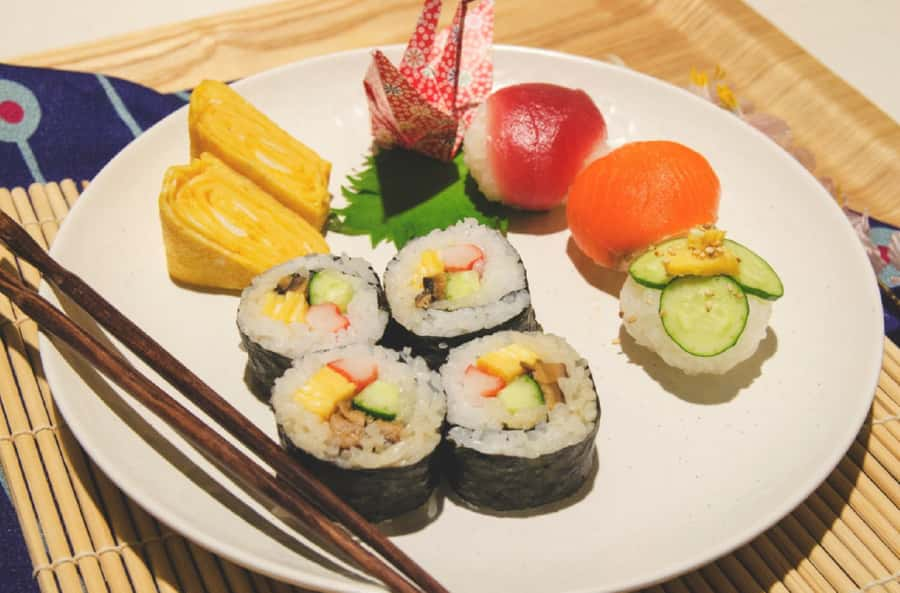
- A cooking class with an actual lunch: Make Temari sushi, rolled sushi, tamagoyaki, and miso soup, then eat what you prepare.
- Small groups of up to six: This gives you a better chance to ask questions and get help at the cooking station.
- English-speaking local guides: Past sessions have included Aki, Akiko, Takeshita, Nobu, and Naomi.
- Not the tuna auction or wholesale market: This tour visits the Outer Market only, not the famous early-morning auction area.
- Best for curious eaters aged 9 and up: Bring comfortable shoes, arrive hungry, and leave large bags behind.
Starting at Tsukiji Hongwanji Temple
You meet your guide in front of the main gate of Tsukiji Hongwanji Temple, at 3-15-1 Tsukiji. The meeting point is easy to reach: Tsukiji Station on the Hibiya Line is about a one-minute walk from Exit 1, while Tsukijishijo Station on the Oedo Line is about seven minutes away from Exit A1.
The temple makes a useful landmark in an area where streets and stalls can soon blur together. Your guide holds a sign with your name, so you do not need to search the market for a particular shop or entrance.
This is also a smart place to begin because Tsukiji is not simply a collection of seafood counters. It is a working food district with a religious landmark, restaurant lanes, produce sellers, knife shops, snack stalls, and shops selling ingredients used in home kitchens. The guide helps you read what you are seeing instead of treating the market as a quick photo stop.
More Cooking Classes with a Market Tour in Japan
- Tokyo Tsukiji Fish Market Tour and Sushi Making Lesson
★ 5.0 · 390 reviews - Tokyo Washoku 4-hour Cooking Class: From Market to Table
★ 5.0 · 253 reviews - Nishiki Market Food Tour with Cooking Class
★ 4.9 · 42 reviews
Reading Tsukiji’s Outer Market
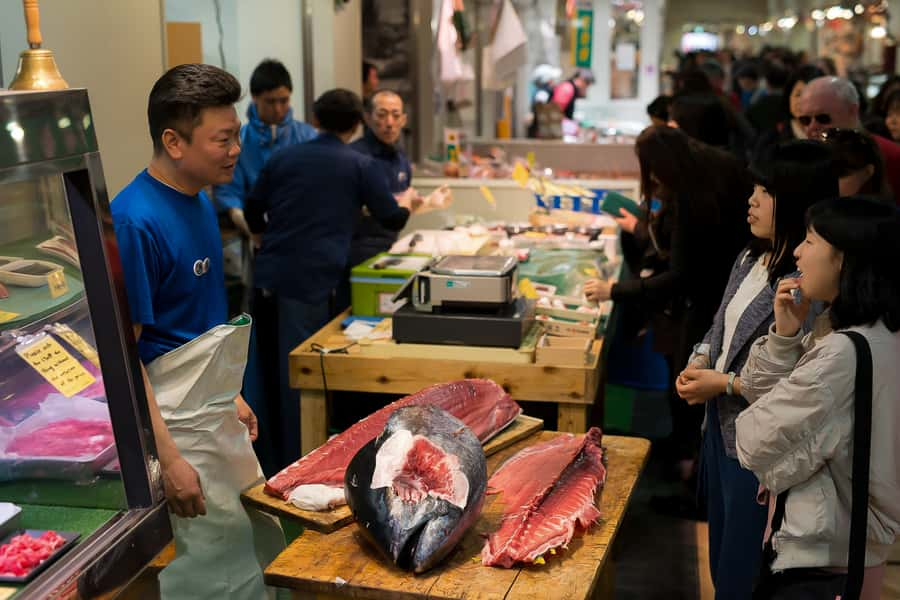
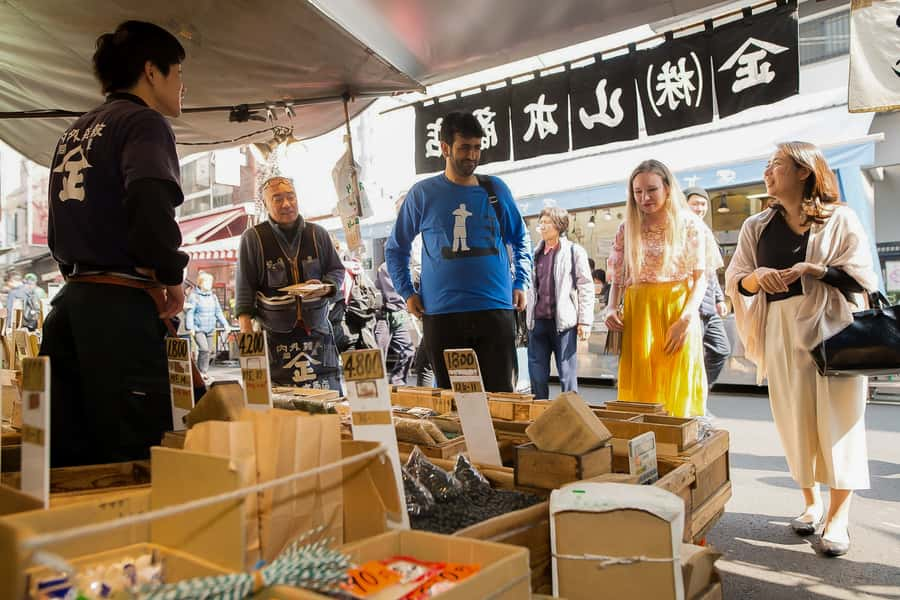
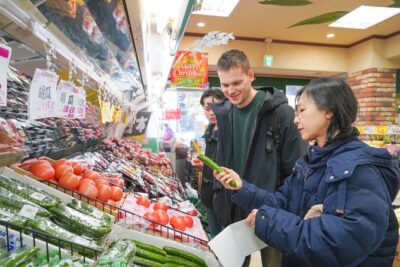
The Tsukiji Outer Market is the first main part of the morning or afternoon. Plan on roughly 70 minutes here. That is enough for an introduction, some explanations, and perhaps a few tastings or purchases, but not enough to inspect every lane at leisure.
Your guide points out the role seafood plays in Japanese meals and explains the products sold in the market. Past guides have included Aki, Akiko, Takeshita, Nobu, Naomi, and Lucy. The strongest part of the guiding is the human help: you can ask what an unfamiliar ingredient is, how it is used, and which stalls are worth your attention.
The market has a lively, crowded feel, and the ground may be wet or messy around food stalls. Comfortable shoes matter. Large bags and luggage are not allowed, and a stroller would make the narrow lanes difficult even if it were permitted.
You may find fresh seafood, vegetables, prepared food, sweets, and other Japanese ingredients. The supplied details do not promise a fixed tasting menu, so do not treat every bite or purchase as included. The lunch included with the tour comes later and consists of the food you make in class.
The guide can make this short visit more useful than wandering alone, especially on a first morning in Tokyo. Guides have been praised for showing people where to look, explaining unfamiliar foods, and helping the group move through the market without losing time. Still, if your main goal is shopping, 70 minutes may leave you wishing for more.
What Tsukiji You Do Not See
This experience does not include the tuna auction or the wholesale fish market. That distinction matters because many people associate Tsukiji with the pre-dawn auction scenes and the old inner market.
The wholesale market moved to Toyosu, while Tsukiji’s Outer Market continues as a public food district. You should book this tour for the Outer Market, not for access to the auction or commercial wholesale lanes. Some older accounts of Tsukiji describe access to areas that are not part of this current experience, so keep your expectations tied to the present itinerary.
That limitation is not necessarily a weakness. The Outer Market is the more practical part for most visitors. It is where you can browse food shops, ask questions, and get a feel for Japanese ingredients without arranging an extremely early visit to an auction. But if the tuna auction is your central Tokyo goal, this is the wrong activity.
From Market Walk to ABC Cooking Studio
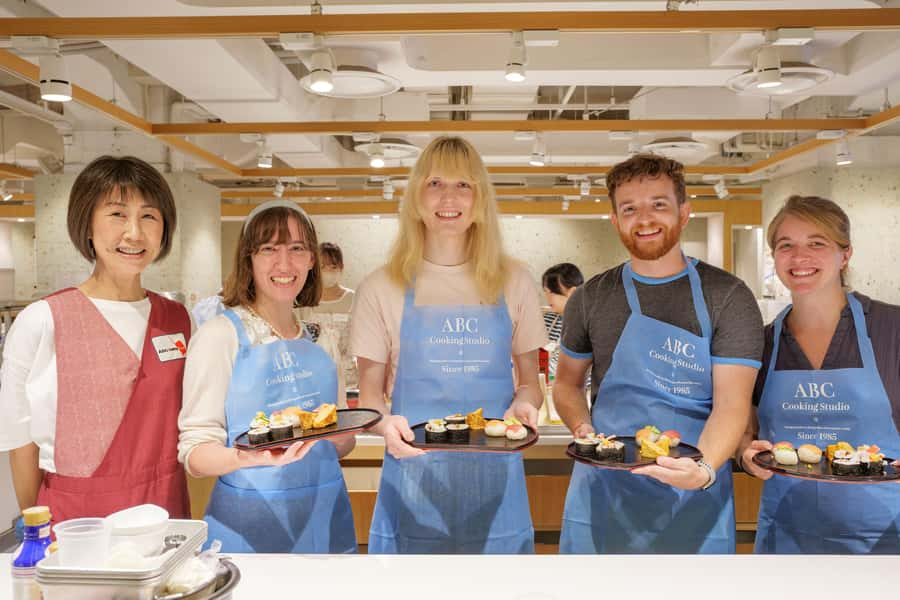
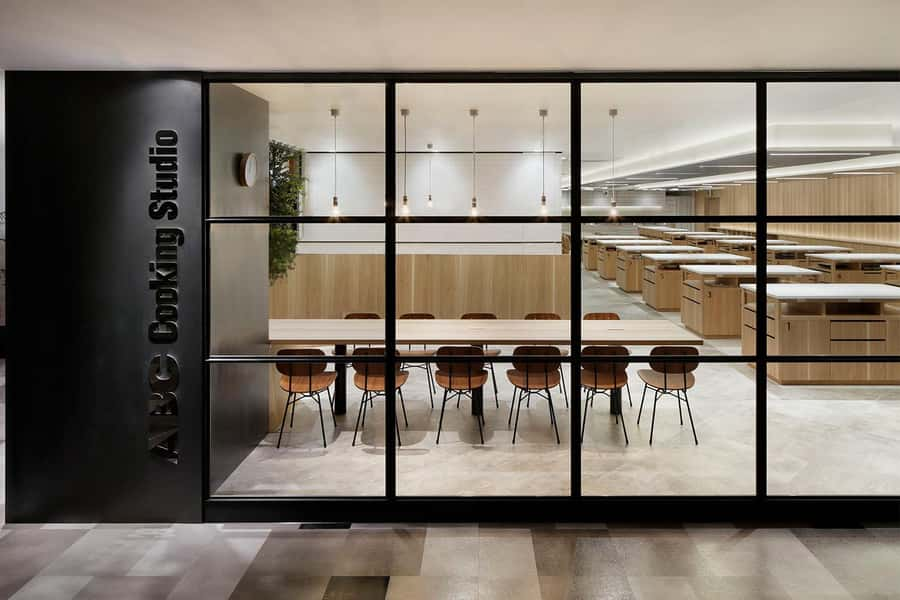
After the market visit, you continue to ABC Cooking Studio, described as one of Asia’s largest cooking schools. The change of setting is useful. Instead of only looking at ingredients, you now handle them and learn a few basic preparations.
An instructor demonstrates the techniques, then helps you prepare the dishes. Past sessions have included teachers such as Megumi, Miwa, Kiko, Hiroko, Hitomi, Keiko, Yukari, and Hatsuko. The names vary by date, but the teaching style is a common strength: patient instruction, clear demonstrations, and help when a roll or omelet does not behave as planned.
You wear an apron supplied by the studio. Drinking water is available, and a digital recipe lets you try the dishes again at home. A digital certificate is also included, though the practical souvenir is the recipe and the confidence to make a second attempt in your own kitchen.
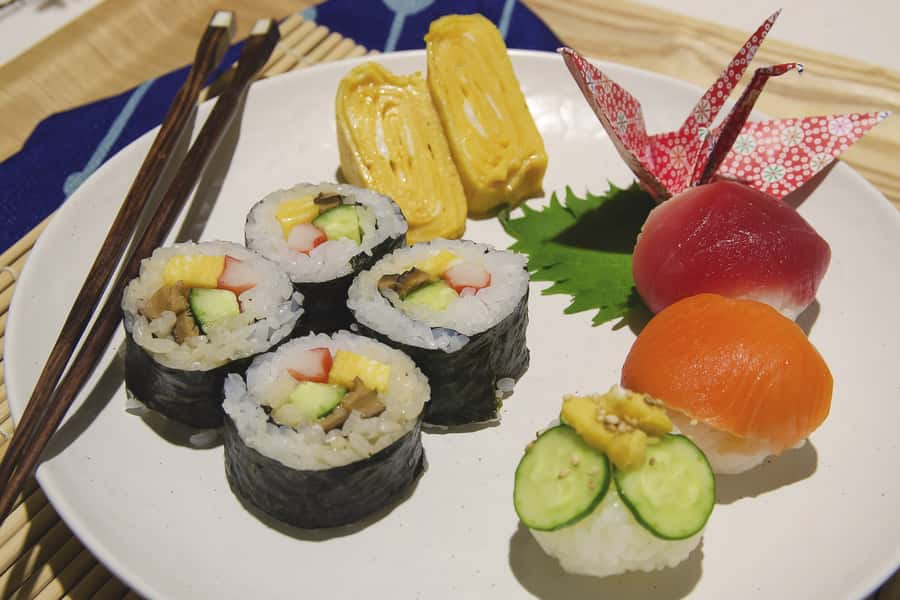
The class is not only about sushi. You prepare Temari sushi, the small ball-shaped style; Maki sushi, the familiar rolled form; tamagoyaki, a Japanese rolled omelet; and miso soup. This gives you a better sense of a Japanese meal than a lesson focused on one sushi roll alone.
More Sushi and Japanese Classes in Tokyo:
- Ramen & Gyoza Cooking Class in Tokyo with Local Supermarket Visit
★ 5.0 · 823 reviews - Tokyo: Easy Ramen Cooking Experience in Kabukicho, Shinjuku
★ 4.6 · 321 reviews - Ramen and Sushi Cooking Class with Sake Pairing Set in Tokyo
★ 5.0 · 291 reviews - Tokyo: Wagyu and 7 Japanese Dishes Cooking Class
★ 4.9 · 273 reviews
Making Temari Sushi and Maki Sushi
Sushi rolling is the part most people anticipate, and it is also where the class becomes social. You learn how to shape and assemble the food, rather than simply receiving a finished plate.
Temari sushi is especially approachable because its round form is less intimidating than trying to produce a restaurant-perfect long roll. Maki sushi gives you the classic rolling practice. Your finished pieces may not look uniform, but that is part of the fun. The point is to learn the basic handling and presentation, not to qualify as a sushi chef in three hours.
The class is hands-on, but expectations matter. One past assessment found the lesson a little rushed and less hands-on than expected. That is the main caution here. A small group helps, but the class still has a set schedule, several dishes to prepare, and a meal to serve.
Come hungry, but not so hungry that you cannot concentrate. The market may tempt you with snacks, and the class ends with lunch. If you try every possible bite at Tsukiji, you may have less appetite for your own cooking.
Making Tamagoyaki and Miso Soup
Tamagoyaki is a particularly good addition to the class. The rolled omelet looks simple, but shaping it neatly takes practice. One past participant even bought a tamago pan after the lesson, which says something about how useful this part can feel if you enjoy Japanese home cooking.
Miso soup rounds out the lesson. It is a basic dish, but it shows how a few ingredients can form part of an everyday Japanese meal. Together with sushi and omelet, it gives you several techniques rather than one party trick.
Ingredients can change with the season, availability, and what arrives at the market. The dishes shown in promotional images may not match your exact class. That is normal for a food activity based on seasonal supplies, but it is worth knowing if you expect a fixed menu.
Eating the Lunch You Prepared
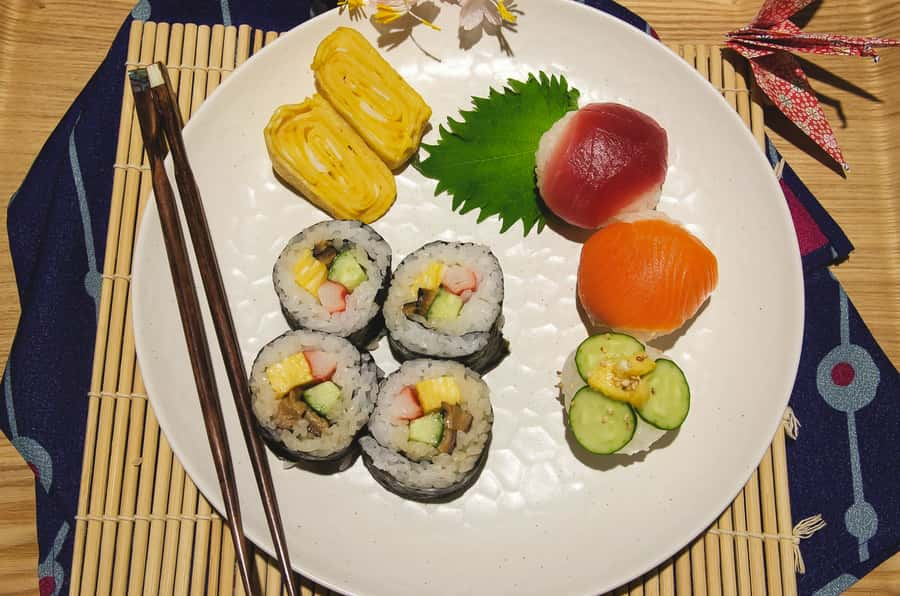
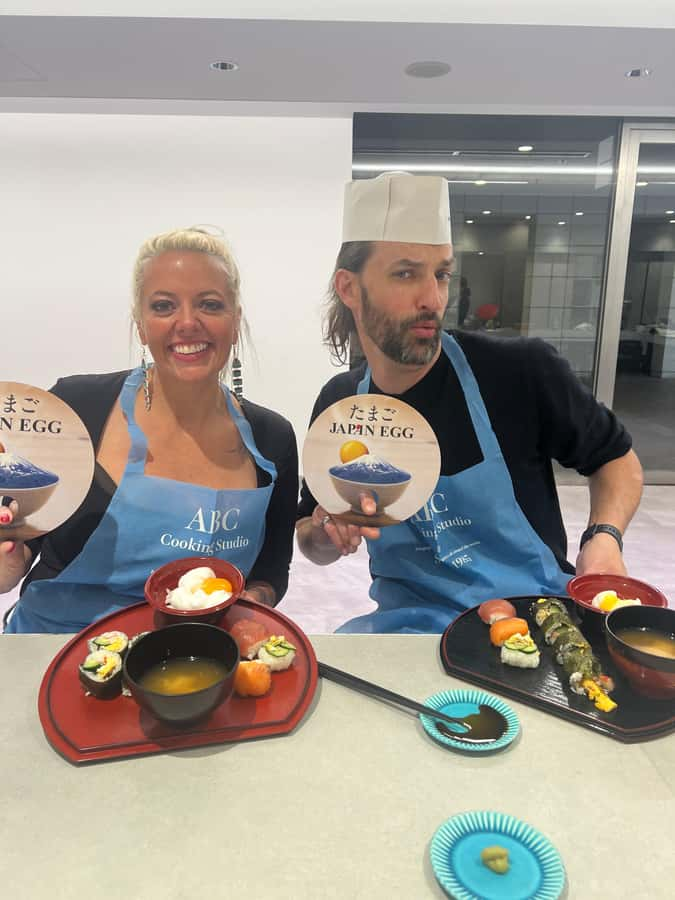
The final meal is simple and satisfying because you made it yourself. You sit down with the Temari sushi, Maki sushi, tamagoyaki, and miso soup you prepared during the class.
This is where the two parts of the experience connect. At Tsukiji, you see the importance of seafood and fresh ingredients. At the studio, you learn how those ingredients fit into a meal. Lunch gives the lesson a clear finish instead of ending with a demonstration and a recipe file.
Do not expect a restaurant tasting menu. The included lunch is your own cooking, and the ingredients may differ by season. For many people, that is better value than being handed a polished plate. You remember the meal because you made it, uneven rolls and all.
Is $96 a Fair Price?
At $96 per person, this is not the cheapest way to visit Tsukiji or learn to roll sushi. You can walk through the Outer Market independently, and cooking classes in Tokyo vary widely in price.
The value comes from combining several services in one compact booking: an English-speaking guide, market interpretation, the cooking lesson, apron use, drinking water, lunch, a digital recipe, and a digital certificate. The group limit of six also matters. You are paying for instruction and organization, not merely entry to a market.
I see the price as reasonable if you want a guided introduction and a proper cooking session in the same outing. It is less attractive if you mainly want free time at Tsukiji, already know how to cook sushi, or dislike fixed schedules. Several hours can disappear quickly in Tokyo, so the best value comes from treating this as a food lesson with a market visit, not as a long market tour with a bonus snack.
Who Will Enjoy This Most?

This suits first-time Tokyo visitors who want context without spending half a day on a single attraction. It also works well for families with older children. The minimum age is 9, and the minimum height is 4.2 feet, or 130 centimeters. A family of five with children aged 11, 13, and 15 found the format a good fit, though children need to manage the market walking and cooking pace.
The activity is a good choice for people who like to ask questions, taste unfamiliar foods, and learn by doing. It also suits couples or friends who want a shared meal with a clear activity built around it.
It is not suitable for wheelchair users, children under 9, or people under 130 centimeters. The activity is also not recommended for people with back or heart problems, pregnant people, or anyone with another serious medical condition. Comfortable clothing and shoes are important, and large bags, luggage, pets, and strollers are not allowed.
The tour requires good weather. If poor conditions cause the operator to cancel, you receive a full refund. You can cancel up to 24 hours before the start for a full refund, and you can reserve now and pay later.
Small Group Benefits and Practical Limits
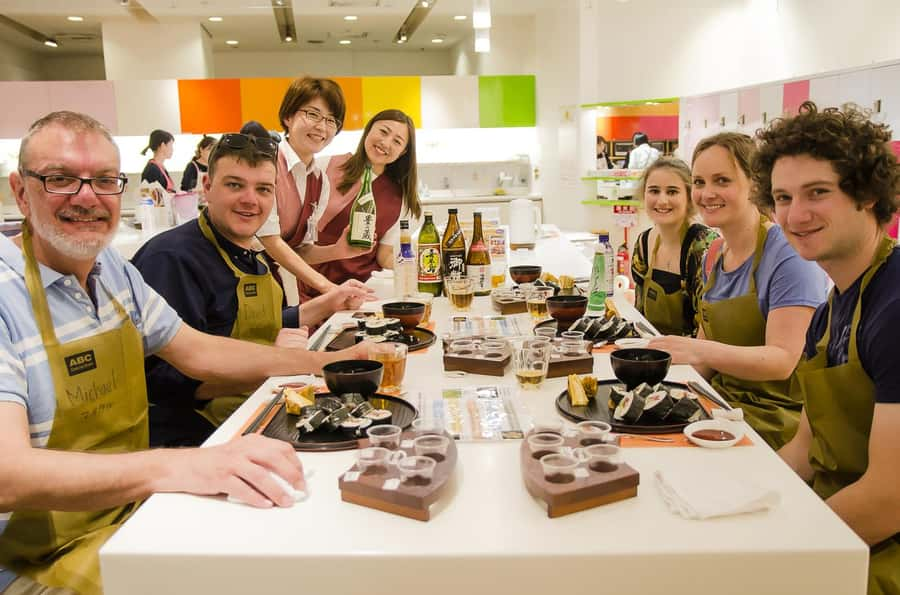
A maximum of six people is one of the better features here. It is easier to hear the guide in the market and easier to get help at the cooking station than in a large class.
Small does not mean private. The tour needs at least two people to operate, and your group may include other participants. The pace also depends on the day, the market crowd, and how quickly everyone follows the cooking instructions.
English is the listed tour language. A confirmation is sent after booking, but the provider notes that its phone line is not available at all hours. Email may be the better contact route if you need help outside operating times.
The activity provider may take photographs during the experience and use them on its website, social media, or advertisements. Keep that in mind if you prefer not to appear in promotional images.
Should You Book This Tsukiji and Sushi Experience?
I would book this if you want a guided market orientation followed by a real cooking lesson. It is particularly useful on an early Tokyo visit, when you may not yet know which seafood, vegetables, or prepared foods you are looking at.
I would skip it if you want the tuna auction, the wholesale market, or several relaxed hours to shop. I would also think twice if $96 feels high for a three-hour activity and you are comfortable exploring Tsukiji alone.
For most food-focused visitors, the strongest reason to go is the combination. The market gives the dishes a setting, and the class gives the market meaning. Just arrive with comfortable shoes, leave the big bag at your hotel, and allow enough appetite for the lunch you make yourself.
FAQ
Where does the tour meet?
Meet your guide in front of the main gate of Tsukiji Hongwanji Temple at 3-15-1, Tsukiji, Chuo, Tokyo. The guide holds a sign with your name.
How long does the activity last?
The full experience lasts three hours. You spend about 70 minutes at the Tsukiji Outer Market before continuing to the cooking studio.
Does the tour visit the tuna auction?
No. The tuna auction is not included.
Does the tour visit the wholesale fish market?
No. The experience visits Tsukiji Outer Market and does not include the inner wholesale market.
What dishes do you make?
You prepare Temari sushi, Maki sushi, tamagoyaki, and miso soup. The exact ingredients may change with the season and ingredient availability.
Is lunch included?
Yes. Lunch consists of the dishes you prepare during the cooking class.
What languages are available?
The tour is conducted in English with a live guide.
What is the minimum age?
The minimum age is 9 years, and the minimum height is 130 centimeters, or about 4 feet 3 inches.
More Walking Tours in Tokyo
- Japanese Home Cooking Class & Walk in Todoroki Temple Tokyo
★ 5.0 · 88 reviews - Cape Town: Bo-Kapp Walking Tour and Malay Cooking Class
★ 4.7 · 105 reviews - Naxos: Food Walking Tour & Cooking Class with Meal & Drinks
★ 4.9 · 86 reviews - Easy Cooking Class Budapest – with Market Walk (local wine & pálinka included)
★ 5.0 · 62 reviews
More Cooking Classes with a Market Tour in Tokyo
- Hanoi Cooking Class: Culture, Local Market & Meaning CSR Impact
★ 5.0 · 5,147 reviews - 5 Traditional Dishes Hanoi Cooking Class with Market Trip
★ 5.0 · 4,890 reviews - Cooking Class and Lunch at a Tuscan Farmhouse with Local Market Tour from Florence
★ 5.0 · 4,831 reviews - Chiang Mai: Cooking Class, Market & Thai Herbs Garden Tour
★ 4.9 · 4,824 reviews
Newest classes around Tokyo
- Tokyo: Sushi roll and side dish cooking experience★ 5.0 · 2 reviews
- Tokyo: Sushi Making Experience & Japanese Cooking Class★ 5.0 · 2 reviews
- Tokyo: Sushi Cooking Class with Sake Tasting★ 4.8 · 55 reviews
- Tokyo: Real Ramen & Dumpling Cooking with Master Chef★ 5.0 · 10 reviews
- Tokyo: Sushi and Ramen Cooking Class with Sake Pairing Set★ 5.0 · 81 reviews
- Tokyo: Kawaii Bento Cooking Class – Cute Character Lunchbox★ 4.9 · 55 reviews
- Tokyo: Gyoza Making from Scratch – Ultimate Cooking Class★ 5.0 · 2 reviews
- Tokyo: Night Cooking Class: 5 Home-Cooked Japanese Dishes★ 4.9 · 13 reviews
Tokyo Cooking Classes, compared.
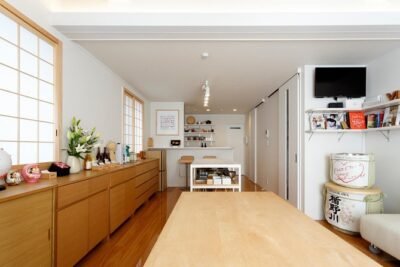
Ramen & Gyoza Cooking Class in Tokyo with Local Supermarket Visit
Read our review →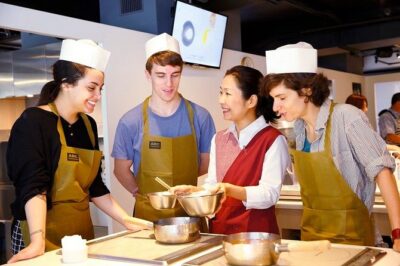
Tokyo Tsukiji Fish Market Tour and Sushi Making Lesson
Read our review →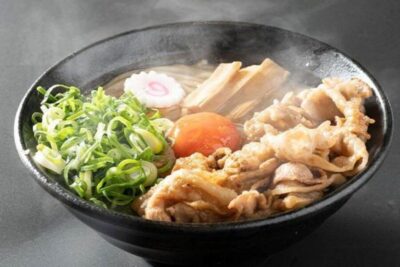
Easy Ramen Cooking Experience in Kabukicho, Shinjuku
Read our review →
Ramen and Sushi Cooking Class with Sake Pairing Set in Tokyo
Read our review →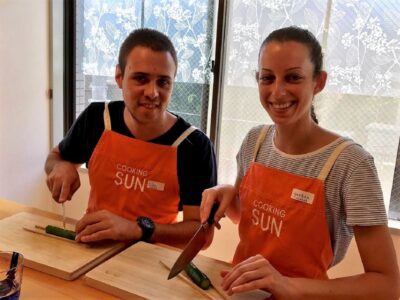
Tokyo Washoku 4-hour Cooking Class: From Market to Table
Read our review →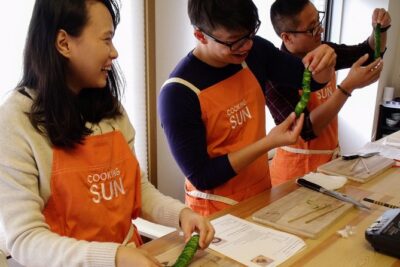
Small-Group Wagyu Beef and 7 Japanese Dishes Tokyo Cooking Class
Read our review →
Private Home Cooking in Yanaka – Local Flavors in a Warm Setting
Read our review →Browse the lists this tour appears in