
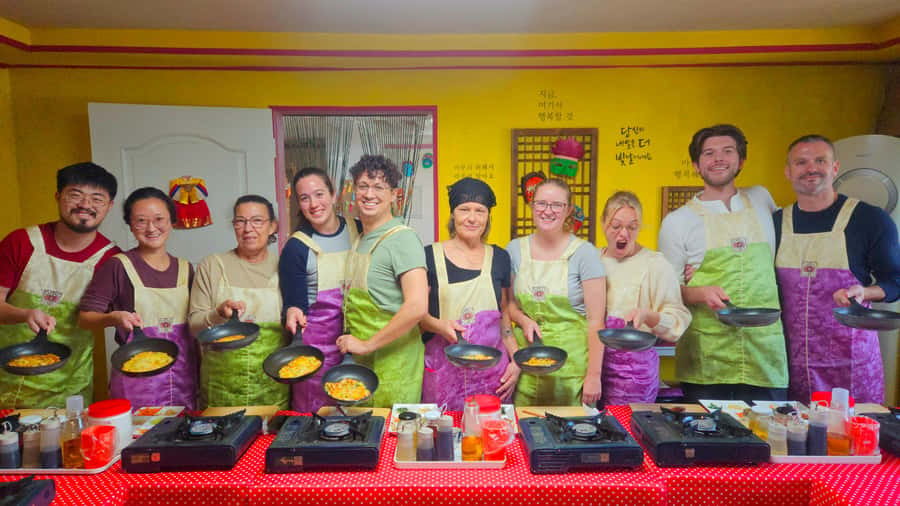
Review · SEOUL COOKING CLASSES
Seoul: Korean Cooking Class at a Local Home and Market Tour
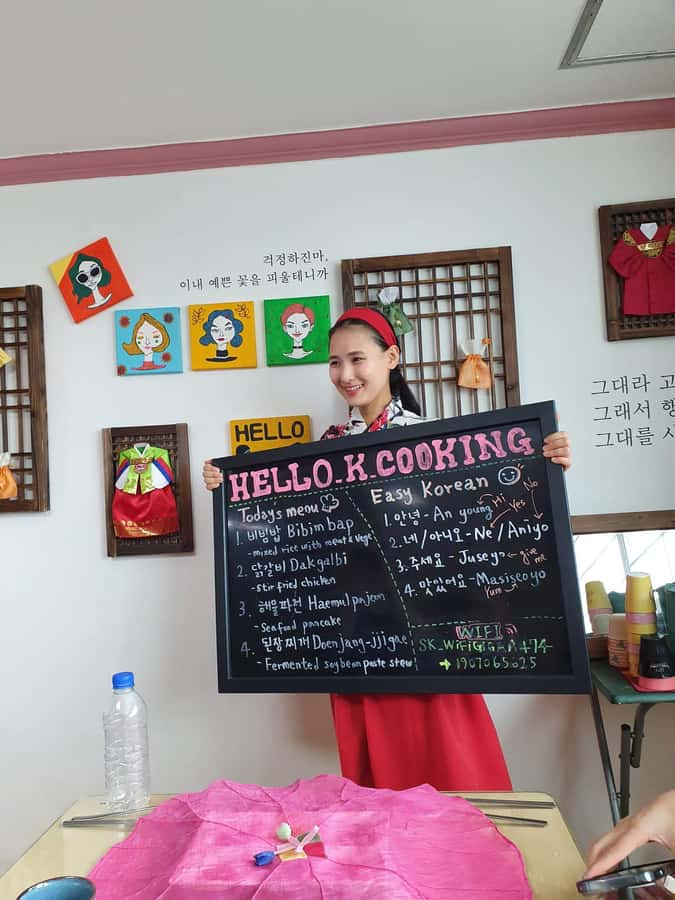
Korean food makes the most sense when you see the ingredients before they reach the table. This 3.5-hour outing takes you through Mangwon Market, into a local home, and through four classic dishes: bibimbap, dakgalbi, haemul-pajeon, and doenjang-jjigae. The meal ends with Hanjeongsik, a Korean spread built around rice, soup, and many small side dishes.
I like the market visit because it shows you how locals shop and gives you street-food tastes before the cooking begins. I also like the warm, hands-on teaching style of hosts such as Sarah, Sara, and Junghee. The main drawback is practical: you must reach Mangwon Station on your own, and the local home has no elevator.
Key points at a glance
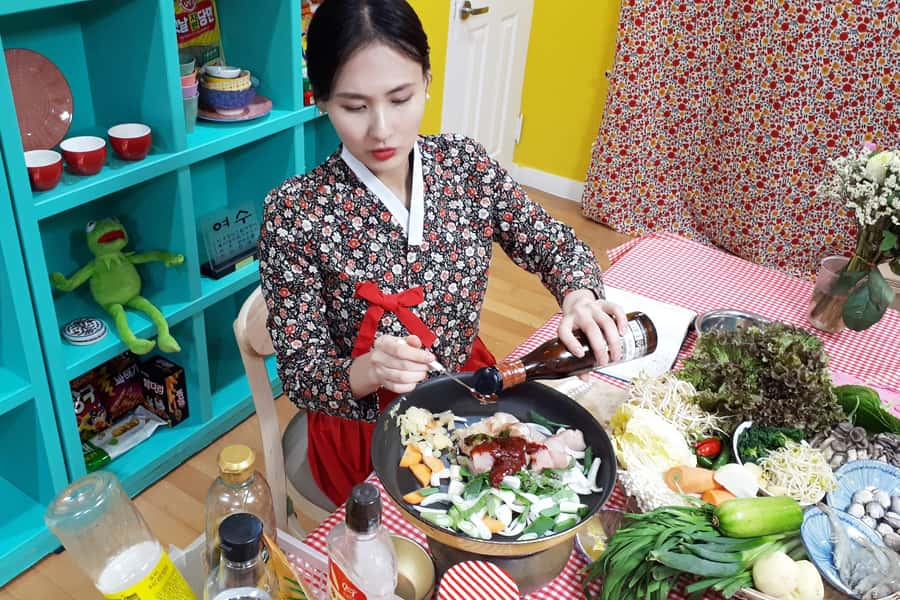
- Mangwon Market first: Shop for class ingredients, sample street food, and see a less tourist-focused side of Seoul.
- Four dishes in one class: Prepare bibimbap, dakgalbi, haemul-pajeon, and doenjang-jjigae with an English-speaking chef-guide.
- A real home setting: The class takes place in a local home rather than a formal cooking school, with no elevator access.
- A full Korean meal: Eat your creations alongside more than 10 side dishes, seasonal fruit, rice, and rice wine.
- Small groups matter: The class is limited to 10 people, giving you room to cook instead of simply watching.
- Useful take-home value: You receive recipes, cooking practice, and a better feel for Korean ingredients and table customs.
Start at Mangwon Market, not a tourist showpiece
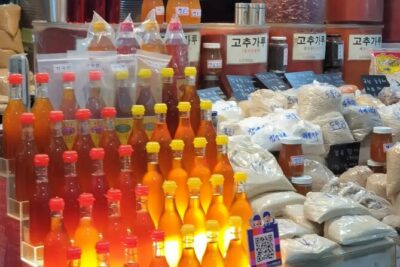
Your meeting point is outside Exit 2 at Mangwon Station. From there, your guide leads you into a local market to find the ingredients needed for the class. The market portion is more than a quick shopping stop. You get a look at Korean food as an everyday activity, with stalls, produce, prepared foods, and snacks all close at hand.
I like this order. Seeing the ingredients before cooking gives the dishes some context. Instead of meeting a bowl of bibimbap as a finished product, you can connect it with the vegetables, meat, sauces, and rice used to make it. Your guide also explains ingredients you might not recognize, which is useful when you later try to shop for Korean food on your own.
The market is described as popular but less touristy than Seoul’s best-known food markets. That means the visit should feel more like a neighborhood stop than a staged food tour. At the same time, market conditions can be lively and crowded, so stay close to your guide and keep an eye on your belongings.
Street-food samples are included. The exact samples can vary, but the point is clear: you taste food in its ready-to-eat form before preparing a meal yourself. This is a strong part of the outing for anyone who likes food served with a sense of place.
More Korean Classes in Seoul:
- Local Home Korean Cooking Class & Market Adventure in Seoul
★ 5.0 · 1,024 reviews - Master Korean traditional cooking with a Kimchi chef
★ 5.0 · 385 reviews - Seoul: Korean Cooking at Seoul Cooking Club!
★ 5.0 · 311 reviews
A short lesson in Korean language and culture
After the market, you go to the cooking venue, a local home. While you enjoy a welcome tea or drink, the guide teaches you a few Korean phrases. This is a small touch, but I find it useful. Even a handful of words can make a market visit feel less like sightseeing from the outside.
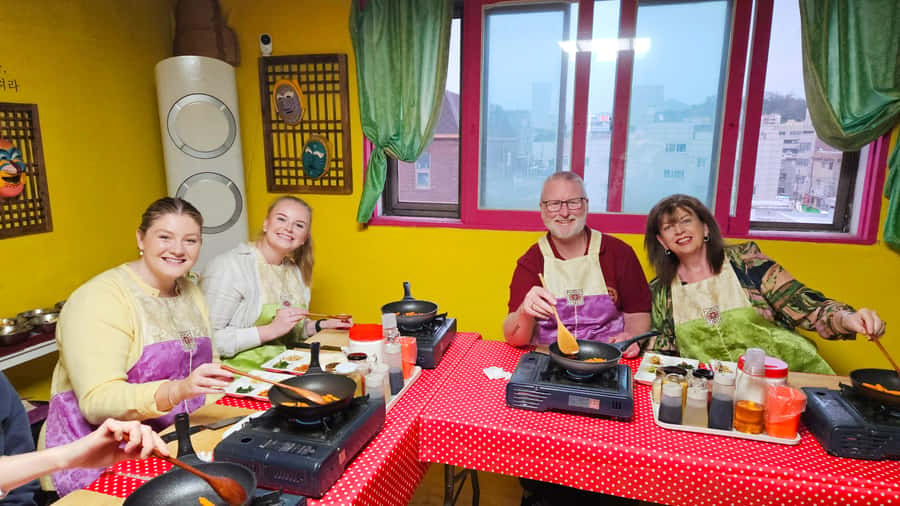
The home setting is one of the experience’s most personal features. You are not only learning a list of recipes. You are also seeing how a host presents Korean food, hospitality, decoration, and the shared meal. One host’s apartment was described as colorful and Korean in style, adding to the sense that you have entered someone’s everyday world rather than a restaurant classroom.
There is one clear access issue. The home has no elevator, so you need to be comfortable using stairs. The activity information does not give a precise floor number, so contact the provider before booking if stairs are a concern.
Cooking four Korean staples by hand
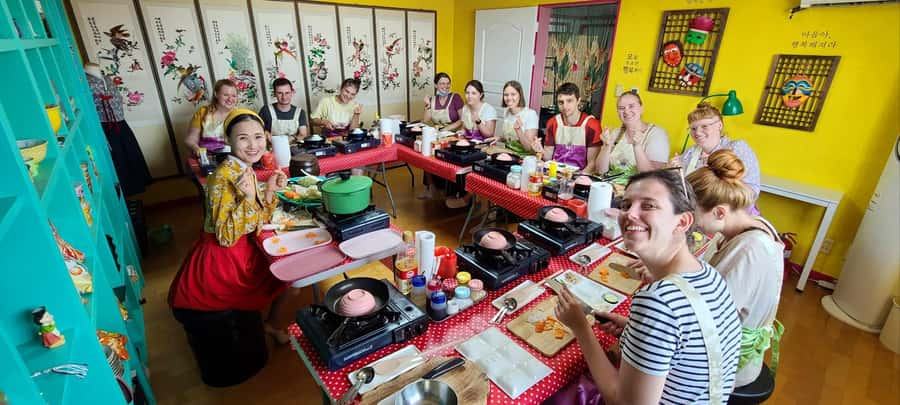
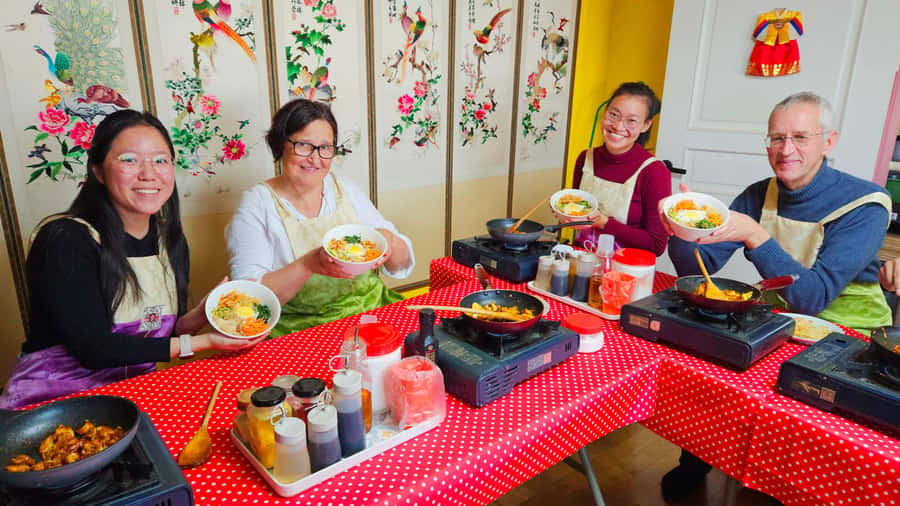
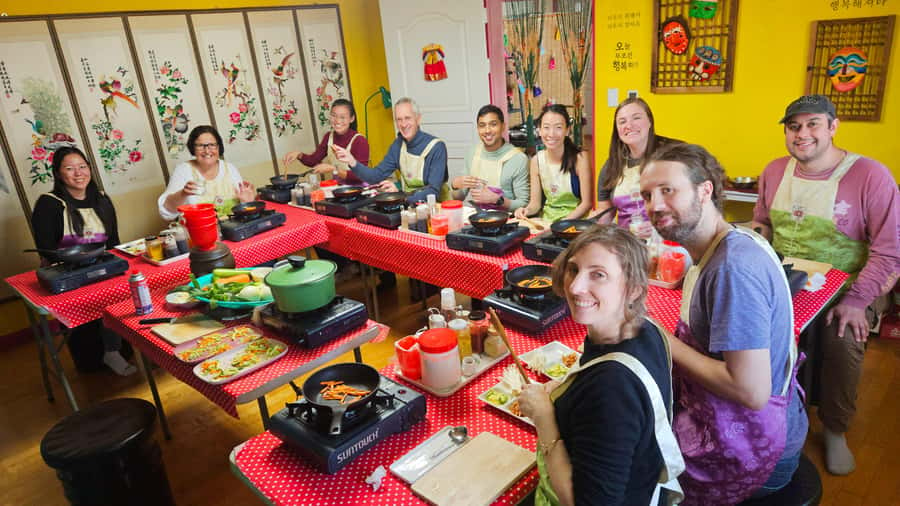
The class covers three main dishes and one stew. Your chef-guide demonstrates each preparation, then helps you cook. The groups are limited to 10 people, and the class is designed as hands-on practice rather than a demonstration where you simply watch from the side.
Bibimbap
Bibimbap combines rice, meat, vegetables, and Korean seasoning in one bowl. It is a useful introduction to Korean cooking because it shows how separate ingredients come together at the table. You learn not just to assemble the dish, but also how the parts fit into a balanced meal.
More Cooking Classes with a Market Tour in Seoul:
- Seoul: Authentic Korean Cooking Class and Market Tour
★ 5.0 · 6 reviews - Hanoi Cooking Class: Culture, Local Market & Meaning CSR Impact
★ 5.0 · 5,147 reviews - 5 Traditional Dishes Hanoi Cooking Class with Market Trip
★ 5.0 · 4,890 reviews - Cooking Class and Lunch at a Tuscan Farmhouse with Local Market Tour from Florence
★ 5.0 · 4,831 reviews
Dakgalbi
Dakgalbi is stir-fried chicken. The dish gives you practice with pan cooking and Korean flavors. It is also a good choice for a group class because the cooking feels active and social without requiring advanced technique.
Haemul-pajeon
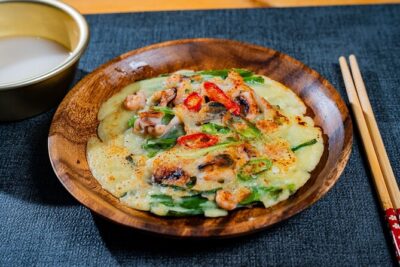
Haemul-pajeon is a seafood and green-onion pancake. Flipping the pancake is one of the class’s more playful moments, and it can be the trickiest task for a beginner. The instructors guide you through it, so you do not need previous cooking experience.
Doenjang-jjigae
Doenjang-jjigae is a stew made with fermented soybean paste. It introduces one of the central savory flavors in Korean food. If you have only eaten Korean dishes in restaurants, this is a chance to understand how fermented paste works in a home-style dish.
The recipes are approachable enough for novice cooks, and the class includes all ingredients and equipment. You work with an English-speaking guide, though Korean is also available. Hosts Sarah and Sara are praised for clear explanations, good English, and an ability to involve every person in the group. Junghee is also noted for being welcoming, funny, and energetic.
That personality matters. Cooking classes can become awkward if the instructor focuses only on the fastest cooks. Here, the teaching style is meant to keep beginners involved while still giving confident cooks something to do. You should expect shared conversation, laughter, and some group interaction, not a quiet private lesson.
Hanjeongsik turns the class into a proper meal
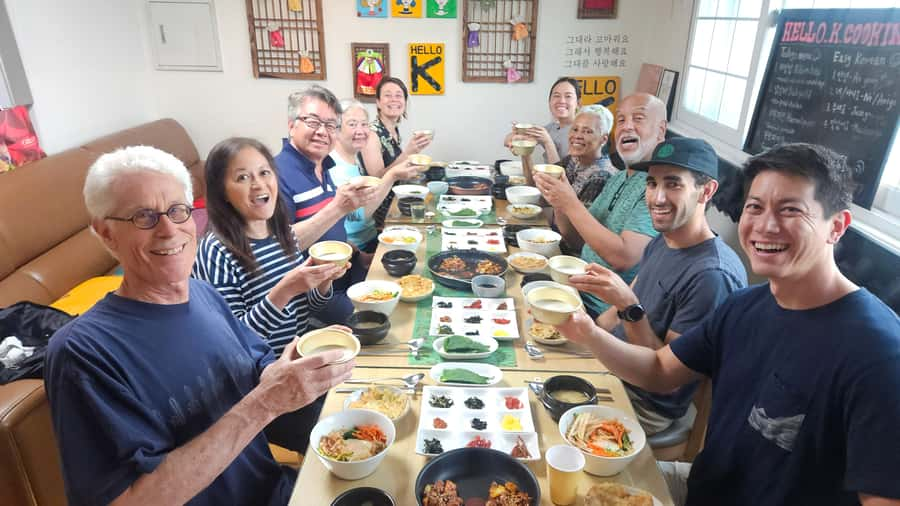
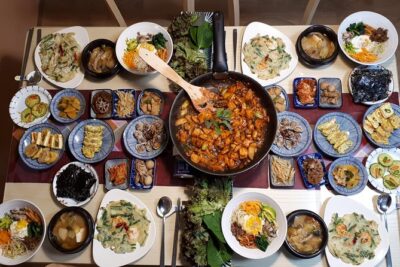
Once the cooking is finished, you sit down and eat. Your dishes are served with a Hanjeongsik-style spread, including more than 10 side dishes, rice, seasonal fruit, and rice wine. Water is included as well.
Hanjeongsik is valuable here because it shows how Korean meals are built around variety. The four dishes you prepare are not isolated plates. They join a table filled with small tastes, contrasting textures, rice, soup, and accompaniments. You can compare the food you made with the side dishes supplied by the host and see how each part supports the others.
This is also where the home setting pays off. A restaurant can show you finished food, but the class lets you take part in the preparation and then share the result around a table. The meal is likely to be the most social part of the afternoon, especially in a small group where everyone has cooked together.
Rice wine is included, but you should tell the host about dietary restrictions and allergies before the class. The activity information specifically asks participants to contact the local host about these needs. Do not wait until you arrive, since the menu and ingredients are planned in advance.
Tal masks and small cultural touches
The experience includes a chance to try on an artful Tal mask. These masks are worn at Korean heritage festivals, so the activity adds a visual and cultural element beyond food.
It is a small feature, not the main reason to book. Still, I like details like this because they break up the cooking and connect the meal to Korean cultural traditions. You also receive photo and video service, which can help preserve the market walk, cooking session, and group meal without requiring you to document every moment yourself.
The language lesson, Tal mask, market walk, and Hanjeongsik meal give the class a wider scope. You are not simply paying for a recipe lesson. You are getting a compact introduction to food, hospitality, language, and everyday customs.
What the $98 price includes
At $98 per person, this is not the cheapest way to eat in Seoul. You could buy a market meal for much less, and you could visit a cooking school with a different format. The value comes from the amount packed into the 3.5 hours.
Your price includes:
- The guided market tour
- Street-food samples
- A professional cooking class
- All ingredients and equipment
- Welcome tea
- The meal and Korean side dishes
- Seasonal fruit, rice wine, and water
- Recipes
- Photo and video service
You are also paying for instruction and access to a local home. Four dishes, a market visit, a full meal, and cultural explanation would be difficult to arrange independently in one afternoon. For a visitor who wants to understand Korean food rather than simply eat it, the price is reasonable.
The value is weaker if you dislike group activities, already cook Korean food confidently, or mainly want a quick meal. The class is limited to 10 people, but it is still a shared experience with group conversation and a common pace.
Timing, meeting point, and practical planning
The activity lasts 3.5 hours, with starting times based on availability. Build in enough time to reach Mangwon Station before the stated start. The meeting point is outside Exit 2, and the activity finishes back at the same meeting point.
There is no hotel pickup or drop-off. You are responsible for getting to and from the station, so check your route before the day of the class. This is especially important if you are staying far from Mangwon or have a tightly packed Seoul schedule.
Wear comfortable shoes. The market visit involves walking, and the class takes place in a home with stairs. The information provided does not promise wheelchair access, so ask the host directly if you have mobility needs.
The group size is capped at 10, which is small enough for personal help but large enough to create a social mood. English and Korean are the available teaching languages. The hosts are described as energetic and attentive, with Sarah, Sara, and Junghee receiving particular praise for including each person and keeping the class moving.
Cancellation is flexible up to 24 hours before the activity for a full refund. You can also reserve now and pay later, which helps if your Seoul schedule is still changing.
Who will enjoy this Seoul cooking class?
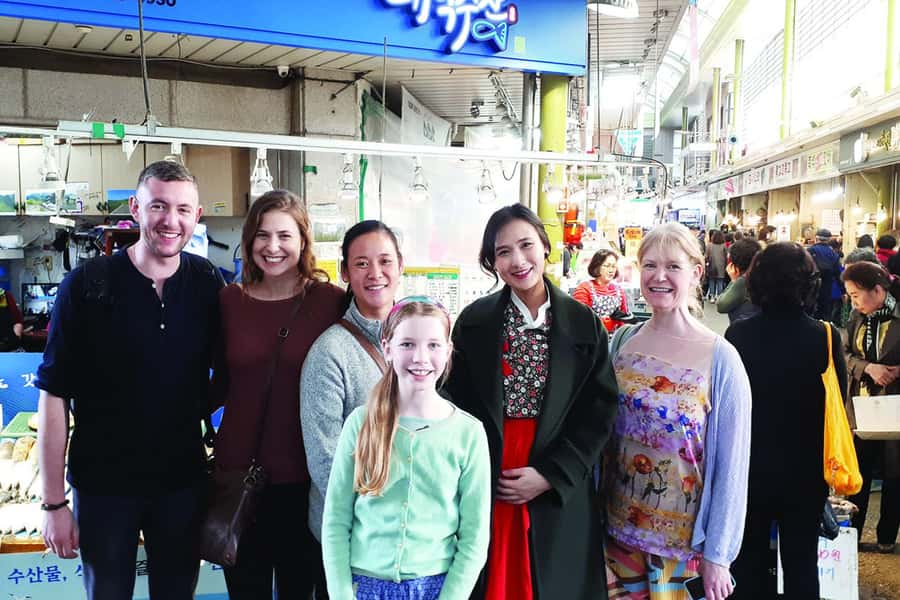
I would choose this for first-time visitors who want a friendly introduction to Korean food. You do not need cooking experience. The class is built for beginners, and the guide walks you through each dish.
It also suits solo visitors. A small group, shared meal, and active cooking give you natural company without requiring you to organize a private group. Couples and families with older children may also like the mix of food, conversation, and simple cultural activities.
Food lovers will get the most from the market visit and the ingredient explanations. If you plan to cook Korean dishes at home later, the recipes and practice with sauces, vegetables, chicken, seafood, pancakes, and fermented soybean paste add real value.
I would think twice if stairs are difficult for you, if you have serious allergies that cannot be accommodated, or if you want a polished restaurant-style cooking studio. This is a home-based activity, and that personal setting is both its appeal and its limitation.
Should you book it?
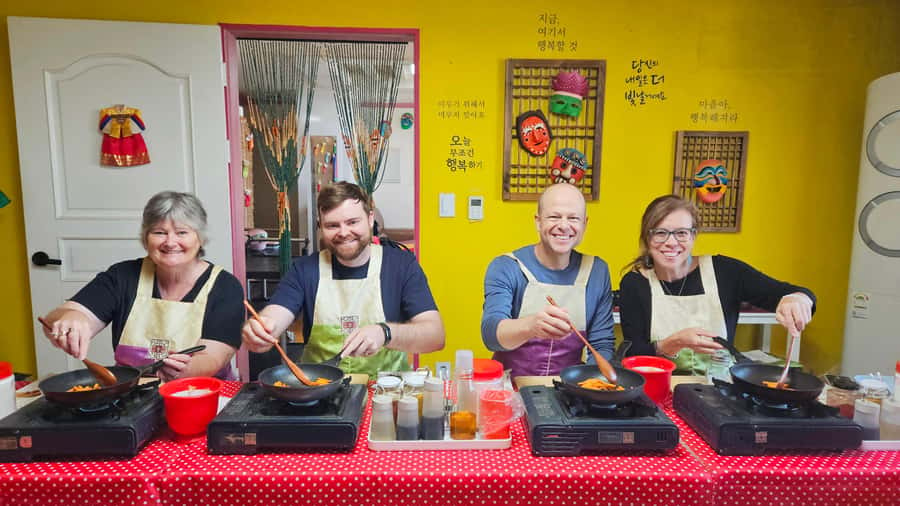
Book this class if you want to understand how Korean food fits into daily life. The strongest combination is the market walk followed by hands-on cooking and a Hanjeongsik meal. You taste, shop, prepare, and eat within one short outing.
The $98 price makes sense for visitors who value instruction, a local host, included food, and a small group. It is less compelling for anyone who only wants street food or a basic meal. Check the stair access, contact the host about allergies, and plan your own route to Mangwon Station.
For most curious eaters, this is a very good use of an afternoon in Seoul. You leave with full plates, four recipes, and a clearer idea of why Korean meals include so many dishes around the rice and soup.
FAQ
Where does the Korean cooking class meet?
Meet your guide outside Exit 2 at Mangwon Station. The activity ends back at the same meeting point.
How long does the activity last?
The cooking class and market tour last 3.5 hours. Starting times depend on availability.
What dishes will I cook?
You will prepare bibimbap, dakgalbi, haemul-pajeon, and doenjang-jjigae.
Is the meal included?
Yes. The class includes your cooked dishes, more than 10 Korean side dishes, rice, seasonal fruit, rice wine, water, and a welcome tea.
Is hotel pickup available?
No. Hotel pickup and drop-off are not included. You must make your own way to and from Mangwon Station.
Is the class suitable for people with dietary restrictions?
You should contact the local host before booking or attending to discuss allergies and dietary restrictions. The activity information specifically asks participants to do this.
More Home Cooking Classes in Seoul
- Khmer Cooking Class at a Local’s Home in Krong Siem Reap
★ 5.0 · 2,731 reviews - Marrakech: Moroccan Cooking Class with a Local Family
★ 4.9 · 668 reviews - Mexican Cooking from Scratch in a Local Home in Tulum
★ 5.0 · 585 reviews - Pastamama, Home Cooking Classes at Grace’s Home
★ 5.0 · 521 reviews
Newest classes around Seoul
- Seoul: Korean Home Visit, Cooking & Cultural Experience★ 5.0 · 2 reviews
- Seoul: Korean Kimchi Cooking Class in the Heart of the City★ 5.0 · 3 reviews
- Seoul: Premium Korean Feast Cooking Class★ 5.0 · 3 reviews
- Seoul: Kimchi Dishes Cooking Class with Wine Pairing★ 4.7 · 38 reviews
- Seoul: Korean Cooking Class with Local Grocery Shopping★ 5.0 · 13 reviews
- (Seoul) Korean Cooking Class with a Professional Chef★ 5.0 · 14 reviews
- Seoul: Authentic Korean Cooking Class and Market Tour★ 5.0 · 6 reviews
- Seoul: Cooking Class and Tour with Michelin-Trained Chef★ 5.0 · 11 reviews
Seoul Cooking Classes, compared.
Local Home Korean Cooking Class & Market Adventure in Seoul
Read our review →
Master Korean traditional cooking with a Kimchi chef
Read our review →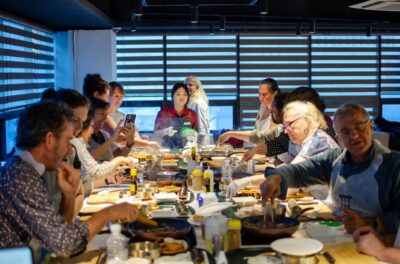
Taste of Korea, Authentic Home Style Cooking Class
Read our review →
Royal Seoul Cooking Class in a 100-Year-Old Hanok
Read our review →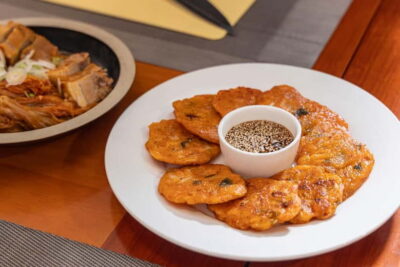
Temple Vegan Cooking Class & Oriental Medicine Tour
Read our review →Browse the lists this tour appears in