
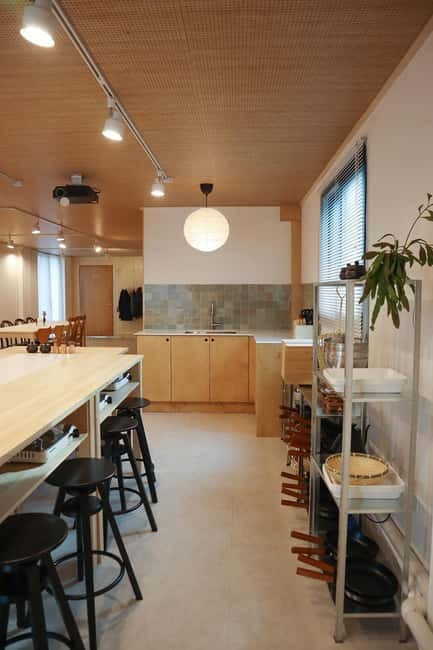
Review · SEOUL COOKING CLASSES
Seoul: Korean Cooking Class with Local Grocery Shopping
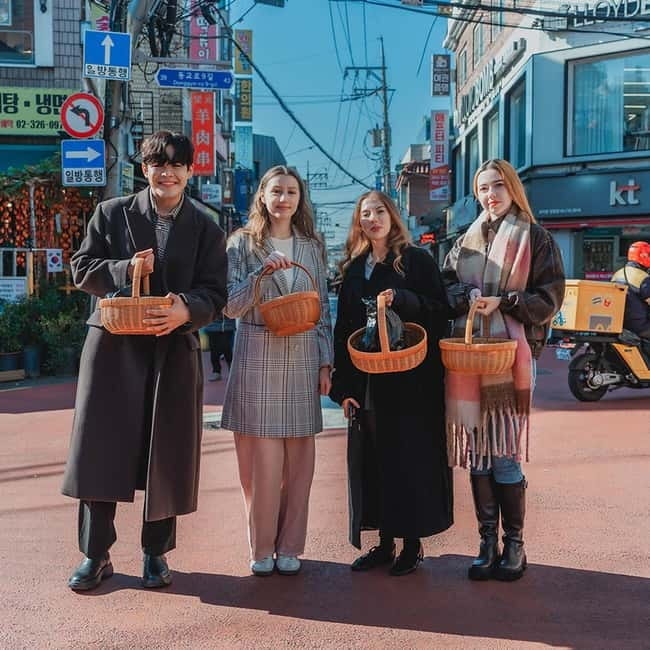
Mangwon Market is the best part of this experience. You shop where Seoul residents shop for daily meals, then carry those ingredients into a small kitchen and turn them into bulgogi, gyeran-jjim, and kimbap. I like the local feel of Mangwon, which is less geared to sightseers than Gwangjang, and I like that Phoebe and Rachel keep the class friendly and easy to follow. The one catch is important: the market visit is offered only with morning classes, so an afternoon or evening booking skips that part.
The class also gives you a useful Korean meal, not just a quick taste. You make the food yourself, sit down for lunch or dinner, and receive recipes to use later. The 8-person limit should keep the cooking personal, but 150 minutes is still a brisk schedule if you want a slow market wander.
Key points at a glance
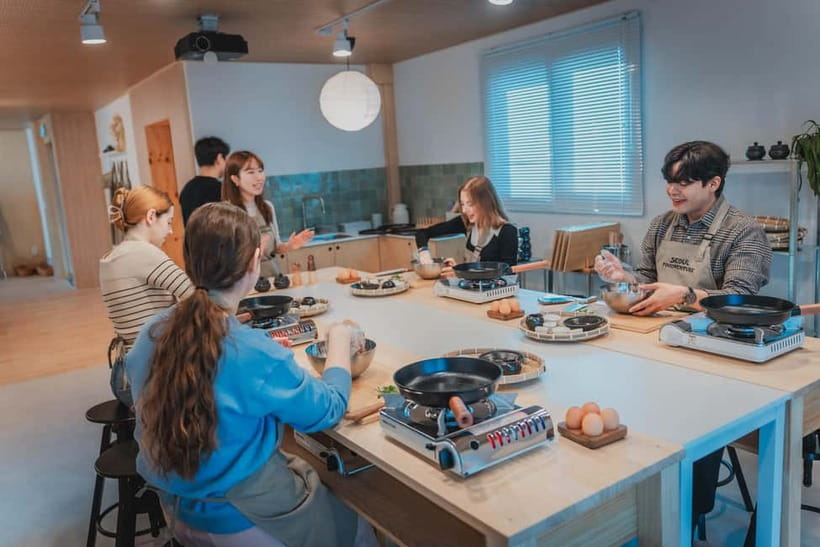
- Mangwon Market before the cooking: Morning groups shop for ingredients in a market used by local residents.
- Three Korean staples: You prepare marinated beef bulgogi, fluffy steamed egg, and rolled kimbap.
- Phoebe and Rachel lead the class: Instruction is in English and designed for complete beginners as well as confident home cooks.
- A small group of eight: The group size leaves room for questions and hands-on cooking.
- Food, drinks, and recipes included: You sit down to eat a Korean-style meal and take the recipes with you.
- Easy Mapo location: The studio is on the fourth floor at 8, World Cup-ro 13-gil, close to Mangwon Station Exit 2 and Mangwon Market.
Starting at the Seoul Foodventure studio
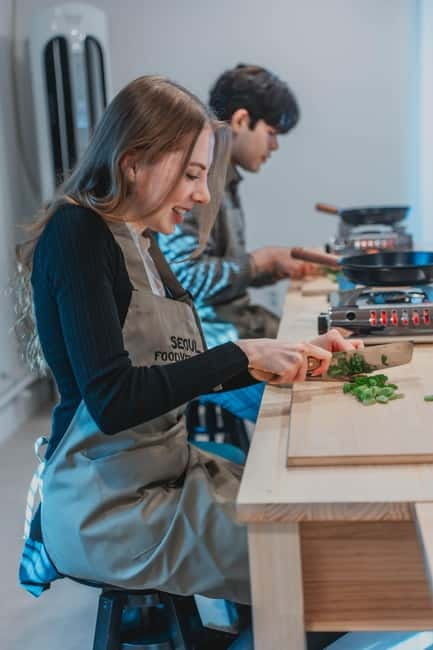
You meet at the Seoul Foodventure studio in Mapo-gu, just steps from Mangwon Station Exit 2. Search Seoul Foodventure on Google or Naver to find the address: 4th floor, 8, World Cup-ro 13-gil, Mapo-gu, Seoul.
This location works well for a food-centered day in western Seoul. Mangwon Market is close by, and Hongdae is also a short distance away. You do not need to cross the city to reach the class, though you should allow time to find the building and go up to the fourth floor.
The activity lasts 150 minutes, or two and a half hours. That is enough time for a market visit on a morning booking, basic instruction, cooking, eating, and some conversation without turning the class into a full-day commitment.
Phoebe and Rachel teach in English. The class is made for all skill levels, so you do not need to know Korean cooking terms or have much kitchen experience. If you are a confident cook, you may find the pace familiar, but the market stop and local food context add more than a standard recipe lesson.
More Korean Classes in Seoul:
- Local Home Korean Cooking Class & Market Adventure in Seoul
★ 5.0 · 1,024 reviews - Master Korean traditional cooking with a Kimchi chef
★ 5.0 · 385 reviews - Seoul: Korean Cooking Class at a Local Home and Market Tour
★ 5.0 · 348 reviews
Shopping through Mangwon Market
The morning begins with a walk through Mangwon Market to choose the ingredients for the meal. This is not simply a photo stop. You see the kind of shopping that supports everyday Korean home cooking, and the market has more local use than the tourist-heavy Gwangjang Market.
That difference matters. Gwangjang is famous and worth seeing, but it can feel like a stop on every food tour in Seoul. Mangwon gives you a closer look at routine food shopping. You might notice products you would pass by in a restaurant or packaged snack shop, and you have the chance to ask what they are and how they are used.
The market visit also gives the dishes some context. Bulgogi is not just beef with a sweet marinade. Gyeran-jjim is not just an egg side dish. Kimbap is not merely Korean sushi, and the market helps you see the ingredients as part of a home meal and picnic culture.
The pace will be practical rather than leisurely. You have a class to reach and food to prepare, so do not expect unlimited time at every stall. Wear comfortable shoes, since the experience involves walking through the market and moving between stops.
One small detail from the class experience is worth noting: a rice drink encountered at the market may become a new favorite. It is the sort of minor discovery that makes a food outing more useful than a meal eaten without explanation.
Cooking bulgogi, gyeran-jjim, and kimbap
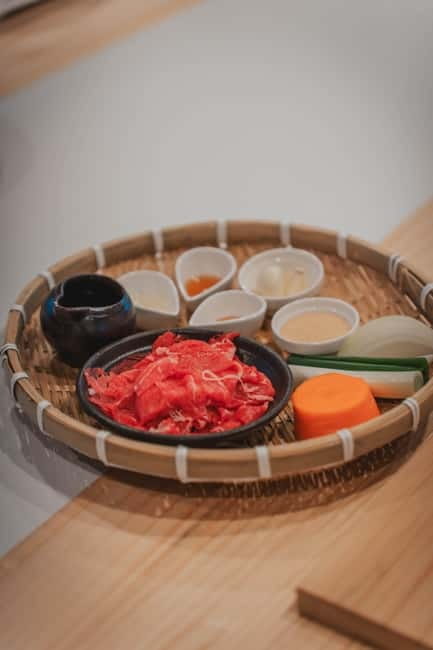
Back at the studio, you prepare three familiar Korean dishes. The main home-style meal combines bulgogi and gyeran-jjim, followed by kimbap that you roll yourself.
Bulgogi is marinated beef, usually known for its savory-sweet flavor and tender texture. Here, the value is in seeing how the marinade comes together and learning the basic handling of a dish that appears often in Korean home cooking. It is also an approachable first recipe for a beginner because the flavor is bold and easy to recognize.
Gyeran-jjim is steamed egg. It is light, soft, and comforting, with a different texture from the crisp fried eggs many people know. The dish can look simple, but steamed egg rewards careful timing and gentle handling. You learn why a short ingredient list does not always mean a careless cooking method.
Then comes kimbap, the rolled picnic food made with rice and fillings. Rolling it is the hands-on part of the class that may take the most practice. The finished pieces do not need to look perfect to taste good, and that is part of the fun. You get to make the food rather than watch an instructor prepare it from start to finish.
The class is designed so a person who has never cooked Korean food can keep up. Phoebe and Rachel explain the process in English and offer small tips that are useful beyond this one meal. At the same time, an experienced home cook can focus on technique, seasoning, and the way the dishes fit together.
With a maximum of eight people, the setting should feel more like a shared kitchen lesson than a large demonstration. You can ask questions, compare your rolls, and get help when a step feels unclear. The smaller group also gives the instructors room to keep an eye on each person’s work.
Sitting down to a Korean-style meal
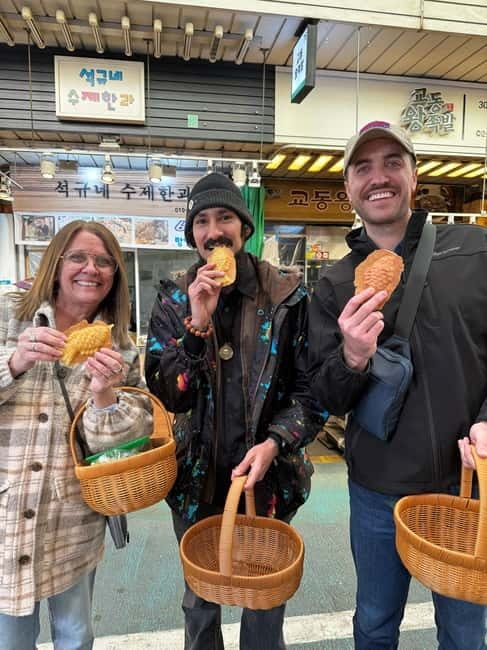
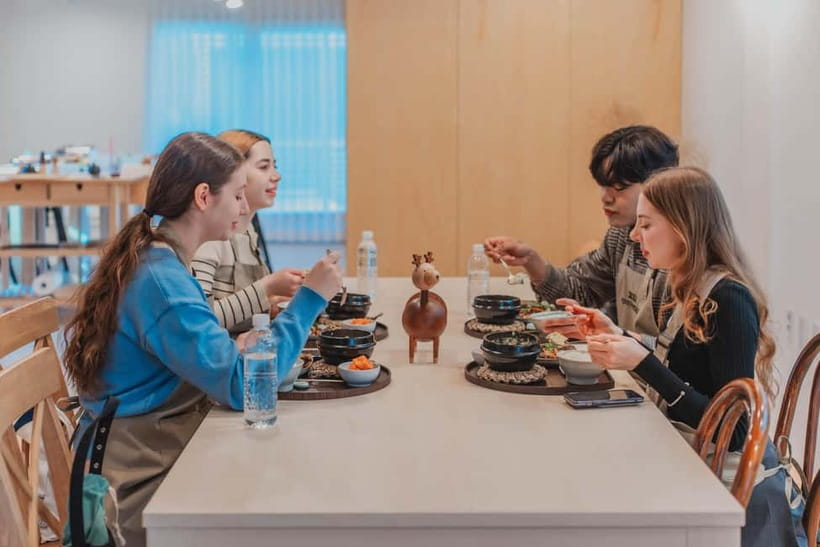
After cooking, you eat the bulgogi and gyeran-jjim as a meal, with kimbap prepared for the table and for later. Lunch or dinner is included, as are drinks, so the $89 price covers more than instruction alone.
I see the strongest value in the complete sequence: market, kitchen, meal, and recipes. A cheaper food tasting might give you more dishes in less time, but it would not give you the same understanding of how those dishes are bought and prepared. A private cooking lesson might offer more personal attention, but this small-group format keeps the price more moderate.
The meal is also a useful test of what you have learned. You can taste the result soon after making it, spot the difference between your own work and the instructor’s guidance, and decide which recipe you would repeat at home.
Do not book this expecting a long formal restaurant meal. The emphasis is on shared cooking and a practical home-style plate. If you want a polished tasting menu, this is the wrong format. If you want to learn a few dishes you can make again, it is a better fit.
More Cooking Classes in Seoul:
- Seoul: Korean Cooking at Seoul Cooking Club!
★ 5.0 · 311 reviews - Korean Cooking at Seoul Cooking Club
★ 5.0 · 220 reviews - Seoul: Taste of Korea, Authentic Home Style Cooking Class
★ 4.9 · 166 reviews - Seoul: Royal Seoul Cooking Class in a 100-Year-Old Hanok
★ 5.0 · 96 reviews
Taking kimbap toward the Han River
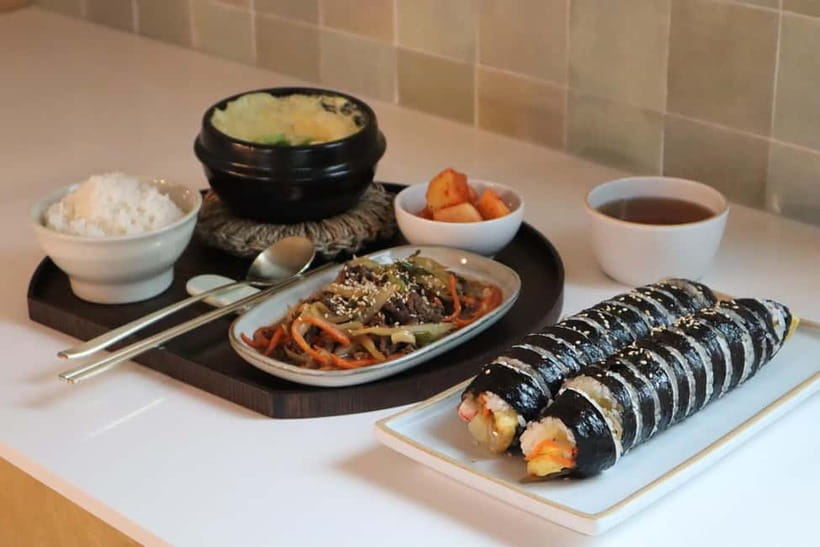
The leftover kimbap can become part of a simple Seoul picnic. The nearby Han River offers the right setting: spread out a mat, relax, and eat the rolls in the sun, following a familiar local habit.
The river outing is not presented as a separately guided portion of the class, so you should treat it as an optional idea after the scheduled activity. It works best if you have time left in your day and want to turn the food into a relaxed outdoor snack.
This suggestion also shows why kimbap is a smart choice for the class. Bulgogi and gyeran-jjim are best enjoyed as part of the cooked meal, while kimbap travels well. You get one dish to eat right away and another that can continue your food experience after you leave the studio.
Timing, access, and what to bring
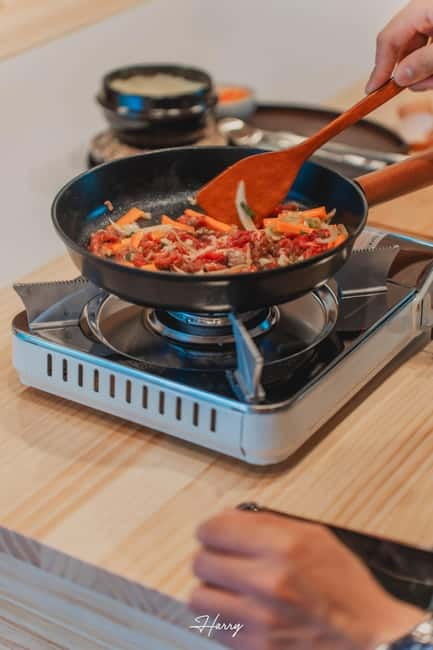
Book a morning class if the Mangwon Market visit is a priority. The market tour is not available with every start time, and afternoon or evening participants should expect the cooking portion without that shopping stop.
Comfortable shoes are a sensible choice. There is walking in the market, and the class includes moving through a busy food-shopping area before you begin cooking.
Tell the provider about allergies or dietary restrictions in advance. The activity supplies the ingredients, so the instructors need that information before the class rather than when the food is already being prepared.
The studio is wheelchair accessible. The group is limited to eight people, and English is the listed teaching language. These details make it a practical option for a wide range of participants, though the market visit still involves movement through a public shopping area.
Cancellation is free up to 24 hours before the activity for a full refund. You can also reserve now and pay later, which helps if you are still arranging your Seoul schedule.
Who will get the most from this class
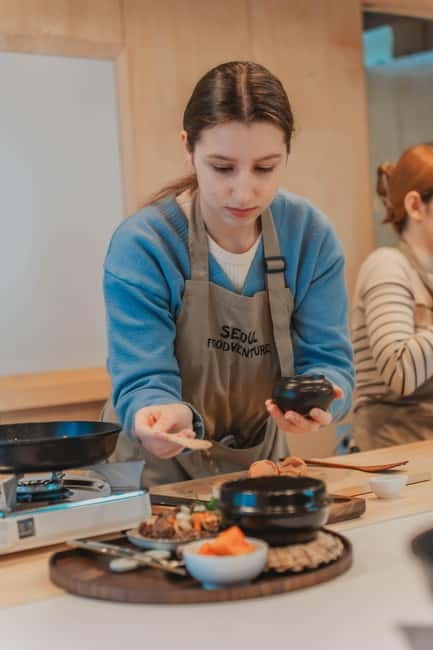
I would choose this for a first visit to Seoul if food is one of your main ways into a place. The market adds a local layer, and the recipes give you something more lasting than a single restaurant meal.
It suits couples, friends, and solo visitors who enjoy meeting a small group around a shared task. Families may also like the hands-on format, though the supplied information does not specify a minimum age, so check that point before booking for young children.
Beginners should feel comfortable here. You are not expected to arrive with knife skills or Korean kitchen experience. The class is also useful for experienced cooks who want guidance on three specific dishes rather than a broad survey of Korean cuisine.
I would think twice if your schedule only allows a late class and your main reason for booking is the market. I would also skip it if you dislike group activities or want a long, unhurried market visit. The small group helps, but this remains a shared lesson with a fixed two-and-a-half-hour timetable.
Is the $89 price fair?
At $89 per person, the price is reasonable for a small English-language class that includes a market tour, ingredients, a full meal, drinks, and a recipe booklet. You are paying for instruction and access to a local food setting, not just the cost of raw ingredients.
The strongest value comes from the market and the hands-on format. You shop for the food, prepare it, eat it, and leave with recipes. That chain gives the activity a clear purpose, and it may help you repeat the meal after your trip.
The value is weaker if you only want to eat Korean food. Seoul has many less expensive meals, and a cooking class takes time that could otherwise go toward more restaurants or markets. Book this when you want participation and context, not simply a plate of bulgogi.
Should you book it?
Book this class if you want a friendly, practical introduction to Korean home cooking and can attend in the morning. Mangwon Market, the small group, and the chance to cook with Phoebe and Rachel are the main reasons to choose it over a basic restaurant meal or a large tourist class.
Skip it if the market visit is essential but only an evening time works, or if you prefer private instruction. For everyone else, the combination of local shopping, three recognizable dishes, a sit-down meal, and recipes makes this a well-balanced use of 150 minutes in Seoul.
FAQ
Where does the Korean cooking class meet?
The class meets at Seoul Foodventure, on the fourth floor at 8, World Cup-ro 13-gil, Mapo-gu, Seoul, Korea. The studio is close to Mangwon Station Exit 2. You can search Seoul Foodventure on Google or Naver.
How long does the experience last?
The activity lasts 150 minutes, or two and a half hours. Starting times vary, so check availability when booking.
Is the Mangwon Market tour included with every class?
No. The market tour is available only for morning classes. Choose a morning start if you want to shop for ingredients at Mangwon Market.
Which dishes will I learn to prepare?
You will learn to make bulgogi, Korean marinated beef, gyeran-jjim, steamed egg, and kimbap, a Korean rice roll and picnic snack.
Is the class suitable for beginners?
Yes. The class is designed for all skill levels, including people who have never cooked before. Instruction is provided in English.
What is included in the price?
The experience includes the market tour when offered with a morning class, cooking ingredients, lunch or dinner, drinks, and a recipe booklet.
Newest classes around Seoul
- Seoul: Korean Home Visit, Cooking & Cultural Experience★ 5.0 · 2 reviews
- Seoul: Korean Kimchi Cooking Class in the Heart of the City★ 5.0 · 3 reviews
- Seoul: Premium Korean Feast Cooking Class★ 5.0 · 3 reviews
- (Seoul) Korean Cooking Class with a Professional Chef★ 5.0 · 14 reviews
- Seoul: Kimchi Dishes Cooking Class with Wine Pairing★ 4.7 · 38 reviews
- Seoul: Authentic Korean Cooking Class and Market Tour★ 5.0 · 6 reviews
- Seoul: Cooking Class and Tour with Michelin-Trained Chef★ 5.0 · 11 reviews
- Seoul: Royal Seoul Cooking Class in a 100-Year-Old Hanok★ 5.0 · 96 reviews
Seoul Cooking Classes, compared.
Local Home Korean Cooking Class & Market Adventure in Seoul
Read our review →
Master Korean traditional cooking with a Kimchi chef
Read our review →
Korean Cooking Class at a Local Home and Market Tour
Read our review →
Taste of Korea, Authentic Home Style Cooking Class
Read our review →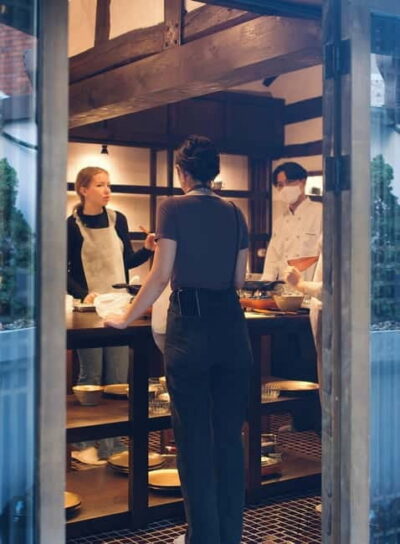
Royal Seoul Cooking Class in a 100-Year-Old Hanok
Read our review →
Browse the lists this tour appears in