
Review · NEPAL COOKING CLASSES
Pokhara: Nepali Cooking Class and Momo Making Workshop
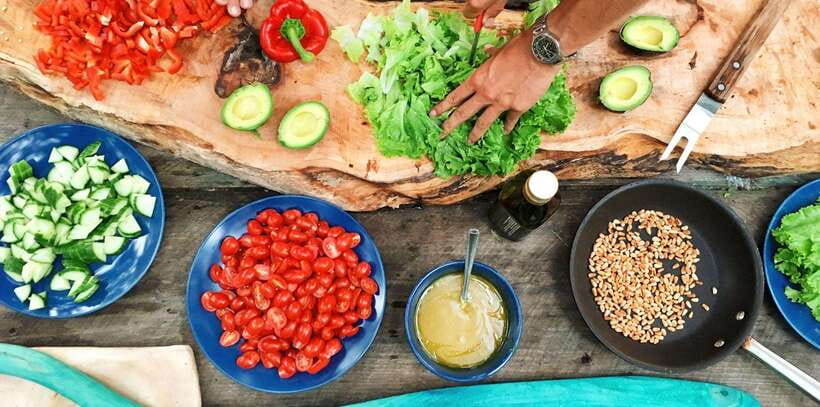
Momo making is the star here, but the real treat is cooking inside a Nepali family home with an Aama chef at the helm. You may choose chicken or vegetarian momos, or switch to dal bhat, then sit down to eat what you made.
I like the small group of eight and the patient, hands-on teaching. I also like that the class can include choosing vegetables, spices, and meat at a local market, rather than simply watching a demonstration. A possible drawback is the food allergy restriction: this class is not suitable for people with food allergies.
I especially like the warm family touch. The Dream family has welcomed cooks with tea, a printed certificate, a tika blessing, and even a scarf. The home is near Lakeside, which makes it easy to pair the class with a walk beside Phewa Lake.
Key points to know before booking
- Choose momos or dal bhat: Make dumplings with chicken or vegetarian filling, or prepare Nepal’s classic lentil, rice, curry, and pickle meal.
- Learn in a family kitchen: An English-speaking local Aama leads the cooking, with help from her family.
- Cook, then eat: You prepare the dishes yourself and sit down for a full tasting meal afterward.
- Pickup is included: A driver collects you from your Pokhara hotel with a name card and returns you after the three-hour class.
- Keep the group small: No more than eight people attend, giving you room to ask questions and work with the ingredients.
- Expect personal touches: Depending on the family’s welcome, you may receive a completion certificate, tika, or scarf.
Why this Pokhara cooking class feels personal
Pokhara has no shortage of restaurants serving dal bhat and momos. A cooking class gives you something a restaurant cannot: a look at how these foods come together in a Nepali home, and the chance to ask why each step matters.
The host family is central to the experience. The local Aama chef teaches in English and demonstrates the work at a pace suited to beginners. You are not expected to arrive with cooking skills. The class is also suitable if you already cook and want to learn a Nepali method you can repeat at home.
The family welcome adds a human touch. The Dream family includes parents and children, and the cooking can feel like a shared household activity rather than a formal school lesson. One host has been praised for her clear English, patience, and strong cooking skills. That matters when you are learning tasks such as shaping dough, preparing fillings, or balancing spices.
The class also gives you a closer connection to everyday Nepali food. Dal bhat is not just a plate of rice and lentils. It is a familiar meal built around several parts, often including curry, vegetables, pickle, and seasoning. Momos are equally important to the food culture of Nepal, but their appeal is easy to understand: soft dough, a savory filling, and a dipping pickle made to cut through the richness.
More Cooking Classes in Nepal:
- Half day cooking class in Thamel kathmandu
★ 5.0 · 607 reviews - Kathmandu: Local Women-Led Nepali Cooking & Momo Class
★ 4.9 · 360 reviews - Kathmandu: Local Lead Nepali Cooking & Momo-Making Class
★ 5.0 · 212 reviews
Starting with ingredients and a local market
The experience can begin with a look at how ingredients are selected. You may visit a local market to choose vegetables, spices, and meat for the class. This part is useful because it connects the finished meal to the ingredients that Nepali cooks actually use.
Do not expect a long market tour. The focus is food preparation, not sightseeing. Still, even a short market stop can help you recognize the basic building blocks of Nepali cooking. You can see the produce before it is washed, chopped, seasoned, and turned into lunch.
The market portion also gives you a chance to ask practical questions. You can learn what goes into a momo filling, which vegetables work in a curry, and how fresh ingredients are chosen. If you have a food preference, raise it before shopping begins. The class offers chicken or vegetarian momos, and the organizers ask you to share dietary restrictions in advance.
The experience is not suitable for people with food allergies. That is an important limit, since the class involves shared ingredients and a home kitchen. Dietary restrictions are worth discussing ahead of time, but you should not assume every allergy can be accommodated.
Entering the traditional kitchen
After pickup from your hotel, you are taken to the cooking location in Pokhara. Hotel pickup and drop-off are included, and the driver uses a name card to identify you. This is handy in a city where your hotel may be on a busy street or in the Lakeside area.
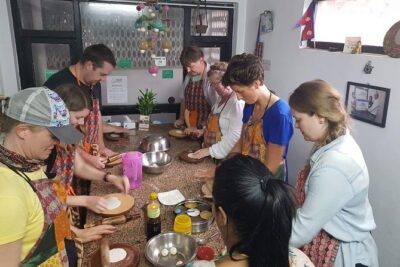
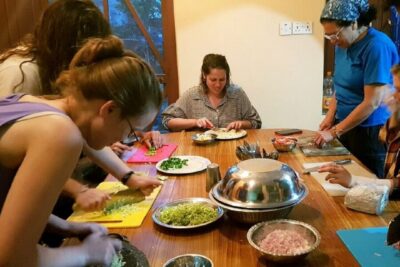
The setting is a traditional Nepali home kitchen. You can expect the smell of spices, cooking equipment, and the friendly activity of a family household. This is not a restaurant kitchen set up only for demonstrations. You take part in the work and use the ingredients and equipment provided.
The class lasts three hours. That gives the Aama chef time to explain the steps, let you practice, and serve the finished food without turning the session into a rushed photo stop. The small group limit of eight is another advantage. You get more direct help than you would in a large commercial class.
Comfortable clothing and shoes are a good idea. Cooking involves standing and handling ingredients, and you should avoid wearing anything precious or difficult to move in. Smoking is not allowed indoors.
Making momos from dough to plate
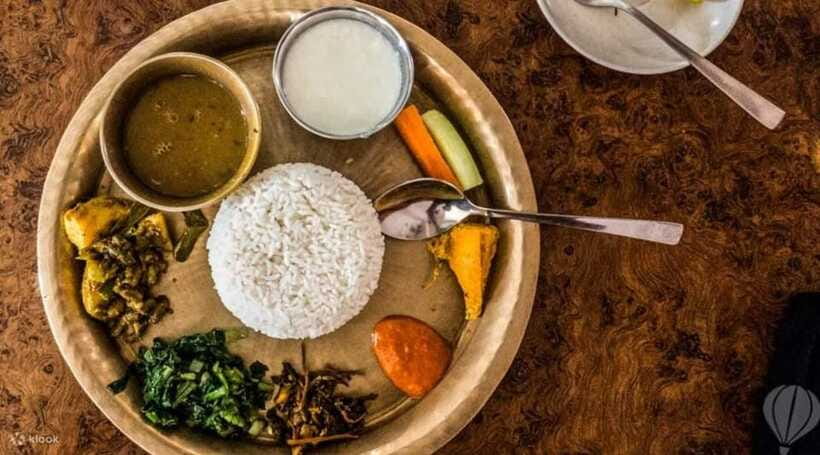
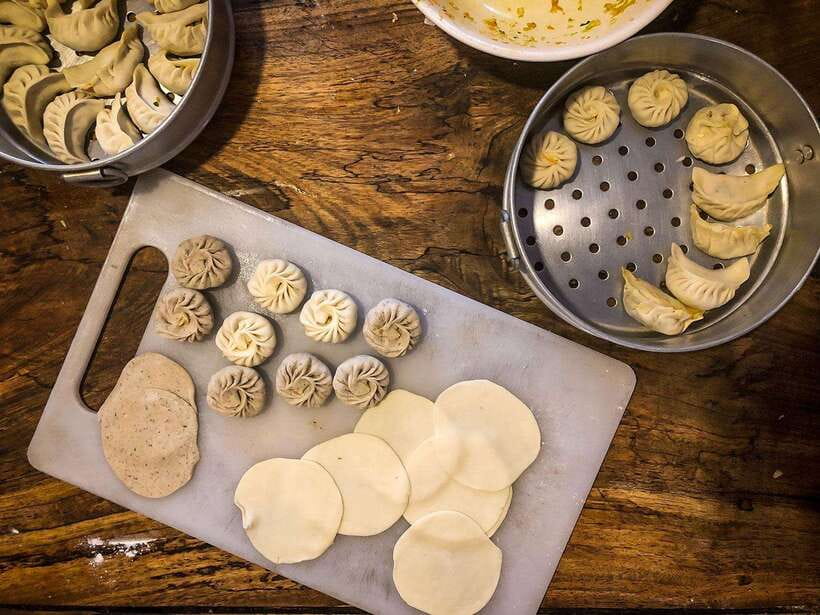
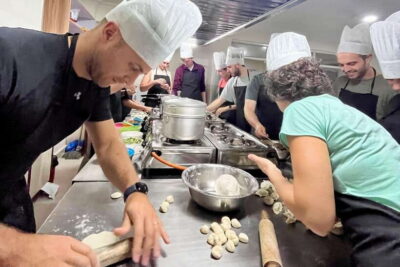
The momo class is likely the best choice if you want an active, social cooking session. You learn to prepare the dumpling mixture, work with the dough, fill the wrappers, and shape them before cooking. The exact pace depends on the group, but the format is step by step rather than a show from a distance.
Momo folding looks simple until you try to make a neat row of pleats. That is part of the fun. The chef can correct your technique and show you how much filling to use. You will learn by handling the dough, not just by taking notes.
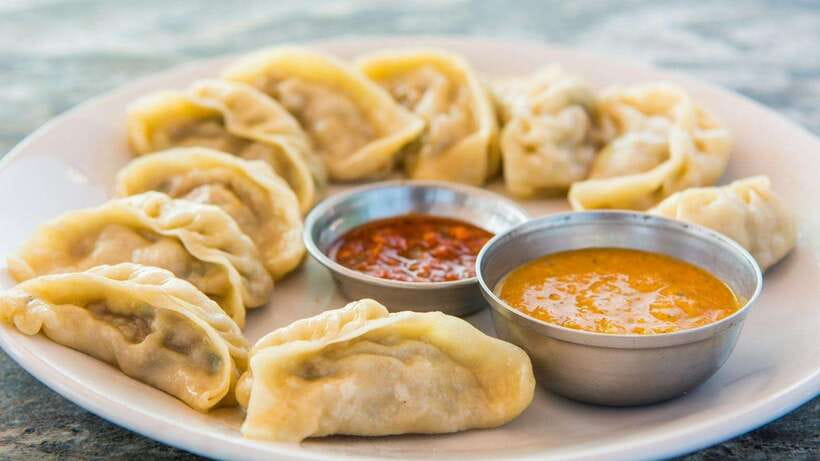
You can choose chicken or vegetarian filling. This makes the class easier to match to your diet, though it does not remove the allergy restriction. The finished momos are served with pickle, an important part of the dish. The pickle adds sharpness and spice, and it helps explain why the dipping sauce is not a minor side item.
If you enjoy cooking, the momo option gives you the most obvious skill to take home. You can repeat the process later, though the quality of your first homemade dumplings will depend on how much time you have to practice folding.
Same region, a different dish to learn:
- Local Women Lead Nepali Cooking Class
★ 5.0 · 125 reviews - Nepalese Kitchen in Pokhara: Momos or Dal Bhat Cooking Class
★ 5.0 · 67 reviews - Kathmandu: Local Women-Lead Nepali Cooking & Momo Class
★ 4.9 · 45 reviews - Kathmandu: Local Lead Nepali Cooking & Momo Making Class
★ 4.9 · 40 reviews
Preparing dal bhat and other Nepali dishes
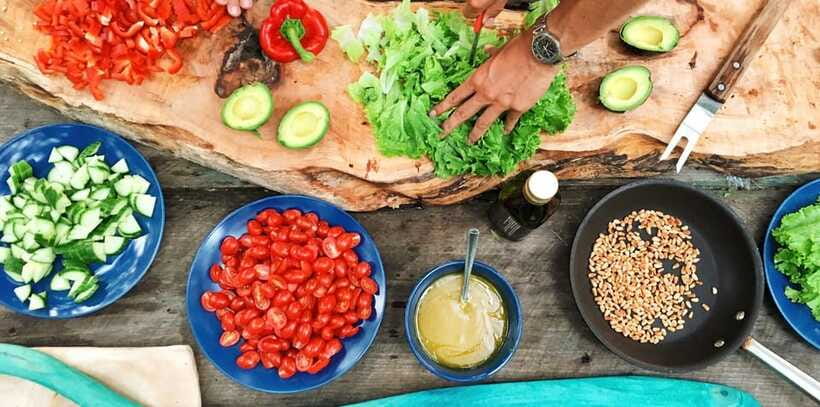
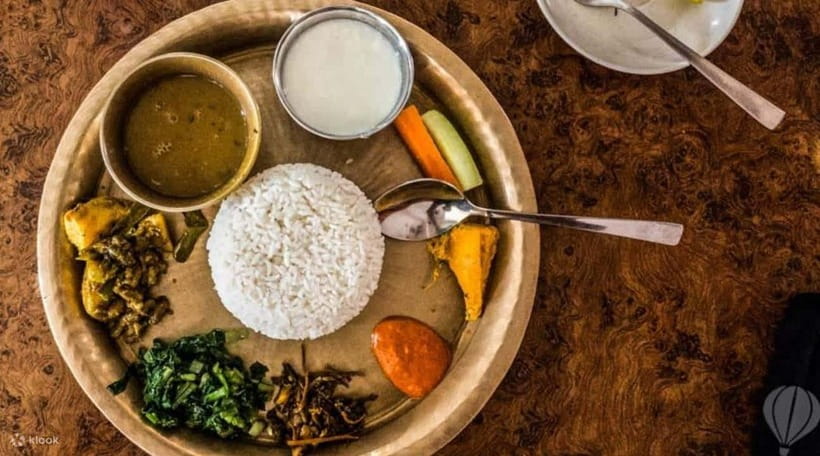
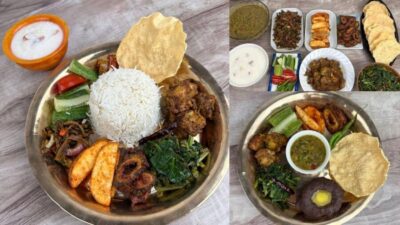
Dal bhat is the better choice if you want to understand a full Nepali meal. The dish combines rice and lentil soup with curry and other accompaniments. It is filling, familiar, and central to daily dining in Nepal.
The class teaches more than how to boil rice and lentils. You learn how separate parts of the meal are seasoned and served together. The chef can explain how the spices work and how each item fits on the plate. The result is less about one recipe and more about assembling a balanced Nepali meal.
One participant changed from the momo class to dal bhat and found the switch easy to arrange. That suggests you should ask about your preferred dish before the session, especially if you are booking close to the start time. The available choice may depend on the kitchen and ingredients that day.
The class can also include additional curries and a pickle. Since the meal is made with fresh, locally sourced ingredients, you get a more useful lesson than a fixed recipe alone. You can see how the kitchen adjusts a dish to what is available.
Masala tea, lunch, and the family welcome
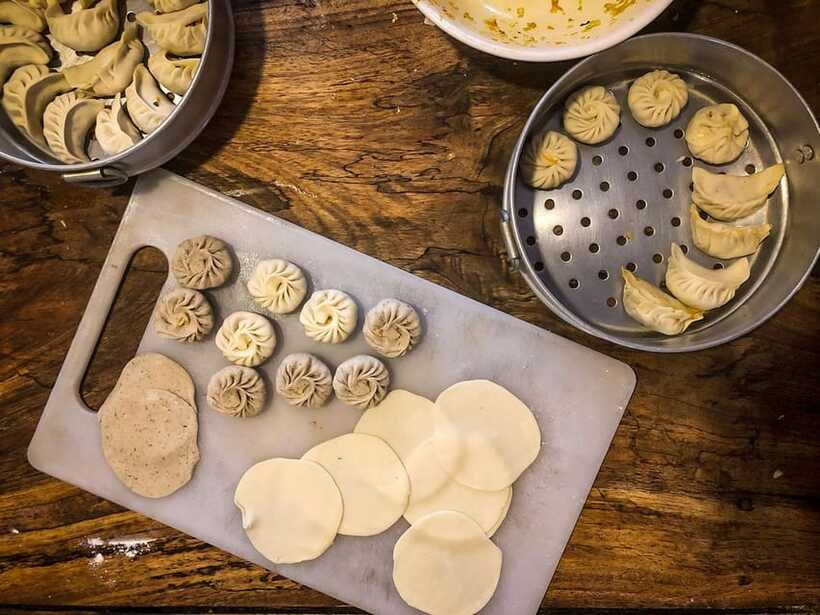
Nepali masala tea is served during the lesson. It gives you a short break from chopping, mixing, and folding, while adding another small piece of local food culture to the class.
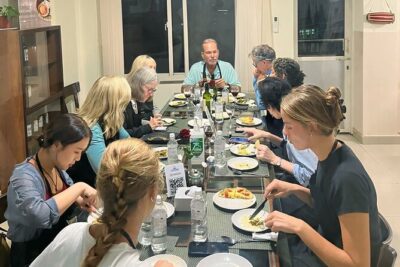
At the end, you eat the dishes you prepared. This is where the three-hour session pays off. You can taste the food while the instructions are still fresh in your mind, notice how the spices work together, and ask about anything that turned out differently from expected.
The family has added several thoughtful touches for past participants. Some cooks received a printed certificate of completion. One family also offered tika on the forehead and a scarf, turning the end of the class into a small cultural welcome rather than a simple goodbye.
These extras are not the main reason to book, and you should not treat them as guaranteed parts of every session. The reliable inclusions are the class, ingredients, equipment, tea, prepared meal, and transport.
The $42 price and what it covers
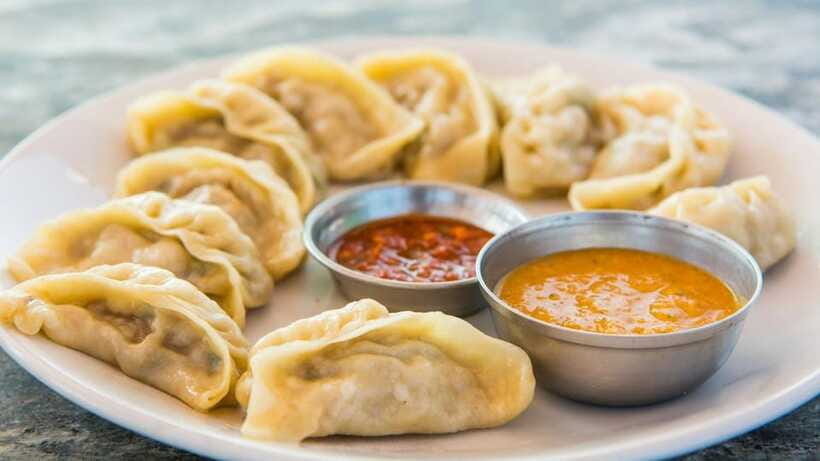
At $42 per person, the class is priced above an ordinary meal in Pokhara, but you are paying for more than food. The fee includes hotel pickup and drop-off, the English-speaking Aama chef, all ingredients and equipment, hands-on instruction, masala tea, and the meal you prepare.
That makes the value fairly strong if you want an activity as well as lunch. You do not need to shop for ingredients, rent equipment, or arrange transport. The three-hour duration also gives you time to learn rather than simply watch a quick cooking display.
The value is less clear if you only want to eat momos or dal bhat. Restaurants in Pokhara will usually be cheaper for a basic meal. This class makes sense when you care about the setting, the family contact, and learning a recipe you can use again.
The small group helps justify the cost. With up to eight participants, the chef has a reasonable chance to see your work and answer questions. It is not a private class, but it is also not a crowded demonstration.
Location, timing, and practical details
Pickup is available from your hotel in Pokhara, and the return transfer is included. You should provide the correct hotel details when booking and be ready to meet the driver with the name card system in mind.
The cooking location is well placed for time near Lakeside. After the class, you may be able to walk through the area and stop by Phewa Lake. If your hotel is farther away, a taxi return can be arranged as part of the local transport plan described for the experience.
Starting times depend on availability. Since the class lasts three hours, leave enough room in your day for transport and the meal afterward. It is best not to schedule a tight flight, trek departure, or other fixed appointment immediately after the session.
The activity is wheelchair accessible. You should still mention any mobility needs when booking, since the class takes place in a home kitchen rather than a large purpose-built cooking school. Comfortable clothes and shoes remain the best choice for everyone.
Cancellation is flexible up to 24 hours before the activity for a full refund. You can also reserve now and pay later, which helps if your Pokhara plans are still changing.
Who will enjoy this class most
I would choose this class for you if you want direct contact with a Nepali family and prefer doing over watching. It suits first-time cooks because the instructions are step by step, but experienced home cooks will still pick up useful techniques, especially with momo dough, fillings, spices, and pickle.
It is also a good fit for couples, families, and small groups of friends. The shared work gives everyone a role, and the final meal creates a natural end to the session. The family setting may feel especially meaningful if you want something more personal than a restaurant meal.
Choose the momo option if you want a focused, hands-on project and a dish that is easy to recognize and share. Choose dal bhat if you want a better sense of how a full Nepali meal is built.
I would be cautious if you have serious food allergies, dislike standing in a kitchen, or want a formal culinary course with advanced techniques. The class is designed for cultural connection and practical home cooking, not professional chef training.
Should you book the Pokhara cooking class?
Book it if you want to spend half a day with a Nepali family, learn a meal from an Aama chef, and eat the results. The combination of small-group teaching, included transport, fresh ingredients, masala tea, and a full meal makes $42 a fair price for an activity rather than just a lunch.
The best fit is someone who values personal contact and does not mind a relaxed home-kitchen setting. Pick momos for the most playful hands-on lesson, or dal bhat for the clearest introduction to everyday Nepali food.
Skip it if your main goal is the cheapest meal in Pokhara, or if food allergies make a shared cooking environment unsafe. For everyone else, this is a practical and warm way to add local food knowledge to a stay in Pokhara.
FAQ
How long does the Pokhara cooking class last?
The cooking class lasts three hours, including the hands-on preparation and meal made during the lesson.
What dishes can I learn to cook?
You can choose between dal bhat and momos. Momo fillings are available in chicken or vegetarian versions, and the class may also include curries and pickle.
Is hotel pickup included?
Yes. Pickup and drop-off from your Pokhara hotel are included. The driver uses a name card for pickup.
Is the class taught in English?
Yes. The instructor teaches in English.
How many people can join the class?
The activity is a small-group class limited to eight participants.
Is the cooking class suitable for beginners?
Yes. The class includes step-by-step instructions and is suitable for both beginners and experienced cooks.
Can people with food allergies join?
The activity is not suitable for people with food allergies. You should inform the organizers of any dietary restrictions in advance.
Newest classes around Nepal
- Kathmandu: 3-Hours of Cooking Class with Meals★ 5.0 · 10 reviews
- Pokhara: 3 Hour MoMo cooking class★ 4.5 · 10 reviews
- Nepalese Kitchen in Pokhara: Momos or Dal Bhat Cooking Class★ 5.0 · 67 reviews
- MoMo or Dal Bhat Cooking Class at Aama Kitchen in Pokhara★ 4.9 · 28 reviews
- Local Women Led Nepali Cooking Class★ 5.0 · 6 reviews
- Kathmandu: Women-Led Cooking Class & Momo Making-Local Taste★ 4.8 · 15 reviews
- Kathmandu: Nepali Cooking Class with Hotel Pickup★ 4.1 · 5 reviews
- Kathmandu: Local Women-Lead Nepali Cooking & Momo Class★ 4.9 · 45 reviews
Nepal Cooking Classes, compared.
Nepalese Kitchen in Pokhara: Momos or Dal Bhat Cooking Class
Read our review →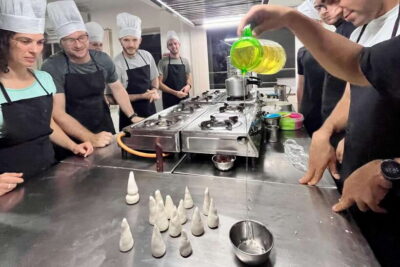
MoMo or Dal Bhat Cooking Class at Aama Kitchen in Pokhara
Read our review →Browse the lists this tour appears in