
Review · NEPAL COOKING CLASSES
Nepalese Kitchen in Pokhara: Momos or Dal Bhat Cooking Class
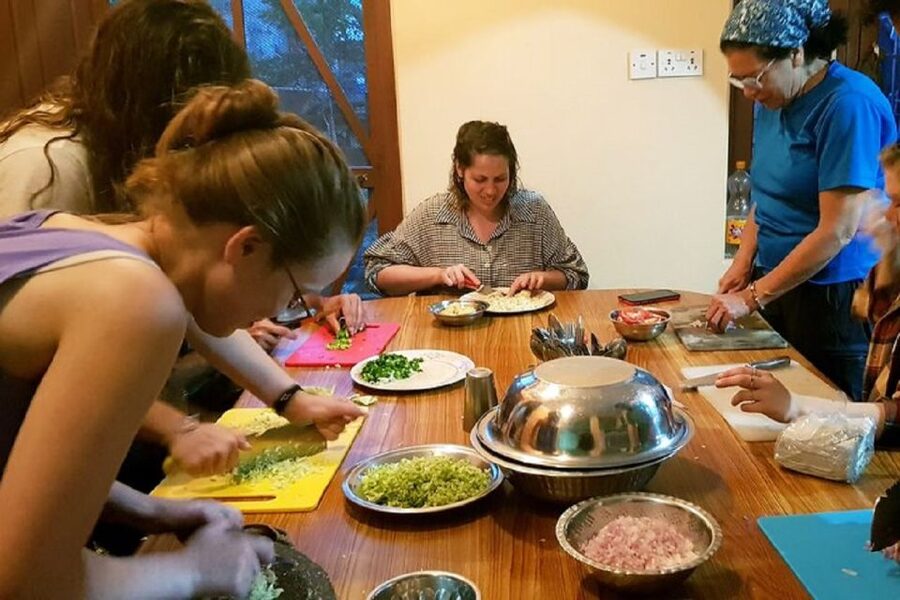
The best part of this Pokhara experience is that you cook in Sarita’s family kitchen, not in a polished school set up for tourists. You make the food yourself, then sit down to eat it with the people who prepared the space. I like the personal setting and the chance to learn dishes you can actually repeat at home. I also like that you choose between momos and dal bhat, rather than being locked into one menu.
The one thing to consider is the transport. Pickup and drop-off from Pokhara Lakeside are included, but one visitor had trouble with a taxi asking for extra business. The cooking itself can also run longer than three hours, especially if you make a large batch of momos. Come hungry, and leave some room in your schedule.
What makes this class worth three hours
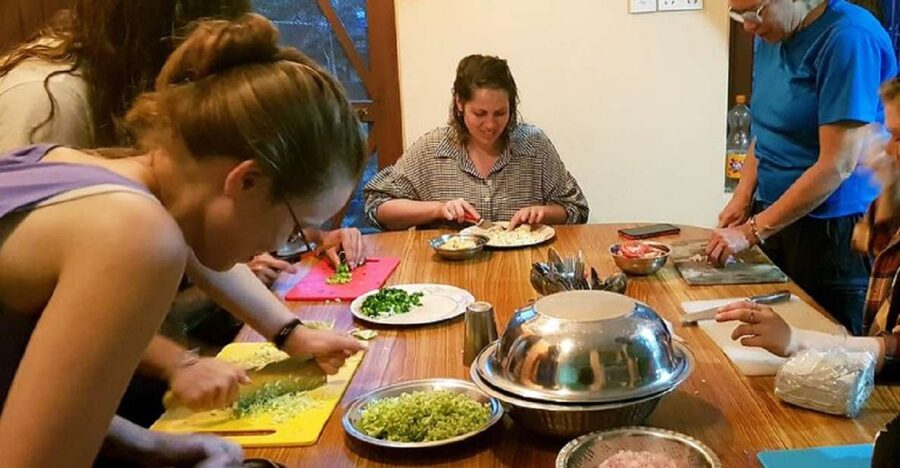
- A real home kitchen: You cook in Sarita’s home, with a small private group rather than a large classroom.
- Two classic choices: Pick handmade momos or a full dal bhat meal, depending on your interests and appetite.
- Hands-on work: You chop, mix, season, shape, steam, and eat instead of simply watching a demonstration.
- Personal instruction: Sarita is patient and explains each stage in English, Hindi, or Nepali.
- A meal and a recipe: The food you prepare is included, along with a printed or digital recipe for home use.
- Simple Lakeside logistics: Round-trip transfer from the Lakeside Road area is included in the $28 price.
Starting from Lakeside Road in Pokhara
Your meeting point is in the Lakeside Road area, specifically Lakeside-6, Pokhara. Pickup and return transfer are included, so you do not need to arrange your own way to the kitchen from the main tourist area.
That is useful after a morning of sightseeing or before an afternoon walk around the lake. Still, I would confirm the pickup details before setting out. The transport has generally been well received, but one person reported that a taxi driver tried to press for extra services. If you prefer to make your own way, ask in advance if independent arrival is possible.
The activity is listed as three hours, though the cooking can be unhurried. Momo preparation has several stages: making or handling the dough, preparing the filling, shaping each dumpling, and cooking them. One person took about four hours, while another group made more than 70 momos. That is not a flaw if you enjoy cooking, but it matters if you have a flight, trek departure, or fixed dinner plan.
More Cooking Classes in Nepal:
- Half day cooking class in Thamel kathmandu
★ 5.0 · 607 reviews - Kathmandu: Local Women-Led Nepali Cooking & Momo Class
★ 4.9 · 360 reviews - Kathmandu: Local Lead Nepali Cooking & Momo-Making Class
★ 5.0 · 212 reviews
Entering Sarita’s home kitchen
The setting is the heart of the experience. You are welcomed into a working Nepalese home kitchen, where the food is prepared with ordinary household methods rather than restaurant shortcuts.
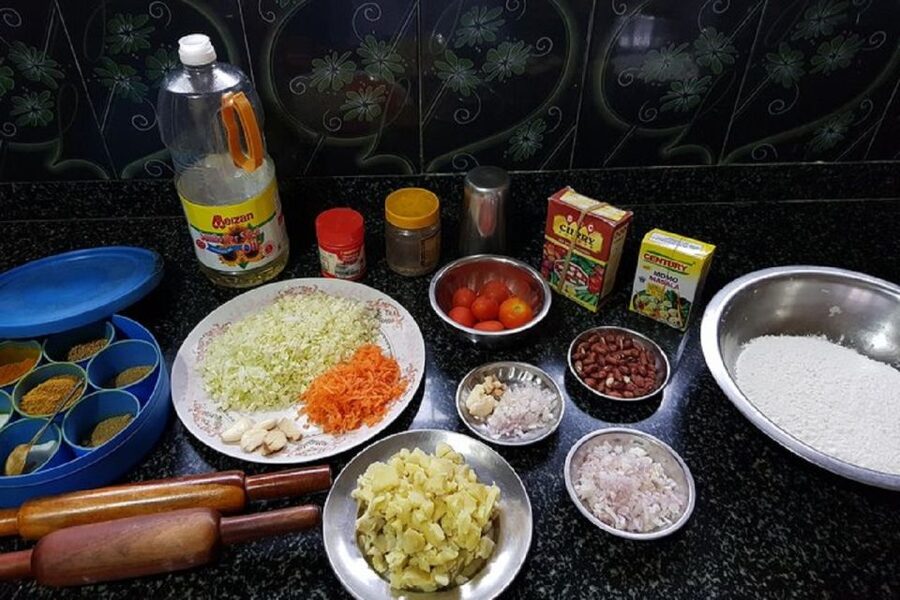
Sarita introduces the ingredients, spices, and cooking steps before you begin. The kitchen has been described as clean, and the ingredients are fresh. Some meals have included homemade ingredients, and the food can reflect the family’s own way of cooking rather than a generic version designed for foreign visitors.
I find this more useful than a polished cooking studio because you get a clearer sense of how the meal fits into daily life. You can ask questions about ingredients, methods, and Nepali food customs while the work is happening. The setting also makes the class feel social. You may meet family members, enjoy tea or water, and talk between cooking stages.
The private-group format helps here. It is not a crowded lesson where you stand at the back and try to see a single mixing bowl. The class can be intimate enough for Sarita to correct your shaping, seasoning, or technique as you work.
Choosing momos or dal bhat
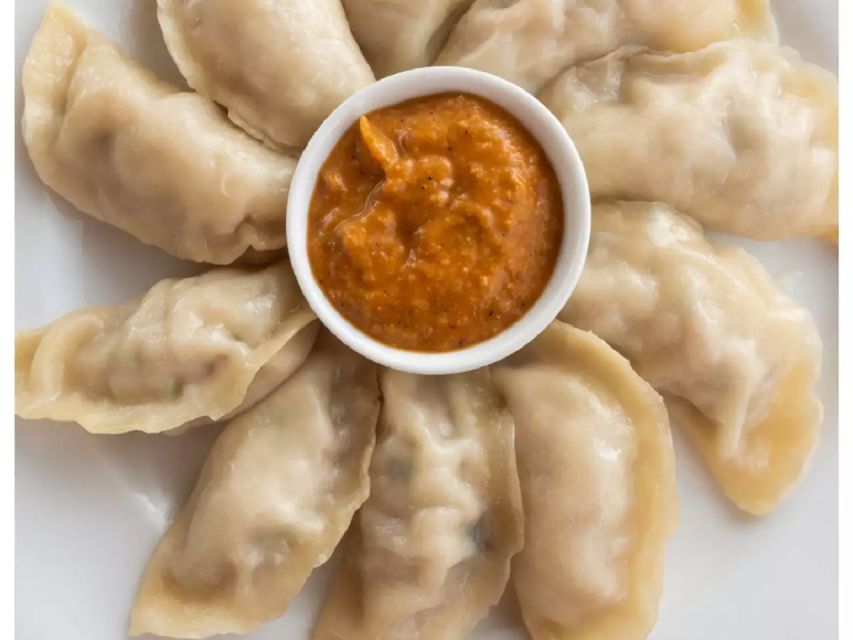
The main decision is simple: choose momos for a focused lesson in Nepali dumplings, or dal bhat for a broader meal with several components.
Momos are the more playful choice. You prepare the filling, work with the dough, and learn how to fold the dumplings. The shaping takes practice. Your first few may look uneven, but that is part of the fun, and Sarita is patient with beginners.
You may make a very large batch. That is good news if you want plenty of practice and a generous meal, but not ideal if you are looking for a quick tasting. Bring a takeaway container if you have one, since the quantity can be more than you can comfortably finish at the table.
The menu can include vegetable momos, and past classes have also used cheese. The supplied information does not promise chicken, buff, or fried momos, so ask what filling is planned when you book if that matters to you. The reliable expectation is a hands-on momo lesson with a dipping sauce and plenty to eat.
Dal bhat gives you a wider look at everyday Nepali food. You learn how to prepare dal, rice, vegetables, and accompanying elements rather than focusing on one dumpling. The meal requires several steps, so it rewards people who want to understand seasoning and timing across a full plate.
For many visitors, dal bhat is the better choice if they have already eaten it in Nepal and want to understand how it comes together. You learn how spices are balanced, how vegetables are prepared, and how separate dishes become one meal. It is less about a single trick and more about building a complete plate.
Chopping, seasoning, shaping, and cooking
This is a working class. You are not simply handed a recipe while Sarita does the difficult parts.
For dal bhat, expect to chop vegetables, measure or combine ingredients, season the dal, and help prepare the different parts of the meal. Sarita explains what each stage does and helps you keep track of the order. Since the dish has multiple components, a written recipe can be useful from the beginning. One person found that having the recipe at the start would have made the sequence easier to follow, so ask for the printed or digital instructions early.
For momos, you work with the filling and dough, then learn the folding technique. The shape looks easy until you try it. Sarita’s patient guidance matters most here, especially if your first dumplings resemble small parcels rather than neat crescents.
The class is suitable for beginners. You do not need to arrive with knife skills or previous knowledge of Nepali cooking. The instruction is available in English, Hindi, and Nepali, and Sarita has been praised for speaking clearly and adjusting her explanations for people with limited English.
The lesson is also useful for cooks who already know their way around a kitchen. You can ask how to adjust spices, swap vegetables, or use the momo method for other dumpling styles. The recipe gives you a practical way to repeat the dish after your trip.
Same region, a different dish to learn:
- Local Women Lead Nepali Cooking Class
★ 5.0 · 125 reviews - Kathmandu: Local Women-Lead Nepali Cooking & Momo Class
★ 4.9 · 45 reviews - Kathmandu: Local Lead Nepali Cooking & Momo Making Class
★ 4.9 · 40 reviews - MoMo or Dal Bhat Cooking Class at Aama Kitchen in Pokhara
★ 4.9 · 28 reviews
Eating what you made
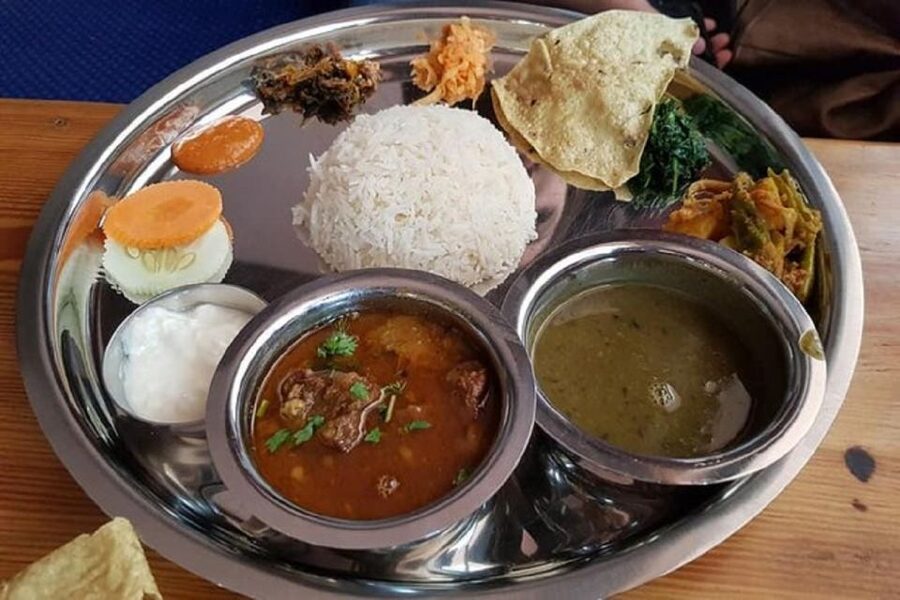
After the cooking, you sit down to eat the meal you prepared. This is not a token tasting. The portions can be large, especially with momos, and the class includes the finished food.
The meal gives you a chance to judge the technique while it is still fresh in your mind. You can taste the balance of spices, compare the filling with your usual restaurant momos, and ask why a particular ingredient or cooking method was used.
This shared meal is also when the cultural side of the class comes through most clearly. Conversation with Sarita and her family can cover food customs, home life, and the place of dal bhat or momos in Nepalese cooking. The experience is less formal than a restaurant meal and more personal than a demonstration.
Tea, water, and small refreshments have been part of some visits, but extra food and drinks outside the class are not included. Drinking water is included. If you have dietary restrictions, tell the provider before booking rather than assuming the standard recipe can be changed.
What the $28 price really covers
At $28 per person, the value is strong if you want an activity that combines transport, instruction, food, and a cultural visit.
The price includes round-trip transfer from Pokhara Lakeside, a private-group cooking lesson, all fresh ingredients and spices, the food you prepare, drinking water, and a printed or digital recipe. You are paying for more than lunch. You also receive several hours of instruction and access to a real household setting.
A restaurant meal would cost less, but it would not teach you the process or give you a recipe. A formal cooking school might offer more equipment or a larger menu, but it may not provide the same home setting. At this price, the class makes sense for couples, solo visitors, families, and small groups who want a slower cultural activity between treks and sightseeing.
The value drops if you dislike repetitive preparation or want only a short food tasting. Momo making involves producing many dumplings, and dal bhat requires several steps. You should book this for the participation, not just the final plate.
The small-group feel
The private format is one of the strongest parts of the experience. A class can be as intimate as one visitor, Sarita, and her husband, or a small group of friends. That gives you room to ask questions and take your time with unfamiliar techniques.
It also means the tone can feel more like cooking with a welcoming aunt than attending a commercial workshop. Sarita has been described as friendly, funny, patient, and warm, and she often involves her family in the welcome. That personal contact is a major reason to choose this over a standard restaurant meal.
The tradeoff is that a home kitchen is not a professional culinary school. The pace may be shaped by the household and the number of dishes being prepared. If you want a tightly timed lesson with individual workstations and exact measurements, this may feel informal. If you want conversation and a genuine household setting, the informality is the point.
Transport, timing, and practical details
Pickup and drop-off are available from Lakeside Road in Lakeside-6, Pokhara. The experience provider is Snow Peak Tours and Travels Pvt. Ltd., and the guide languages are English, Hindi, and Nepali.
Bring a passport or identity card. A copy is accepted. Wear something comfortable for cooking, and avoid arriving after a large meal. You may spend a good part of the class handling flour, vegetables, spices, and fillings, so practical clothing makes sense.
The activity has free cancellation up to 24 hours before the start time, with a full refund. You can also reserve now and pay later, which helps if your Pokhara plans depend on weather or trekking conditions.
The class has a perfect overall rating from 67 reviews, and transport received a 98 percent perfect score. Those figures suggest a dependable experience, but they do not remove the need to confirm pickup details. Nepalese roads, weather, and taxi arrangements can still affect timing.
Who should book this Pokhara class
I would choose this class if you want a calm, social activity that gives you something useful to take home. It suits:
- Couples who want a shared activity outside the usual sightseeing circuit
- Solo visitors who enjoy meeting a local host
- Beginners curious about Nepali cooking
- Food lovers who want to recreate momos or dal bhat later
- Families and small private groups
- People taking a break from trekking and outdoor activities
I would think twice if you have a strict schedule or do not enjoy hands-on preparation. The class can take longer than the advertised three hours, particularly for momos. It is also not the best pick if you want to sample many different Nepalese dishes in small portions.
For the best fit, decide on momos or dal bhat before pickup. Choose momos if shaping dumplings sounds fun and you want a skill that can transfer to other filled dough dishes. Choose dal bhat if you want to understand Nepal’s most familiar everyday meal and learn several preparations in one sitting.
Should you book the Nepalese Kitchen class?
Yes, if you value personal contact over polished presentation. The strongest features are Sarita’s patient teaching, the private home setting, the fresh ingredients, and the chance to eat a full meal you helped prepare.
The main caution is practical rather than culinary. Allow more than three hours if your schedule is tight, confirm the transport arrangement, and ask for the recipe at the start if you want to follow every step closely.
At $28, this is a good-value Pokhara activity for anyone who wants more than a meal. You leave with food in your stomach, a better sense of Nepali home cooking, and a recipe you can try again after Nepal.
FAQ
Where does the cooking class take place?
The class takes place in a Nepalese home kitchen in Pokhara. Pickup and drop-off are available from Lakeside Road in Lakeside-6.
How long does the experience last?
The stated duration is three hours. Momo preparation may take longer, depending on the amount being made and the pace of the group.
Can I choose between momos and dal bhat?
Yes. You can choose a hands-on momo lesson or a dal bhat cooking class.
Is transportation included?
Yes. Round-trip transfer from the Pokhara Lakeside area is included.
Which languages does the guide speak?
Instruction is available in English, Hindi, and Nepali.
Is the class private?
Yes. The activity is offered for a private group rather than a large shared class.
What do I need to bring?
Bring a passport or identity card. A copy is accepted. The class includes ingredients, spices, water, the meal you prepare, and a printed or digital recipe.
Newest classes around Nepal
- Kathmandu: 3-Hours of Cooking Class with Meals★ 5.0 · 10 reviews
- Pokhara: 3 Hour MoMo cooking class★ 4.5 · 10 reviews
- Pokhara: Nepali Cooking Class and Momo Making Workshop★ 5.0 · 6 reviews
- MoMo or Dal Bhat Cooking Class at Aama Kitchen in Pokhara★ 4.9 · 28 reviews
- Local Women Led Nepali Cooking Class★ 5.0 · 6 reviews
- Kathmandu: Women-Led Cooking Class & Momo Making-Local Taste★ 4.8 · 15 reviews
- Kathmandu: Nepali Cooking Class with Hotel Pickup★ 4.1 · 5 reviews
- Kathmandu: Local Women-Lead Nepali Cooking & Momo Class★ 4.9 · 45 reviews
Nepal Cooking Classes, compared.
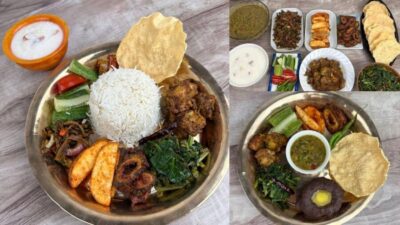
MoMo or Dal Bhat Cooking Class at Aama Kitchen in Pokhara
Read our review →
Women-Led Cooking Class & Momo Making-Local Taste
Read our review →Browse the lists this tour appears in