
Review · KYOTO COOKING CLASSES
Kyoto Udon & Tempura Cooking Class with Professional Chefs
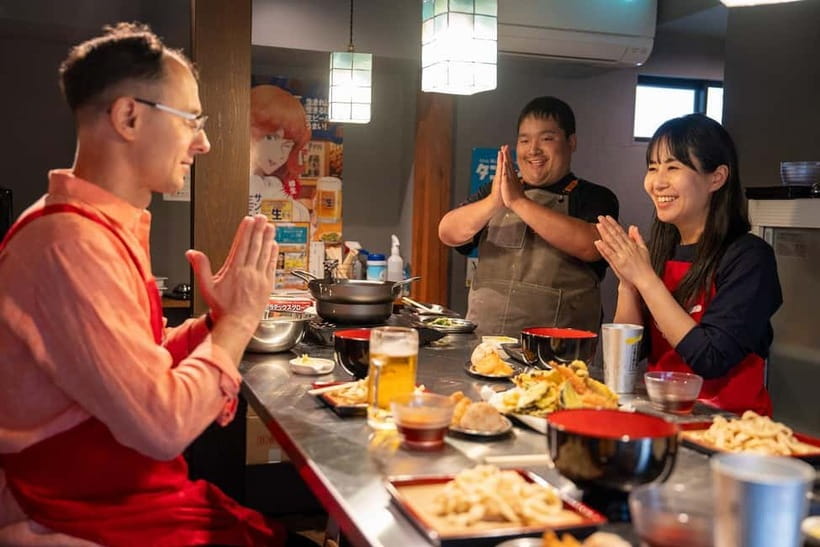
Kyoto’s food culture becomes much more fun when you get your hands into the dough. This small-group cooking class takes you from flour and water to chewy udon, then adds tempura, rice dishes, and a meal you prepare yourself.
I like the friendly guidance and the chance to cook in a real restaurant setting. I also like the English recipe set, since it gives you a fair shot at making the dishes again at home. One thing to watch: the exact menu and timing may not match the full description every time. One recent session lasted about 1 hour and 20 minutes, and the participants did not make sushi or cook the udon and broth themselves.
Key points to know before booking
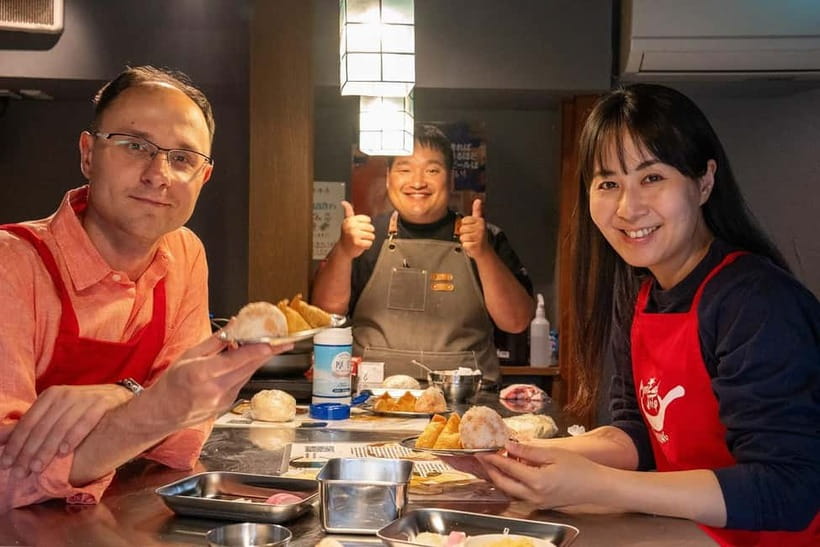
- Knead udon by hand: You begin with flour and water, then mix, knead, and roll the dough yourself.
- Cook with a local udon master: An English-speaking guide helps explain each step and keeps the class moving.
- Eat a full handmade meal: Udon, tempura, inari sushi, and other rice preparations are part of the planned menu.
- Small group of up to eight: The limited size should make it easier to ask questions and get direct help.
- Two drinks are included: The meal comes with drinks and a mini sake tasting experience.
- Timing can vary: The advertised length is two hours, but one verified session ran closer to 80 minutes.
Turning flour and water into Kyoto-style udon
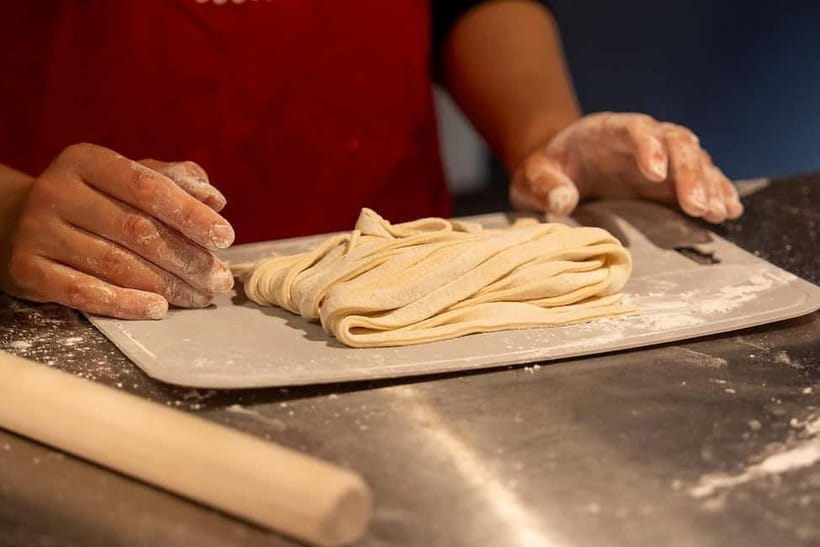
The class begins with the most satisfying task: making udon dough from scratch. You mix flour and water, then work the dough by hand until it becomes smooth and stretchy.
This is not a polished cooking demonstration where you stand back and watch someone else do the work. You get involved from the start. The dough changes under your hands, and that physical process is a big part of the fun.
Udon is simple food, but good udon depends on texture. The thick noodles should have a pleasant chew, and making them by hand helps you understand why. You can feel the difference between dough that needs more work and dough that is ready to roll.
The udon master leads this portion, while the English-speaking guide helps with instructions and questions. No cooking background is needed. If you are traveling with children or friends who rarely cook, the hands-on format should be approachable.
The main limitation is important: the class may focus more on preparing and kneading the dough than on cooking the noodles. In one session, participants did not cook the udon or prepare the broth. If you want a full lesson on broth, noodle cooking, and final seasoning, ask about the exact format before you pay.
More Sushi and Japanese Classes in Kyoto:
- Ramen Cooking Class at Ramen Factory in Kyoto
★ 5.0 · 1,937 reviews - Kyoto: Ramen Cooking Class at a Ramen Factory with Souvenir
★ 4.9 · 532 reviews - Kyoto: Ramen, Gyoza, and Onigiri Cooking Class
★ 5.0 · 445 reviews
Rice, inari sushi, and simple Japanese preparation
The planned class also covers Japanese rice dishes. You learn how freshly steamed rice is seasoned and used for inari sushi and onigiri.
Inari sushi is rice tucked into a sweet-savory pouch of fried tofu. It is less complicated than many visitors expect, but shaping and filling it gives you a useful look at everyday Japanese food. Onigiri offers another practical lesson: rice becomes a portable snack with simple shaping and seasoning.
This section adds balance to the noodle work. Udon is about dough and texture. Rice dishes are about moisture, seasoning, and shape. Together, they give you a wider picture of home-style Japanese cooking than a class focused on only one dish.
The stated menu includes inari sushi, but the actual contents can vary. One recent class did not include sushi preparation. That does not ruin the meal, but it matters if sushi is the main reason you are booking.
You should also keep your expectations realistic about the level of detail. The class is only two hours on paper, so it is meant to be a friendly introduction rather than a full professional kitchen course. You will learn useful steps, but you will not master every part of Japanese rice cooking in one sitting.
Making tempura without the fuss
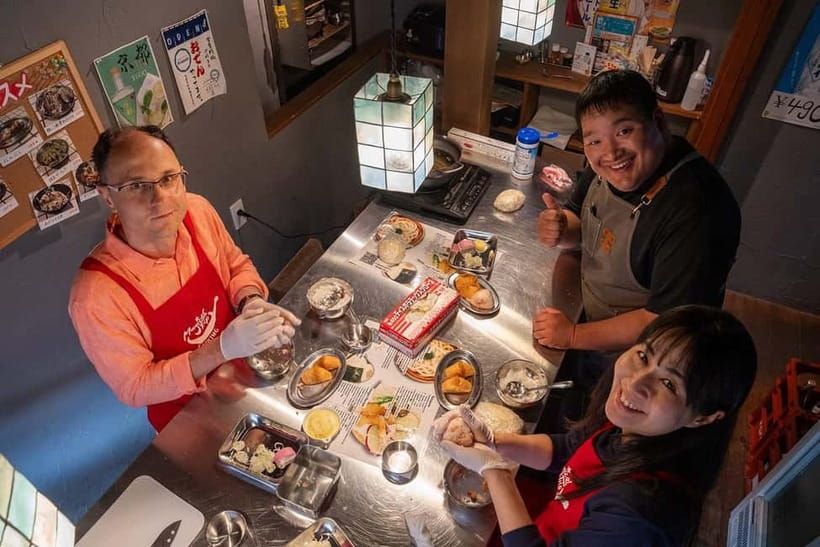
Tempura is the most immediately familiar part of the menu for many people. The guide and chef show you how to prepare ingredients for frying, then you dip them and cook them until golden.
The planned experience says you will learn to make tempura from scratch. In practice, one session used prepared batter, with participants dipping the ingredients before frying them. That is still hands-on, and it lets you focus on frying and timing, but it is less complete than mixing your own batter.
This distinction matters if you are a serious home cook. Tempura batter is sensitive to mixing, temperature, and handling. Learning those details would give you more control at home. If the batter is already prepared, you get the fun of frying without the full lesson in batter technique.
For most people, that shortcut may be perfectly fine. Frying your own food adds energy to the class, and the result is easy to enjoy with the udon and rice dishes. It also avoids making the class feel rushed.
You should expect a cheerful introduction, not a high-level tempura workshop. The provided recipes may help you repeat the dishes later, but the class experience itself is strongest when you treat it as a social meal with cooking instruction.
Eating what you made, with two drinks
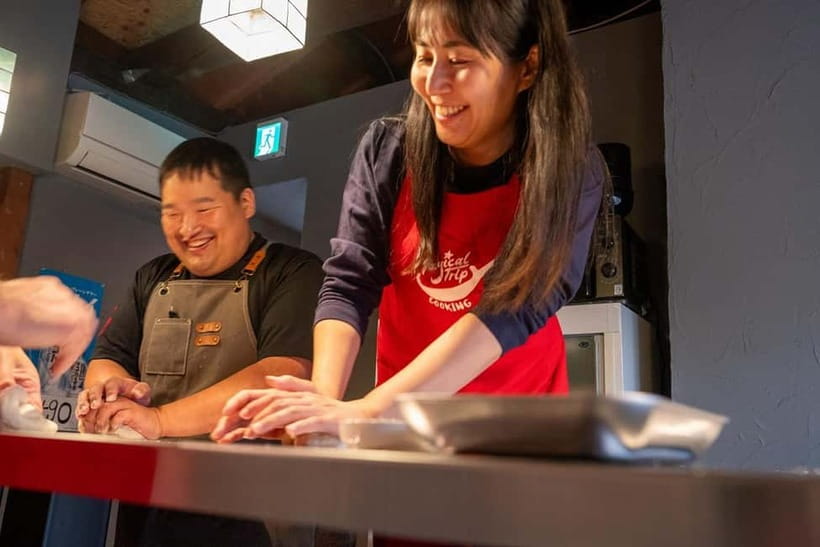
The best part comes at the table. You sit down with the udon, tempura, and rice dishes you helped prepare, then eat the results while the experience is still fresh.
That meal gives the class a clear purpose. You are not just practicing motions for a future recipe. You can taste how the noodles turned out, compare the crispness of the tempura, and see how the rice preparation fits with the rest of the meal.
Two drinks are included, along with a mini sake tasting experience. The sake adds a small cultural touch without turning the activity into a dedicated alcohol tour. If you do not drink alcohol, confirm what the two drinks include before booking, since the available information does not describe alternatives.
The food portion also affects the value. At $83 per person, you are paying for ingredients, instruction, a meal, drinks, recipes, photos, and the convenience of a central Kyoto location. That is more than the cost of simply eating udon, but you are buying an activity as well as lunch or dinner.
One participant described the meal as a lot of food. Plan this as a proper eating stop rather than a quick snack between sights. You may want to avoid a large meal before arriving.
More Cooking Classes in Kyoto:
- Kyoto: Japanese Washoku Bento Small Group Cooking Class
★ 5.0 · 380 reviews - Kyoto Ramen and Gyoza Cooking Class with Professional Chefs
★ 5.0 · 282 reviews - Kyoto: Afternoon Japanese Izakaya Cooking Class
★ 4.9 · 241 reviews - Izakaya Style Cooking Class
★ 5.0 · 219 reviews
A friendly class with direct help
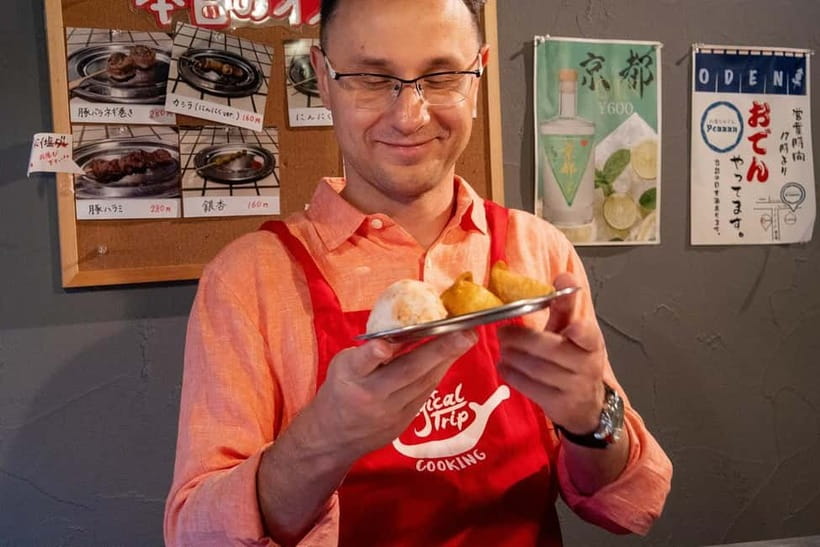
The group is limited to eight people. That is a useful size for cooking because the chef and guide can give attention without the room feeling crowded.
I especially like this setup for people who want to ask basic questions without feeling self-conscious. You can check how to knead the dough, shape the rice, or handle the tempura as you work.
The guide is listed as English-speaking, and the experience includes a local udon master. The available details do not provide their names, so do not book this expecting a named celebrity chef or a formal lecture. The focus is on clear help and doing the work yourself.
A recent participant rated the attention and guidance highly. That is worth emphasizing because cooking classes can fall apart when instructions are rushed. Here, the direct support appears to be one of the stronger parts of the experience.
The atmosphere is intended to be relaxed and friendly. That makes this a good pick for couples, families, solo visitors who like meeting people, and small groups of friends. It should also work for mixed-ability groups, since no previous cooking skill is required.
What the two-hour schedule really means
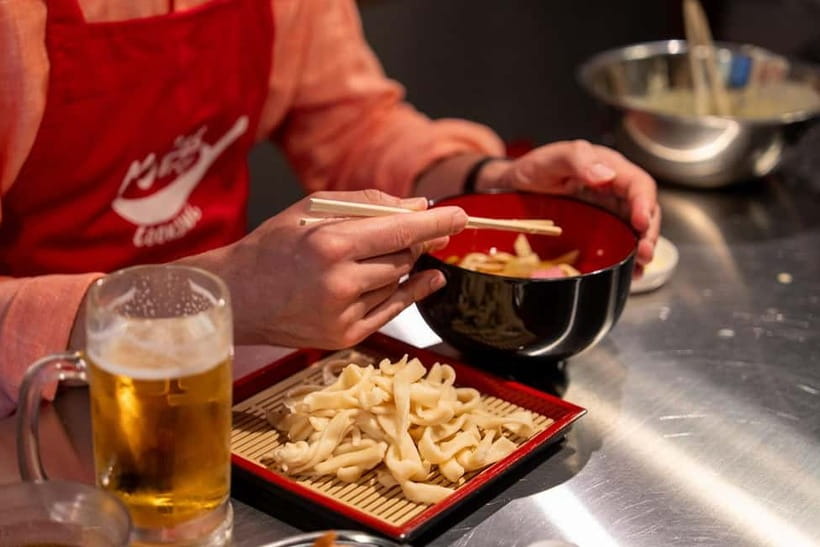
The published duration is two hours, and starting times depend on availability. That is a reasonable amount of time for a compact cooking class with several dishes.
Still, build in some flexibility. One verified session, including the meal, lasted about 1 hour and 20 minutes. The same session did not include every cooking step described in the planned menu. You may finish well before two hours if the class moves quickly or some preparation has been done in advance.
This is not necessarily a problem. A shorter class can be useful if you have a packed Kyoto schedule. You could fit it between visits around Kawaramachi, Gion, or the nearby shopping streets.
But if you are booking it as your main activity of the day, the shorter format may feel light for the price. I would confirm the expected length and menu on your booking date, especially if you want to make sushi, prepare tempura batter, cook the noodles, and make broth yourself.
The class is suitable for all ages, and ingredients are provided. You do not need to shop, bring special food, or prepare anything ahead of time.
Finding the meeting point near Kawaramachi
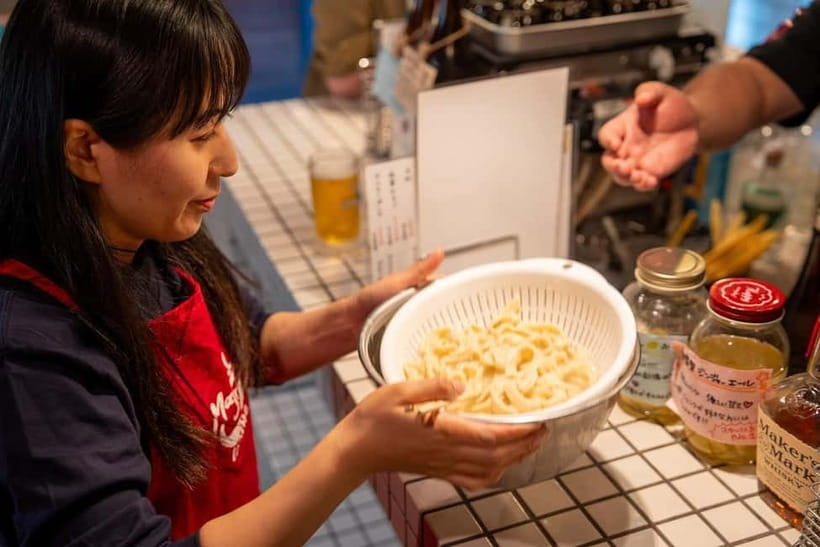
The meeting point is the 7-Eleven at Kyoto Kawaramachi-Takoyakushi. It is about a three-minute walk from Exit B3 of Kyoto-Kawaramachi Station on the Keihan Kyoto Line.
From Gion-Shijo Station on the Keihan Main Line, allow about nine minutes from Exit 3. Those walking times are short, but Kyoto station exits can be confusing, so arrive with enough time to orient yourself.
This location works well if you are already exploring central Kyoto. You can pair the class with time around Kawaramachi or Gion without making a long trip across the city. The meeting point is a convenience store, not the cooking venue itself, so read the meeting instructions carefully and do not assume you should walk straight into a restaurant.
The central location also helps with the class’s value. You are not spending extra time or money reaching an out-of-the-way kitchen. For a short activity, that practical detail matters.
Recipes and photos for after the class
The English recipe set is one of the most useful inclusions. Many cooking classes are fun in the moment but hard to repeat once you return home. Clear recipes give you a better chance of making udon, rice dishes, and tempura again.
The recipes are designed around ingredients you can find at home. That does not mean every result will taste exactly like the Kyoto version, but it makes the lesson more practical for your own kitchen.
Tour photos are also included. These are a nice record of the class, especially if you are cooking with family or friends. The information does not specify how many photos you receive or how they are delivered, so treat them as an added benefit rather than the main reason to book.
Who will enjoy this class most
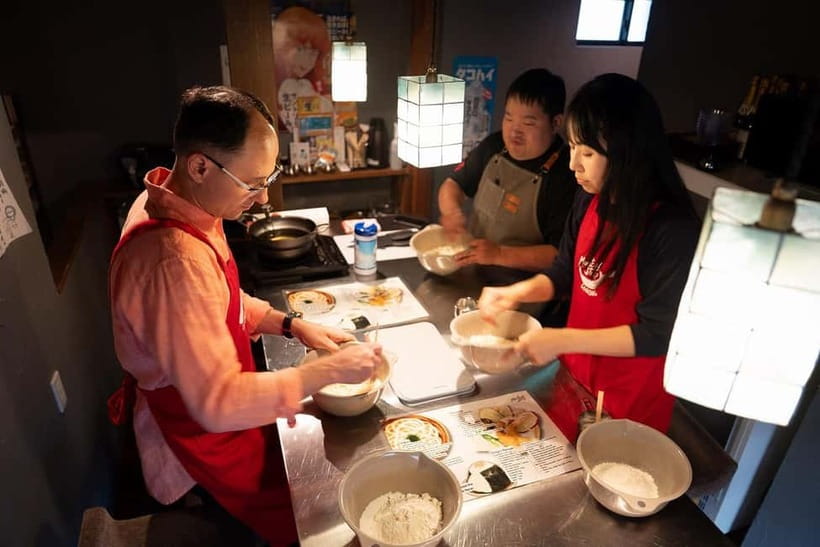
I would choose this experience if you want a short, social food activity rather than a formal culinary course. It gives you a taste of several Japanese dishes and lets you eat a meal you helped prepare.
It suits first-time cooks because the ingredients and instruction are provided. Families may appreciate the simple physical tasks, though very young children may need close adult help around hot oil and kitchen equipment.
It is also a good fit for visitors who have already seen temples and want a different side of Kyoto. Making udon connects you with a familiar local food in a more memorable way than ordering it from a menu.
I would be more cautious if your top priority is technical cooking instruction. The reported class format did not always include homemade batter, cooked noodles, or broth preparation. Serious home cooks may want to confirm those details before booking.
The $83 price feels fair when the full package is delivered: a small group, a local udon master, an English guide, a substantial meal, two drinks, recipes, and photos. It feels less compelling if the session is much shorter and several promised preparation steps are skipped.
Should you book the Kyoto udon class?
Book it if you want to knead noodles, cook with a local chef, eat a generous Japanese meal, and enjoy a relaxed activity near central Kyoto. The attentive guidance, small group, and English recipes are the strongest reasons to go.
Before booking, confirm the current menu and expected timing. In particular, ask if you will make sushi, mix the tempura batter, cook the udon, and prepare the broth. If those details matter to you, they may affect your decision.
For a friendly introduction to Japanese cooking, this class has real appeal. For an exact, full-length culinary lesson, approach it with care and verify what will happen on the day.
FAQ
Where does the cooking class meet?
The meeting point is the 7-Eleven at Kyoto Kawaramachi-Takoyakushi.
How do I reach the meeting point?
It is about a three-minute walk from Exit B3 of Kyoto-Kawaramachi Station on the Keihan Kyoto Line, or about a nine-minute walk from Exit 3 of Gion-Shijo Station on the Keihan Main Line.
How long is the experience?
The stated duration is two hours. One verified session lasted about 1 hour and 20 minutes, including the meal, so the actual timing may vary.
Is the class taught in English?
Yes. An English-speaking local guide assists with the class, and an udon master leads the noodle preparation.
Do I need cooking experience?
No. The activity is designed for people with no prior cooking experience, and ingredients are provided.
What food will I make?
The planned menu includes udon noodles, tempura, and inari sushi. The class also covers Japanese rice dishes such as onigiri. The exact preparation may vary, so confirm the current menu if a specific dish is important to you.
What is included in the price?
The $83 price includes the cooking class, udon, tempura and inari sushi, two drinks, an udon master and local guide, recipes, tour photos, and a mini sake tasting experience.
Newest classes around Kyoto
- Kyoto: Wagashi (Japanese sweets) Cooking near Fushimiinari★ 5.0 · 40 reviews
- Kyoto Home Cooking Class &Supermarket tour near Fushimiinari★ 5.0 · 31 reviews
- Kyoto: Morning Japanese Bento Cooking Class★ 5.0 · 149 reviews
- Kyoto: Authentic Sushi Making Cooking Lesson★ 5.0 · 103 reviews
- Kyoto: Cooking class, learning how to make authentic sushi★ 4.2 · 9 reviews
- Authentic Japanese Cooking Experience at Izakaya restaurant★ 4.2 · 5 reviews
- Gyoza Cooking Class in Kyoto: Traditional Japanese Dumplings★ 5.0 · 12 reviews
- Private Plant-Based Japanese Cooking Class – Kyoto Edition★ 5.0 · 15 reviews
Kyoto Cooking Classes, compared.
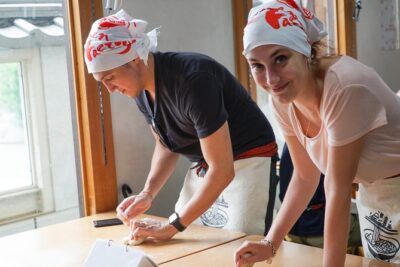
Ramen Cooking Class at Ramen Factory in Kyoto
Read our review →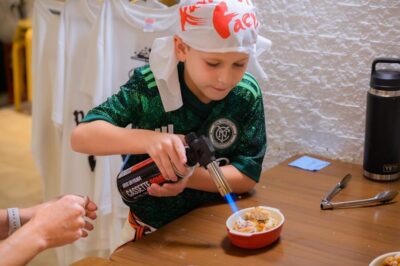
Ramen Cooking Class at a Ramen Factory with Souvenir
Read our review →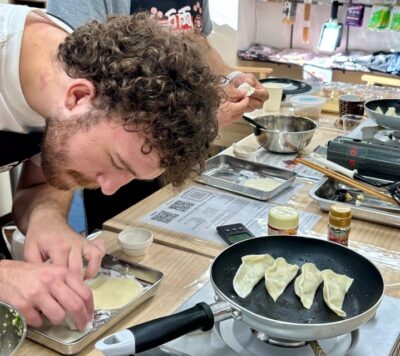
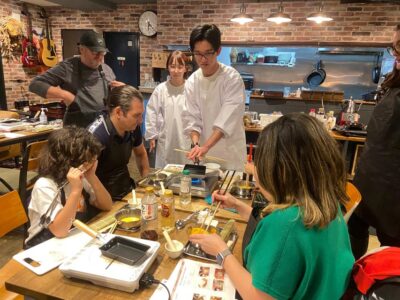
Japanese Washoku Bento Small Group Cooking Class
Read our review →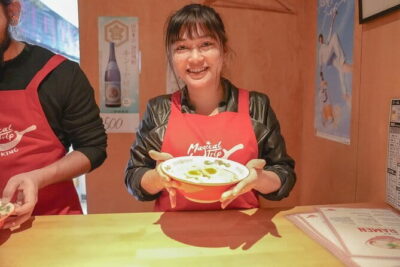
Kyoto Ramen and Gyoza Cooking Class with Professional Chefs
Read our review →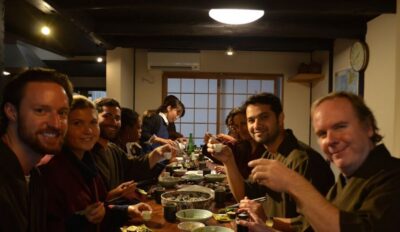
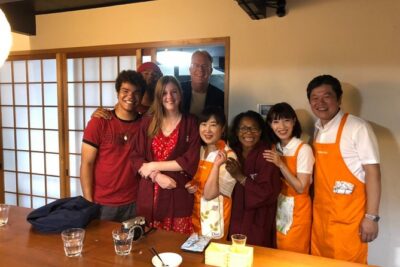
Gyoza Cooking Class in Kyoto: Traditional Japanese Dumplings
Read our review →Browse the lists this tour appears in