Review · ROME COOKING CLASSES
Rome: Traditional Pasta Making Class with Wine & Gelato
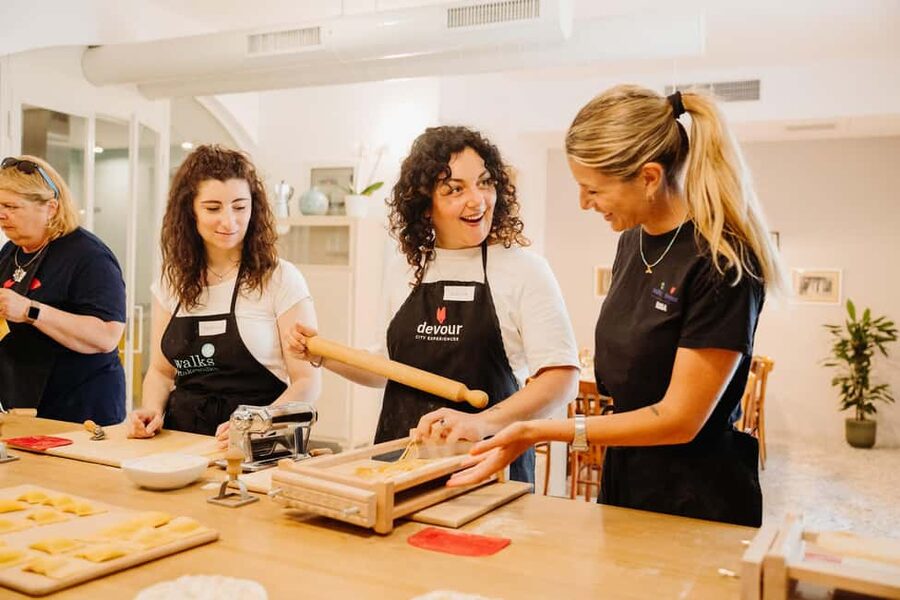
Fresh pasta is the heart of this experience. In a cooking school in Trastevere, you work with an English-speaking chef to make fettuccine and ravioli from scratch, then eat what you prepared with wine and homemade gelato. It feels less like a staged demonstration and more like being welcomed into a Roman kitchen.
I like the hands-on format, especially because the class covers sauces as well as pasta. I also like the social touch: prosecco, cured meats, and cheese come first, and instructors such as Luca, Manuela, Stefano, Elisa, and Federica have been praised for making beginners feel at ease. The main drawback is practical: the class is not suitable for wheelchair users, guests with mobility impairments, or strollers, and celiacs cannot be accommodated.
Key points at a glance
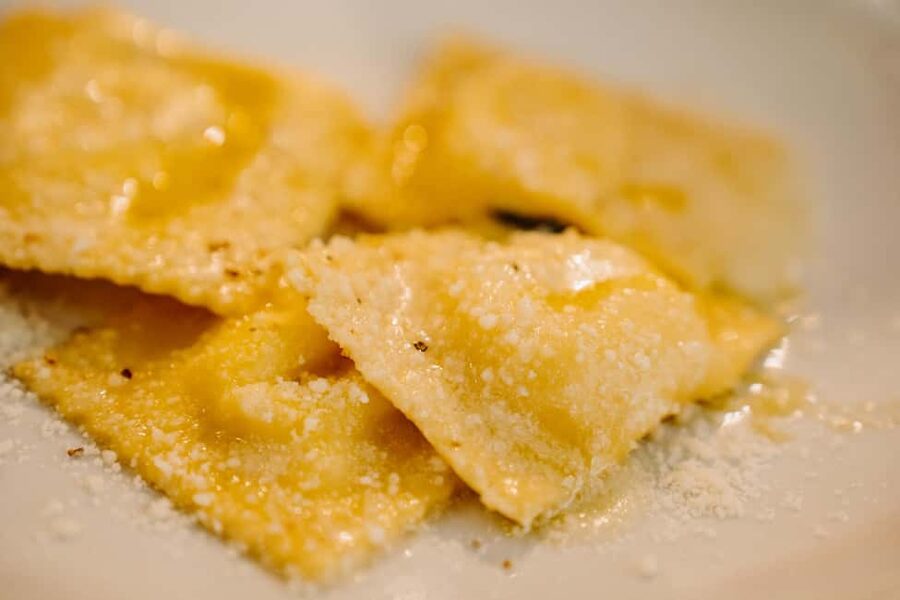
- Two pastas from scratch: Learn to make both fettuccine and ravioli, not just watch a chef work.
- Roman sauces change with the market: Your chef may prepare amatriciana, puttanesca, gricia, or cacio e pepe using seasonal ingredients.
- Aperitivo before the lesson: Prosecco, cured meats, and cheese give the class an easy social start.
- A full meal is included: Eat your pasta with wine, then finish with homemade gelato.
- Private or shared choices: You can book a private class or join a small group, depending on the option selected.
- Family-friendly teaching: The practical format has worked well for children, teenagers, solo visitors, and first-time pasta makers.
A Roman kitchen in the middle of Trastevere
This three-hour class takes place in a charming cooking school in the heart of Trastevere. You meet at Piazza di San Giovanni della Malva, in front of the San Giovanni della Malva church, then begin the experience from there. The guide carries a red bag or a Devour Tours sign, and you should arrive 15 minutes early.
The location matters. Trastevere is one of Rome’s most atmospheric neighborhoods, and a cooking class here gives you a useful break from monuments and museum interiors. You are not simply eating a plate of pasta at a restaurant. You are learning how the meal comes together, in a space reserved for your group.
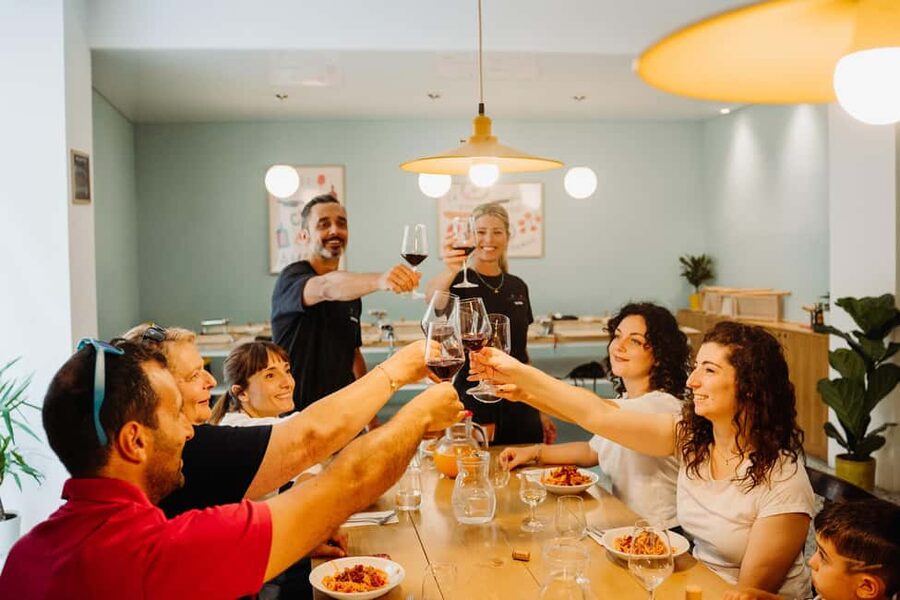
The class is offered as private or shared. A private session gives your party more personal attention and privacy. A shared class adds a social element, with introductions and the chance to cook alongside other people. That can be especially pleasant for solo visitors, couples, and families who enjoy swapping food and Rome tips while they work.
The format is relaxed, but it is still a real lesson. You should expect to handle ingredients, follow instructions, ask questions, and take part in the preparation. It is not the right pick if you want a quick meal with no participation.
More Cooking Classes with Wine Tasting in Italy
- Rome: Pasta Making Class with Wine, Limoncello, and Dessert
★ 4.9 · 3,177 reviews - Fettuccine & Tiramisù: Cooking Class with Wine & Limoncello
★ 4.9 · 2,103 reviews - Pasta Making & Wine Tasting with Dinner in Frascati from Rome
★ 5.0 · 1,326 reviews
Prosecco, cured meats, and an easy start
The class opens with an Italian aperitivo. You receive prosecco along with cured meats and cheese, which gives you time to settle in before the cooking begins.
This opening course does more than provide a snack. It explains a familiar Italian habit: food often begins with a small drink and something savory before the main meal. It also gives a shared group time to get comfortable, which helps if you arrive alone or are joining people you have never met.
The aperitivo is a strong part of the value at $66.84 per person. You are not paying only for a pasta lesson. The price also includes the ingredients, appetizers, prosecco, wine, two pasta dishes with sauces, gelato, and instruction from a professional chef.
Alcohol is part of the experience, so keep that in mind when choosing your time and planning the rest of your day. The activity lasts three hours and ends back at the meeting point. You should not expect pickup or drop-off, and extra food or drinks after the class cost more.
Making fettuccine and ravioli by hand
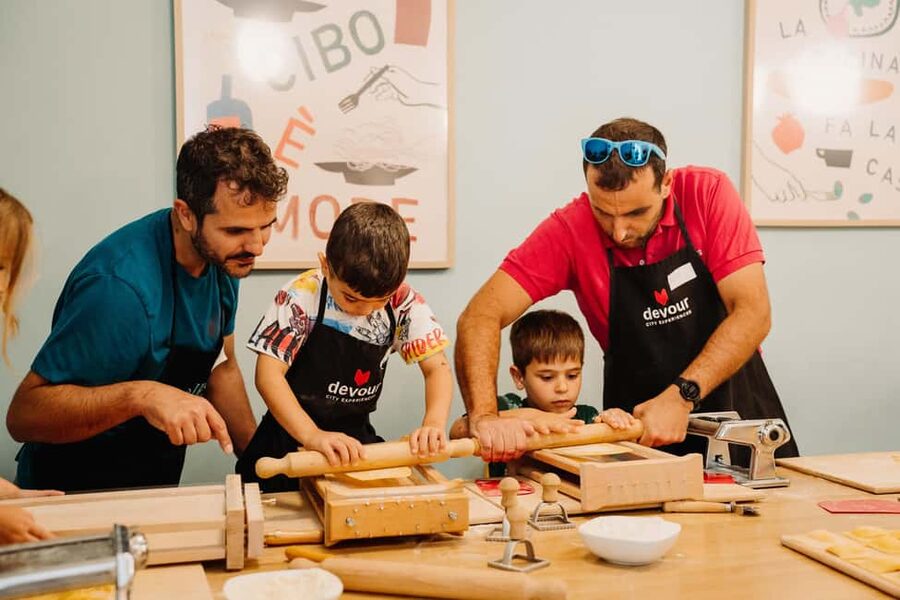
The main lesson focuses on two classic shapes: fettuccine and ravioli. You learn the process from the beginning rather than receiving prepared dough and simply cutting it.
For a first-time pasta maker, this is the useful part. You can ask why the dough is handled in a certain way, how the filling is placed, and how the pasta is prepared for cooking. Several instructors, including Federica, Fernanda, Luca, Manuela, and Stefano, have been praised for explaining each step patiently and for covering the reasons behind the techniques.
That practical teaching makes the class more useful after you return home. You are not just copying a recipe. You are learning the basic habits that help fresh pasta work: careful preparation, attention to texture, and respect for the ingredients.
The class works well for children and teenagers because the lesson keeps them involved. One family with children aged nine and eleven found the activity a favorite part of a 10-day trip, while another parent attended with a six-year-old. Young children will still need adult help and supervision, but the format is active rather than lecture-based.
You should also expect some variation. The chef chooses ingredients based on what is available at local markets, so the exact sauce and details may change. That is a good sign if you want a seasonal Roman meal, but it means you should not book expecting one fixed menu in every session.
Learning the sauces of Rome
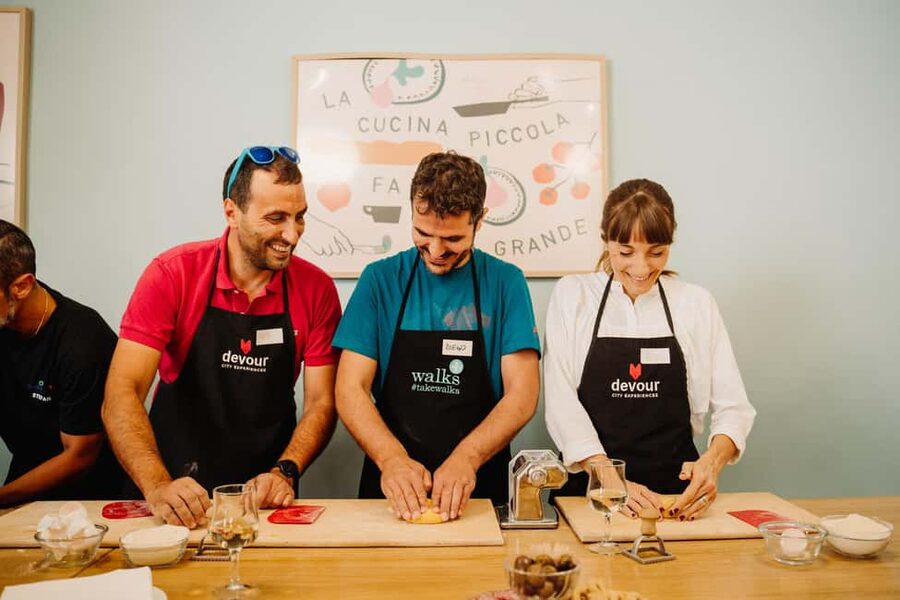
The class may pair your pasta with sauces such as amatriciana, puttanesca, gricia, or cacio e pepe. These recipes give you a useful introduction to Roman cooking because they show how much flavor can come from a short list of ingredients.
Amatriciana brings tomato and the savory character associated with Roman pasta. Gricia relies on a simpler combination of pasta, cheese, and cured pork. Cacio e pepe is famously spare, with cheese and pepper doing the work. Puttanesca adds a more assertive mix of ingredients.
The exact selection depends on the season and the chef’s plan. That gives the class a local connection, though it also means one dish may appeal to you more than another. If you prefer mild flavors, ask about the sauces before cooking. If you enjoy learning technique, cacio e pepe can be especially useful because a simple recipe leaves little room to hide mistakes.
One useful feature is that the lesson covers sauce, not only dough. A class that teaches pasta shapes but ignores the sauce leaves you with only half the skill. Here, you get a better sense of how the finished dish is built.
Dietary needs can usually be adapted, except for celiac requirements. You must contact the operator before the class if you have dietary restrictions so food can be arranged. Do not wait until you arrive and expect the kitchen to solve it on the spot.
More Cooking Classes with Wine Tasting in Rome
- Rome Cooking Class: Make Pasta, Dine & Drink Wine With Local Chef
★ 5.0 · 1,263 reviews - Rome: Combo Pizza and Pasta Cooking Class with Wine
★ 4.6 · 1,180 reviews - Rome: Pasta Making with Wine Tasting and Dinner in Frascati
★ 4.9 · 979 reviews - Super Fun Pasta & Gelato Class by Vatican with Wine + Oil Tasting
★ 5.0 · 726 reviews
Sitting down to eat what you made
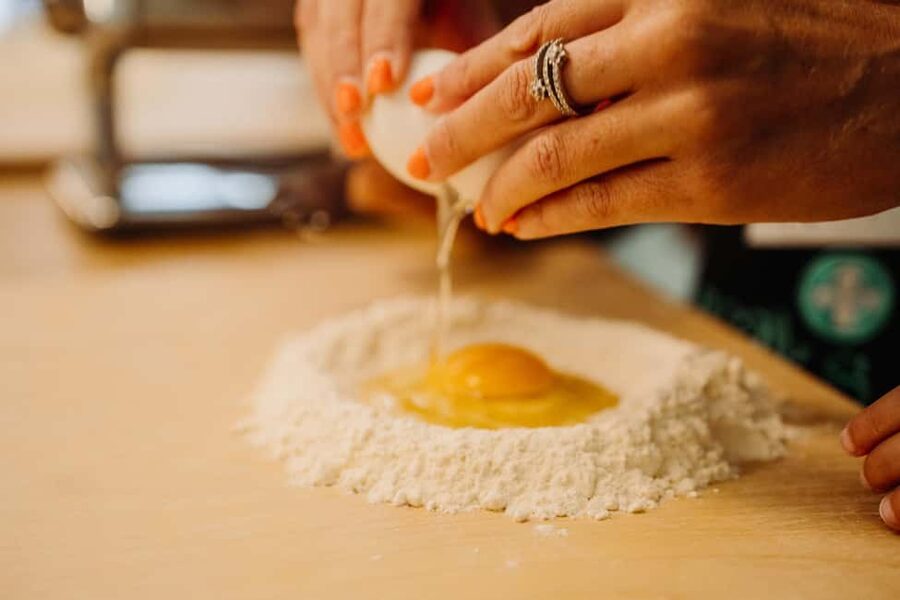
After the preparation, you sit down to eat the two homemade pastas with wine. This is where the class pays off. You can taste the difference between pasta made moments earlier and dried pasta from a packet, while also seeing how your work turned into a proper meal.
The cooking school provides a beautiful, comfortable space, and the class is designed around eating together rather than rushing you out after the final step. The meal gives you time to continue talking with the chef and the other people in the group.
You may also receive practical Rome advice during the meal. Instructors have shared tips about local food, Roman restaurants, and how to spot a good gelateria. That kind of conversation can be more useful than a long list of famous restaurants because it connects directly to the area and to the kind of food you are learning to make.
One point to keep in mind is that the menu is centered on pasta. One participant wished a small green salad had been included, and another found a ravioli filling somewhat plain. Those are minor considerations, but they matter if you expect a broad multi-course restaurant meal. This is first and foremost a pasta workshop with drinks and dessert.
Gelato to finish the meal
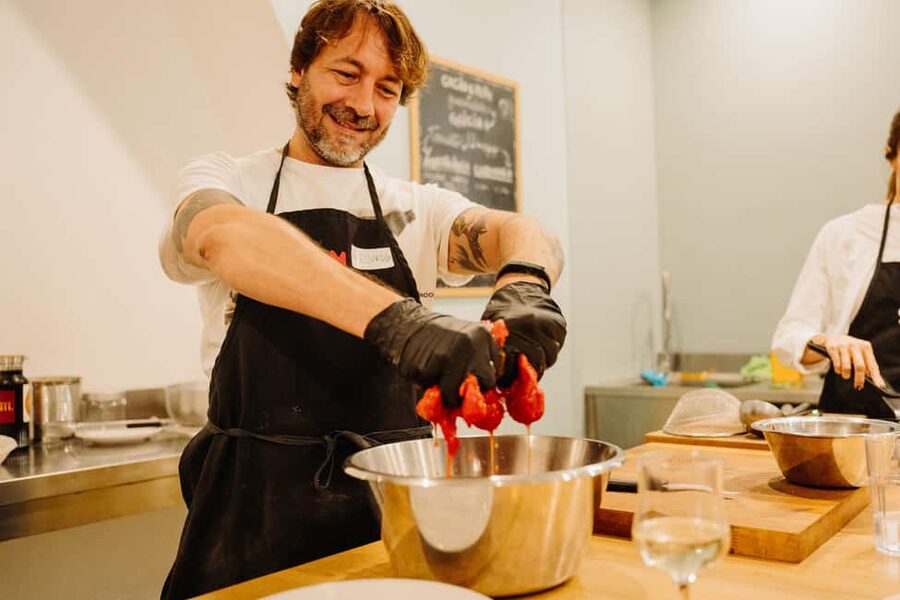
Homemade gelato closes the class. It is a simple but fitting ending, and it gives you a sweet final course after the savory pasta.
The gelato also adds to the sense that the chef is guiding you through a complete Italian meal. You begin with aperitivo, move into handmade pasta and sauce, continue with wine, and finish with dessert. At three hours, the pace has room for cooking, eating, conversation, and questions.
Do not confuse this with a full pastry class. You eat gelato prepared by the chef, but the main hands-on instruction focuses on pasta and sauces. That distinction is useful when comparing this activity with a dessert-focused lesson.
The teaching style and group feel
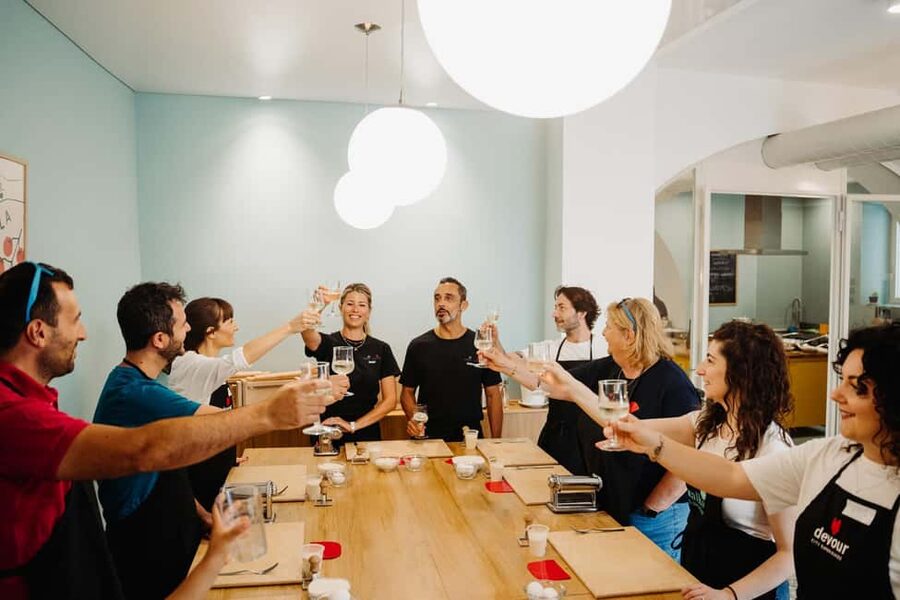
The instructors are central to the experience. Names connected with the sessions include Luca, Manuela, Stefano, Elisa, Federica, Asia, Jamila, Jeanmarie, Guilia, and Alessandro. Your specific chef depends on the date and group, but the teaching style is intended to be friendly, practical, and conducted in English.
A good cooking class needs more than recipe knowledge. You need a teacher who can slow down when the dough feels unfamiliar, explain the reason behind a method, and keep the group moving. The strongest reports about this class repeatedly point to patient explanations, humor, encouragement, and a comfortable pace.
That is useful for beginners. You do not need previous experience, and you can ask questions about Italian food, Roman culture, and everyday cooking. Solo visitors can join without feeling out of place, while families can take part together.
Group size affects the feel. A shared class can be lively and social, but you may have less individual attention than in a private session. A private option is the better choice for a special celebration, a family that wants to set its own pace, or anyone who prefers not to cook in front of new people.
Is $66.84 good value?
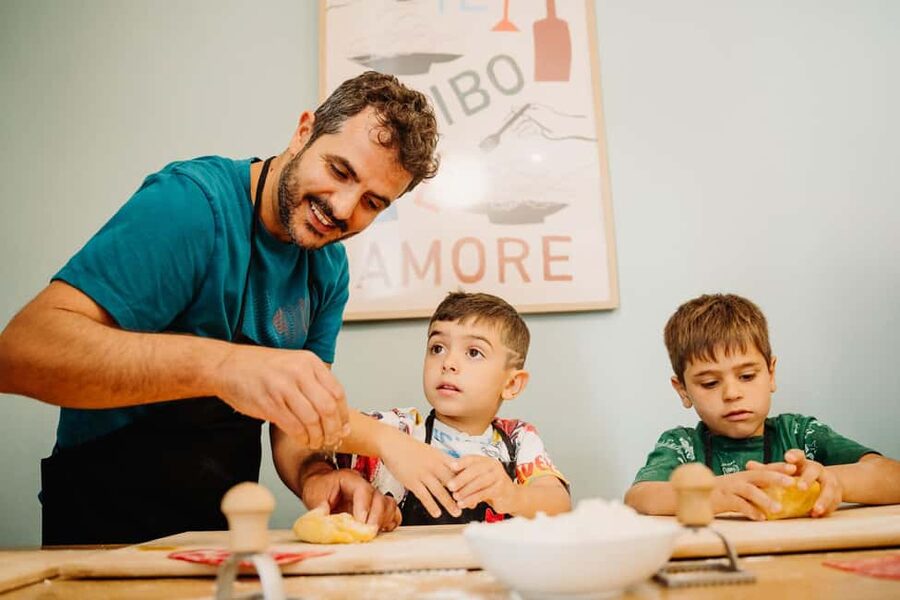
At $66.84, the price is fair for a three-hour experience that combines instruction, food, drinks, and dessert. You receive all ingredients, appetizers, prosecco, wine, two handmade pastas with sauces, gelato, and a professional chef.
The value is strongest if you want an activity as well as a meal. A restaurant dinner would feed you, but it would not teach you how to make the dough or explain the differences among Roman sauces. A short demonstration might cost less, but it would not give you the same hands-on practice.
The price is less appealing if your main goal is simply to eat as much as possible. This is not an all-day food tour, and extra drinks or food after the class are not included. You are paying for time with a chef, access to the kitchen, instruction, and the meal you help prepare.
Private sessions can offer better value for families or small celebrations because the class stays focused on your group. Shared sessions are likely the better budget choice if you enjoy meeting other people and do not need individual attention at every stage.
Who should book this class?
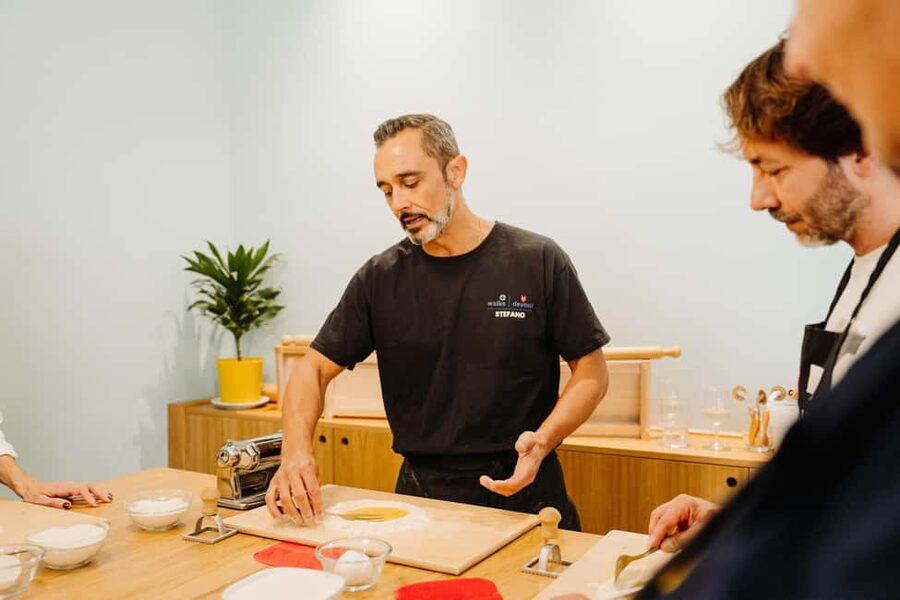
I would recommend it to first-time pasta makers, families with older children, couples, solo visitors, and anyone who wants a social evening away from Rome’s major sights. It is also a good choice for people who plan to cook Italian food at home and want more than a recipe card.
You will get the most from it if you enjoy participating. Wear something comfortable, arrive early, and come ready to work with your hands. The experience rewards curiosity more than culinary skill.
This is not the right activity for someone with celiac disease, since that need cannot be accommodated. It is also unsuitable for wheelchair users, people with mobility impairments, and strollers. Contact the operator in advance about other dietary restrictions.
The meeting point is easy to identify if you arrive prepared: Piazza di San Giovanni della Malva, in front of the church. The guide carries a red bag or Devour Tours sign. The activity ends back at the same meeting point, and you must arrange your own way there and back.
Should you book the Trastevere pasta class?
Book it if you want to connect Roman food with real technique. The best parts are the hands-on pasta making, the chance to learn several Roman sauces, and the generous rhythm of aperitivo, meal, wine, and gelato.
Choose a private option if personal attention matters most. Choose a shared class if you like meeting people and want a relaxed group activity. Either way, keep your expectations realistic: the menu may change with seasonal ingredients, and the meal is pasta-centered rather than a large restaurant-style spread.
For most visitors, this is a strong use of three hours in Rome. You leave with a meal, a better grasp of Roman cooking, and skills you can try at home. The class is especially worthwhile when you want one activity that works for adults, children, and solo visitors alike.
FAQ
How long does the pasta-making class last?
The class lasts three hours. Check availability for the starting times offered on your chosen date.
Where does the activity meet?
Meet at Piazza di San Giovanni della Malva, 00153 Roma RM, in the square in front of the San Giovanni della Malva church. The guide holds a red bag or Devour Tours sign.
Where does the class end?
The activity ends back at the meeting point.
Is the class taught in English?
Yes. The instructor language is English.
What food and drinks are included?
The experience includes appetizers, prosecco, wine, two homemade pastas with sauces, gelato, and all ingredients needed for the meal.
Can dietary restrictions be accommodated?
The class can adapt to dietary needs except for celiac requirements. Contact the operator before joining so food can be arranged.
Is the class suitable for wheelchair users or strollers?
No. The activity is not suitable for wheelchair users, people with mobility impairments, or strollers.
More Tiramisu and Dessert Classes in Rome
- Rome: Pasta & Tiramisu Cooking Class near the Spanish Steps
★ 4.8 · 1,395 reviews - Cooking Class in the Heart of Rome: Pizza and Tiramisu Making
★ 5.0 · 1,330 reviews - 2-in-1 Pasta and Tiramisu Cooking Masterclass in Rome
★ 5.0 · 832 reviews - Rome Cooking Class: Make Pizza and Pasta with Wine & Dessert
★ 4.5 · 651 reviews
More Pasta Making Classes in Rome
- 3 in 1 Cooking Class near Navona: Fettuccine, Ravioli & Tiramisu
★ 5.0 · 7,376 reviews - Rome Cooking Class: Make Pasta and 3 Spritz Cocktails
★ 5.0 · 2,937 reviews - Rome: 3-in-1 Fettuccine, Ravioli, and Tiramisu Cooking Class
★ 4.9 · 2,704 reviews - Rome: Fettuccine Pasta Cooking Class in Rome’s City Center
★ 4.8 · 2,414 reviews
Newest classes around Rome
- Testaccio: Home Cooking Cacio e Pepe, Amatriciana, Carbonara★ 4.9 · 57 reviews
- Super Fun Pasta and Gelato Cooking Class by the Vatican★ 5.0 · 6 reviews
- Spritz and Spaghetti Traditional Cooking Class in Rome★ 4.9 · 30 reviews
- ROME:Hands-On Lasagna & Marsala Tiramisu Cooking Experience”★ 5.0 · 3 reviews
- Rome: Vatican Food Tours, Cooking classes & Free Tours★ 4.9 · 11 reviews
- Rome: Trastevere Pasta Making Class★ 4.9 · 33 reviews
- Rome: Traditional Cooking Class in the Jewish Ghetto★ 4.9 · 75 reviews
- Rome: Small Group Pasta cooking class near Piazza Navona★ 4.9 · 8 reviews
Rome Cooking Classes, compared.
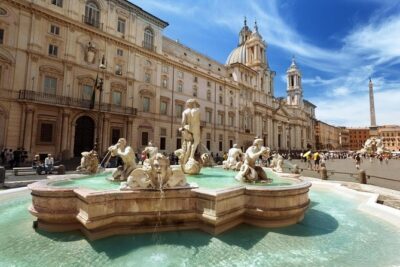
3 in 1 Cooking Class near Navona: Fettuccine, Ravioli & Tiramisu
Read our review →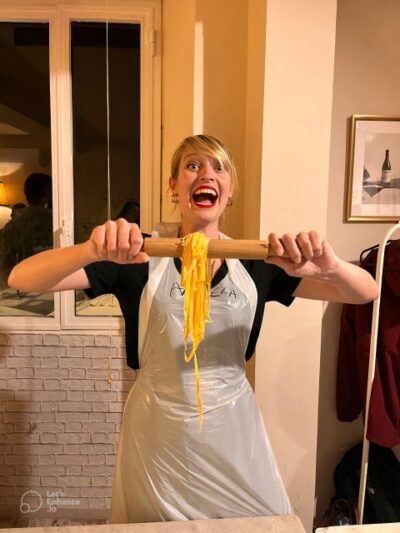
Pasta Making Class with Wine, Limoncello, and Dessert
Read our review →
Rome Cooking Class: Make Pasta and 3 Spritz Cocktails
Read our review →
3-in-1 Fettuccine, Ravioli, and Tiramisu Cooking Class
Read our review →
Fettuccine Pasta Cooking Class in Rome’s City Center
Read our review →
Fettuccine & Tiramisù: Cooking Class with Wine & Limoncello
Read our review →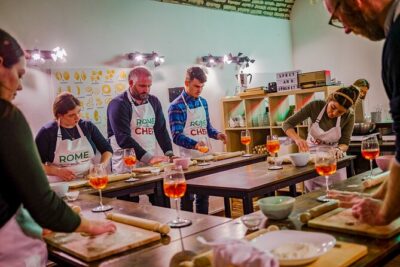
Pasta Cooking Class Near the Colosseum with 3 Spritz Cocktails
Read our review →