
Review · TOKYO COOKING CLASSES
Japanese Knife Skills & Tuna Don/Sushi Workshop in Tokyo
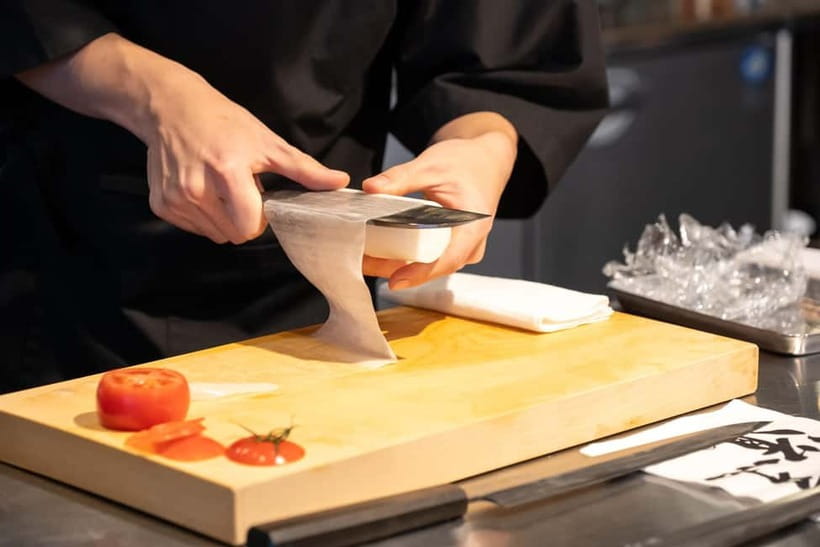
The sharpest moment comes when you take a Japanese knife to fresh tuna and slice sashimi yourself. This two-hour Tokyo workshop gives you more than a recipe: you learn why the blade matters, how to sharpen it, and how careful cuts affect the food on your plate. I like the hands-on sashimi practice and the chance to eat a proper meal at the end, not just sample a few bites.
I also like the small group size, limited to eight, and the mix of craft, cooking, and culture. The class includes a kappodo costume rental, a participation certificate, and 10 percent off the first-floor shop that day. The main consideration is that fish changes with availability, and the workshop is not suitable for children under 12 or people with food allergies.
Key points to know before booking
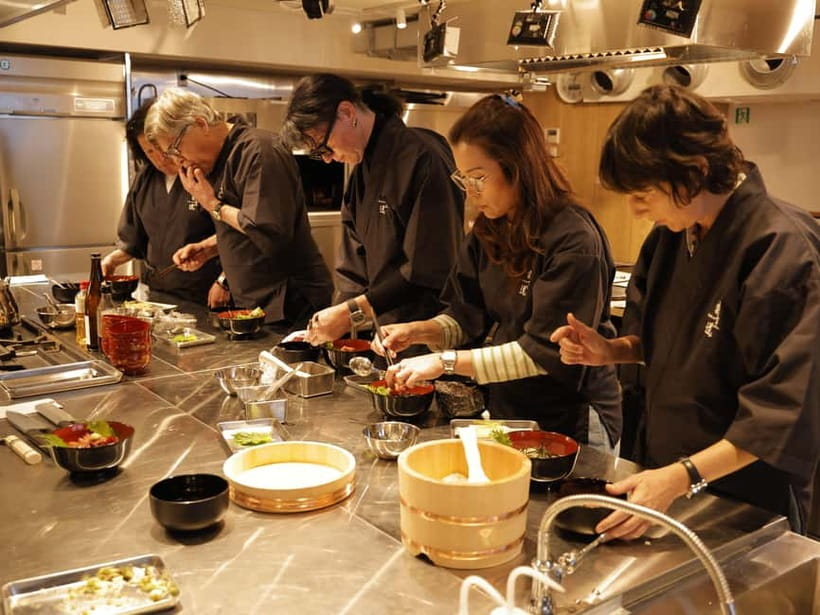
- You cut the tuna yourself: After an expert demonstration, you practice slicing sashimi with guidance.
- Knife craft comes first: Learn how Japanese knives are made and how to sharpen one with a whetstone.
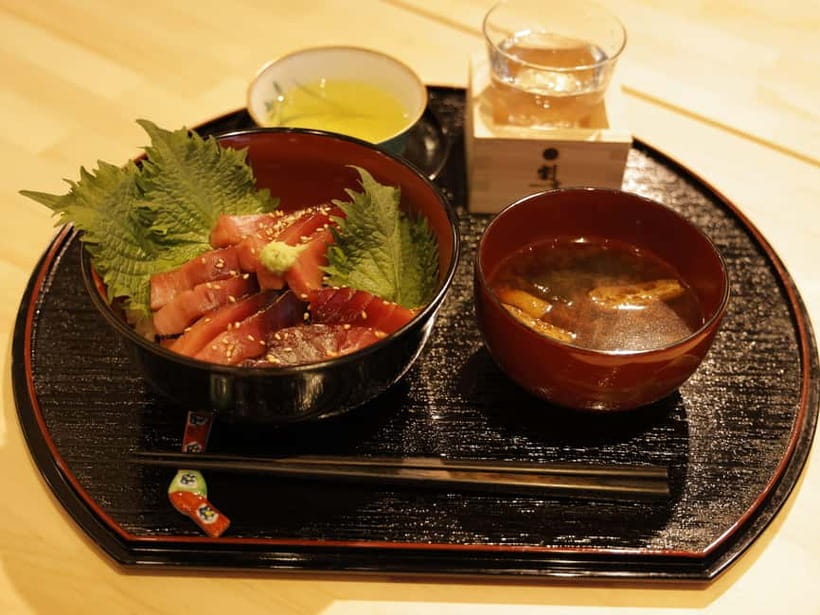
- Choose your main dish: Prepare a tuna zuke-don rice bowl or a 10-piece sushi set, with the included meal listed as sashimi zuke-don.
- The meal is generous: Your food comes with miso soup, sake, and green tea.
- Small groups help: The class takes up to eight people and operates in English and Japanese.
- Come dressed to cook: Wear comfortable clothes, and remember that transportation is not included.
Why the tuna slicing is the heart of this Tokyo class
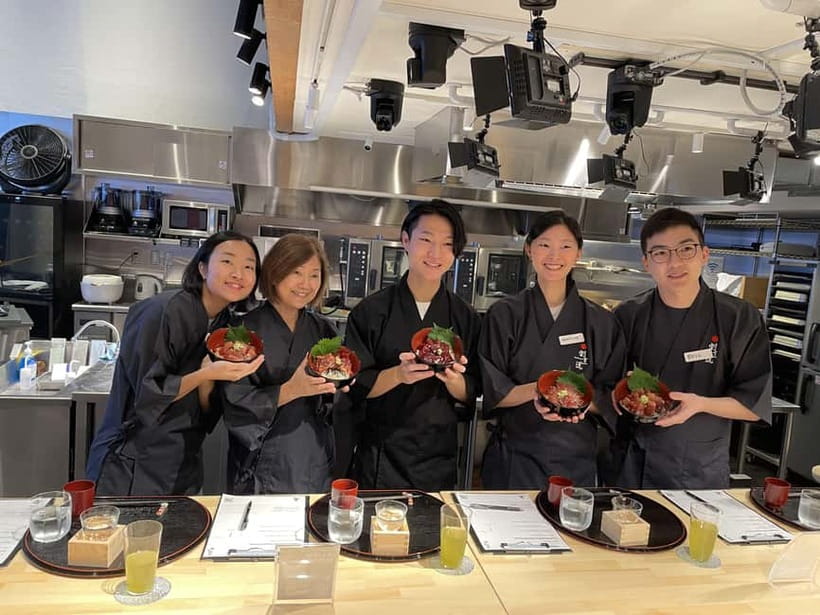
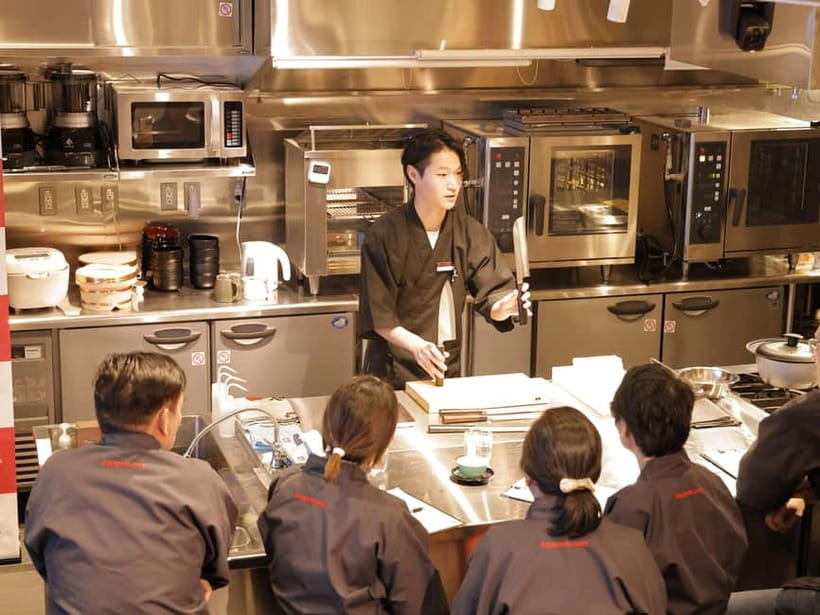
Many cooking classes let you assemble food. This one asks you to handle the knife first, which makes the meal feel earned. You watch the instructor perform sashimi cutting, then try the same basic work yourself with fresh fish.
That order matters. Sashimi looks simple on the plate, but the cut controls texture, appearance, and how the fish feels in your mouth. A rough slice can make fine tuna seem ordinary. A clean slice shows why Japanese knife work is treated as a serious skill rather than a quick kitchen chore.
You should expect instruction rather than a free-for-all. The class begins with a look at Japanese knife culture and the making of the blades. You then learn which knives suit different kinds of food and how a sharp edge changes the work. The exact fish may vary with supply, but the listed meal centers on tuna zuke-don, and the practical focus remains the same: handle the blade carefully and cut with control.
I especially like that you are not asked to pretend to be a sushi chef. You watch a professional performance first, then work under direction. That makes this a good choice if you cook at home but have never handled sashimi, or if your knife skills stop at vegetables and boneless meat.
More Sushi and Japanese Classes in Tokyo:
- Ramen & Gyoza Cooking Class in Tokyo with Local Supermarket Visit
★ 5.0 · 823 reviews - Tokyo Tsukiji Fish Market Tour and Sushi Making Lesson
★ 5.0 · 390 reviews - Tokyo: Easy Ramen Cooking Experience in Kabukicho, Shinjuku
★ 4.6 · 321 reviews
Japanese knife making and the whetstone lesson
The opening lesson gives the class a useful cultural frame. Japanese knives are prized for craftsmanship and sharpness, but sharpness alone is not the whole story. The instructor explains how knives are made and how to choose the right tool for different foods.
You also learn sharpening techniques with a whetstone. This is one of the most useful parts to take home, since many home cooks own a good knife but do not know how to maintain it. The class guides you through the basic method step by step, so you leave with more than a souvenir recipe.
Do not expect a full apprenticeship in two hours. A short workshop cannot cover every blade style, steel type, angle, and repair method. It can, however, give you a sound introduction and help you understand what you are doing before you start sharpening at home.
The lesson is valuable even if you do not plan to buy a knife. You begin to notice how the blade meets the food, how much pressure you use, and why a smooth motion matters. Those are small changes, but they can make everyday cooking safer and less clumsy.
Wearing the kappodo costume
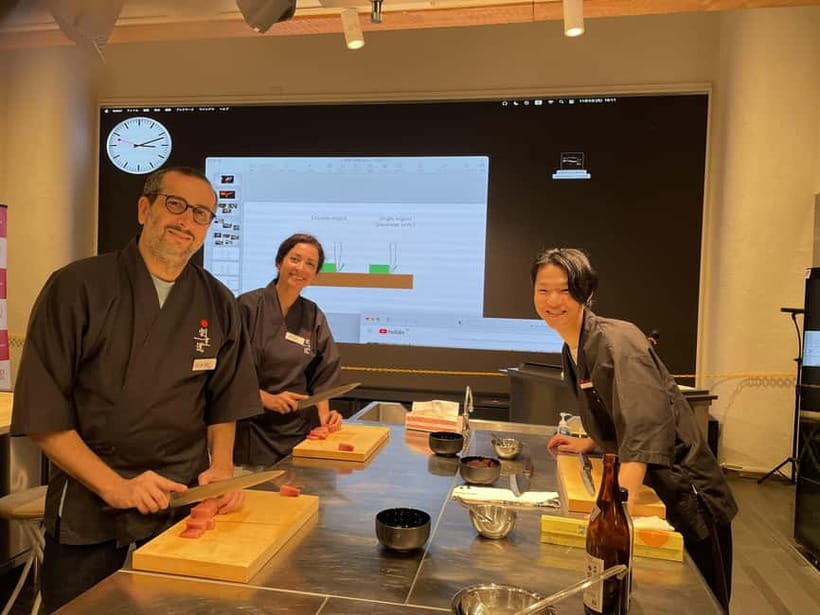
The included kappodo costume rental adds a traditional touch without turning the class into a staged show. You get to take part in the workshop dressed for the setting, which can make the knife demonstration and meal feel more connected to Japanese culinary practice.
The costume is not a reason by itself to book the class, but it adds character to an already focused lesson. If you enjoy experiences that combine food with an element of craft and presentation, you will likely appreciate it.
Your own clothing still matters. The instructions ask you to wear comfortable clothes suitable for cooking. Choose something that allows easy movement and that you will not worry about near ingredients, knives, or soup. The activity does not list transportation, so you also need to arrange your own way to the meeting point. Look for the building with samurai-style murals painted on it.
Making your zuke-don or sushi set
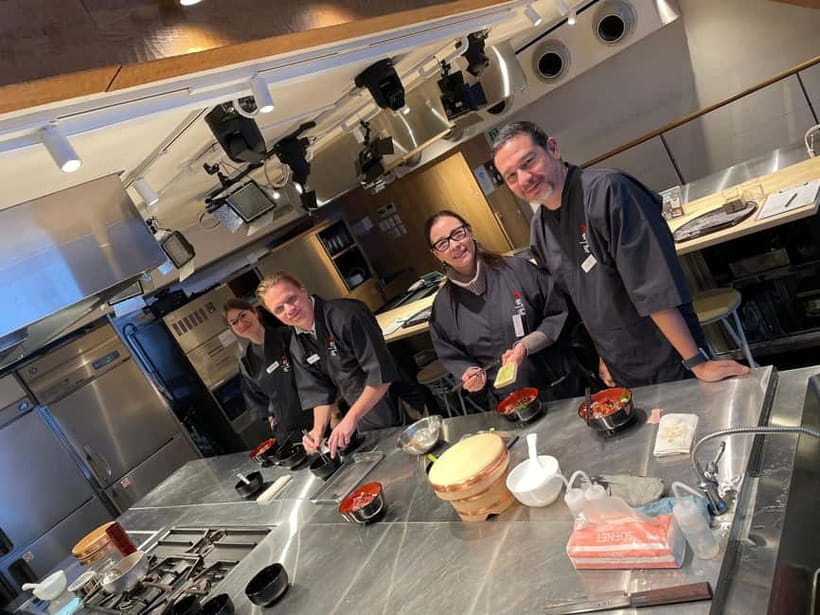
Once the knife work is underway, the workshop turns toward lunch. You prepare a tuna zuke-don, a rice bowl topped with marinated sashimi, or a 10-piece sushi set. The supplied meal information specifically lists sashimi zuke-don, so check the available choice when booking or at the start of the session if the sushi option matters to you.
Zuke-don is a smart dish for this kind of class. The marinated fish is the star, but the rice gives you a complete meal rather than a few isolated pieces of sashimi. You also get to see how preparation, seasoning, slicing, and serving fit together.
The sushi option offers a different kind of practice. A 10-piece set gives you a clear portion and a more formal presentation, but the available fish can vary. The class states that fish depends on availability, so do not book expecting one exact species or an identical plate every time.
This is also where the lesson becomes practical for home cooking. The recipe lets you repeat the dish after returning home, while the knife practice helps you prepare ingredients more neatly. You will not leave with professional sushi training, but you can leave with a reliable starting point.
Same region, a different dish to learn:
- Ramen and Sushi Cooking Class with Sake Pairing Set in Tokyo
★ 5.0 · 291 reviews - Tokyo: Wagyu and 7 Japanese Dishes Cooking Class
★ 4.9 · 273 reviews - Tokyo Washoku 4-hour Cooking Class: From Market to Table
★ 5.0 · 253 reviews - Small-Group Wagyu Beef and 7 Japanese Dishes Tokyo Cooking Class
★ 5.0 · 190 reviews
A proper meal with miso soup, sake, and green tea
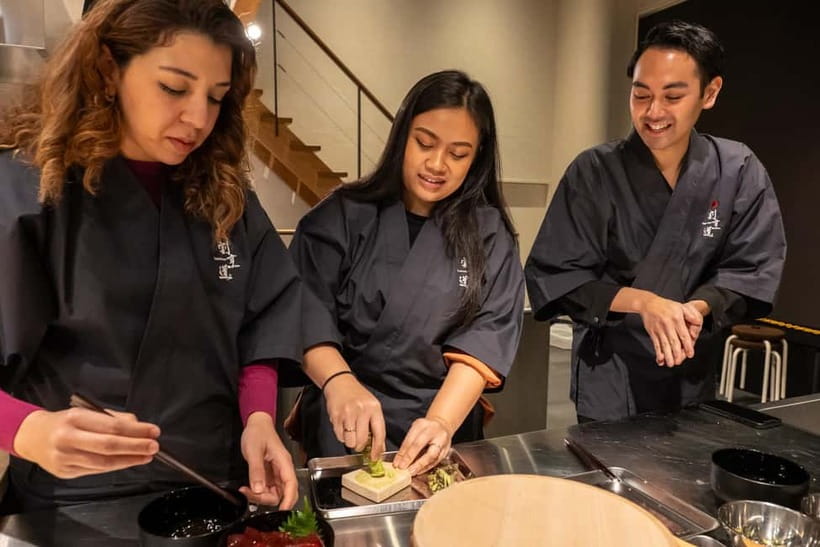
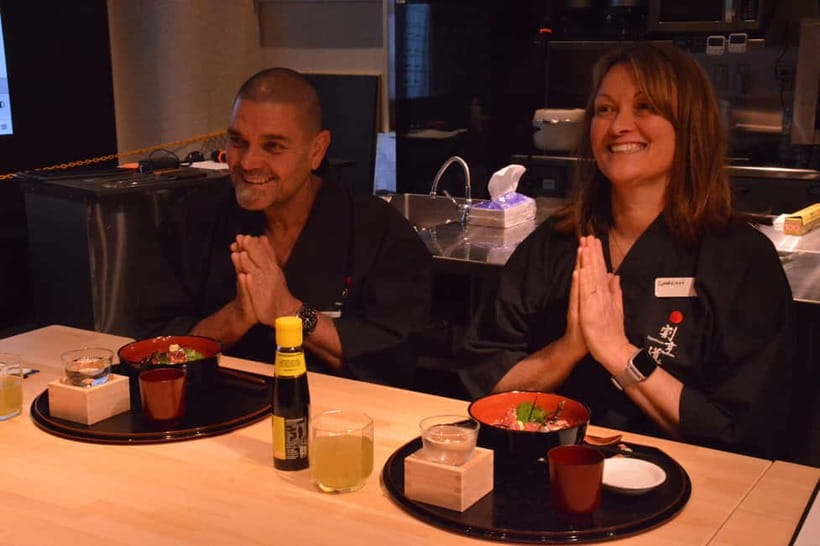
The meal is not an afterthought. You sit down with the dish you prepared, miso soup, and a tasting of the workshop’s original sake. Green tea is included as well.
That combination gives the two-hour session a satisfying finish. You first learn about tools, then cut fish, then prepare food, and finally eat it in a relaxed setting. The meal also helps you judge the result of your own work. You can see how the tuna looks and taste how the marinade, rice, and slicing come together.
The portion appears to be generous based on the available feedback, with one diner specifically noting plenty of fish, soup, and sake. That makes the $127 price easier to assess. You are paying for a small-group lesson, ingredients, tools, a costume rental, a meal, drinks, a certificate, and access to knife instruction, not simply for lunch.
Still, value depends on your interests. If you want the cheapest way to eat tuna in Tokyo, this is not it. If you want to learn a skill, handle the tools, and enjoy a guided meal, the price is more reasonable. A souvenir knife is not included, though you receive 10 percent off items at the first-floor shop on the day of your workshop.
What the small group changes
With a maximum of eight participants, the instructor can give the knife portion more attention than a large demonstration class normally allows. That matters when you are holding a sharp blade and trying to copy a precise motion.
Small groups also make the meal less hurried. You have room to ask about knife types, sharpening, sashimi cuts, and Japanese cooking traditions. The class is available in English and Japanese, so English-speaking participants can follow the instruction without needing to rely only on visual demonstrations.
The format should suit solo visitors, couples, and food-focused friends. It may also work well for someone who wants a cultural activity with a clear result at the end. You make something, eat it, and receive a participation certificate.
The group size does not guarantee an individual lesson every minute. There are still several people sharing the instructor’s time, and the two-hour schedule has to cover knife history, sharpening, cutting, cooking, and lunch. If you want a long private coaching session, this is not the right format.
Who should book this workshop
I would recommend this class to you if one or more of these descriptions fits:
- You enjoy Japanese food and want to understand how it is prepared.
- You cook at home and want better knife control or sharpening skills.
- You prefer a practical activity to a standard food tasting.
- You want a small group and instruction in English or Japanese.
- You want a Tokyo meal that includes a cultural lesson.
- You are comfortable trying raw fish and eating a dish based on available ingredients.
It is less suitable if you have food allergies, since the activity specifically excludes people with food allergies. It is also not suitable for children under 12. Anyone uneasy around sharp knives should think carefully before booking, even though the lesson is guided.
Because fish varies with availability, people with strict dietary expectations should ask for clarification before reserving. The included dish is centered on sashimi and tuna zuke-don, so this is not a flexible vegetarian cooking class.
Practical timing, clothing, and booking value
The class lasts two hours, which is a useful length in a busy Tokyo schedule. It is long enough to include instruction and a full meal, but short enough to fit before or after another activity.
Wear comfortable clothes that are suitable for cooking. You do not need to bring ingredients or tools, since they are supplied. Transportation is not included, and the meeting point is identified by samurai-style murals on the building, so allow time to find the location.
The activity offers free cancellation up to 24 hours before the start time, and you can reserve now and pay later. Those terms are helpful if your Tokyo plans are still shifting, though you should still confirm the start time when checking availability.
The participation certificate is a pleasant extra, especially if you are collecting memories from hands-on activities. The 10 percent shop discount may also matter if you are considering Japanese kitchen goods. It only applies to items at the first-floor shop on the same day, so it is worth looking around before or after class if knives or cooking tools interest you.
How this compares with a basic sushi class
A basic sushi class usually puts the food first. You may learn rice preparation, rolling, or shaping. This workshop puts the knife at the center, then uses the meal to show why the knife work matters.
That makes the class a better match for sashimi fans and home cooks who want technique. It is less ideal if your main goal is to make many different sushi shapes or learn a broad menu of Japanese dishes.
The sharpening lesson is another difference. It gives you a useful skill that many short food classes skip. You may not become confident enough to sharpen every knife immediately, but you will understand the process and have a method to practice.
The class also has a stronger connection to Japanese culinary tools. You are not only preparing food. You are learning why the equipment is made and maintained in a particular way. That context gives the meal more meaning without making the session feel like a lecture.
Final call: is this $127 workshop worth it?
Book it if you want an active food experience rather than a meal alone. The strongest reasons are the chance to slice sashimi yourself, learn whetstone sharpening, and eat a generous tuna-based lunch with miso soup and sake. The small group and English-language instruction make the format approachable.
Think twice if you have food allergies, avoid raw fish, dislike handling sharp knives, or want a broad sushi-making course. Fish availability can also change the exact plate, so keep your expectations flexible.
For food lovers, home cooks, and anyone curious about Japanese knife culture, this is a well-shaped two-hour activity. You leave with a recipe, a certificate, new knife habits, and a better sense of why a simple slice of sashimi demands such care.
FAQ
How long does the Japanese knife and tuna workshop last?
The workshop lasts two hours. It includes knife instruction, sashimi slicing practice, cooking, and the meal.
What food will I prepare?
You can prepare a tuna zuke-don rice bowl with marinated sashimi or a 10-piece sushi set. The listed lunch is sashimi zuke-don, and the fish used can vary based on availability.
Is the class offered in English?
Yes. The instructor teaches in English and Japanese.
What is included in the price?
The activity includes instruction about Japanese knife making, sharpening techniques, a knife skills demonstration, ingredients, tools, kappodo costume rental, lunch, miso soup, sake, green tea, and a participation certificate.
Are children and people with food allergies allowed?
Children under 12 are not permitted, and the activity is not suitable for people with food allergies.
What should I wear and bring?
Wear comfortable clothes suitable for cooking. Ingredients and tools are provided. Transportation to and from the activity is not included.
Newest classes around Tokyo
- Tokyo: Sushi roll and side dish cooking experience★ 5.0 · 2 reviews
- Tokyo: Sushi Making Experience & Japanese Cooking Class★ 5.0 · 2 reviews
- Tokyo: Sushi and Ramen Cooking Class with Sake Pairing Set★ 5.0 · 81 reviews
- Tokyo: Sushi Cooking Class with Sake Tasting★ 4.8 · 55 reviews
- Tokyo: Real Ramen & Dumpling Cooking with Master Chef★ 5.0 · 10 reviews
- Tokyo: Kawaii Bento Cooking Class – Cute Character Lunchbox★ 4.9 · 55 reviews
- Tokyo: Gyoza Making from Scratch – Ultimate Cooking Class★ 5.0 · 2 reviews
- Tokyo: Night Cooking Class: 5 Home-Cooked Japanese Dishes★ 4.9 · 13 reviews
Tokyo Cooking Classes, compared.

Ramen & Gyoza Cooking Class in Tokyo with Local Supermarket Visit
Read our review →
Tokyo Tsukiji Fish Market Tour and Sushi Making Lesson
Read our review →
Easy Ramen Cooking Experience in Kabukicho, Shinjuku
Read our review →
Ramen and Sushi Cooking Class with Sake Pairing Set in Tokyo
Read our review →
Tokyo Washoku 4-hour Cooking Class: From Market to Table
Read our review →
Small-Group Wagyu Beef and 7 Japanese Dishes Tokyo Cooking Class
Read our review →
Private Home Cooking in Yanaka – Local Flavors in a Warm Setting
Read our review →Browse the lists this tour appears in