
Review · OSAKA COOKING CLASSES
Osaka Cooking Class: Okonomiyaki &Japanese cuisines experience
Osaka is a food city, but this class takes you beyond restaurant counters and into a local home kitchen. With Yayo guiding you, you prepare okonomiyaki, takoyaki, and miso soup, then sit down to eat the meal you made. I like the small group limit of eight, and I especially like that the cooking is practical enough to repeat at home. The optional sake and beer pairing adds a pleasant extra for adults who want it.
The main consideration is the price: at $104.13 per person, this is not a cheap lunch. You are paying for personal instruction, a full meal, ingredients, and a home-based cultural experience. Also, arrive on time. Participation may be refused after 10 minutes, with no refund.
Key points at a glance
- Cook Osaka’s signature dishes: Make savory okonomiyaki, octopus-filled takoyaki, and miso soup from scratch.
- Learn in Yayo’s home: The setting feels personal and gives the class a more intimate tone than a large cooking school.
- Expect plenty of food: The portions can be generous enough that you may have leftovers to take away.
- Small groups matter: The class is limited to eight people, and solo bookings may sometimes become private lessons.
- Add a drink pairing: Select the optional local sake and beer tasting when booking.
- Leave with more than a full stomach: Recipes, cooking tips, matcha, taiyaki, and thoughtful small gifts may be part of the experience.
Why this Osaka cooking class feels personal
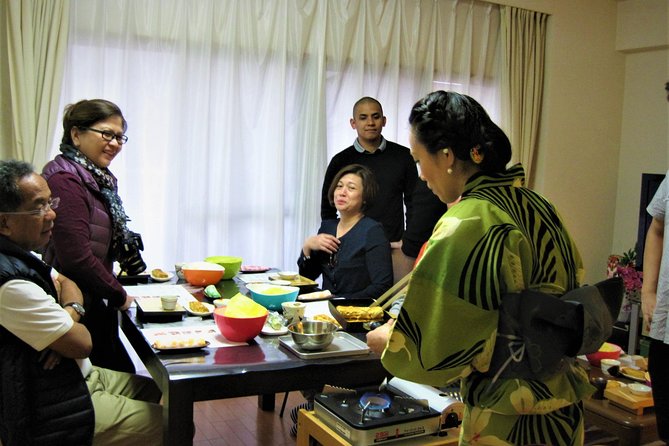
The best part of this experience is its scale. You are not placed in a large demonstration room, watching a chef work from a distance. The class takes place in Yayo’s own home, where the cooking feels closer to being invited into someone’s kitchen than attending a formal culinary course.
That setting also shapes the conversation. Yayo explains the ingredients, the techniques, and the place each dish has in Japanese food culture. She is fluent enough in English to answer questions and explain the steps clearly, and her friendly, patient manner helps take the pressure off first-time cooks.
I like that the class is built around participation, but not around perfection. The food is prepared efficiently, with some ingredients ready to use, so you have time to cook without spending the entire session chopping and measuring. You still get to handle the food, shape the dishes, and practice the key techniques.
The maximum group size is eight. That is small enough for direct help, though the actual number can vary. Solo visitors have sometimes ended up with a private lesson, while couples and small groups may share the kitchen with other people from around the world.
More Sushi and Japanese Classes in Osaka:
- Sushi Making Osaka! Popular Sushi Class in Japan!
★ 5.0 · 500 reviews - Osaka: Ramen and Gyoza Cooking Class in Dotonbori
★ 5.0 · 378 reviews - Osaka: Roll and Authentic Sushi Making Class in Dotonbori
★ 4.9 · 239 reviews
Meeting Yayo near Noda Station
The meeting point is outside Noda Station in Osaka’s Fukushima Ward. From there, you continue with the instructor to the cooking studio, which is Yayo’s home.
You should allow enough time to find the station meeting point. The instructions stress punctuality, and arriving more than 10 minutes late can mean losing your place without a refund. That rule is understandable in a small private home, where the class depends on a fixed cooking schedule, but it leaves little room for a wrong turn.
The location is near public transportation, so the meeting point is practical for a morning or evening activity. Hotel pickup and drop-off are not included. You will need to make your own way to Noda Station and return from the same meeting point after the class.
Because the cooking studio is small, only people with confirmed bookings can join. You cannot bring along a friend who has not been booked into the class.
Starting with miso soup and Japanese basics
The class begins with miso soup, a simple dish that shows why Japanese cooking is often about small details. The basic ingredients may seem familiar, but the final taste can change with the stock, the amount of miso, and how the ingredients are combined.
This is where the class becomes more useful than a simple food tasting. Yayo explains how the ingredients work together and gives you methods you can repeat at home. One particularly helpful lesson is the preparation of dashi, the stock that forms the base of many Japanese dishes. It can sound mysterious before you learn it, but the class helps make the process feel manageable.
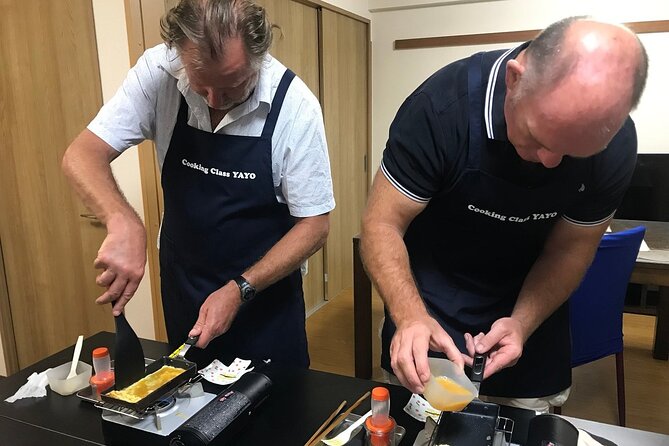
Some sessions also include dashimaki tamago, a rolled Japanese omelet. This is a good dish for learning control, since the egg must be cooked and rolled in layers. The exact flow may vary, but the food prepared during the class gives you a broad introduction to home-style Japanese cooking rather than a single specialty.
Turning batter into takoyaki
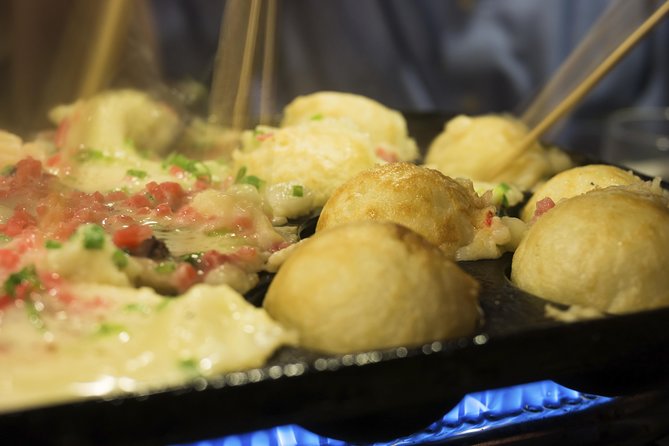
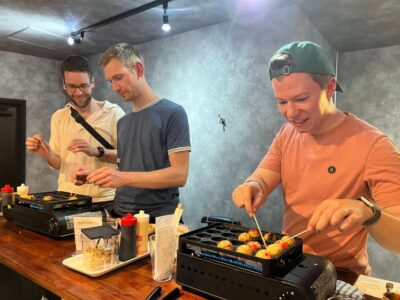
Takoyaki is one of Osaka’s best-known foods, and making it yourself gives you a better sense of the skill involved. These small balls are made from wheat flour batter and filled with octopus before being cooked in a special pan.
The challenge is shaping the batter as it cooks. You need to turn the pieces at the right moment so they become round rather than rough-edged. Yayo provides hands-on guidance, which is useful if you have never used a takoyaki pan before.
This is also one of the more social parts of the class. You can work alongside the other participants, compare your results, and enjoy the relaxed rhythm of cooking several small pieces at once. The final dish is commonly served with sauces and toppings, including dried bonito flakes.
If you are not comfortable with octopus, check the available food options when booking. Vegetarian and pescatarian choices can be arranged upon request, but you should state your needs at the time of booking rather than assume the standard menu can be changed on the day.
More Cooking Classes in Osaka:
- Ramen and Gyoza Cooking Class in Osaka
★ 5.0 · 202 reviews - Osaka Sake Tasting with Takoyaki Cooking
★ 5.0 · 156 reviews - Osaka: Cooking Class Ramen & Gyoza Course in Nanba
★ 4.9 · 86 reviews - Osaka: Gluten-Free Ramen and Gyoza Cooking Class
★ 5.0 · 42 reviews
Making okonomiyaki the Osaka way
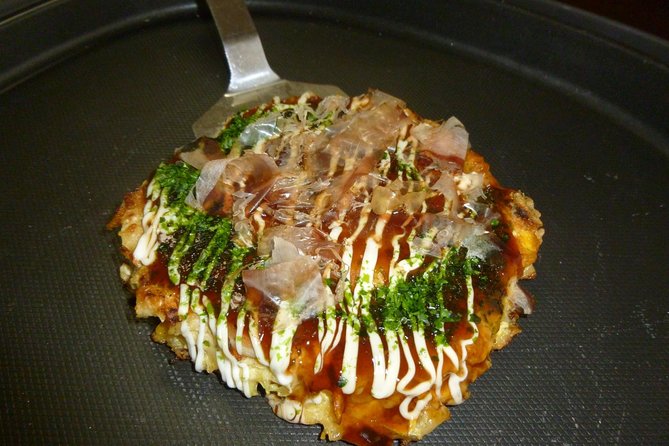
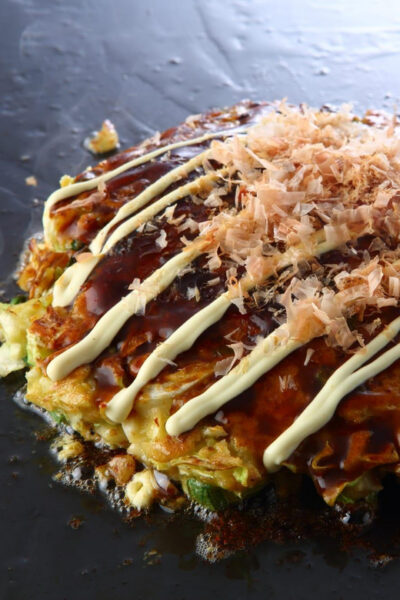
Okonomiyaki is the centerpiece for many people. The name is often explained as something like what you like, cooked on a griddle, and the dish reflects that flexible spirit. The standard preparation here includes egg, flour, cabbage, pork, and dried bonito flakes.
The value of making it yourself is that you learn the balance. Too much batter can make the pancake heavy. Too little can leave it difficult to hold together. Cabbage provides bulk and texture, while the toppings bring much of the familiar savory flavor.
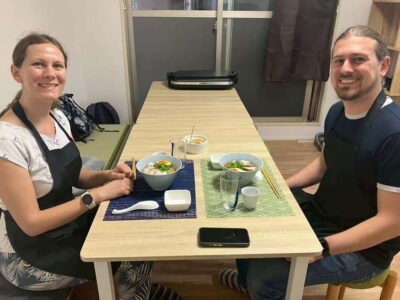
Yayo shows you how to combine and cook the mixture, then helps you finish it properly. You eat your own okonomiyaki as part of the meal, so the class is both a lesson and lunch or dinner.
I also like that this is a dish you can realistically make again. You do not need a restaurant kitchen to prepare it, and the technique is less intimidating once you have seen the process. Several class participants have gone home eager to try different versions with family members.
Taiyaki, matcha, and the sweet finish
After the savory dishes, the class finishes with taiyaki and matcha tea. Taiyaki is a fish-shaped cake, usually associated with a sweet filling, though the precise preparation can vary.
The shape makes it a fun ending, especially for families and anyone who enjoys Japanese snacks. It also gives the class a clear progression from soup and savory pancakes to a small dessert and tea.
Matcha provides a quieter finish. Rather than rushing out after the meal, you have time to sit, drink tea, and talk with Yayo and the other participants. Some sessions include small snacks, homemade items, or gifts such as chopsticks and paper cranes made from the flags of participants’ home countries. These touches are not the main reason to book, but they add warmth to the farewell.
A large meal in a small home kitchen
Come hungry. The class includes several dishes, and the total amount of food can be more than some people expect from a two-and-a-half-hour activity. You may prepare miso soup, takoyaki, okonomiyaki, and egg dishes, then finish with taiyaki and matcha.
The included meal is one reason the $104.13 price can make sense. You are not paying only for a cooking demonstration. The fee covers the instruction, all ingredients and utensils, and the food you prepare. You also receive a local home experience that is difficult to compare directly with an ordinary restaurant meal.
Still, the price will feel high if your main goal is simply to eat Osaka specialties. You can order okonomiyaki and takoyaki for much less in the city. This class makes sense when you want to learn the process, ask questions, meet people, and take home skills rather than just have lunch.
The generous portions can also mean leftovers. That is useful, but it is worth remembering if you have a full dinner planned afterward. The optional sake and beer pairing adds to the experience, but extra food and drinks outside the included meal are not covered.
What makes Yayo an effective instructor
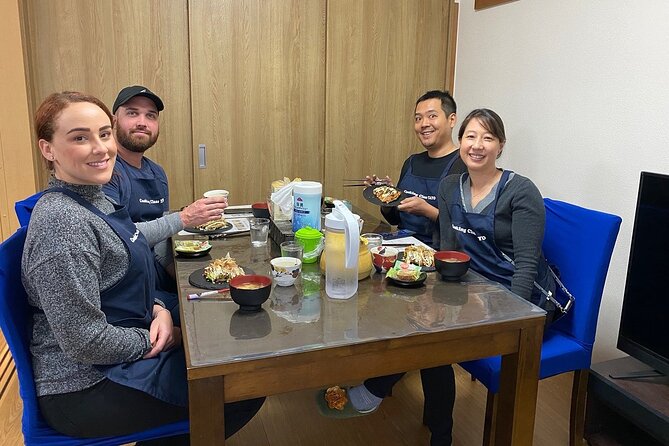
Yayo’s strongest quality is her personal approach. She explains the techniques carefully, gives useful cooking advice, and takes time to answer questions about ingredients and everyday life in Japan.
Her English is described as quite good, which matters in a class where timing and texture are important. You need to understand when to turn takoyaki, how to handle the okonomiyaki mixture, and how to adjust the soup. Clear instructions make the session accessible even if you have little cooking experience.
She also brings family connections into the food. The class can include explanations about her mother’s ingredients and the cultural background of each dish. That adds context without turning the lesson into a lecture.
The atmosphere is informal. Humor and conversation are part of the experience, and the class is designed so that people who are not confident cooks can participate. If you are an experienced home cook, you may not learn advanced professional techniques, but you will still pick up useful details about Japanese ingredients and preparation.
Who should book this experience
I would recommend this class most strongly to people who enjoy food as a way to understand a place. It suits solo visitors, couples, families with older children, and small groups looking for an activity that is more personal than sightseeing.
It is also a good choice for anyone who takes cooking classes while traveling. You get several dishes in one session, rather than spending two and a half hours focused on only one recipe. The class is especially useful if you want recipes and methods that can be repeated at home.
The experience may be less suitable if you dislike eating a large meal, need a highly structured professional kitchen, or prefer to keep your Osaka schedule flexible. The fixed start time and strict late-arrival policy require planning.
Vegetarians and pescatarians should ask for the appropriate option when booking. The information confirms that these choices are available by request, but it does not promise that every dish will be identical to the standard menu.
Price, group size, and booking value
At $104.13 per person, this is a premium food activity. The value comes from several parts working together: a 2.5-hour session, a small group capped at eight, an English-speaking instructor, all ingredients and equipment, and the meal you prepare.
The home setting is important. A cooking school can provide more specialized equipment, but Yayo’s kitchen gives you a better idea of how these dishes fit into everyday Japanese cooking. The small group also means you can ask for help instead of waiting for an instructor to reach you.
Solo visitors should note the possibility of receiving especially direct attention if no other bookings are made for that session. Couples may also find the class feels almost private when the group is small.
The activity has a 100 percent recommendation rate and a five-star rating based on 261 reviews, which supports the idea that the format consistently works well. Still, I would judge the value by your interests. If you love food, want personal contact, and plan to cook Japanese dishes at home, the cost is easier to justify. If you only want a quick meal, spend the money on restaurants instead.
Free cancellation is available up to 24 hours before the start time for a full refund. Changes or cancellations made within 24 hours are not accepted for a refund, based on local time.
Should you book Yayo’s Osaka cooking class?
Book it if you want a warm, hands-on introduction to Japanese home cooking, especially if okonomiyaki and takoyaki are high on your Osaka list. The combination of useful instruction, a small group, a generous meal, and time in Yayo’s home gives the experience more substance than a standard food stop.
I would skip it only if the price feels too high for a meal, you have strict dietary needs that you have not arranged in advance, or your schedule cannot handle a fixed start time. For everyone else, arrive early, bring an appetite, and leave room for taiyaki and matcha.
FAQ
How long does the Osaka cooking class last?
The class lasts approximately 2 hours and 30 minutes.
Where does the class begin?
You meet outside Noda Station in Osaka, at 1 Chome-1 Ohiraki, Fukushima Ward, Osaka, 553-0007, Japan.
Where does the activity end?
The activity ends back at the meeting point.
What dishes will I prepare?
The standard class includes miso soup, takoyaki, and okonomiyaki. Sessions may also include dishes such as dashimaki tamago, taiyaki, matcha, and other Japanese food preparations.
Is the food included in the price?
Yes. The price includes the ingredients, utensils, and the lunch or dinner you prepare during the class.
Can I request a vegetarian or pescatarian option?
Yes. Vegetarian and pescatarian options are available upon request when you book.
Is sake and beer included?
A sake and beer pairing is available as an optional add-on. Extra food and drinks are not included unless specifically selected or provided as part of the activity.
Newest classes around Osaka
- Okonomiyaki&Takoyaki for Families:Osaka Street Food Festival★ 5.0 · 4 reviews
- Osaka: Gluten-Free Ramen and Gyoza Cooking Class★ 5.0 · 42 reviews
- Osaka Okonomiyaki Cooking Experience for Families & Groups★ 4.9 · 8 reviews
- Osaka Sake Tasting with Takoyaki Cooking★ 5.0 · 156 reviews
- Osaka: Okonomiyaki Cooking Class with Beer or Soft Drink★ 4.9 · 9 reviews
- Osaka: Japanese Cooking Class with Matcha Experience★ 5.0 · 4 reviews
- Osaka : Exclusive Tea Ceremony & Wagashi Cooking★ 5.0 · 2 reviews
- Osaka: Cooking Class & Sake Tasting with Local Market Visit★ 4.8 · 31 reviews
Osaka Cooking Classes, compared.

Sushi Making Osaka! Popular Sushi Class in Japan!
Read our review →
Roll and Authentic Sushi Making Class in Dotonbori
Read our review →
Cooking Class & Sake Tasting with Local Market Visit
Read our review →Browse the lists this tour appears in