
Review · GALLE COOKING CLASSES
Sea waves sri lankan cooking class
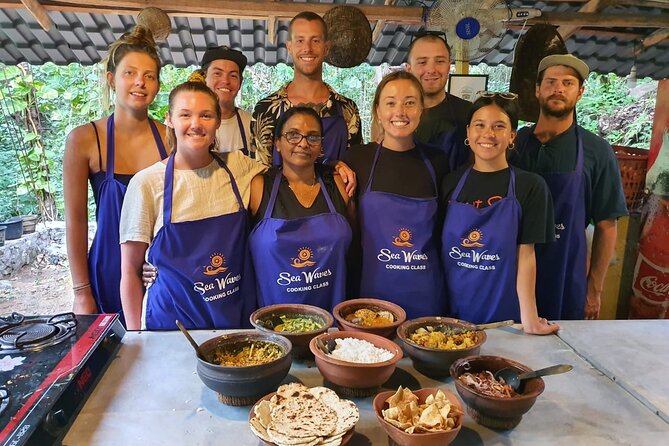
The most appealing part of Sea Waves Sri Lankan Cooking Class is that the cooking begins at the market. You choose fish, chicken, vegetables, and spices before heading to a small family restaurant near Unawatuna, where an experienced chef teaches you to turn those ingredients into a full Sri Lankan meal.
I like the market-to-table format, which gives the food a clear local setting rather than treating curry as a classroom recipe. I also like the open kitchen and jungle view, where monkeys and birds may provide a bit of company while you cook. The main caution is that the class is advertised as private, but one booking party found that three other people joined them, so confirm the group arrangement if privacy matters.
Key points to know
- Market visit first: You may visit fish and vegetable markets before cooking and choose what goes into your meal.
- Five vegetable dishes: The class includes five vegetables, plus fish or chicken according to your preference.
- More than 30 years of cooking experience: The chef teaches traditional methods, spice blending, and coconut milk preparation.
- Open-air setting: Cooking takes place at a family restaurant with a jungle view and possible sightings of monkeys and birds.
- Meal included: You sit down and eat the food you prepared at the end of the lesson.
- Private booking needs checking: The activity is sold as private, but group size may not always match that description.
Starting at Sea Waves in Unawatuna
Sea Waves Restaurant and Cooking Classes is on Dunwella Road in Yaddehimulla, Unawatuna, about the Galle area. The meeting point is easy to keep in mind: you start and finish at the restaurant, with the activity scheduled to begin at 10:00 in the morning.
The published location says Galle, but the exact meeting address is in Unawatuna. That distinction matters because Galle Fort and Unawatuna are separate places, and you should allow enough time to reach the meeting point. The class is near public transportation, and the return to the same spot keeps the end of the morning simple.
The full class lasts about three hours. That is long enough to include shopping, preparation, cooking, and lunch without taking up your entire day. If you plan to visit Galle Fort, relax on Unawatuna Beach, or continue toward the coast afterward, a morning booking leaves useful time later.
Bring a phone with the mobile ticket ready. Confirmation is provided at booking, and the tour ends where it begins, so you do not need to arrange a separate return transfer through the activity.
More Cooking Classes in Sri Lanka:
- Ella: Traditional Sri Lankan Cooking Class
★ 4.9 · 788 reviews - Organic cooking class sigiriya (kumara & family)
★ 5.0 · 650 reviews - Sri Lanka Cooking Class with Granny
★ 5.0 · 587 reviews
Choosing fish, vegetables, and spices at the market
The class begins with a visit to local food markets. The exact order can vary, but the practical idea is clear: you help choose the ingredients before you cook them.
One detailed account describes starting at a fish market on the beach near Galle Fort, then taking a tuk tuk to a vegetable market before going to the restaurant. You should treat that transfer as part of the day’s local feel, but confirm the meeting and transport details when booking, since the official meeting point is Sea Waves in Unawatuna.
This market stop gives you something a recipe sheet cannot. You can see the raw materials before they become curry, ask what is fresh, and select the fish or vegetables that appeal to you. The chef or guide can also explain what to look for and how the ingredients fit into a Sri Lankan meal.
The menu is not fixed in the narrow sense. You choose a meal built around five vegetables and either fish or chicken. That is a useful arrangement for couples or small groups with different tastes. One person can choose fish while another may prefer chicken, although the final menu should be confirmed with the host.
The market visit also helps you understand the balance of a Sri Lankan meal. Several vegetable curries are served with a main protein, so the plate is not simply one large bowl of curry. Different vegetables take on different spice mixes and cooking times, which becomes clearer once you prepare several dishes in the same session.
Learning from Susanthi and an experienced family chef
Susanthi is named in several accounts as the friendly guide for the market and cooking session. The chef is described as having more than 30 years of cooking experience, and the class is run through a small family restaurant business.
That family setting is important. You are not cooking in a polished demonstration kitchen designed only for tourists. You are using the tools and ingredients supplied by a working restaurant, with the lesson built around food the family knows well.
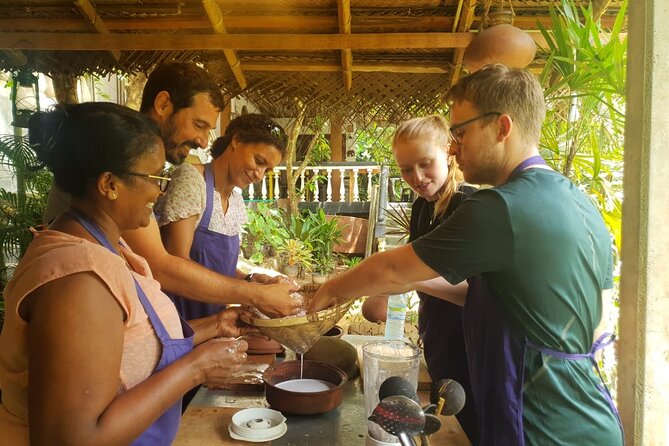
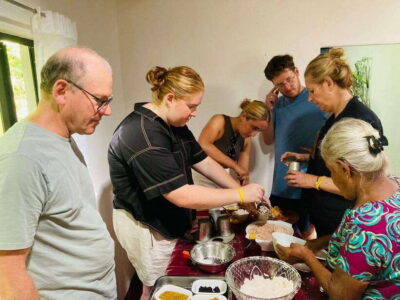
The instruction is in English, and the chef guides you through the preparation. You are not simply watching a cook prepare lunch while standing at a distance. The point is to take part in the process, from handling the ingredients to following the stages of each curry.
You can expect help with traditional Sri Lankan methods, including spice blending and making coconut milk. These small steps are often what separate a home-style curry from a generic dish labeled Sri Lankan. Learning when to add spices, how to prepare coconut milk, and how vegetables change during cooking gives you techniques you can use after returning home.
The class is especially useful if you have cooked curry before but never worked with Sri Lankan flavors. It shows how several dishes can be prepared together without making the meal feel repetitive. A dhal curry and tuna curry, along with four vegetable dishes, are among the combinations prepared by one group, though your ingredients may lead to a different menu.
Cooking five vegetables plus fish or chicken
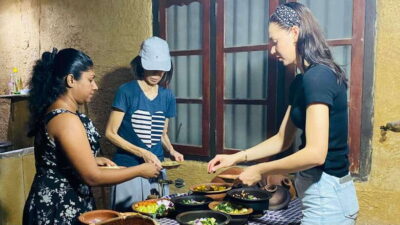
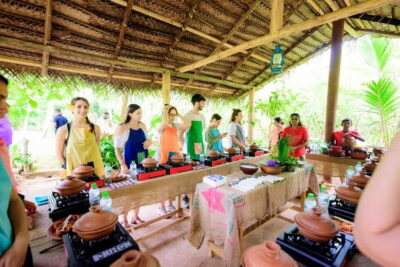
The main lesson takes place in an open kitchen at the restaurant. You can expect to prepare five vegetable dishes, along with fish or chicken, using the ingredients selected earlier.
That is a generous amount of food for a three-hour class. You are not learning one curry and then waiting for lunch. Instead, you work through a small meal, which helps you see how vegetables, protein, spices, and coconut-based sauces work together.
The cooking has a practical rhythm. You prepare ingredients, follow the chef’s instructions, and watch the separate dishes develop. Since the meal depends on what you choose at the markets, the class has a more personal feel than a fixed menu. The trade-off is that you may not know the exact dishes in advance.
If you are vegetarian, the description specifically allows a meal built around five vegetables, but it also says the standard format includes fish or chicken. Tell the host your preference before the class so the menu can be arranged clearly. The supplied information does not state whether vegan, gluten-free, or other dietary needs can be accommodated.
The cooking is also a good choice for people who want to repeat the dishes at home. The lesson covers the whole process rather than stopping at a finished plate. One participant particularly valued learning dhal curry because the complete preparation made it easier to understand how to recreate it later.
Do not expect a formal culinary school certificate or a technical chef-training session. This is a hands-on cultural cooking lesson in a family restaurant. The value comes from working with local ingredients and learning everyday methods, not from a highly structured professional syllabus.
Same region, a different dish to learn:
- Kandy Village Cooking Class
★ 5.0 · 536 reviews - Ella: Sri Lankan Cooking Class with Neranji at Homestay
★ 5.0 · 276 reviews - Cook with Wasantha
★ 5.0 · 248 reviews - Ella : Cooking class with amazing Spice Garden Tour
★ 5.0 · 239 reviews
Eating what you prepared
At the end, you sit down and eat the meal made during the class. This is more than a convenient lunch. Tasting the dishes immediately shows whether the spices, coconut milk, vegetables, and protein have come together as intended.
The meal can include a broad spread of curries, depending on the market choices. That gives you a chance to compare the flavors of the different vegetables rather than judging a single dish. You can also ask questions while the food is fresh in your mind and while the chef is nearby.
The class has a generous social side, too. One account describes Susanthi offering food to the tuk tuk driver, which reflects the relaxed family atmosphere of the restaurant. That detail should not be treated as a guaranteed part of every booking, but it gives you a sense of the informal setting.
Because you eat the food you cooked, the lesson ends with a clear reward. You do not leave wondering whether the recipes work. You have tasted the result and can remember the steps while they are still fresh.
The jungle view and the published Jungle Beach stop
The cooking area has an open kitchen and a jungle view. You may see monkeys and birds while you work, which adds a welcome bit of Sri Lankan setting to the class.
This is not a city cooking studio with sealed walls and a formal presentation counter. The natural surroundings are part of the appeal, though they also mean the atmosphere may feel less controlled than an indoor classroom. If you want a quiet, polished culinary setting, this may not be the right fit.
The listed itinerary includes Jungle Beach as a stop, but the detailed description focuses more heavily on the fish market, vegetable market, and restaurant. It does not explain how long you spend at Jungle Beach or whether swimming time is included. If that stop is important to your plans, ask Sea Waves to confirm exactly how it fits into your chosen session.
The two daily sessions provide some scheduling flexibility, but the supplied details identify 10:00 a.m. as the start time for this booking. Confirm the available session times before planning other activities around the class.
What the $59 price gets you
At $59, the price is reasonable if you value participation rather than simply eating lunch. Your fee covers the cooking lesson, ingredients, cooking tools, market visits as arranged, and the meal you prepare.
The strongest value comes from the number of dishes. You are working toward five vegetables plus fish or chicken, not just preparing one small recipe. The market component adds another layer, since you are learning how ingredients are selected before they reach the kitchen.
For a couple or small group, the private format can make the cost easier to justify. You receive direct guidance, choose ingredients to suit your preferences, and eat a substantial meal afterward. The price is less attractive if you only want a quick demonstration or have little interest in cooking.
One practical issue deserves attention. The experience is presented as a private activity for your party, but one booking party reported that three other people joined. That may have been an exception or a scheduling issue, but I would confirm the group size in writing if a private lesson is central to your decision.
The 99 percent recommendation rate and 5.0 rating from 467 reviews indicate very strong satisfaction overall, especially with the food, market visit, atmosphere, and instruction. Still, the private-group complaint is useful because it points to the one detail most worth checking before you pay.
Who will enjoy this class most
I would choose this class if you want to understand Sri Lankan food through actual ingredients and preparation. It suits curious eaters, home cooks, couples, families, and small groups who enjoy taking part rather than watching from the sidelines.
It is also a good match if you want a food activity outside the usual Galle Fort sightseeing route. The trip between the markets and restaurant gives the morning a local shape, while the open kitchen and family setting keep the focus on everyday cooking.
You may want another option if you need a strictly private lesson, a fixed menu, or detailed accommodation for special diets. The available information does not promise a professional kitchen, air-conditioning, wheelchair access, or a specific dish list. Ask before booking if any of those points are essential.
The class also works well for people who want a meal with a story. You can remember where the fish and vegetables came from, what you selected, how the spices were used, and how the finished food tasted. That is more useful than taking home a recipe with no sense of its setting.
Booking details worth checking
Free cancellation is available if you cancel at least 24 hours before the local start time. Cancellations made less than 24 hours ahead are not refunded, and changes inside that period are not accepted.
The activity requires good weather. If poor weather causes cancellation, you are offered another date or a full refund. This matters because the market visits and open kitchen are part of the appeal, and wet conditions could affect the plan.
The activity is listed as private, but group size should be confirmed. Also confirm whether transport between the fish market, vegetable market, and restaurant is included or simply arranged locally. One account describes tuk tuk travel, but the provided details do not set out a fixed transport policy or included fare.
Should you book Sea Waves Cooking Class?
I would book it if you want a practical introduction to Sri Lankan cooking, a market visit, and a generous meal in a family restaurant. The strongest features are the chef’s long experience, Susanthi’s English guidance, the choice of ingredients, the five-vegetable format, and the chance to eat what you make.
Before paying, confirm three things: the exact meeting arrangement in Unawatuna, the group size, and whether Jungle Beach is included in your session. If those details match your expectations, $59 buys a full morning with plenty of food and useful cooking skills, not just a short demonstration.
FAQ
Where does the cooking class start and finish?
The activity starts and ends at Sea Waves Restaurant and Cooking Classes on Dunwella Road, Yaddehimulla, Unawatuna 80600, Sri Lanka.
What time does the class start?
The listed start time is 10:00 a.m. Two sessions are offered each day, so confirm the available time when booking.
How long does the experience last?
The cooking class lasts approximately three hours.
Will I visit a market?
The class description includes visits to fish and vegetable markets before cooking. You may choose the ingredients for your meal during those visits.
What will I cook?
You will prepare five vegetable dishes plus either fish or chicken, depending on your preference and the ingredients selected.
Is the class taught in English?
Yes. The chef and guides are described as fluent English speakers who will guide you through the class.
Are ingredients and cooking tools included?
Yes. The experience provides the ingredients and tools needed for the cooking lesson.
Can I cancel for a full refund?
Yes, if you cancel at least 24 hours before the local start time. Cancellations made less than 24 hours in advance are not refunded.
Newest classes around Sri Lanka
- cooking lesson★ 5.0 · 7 reviews
- Hands-On Cooking Class in Anuradhapura-Cook Like a Local★ 5.0 · 2 reviews
- Sri Lankan Cooking Class in Bentota★ 5.0 · 2 reviews
- Sri Lanka: Cooking Class★ 4.4 · 6 reviews
- Sri Lankan Cookery with Nilu★ 5.0 · 34 reviews
- Cooking Experience from Ella★ 4.9 · 2 reviews
- Private cooking class – Personalized classic menu★ 5.0 · 5 reviews
- Nilaveli: Sri Lankan Cooking Class with a Local Family★ 5.0 · 16 reviews
Galle Cooking Classes, compared.
Browse the lists this tour appears in