
Review · SRI LANKA COOKING CLASSES
Ella: Traditional Sri Lankan Cooking Class
Ella’s Chamathka cooking class gets to the heart of Sri Lankan food: fresh produce, toasted spices, coconut, careful seasoning, and food made the old-fashioned way. With Ranjani, also called Ranji, you’ll work in an open-air kitchen, learn how coconut milk is made, and help prepare a generous spread of local dishes.
I like the warm, family-style setting and the clear talk about herbs, spices, and their health uses. I also like the banana-leaf meal at the end, which turns lunch or dinner into a small cultural lesson. The main consideration is that this is a shared class around one workstation, not a private lesson where each person cooks a separate dish from start to finish.
Key things to know before you book
- One shared cooking station: You’ll take turns chopping, mixing, seasoning, and cooking while Ranjani handles some of the more complex techniques.
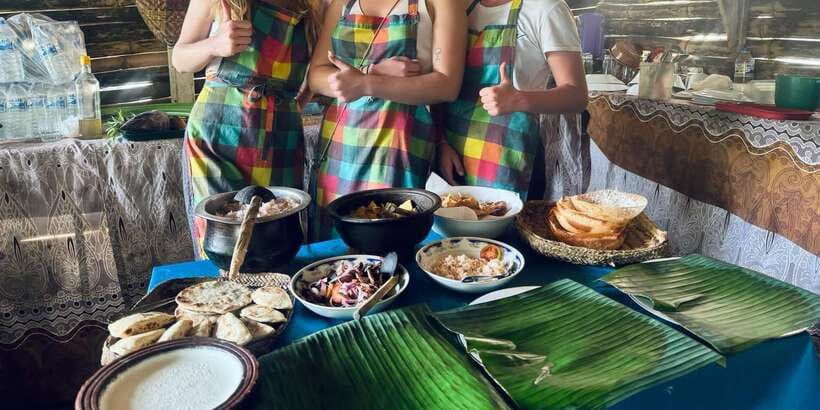
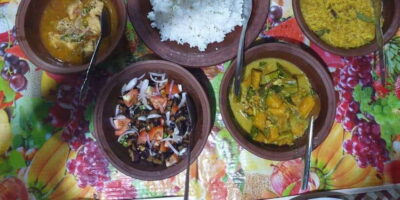
- A full Sri Lankan menu: Dishes may include dhal curry, chicken curry, aubergine salad, coconut sambol, papadam, hoppers, string hoppers, rice, and honey roti.
- Traditional methods: Expect old-style tools and techniques, including grating coconut and preparing coconut milk by hand.
- A generous final meal: Food is served together on banana leaves, with enough to make the meal feel like a proper feast.
- Useful recipes afterward: The recipes are sent digitally through WhatsApp, so you can try the dishes at home.
- Flexible timing: Classes normally begin at 11:00 AM or 5:00 PM, though you can ask the provider about another time in advance.
Cooking Sri Lankan food in Ella’s open-air kitchen
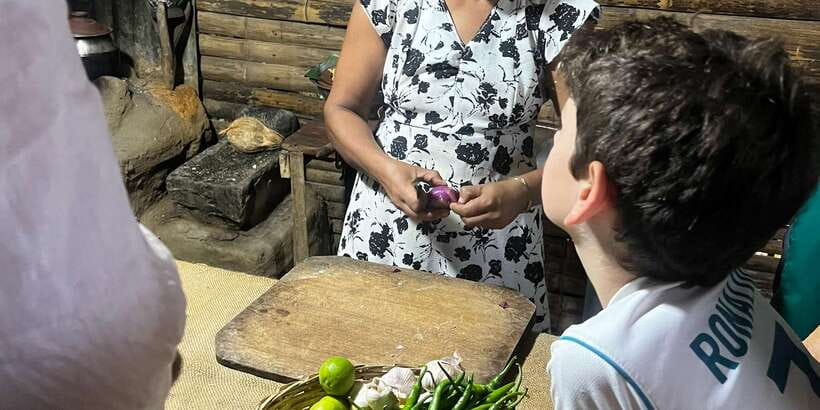
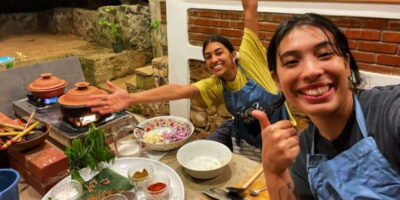
The class begins at Chamathka Cooking Class, where you meet the staff and Ranjani before entering an open-air kitchen surrounded by greenery. The setting gives you better ventilation than a closed cooking room and helps the session feel connected to everyday home cooking rather than a polished demonstration kitchen.
You’ll first meet the ingredients. Sri Lankan cooking uses familiar foods in ways that may be new to you: coconut becomes milk or sambol, spices are used for both flavor and traditional health purposes, and vegetables bring color and texture to the plate. Ranjani explains what you are using before the cooking begins, which makes the meal easier to understand once everything reaches the table.
The pace is relaxed and social. You may begin with a welcome tea and biscuits, then move into preparation. The class normally lasts two hours, though the actual visit can run longer when there is a lot of food to finish and eat. One recent account suggested allowing about two and a half hours, especially if you have a car or pickup waiting afterward.
More Cooking Classes in Sri Lanka:
- Organic cooking class sigiriya (kumara & family)
★ 5.0 · 650 reviews - Sri Lanka Cooking Class with Granny
★ 5.0 · 587 reviews - Kandy Village Cooking Class
★ 5.0 · 536 reviews
What you actually cook during the two hours
The exact menu can vary, and you do not choose every dish yourself. That is useful to know before booking. The class is designed to show a broad sample of Sri Lankan home cooking rather than let you focus on one recipe.
You might prepare dhal curry, a staple that shows how lentils, coconut, and spices come together. You may also make chicken curry, aubergine salad, coconut sambol, papadam, rice, hoppers, string hoppers, or honey roti. Several people have described preparing about five dishes, creating much more food than a simple tasting plate.
Hoppers are bowl-shaped pancakes with crisp edges and a softer center. String hoppers are fine rice-flour noodles pressed into nests. Honey roti offers a sweeter change from the curries and sambol. Seeing these dishes prepared in one session gives you a better idea of how a Sri Lankan meal balances starch, heat, sweetness, creaminess, and acidity.
The useful part is not just the list of dishes. You’ll see how cooking methods change the result. Ranjani demonstrates techniques such as preparing dhal, cooking rice properly, making sambol, grating coconut, and extracting coconut milk. These small steps often explain why a dish made at home tastes different from one served in Sri Lanka.
A hands-on class, but not a private cooking lesson
The class is interactive, though you should picture a shared kitchen rather than an individual workstation. Everyone takes turns helping with tasks such as chopping, seasoning, mixing, and preparing ingredients. Ranjani demonstrates the trickier parts and keeps the group moving.
That format has a clear advantage: you see the whole meal come together and can learn from every dish, not only the one assigned to you. It also makes the evening sociable, particularly if you are traveling alone or want an easy way to meet people from different countries.
The tradeoff is that you may not personally cook every step. If you want your own counter, your own ingredients, and complete control over one plate, this will not be the right style. A larger group can also feel crowded. The advertised group size is limited to eight, but one account described a class of 13, so it is sensible to confirm the expected group size when booking.
Even in a bigger session, the structure allows each person a turn. You may need to be willing to share the work rather than wait for a long, uninterrupted cooking task. For most people, that shared approach is part of the charm. For serious home cooks seeking a technical masterclass, it is the main limitation.
Why the spice and health lessons add value
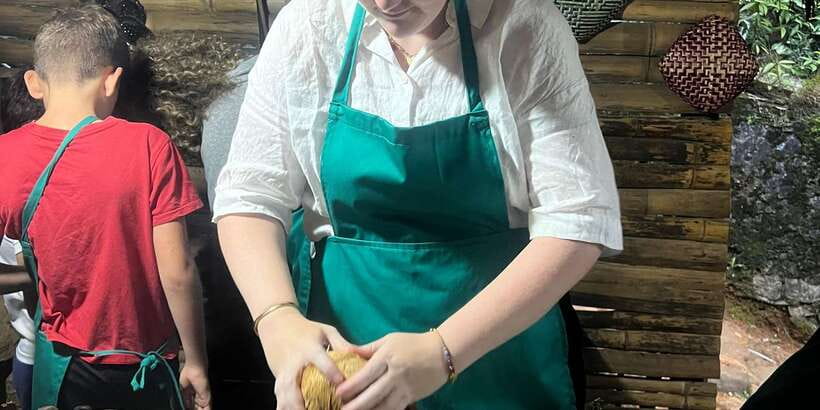
Ranjani spends time explaining the ingredients, including their traditional health uses. This can include herbs and spices used in cooking and natural remedies. The food lesson is therefore not just about following a recipe. You learn why an ingredient is added, how it affects the dish, and how it fits into local cooking habits.
I would treat health claims as traditional food knowledge, not as medical advice. Still, the explanations add useful context. You begin to see why Sri Lankan cooking uses such a broad mix of spices instead of relying on one strong curry powder.
The class also helps you adapt the recipes for home. Ranjani has been praised for explaining recipes that can be made outside Sri Lanka, where certain ingredients or cooking tools may be harder to find. The recipes are sent through WhatsApp after class, and some participants have also received a cookbook PDF when they asked for one.
That follow-up matters. A cooking class can be enjoyable for one evening and then vanish from memory. Digital recipes give you a practical chance to repeat the dishes with family and friends after your trip.
Same region, a different dish to learn:
- Sea waves sri lankan cooking class
★ 5.0 · 467 reviews - Ella: Sri Lankan Cooking Class with Neranji at Homestay
★ 5.0 · 276 reviews - Cook with Wasantha
★ 5.0 · 248 reviews - Ella : Cooking class with amazing Spice Garden Tour
★ 5.0 · 239 reviews
The traditional tools are part of the lesson
One of the most interesting parts of the experience is the use of older cooking methods and equipment. You may see coconut grated and milk prepared by hand, rather than relying on modern shortcuts. You might also see tools that look unfamiliar and surprisingly formidable.
These methods take more time, but they show how the food was made in a home kitchen before electric appliances became common. The point is not that every visitor must copy every old technique at home. It is that you can see the work behind a dish and understand why coconut, spice, and texture matter so much in Sri Lankan cooking.
The open-air kitchen also keeps the experience informal. You are not sealed away from the surrounding greenery, and the room has better air movement while food is cooking. On a rainy day in Ella, the class can be a particularly useful plan, giving you a warm indoor activity without feeling like a standard tourist attraction.
Sitting down to eat from a banana leaf
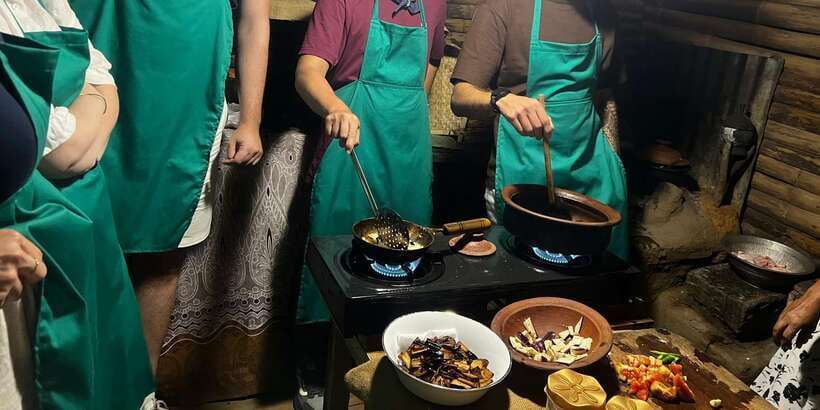
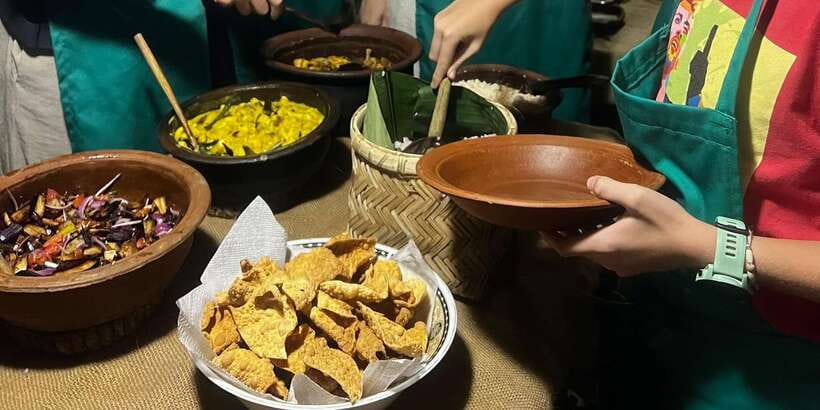
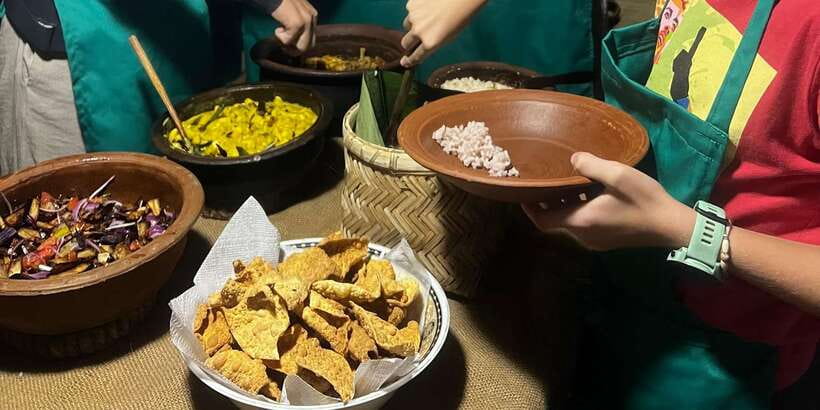
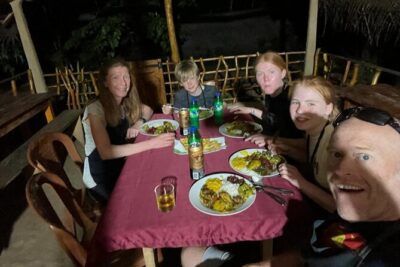
When the food is ready, you sit down together and eat what the group has prepared. The meal is served on banana leaves, a simple choice that reduces the need for plates and connects the meal with local custom.
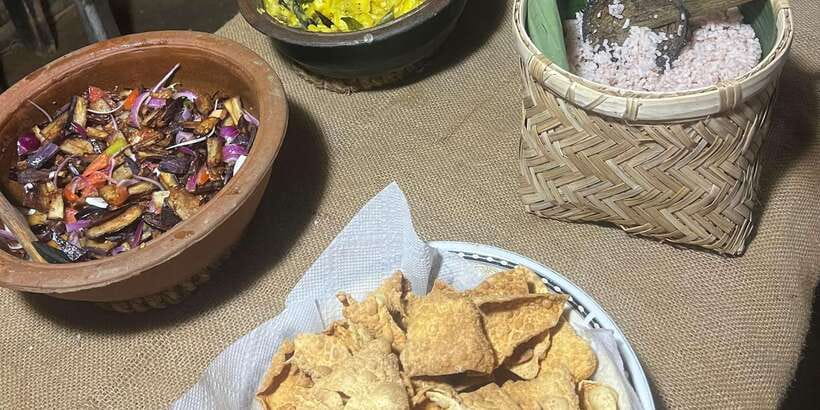
You can expect a large spread rather than one small portion. The menu may include several curries, rice, sambol, vegetables, and fried or baked accompaniments. Some groups have had enough food for second portions, and there may be leftovers.
The shared meal is one of the strongest parts of the experience. Cooking gives you something to do, but eating together gives the evening a natural finish. It also lets you compare the flavors in the way a Sri Lankan meal is meant to be eaten, with a little of this, a little of that, and rice tying everything together.
Dietary needs should be raised before or at the start of the class. Vegetarian and vegan options have been accommodated, and one participant was able to eat everything except one dish. The available information does not promise every dietary variation, so do not leave an allergy or strict diet until the last minute.
The value at $19 per person
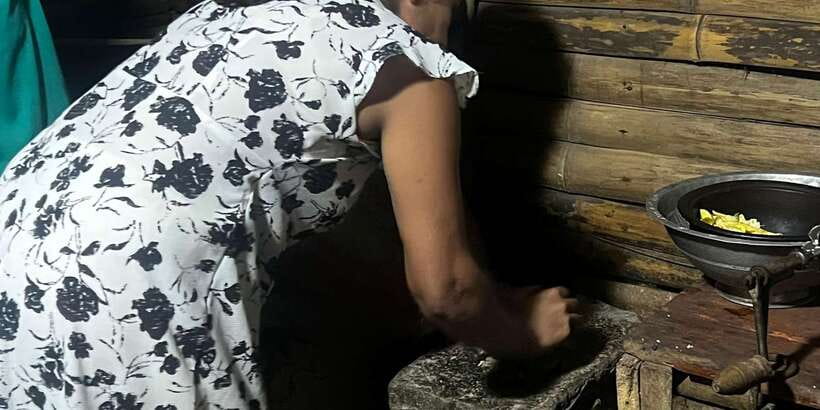
At $19 per person, this is strong value if you want both a meal and a cultural activity. You receive the instructor, ingredients, class, bottled water, and the food you prepare. The recipes sent later add something useful that many short cooking sessions do not provide.
You are also getting more than a restaurant dinner. A meal in Ella may cost less or more depending on the restaurant, but it will not usually show you how coconut milk is made, how the spices are balanced, or how several dishes are prepared in one kitchen.
The price looks especially good for couples, families, and small groups who plan to cook Sri Lankan food after returning home. The value is lower if you only want a quick meal or if you dislike group activities. This is a two-hour lesson followed by a proper sit-down meal, not a fast tasting stop.
Transportation is not included. You need to make your own way to Chamathka Cooking Class, so allow time to reach the meeting point. The provider normally schedules sessions at 11:00 AM and 5:00 PM, with some flexibility if you contact them ahead of time.
Who will enjoy this class most
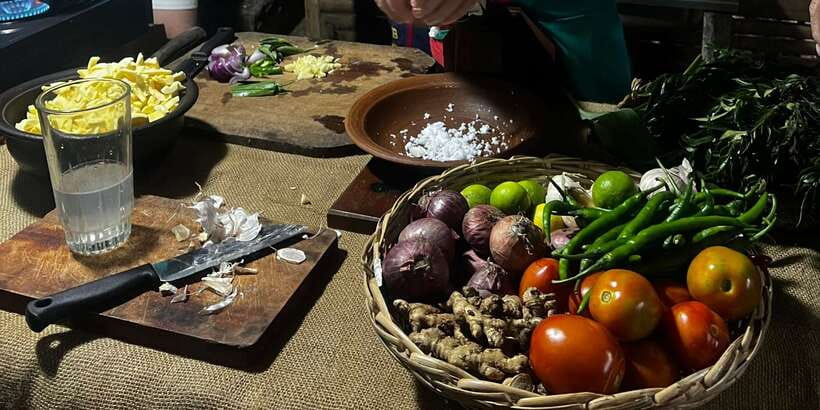
I would recommend this class to you if you like food, enjoy meeting people, or want an activity with more substance than a restaurant visit. It works particularly well for people who want to recreate Sri Lankan dishes at home, since you receive recipes and see the techniques in person.
It also suits a rainy afternoon or evening in Ella. The lesson takes place in a traditional open-air kitchen, so you get shelter while still having air and greenery around you.
The class may not suit you if you need a private instructor, want an individual cooking station, or expect to choose every dish. It is also worth allowing extra time beyond the stated two hours. The cooking can finish on schedule, but eating a large meal and lingering with the group may take longer.
The instructor speaks English and Sinhala. Ranjani’s teaching style focuses on clear explanations, practical methods, and the uses of ingredients. Her friendly approach is a major part of the experience, but the class still depends on you joining in and taking your turn.
Booking and cancellation advice
You can cancel up to 24 hours before the activity for a full refund. The reserve-now, pay-later option lets you hold a place without paying immediately, which is useful if your Ella plans may change.
Ask about the start time if 11:00 AM or 5:00 PM does not fit your day. Also ask about the likely group size if having more room to participate matters to you. Since transportation is not included, check the route to the meeting point before you leave your accommodation.
Should you book the Chamathka cooking class?
Book it if you want a friendly, hands-on introduction to Sri Lankan food at a very fair price. The strongest reasons are the generous meal, the old-style cooking methods, the clear explanations about spices, and the recipes sent afterward.
Go in expecting a communal lesson, not a private chef session. You will help with several tasks, but Ranjani will also demonstrate parts of the meal for the whole group. If that sounds like your kind of evening, this is one of the most useful food experiences to add to a stay in Ella.
FAQ
Where does the cooking class take place?
The class takes place at Chamathka Cooking Class in Ella, Sri Lanka. You check in with the staff at the meeting point.
How long is the activity?
The scheduled duration is two hours. You should allow extra time if you plan to stay for the meal and may need about two and a half hours in total.
What time does the class start?
Classes normally start at 11:00 AM or 5:00 PM. The provider may be flexible if you contact them in advance.
Who teaches the class?
The experience is provided by Ranjani, who is also referred to as Ranji. The listed languages are English and Sinhala.
What food might I prepare?
Possible dishes include hoppers, rice and curry, string hoppers, honey roti, dhal curry, chicken curry, aubergine salad, coconut sambol, and papadam. The menu can vary, and you do not select every dish.
Is the class private?
No. It is a small-group class, with the advertised group size limited to eight participants. The cooking is done together around a shared workstation.
Do I get to cook myself?
Yes, participants take turns helping with preparation and cooking. The instructor demonstrates some of the more complex techniques, so you may not personally complete every step of every dish.
Is a meal included?
Yes. The meal is included after the cooking session. It is served on banana leaves, along with bottled water.
Are ingredients included?
Yes. Fresh ingredients and the cooking class are included in the price.
Are transportation and recipes included?
Transportation to the meeting point is not included. Recipes are sent digitally through WhatsApp after the class.
Newest classes around Sri Lanka
- cooking lesson★ 5.0 · 7 reviews
- Hands-On Cooking Class in Anuradhapura-Cook Like a Local★ 5.0 · 2 reviews
- Sri Lankan Cooking Class in Bentota★ 5.0 · 2 reviews
- Sri Lankan Cookery with Nilu★ 5.0 · 34 reviews
- Sri Lanka: Cooking Class★ 4.4 · 6 reviews
- Cooking Experience from Ella★ 4.9 · 2 reviews
- Private cooking class – Personalized classic menu★ 5.0 · 5 reviews
- Nilaveli: Sri Lankan Cooking Class with a Local Family★ 5.0 · 16 reviews
Sri Lanka Cooking Classes, compared.
Organic cooking class sigiriya (kumara & family)
Read our review →
Sri Lankan Cooking Class with Neranji at Homestay
Read our review →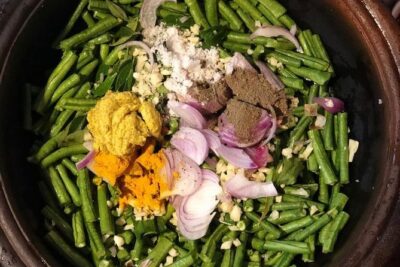
Browse the lists this tour appears in