
Review · TOKYO COOKING CLASSES
AKEMI’s SUSHiKiTCHEN: A fun sushi cooking lesson in Tokyo
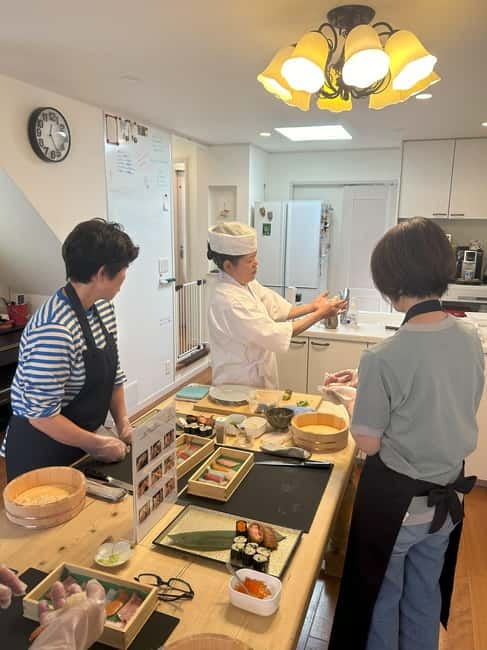
Sushi is more than fish placed on rice here. Akemi Castellano’s home lesson shows you how the rice, vinegar, seafood, fillings, and hand movements all work together. You’ll make four styles, including nigiri, rolled maki, battleship-style gunkan, and fried tofu-pocket inari, then sit down to eat your own work.
I like the small group of up to six, which gives Akemi time to correct your technique without making the class feel formal. I also like the home setting and the added cultural context, from Edo-style sushi to the preparation of the fish and vinegar rice. The main drawback is that the menu is fixed, so you cannot choose which sushi you make, and the class cannot accommodate food or animal allergies.
Key points to know before booking
- Four sushi styles in one lesson: Make nigiri, maki, gunkan, and inari from start to finish.
- A real home kitchen: Akemi and Dan welcome you into their house, creating a personal setting rather than a large cooking studio.
- Small groups matter: With no more than six participants, you can get close help with shaping rice and rolling sushi.
- A meal at the end: Your finished sushi becomes lunch or dinner, with Japanese sake, dessert, and drinks included as part of the experience.
- Easy access from major hubs: The house is convenient from Shinjuku and Shibuya, with station pickup available if you ask in advance.
- Vegetarian option available: Request it when booking, but note that allergies cannot be accommodated.
A Tokyo sushi lesson inside a local home
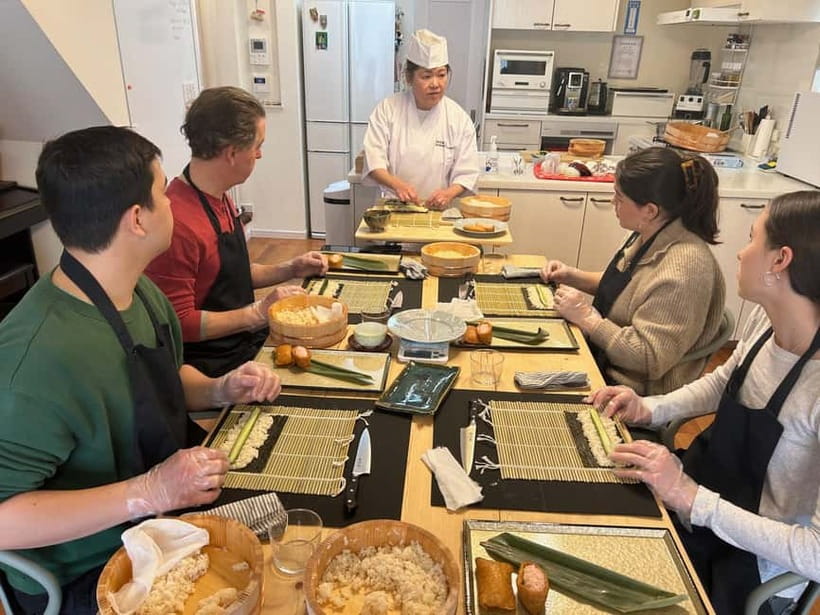
The first thing to understand is the setting. You are not walking into a restaurant kitchen or a polished culinary school. You are visiting Akemi and Dan at home, usually finding the house with Google Maps or arranging to meet at the nearest train station.
That difference shapes the whole lesson. The class feels personal and relaxed, with time for conversation as well as instruction. One booking described the walk from the station as about 10 minutes through a pleasant residential neighborhood. If navigating unfamiliar streets sounds tiring, ask Akemi to meet you at the station.
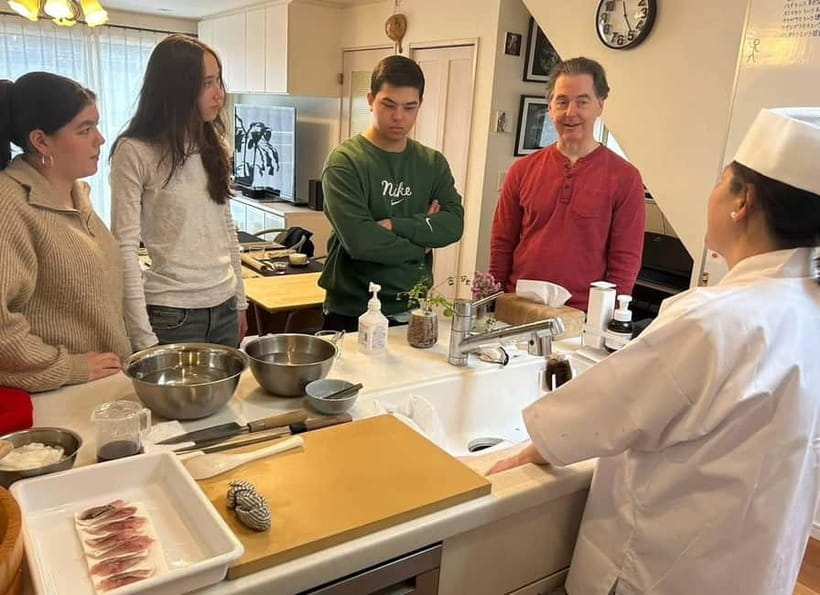
Akemi is a trained sushi chef, and she leads the cooking. Dan helps with the welcome and practical details. Together, they create the feeling of being taught in a Japanese family kitchen, while Akemi still brings professional technique to the table.
You can choose a morning lesson with lunch or an afternoon lesson with dinner. The total time is three hours, which gives you enough time to learn, practice, eat, and ask questions without rushing through the important steps.
More Sushi and Japanese Classes in Tokyo:
- Ramen & Gyoza Cooking Class in Tokyo with Local Supermarket Visit
★ 5.0 · 823 reviews - Tokyo Tsukiji Fish Market Tour and Sushi Making Lesson
★ 5.0 · 390 reviews - Tokyo: Easy Ramen Cooking Experience in Kabukicho, Shinjuku
★ 4.6 · 321 reviews
Rice comes first, because rice is the point
Many first-time sushi makers focus on the fish. Akemi begins with the rice, and that is the right choice. Sushi rice needs the right texture, temperature, and seasoning. If it is too wet, too dry, too warm, or too strongly flavored, even good seafood will not taste right.
You will learn how the vinegar is prepared and how it is worked into the cooked rice. This is a useful lesson because seasoned rice is the base for every style you make during the class. The same rice must hold together for nigiri, fill the center of maki, and support the toppings on gunkan.
Akemi also explains the ingredients she selects, including the rice, vinegar, and seafood known as neta. That word refers to the topping or filling used for sushi. Understanding it helps you see sushi as a set of carefully balanced parts, not a single recipe.
The rice section may be less flashy than shaping a piece of nigiri, but I would pay close attention here. It is the skill you are most likely to use again at home, and it explains why restaurant sushi can taste so different from a rushed homemade version.
Four kinds of sushi, four different techniques
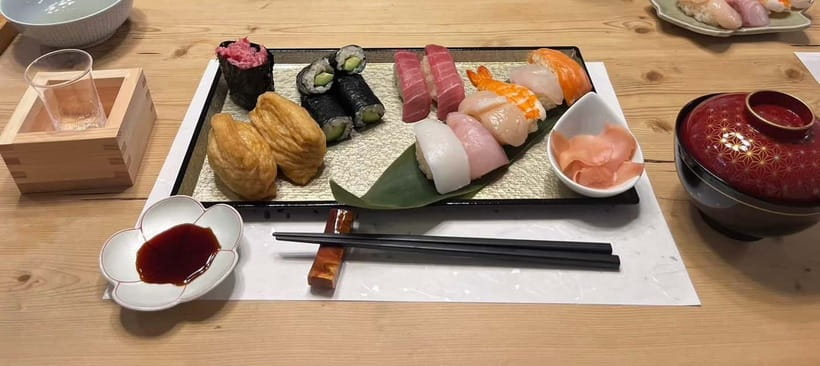
The class covers four popular styles. Each one asks you to handle the rice and fillings in a different way, so the lesson has a good range of hands-on work.
Nigiri, the test of a light touch
Nigiri-zushi is the familiar hand-pressed form: a small mound of seasoned rice topped with fish or another selected ingredient. The challenge is to shape the rice firmly enough to hold together without crushing it.
This is where Akemi’s individual guidance matters most. A beginner can easily use too much pressure or make the rice portion too large. The goal is a compact, neat piece that still feels light when you eat it.
You will also see how the fish is prepared for sushi. The demonstration helps connect the ingredient to the finished piece and gives you a better sense of why cutting technique matters. The activity does not present sushi as a casual pile of ingredients. It treats each part with care.
More Cooking Classes in Tokyo:
- Ramen and Sushi Cooking Class with Sake Pairing Set in Tokyo
★ 5.0 · 291 reviews - Tokyo: Wagyu and 7 Japanese Dishes Cooking Class
★ 4.9 · 273 reviews - Tokyo Washoku 4-hour Cooking Class: From Market to Table
★ 5.0 · 253 reviews - Small-Group Wagyu Beef and 7 Japanese Dishes Tokyo Cooking Class
★ 5.0 · 190 reviews
Maki, the rolling exercise
Maki-zushi is rolled sushi, usually made with rice and fillings wrapped in nori. Rolling looks simple until the rice spreads too far, the filling shifts, or the roll ends up loose.
You will learn how to distribute the rice and fillings, then form the roll so it cuts cleanly. The class is useful for anyone who has tried making maki at home and ended up with a soft, uneven cylinder.
Because the set menu is fixed, you should not book this expecting to select every filling. The benefit is that Akemi can plan a balanced lesson and provide the ingredients needed for all four styles.
Gunkan, the little battleship
Gunkan, or battleship sushi, uses a strip of nori around a small mound of rice. The seaweed creates a raised edge that holds a softer topping in place.
It is a clever form and a good contrast to nigiri. Instead of pressing a topping directly onto rice, you build a small edible container. The shape also shows how sushi design responds to the texture of its ingredients.
Inari, the pleasant surprise
Inari uses fried tofu pockets filled with seasoned rice. It is often the least familiar style for people who think of sushi mainly as raw fish.
That makes it one of the most useful parts of the lesson. You get a different flavor and texture, and you see how broad the category of sushi really is. The tofu is sweet and savory, and it gives the meal a welcome change from seafood.
If you like discovering less obvious Japanese foods, pay special attention to this part. One participant singled out the tofu sushi as a particularly enjoyable surprise.
Ingredient quality and the fish demonstration
The class includes a demonstration of how fish are prepared for sushi. That does not mean you should expect a full fish market tour or a professional knife course. The stated focus is on seeing how the fish is prepared and understanding its place in the meal.
Akemi uses carefully selected rice, vinegar, and seafood neta. That matters because a lesson like this can easily become a basic craft activity if the ingredients are treated as an afterthought. Here, the ingredients are part of the teaching.
You will learn why sushi depends on more than freshness alone. Rice seasoning, slicing, portion size, and presentation all affect the final bite. The lesson also gives you a better way to judge sushi later in your trip. You may start noticing the balance between rice and topping instead of focusing only on the fish.
The menu is set, so you cannot select the exact sushi you will make. That may disappoint someone with a long list of favorite ingredients, but it also keeps the class organized and makes sure you experience four distinct techniques.
The cultural story behind Edo-style sushi
Akemi talks about the origin of sushi and the development of Edo sushi. This adds useful context to the cooking. You are not just copying hand movements without knowing why the food took its present form.
The history portion is tied to the ingredients and methods in front of you. As you prepare rice and shape sushi, you can connect the lesson to Tokyo’s older culinary traditions. The setting helps, too. A home in the city gives the discussion a more direct connection to everyday Japanese food culture than a lecture in a large classroom would.
I would not choose this activity if you want a long academic presentation. The main event is still cooking and eating. But if you enjoy knowing where a dish came from and how it became part of daily life, the background makes the food more meaningful.
Eating the lunch or dinner you prepared
At the end, you eat the sushi you made. That simple payoff is important. The meal gives you a chance to compare the four styles and see how your work turned out.
The experience includes Japanese sake for adults, along with drinks, dessert, and matcha tea. The exact extras can depend on the group, but the activity information specifically includes sake and dessert, and one family booking also noted drinks and ice cream.
The meal is not just a quick taste after class. It is part of the lesson’s social side. You have time to sit with Akemi and Dan, talk about the food, and enjoy the results. A welcome drink may also be offered, including a sakura drink mentioned by one participant.
If you are planning this as a lunch or dinner replacement, the three-hour schedule makes sense. You are not paying for a short demonstration followed by a tiny sample. You are learning several preparations and eating a full selection of what you made.
What $103 means in value
At $103 per person, this is not a cheap way to get sushi. If your only goal is to eat excellent nigiri, Tokyo has restaurants where you can spend less, or far more, depending on the counter.
The value here comes from the combination of instruction, ingredients, cultural background, and a meal in a private home. You get three hours with a trained chef, hands-on practice with four styles, and a small group capped at six. You also avoid paying separately for a meal, sake, dessert, and the setting.
I think the price makes the most sense for someone who wants a lasting skill or a more personal connection to Japanese food. It is also a strong choice for a couple, a family with older children, or a small group of friends who would rather cook than watch.
The value is weaker if you do not enjoy hands-on activities or if you already know how to make several kinds of sushi. You are paying for the teaching and the atmosphere, not simply for the ingredients on the plate.
Getting there from Shinjuku or Shibuya
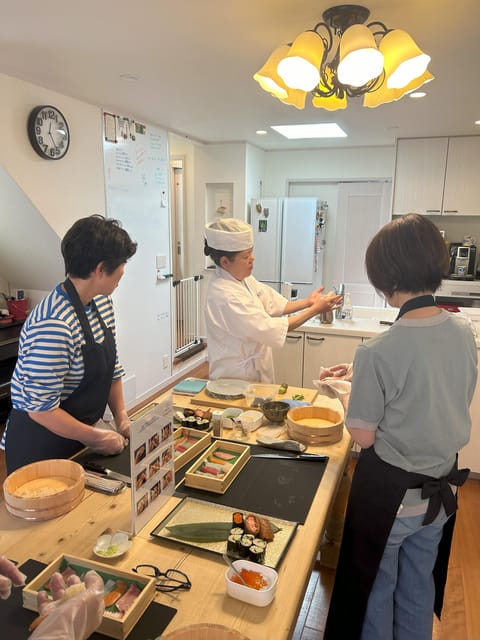
The house is positioned for easy access from Shinjuku and Shibuya, two of Tokyo’s main rail hubs. You can use Google Maps or a similar app to find the address, and a walk from the nearest station may take around 10 minutes.
That last stretch is part of the practical calculation. Tokyo addresses can be confusing, especially when you are tired or carrying luggage. Ask to be met at the nearest station if you prefer a smoother arrival. The hosts are happy to arrange this.
Give yourself enough time to find the meeting point. You do not want to begin a three-hour cooking lesson flustered because you took the wrong residential turn.
The morning option works well if you want to make lunch and keep the afternoon open. The afternoon option is a natural fit for dinner. Since starting times vary, check availability for the day you want.
Who will enjoy this most
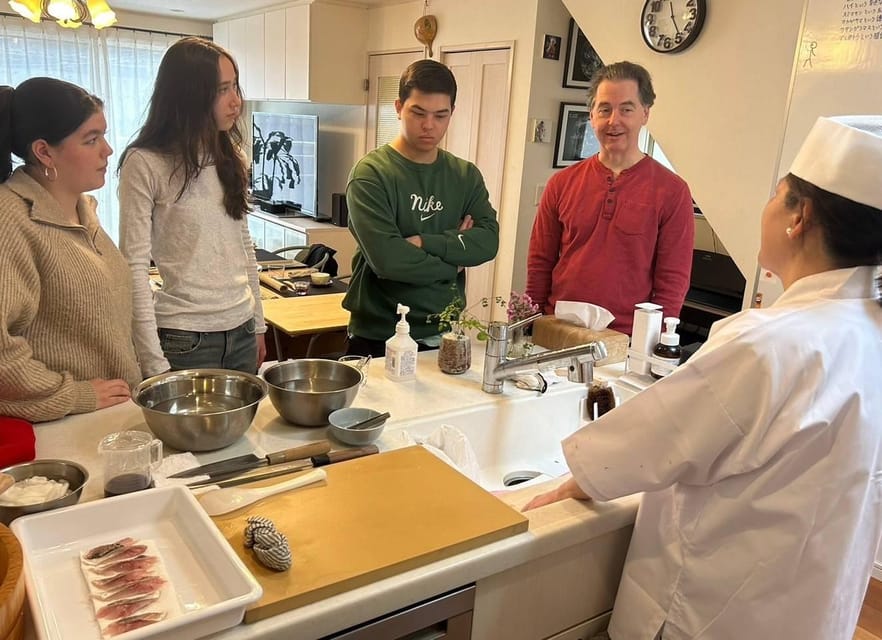
I would recommend this for sushi fans who want to understand the food rather than simply order it. It also suits first-time visitors who value a home visit and a small group over a large, polished cooking school.
Families can book, but children must be at least 10 years old. The small group format works especially well for a family because everyone can take part without getting lost in a crowd. One family group of four had the class to themselves, though you should not assume every booking will be private.
The vegetarian option is useful, but you must request it when placing the order. This is not an allergy-friendly activity. The hosts state that they cannot accommodate food or animal allergies, so you should not book if you need strict allergy controls.
English and Japanese are offered. The class is designed for English-speaking participants, and the hosts have been described as welcoming and able to give clear English instructions.
Should you book Akemi’s sushi class?
Book it if you want a personal Tokyo food experience with real instruction, four sushi styles, and a meal in a Japanese home. The strongest reasons are the small group, Akemi’s professional guidance, the chance to learn rice and fish preparation, and the warm teamwork between Akemi and Dan.
Skip it if you need to choose every ingredient, have a serious allergy, or only want a quick sushi meal. For everyone else, the $103 price is reasonable for three hours of cooking, cultural explanation, food, drinks, dessert, and close help from a trained chef.
I would place this activity early or midway through a Tokyo stay. Afterward, you will look at sushi menus with a sharper eye, and you may be ready to try making the rice and rolls again at home.
FAQ
How long does the sushi lesson last?
The activity lasts three hours.
How much does the experience cost?
The listed price is $103 per person.
Where does the class take place?
The lesson takes place in Akemi and Dan’s home in Tokyo, on Honshu, Japan. The house is conveniently reached from Shinjuku and Shibuya.
Can I be met at the train station?
Yes. You can find the house using Google Maps or a similar app, or ask the hosts to meet you at the nearest train station.
Which kinds of sushi will I make?
You will make four styles: inari, gunkan, maki-zushi, and traditional nigiri-zushi.
Is a vegetarian option available?
Yes. A vegetarian option is available, but you need to state your preference when you book.
Can the class accommodate food allergies?
No. The activity cannot accommodate food or animal allergies. If you have an allergy, you should contact the hosts before booking.
Are children allowed to participate?
Children must be at least 10 years old.
What languages are offered?
Instruction is available in English and Japanese.
Newest classes around Tokyo
- Tokyo: Sushi Making Experience & Japanese Cooking Class★ 5.0 · 2 reviews
- Tokyo: Sushi roll and side dish cooking experience★ 5.0 · 2 reviews
- Tokyo: Sushi Cooking Class with Sake Tasting★ 4.8 · 55 reviews
- Tokyo: Real Ramen & Dumpling Cooking with Master Chef★ 5.0 · 10 reviews
- Tokyo: Sushi and Ramen Cooking Class with Sake Pairing Set★ 5.0 · 81 reviews
- Tokyo: Kawaii Bento Cooking Class – Cute Character Lunchbox★ 4.9 · 55 reviews
- Tokyo: Gyoza Making from Scratch – Ultimate Cooking Class★ 5.0 · 2 reviews
- Tokyo: Night Cooking Class: 5 Home-Cooked Japanese Dishes★ 4.9 · 13 reviews
Tokyo Cooking Classes, compared.

Ramen & Gyoza Cooking Class in Tokyo with Local Supermarket Visit
Read our review →
Tokyo Tsukiji Fish Market Tour and Sushi Making Lesson
Read our review →
Easy Ramen Cooking Experience in Kabukicho, Shinjuku
Read our review →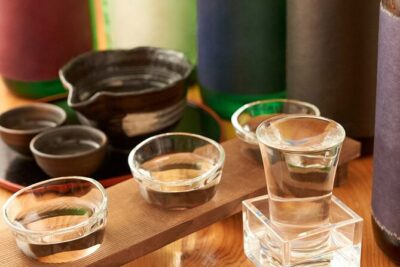
Ramen and Sushi Cooking Class with Sake Pairing Set in Tokyo
Read our review →
Tokyo Washoku 4-hour Cooking Class: From Market to Table
Read our review →
Small-Group Wagyu Beef and 7 Japanese Dishes Tokyo Cooking Class
Read our review →
Private Home Cooking in Yanaka – Local Flavors in a Warm Setting
Read our review →Browse the lists this tour appears in