
Review · TOKYO COOKING CLASSES
Shibuya Tokyo: Onigiri & Tamagoyaki Cooking Class
Onigiri looks simple, but good rice balls depend on small details: the right rice, the right texture, a gentle hand, and well-chosen fillings. This Shibuya class puts those details within reach, then adds tamagoyaki, the softly layered Japanese rolled omelet. I like the hands-on format and the chance to make food you can repeat at home, not just watch someone else prepare it.
I also like the small group size, capped at eight, and the clear English instruction. A possible drawback is that the class lasts only 90 minutes, so you get a focused introduction rather than a broad Japanese cooking course. You will also need to arrange your own transport to the venue.
What makes this Shibuya class worth your time
- Make three onigiri per person: You get enough practice to try different shapes and fillings rather than making a single sample.
- Prepare tamagoyaki too: The half portion of rolled omelet adds another useful Japanese kitchen skill to the session.
- Learn the rice first: The class explains how rice choice, cooking, texture, and flavor affect the finished onigiri.
- Use traditional nori wrapping: You will practice shaping and wrapping the rice balls with seaweed.
- Work in a small group: The class accepts no more than eight people, and some sessions may be smaller.
- Leave with take-home help: Recipes and a small souvenir are included, along with the confidence to try the dishes again.
Starting with rice, not just rice balls
The clever part of this experience is that it treats onigiri as more than a quick snack. The rice is the foundation, so you begin by learning what makes it suitable for shaping and how cooking affects its texture.
That matters because poorly cooked rice can be too dry, too wet, or too loose to hold together. The instructor explains the basics of selecting and cooking the rice, then shows you how flavor and texture work together. You are not simply pressing warm rice into a mold and calling it lunch.
The class is designed for beginners, so you do not need previous cooking experience. The English-speaking host guides you through each stage and explains the process clearly. If you have cooked very little in Japan or are unsure around unfamiliar ingredients, that steady pace should make the session approachable.
You will use the ingredients and utensils supplied at the venue. An apron is also included, which saves you from worrying about getting rice or egg on your clothes. Since the activity is held in a small kitchen setup, you should expect a practical working space rather than a large professional cooking studio.
More Cooking Classes in Tokyo:
- Ramen & Gyoza Cooking Class in Tokyo with Local Supermarket Visit
★ 5.0 · 823 reviews - Tokyo: Easy Ramen Cooking Experience in Kabukicho, Shinjuku
★ 4.6 · 321 reviews - Ramen and Sushi Cooking Class with Sake Pairing Set in Tokyo
★ 5.0 · 291 reviews
Shaping three onigiri with different fillings
Once the rice is ready, the class moves to the part most people picture: shaping onigiri. You will make three rice balls per person, with instruction on traditional forms such as the familiar triangle, along with more creative designs.
The number is useful. One attempt lets you copy the instructor. The second gives you a chance to correct your grip and pressure. By the third, you can start making choices about shape, size, and filling instead of concentrating on every basic movement.
The key is a light touch. Press too hard and the rice becomes dense. Handle it too gently and it may fall apart. You learn how to form a rice ball that holds together while still keeping a pleasant texture.
Nori seaweed brings another small lesson. It adds salt, aroma, and a clean contrast to the rice, but it also needs to be wrapped in a way that makes the onigiri easy to hold and eat. The class covers traditional wrapping techniques, so you can leave with more than a picture of a finished rice triangle.
The fillings include traditional choices as well as modern interpretations. The exact selection is not specified in advance, so you should ask the host what is being prepared on your date if a particular ingredient matters to you. The range is useful because it shows how flexible onigiri can be. It can be a simple comfort food, a portable meal, or a creative way to combine familiar Japanese flavors.
Vegetarian fillings are part of the options described for the class, but you should still notify Sorisso about dietary needs before attending. Gluten-free choices may be possible upon request. The class is not suitable for people with severe or life-threatening food allergies.
Adding tamagoyaki to the meal
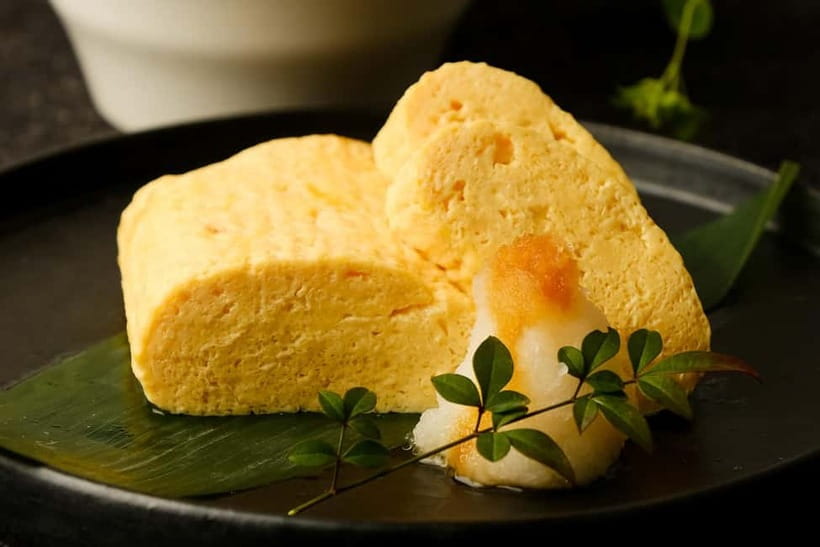
The second dish is tamagoyaki, the Japanese rolled omelet. You receive ingredients and utensils to make half a portion per person, so this is a smaller part of the class than the three onigiri.
That balance makes sense for a 90-minute session. Onigiri is the main lesson, while tamagoyaki gives you a second technique to practice. Rather than spending the entire class on one food, you get a taste of two everyday Japanese preparations that use very different skills.
Tamagoyaki is made by cooking egg in layers and rolling it into a neat shape. The class gives you a chance to work through that process with guidance. It is a useful addition because the finished meal feels more complete than three rice balls alone.
You then get to eat what you make. That shared meal is part of the experience, not an afterthought. It gives you a chance to compare shapes and fillings, and to see how the omelet works alongside the rice. One particularly appealing detail is that the food is enjoyed together, which can make a small class feel social without requiring a separate group activity.
A small Shibuya kitchen with personal instruction
The class takes place in a small shop with a cozy kitchen setup. You should not expect a spacious cooking school with separate stations for every dish. Instead, the appeal is the close, practical setting and the chance to work near the instructor.
The group limit is eight people. That is small enough for direct help, though the actual number can vary. One session had only three participants, which allowed plenty of individual attention. You cannot assume every class will be that intimate, but the eight-person limit is still a useful safeguard against a crowded lesson.
The venue is described as easy to find, but transportation is not included. You will need to make your own way to the meeting point in Shibuya and allow enough time to arrive before the start. The exact starting times depend on availability, so check the schedule when choosing a date.
The English instruction is one of the strongest practical features. You do not need to rely on gestures or guesswork when learning how to handle hot rice, shape the onigiri, or roll the omelet. Clear directions matter in a class built around texture and technique, where a small misunderstanding can change the result.
Same region, a different dish to learn:
- Tokyo Tsukiji Fish Market Tour and Sushi Making Lesson
★ 5.0 · 390 reviews - Tokyo: Wagyu and 7 Japanese Dishes Cooking Class
★ 4.9 · 273 reviews - Tokyo Washoku 4-hour Cooking Class: From Market to Table
★ 5.0 · 253 reviews - Small-Group Wagyu Beef and 7 Japanese Dishes Tokyo Cooking Class
★ 5.0 · 190 reviews
What is included for $49
At $49 per person, the price is reasonable if you want an active food experience rather than a tasting alone. You are paying for 90 minutes of instruction, ingredients, utensils, an apron rental, recipes, and a small souvenir.
The take-home recipes improve the value. You can try the dishes again after returning home, and the class is specifically structured to give beginners enough guidance to do that with confidence. The souvenir is a modest extra, not the reason to book, but it gives you a physical reminder of the session.
The food itself also matters. You make three onigiri and half a portion of tamagoyaki, then eat what you prepare. This is not a full multi-course cooking school experience, and the portion is best viewed as a hands-on meal or substantial snack rather than a large lunch.
I would compare the price with the amount of personal instruction you want. If you only want to eat onigiri, a shop or convenience store will cost far less. If you want to understand the rice, practice shaping, ask questions in English, and take home a method you can repeat, the class offers better value.
Who should book this experience
This is a good choice for food-focused visitors who want a simple introduction to Japanese home cooking. You do not need special skills, and the short format fits neatly into a day in Tokyo.
Families can also consider it, but children must be at least five years old. Younger children are not permitted. Since the class involves hands-on preparation and a small kitchen, parents should decide if their children can follow instructions and work comfortably in that setting.
It also suits solo visitors and couples who prefer a social activity with a clear purpose. The group is small, and the shared meal creates an easy point of contact. You are not being asked to perform or introduce yourself at length. You simply cook, compare results, and eat together.
I would be more cautious if you have strict dietary needs. The host asks you to provide allergy and dietary information in advance, and gluten-free options may be available. Still, the activity is not suitable for severe or life-threatening allergies, so do not treat a possible accommodation as a guarantee.
You should also consider your expectations. This is not a deep survey of Japanese cuisine, and it does not promise a long menu or a tour of Shibuya. It is a compact lesson centered on two foods, with enough explanation to make the process meaningful.
The 90-minute schedule in practical terms
The exact order may vary, but you can expect the session to move through four main stages:
- First, the host introduces the rice, ingredients, tools, and basic approach.
- Next, you learn about rice selection and cooking, including the texture needed for onigiri.
- Then you shape three rice balls, choose from the available fillings, and wrap them with nori.
- You also prepare half a portion of tamagoyaki, then sit down to enjoy the food you made.
Ninety minutes is long enough for a proper introduction but short enough to keep the class moving. You will not spend hours waiting between steps. The tradeoff is that there may be limited time for advanced shaping, many fillings, or repeated attempts at every technique.
The small format helps here. Clear instruction and individual attention can make a short class feel productive. You should still arrive ready to participate rather than expecting a demonstration where the host does most of the work.
Booking details that matter
Sorisso offers free cancellation up to 24 hours before the activity for a full refund. You can also reserve now and pay later, which helps if your Tokyo schedule is still changing.
The class is conducted in English. Ingredients, utensils, an apron, recipes, and a small souvenir are included. Transport to and from the venue is not included, so plan that separately.
The activity takes place in Shibuya, Tokyo, on Honshu. Starting times depend on availability. Since the group is limited to eight, you should check the date and time before building the rest of your day around it.
Bring any dietary or allergy information to the host in advance. Vegetarian choices are available among the described filling options, and gluten-free options may be possible by request. For serious allergies, choose a different activity.
Should you book the Sorisso onigiri class?
I would book this if you want a friendly, practical food lesson that fits into a busy Tokyo itinerary. The strongest reasons are the small group, English guidance, clear instruction, three onigiri to shape, and the added tamagoyaki practice.
The class is especially good for beginners, families with children five and older, solo visitors, and anyone who wants recipes to use at home. At $49, it offers fair value for the instruction, food, apron, and take-home material.
Skip it if you want a large meal, a long cooking course, or a wide tour of Japanese dishes. You should also skip it if severe food allergies make a shared cooking environment unsafe. For everyone else, this is a compact way to understand why humble rice, seaweed, fillings, and egg remain such a central part of everyday Japanese food.
FAQ
Where does the onigiri and tamagoyaki class take place?
The class takes place in Shibuya, Tokyo, on Honshu, Japan.
How long does the cooking class last?
The experience lasts 90 minutes.
How much does the experience cost?
The listed price is $49 per person.
What food will I make?
You will make three rice balls, or onigiri, and half a portion of rolled tamagoyaki per person.
Is the class taught in English?
Yes. An English-speaking host provides the instruction.
What is included in the price?
The price includes the cooking class, ingredients, utensils, an apron rental, recipes, and a small souvenir.
How large is the group?
The class is limited to eight participants. The actual group may be smaller.
Are children and people with dietary restrictions able to join?
Children under five cannot participate. You should notify the host about dietary restrictions or allergies in advance. Gluten-free options may be available upon request, but the class is not suitable for people with severe or life-threatening food allergies.
Newest classes around Tokyo
- Tokyo: Sushi roll and side dish cooking experience★ 5.0 · 2 reviews
- Tokyo: Sushi Making Experience & Japanese Cooking Class★ 5.0 · 2 reviews
- Tokyo: Sushi Cooking Class with Sake Tasting★ 4.8 · 55 reviews
- Tokyo: Real Ramen & Dumpling Cooking with Master Chef★ 5.0 · 10 reviews
- Tokyo: Sushi and Ramen Cooking Class with Sake Pairing Set★ 5.0 · 81 reviews
- Tokyo: Gyoza Making from Scratch – Ultimate Cooking Class★ 5.0 · 2 reviews
- Tokyo: Night Cooking Class: 5 Home-Cooked Japanese Dishes★ 4.9 · 13 reviews
- Tokyo: Kawaii Bento Cooking Class – Cute Character Lunchbox★ 4.9 · 55 reviews
Tokyo Cooking Classes, compared.

Ramen & Gyoza Cooking Class in Tokyo with Local Supermarket Visit
Read our review →
Tokyo Tsukiji Fish Market Tour and Sushi Making Lesson
Read our review →
Easy Ramen Cooking Experience in Kabukicho, Shinjuku
Read our review →
Ramen and Sushi Cooking Class with Sake Pairing Set in Tokyo
Read our review →
Tokyo Washoku 4-hour Cooking Class: From Market to Table
Read our review →
Small-Group Wagyu Beef and 7 Japanese Dishes Tokyo Cooking Class
Read our review →
Private Home Cooking in Yanaka – Local Flavors in a Warm Setting
Read our review →Browse the lists this tour appears in