
Review · TOKYO COOKING CLASSES
Ramen Making from Scratch +Akihabara Tour –Cooking Class
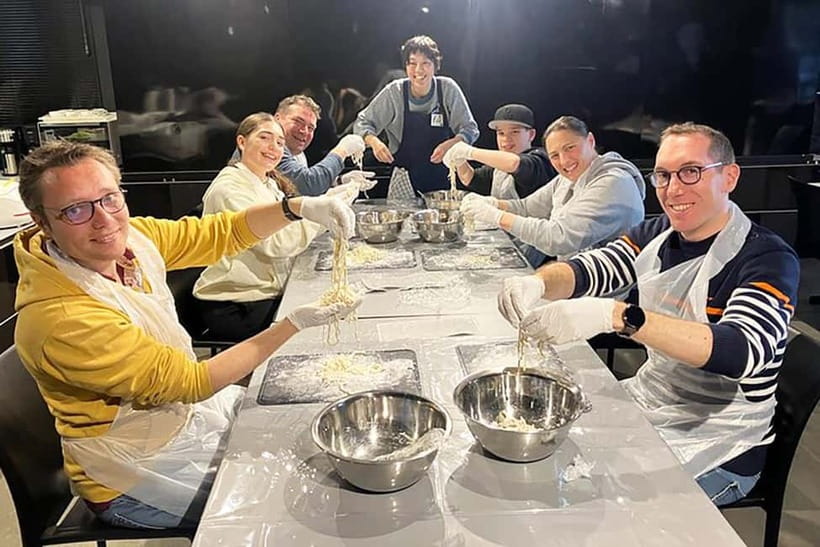
Jiro-style ramen is not a dainty bowl. It is hearty, generous, and built around thick fresh noodles, broth, and plenty of toppings. This three-hour experience lets you make the noodles yourself, then eat the bowl you created. The hands-on cooking is the main event, but the short Akihabara walk and supermarket stop add useful local context.
I like the small group size, limited to six, and the fact that the class is taught in English. I also like the supermarket visit, where you see the Japanese ingredients before using them. The main drawback is that you must pay your own train fare from Suehirocho Station to the kitchen studio, and the class is not suitable for vegans, vegetarians, wheelchair users, or children under five.
Key points to know before booking
- Fresh noodles from flour: You make the ramen noodles yourself instead of simply assembling a prepared dish.
- Akihabara before the kitchen: A roughly 20-minute walk connects electric-town sights, anime culture, and the local grocery stop.
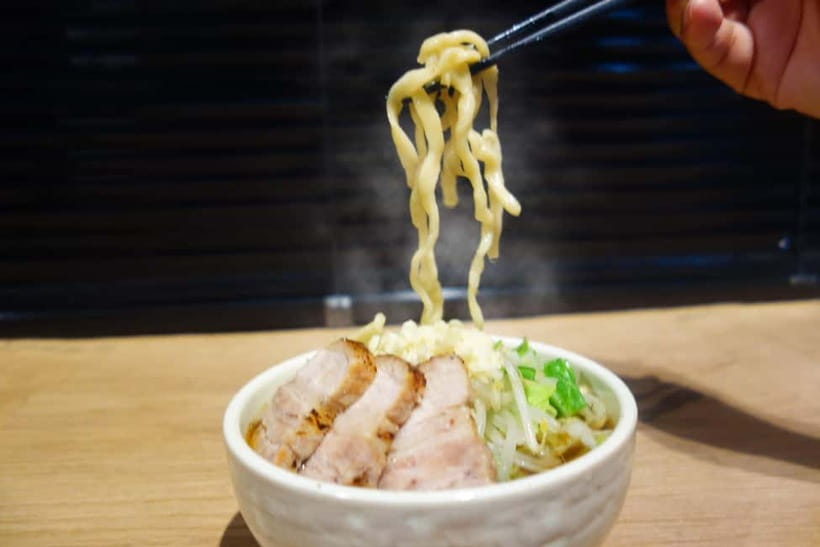
- Jiro-style ramen: Expect a filling Japanese ramen style with homemade noodles, broth, chashu, and toppings.
- English instruction: The guide and cooking instructor explain the process in English.
- Small class of six: The limited group size gives you a better chance to follow each cooking step.
- Three-hour schedule: Meet at 11 AM at JR Akihabara Station, then finish at the kitchen studio rather than back at the station.
Why this ramen class is different from a standard cooking lesson
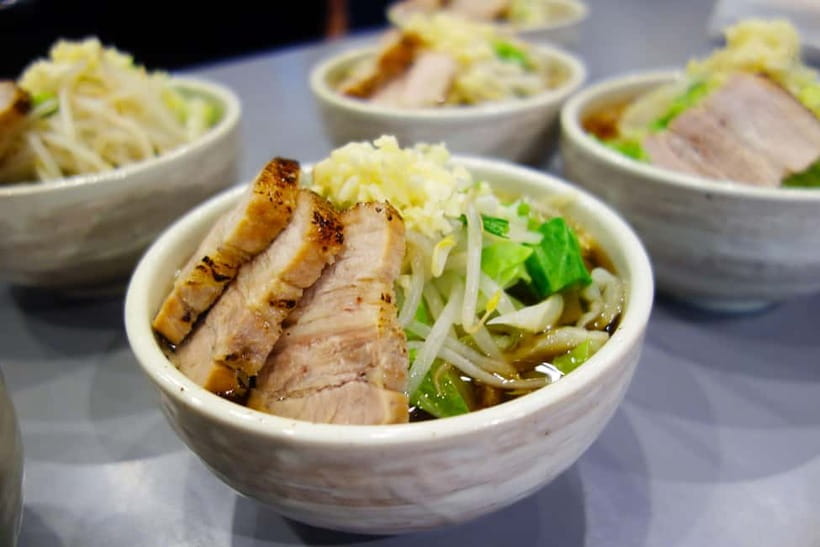
Many Japanese cooking classes focus on sushi, tempura, or familiar home dishes. This one takes a more unusual route: you learn to make Jiro-style ramen from scratch, including the noodles.
That matters because noodles are often the part of ramen you simply receive in a restaurant bowl. Here, you work with flour and take part in the process that gives the finished dish its texture. You also prepare the broth and toppings, so the meal feels like a complete cooking project rather than a short demonstration.
The class is offered in English, which removes much of the guesswork for visitors. You can ask questions while preparing the food and get explanations of the ingredients used that day. The small group, capped at six participants, should also make it easier to keep up with the instructor.
The style of ramen is worth understanding before you book. Jiro-style ramen is known for a substantial serving and a strong, filling character. This is not the best choice if you prefer tiny portions or light food. It suits you if you want a hearty bowl and enjoy learning how the parts come together.
More Sushi and Japanese Classes in Tokyo:
- Ramen & Gyoza Cooking Class in Tokyo with Local Supermarket Visit
★ 5.0 · 823 reviews - Tokyo Tsukiji Fish Market Tour and Sushi Making Lesson
★ 5.0 · 390 reviews - Tokyo: Easy Ramen Cooking Experience in Kabukicho, Shinjuku
★ 4.6 · 321 reviews
Starting at JR Akihabara Station at 11 AM
The experience begins at 11 AM outside the Central Ticket Gate at JR Akihabara Station. Akihabara is one of Tokyo’s easiest places to recognize, but the station can still be confusing, especially if you arrive from another train line.
Give yourself extra time. The group leaves if you are more than 10 minutes late, and you may then be asked to go directly to the kitchen studio. There is no refund for missing the departure, so arriving early is a sensible part of the plan.
You do not need to treat the opening walk as a full sightseeing tour. It lasts about 20 minutes and is designed to show you some of Akihabara on the way to the supermarket. You will pass through an area known for electronics, anime, and Japanese pop culture.
That short walk gives the food class a better setting. You are not simply dropped into a cooking studio with no connection to the city. You first see the neighborhood that many visitors associate with modern Tokyo, then shift from gadgets and pop culture to ordinary Japanese food shopping.
Akihabara in 20 minutes: a quick look at modern Tokyo
Akihabara is famous for its electric-town identity. The streets are associated with gadgets, anime, manga, and other parts of Japanese pop culture. The tour does not promise a long shopping expedition, so set your expectations correctly.
I see this section as a useful introduction rather than the main attraction. It gives you a little time to get your bearings and adds variety before the cooking begins. If you already know Akihabara well, the walk may feel brief. If this is your first visit, it offers a compact look at one of Tokyo’s most distinctive districts.
The timing also works well for a cooking class. You meet in the late morning, walk through the neighborhood, shop for ingredients, and then move to the kitchen. The schedule gives the outing a clear shape without taking up an entire day.
The supermarket stop and the ingredients behind the bowl
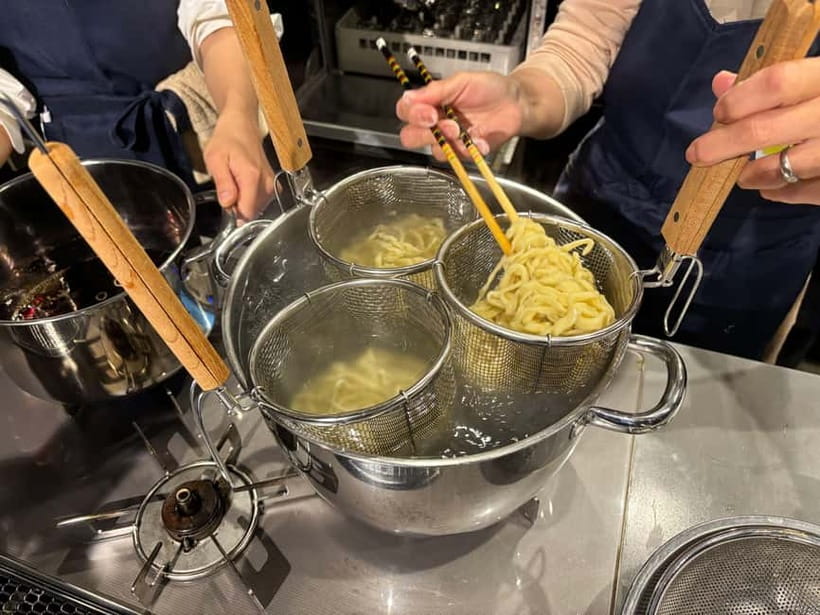
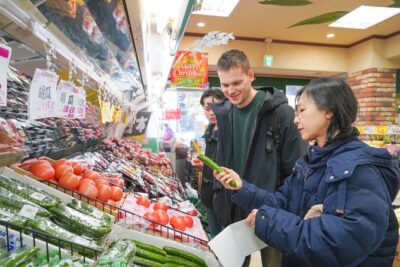
The supermarket visit lasts about 20 minutes. The guide takes you inside to look at ingredients used for the day’s ramen and explains how they fit into Japanese cooking.
This is one of the most useful parts for anyone interested in food culture. A restaurant bowl can make ramen seem simple: noodles, broth, meat, and vegetables. A supermarket shows you the ingredients in their everyday setting, with the guide explaining what you will use and how it supports the dish.
The stop is not a shopping break where you buy a meal for yourself. It is part of the lesson. You get a closer look at Japanese ingredients before heading to the kitchen, which helps connect the food on the shelves with the cooking steps that follow.
The exact ingredients can vary because the guide explains what is used on that day. That is a practical point to keep in mind. You are learning a ramen method and seeing the components for a particular class, not receiving a fixed menu that never changes.
More Cooking Classes in Tokyo:
- Ramen and Sushi Cooking Class with Sake Pairing Set in Tokyo
★ 5.0 · 291 reviews - Tokyo: Wagyu and 7 Japanese Dishes Cooking Class
★ 4.9 · 273 reviews - Tokyo Washoku 4-hour Cooking Class: From Market to Table
★ 5.0 · 253 reviews - Small-Group Wagyu Beef and 7 Japanese Dishes Tokyo Cooking Class
★ 5.0 · 190 reviews
The train ride to Patia Kitchen Studios
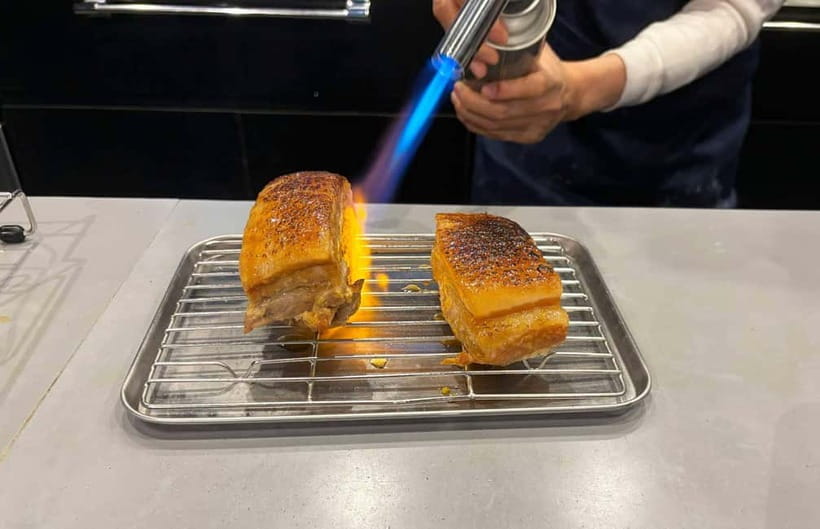
After the supermarket, you travel by train to the cooking studio. The trip takes about 15 to 30 minutes, depending on the route and timing.
The kitchen studio is operated by Patia Kitchen Studios, a group of modern cooking spaces in central Tokyo. The studios are described as spacious and relaxed, and they are only a short walk from the nearest station. The spaces have also been used for Japanese television programs.
Your train fare is not included. You should use your own Suica or another IC card. If you do not have one, the guide can help you buy a ticket. This is a small cost, but it is important to carry a little extra money or have a working transit card ready.
The class ends at the studio, not at JR Akihabara Station. Plan the rest of your day from the kitchen location rather than assuming you will return to your starting point. The precise studio address is part of the booking information, so check it before arranging a tight afternoon connection.
Ninety minutes of ramen making
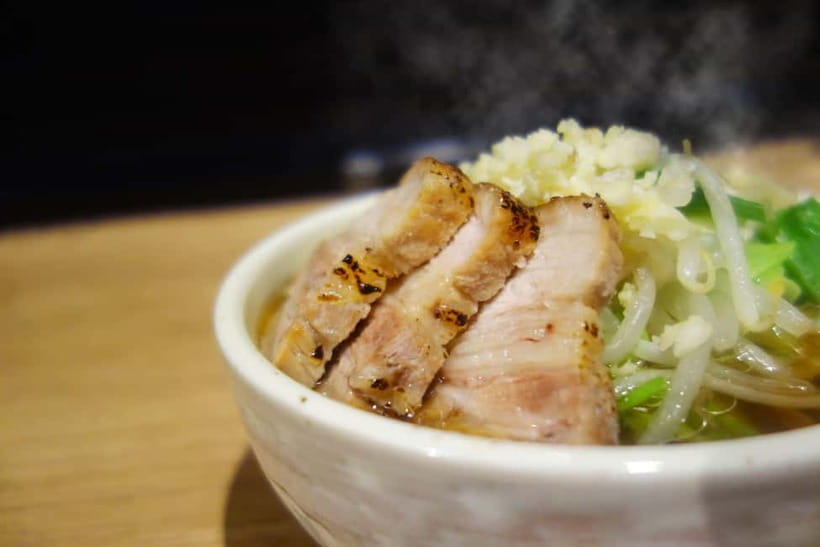
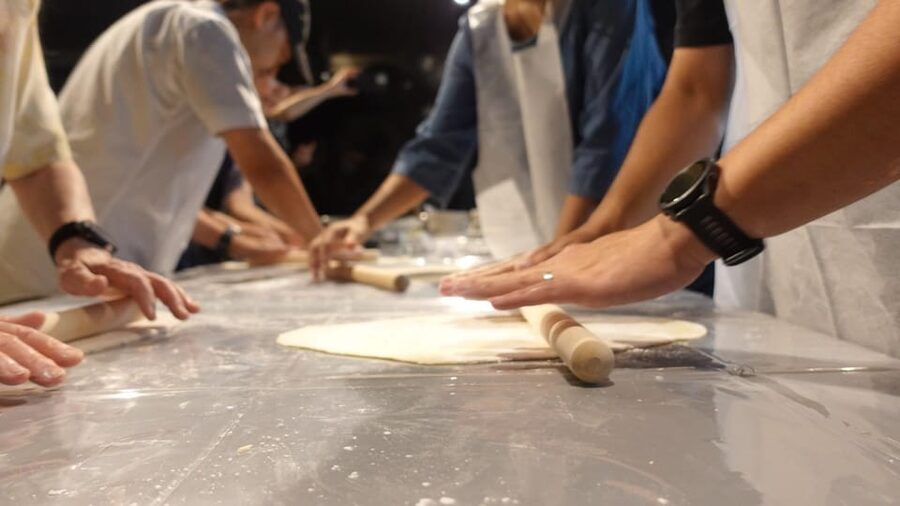
The cooking class lasts about 90 minutes. You prepare fresh noodles, broth, and toppings, then bring them together into a Jiro-style bowl.
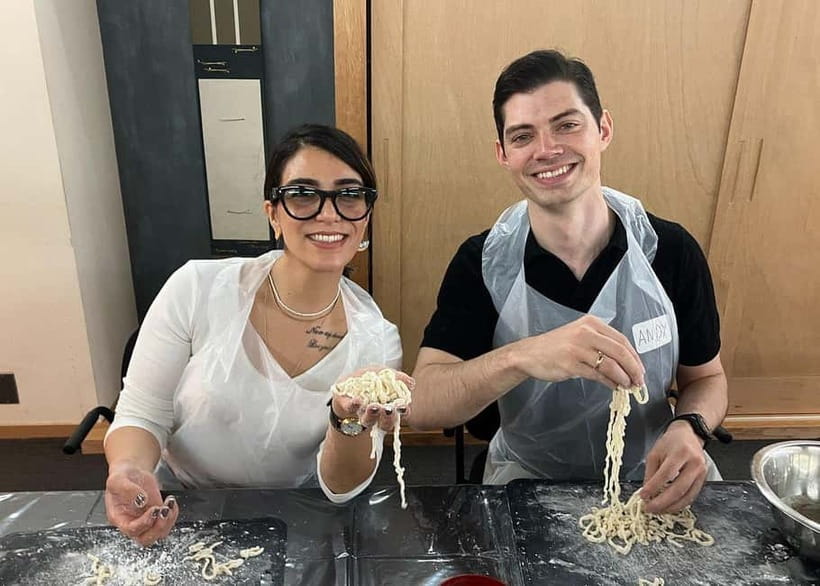
The noodle-making step is the most distinctive part. You start with flour rather than a packet of ready-made noodles. This gives you a better sense of the work behind ramen and lets you see how a basic ingredient becomes the foundation of the dish.
You also prepare the broth. The broth is not simply poured from a container at the end, so you take part in the flavor-building process. The class then covers toppings, including chashu, before the final bowl is assembled.
The instructor guides you through the process in English. One Italian participant described the guide and chef as especially good at explaining the secrets of Japanese ingredients, which points to the class’s strongest feature: it connects technique with food knowledge.
You should expect to work, not just watch. That makes the experience more satisfying, but it also means the class may require standing, handling ingredients, and moving through several steps in a limited time. People with back problems should take the physical demands seriously.
Eating the bowl you made yourself
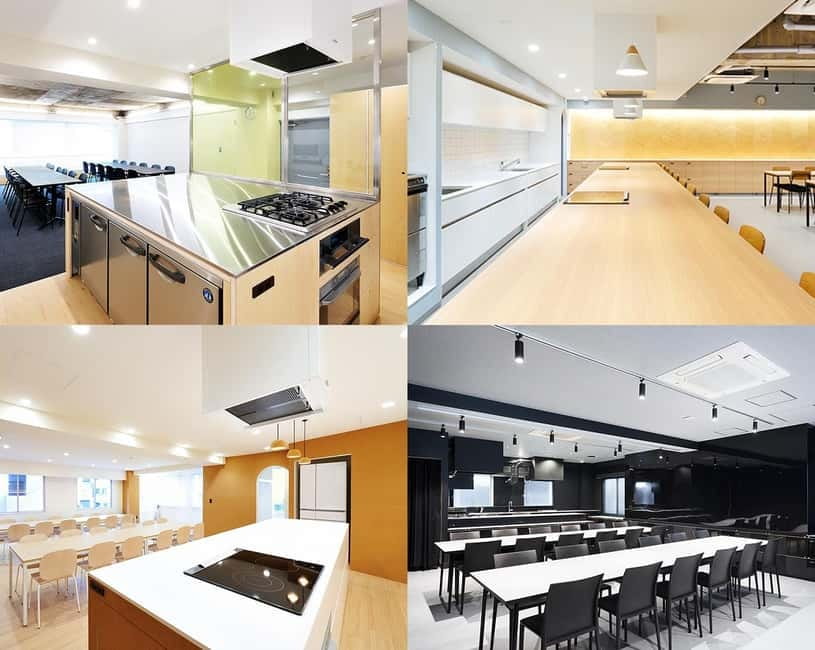
At the end, you eat the ramen you prepared. The bowl includes your fresh noodles, broth, toppings, and chashu.
This final meal is more than a reward. It lets you judge the results of your own work. You can taste the texture of the noodles and see how the broth and toppings balance in the finished bowl.
One Canadian participant described the homemade ramen as the best ramen of the trip. That is a strong reaction, but it also reflects the appeal of the format. You are not comparing a restaurant bowl with another restaurant bowl. You are eating a dish tied to a morning of walking, shopping, cooking, and learning.
The meal is also likely to be filling. Jiro-style ramen is substantial, so I would avoid booking a large lunch before the class. The included food and drink form an important part of the $120 price rather than a small snack at the end.
How much value do you get for $120?
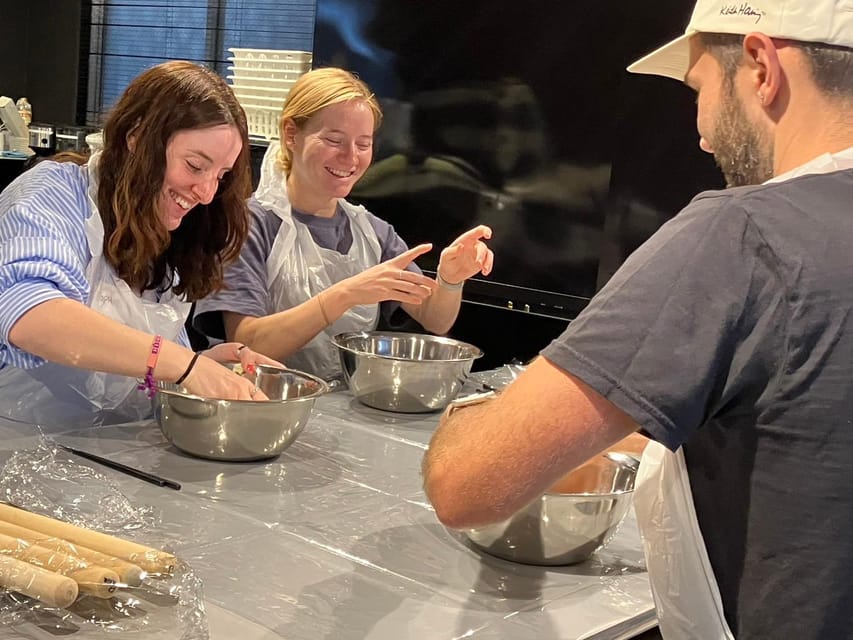
At $120 per person, this is not the cheapest way to eat ramen in Tokyo. A restaurant bowl costs far less. The value comes from the full three-hour experience: the neighborhood walk, supermarket visit, train ride, English instruction, cooking, meal, and downloadable photographs.
The class is especially good value if you want to learn a skill you can remember after the trip. You make noodles from flour, prepare the broth and toppings, and gain a better understanding of the ingredients. The food is part of the price, but the instruction and guided access to the process are just as important.
A small group helps justify the cost. With no more than six participants, the class is not set up like a large demonstration where you watch from the back. You get a more direct role in the preparation and can ask questions in English.
The value is weaker if you only want to eat ramen or see Akihabara. For those goals, a restaurant meal and independent neighborhood walk will cost less. Book this class because you want the combination of cooking, food culture, and a finished meal.
Dietary limits and the chicken option
The standard class uses pork chashu, and vegan or vegetarian versions are not available. That makes the experience unsuitable for vegans and vegetarians.
If you eat meat but prefer chicken, you can request a change from pork to chicken if you give more than 48 hours notice. This option is useful, but it does not turn the class into a vegetarian or vegan experience. Ask for the chicken change in advance rather than waiting until the day of the class.
The available information does not promise other dietary changes, so you should not assume that every allergy or preference can be handled. If you have a serious food restriction, confirm it before booking.
Who will enjoy this experience most?
I would recommend this class to food-focused visitors who want more than a quick meal. It suits you if you like working with your hands, want an English-language lesson, and are curious about modern Japanese food culture.
It is also a good fit for couples and small groups. A minimum of two people is required per reservation, and the six-person limit keeps the activity personal. The class can work well as a morning plan before another Tokyo activity, though remember that you finish at the studio rather than at Akihabara Station.
Families should check the age and mobility limits carefully. Children under five cannot join, baby strollers are not allowed, and wheelchair users are not considered suitable for the activity. People with back problems should also choose another food experience.
Practical timing, cancellation, and photographs
The total time is about three hours, but the schedule includes walking, a train ride, and cooking. Wear something comfortable for moving between locations and standing in the studio.
The activity includes photographs that you can download later. These are a nice record of the cooking session, especially if you want more than the usual Tokyo street photos.
You can cancel up to 24 hours before the start for a full refund. The reserve-now, pay-later option also gives you some flexibility when you are arranging a busy Tokyo schedule.
Do not cut it close at the starting point. The guide leaves after 10 minutes, and late arrivals may need to find the studio on their own. The meeting point is outside the Central Ticket Gate, not inside the station concourse.
Should you book the Akihabara ramen class?
Book it if you want to make fresh noodles, learn about Japanese ingredients in a supermarket, and eat a substantial Jiro-style bowl in a small English-speaking class. The combination is unusual, and the cooking has enough substance to feel like a real activity rather than a quick tourist stop.
Skip it if you are vegan or vegetarian, need wheelchair access, dislike pork-based ramen, or only want a cheap bowl of noodles. Also think twice if you have a tight afternoon plan, since the class ends at a different location and the train fare is extra.
For food lovers, couples, and curious first-time visitors to Tokyo, this is a practical way to connect Akihabara’s modern city culture with the everyday work behind a Japanese meal.
FAQ
Where does the ramen experience begin?
It begins at 11 AM outside the Central Ticket Gate at JR Akihabara Station.
Where does the experience end?
The class ends at the kitchen studio, which is in a different location from the Akihabara meeting point.
How long does the experience last?
The full experience lasts about three hours. This includes the Akihabara walk, supermarket visit, train ride, and ramen class.
Is the class taught in English?
Yes. The activity includes an English-speaking guide and instructor.
How many people can join the class?
The group is limited to six participants. A minimum of two people is required per reservation.
Is train transportation included?
No. You pay your own fare from Suehirocho Station to the kitchen studio. You can use a Suica or another IC card, and the guide can help you buy a ticket if needed.
Can the pork chashu be changed to chicken?
Yes, but you must request the chicken option more than 48 hours in advance.
Are vegan or vegetarian options available?
No. Vegan and vegetarian options are not available, so the experience is not suitable for vegans or vegetarians.
Newest classes around Tokyo
- Tokyo: Sushi roll and side dish cooking experience★ 5.0 · 2 reviews
- Tokyo: Sushi Making Experience & Japanese Cooking Class★ 5.0 · 2 reviews
- Tokyo: Sushi Cooking Class with Sake Tasting★ 4.8 · 55 reviews
- Tokyo: Real Ramen & Dumpling Cooking with Master Chef★ 5.0 · 10 reviews
- Tokyo: Sushi and Ramen Cooking Class with Sake Pairing Set★ 5.0 · 81 reviews
- Tokyo: Kawaii Bento Cooking Class – Cute Character Lunchbox★ 4.9 · 55 reviews
- Tokyo: Gyoza Making from Scratch – Ultimate Cooking Class★ 5.0 · 2 reviews
- Tokyo: Night Cooking Class: 5 Home-Cooked Japanese Dishes★ 4.9 · 13 reviews
Tokyo Cooking Classes, compared.

Ramen & Gyoza Cooking Class in Tokyo with Local Supermarket Visit
Read our review →
Tokyo Tsukiji Fish Market Tour and Sushi Making Lesson
Read our review →
Easy Ramen Cooking Experience in Kabukicho, Shinjuku
Read our review →
Ramen and Sushi Cooking Class with Sake Pairing Set in Tokyo
Read our review →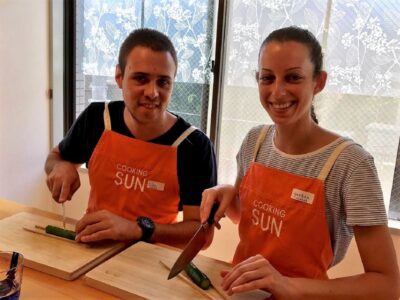
Tokyo Washoku 4-hour Cooking Class: From Market to Table
Read our review →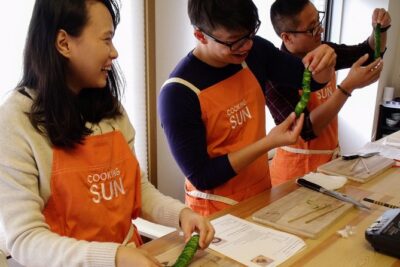
Small-Group Wagyu Beef and 7 Japanese Dishes Tokyo Cooking Class
Read our review →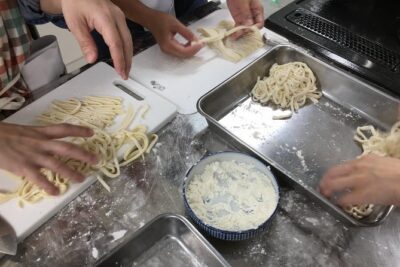
Private Home Cooking in Yanaka – Local Flavors in a Warm Setting
Read our review →Browse the lists this tour appears in