
Review · OSAKA COOKING CLASSES
Osaka : Exclusive Tea Ceremony & Wagashi Cooking
The best part of this Izumisano experience is that you do not simply watch a tea ceremony. You make wagashi, prepare green tea, and then use your own sweet during the ceremony. That small change turns a formal custom into something you can understand with your hands, not just your eyes.
I like the three-generation family connection behind the welcome, and I like the small group size, limited to six people. You also get time to see kimono examples and Nishijin textiles after the ceremony. The main consideration is timing: two hours gives you a focused introduction, not a full study of tea culture.
Key points to know before booking
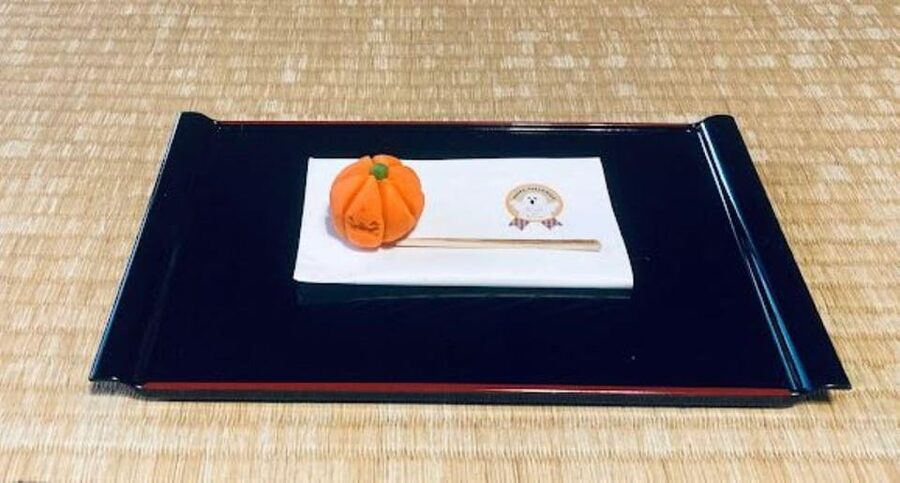
- Make your own wagashi: Prepare a traditional Japanese sweet and eat it with the tea you make.
- A family setting: The ceremony is hosted by a family with more than a century in the business.
- Historic Izumisano setting: Meet at Furusato Machiya-Kan, a former traditional home near Nankai Izumisano Station.
- Small English-speaking group: The class is limited to six participants, with an English guide available.
- Optional kimono photos: Add kimono wear during booking if you want photos during the experience.
- Friendly to special diets: Vegetarian and vegan participants can join if they share dietary needs in advance.
Why making the sweet changes the tea ceremony
A Japanese tea ceremony can seem mysterious when you first see one. There are careful movements, set positions, and polite gestures that may look difficult to follow from the outside. Here, you have a useful entry point: you make the wagashi yourself before the tea is served.
Wagashi are Japanese sweets often designed to suit the season. The information provided for this class does not specify the exact sweet you will prepare, so do not book expecting one particular shape or flavor. What you can expect is a hands-on cooking lesson using the provided ingredients and seasonings.
The sweet matters because it balances the green tea. Japanese tea used in a ceremony can have a strong, grassy taste, while wagashi gives your palate something gentle and sweet. When you eat the confectionery you made and then drink the tea, the customs make more sense.
I also like that the activity does not separate cooking from culture. You are not only learning a recipe, and you are not only observing a ritual. You move from making food to taking part in the ceremony itself. For a first introduction, that is a sensible order.
More Sushi and Japanese Classes in Osaka:
- Sushi Making Osaka! Popular Sushi Class in Japan!
★ 5.0 · 500 reviews - Osaka: Ramen and Gyoza Cooking Class in Dotonbori
★ 5.0 · 378 reviews - Osaka Cooking Class: Okonomiyaki &Japanese cuisines experience
★ 5.0 · 261 reviews
Starting at Furusato Machiya-Kan in Izumisano
Your meeting point is 泉佐野ふるさと町屋館, also called Furusato Machiya-Kan, the former Shinkawa family residence. It is near Nankai Izumisano Station, making the experience practical if you are staying in Osaka or moving around the Kansai Region.
From the station, leave through the exit and walk to the right. Turn right at Tsubasadouri shopping district, turn left at Uniform Noguchi, then turn right at the next corner. Furusato Machiya-Kan is where the pickup takes place.
The directions are specific, which helps, but give yourself enough time to find the building. Izumisano is not the sort of place where you want to rush in, especially if you are unfamiliar with the streets. If you book an English interpreter to accompany you, that person will accompany you during the experience.
Starting in a traditional house gives the lesson a better setting than a generic cooking studio. You begin in a place connected to local life, then move into the food and tea activities. The building itself forms part of the experience, even though the main focus remains the class.
The two-hour walk, class, and cooking session
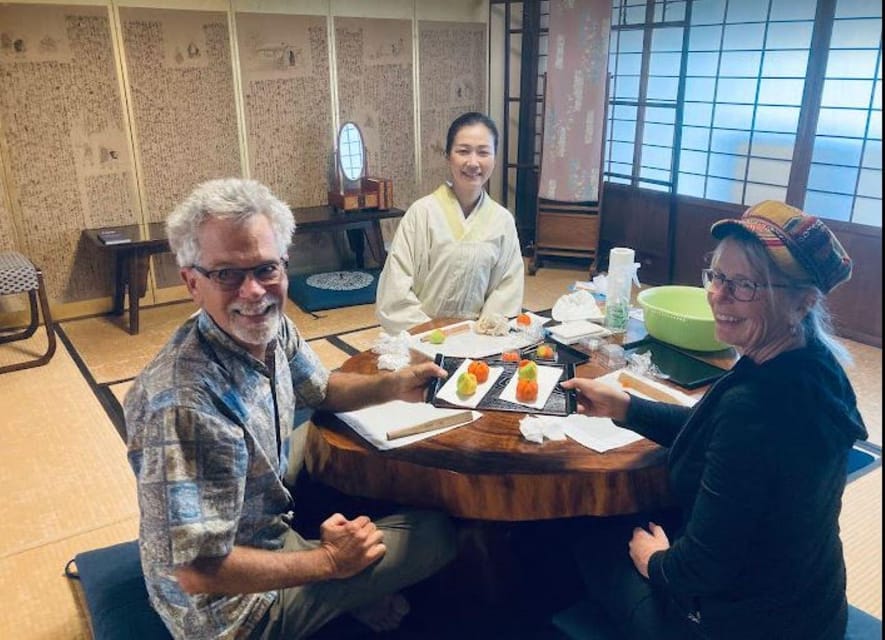
The scheduled activity lasts two hours and includes walking, instruction, and cooking. The exact order and amount of time spent on each part may vary, but the central sequence is clear: learn about the tea ceremony, make wagashi, prepare green tea, and take part in the ceremony with your finished sweet.
The guide explains the history and spirit of the tea ceremony, giving you a basic sense of why the movements and manners matter. This is useful because tea ceremony is not simply a way to prepare a drink. The formal actions express care, attention, and respect between the person making the tea and the person receiving it.
You also learn how to make tea according to the rules of the ceremony. The supplied information calls this green tea, while the activity description refers to tea ceremony. It does not give a specific tea name or explain the exact equipment, so you should expect an introductory lesson rather than advanced training in a particular school of tea.
That is a good fit for most people visiting Japan for a limited time. You get enough structure to understand what you are doing, without needing prior experience. If you already study tea ceremony, you may find the lesson too brief for detailed technical instruction.
A family welcome with a century of local experience
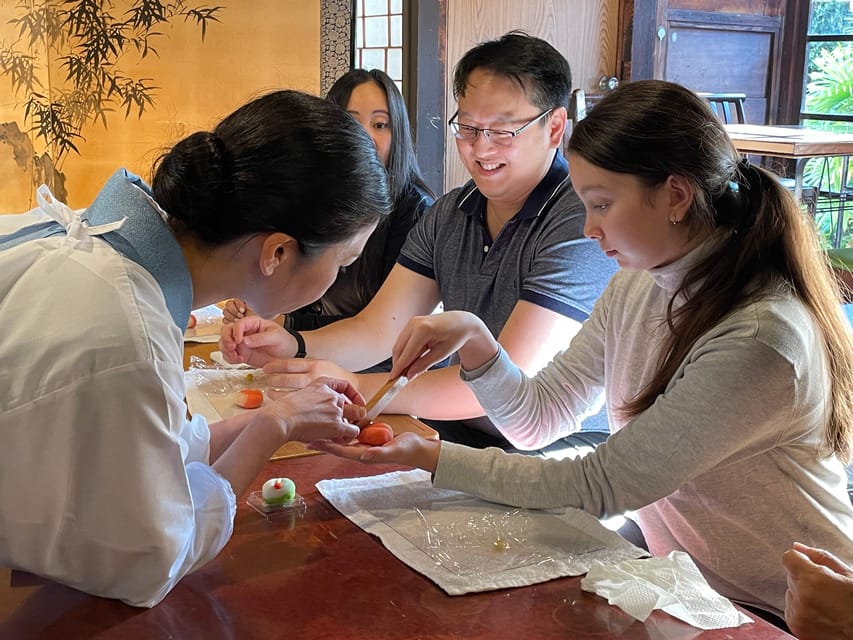
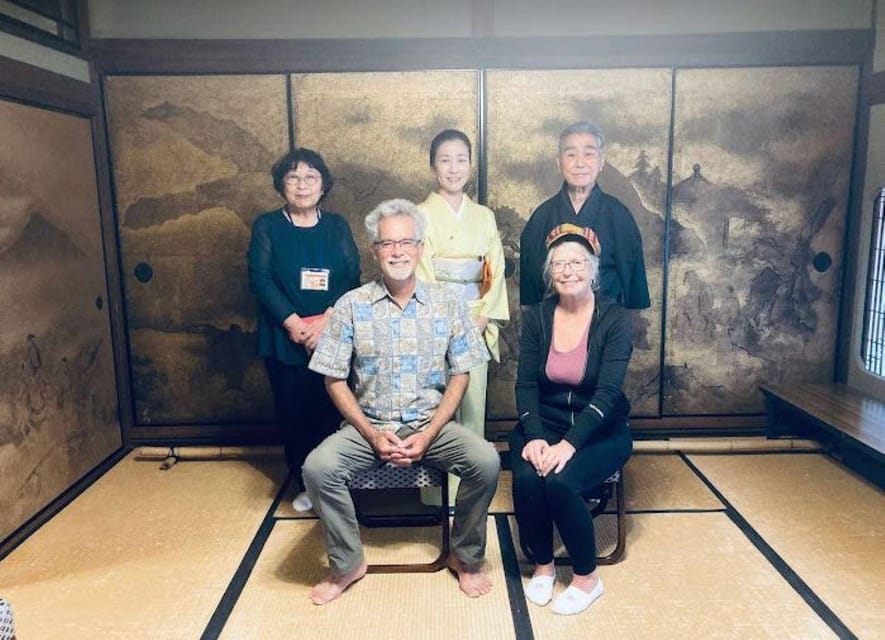
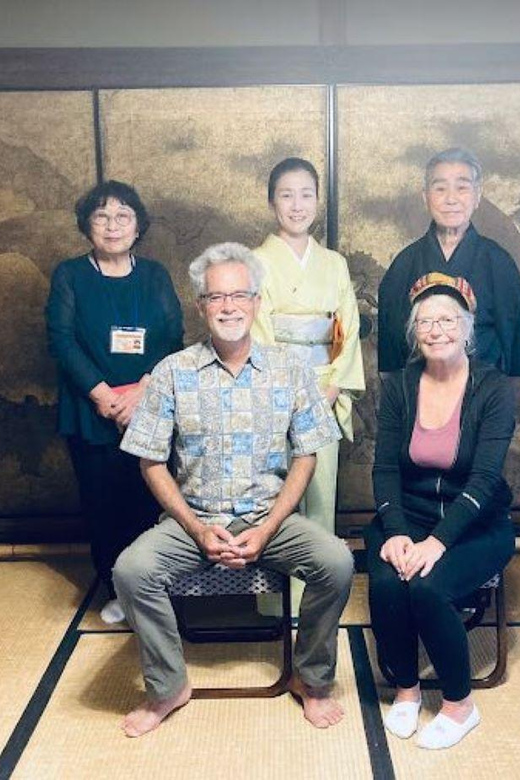
One of the most appealing details is the family connection. The ceremony is hosted by a three-generation family, and the family business has been operating for more than a century. That does not mean every part of the event is old-fashioned, but it does give the welcome a personal foundation.
The family setting can make a formal custom feel less distant. You have a chance to ask questions, see how the hosts present the tradition, and take part at a manageable pace. The English guide helps bridge the language gap, though the available information does not provide the guide’s name.
A small group is important here. With a maximum of six participants, you should have more room to watch the demonstrations and receive help during the cooking portion. It also keeps the ceremony from feeling like a large performance. The trade-off is that small-group spaces can fill quickly, so check the available start times before planning the rest of your day.
More Cooking Classes in Osaka:
- Osaka: Roll and Authentic Sushi Making Class in Dotonbori
★ 4.9 · 239 reviews - Ramen and Gyoza Cooking Class in Osaka
★ 5.0 · 202 reviews - Osaka Sake Tasting with Takoyaki Cooking
★ 5.0 · 156 reviews - Osaka: Cooking Class Ramen & Gyoza Course in Nanba
★ 4.9 · 86 reviews
The wagashi lesson and what to expect
All cooking ingredients and seasonings are included. You do not need to bring supplies, and the activity fee also includes the guide and taxes. The class information does not list the exact ingredients, the specific wagashi design, or any take-home packaging, so plan to enjoy the sweet during the experience rather than assume you will leave with a box.
The cooking portion should suit you if you like food activities that have a cultural purpose. You are not simply following a recipe for dessert. The finished wagashi becomes part of the tea ceremony that follows.
Vegetarian participants are welcome, and the experience is also vegan-friendly. You need to report dietary restrictions in advance. That advance notice matters, since the exact ingredients are not listed and the hosts need time to prepare appropriately.
The class may also appeal to families and mixed-age groups, though no minimum age is provided. Since the activity involves cooking and a formal ceremony, younger children may need close adult attention. That is practical advice rather than a stated age rule.
Taking part in the tea ceremony
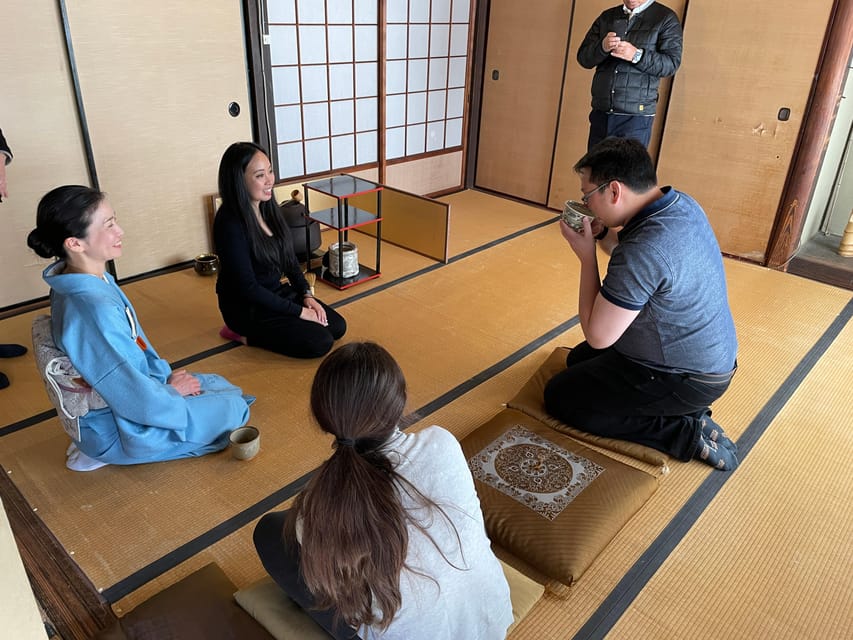
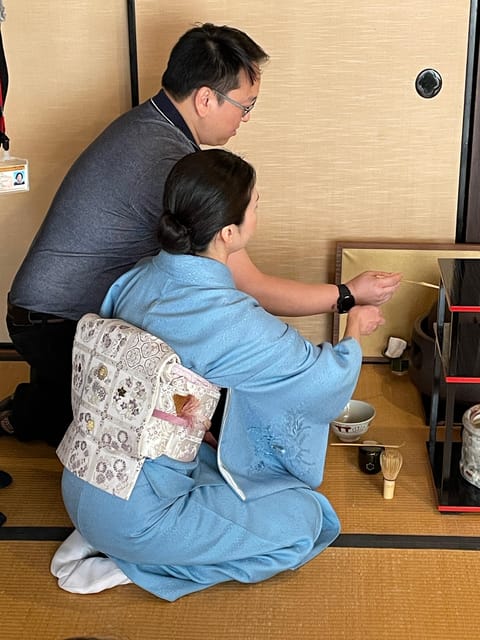
Once the wagashi is ready, you experience the ceremony with the confectionery you made. You learn how to make the tea according to the ceremony’s rules, then use the quiet, formal setting to appreciate the result.
The ceremony is likely to feel more deliberate than an ordinary cup of tea. Movements are part of the lesson, so watch closely and follow the guide’s instructions. You do not need to know the etiquette in advance. The point of the class is to show you how to participate.
I like the way this activity gives you a reason to slow down. Osaka is often associated with food, shopping, and quick movement, while Izumisano offers a calmer cultural stop. You are still close enough to reach by train, but the experience asks you to pay attention to small actions.
Do not expect a long meditation session or an expert-level study of tea schools. Two hours is enough for a meaningful introduction, but not enough to cover every part of Japanese tea history. Think of it as a well-focused first lesson.
Kimono, Nishijin textiles, and time for photographs
After the ceremony, you can take photographs and see examples of kimono and beautiful woven textiles made in Kyoto’s Nishijin district. This adds a visual part to the experience and gives you more than a single tea-and-sweets activity.
Nishijin is known for fine textile work, so the examples help connect the ceremony to Japanese clothing and craft. The supplied details do not say how many garments you will see or whether the collection belongs to the family, so treat this as a viewing opportunity rather than a museum visit.
You can choose kimono wear as an add-on during booking. If you select it, you can take photos during the experience. The add-on cost is not provided, so check the booking screen before deciding. If you want a photograph in traditional clothing, this is the moment to plan for it. If you prefer to keep the visit simple, the core tea and wagashi experience does not require the add-on.
The final stop at くらふとや
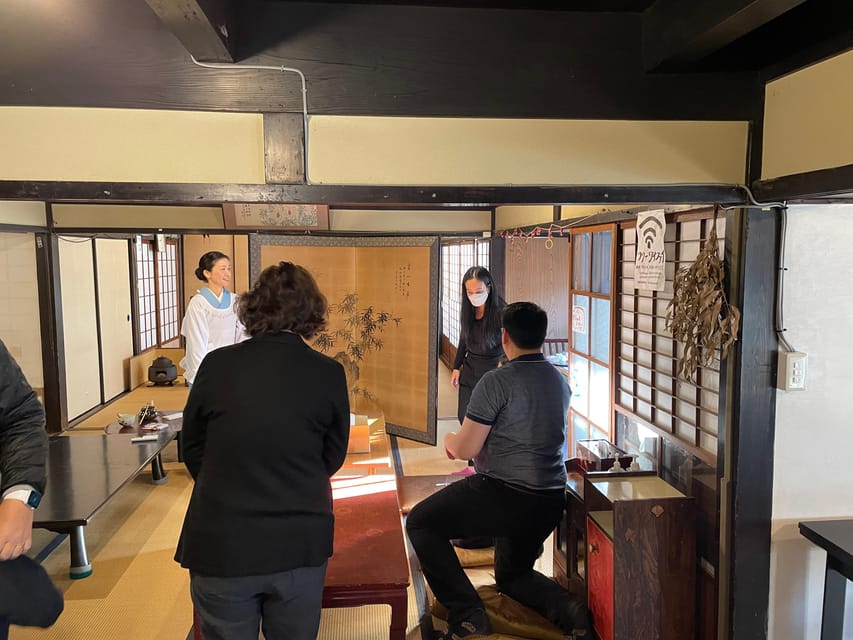
The activity itinerary includes a final stop at くらふとや, followed by the end of the activity back at the meeting point. The supplied details describe the stop as part of the walk, class, and cooking experience, but do not explain exactly what you will do there or how long you will stay.
Because the ending information refers both to くらふとや and a return to the meeting point, confirm the precise end point with the provider if you have a tight train connection. The stated meeting directions and return information make Nankai Izumisano Station the useful reference point for planning.
This is not a full-day excursion. At two hours, it can fit before or after another Kansai activity. Allow extra time for finding the starting location and for any return walk, especially if you plan to catch a train immediately afterward.
Is $98 a fair price?
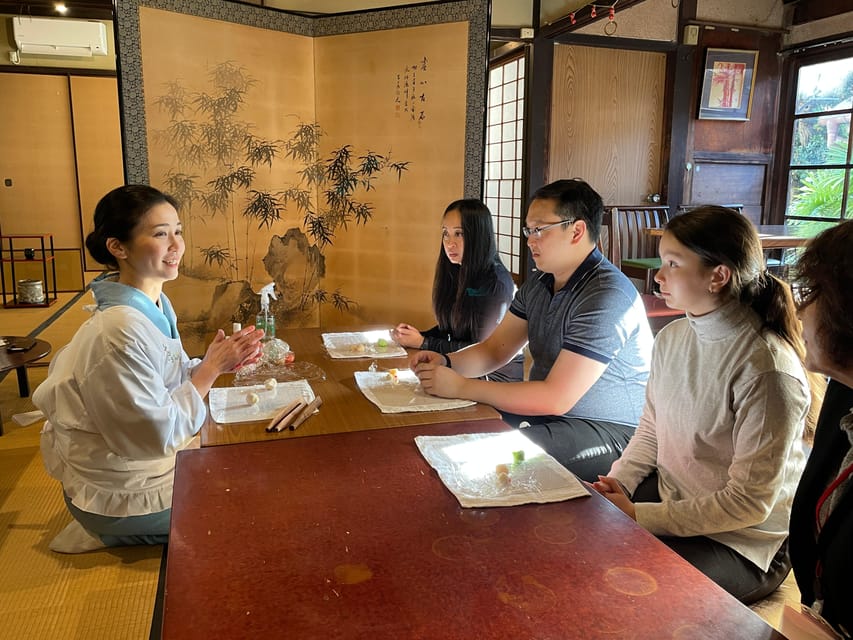
At $98 per person, this is not a bargain tea break. The value comes from the combination of several services: a small group, an English guide, cooking ingredients, instruction, the tea ceremony, access to a historic home setting, and time with kimono and Nishijin textile examples.
You also pay for a personal cultural lesson rather than just a drink and a sweet. Making the wagashi and preparing the tea gives you more to remember than a short demonstration. The three-generation family setting adds another layer that is difficult to reproduce in a standard tourist workshop.
Still, you should compare the cost with your interests. If you only want to taste Japanese sweets or drink matcha, a café will cost less. If you want a brief but structured introduction to tea ceremony, with a hands-on cooking element and an English guide, the price is easier to justify.
The two-hour limit keeps the commitment reasonable. You are not giving up an entire day, and the reserve-now, pay-later option lets you hold a place without paying immediately. Free cancellation is available up to 24 hours before the experience for a full refund.
Who should book this experience?
I would choose this for a first visit to Japan when you want a cultural activity that is personal, short, and easy to fit into a wider itinerary. It is especially suitable if you like cooking, traditional clothing, Japanese craft, or small-group instruction.
It also works well for you if formal customs make you nervous. The guide explains the tea ceremony and shows you how to prepare the tea, so you are not expected to arrive with knowledge of the rules.
Vegetarians and vegans can join with advance notice. The activity is wheelchair accessible, which is an important practical point, although the details do not explain the exact access arrangements at every point along the walk.
You should think twice if you want a long, scholarly treatment of tea ceremony or a private full-day visit. This is a compact introduction. Also note that alcohol and drugs are not permitted, and the activity is marked as unsuitable for people with altitude sickness, although the provided information does not explain why that restriction applies in this setting.
Should you book the Izumisano tea ceremony?
Book it if you want to make the culture part of the meal, not just watch a demonstration. The wagashi lesson, tea preparation, family setting, and small group make this more engaging than a basic tea tasting.
I would skip it if your schedule is too tight for the station walk and two-hour class, or if $98 feels high for a short activity. For the right visitor, the strongest value is the chance to learn by doing, then sit down with the sweet and tea you helped prepare.
FAQ
Where does the tea ceremony experience start?
It starts at Furusato Machiya-Kan, the former Shinkawa family residence, near Nankai Izumisano Station.
How do I reach the meeting point from Nankai Izumisano Station?
Exit the station and proceed to the right. Turn right at Tsubasadouri shopping district, left at Uniform Noguchi, then right at the next corner.
How long does the activity last?
The experience lasts two hours.
What does the activity include?
It includes the tea ceremony, wagashi making, cooking ingredients and seasonings, guide services, and all fees and taxes.
Is an English guide available?
Yes. The activity includes a live English-speaking guide. An English interpreter can also accompany you if you book that option.
How many people can join the group?
The group is limited to six participants.
Can vegetarians and vegans participate?
Yes. Vegetarians are welcome and the experience is vegan-friendly. Tell the provider about dietary restrictions in advance.
Can I wear a kimono?
Yes. Kimono wear is available as an add-on during booking, with time for photographs.
Is the activity wheelchair accessible?
Yes, the experience is listed as wheelchair accessible.
What is the cancellation policy?
You can cancel up to 24 hours in advance for a full refund. You can also reserve now and pay later.
Newest classes around Osaka
- Okonomiyaki&Takoyaki for Families:Osaka Street Food Festival★ 5.0 · 4 reviews
- Osaka Sake Tasting with Takoyaki Cooking★ 5.0 · 156 reviews
- Osaka: Gluten-Free Ramen and Gyoza Cooking Class★ 5.0 · 42 reviews
- Osaka Okonomiyaki Cooking Experience for Families & Groups★ 4.9 · 8 reviews
- Osaka: Okonomiyaki Cooking Class with Beer or Soft Drink★ 4.9 · 9 reviews
- Osaka: Japanese Cooking Class with Matcha Experience★ 5.0 · 4 reviews
- Osaka: Cooking Class & Sake Tasting with Local Market Visit★ 4.8 · 31 reviews
- Osaka: Cooking Class Ramen & Gyoza Course in Nanba★ 4.9 · 86 reviews
Osaka Cooking Classes, compared.

Sushi Making Osaka! Popular Sushi Class in Japan!
Read our review →
Osaka Cooking Class: Okonomiyaki &Japanese cuisines experience
Read our review →
Roll and Authentic Sushi Making Class in Dotonbori
Read our review →

Browse the lists this tour appears in