
Review · SRI LANKA COOKING CLASSES
Udawalawe: Farm to Table Cooking & Authe: Village Experience
The best part of this Udawalawe experience is the move from garden to plate. You pick vegetables, help grind and cook the ingredients in a traditional village kitchen, then sit down to eat what you made. Along the way, you see an old precious-stone mine and a cinnamon-peeling demonstration, so the visit feels broader than a standard cooking class.
I like the hands-on garden work and the warm, practical cooking lesson with local women. I also like the setting, a recreated 200-year-old agricultural village only 1.2 kilometers from Udawalawe Elephant Orphanage. One thing to watch: drinks served with the meal may cost extra, and one visitor reported being charged far more than shop prices without clear warning.
Key points to know before booking
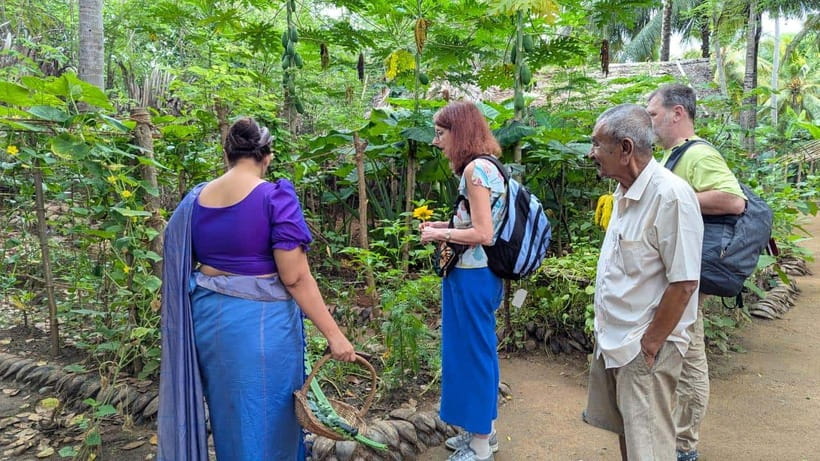
- A garden-to-table meal: Pick fresh vegetables, cook them in a traditional kitchen, and eat the finished dishes.
- More than a cooking class: The visit also includes a precious-stone mine tour and cinnamon-peeling demonstration.
- Close to the elephant orphanage: The meeting point is just 1.2 kilometers from Udawalawe Elephant Orphanage.
- A short but active visit: The advertised duration is two hours, with about 90 minutes spent walking around the site.
- Private and language-friendly: Your group is private, with guiding in English or Sinhala.
- Check drink prices first: The meal is included, but drinks may not be, so ask before ordering.
Starting with cinnamon, coconut, and village life
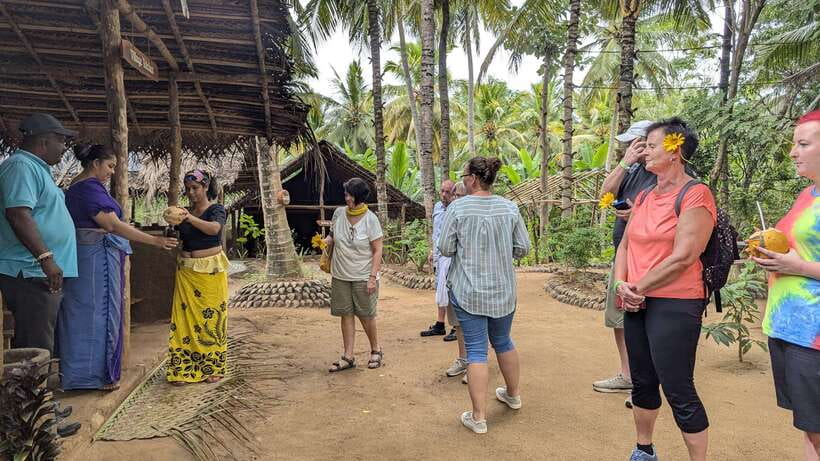
Your visit begins with a welcome drink. The details list cinnamon tea in one place and king coconut in another, so I would confirm which drink is being offered when you book. Either way, this first pause sets the tone: the focus is on ordinary ingredients and the work behind them, not on a staged restaurant meal.
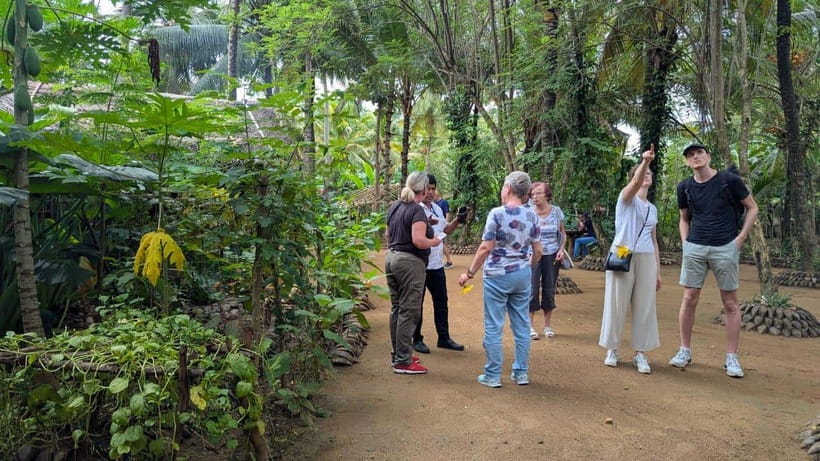
The site presents itself as a reconstruction of a traditional Sri Lankan village from about 200 years ago. That framing matters. You are not simply sitting at a cooking table for a quick demonstration. You walk through a setting designed to show how farming families lived, prepared food, and used local crops.
The walking element is important. Around 90 minutes of the two-hour visit takes place on foot, so wear shoes you can comfortably walk in and clothing suited to a rural outdoor setting. The experience is not suitable for wheelchair users, and anyone who dislikes uneven or extended walking should take that seriously.
The location is especially handy if Udawalawe Elephant Orphanage is already on your schedule. At only 1.2 kilometers away, this can fit neatly before or after that visit. The short distance does not automatically mean transport is provided, so arrange your own way to the meeting point unless the operator tells you otherwise.
More Farm Cooking Classes in Sri Lanka
- Organic cooking class sigiriya (kumara & family)
★ 5.0 · 650 reviews - Kandy Village Cooking Class
★ 5.0 · 536 reviews - Organic Cooking Class sigiriya home Kitchen(Kumara & family)
★ 5.0 · 116 reviews
Seeing an old mine and the work behind cinnamon
The old mine visit adds a useful local trade story to the day. Sri Lanka is known for precious stones, and this stop shows the mining process used in earlier times. The experience includes a guided look at the mine and a demonstration of how stones were uncovered.
Do not book this expecting a full mine expedition. The supplied details promise a visit and demonstration, not an underground adventure or a buying session. Its value is in seeing one part of rural economic life that you might otherwise miss while moving between wildlife parks and beach towns.
The cinnamon demonstration works in the same way. Skilled artisans show how cinnamon bark is peeled and prepared. This is a small task, but it makes a familiar spice more real. You see that cinnamon is not simply something poured from a jar. It requires careful handwork, and the spice has an important place in Sri Lankan culture and trade.
I like this pairing because it gives the visit some variety. The mine focuses on the earth beneath the village, while cinnamon points to the plants and labor above it. Neither stop is described as lengthy, but together they help explain how local materials become valuable products.
Picking vegetables in the garden
The garden is where the experience becomes personal. Instead of receiving premeasured ingredients, you walk through the organic garden and pick vegetables for the meal. That simple act changes your connection to lunch. You have seen the produce growing, selected it, and carried it into the kitchen.
The garden was one of the strongest features for the people who enjoyed this activity. The property is described as beautiful, and the fresh produce gives you something concrete to look at and handle. If you enjoy food markets, home gardens, or farm visits, this part may be more rewarding than a polished cooking studio.
The exact vegetables and dishes can vary, and no fixed menu is provided. That is worth remembering when you compare this with cooking schools that promise a named list of recipes. Here, the appeal is the process and the local setting rather than a guaranteed menu.
Cooking with local women in a village kitchen
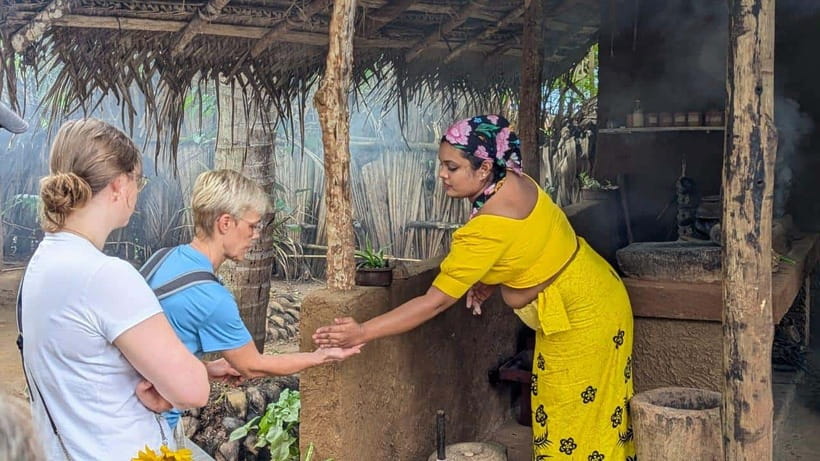
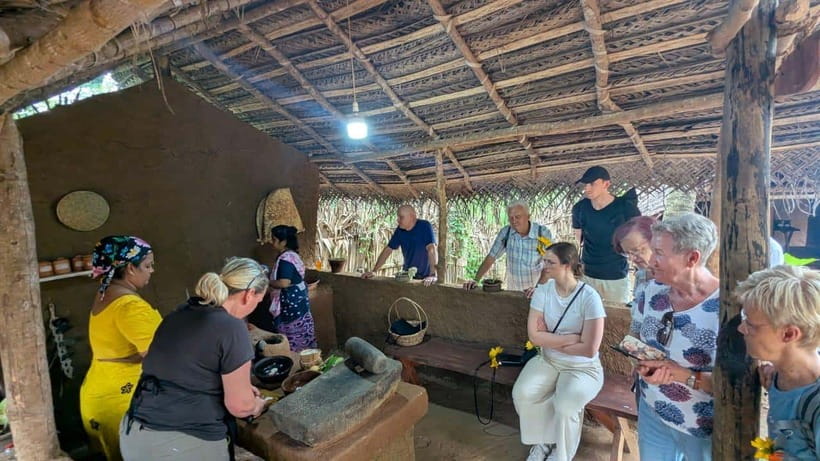
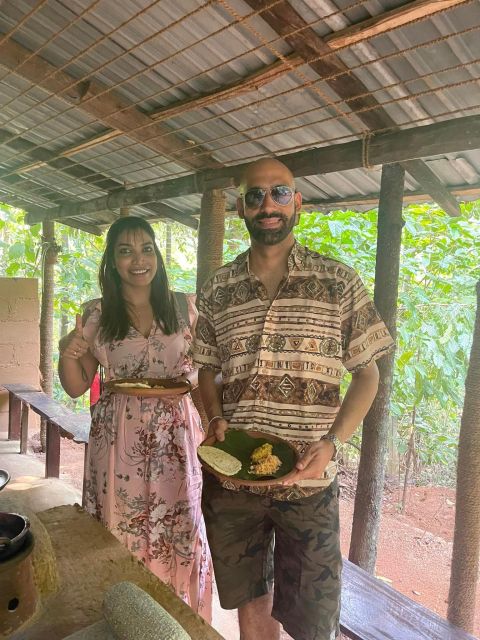
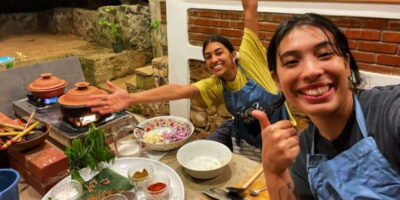
After picking vegetables, you join local women in a traditional kitchen. The lesson includes familiar Sri Lankan techniques such as grinding spices and cooking over an open flame. You are encouraged to take part, not simply watch from the side.
This is the heart of the activity. The cooking class has been praised for being both informative and fun, and the staff make an effort to show and explain the process. You should expect a practical session, with plenty of work involving ingredients, utensils, and traditional methods.
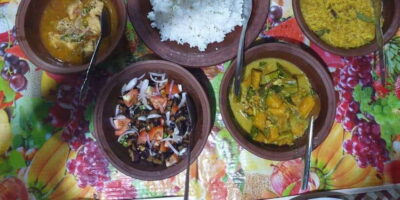
The strongest food praise has focused on coconut sambal and dhal. Those dishes are especially useful examples of why a local cooking lesson can be worth your time. Coconut sambal looks simple, but its flavor depends on the balance of coconut, spice, and seasoning. Dhal is another everyday staple, and making it in a village kitchen gives you a better sense of how central it is to Sri Lankan meals.
Do not expect a silent, highly scripted class. The point is contact with the people preparing the food and an opportunity to ask questions through the English or Sinhala guide. Communication may vary by group, but the listed tour languages are English and Sinhala.
The class also gives you a better way to judge the price. At $30 per person, this is not the cheapest way to eat in Sri Lanka. It becomes better value if you want several activities in one stop: garden picking, a cooking lesson, a mine visit, cinnamon preparation, and a meal. If you only want to learn one or two recipes, a shorter food class elsewhere may cost less.
Same region, a different dish to learn:
- Ella: Traditional Sri Lankan Cooking Class
★ 4.9 · 788 reviews - Sri Lanka Cooking Class with Granny
★ 5.0 · 587 reviews - Sea waves sri lankan cooking class
★ 5.0 · 467 reviews - Ella: Sri Lankan Cooking Class with Neranji at Homestay
★ 5.0 · 276 reviews
Sitting down to the meal you helped make
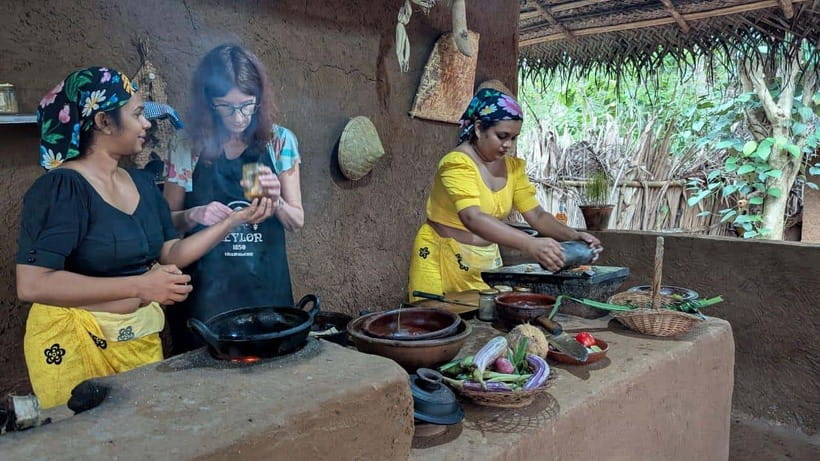
The final meal is served after the cooking session, with the dishes you prepared. It is a communal meal, which fits the village theme and lets you taste the results while the cooking is still fresh in your mind.
This is where the experience earns its strongest praise. The meal has been described as delicious, with coconut sambal and dhal singled out as particular favorites. The cooking is not just a demonstration followed by a plate from a separate kitchen. Your own work forms part of the meal.
There is one practical wrinkle. The food is included, but drinks are not clearly covered. One visitor reported being charged drinks at prices several times higher than shop prices and said this had not been explained beforehand. I would ask two questions before you sit down: Which drinks are included, and what will any additional drinks cost?
That small conversation can prevent an otherwise avoidable surprise. It also helps you compare the total cost fairly. The advertised $30 price covers a private cultural visit, demonstrations, participation in the cooking, and the meal, but you should not assume every beverage is part of the package.
What the two-hour schedule really means
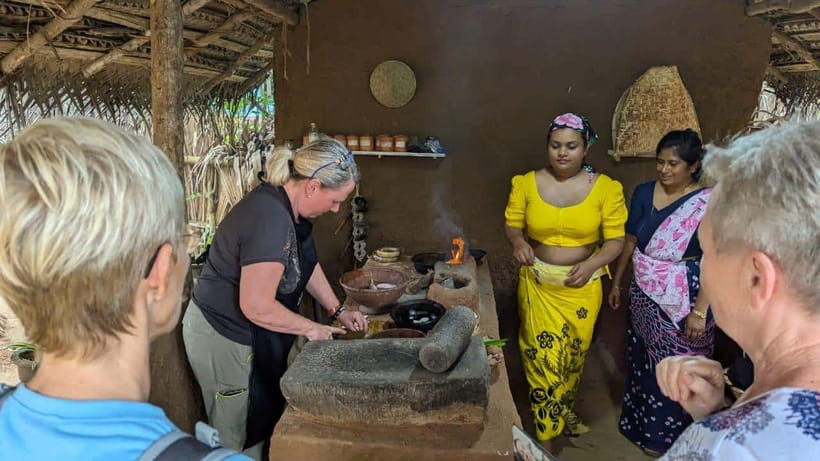
The listed duration is two hours, while the walking information says about 90 minutes. In practice, that suggests a compact visit with most of the time spent moving among the mine, garden, demonstrations, and kitchen, followed by the meal.
This is not a full-day village stay. You will get a quick look at several parts of rural life, then take part in a focused cooking activity. That makes it easy to add to a Udawalawe day, but it also means the pace may feel brisk if you want long conversations or extensive time at each stop.
The private-group format is a plus. You are not placed in a large public group, so the cooking portion should be easier to follow and more personal. The available information does not give a maximum group size, so do not assume the group is limited to only two or three people.
The tour is led in English or Sinhala. No guide names are provided, so you cannot select a particular host in advance. The staff members involved in the cooking are described as friendly and keen to explain what they are doing, which suits visitors who want active participation rather than a formal lecture.
Who will get the most from this experience
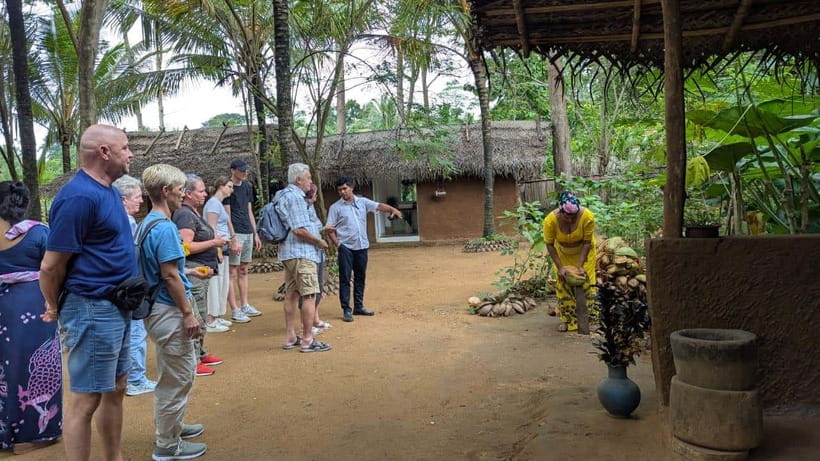
I would recommend this for people who want food to be the main way into local culture. It suits couples, families, and small private groups who enjoy doing rather than just looking. Children who can manage a 90-minute walking visit may also find the garden and cooking more engaging than a museum stop, though the activity page does not set a child age range.
It is also a good match for anyone staying near Udawalawe Elephant Orphanage. The location makes it a practical add-on, especially if you want something based on village life rather than another wildlife outing.
You may want to skip it if you have limited mobility, dislike walking, or need wheelchair access. The activity is specifically listed as unsuitable for wheelchair users. You may also prefer another option if you want a chef-led course with a fixed menu, printed recipes, or a long, detailed lesson.
The recreated village setting will appeal to you if you enjoy demonstrations and local crafts. If you are uncomfortable with reconstructed historical settings and want only present-day village life, keep that distinction in mind. The site aims to show how a Sri Lankan agricultural village functioned about 200 years ago, while the staff and cooking are part of a modern hosted experience.
Is $30 a fair price near Udawalawe?
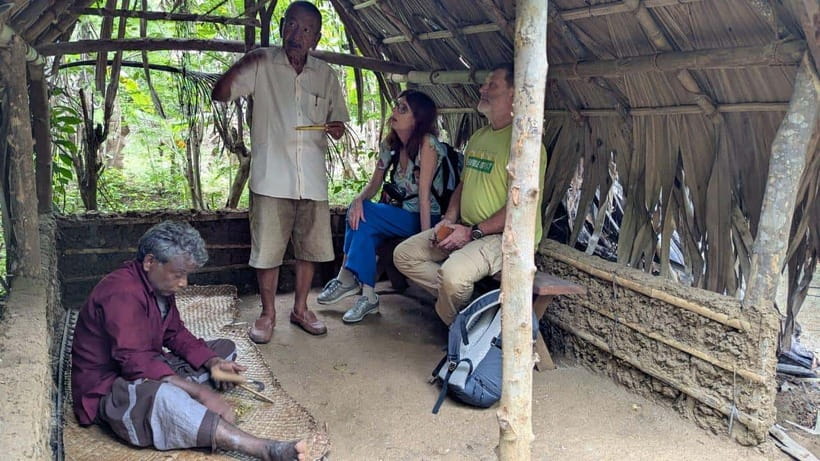
At $30 per person, the price is reasonable if you use most of what is offered. You receive a welcome drink, a guided mine visit, a cinnamon demonstration, garden time, a hands-on cooking class, a prepared meal, and a private-group format. Taken together, that is more than a basic lunch or a single demonstration.
The value is strongest for first-time visitors who want several introductions in one compact session. You sample agriculture, food preparation, craft work, and local trade without committing a full day.
The value is weaker if some advertised parts are brief or if you mainly care about eating. A local restaurant meal will cost less, and a dedicated cooking class may offer more time at the stove. I would choose this activity for its mix of experiences, not purely for the meal.
The drink issue matters because it affects your final cost and your sense of fairness. Ask for prices before ordering anything beyond the included food. That is a small step, but it is the clearest practical advice I can give.
Booking advice for a smooth visit
The experience offers free cancellation up to 24 hours before the start time, and you can reserve now and pay later. Those terms are helpful if your Udawalawe plans may shift, though you should still check the available starting times before booking.
Because the meeting point is close to the elephant orphanage, build in enough time to reach the village without rushing. The supplied details do not state hotel pickup, transport, or a precise start time, so confirm those points directly.
Wear comfortable walking shoes. Bring enough water for the walking portion unless the operator confirms refreshments beyond the welcome drink. Since much of the activity is outside or in a traditional kitchen, practical clothing is a better choice than anything delicate or restrictive.
Most important, ask about the welcome drink and meal drinks. One part of the description names cinnamon tea, another names king coconut, and the food inclusion does not appear to cover every beverage. A quick check will make the price easier to understand.
Should you book it?
Book this experience if you want an active, food-centered introduction to village life near Udawalawe. The garden picking and cooking are the main reasons to go, while the mine and cinnamon stops add useful local context. The warm staff, tasty dhal, and coconut sambal make the meal feel like the proper finish to the visit.
I would pass if you need wheelchair access, want a long cooking course, or dislike asking about extra charges. For most able-bodied visitors with two hours to spare, $30 is a fair price for the number of activities included, provided you confirm drink costs first.
FAQ
Where is the experience located?
It is in Sabaragamuwa Province, Sri Lanka, about 1.2 kilometers from Udawalawe Elephant Orphanage.
How long does the activity last?
The listed duration is two hours. About 90 minutes of that time is described as walking around the site.
What languages are available?
The live tour guide is available in English and Sinhala.
Is the group private?
Yes. The activity is offered as a private group experience.
What food activities are included?
You pick vegetables from the organic garden, join a cooking class in a traditional village kitchen, and eat the meal prepared during the class.
Is the meal included?
Yes. A meal featuring the dishes prepared during the cooking class is included.
Is a welcome drink included?
Yes. A welcome drink is included, but the details identify it as both cinnamon tea and king coconut. Confirm which one will be served when booking.
Are drinks with the meal included?
The information does not clearly include meal drinks. Ask about drink prices before ordering, as additional beverages may cost extra.
Is the experience suitable for wheelchair users?
No. The activity is listed as unsuitable for wheelchair users.
Can I cancel for a refund?
You can cancel up to 24 hours in advance for a full refund. You can also reserve now and pay later.
Newest classes around Sri Lanka
- cooking lesson★ 5.0 · 7 reviews
- Hands-On Cooking Class in Anuradhapura-Cook Like a Local★ 5.0 · 2 reviews
- Sri Lankan Cooking Class in Bentota★ 5.0 · 2 reviews
- Sri Lankan Cookery with Nilu★ 5.0 · 34 reviews
- Sri Lanka: Cooking Class★ 4.4 · 6 reviews
- Cooking Experience from Ella★ 4.9 · 2 reviews
- Private cooking class – Personalized classic menu★ 5.0 · 5 reviews
- Nilaveli: Sri Lankan Cooking Class with a Local Family★ 5.0 · 16 reviews
Sri Lanka Cooking Classes, compared.
Organic cooking class sigiriya (kumara & family)
Read our review →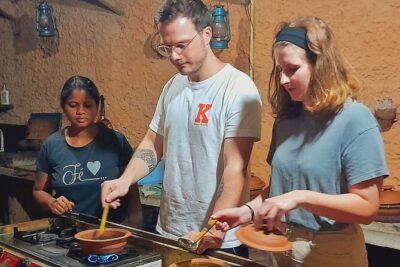
Sri Lankan Cooking Class with Neranji at Homestay
Read our review →
Browse the lists this tour appears in