
Review · ROME COOKING CLASSES
Fettuccine Ravioli and Tiramisu Cooking Class in Rome
Fresh pasta is the main event here. In a kitchen near Piazza Navona, you mix and work the dough, roll it thin, cut fettuccine, and fill ravioli before sitting down to eat what you made. You also prepare tiramisu, so the class gives you a full Roman meal rather than a single recipe.
I like two things right away: you learn dishes you can repeat at home, and the meal becomes a friendly, family-style gathering with wine. Chefs such as Maria, Leo, Lori, Mattia, Mimi, and Tommy are praised for patient, hands-on teaching. The main thing to know is that you prepare the pasta but do not cook it yourself, and the class can reach about 20 people.
Key details before you book
- Three Roman-style dishes: Make fettuccine, ravioli with butter and sage, and a classic tiramisu.
- A central location: Meet at Via Giuseppe Zanardelli 14, a short walk from Piazza Navona and close to public transportation.
- Chef-led, hands-on instruction: You roll, cut, and stuff the pasta instead of only watching a demonstration.
- Three fettuccine sauces: Choose tomato and basil, cacio e pepe, or amatriciana.
- A social meal at the end: Eat your own cooking with a glass of wine, water, and a final coffee or limoncello.
- Good for beginners and families: The class is taught in English, with a maximum group size of 20.
Starting near Piazza Navona
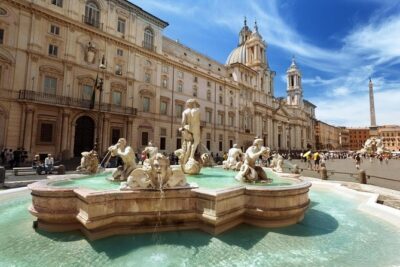
The meeting point is at Via Giuseppe Zanardelli 14, in Rome’s historic center. That location matters because you can fit the class into a sightseeing day without spending much time crossing the city. Piazza Navona is nearby, and the area is well served by public transportation.
I would plan to arrive early and confirm the exact meeting details before setting out. One person had conflicting location information in a booking email, although the original location proved correct. That is a small but useful reason to check your final confirmation carefully.
The setting is especially handy for a first or last-night activity. You can visit central sights before class, then spend the afternoon or evening at the table. One useful feature of a cooking class in Rome is that it gives you a break from hard pavement, crowds, and queues without sending you far from the action.
The class is offered in English. Different sessions may be led by different chefs, including Maria, Leo, Lori, Mattia, Mimi, Tommy, Alessia, Carlotta, Dani, Jo, Matt, and Leonardo. Their styles vary, but the consistent theme is direct help at the worktable and an effort to involve the whole group.
More Pasta Making Classes in Rome
- 3 in 1 Cooking Class near Navona: Fettuccine, Ravioli & Tiramisu
★ 5.0 · 7,376 reviews - Rome: Pasta Making Class with Wine, Limoncello, and Dessert
★ 4.9 · 3,177 reviews - Rome Cooking Class: Make Pasta and 3 Spritz Cocktails
★ 5.0 · 2,937 reviews
Making dough, fettuccine, and ravioli
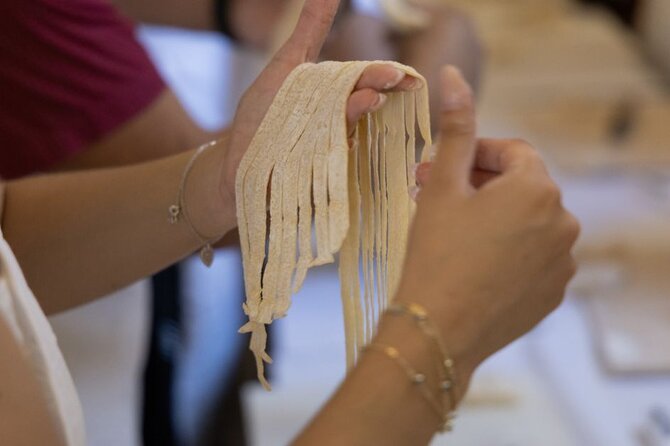
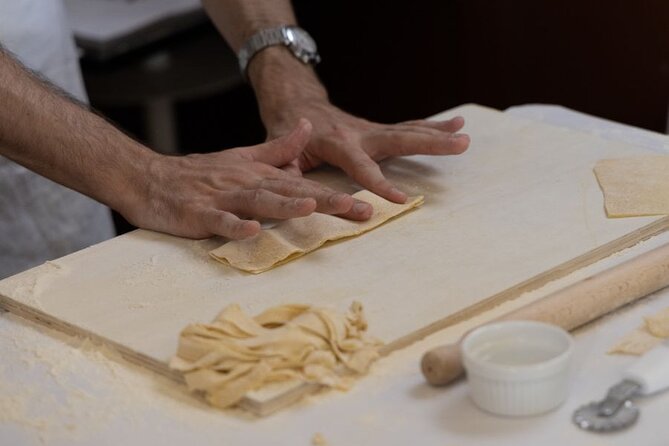
The first part of the class focuses on the pasta. You work with simple ingredients, then turn the dough into two different shapes. The process includes rolling the dough, cutting it into fettuccine, and stuffing ravioli.
This is useful cooking instruction because the same dough teaches several skills. Fettuccine shows you how thin and wide fresh pasta should be. Ravioli adds the extra steps of filling, folding, and sealing. One portion of dough and one egg can produce a surprising amount of pasta, so you leave with a better feel for how far a small batch can go.
The chefs help correct common problems as you work. Matt, for example, is praised for taking time with guests who needed help rolling the dough. Maria is described as patient and willing to offer practical tricks rather than rushing people through the steps. That sort of assistance is important for beginners, since fresh pasta can look easy in a demonstration and less tidy once your own hands get involved.
The class is not presented as a serious culinary school. It is a relaxed introduction that lets you make mistakes without pressure. Leonardo is particularly noted for keeping the mood light when people made errors, while still helping everyone reach a good final result.
The one limitation is worth stating clearly: you prepare the pasta, but the class information indicates that you do not cook it yourself. The kitchen handles that part while you sit down with a drink. If you want a full lesson in boiling, timing, and finishing fresh pasta, you will get less practice there.
Choosing the sauce for your fettuccine
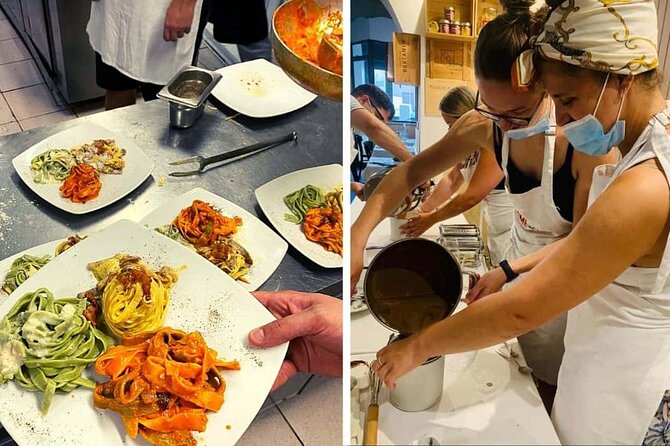
Your fettuccine comes with a choice of sauce: tomato and basil, cacio e pepe, or amatriciana. These choices give you three different Roman pasta lessons.
Tomato and basil is the straightforward option, with a clean flavor that lets the fresh noodles do much of the work. Cacio e pepe is a Roman favorite built around cheese and pepper, but getting the texture right at home can be trickier than its short ingredient list suggests. Amatriciana brings a stronger, savory profile and gives you another classic Roman combination to remember.
The ravioli is served with butter and sage. That is a sensible pairing for handmade pasta because it does not bury the filling under a heavy sauce. It also gives you a second lesson in restraint: fresh pasta often needs a simple finish, not a crowded plate.
You do not need advanced cooking skills to follow the class. Several of the dishes use familiar techniques, and the instruction is designed for beginners. Still, the rolling and filling require some work, so this is not a passive food tasting with a quick demonstration attached.
Preparing tiramisu from scratch
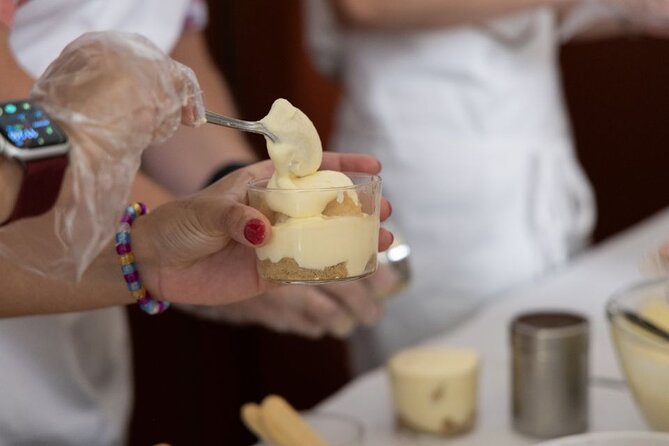
Tiramisu gives the class a sweet finish and a useful change of pace. You prepare it with mascarpone and espresso-soaked biscuits, then set it aside while the pasta work continues.
This part tends to suit families especially well because it is easy to understand and immediately rewarding. Children can take part in assembling the dessert, while adults get a chance to focus on the pasta. Several families describe the class as a highlight of their Rome visit, and the format makes sense for that response: everyone has a task, then everyone shares the result.
The tiramisu is also a practical souvenir. You receive recipes after the class, so you can try the dessert and pasta again at home. That makes the experience more useful than a meal you simply remember. You may not reproduce every detail perfectly on your first attempt, but you will have the basic method and proportions to work from.
More Tiramisu and Dessert Classes in Rome
- Rome: 3-in-1 Fettuccine, Ravioli, and Tiramisu Cooking Class
★ 4.9 · 2,704 reviews - Fettuccine & Tiramisù: Cooking Class with Wine & Limoncello
★ 4.9 · 2,103 reviews - Rome: Pasta & Tiramisu Cooking Class near the Spanish Steps
★ 4.8 · 1,395 reviews - Cooking Class in the Heart of Rome: Pizza and Tiramisu Making
★ 5.0 · 1,330 reviews
Sitting down to eat your own work
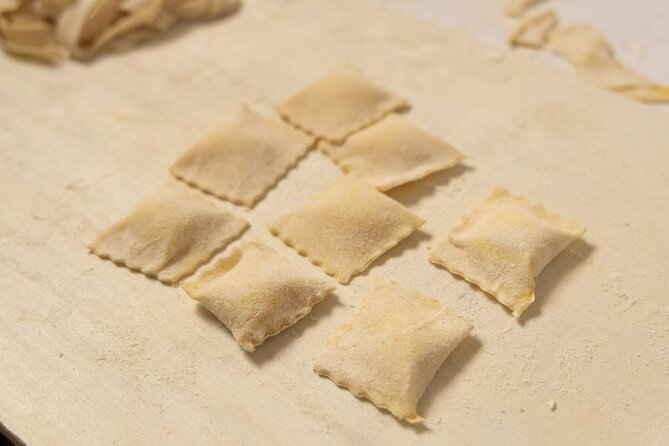
Once the preparation is finished, the pasta is cooked for you while you relax with a drink. You then sit down to eat the fettuccine, ravioli, and tiramisu together.
This shared meal is one of the strongest parts of the experience. You are seated with the people from your class, which gives the evening a social rhythm without requiring a separate dinner reservation. Wine and water are included, and the experience ends with either coffee or limoncello.
The meal is not only a reward for the work. It also lets you compare results and ask follow-up questions while the cooking is still fresh in your mind. A family can talk about which step was easiest, a solo visitor can meet people over dinner, and a group can enjoy an activity that feels more personal than eating at another restaurant.
Food quality will depend partly on the group’s work and the chef’s kitchen service. That is part of the charm, but it also means the experience is not aimed at diners who want a polished restaurant tasting menu. You are there to make the meal, not simply receive it.
How long the three-hour format feels
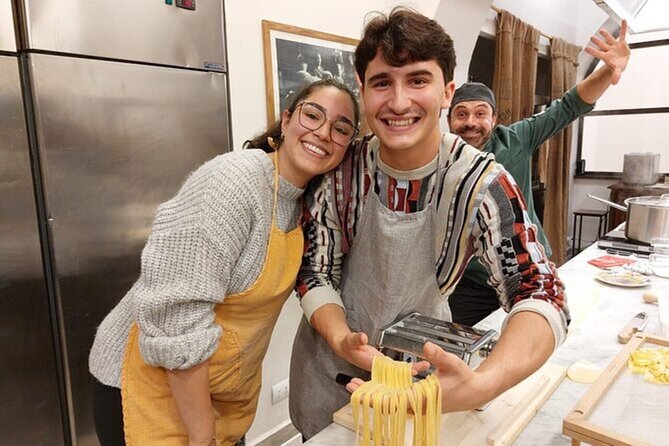
The advertised duration is about three hours. The preparation takes up the first portion, followed by the cooking, meal, drinks, and conversation. One smaller class finished in about two hours, so the exact timing can vary with group size and pace.
I would keep the rest of your schedule flexible. A three-hour booking is easy to combine with central Rome sightseeing, but you should not place it between two tightly timed attractions. A larger class may take longer to organize, while a smaller group may move more quickly.
The maximum group size is 20 people. That is large enough to create a social meal and small enough for a chef to move around the tables, though personal attention can vary with the number of people and the pace of the session. The strongest teaching comments focus on chefs who actively checked each person’s dough and answered questions.
For a busy Rome itinerary, the timing has another benefit. The class gives you a clear block of indoor activity, which can be welcome during hot weather or after a morning spent walking between major sights.
Is the $84.69 price good value?
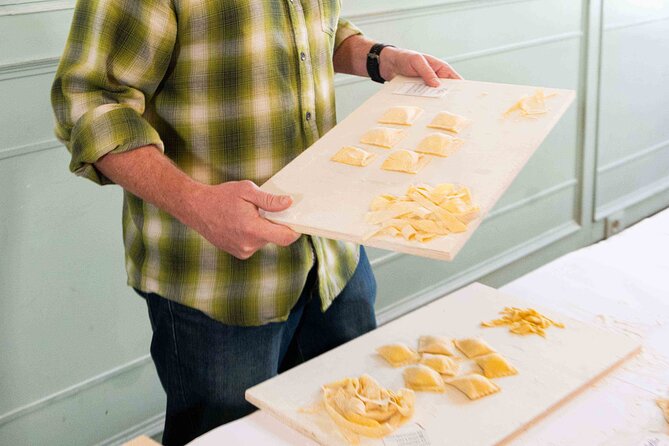
At $84.69 per person, this is not the cheapest meal in Rome. You are paying for instruction, ingredients, a chef-led activity, the food you prepare, wine, water, and a closing coffee or limoncello.
The value improves if you want both dinner and an activity. A normal restaurant meal may cost less, especially if you choose a simple trattoria. But it will not teach you how to make pasta, give you recipes to take home, or provide three hours of guided participation.
I see the price as reasonable for people who would otherwise book a meal and a separate cultural activity. It is also good value for families because the class creates a shared project rather than asking children to sit quietly through another meal. Several family groups found that even people who rarely cook could follow the instructions and enjoy the result.
The value is weaker if you already make fresh pasta often or mainly want to watch a professional chef. You will spend time kneading, rolling, and filling, and the pasta may not come out perfectly uniform. That hands-on work is the point, but it will not suit everyone.
Tips are not included, and extra food or drinks beyond the stated inclusions are also not included. A gratuity is optional according to your judgment, but you should account for it when setting your activity budget.
Who will enjoy this class most?
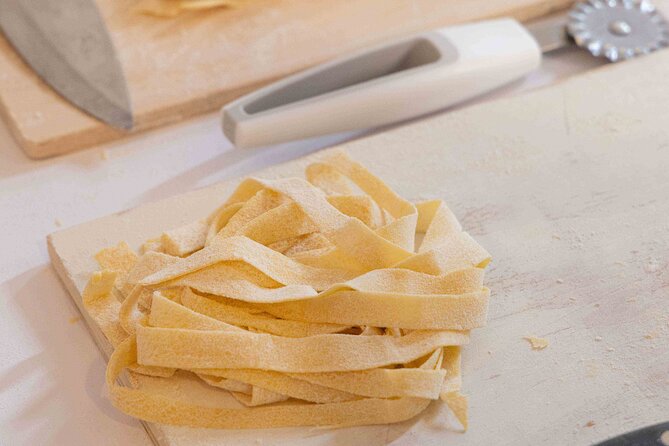
I would recommend this experience to:
- First-time pasta makers who want simple instruction and room to make mistakes.
- Families with children looking for a shared activity with a meal at the end.
- Solo visitors who like meeting people over food and want a structured evening.
- Couples and friends who prefer doing something together instead of booking another sightseeing tour.
- Food-focused visitors who want recipes they can recreate at home.
- Rome newcomers who want an activity near Piazza Navona and other central sights.
I would think twice if you have limited time and need an exact finish time, dislike group activities, or expect to cook every stage yourself. You should also check the current meeting instructions closely, particularly if your confirmation shows more than one location.
Booking and cancellation tips
The experience is often booked about 37 days in advance, so popular dates may fill before your trip. Confirmation is provided at booking, and free cancellation is available up to 24 hours before the local start time.
A cancellation made less than 24 hours before the start time is not refunded, and changes inside that window are not accepted. I would book once your Rome schedule is firm, then leave enough travel time to reach Via Giuseppe Zanardelli 14.
The final call
Book this class if you want to combine a meal, a social evening, and a useful cooking lesson in central Rome. The best reasons are the three-part menu, patient chef support, recipes to take home, and the chance to eat what you made.
Skip it if you want a quiet restaurant dinner, a small private lesson, or full control over every cooking step. For everyone else, the class offers a practical taste of Italian home cooking without taking you far from Piazza Navona. At this price, it is especially appealing as a family activity or as a break from Rome’s crowded sightseeing circuit.
FAQ
Where does the cooking class meet?
The meeting point is Via Giuseppe Zanardelli 14, 00186 Rome, Italy.
Where does the class end?
The activity ends back at the meeting point.
How long does the experience last?
The advertised duration is approximately three hours. The exact length can vary, and one smaller group finished in about two hours.
Is the class offered in English?
Yes. The experience is offered in English.
What dishes do I make?
You make fresh fettuccine, ravioli, and classic Italian tiramisu.
Which sauces are available for the fettuccine?
You can choose tomato and basil, cacio e pepe, or amatriciana.
How is the ravioli served?
The ravioli is served with butter and sage sauce.
Are drinks included?
A glass of wine and water are included. The experience also includes a final sip of limoncello or coffee. Additional food or drinks are not included.
How many people can join the class?
The class has a maximum of 20 participants.
Can I cancel for a full refund?
Yes, you can cancel up to 24 hours before the experience start time for a full refund. Cancellations or changes made less than 24 hours before the start time are not accepted for a refund.
Newest classes around Rome
- Testaccio: Home Cooking Cacio e Pepe, Amatriciana, Carbonara★ 4.9 · 57 reviews
- Super Fun Pasta and Gelato Cooking Class by the Vatican★ 5.0 · 6 reviews
- Spritz and Spaghetti Traditional Cooking Class in Rome★ 4.9 · 30 reviews
- ROME:Hands-On Lasagna & Marsala Tiramisu Cooking Experience”★ 5.0 · 3 reviews
- Rome: Vatican Food Tours, Cooking classes & Free Tours★ 4.9 · 11 reviews
- Rome: Trastevere Pasta Making Class★ 4.9 · 33 reviews
- Rome: Small Group Pasta cooking class near Piazza Navona★ 4.9 · 8 reviews
- Rome: Traditional Cooking Class in the Jewish Ghetto★ 4.9 · 75 reviews
Rome Cooking Classes, compared.
3 in 1 Cooking Class near Navona: Fettuccine, Ravioli & Tiramisu
Read our review →
Pasta Making Class with Wine, Limoncello, and Dessert
Read our review →
Rome Cooking Class: Make Pasta and 3 Spritz Cocktails
Read our review →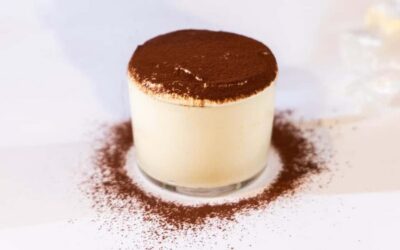
3-in-1 Fettuccine, Ravioli, and Tiramisu Cooking Class
Read our review →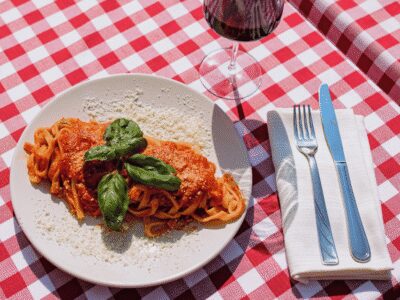
Fettuccine Pasta Cooking Class in Rome’s City Center
Read our review →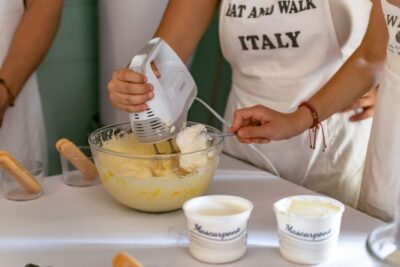
Fettuccine & Tiramisù: Cooking Class with Wine & Limoncello
Read our review →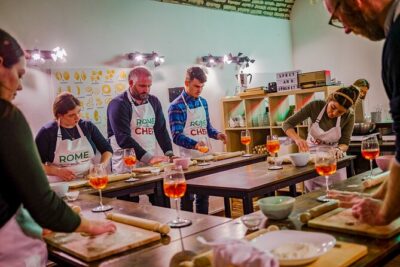
Pasta Cooking Class Near the Colosseum with 3 Spritz Cocktails
Read our review →
Enjoy Spritz and Pasta Making in Piazza Navona
Read our review →Browse the lists this tour appears in