
Review · SRI LANKA COOKING CLASSES
Hands-On Cooking Class in Anuradhapura: Cook Like a Local
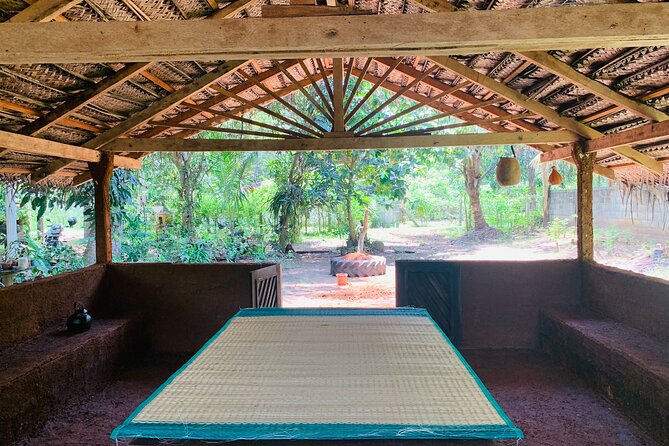
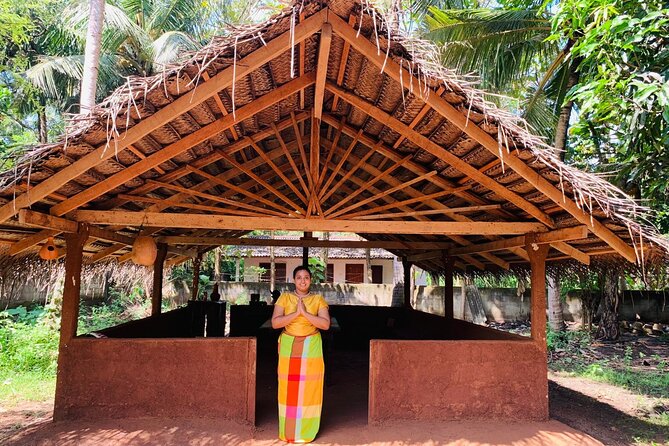
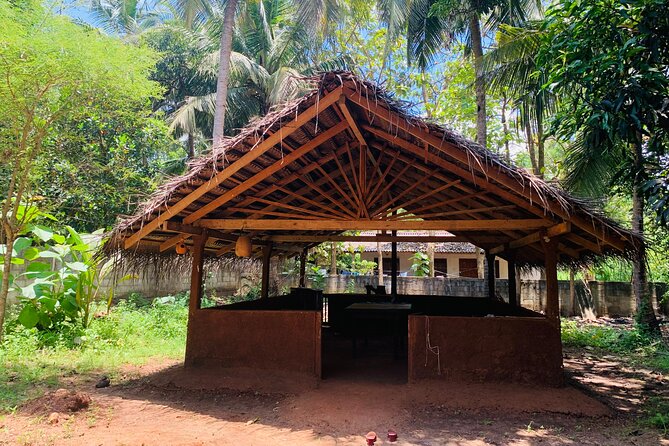
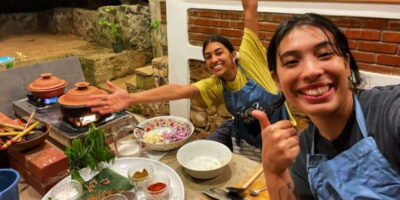
The best part of this Anuradhapura cooking class is the setting: you prepare food in a clay kitchen beneath a coconut-leaf roof, using the same basic tools found in old Sri Lankan village homes. This is not a demonstration where you watch someone else do the work. You grind, scrape, stir, season, and cook your own meal.
I like the chance to learn practical skills such as using a miris gala stone grinder and hiramanaya coconut scraper. I also like the menu, especially the ambarella curry, banana blossom mallum, and lake fish curry, dishes you are less likely to meet in a standard hotel restaurant.
The main consideration is heat, smoke, and insects. You will cook over a wood fire in a village setting, so bring mosquito repellent and wear clothes that can handle a little kitchen splatter.
Key points to know before booking
- Traditional tools do the real work: Grind spices on a miris gala and scrape coconut with a hiramanaya.
- The three-hour class takes place in a clay kitchen: A coconut-leaf shelter creates a simple, quiet village setting.
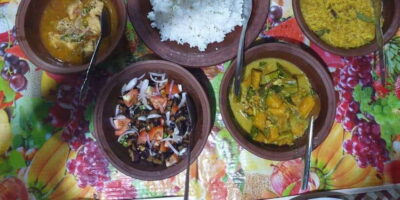
- You help prepare a full Sri Lankan meal: Expect rice, fish curry, sambal, mallum, pumpkin curry, and ambarella curry.
- Coconut goes from tree to plate: Picking your own coconut adds a small but memorable outdoor task.
- The class is private and taught in English: It suits couples, families, and small groups wanting direct instruction.
- The price is $40 per person: That is fair value for a three-hour class, a full meal, and a cultural lesson in traditional cooking.
Cooking in a Clay Kitchen Near Anuradhapura
This experience takes place at GK Immersions, described as a peaceful village home with a clay house kitchen and a traditional coconut-leaf shelter. The setting matters. You are not simply learning how to make curry in a modern cooking school. You are seeing how cooking connects with local materials, fire, garden produce, and everyday household skills.
The rustic design also keeps the class grounded in Rajarata, the ancient region associated with Anuradhapura. The class uses the area’s older cooking methods as a way to explain Sri Lankan food culture. That gives you useful context without turning the afternoon into a formal history lecture.
You will receive a local drink at the start. Then the hands-on work begins. The exact order can vary, but the experience is built around preparing several dishes together and eating them at the end.
This is a private group activity, which should make it easier to ask questions, work at your own pace, and get direct help with unfamiliar tools. The instruction is in English. Wheelchair access is available, though you may want to confirm any specific mobility needs before booking because the experience includes a traditional kitchen and outdoor tasks.
More Cooking Classes in Sri Lanka:
- Ella: Traditional Sri Lankan Cooking Class
★ 4.9 · 788 reviews - Organic cooking class sigiriya (kumara & family)
★ 5.0 · 650 reviews - Sri Lanka Cooking Class with Granny
★ 5.0 · 587 reviews
Picking a Coconut and Preparing the Ingredients
One of the small details that gives this class character is the chance to pick your own coconut straight from the tree. You are not just handed a packet of grated coconut from a supermarket. You see one of the ingredients in its natural form before it becomes part of the meal.
The supplied information does not specify how the coconut is picked or who handles the more difficult part, so do not assume you will climb the tree yourself. The value is in seeing the ingredient go from tree to kitchen and then taking part in its preparation.
You will also work with fresh ingredients from the garden. That connection helps explain why coconut appears in so many Sri Lankan dishes. It is not only a garnish. Coconut adds body, sweetness, creaminess, and texture to curries, mallum, sambal, and desserts.
For this part, I would wear comfortable clothes and closed shoes. You will be moving between the cooking area and the garden, and the class is practical rather than polished. Bring mosquito repellent, a useful tip after one participant specifically found it helpful.
Grinding Spices on the Miris Gala
The miris gala is a traditional stone grinder. Instead of tipping pre-ground spices into a pot, you grind them yourself and notice the aroma as the spices are crushed.
This is one of the strongest parts of the class for anyone who wants to understand Sri Lankan food rather than simply taste it. Freshly worked spices show you how much scent comes from the preparation itself. The process is physical, but it also slows the cooking down and gives you a better sense of how a meal is built.
The instructor explains which spices and vegetables to use and how they work in the dishes. That guidance is especially useful if you have little experience with South Asian cooking. You can ask why a spice is used, how much heat to expect, and what role coconut or lime plays in balancing the dish.
Do not expect the same speed as a restaurant kitchen. A stone grinder takes more effort than an electric blender. That is part of the point, but it may be less appealing if you want a fast, polished class with minimal physical work.
Learning the Hiramanaya Coconut Scraper
The hiramanaya is a traditional coconut scraper. You sit and use the tool to turn coconut flesh into fine shreds for cooking.
This is a simple skill, but it gives the class a strong link to ordinary Sri Lankan home cooking. The tool can look unfamiliar at first, so the instructor’s demonstration matters. Once you get the movement right, the task becomes quite satisfying.
The grated coconut is then useful across the menu. It may go into the coconut sambal, mallum, curries, or other parts of the meal. You see the same basic ingredient used in several different ways, rather than treating each dish as a separate recipe.
This is also a good activity for families and first-time cooks because it is easy to understand and produces an immediate result. Young children may need supervision around the tool and cooking fire, but the supplied information does not set a minimum age, so ask before booking if that matters to your group.
Same region, a different dish to learn:
- Kandy Village Cooking Class
★ 5.0 · 536 reviews - Sea waves sri lankan cooking class
★ 5.0 · 467 reviews - Ella: Sri Lankan Cooking Class with Neranji at Homestay
★ 5.0 · 276 reviews - Cook with Wasantha
★ 5.0 · 248 reviews
Cooking Rice and Curries Over Firewood
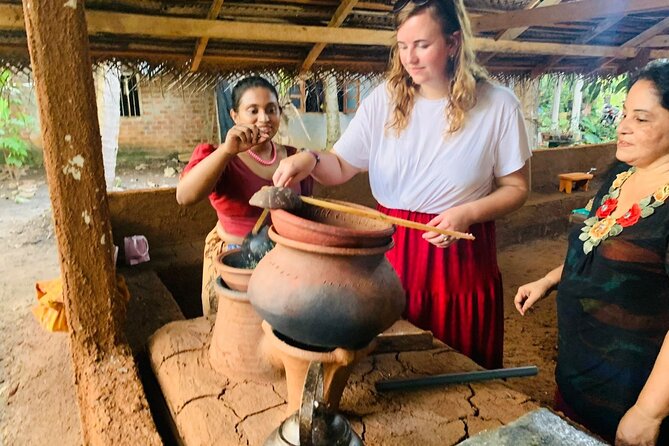
The main cooking takes place on a traditional wood-fired stove. Coconut shells may be used as firewood, adding another local touch to the preparation.
Cooking over wood changes the pace. You need to watch the heat, stir at the right moment, and pay attention to how quickly a dish thickens. The smoky aroma also becomes part of the meal, although people who dislike smoke or high heat should take note.
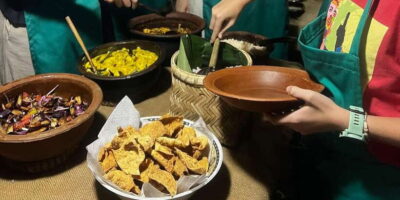
Rice forms the base of the meal. The menu allows for white rice or yellow rice, described as soft and steamed to accompany the other dishes. Rice is not a minor side here. It gives the meal structure and lets you compare the different curries, greens, and spicy accompaniments in one sitting.
The lake fish curry is prepared with locally caught fish, spices, and coconut milk. It offers a chance to taste a dish tied to the waterways around Rajarata. The precise fish is not specified, and availability may affect the final preparation.
Pumpkin curry brings a milder, slightly sweet contrast to the meal. It is creamy and gently spiced, a useful balance beside the hotter coconut sambal. The class also includes ambarella curry, made from a tropical fruit used as a savory ingredient. Its tangy flavor gives the menu something different from the familiar potato and chicken curries found on many restaurant menus.
Banana Blossom and Kathurumurunga Mallum
The menu includes two plant-based dishes that are especially useful for understanding local cooking.
Banana blossom is the flower of the banana plant. It has a layered texture and an earthy taste when cooked as a curry or mallum. It may be unfamiliar to many visitors, which makes it one of the more interesting parts of the meal. You are not simply eating a common vegetable prepared in a new sauce. You are seeing how Sri Lankan cooks use more of the plants around them.
Kathurumurunga mallum uses soft local greens mixed with coconut and spices. Mallum is generally a light preparation, and this dish should provide a fresh, leafy contrast to the fish curry and pumpkin.
The menu calls out both banana blossom mallum and kathurumurunga mallum in different places, so the final preparation may depend on the available ingredients or the day’s plan. If one of these dishes is particularly important to you, ask the instructor when you arrive.
These vegetable dishes also make the class a good choice for people who want more than meat and rice. The menu includes fish, but the meal has several vegetable-based components. The supplied information does not promise a fully vegetarian or vegan menu, so request adjustments in advance if you have dietary restrictions.
Coconut Sambal and the Sweet Finish
Coconut sambal is made with freshly grated coconut, red chili, lime, and onion. It is a small side dish with a sharp, spicy kick, and it shows how a few fresh ingredients can change an entire plate of rice and curry.
You can control your expectations here. The menu calls it fiery, but the class does not state that the heat level can be adjusted. If you are sensitive to chili, tell the instructor before preparation begins.
The meal ends with fresh curd and treacle, along with ripe papaya. The curd and treacle combination gives you a cool, creamy finish after the spice and smoke of the main meal. Papaya keeps the dessert simple and tied to local produce.
Eating the food you helped prepare is an important part of the class. It lets you taste how the grinding, scraping, firewood, and fresh ingredients affected the final dishes. You can also see which flavors you might want to recreate at home.
What the Three Hours Feel Like
Three hours is enough time to learn several techniques without turning the class into a rushed cooking contest. The experience includes an introduction to tools and ingredients, preparation work, cooking, and a full meal.
The class is likely to feel active from start to finish. You will not spend the whole time sitting at a table, and you should not arrive expecting a purely instructional talk. The work includes grinding, scraping, handling ingredients, cooking over fire, and moving through the meal’s different components.
The private format is a major advantage. You can spend more time on an unfamiliar tool and ask the instructor to repeat a step. It is also easier to discuss substitutions, spice levels, or the names of ingredients when you are not part of a large shared group.
The setting has tradeoffs. A clay kitchen and wood-fired stove offer a stronger sense of place than a modern classroom, but they also mean smoke, heat, and possibly mosquitoes. Bring repellent, water, and practical clothing. The activity includes a local drink, but additional drinks are not listed.
Is $40 Per Person Good Value?
At $40 per person, I consider this a reasonable price for a three-hour private cooking experience in Anuradhapura. You receive instruction, a local drink, access to traditional tools, the chance to pick a coconut, and a multi-dish meal.
The value is not just the amount of food. You are paying for the setting, the instructor’s guidance, the hands-on time, and the explanation of how older cooking practices still work. A restaurant meal would cost less in some cases, but it would not teach you how the spices were prepared or how coconut was handled.
The class offers particularly good value if you want a cultural activity that fits into a visit focused on Anuradhapura’s ancient sites. It gives you a different view of the region, one based on household skills and food rather than monuments alone.
It may be less attractive if your main goal is a professional chef-led lesson, a large recipe book, or a modern kitchen with precise equipment. Those features are not part of the experience. This is a local-style session built around traditional tools and a shared meal.
Who Should Book This Anuradhapura Cooking Class?
I would recommend this class to food lovers, curious first-time cooks, families, couples, and anyone who wants a direct cultural activity in Anuradhapura. It suits people who like learning by doing and who are happy with a relaxed village setting.
It is also a good pick if you are interested in plant-based ingredients. Ambarella, banana blossom, kathurumurunga greens, pumpkin, coconut, and papaya give you a broad look at Sri Lankan produce.
You may want to choose another activity if you dislike spicy food, smoke, outdoor conditions, or hands-on work. The menu includes red chili and a wood fire, and the class does not promise changes for every dietary need.
The experience has received a five-star rating from the five ratings provided, with particular praise for clear instruction about spices and vegetables, the presentation of Sri Lankan cooking traditions, the tools, and the final meal. That matches what I would consider its strongest feature: you learn the background and then immediately use it.
Booking Details and Practical Notes
The activity lasts three hours, with starting times based on availability. It takes place at the GK Immersions clay house kitchen in the North Central Province. To find it, search Google Maps for GK Immersions, described as a provider of things to do in Anuradhapura.
The class is taught in English and is available as a private group experience. It is wheelchair accessible according to the supplied details. Because the activity involves a traditional kitchen, garden tasks, and a wood-fired stove, ask about the exact setup if you need specific accessibility arrangements.
You can cancel up to 24 hours in advance for a full refund. A reserve-now, pay-later option is also available, which helps if your Anuradhapura schedule is still changing.
Should You Book It?
Book this class if you want to do more than photograph Anuradhapura’s ancient monuments. You will learn several traditional kitchen skills, prepare a varied Sri Lankan meal, and get a close look at how coconut, spices, greens, fruit, and firewood shape local cooking.
The strongest reasons to choose it are the private format, the unusual menu, the stone grinder and coconut scraper, and the chance to cook in a real clay kitchen. Just bring mosquito repellent and accept that the setting may be hot, smoky, and rustic. At $40 per person, it is a solid choice for a practical cultural experience with a very good meal at the end.
FAQ
Where does the cooking class take place?
The class takes place at the GK Immersions clay house kitchen in the North Central Province, beneath a traditional coconut-leaf shelter.
How long does the activity last?
The cooking class lasts three hours.
How much does the class cost?
The price is $40 per person.
Is the class taught in English?
Yes. The instructor language is English.
Is this a private or shared group activity?
It is offered as a private group activity.
What cooking tools will I use?
You can use a miris gala stone grinder, a hiramanaya coconut scraper, and a traditional wood-fired stove.
Can I pick a coconut?
Yes. Picking your own coconut straight from the tree is included.
What dishes are prepared?
The menu includes white or yellow rice, lake fish curry, ambarella curry, kathurumurunga mallum, coconut sambal, pumpkin curry, and banana blossom mallum.
What is served for dessert?
The sweet finish includes fresh curd with treacle and ripe fruit, including papaya.
Is the activity wheelchair accessible?
The activity is listed as wheelchair accessible. If you need specific arrangements for the clay kitchen or outdoor parts, confirm them when booking.
Newest classes around Sri Lanka
- cooking lesson★ 5.0 · 7 reviews
- Hands-On Cooking Class in Anuradhapura-Cook Like a Local★ 5.0 · 2 reviews
- Sri Lankan Cooking Class in Bentota★ 5.0 · 2 reviews
- Sri Lanka: Cooking Class★ 4.4 · 6 reviews
- Sri Lankan Cookery with Nilu★ 5.0 · 34 reviews
- Cooking Experience from Ella★ 4.9 · 2 reviews
- Private cooking class – Personalized classic menu★ 5.0 · 5 reviews
- Nilaveli: Sri Lankan Cooking Class with a Local Family★ 5.0 · 16 reviews
Sri Lanka Cooking Classes, compared.
Organic cooking class sigiriya (kumara & family)
Read our review →
Sri Lankan Cooking Class with Neranji at Homestay
Read our review →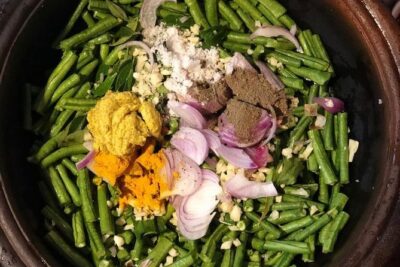
Browse the lists this tour appears in