Review · UBUD COOKING CLASSES
Ubud: Balinese Cooking Class and Market Tour
The best part of this Ubud experience is that you do not simply watch a chef cook. You visit a real local market, learn how ingredients are bought and sold, then prepare nine Balinese dishes with your own hands before sitting down to eat. The morning option also includes a rice-paddy stop, giving the food some useful local context.
I like the generous amount of hands-on cooking and the friendly, family-run feel. I also like that guides such as Putu and Wayan explain the food clearly without making the class stressful. The main consideration is that the market can be raw and crowded, with dirt floors, flies, tight spaces, and fresh meat on display.
Key points at a glance
- Nine dishes in four hours: You prepare a broad meal of Balinese food, then eat it together.
- Morning market and fruit tasting: The local market visit shows how ingredients and Hindu offerings are bought and sold.
- Rice paddies included in the morning: You learn why rice matters to Balinese life before cooking.
- Afternoon class has a cultural extra: Instead of the market, you make a traditional Canang offering and finish with dinner.
- Small group format: The class is limited to 14 people, with some sessions much smaller.
- Strong value at $23: Pickup in Ubud, instruction, ingredients, food, and recipe PDF are included.
A morning built around food, not just sightseeing
This four-hour activity gives you a practical look at Balinese food from market stall to dining table. The morning schedule is the fuller choice: pickup in Ubud, a market visit, a rice-paddy stop, and a cooking session. The afternoon schedule skips those outdoor visits but adds Canang offering preparation and ends with dinner.
I would choose the morning class if you want to understand where the ingredients come from. You get to see the produce before it is chopped, seasoned, and cooked. The afternoon class makes more sense if you prefer a later start or want the added cultural activity at the family compound.
The class is conducted in English and capped at 14 people. That is small enough for instruction to stay personal, though the actual group can vary. One session had only four people, which allowed plenty of direct participation. Larger groups will feel busier, but the class is organized around shared preparation rather than a long demonstration from a distance.
More Cooking Classes with a Market Tour in Indonesia
- Ubud: Cooking Class with Transfers and Optional Market Visit
★ 4.9 · 824 reviews - Balinese Ubud cooking school (9 Dish Cooking and Market Tour)
★ 5.0 · 540 reviews - Balinese Cooking class with traditional morning market visit
★ 5.0 · 161 reviews
The local market: useful, lively, and not polished for tourists
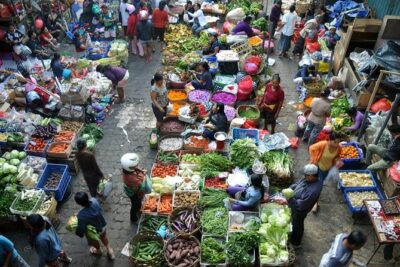
The morning begins at a traditional market. This is not a tidy food hall designed for visitors. You might find damp or dirt floors, flies, narrow walkways, strong smells, and meat being prepared nearby. If that sounds unpleasant, you should know this before booking. If you want to see ordinary food shopping in Bali, it is part of the value.
A guide such as Putu or Tata helps explain what you are seeing and may offer tastes of local fruit and snacks. The explanations can be especially helpful if you have never encountered some of the produce before. One useful approach described during the visits is comparing unfamiliar fruit with fruit you already know, which makes the introduction easier for first-time visitors.
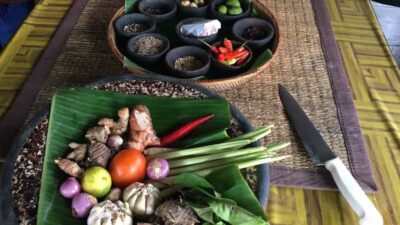
You will also see ingredients used for Hindu offerings, along with vegetables and other cooking supplies. The point is not to buy a souvenir. It is to understand the daily exchange of food, money, and custom that supports the cooking class later in the morning.
The market may be outside central Ubud, depending on the route used that day. That adds driving time but also takes you beyond the familiar tourist center. Wear shoes that can handle wet or dirty ground, and bring cash if you want to buy something. A camera is useful, but ask before photographing people or stalls.
Rice paddies and the place of rice in Balinese life
Morning groups also stop at local rice paddies. This is a short cultural visit, not a long walk through the countryside, but it gives meaning to one of the main foundations of Balinese cooking.
The guide explains why rice matters to Balinese people and how farming connects with everyday life. One guide, Putu, has a rice field herself, which gives her a personal link to the subject. You will not only see fields from the roadside. You get some explanation of the work and value behind the crop.
The paddy stop also breaks up the morning nicely. After the close quarters of the market, the open fields provide breathing room before you begin cooking. Keep in mind that this visit is available only with the morning option. Afternoon bookings do not include the market or rice paddies.
Cooking nine dishes by hand
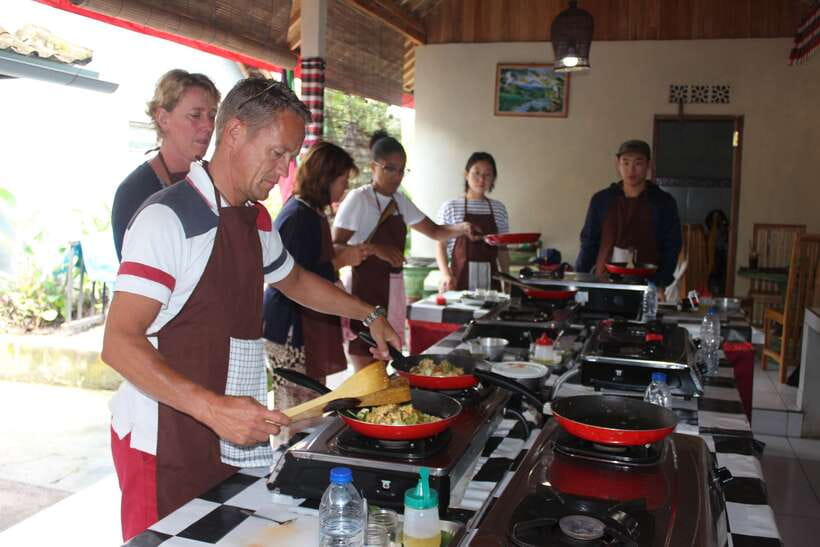
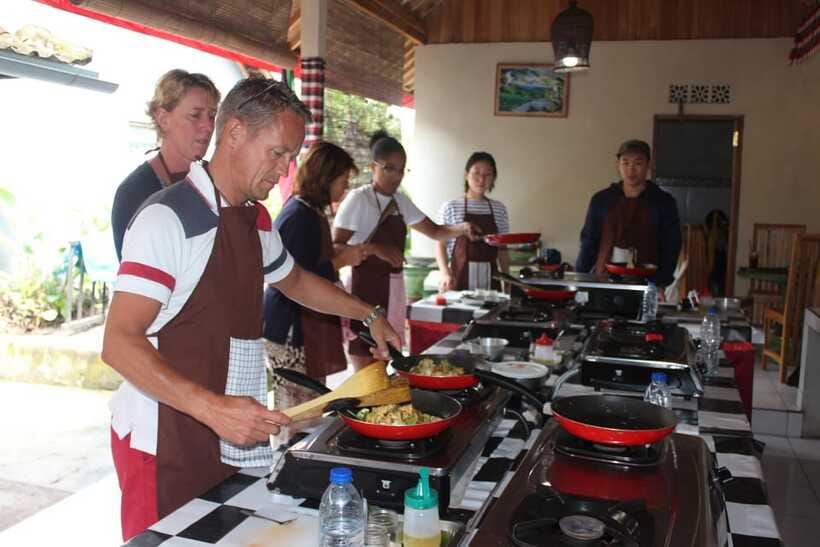
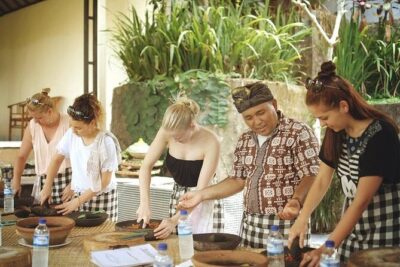
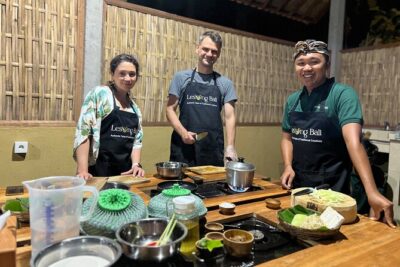
The main event takes place at a family-run cooking school, described as being inside a local family compound. The setting helps the class feel connected to everyday Balinese life rather than like a formal restaurant lesson.
You prepare nine signature dishes, including sauces, main foods, and dessert. The exact menu should be checked when you book, since the supplied information does not list each dish by name. The important point is the range: you are not making one curry and calling it a day. You work through several parts of a Balinese meal.
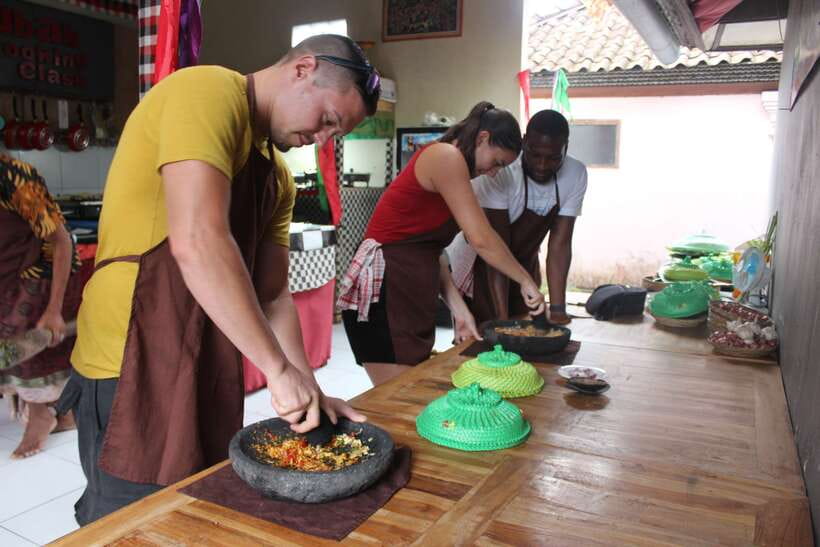
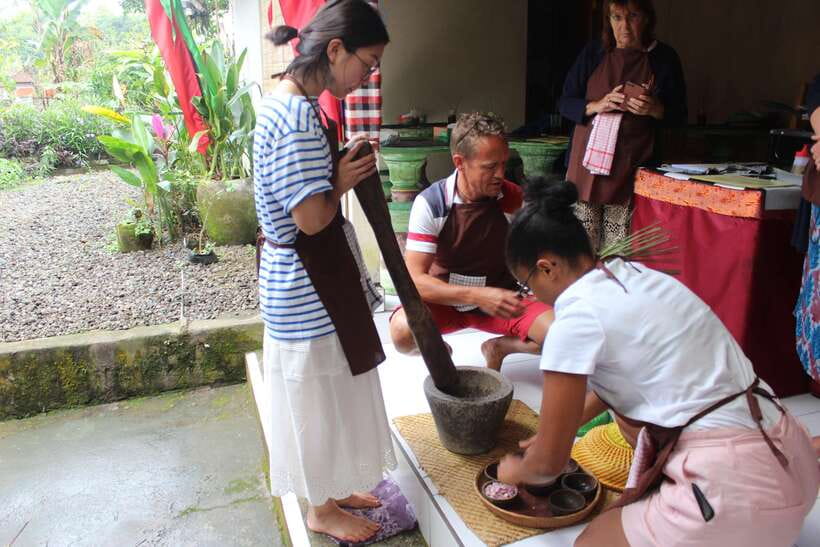
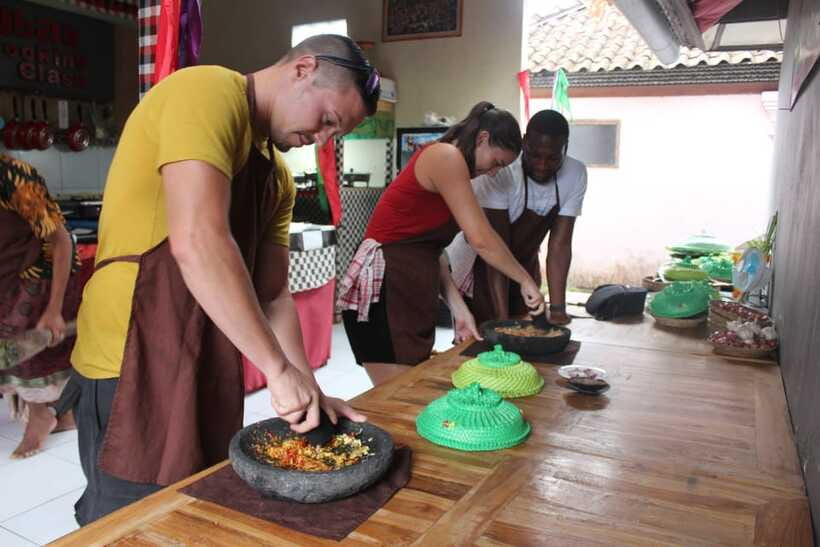
The chef explains the ingredients and each step before you begin. Then you chop, mix, season, and prepare the food yourself, with help when needed. The teaching style is hands-on but forgiving. If you are not a confident cook, you should still be able to take part without worrying that one mistake will ruin lunch.
That balance matters. Some cooking classes let you stir one pot while the chef handles everything else. Here, the group prepares several dishes and combines the results at the end. You get more to do, and you also learn how the separate sauces and ingredients fit together.
The food is cooked in a shared setting, so you will work alongside other people in the group. That makes this a social activity as much as a lesson. Solo visitors can join in easily, and families with older children can enjoy the teamwork. Children under six are not suitable for the activity.
More Cooking Classes with a Market Tour in Ubud
- PRIVATE Ubud Market Tour & Balinese Cooking Class with Putu
★ 5.0 · 125 reviews - Jambangan bali cooking class with morning market tour
★ 5.0 · 35 reviews - Balinese cooking class/Go shopping at the market, cook, eat
★ 5.0 · 12 reviews
Eating what you prepared
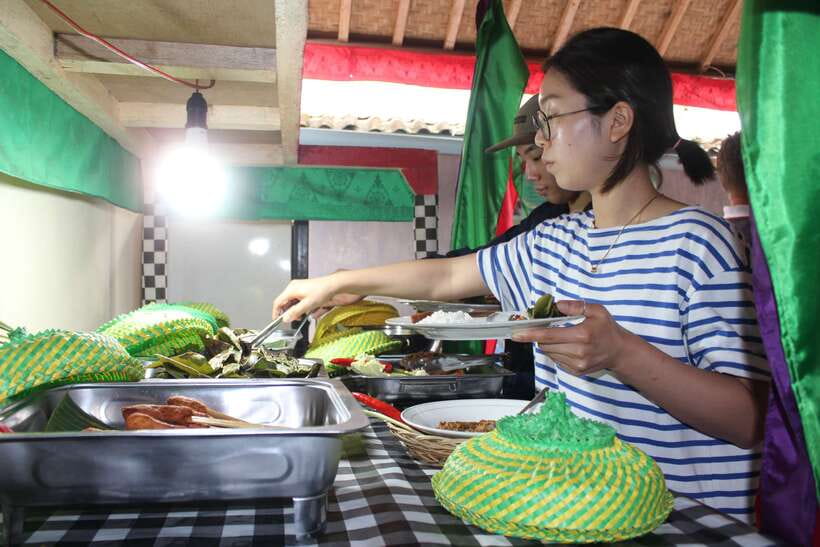
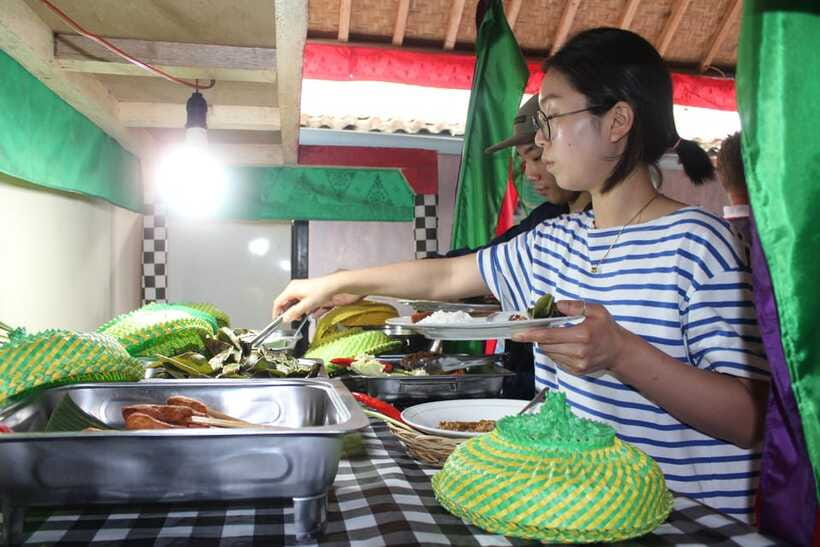
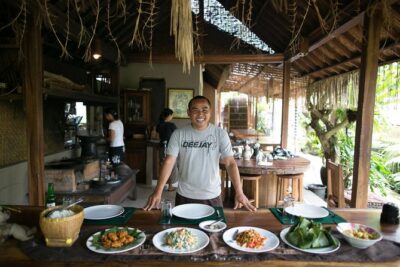
After the cooking, you sit down and eat the meal together. This is a substantial finish because nine dishes produce a real spread, not a token sample.
I like this part because it gives every preparation a clear purpose. You can taste how the ingredients changed during cooking and remember which steps created each flavor. It also turns the class into lunch or dinner, which helps explain the low $23 price.
A welcome drink is included. Beer is available at an extra cost and has been described as reasonably priced, but you should bring cash if you want to purchase anything beyond the included activity.
Vegetarian and vegan needs can be accommodated, and one participant with allergies received a non-spicy menu. You should tell the provider about dietary needs in advance rather than waiting until the cooking begins. The class includes a lot of ingredients and several dishes, so early notice gives the staff a better chance to adjust the menu.
Morning or afternoon: choose the right version
The two schedules offer different experiences.
The morning class includes:
- Local market visit
- Local fruit tasting
- Rice-paddy visit
- Cooking of nine dishes
- Shared meal
- Recipe PDF
The afternoon class includes:
- Cooking of nine dishes
- Canang offering preparation
- Shared dinner
- Recipe PDF
Choose morning if the market is a main reason you are interested. It is the only schedule that includes that visit, and it adds useful context to the cooking. Choose afternoon if you want to avoid the market or prefer a later activity. The Canang offering session gives the afternoon version its own cultural focus.
The market is not for everyone. It can be crowded and visually confronting, especially around meat stalls. One person may find it fascinating while another would be happy to skip it. The cooking class itself is the more consistently appealing part, so an afternoon booking is not a lesser experience, just a different one.
Transport and meeting arrangements in Ubud
Hotel pickup and drop-off are included within the Ubud area. The provider contacts you about the pickup, and the driver handles the transfer to the market and cooking site. Several participants received timely pickups and clear communication.
If you stay outside Ubud, pickup and drop-off are not included. You can meet the shuttle at the front of Ubud Palace or go directly to the class. The free shuttle is limited to the Ubud area, so check your accommodation location before paying.
This detail matters because Bali transfer times can affect a four-hour activity. If your hotel is outside the included zone, allow time to reach the meeting point. If you are staying in Ubud proper, the included transport makes the morning much easier, especially when the class begins early.
The activity lasts four hours, but starting times vary. Check the available schedule before booking, particularly if you have another tour or a flight on the same day.
How the guides shape the experience
The guides and cooking staff are a major part of the appeal. Names connected with the sessions include Putu, Wayan, Butu, and Tata. Their roles can vary between market guiding, driving, and cooking, but the tone is consistent: friendly, patient, and willing to explain.
Wayan is particularly associated with the cooking instruction, while Putu has guided market and rice-field visits. Butu has led afternoon sessions, and Tata has been praised for clear English. You should not assume you will receive a specific guide, but these names give you an idea of the personal, local approach.
The strongest feature is the lack of pressure. The chef helps you when needed, but you still get to do the work. That is important if you want to recreate the meal at home. A PDF copy of the recipes is included, so you can refer back to the dishes for a family lunch or dinner.
The instructions are not presented as a professional culinary course. You are learning home-style Balinese preparation in a social setting. Measurements and methods may be practical rather than precise, so take notes if you want to reproduce a dish exactly.
Price, value, and who should book
At $23 per person, this is a strong-value half-day activity. The price includes Ubud-area transportation, a guide, market and paddy visits for the morning class, ingredients, nine dishes, a welcome drink, the meal, and a recipe PDF.
The amount of food is the key value. You are not paying for a short demonstration followed by a small plate. You help make a full spread and eat it at the end. Add the cultural visits and transport, and the price is modest for four hours.
I would recommend it to:
- Couples who want an activity beyond temples and cafes
- Solo visitors looking for an easy social experience
- Families with children aged six and older
- Anyone interested in Balinese food and local ingredients
- Visitors who want recipes they can use at home
- People choosing between a market-focused morning and an offering-focused afternoon
I would hesitate if you dislike crowded markets, raw food stalls, or shared cooking. The market can be confronting, and the class is not designed for wheelchair users. People with serious allergies should contact the provider before booking, even though non-spicy, vegetarian, and vegan adjustments are available.
The experience has a rating of 4.8 from 531 ratings, which fits the strongest features: warm staff, clear organization, a large amount of food, and genuine participation. The market is the least predictable part, while the cooking class is the reliable core.
Should you book this Ubud cooking class?
Book it if you want to learn by doing and you like the idea of seeing ingredients in their local setting before cooking them. The morning option is the best all-round choice, since it adds the market and rice paddies for the same basic activity. Bring comfortable shoes, cash, a camera, and an open mind about the market.
Choose the afternoon class if you want a calmer schedule or prefer learning about Canang offerings instead of visiting the market. Either way, the cooking lesson gives you nine dishes, a shared meal, and recipes to take home. For $23, that is a practical and enjoyable way to connect Balinese food with daily life.
FAQ
How long does the Ubud cooking class and market tour last?
The activity lasts four hours. Starting times vary, so check availability for the date you want.
What is included in the price?
The price includes Ubud-area hotel pickup and drop-off, a guide, nine Balinese signature dishes, a welcome drink, and a PDF copy of the recipes. Morning bookings also include the market and rice-paddy visits. Afternoon bookings include Canang offering preparation.
Is the local market visit included in every class?
No. The traditional market visit is available only with the morning class.
Is the rice-paddy visit included in every class?
No. The rice-paddy visit is available only with the morning option.
What happens during the afternoon class?
The afternoon class includes the cooking lesson, preparation of a Canang offering, and dinner together. It does not include the market or rice-paddy visit.
Is hotel pickup available outside Ubud?
No. Free pickup and drop-off are limited to the Ubud area. If you stay outside Ubud, you can meet the shuttle at Ubud Palace or go directly to the class.
Is the class taught in English?
Yes. The activity includes a live English-speaking guide.
Can vegetarian, vegan, or non-spicy food be arranged?
Yes. Vegetarian and vegan options are available, and a non-spicy menu can be prepared for some dietary needs. Tell the provider about allergies or restrictions in advance.
Is the activity suitable for young children or wheelchair users?
Children under six are not suitable for the activity, and the experience is not suitable for wheelchair users.
More Balinese and Indonesian Classes in Ubud
- Ubud Cooking Class Bali with Balinese Chef
★ 5.0 · 1,609 reviews - PRIVATE Authentic Balinese Cooking Class in Ubud at Putu’s Home
★ 5.0 · 644 reviews - Balinese Farm Cooking Class by Pemulan Bali
★ 5.0 · 410 reviews - Balinese Authentic Cooking Class in Ubud
★ 5.0 · 239 reviews
Newest classes around Ubud
- The Authentic Balinese Cooking Experience★ 5.0 · 4 reviews
- Ubud: Organic Farm Harvest, Bali Cooking Class by Pemulan★ 4.8 · 12 reviews
- packages cooking class and romantic dinner in a local home★ 5.0 · 4 reviews
- Jambangan bali cooking class with morning market tour★ 5.0 · 35 reviews
- Ubud: Balinese Cooking Class with Hotel Transfers★ 4.8 · 17 reviews
- Balinese cooking class/Go shopping at the market, cook, eat★ 5.0 · 12 reviews
- Bali: Cooking Class with Monkey Forest and Art Village Tour★ 5.0 · 2 reviews
- PRIVATE Ubud Market Tour & Balinese Cooking Class with Putu★ 5.0 · 125 reviews
Ubud Cooking Classes, compared.
Cooking Class with Transfers and Optional Market Visit
Read our review →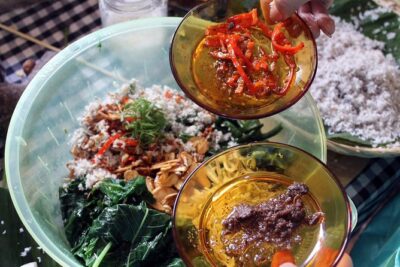
PRIVATE Authentic Balinese Cooking Class in Ubud at Putu’s Home
Read our review →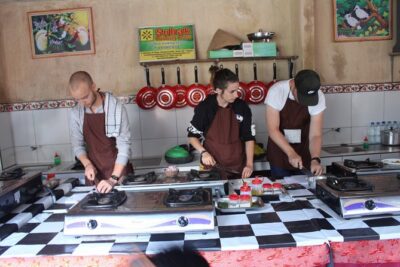
Balinese Ubud cooking school (9 Dish Cooking and Market Tour)
Read our review →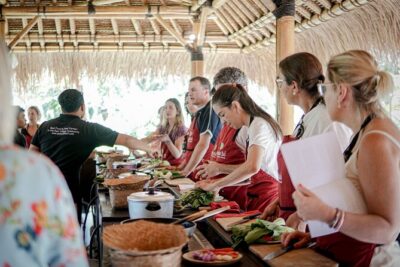
PRIVATE Balinese Cooking Class in Ubud with Dewa with Transfers
Read our review →